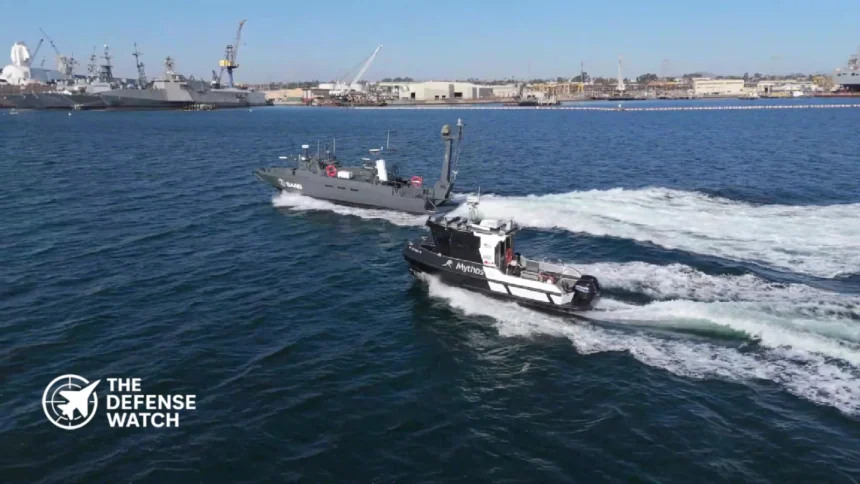
Saab Acquires Mythos AI to Expand Autonomous Maritime Capabilities
Saab has completed its acquisition of U.S.-based maritime technology company Mythos AI, adding autonomous navigation, intelligent pilot assistance and automated marine surveying software to its defense and commercial maritime portfolio.
Announced on November 24, 2026, the acquisition brings together Mythos AI’s software development capabilities with Saab’s experience in naval platforms, sensors and systems integration. The companies intend to use the combined capabilities to support autonomous operations across existing vessels and future shipbuilding programs.
Mythos AI has a workforce of 15 employees and develops software designed to help vessels navigate with reduced human intervention. Its technology can be installed on vessels already operating at sea or incorporated into newly built platforms.
The acquisition gives Saab access to a specialized U.S. engineering team with practical experience developing and testing autonomous maritime systems.
What Mythos AI Brings to Saab
Mythos AI focuses on three main areas of maritime technology:
- Intelligent pilot assistance: Software intended to support vessel operators with navigation and maneuvering.
- Autonomous navigation: Capabilities that allow vessels to perform navigation tasks with reduced direct human control.
- Automated seafloor surveys: Software supporting the collection of marine survey data.
The ability to integrate its software into existing vessels is particularly relevant. Rather than requiring operators to replace their entire fleets, the technology can potentially provide an upgrade path for ships already in service.
For Saab, this creates an opportunity to combine software-based autonomy with its existing naval platforms, sensor technologies and systems integration expertise.
The company has not disclosed the acquisition price, detailed integration schedule or a specific list of defense programs that will receive the technology.
30,000 Autonomous Miles and Nearly 40,000 Vessel Encounters
One of the most notable figures associated with the acquisition comes from Mythos AI’s own operational experience.
Geoff Douglass, CEO and co-founder of Mythos AI, said the company’s technology has accumulated approximately 30,000 autonomous miles in busy waterways. He also reported nearly 40,000 vessel encounters and avoidance maneuvers.
These figures are company-reported performance data, not independently verified operational statistics.
Nevertheless, experience in congested waterways is relevant to autonomous vessel development. Maritime navigation involves more than following a predetermined route. Autonomous systems must account for surrounding traffic, changing navigation conditions and the need to avoid collisions.
The ability to recognize nearby vessels and support appropriate avoidance maneuvers is therefore an important part of developing software for autonomous maritime operations.
The acquisition gives Saab access to a company whose software has already undergone practical testing in real maritime environments, although the announcement does not provide independent validation of its performance or establish certification for unrestricted autonomous operations.
Previous Demonstration With Saab’s Enforcer Vessel
The acquisition builds on an existing relationship between the two companies.
In 2025, Saab and Mythos AI demonstrated pilot-assistance and remote-operation capabilities aboard Saab’s Enforcer vessel in San Diego Bay, California.
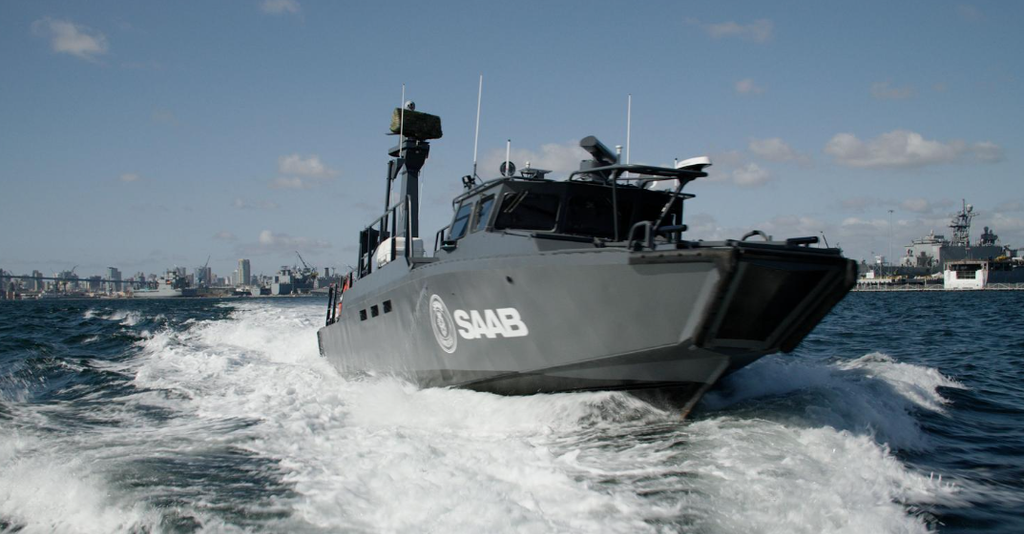
The demonstration provided an opportunity to test Mythos AI’s software alongside Saab’s maritime platform technology.
The collaboration is relevant because integrating autonomy into a vessel requires more than developing navigation software. It also involves connecting software with onboard sensors, vessel controls, communications equipment and other systems.
Saab’s experience in these areas could help expand the technology beyond individual demonstrations and into broader maritime applications.
Why the Acquisition Matters for Naval Operations
Autonomous maritime technology is becoming increasingly relevant to defense organizations seeking to improve maritime surveillance, extend mission duration and operate more vessels without proportionally increasing crew requirements.
For naval forces, autonomous surface vessels can potentially support several missions:
- Maritime surveillance and reconnaissance.
- Coastal and harbor monitoring.
- Hydrographic and seabed surveys.
- Support for crewed naval vessels.
- Extended maritime observation missions.
- Remote operation in areas where continuous crewed presence is difficult.
Mythos AI’s software does not automatically provide all these capabilities. Its acquisition gives Saab additional navigation and pilot-assistance technology that could contribute to future autonomous vessel applications.
An important distinction is that autonomous navigation and fully autonomous military operations are not the same thing. A vessel capable of following routes and avoiding traffic does not necessarily possess the decision-making, mission management, communications resilience or weapons integration required for independent combat operations.
Those capabilities would require additional development and integration.
Potential U.S. Defense Industry Implications
Acquiring a U.S.-based maritime autonomy developer also strengthens Saab’s position in the American defense technology market.
The company’s U.S. operations provide an established industrial presence, while Mythos AI adds a specialized software development capability.
This combination could help Saab pursue opportunities involving unmanned surface vessels and maritime autonomy. However, the acquisition announcement does not identify a specific U.S. Navy contract or confirm that Mythos AI technology has been selected for a particular military program.
The financial terms of the transaction have also not been disclosed.
What Remains Unclear
Several important details remain unavailable following the acquisition announcement.
Saab has not publicly specified:
- The financial value of the acquisition.
- Whether Mythos AI will retain its existing organizational structure.
- A timetable for integrating its software into Saab’s naval platforms.
- Which military or commercial customers will receive the technology.
- Whether the software will be incorporated into specific U.S. Navy unmanned vessel programs.
- The extent of autonomy and human supervision supported by the software in operational deployments.
These details will help determine how quickly the acquisition translates into deployable maritime capabilities.
For now, the confirmed development is the completion of the acquisition and the addition of Mythos AI’s existing software and engineering team to Saab’s business.
Enjoying our coverage?
Make The Defense Watch a preferred source on Google to see more of our geopolitical and defense insights when relevant to you.