The U.S. Army’s 101st Airborne Division is testing ways to turn small unmanned aircraft into more versatile infantry support platforms, combining modular payload-release equipment with experimental drone-delivered munitions during live-fire training at Fort Campbell, Kentucky.
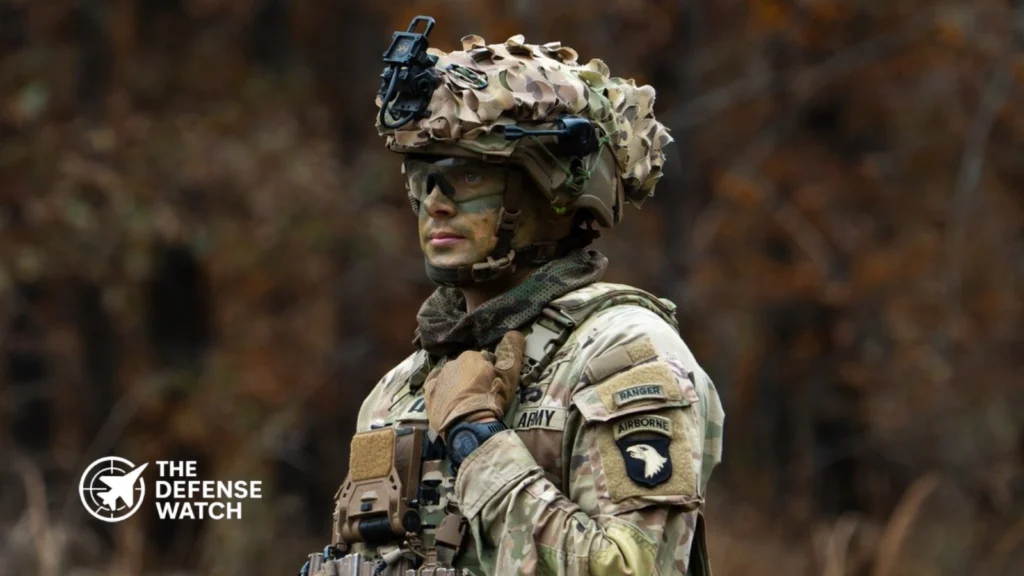
The exercise, conducted from November 2 to 8, 2026, involved soldiers from Delta Multi-Purpose Company, 1st Battalion, 502nd Infantry Regiment, 2nd Mobile Brigade. The unit demonstrated two technologies, the Drone Agnostic Release Kit (DARK) and Broad Lethality Air Deployed Effects (BLADE), according to an Army report published November 20.
The systems are intended to expand what infantry units can accomplish with existing unmanned aircraft, allowing them to conduct reconnaissance while also delivering explosive and nonlethal payloads during ground operations.
From soldier-built drone attachments to dedicated payload systems
The 101st Airborne’s latest work builds on an earlier initiative developed by soldiers during the company’s deployment to Poland.
Under Capt. Jacob Moberly, soldiers created a low-cost grenade-dropping attachment called Widowmaker. The system used 3D-printing technology and readily available materials to demonstrate how small unmanned aircraft could deliver more than surveillance and reconnaissance capabilities.
That initial effort provided practical experience with drone-based payload delivery and helped establish the foundation for more advanced systems.
Rather than relying exclusively on purpose-built armed aircraft, the unit has explored ways to adapt different unmanned platforms to support infantry operations.
The approach also reflects a wider change in the Army’s thinking about small drones. Their role is expanding from observation and target identification toward delivering effects directly in support of ground maneuver units.
DARK and BLADE perform different roles
The two technologies being integrated by the 101st Airborne serve separate but complementary functions.
Drone Agnostic Release Kit (DARK)
Developed by Orbital Research, DARK is a modular payload-release system designed to work across different unmanned aircraft platforms.
Its purpose is to let units carry and release different payloads without requiring a separate release mechanism for every drone type.
According to the Army, supported payload categories include:
- Explosive munitions
- Smoke grenades
- Other mission-specific equipment
- Nonlethal payloads
This modular approach could give infantry formations more flexibility when operating different drone platforms. It also reduces the need to develop an entirely separate payload-release arrangement for every aircraft.
Broad Lethality Air Deployed Effects (BLADE)
BLADE is an experimental munition developed specifically for unmanned aircraft.
The Army describes it as a more advanced capability than the earlier improvised grenade-dropping arrangement. Capt. Moberly said the munition is designed to produce effects comparable to conventional military munitions while providing additional options against different battlefield threats.
However, the Army has not publicly detailed BLADE’s warhead configuration, explosive content, weight, effective range or technical performance.
DARK provides the payload-release capability, while BLADE supplies an experimental munition designed for drone delivery. Their integration allows the division to investigate additional missions for existing unmanned aircraft.
Ghost-X and the infantry drone integration effort
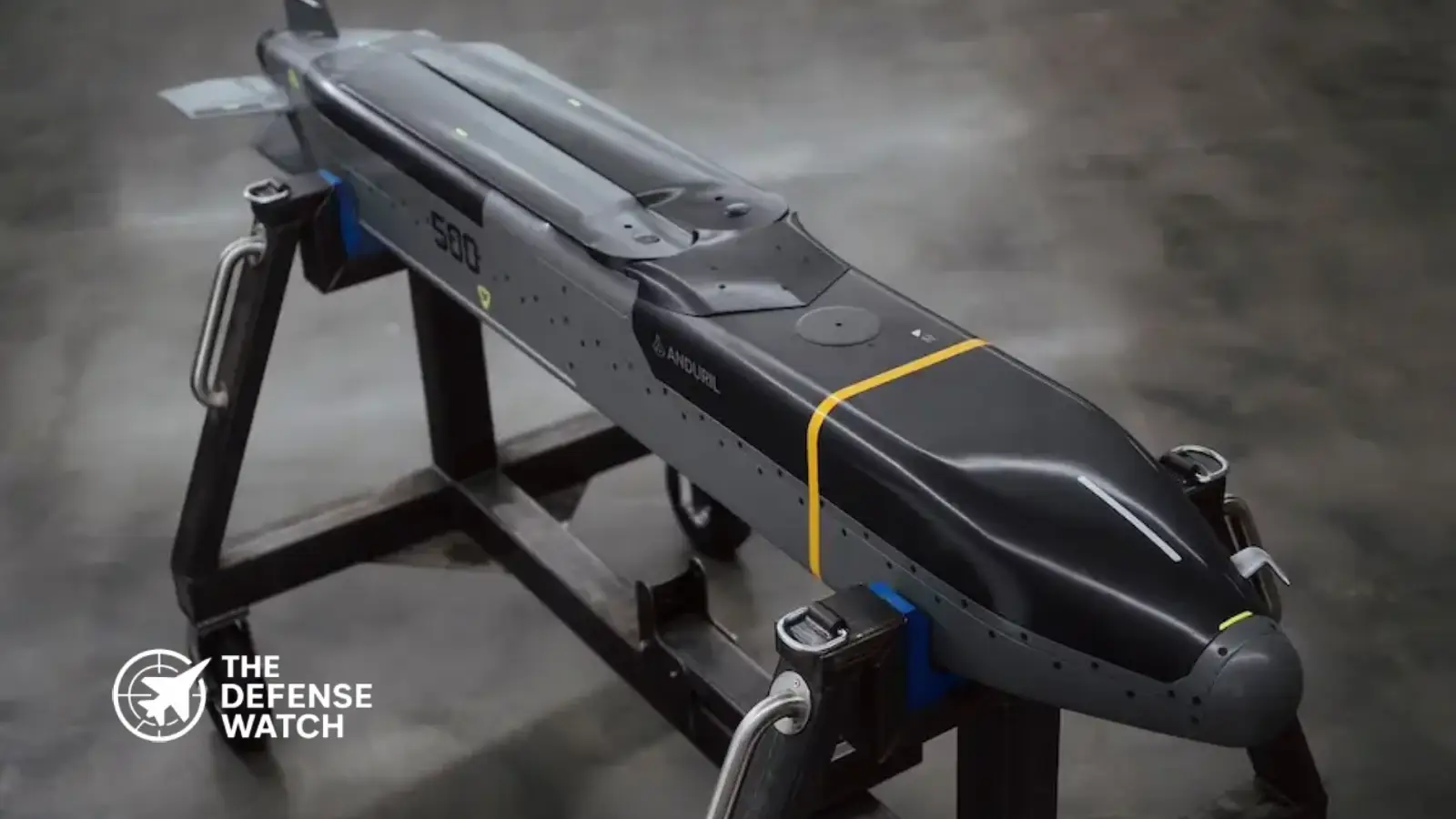
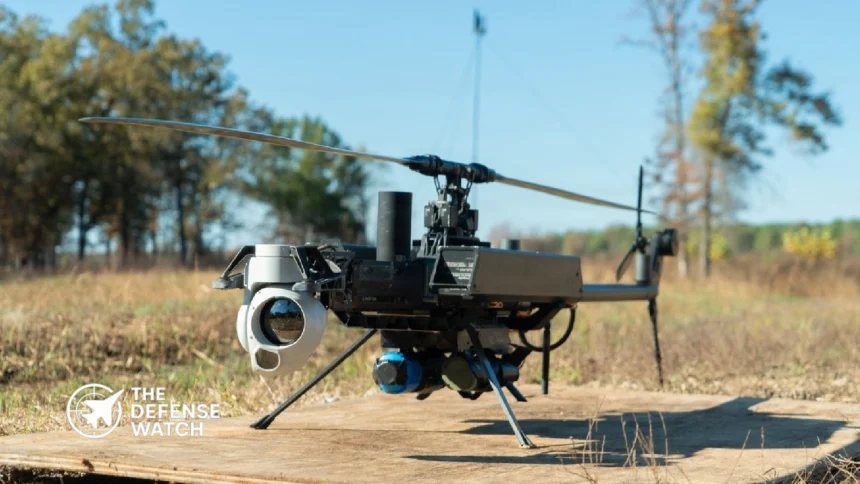
Army photographs accompanying the November report show an Anduril Ghost-X unmanned aircraft equipped with a payload delivery system during training at Fort Campbell on November 6.
The photograph establishes that Ghost-X was among the aircraft associated with the training demonstration. The Army report does not establish that every platform used during the exercise carried the same equipment.
The work is being conducted through the company’s Advanced Reconnaissance and Effects Systems (ARES) platoon, which focuses on unmanned reconnaissance, battlefield observation and additional capabilities for maneuvering infantry formations.
During the November training, unmanned aircraft conducted aerial reconnaissance and delivered smoke and explosive munitions in simulated combat scenarios.
This combination is relevant to infantry operations because reconnaissance and direct battlefield support can be integrated into the same small-unit drone capability.
Why the Army wants organic drone firepower
The 101st Airborne’s experimentation addresses an operational problem: infantry formations need faster access to information and additional effects without always depending on higher-level supporting units.
Traditionally, small reconnaissance drones have helped soldiers observe terrain, identify potential threats and monitor enemy activity. However, reconnaissance alone does not provide a direct means of influencing an engagement.
A drone equipped with a suitable payload can potentially support additional tasks, including delivering smoke to obscure movement or carrying an explosive munition for a specific battlefield requirement.
This does not mean small drones can replace artillery, mortars or other conventional fire-support systems. Their payload capacity, endurance, communications requirements and vulnerability to electronic warfare impose different operational constraints.
Instead, the Army’s approach is to expand the options available to infantry commanders at the tactical level.
The experience of the 101st also reflects lessons from the war in Ukraine, where widespread use of small unmanned aircraft has demonstrated their value for reconnaissance and attack missions.
Earlier experiments show a broader transformation
The November exercise is part of a wider effort within the 101st Airborne to integrate unmanned systems into infantry formations.
In June 2026, Col. Richard Ryan Bell, commander of the division’s 3rd Mobile Brigade Combat Team, discussed the brigade’s experience operating more than 500 drones during a training rotation at the Joint Readiness Training Center.
He also described the development of Purpose-Built Attritable Systems (PBAS), including the A101, a small unmanned aircraft developed by soldiers at Fort Campbell.
Bell emphasized that drones need to be available in sufficient quantities to become a routine part of combat operations rather than remain a limited specialist capability. He estimated that a brigade could require between 1,000 and 1,500 one-way attack drones per week during sustained combat operations.
Those figures reflect Bell’s assessment of requirements for his brigade’s operational concept, not an announced Army-wide procurement target. The June discussion also concerned a different brigade and should not be confused with the November DARK and BLADE demonstration.
Testing does not mean Army-wide fielding
The November exercise demonstrates that the 101st Airborne is moving beyond basic reconnaissance applications and testing ways to integrate drone-delivered effects into infantry training.
However, several important details remain undisclosed.
The Army has not announced a wider procurement decision for DARK or BLADE, a production schedule, the number of systems involved, or a timeline for operational deployment across other formations.
The technical performance of BLADE also remains unclear from publicly available information.
For now, the effort is best understood as an ongoing military experimentation and integration initiative. Its longer-term value will depend on reliability, ease of use, payload flexibility, training requirements and the ability to operate in environments where communications and satellite navigation are disrupted.
The 101st Airborne’s experience could provide useful lessons for other Army formations seeking to incorporate small unmanned aircraft into their infantry operations. But broader adoption will require further evaluation beyond a single live-fire training exercise.
Enjoying our coverage?
Make The Defense Watch a preferred source on Google to see more of our geopolitical and defense insights when relevant to you.