The U.S. Army has demonstrated a containerized robotic weapons concept in Germany, combining an unmanned ground vehicle, an autonomous drone swarm and remotely operated anti-armor weapons in a live-fire technology trial designed to support NATO’s eastern flank.
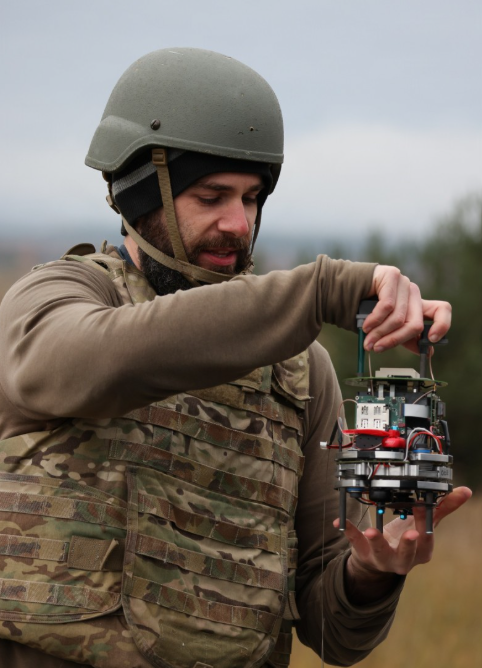
Conducted on November 12, 2026, at Grafenwoehr Training Area in Bavaria, the demonstration featured a R3NEGADE unmanned ground vehicle carrying a HIV3 swarm launcher that deployed 18 drones for an autonomous strike against a designated target.
The event was organized by the U.S. Army Combat Capabilities Development Command (DEVCOM) Armaments Center in cooperation with U.S. Army Europe and Africa and the 7th Army Training Command. It formed part of the Remote Rapid Response Autonomous Contingency Team (R3ACT) effort, which explores ways to store, position and rapidly deploy robotic systems from containerized locations.
The Army’s objective is to give ground commanders additional strike options without requiring soldiers to operate directly beside launch platforms or move into exposed positions.
Inside the Grafenwoehr demonstration
The R3NEGADE vehicle carrying the HIV3 launcher was one of several unmanned systems featured during the trial.
According to the Army’s account, the demonstration included a coordinated sequence involving aerial smoke deployment, drone launches and attacks against designated targets.
A TRV-150 unmanned aircraft first deployed smoke over a target area. A R3NEGADE vehicle subsequently launched multiple drones through its HIV3 swarm launcher. The aircraft conducted an autonomous strike during the demonstration.
Reporting by Stars and Stripes identified the launched group as an 18-drone swarm, providing a more specific figure than the Army’s initial public description.
The trial also featured several other configurations:
- R3NEGADE with HIV3: An unmanned ground vehicle carrying a launcher for deploying coordinated groups of small drones.
- R3NEGADE with Javelin: A second robotic vehicle equipped with a remotely operated weapon station carrying a Javelin missile system.
- TRV-150: An unmanned aircraft used to deploy smoke during the demonstration.
- FPV attack drones: First-person-view aircraft operated by soldiers from the 173rd Airborne Brigade, which conducted a separate strike.
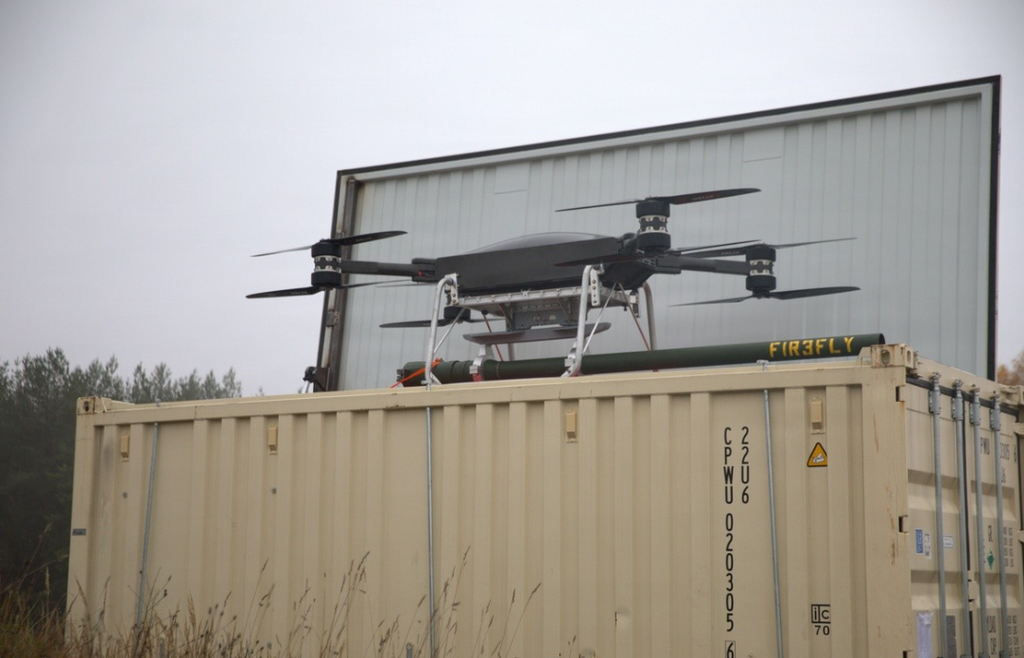
- TRV-400 with FIR3FLY: A larger unmanned aircraft displayed with a developmental anti-armor payload.
One distinction is important: the Army described the TRV-400 and FIR3FLY configuration as part of a static display. Its appearance should not be interpreted as evidence that the anti-armor payload completed a live firing during this event. Similarly, the Army documented the Javelin-equipped R3NEGADE configuration but did not report a Javelin missile launch.
R3ACT explores containerized robotic warfare
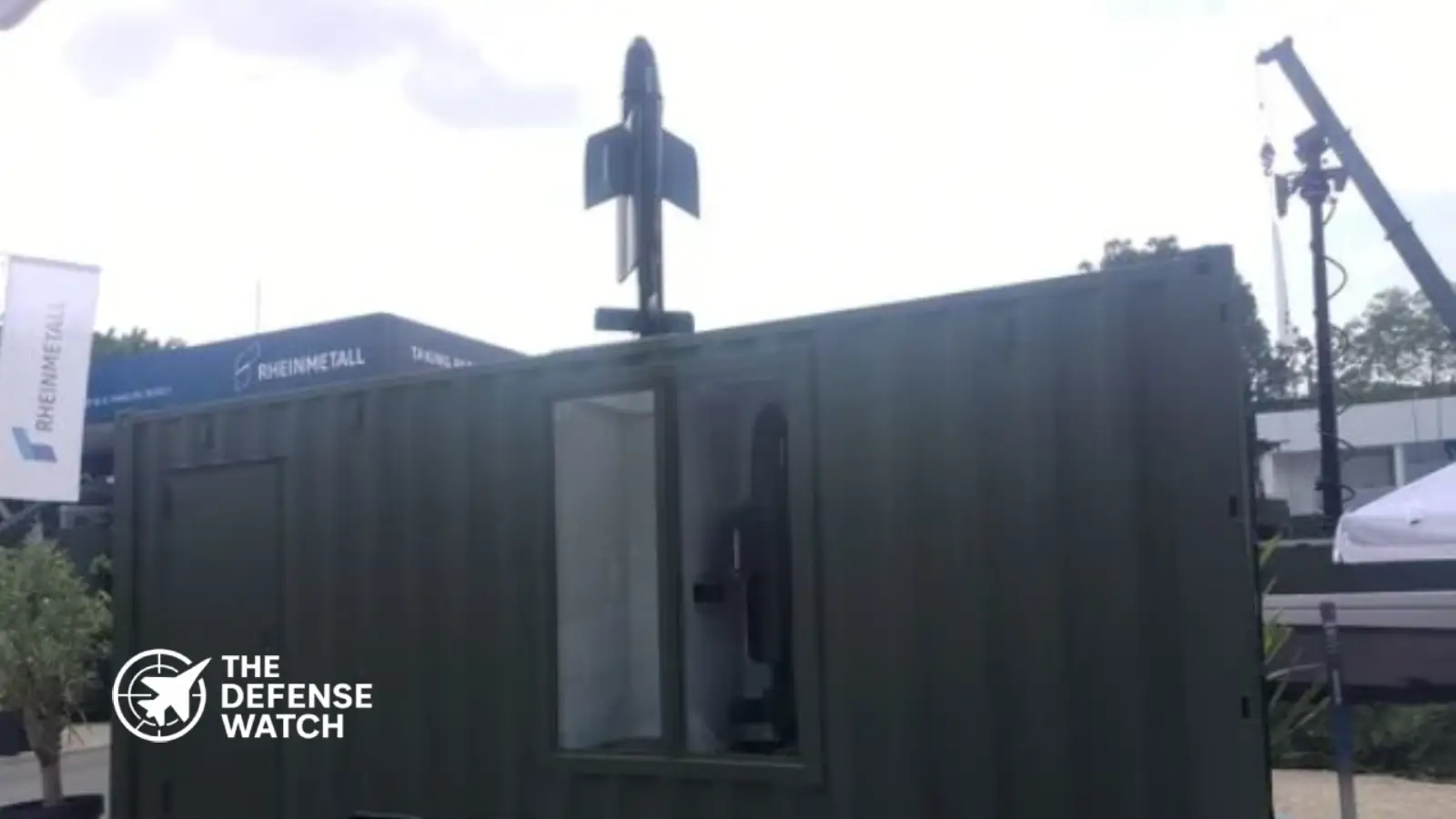
The central idea behind R3ACT is to position modular unmanned platforms inside transportable containers so they can be stored near operational areas and deployed when required.
Rather than depending entirely on conventional forward operating bases or permanently positioned weapons crews, the concept explores how robotic ground vehicles and aerial systems could be distributed across different locations.
The containers would provide a means of storing and transporting the equipment. Once deployed, unmanned ground vehicles could carry different mission payloads, while aerial platforms could be released to conduct reconnaissance, smoke deployment or strike missions.
Alex Tomosieski, R3ACT program manager, explained that the effort is intended to give commanders the ability to pre-position modular air and ground platforms and deploy them where needed.
The Army is also examining the use of commercially available technologies alongside existing military weapons and equipment. This approach could offer opportunities to increase the number of available unmanned platforms without relying exclusively on expensive, purpose-built military systems.
However, the demonstration does not establish that R3ACT has entered operational service. The Army has not publicly disclosed a procurement decision, deployment schedule, production target or complete cost assessment for the concept.
Why the Army is combining drone swarms with ground robots
The combination of unmanned ground vehicles and coordinated aerial drones addresses an increasingly important problem for modern land forces: how to generate strike effects while limiting the exposure of personnel and expensive combat platforms.
The war in Ukraine has demonstrated how relatively inexpensive drones can threaten armored vehicles, artillery positions, logistics routes and personnel. Persistent aerial surveillance and the widespread use of first-person-view attack drones have also made movement and concentration more difficult on exposed battlefields.
For NATO forces operating along the alliance’s eastern flank, these developments have increased the importance of dispersion, concealment, rapid deployment and counter-drone measures.
The R3ACT concept approaches the problem from the offensive side. Instead of relying exclusively on soldiers operating individual drones from forward positions, commanders could potentially employ remotely positioned robotic launch platforms to release multiple aircraft against designated targets.
A coordinated swarm could also create several simultaneous threats, potentially complicating an adversary’s ability to identify, track and engage individual aircraft.
However, launching multiple drones does not automatically establish that they can defeat an integrated air defense system. Their effectiveness would depend on factors including communications reliability, navigation, target identification, electronic warfare resistance, coordination and the defensive capabilities of the opposing force.
The Army has not released detailed performance data covering the HIV3 system’s communications architecture, individual drone specifications, engagement accuracy or resistance to electronic interference.
Consequently, the 18-drone demonstration is evidence of a tested launch and autonomous strike concept, not proof of effectiveness against a sophisticated military opponent.
NATO’s eastern flank and the Army’s changing operational approach
The Grafenwoehr trial also supports the Army’s Eastern Flank Deterrence Initiative, which focuses on strengthening NATO’s ability to deter potential aggression along its eastern approaches.
Germany provides an important training and logistics location for U.S. forces operating in Europe. Grafenwoehr Training Area regularly hosts multinational exercises and military technology evaluations, making it a relevant environment for testing systems intended for European operations.
The Army linked the demonstration to its October 2026 How the Army Fights framework, particularly its Strike and Endurance elements.
These priorities are relevant to the R3ACT concept.
Strike concerns the ability to deliver effects against opposing forces, while Endurance involves maintaining combat effectiveness and sustaining operations. Containerized robotic systems could contribute to both by allowing strike assets to be positioned in advance and distributed across multiple locations.
The approach could also reduce the need to concentrate personnel and equipment around a limited number of forward launch positions.
For NATO, the ability to distribute unmanned capabilities across different formations could become increasingly important as alliance members expand their drone inventories and develop common approaches to autonomous systems.
Nevertheless, interoperability remains a significant consideration. Different NATO forces operate equipment with varying communications systems, command structures and technical standards. Integrating autonomous platforms into multinational operations would require reliable information exchange, compatible control systems and clear command authority.
The Grafenwoehr demonstration provides an opportunity to evaluate these issues, but the Army has not published detailed interoperability results from the trial.
The next challenge is operational validation
The R3ACT demonstration illustrates how the U.S. Army is exploring the combination of commercially derived drone technology, robotic ground vehicles and established weapons systems.
The approach offers potential advantages in deployment flexibility and personnel protection. It could also provide commanders with additional options for distributing strike assets across a contested operational area.
But moving from a controlled technology demonstration to a deployable military capability requires more than successfully launching a group of drones.
The Army will need to assess how these systems perform under degraded communications, electronic interference, adverse weather, difficult terrain and sustained operational use. It will also need to address ammunition supply, maintenance, operator training, software security and the ability to replace damaged or expended platforms.
The question of human control over autonomous engagements will be equally important, particularly when systems are expected to identify or engage targets without continuous direct operator input.
For now, Grafenwoehr has demonstrated a combination of robotic launch platforms, aerial drones and existing weapons in a single experimental framework. Whether the R3ACT approach can deliver a reliable, affordable and interoperable capability for NATO formations will depend on the results of further testing and Army procurement decisions.