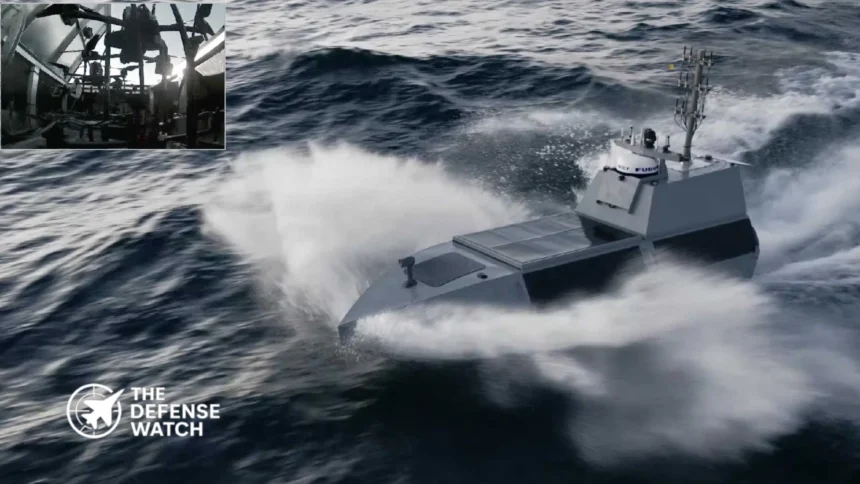
U.S. defense companies Seasats and Neros have demonstrated the launch of first-person-view (FPV) strike drones from an unmanned surface vessel, combining maritime surveillance and persistent sea operations with an airborne attack capability.
The demonstration integrated Neros’ Archer 10-inch Strike and Archer AI drones with Seasats’ Quickfish unmanned surface vessel (USV). The companies announced the partnership on November 10, 2026, and said they had completed multiple successful launches at sea using Quickfish’s enclosed, modular payload compartment.
The arrangement gives an unmanned vessel the ability to carry and launch several expendable aerial systems without requiring a crewed ship to remain near the operating area. Satellite connectivity and onboard communications relays support remote control of both the surface vessel and its aircraft.
The demonstration is relevant to a growing naval interest in combining unmanned platforms rather than treating aerial and maritime drones as separate systems. It also provides another potential way to extend the reach of small maritime surveillance vessels.
Quickfish becomes a launch platform for aerial strike drones
Quickfish is part of Seasats’ unmanned surface vessel family. The company describes it as a high-speed maritime platform designed for persistent operations, modular payload integration and remote control.
According to Seasats’ published specifications, Quickfish can reach speeds exceeding 40 knots, has an advertised maximum range exceeding 550 nautical miles and supports multi-week operations at sea. Its payload capacity is listed at approximately 500 pounds.
The Neros integration uses an enclosed payload bay to accommodate six Archer drones, according to the companies’ published demonstration information reported by MarineLink.
The compartment protects the aerial systems during maritime operations and allows them to be launched when required. The vessel itself remains a reusable platform rather than becoming an expendable weapon.
This distinction separates the concept from explosive unmanned surface vessels designed to collide with or detonate against a target. Quickfish is intended to operate as a carrier and maritime response platform that can return for maintenance, refueling and payload replenishment.
The companies have not publicly disclosed a customer-specific configuration, procurement order or operational deployment schedule for the integrated system.
Two Archer variants provide different capabilities
The aerial component consists of two Neros products, the Archer 10-inch Strike and Archer AI.
Archer 10-inch Strike
A kinetic-enabled FPV platform designed for precision strike missions. Neros lists a maximum payload capacity of 7 pounds (3.18 kg) and a maximum advertised speed of 80 mph without payload.
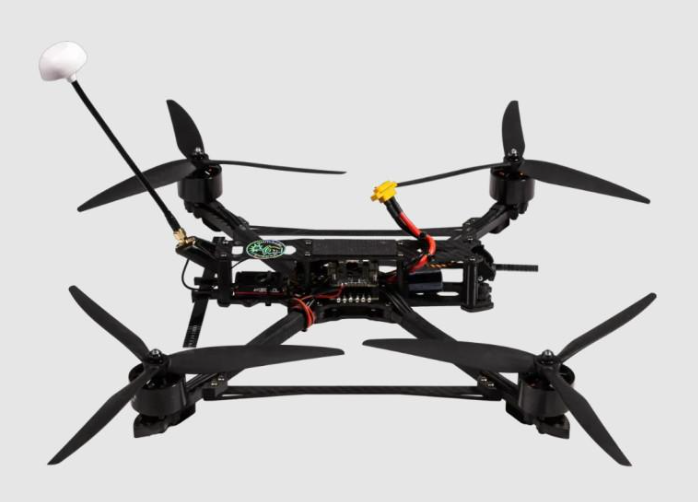
Archer AI
An autonomous-capable variant with onboard computing, GPS-denied position-hold functions and terminal guidance designed to continue toward an operator-selected target if communications are interrupted.
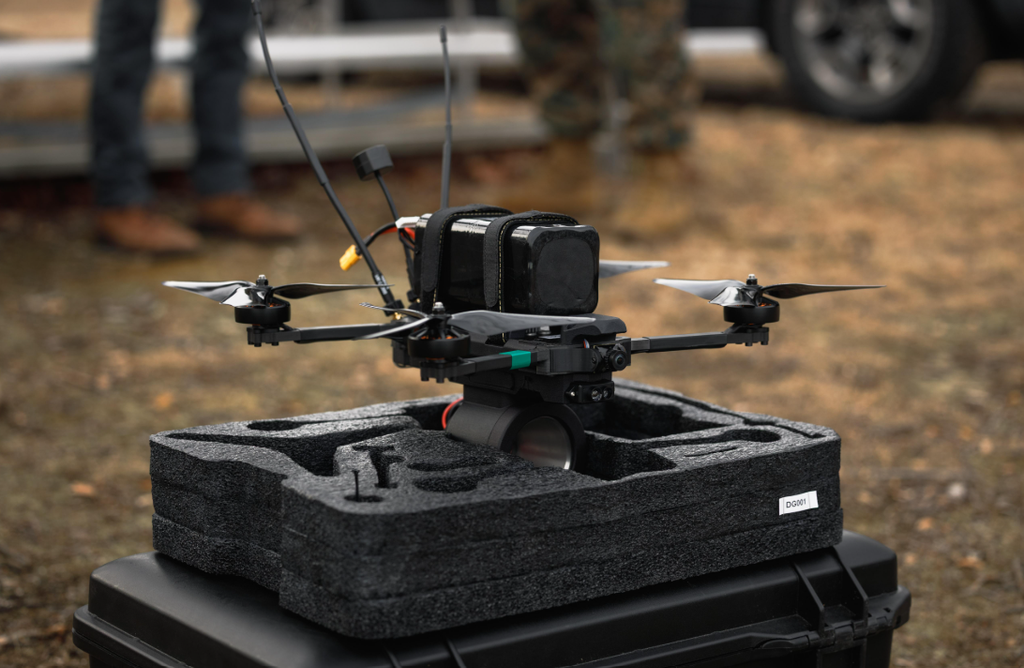
The two systems share a common emphasis on compact FPV architecture, modular payload compatibility and operation in electronically contested environments.
Neros advertises dual-band, electronic-warfare-hardened control links for both platforms. Archer AI adds onboard computing for autonomous functions, while retaining an operator-controlled flight option.
These features could be relevant in maritime environments where communications may be affected by distance, interference or the availability of satellite and radio links. However, the companies have not published independent test results demonstrating the system’s performance against sophisticated naval electronic warfare defenses.
The advertised drone performance figures also depend on payload configuration. Maximum range and endurance figures published for unloaded aircraft should not be treated as representative of fully loaded strike missions.
Why the combination matters for naval operations
Traditional naval aviation depends on aircraft carriers, amphibious assault ships, helicopters or other platforms capable of supporting aerial operations. Small unmanned surface vessels offer another option for carrying limited aerial payloads into maritime areas without placing a crew aboard the launch platform.
The Seasats-Neros arrangement combines two different operational functions:
- Maritime persistence: Quickfish can remain at sea for extended periods and provide a mobile platform for unmanned operations.
- Aerial response: Archer drones provide an additional airborne capability that can be deployed from the surface vessel.
- Remote operation: Satellite connectivity and onboard communications relays allow operators to control the system remotely.
- Modular payload integration: The enclosed compartment allows the vessel to carry multiple aerial systems rather than relying on a single aircraft.
An important feature is the separation between the carrier and the expendable payload.
If an Archer drone is lost during a mission, the Quickfish platform does not necessarily have to be sacrificed. It can potentially retain its maritime functions and return for replenishment, assuming the vessel remains operational.
This creates a different cost and operational model from one-way attack boats. It also allows operators to distribute unmanned capabilities across multiple platforms rather than concentrating every mission on a crewed warship.
However, the presence of an aerial strike capability does not automatically make Quickfish an independent naval combat system. Its effectiveness would depend on target detection, identification, communications, mission authorization, navigation reliability and the ability to operate under hostile conditions.
The companies have not disclosed evidence establishing how the integrated platform performs in a contested naval environment.
Neros already has a U.S. military fielding pathway
The partnership also builds on Neros’ existing relationship with U.S. military organizations.
In September 2025, the U.S. Marine Corps issued guidance for fielding Neros Archer systems through an initiative funded by the Defense Innovation Unit (DIU). The Marine Corps Warfighting Laboratory was scheduled to begin fielding the systems in September 2025 to help units develop operating procedures and training for small attack drones.
Neros also announced in November 2025 that it had been selected as a primary manufacturer for the U.S. Army’s Purpose-Built Attritable Systems program. The company’s announcement identified Archer and Archer Strike variants among the systems intended for the program.
These developments establish that Archer is not simply a commercial drone concept being adapted for maritime use. The family has an existing military procurement and fielding context, although that does not establish that the Quickfish integration has been selected by the U.S. Navy or any other military customer.
For Seasats, the integration adds an offensive payload option to a platform already marketed for maritime surveillance, border protection and other persistent maritime missions.
The combination could interest naval organizations seeking ways to distribute reconnaissance and limited strike capabilities across smaller, remotely operated vessels.
The main challenge is integration, not simply launching a drone
Launching an FPV drone from a moving vessel introduces additional operational considerations.
Maritime motion, wind, saltwater exposure and changing weather conditions can complicate aircraft handling and communications. The launch platform must also maintain reliable control links while operating at a distance from its operators.
Satellite connectivity helps extend the control architecture beyond conventional line-of-sight operations, but it does not eliminate dependence on communications infrastructure. Satellite availability, latency, interference and onboard relay performance remain relevant factors.
There are also questions about target identification and coordination. An unmanned vessel carrying strike drones needs reliable information about what is happening around it. Surveillance sensors, external intelligence sources and human oversight would remain important to prevent misidentification and ensure appropriate use of force.
The companies have demonstrated that Quickfish can carry and launch Archer drones at sea. They have not publicly established the system’s performance in operationally representative combat conditions, including sustained electronic warfare exposure, adverse weather or coordinated attacks against defended maritime targets.
That distinction matters when assessing how close the technology is to operational deployment.
A different approach to distributing maritime strike capability
The Seasats-Neros demonstration reflects a wider shift toward combining unmanned surface and aerial systems into interconnected maritime networks.
Rather than relying exclusively on large warships to provide aerial coverage, naval forces could potentially use smaller unmanned vessels as mobile launch points for surveillance and limited strike missions.
The concept is particularly relevant to maritime areas where persistent monitoring is important but continuous crewed patrols are expensive or difficult to sustain.
For now, the Quickfish-Archer combination remains a demonstrated industry integration rather than a confirmed U.S. Navy acquisition program. No public announcement has established a contract for the combined system, an operational deployment or a defined production requirement.
Its longer-term significance will depend on whether the companies can move beyond successful launch demonstrations and establish reliable performance, affordable replenishment and practical integration into naval command-and-control networks.