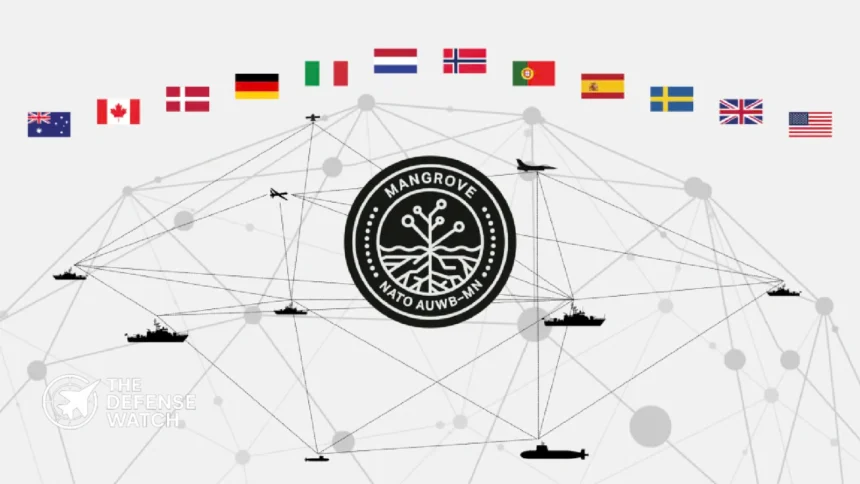
NATO has completed an important preparatory step toward connecting allied submarines, autonomous underwater vehicles, maritime sensors and other naval assets through a common digital mission network. The Saab-led MANGROVE consortium has finished the first phase of the Allied Underwater Battlespace Mission Network (AUWB-MN), establishing the architectural and technical foundations for multinational underwater operations.
Saab announced the milestone on November 17, 2026. The work focuses on common technical standards, security principles and governance arrangements intended to allow different national systems to exchange information without requiring separate integrations for every combination of platforms.
The project addresses a longstanding challenge in anti-submarine warfare and maritime surveillance: NATO allies operate different platforms, sensors, communications systems and command structures, making the exchange of underwater operational information difficult.
Although Phase 1 establishes the foundations for the network, it does not mean that NATO has already fielded a fully operational, Alliance-wide underwater communications system.
A Common Digital Framework for Underwater Operations
The AUWB-MN is intended to provide a shared framework through which participating nations can exchange information and coordinate crewed and uncrewed maritime assets.
Under the existing approach, integrating equipment from different countries can require individual technical interfaces and bespoke software arrangements. This can complicate multinational operations, particularly when several autonomous platforms and sensor networks need to contribute information to a common operational picture.
MANGROVE aims to reduce this fragmentation by establishing a reference architecture and common security principles.
The proposed network is designed to support information exchange between systems operating above, on and below the water. Its intended users include conventional naval platforms and maritime uncrewed systems.
This distinction matters because underwater operations present different communication challenges from conventional naval networking.
Radio-frequency communications do not propagate effectively through seawater, while acoustic communications face limitations involving bandwidth, latency, environmental conditions and operating distance. Underwater platforms therefore cannot simply rely on the same communication methods used by aircraft and surface ships.
A common architecture can help coordinate how information is collected, transferred, processed and shared across different systems, even when individual platforms use different technologies.
However, Saab has not disclosed the specific communication protocols, encryption standards, network architecture or technical performance parameters established during Phase 1.
Why NATO Needs Greater Underwater Interoperability
The requirement for a common underwater mission network is closely connected to NATO’s expanding focus on anti-submarine warfare, seabed security and the protection of critical maritime infrastructure.
Submarine operations, underwater surveillance and the monitoring of subsea infrastructure require information gathered from multiple sources. These can include crewed submarines, surface vessels, maritime patrol aircraft, fixed underwater sensors and autonomous vehicles.
Without effective interoperability, information collected by one national system may not be readily available to another allied force.
This can create delays in building a shared understanding of underwater activity, particularly during multinational operations covering large maritime areas.
NATO’s Anti-Submarine Warfare Barrier Smart Defence Initiative provides the institutional framework behind the AUWB-MN project. The initiative seeks to strengthen allied anti-submarine warfare capabilities through multinational cooperation and improved use of emerging technologies.
The project also forms part of NATO’s wider Digital Ocean Initiative.
The Alliance’s 2025 Secretary General’s Annual Report identifies the AUWB-MN as an important component of its maritime modernization efforts. It describes the initiative as part of a planned secure underwater digital backbone supporting command and control and information sharing.
The report specifically connects the project with capability requirements involving anti-submarine warfare, critical undersea infrastructure and seabed warfare.
For NATO, the objective is not simply to connect more underwater vehicles. It is to ensure that information collected by different national assets can contribute to coordinated maritime operations.
From Architecture to Testing: What Comes Next?
The completion of Phase 1 is an intermediate development milestone rather than the end of the programme.
The next stage will focus on establishing a Test and Reference Environment (TRE). This environment is intended to provide a controlled framework for evaluating how different platforms and systems comply with the proposed architecture.
According to DSEI Gateway reporting published October 13, 2026, NATO’s second phase is expected to run for approximately three years.
The report also outlined several planned milestones:
- Reference architecture: The final architecture was expected to be released by the end of October 2026.
- Industry access: The architecture is expected to become available to industry in 2027.
- Operational experimentation: A presentation of the architecture is scheduled for July 2027 during NATO’s Task Force X-Arctic exercise.
- Test environment: The second phase will progressively develop the environment for testing and validating interoperability.
David Burton, director of NATO’s Anti-Submarine Warfare Smart Defence Initiative, told DSEI Gateway that testing and validation are essential because common standards need to be assessed before they can be relied upon in operational environments.
The planned test environment could also help manufacturers assess whether new maritime systems comply with NATO’s requirements before participating in multinational exercises or operations.
This is particularly relevant as allied navies introduce more autonomous underwater and surface platforms. Without common integration requirements, expanding fleets of uncrewed systems could create additional command, control and data-sharing challenges.
Saab Leads a Multinational Industrial and Academic Team
The MANGROVE consortium brings together defense companies, maritime technology specialists and academic researchers.
According to Saab’s November 17 announcement, the participating organizations include:
- Saab, consortium lead
- CETENA, part of the Fincantieri Group
- IDS, part of the Fincantieri Group
- FlySight
- GraalTech
- Miraya
- Saab UK
- S2IX
- University of Plymouth
The consortium combines expertise in naval systems, maritime technology, digital architecture and research.
The University of Plymouth’s participation is particularly relevant to the project’s academic and technical dimension. The university previously identified maritime cybersecurity and digital twinning as areas of expertise contributing to the initiative.
Saab’s involvement also builds on its existing position in naval combat systems, underwater technology and maritime defense.
The company was selected to lead the NATO project in July 2025, with work formally beginning on September 1 that year. The original project announcement identified 12 sponsoring NATO nations, led by the United Kingdom, alongside partner Australia.
The multinational sponsorship is important because interoperability depends on participating nations adopting common requirements rather than developing isolated national solutions.
What the Network Could Mean for Anti-Submarine Warfare
The operational value of AUWB-MN will depend on how effectively it connects distributed maritime assets and supports the exchange of useful information.
Modern anti-submarine warfare increasingly involves multiple platforms working together rather than relying exclusively on individual submarines or surface ships.
A network connecting underwater sensors, autonomous vehicles, surface vessels and airborne surveillance assets could help allied forces combine information from different parts of the maritime environment.
Potential benefits include:
Improved maritime situational awareness: Information from different national sensors could contribute to a more comprehensive operational picture.
Better coordination of autonomous systems: Common standards could make it easier to integrate uncrewed underwater and surface vehicles into multinational missions.
Reduced integration requirements: A shared architecture could reduce the need for separate technical interfaces whenever a new platform joins a mission network.
Stronger infrastructure monitoring: Interoperable sensor networks could support surveillance of important subsea infrastructure, including telecommunications cables and other critical maritime assets.
These are intended benefits rather than demonstrated operational outcomes. The completion of Phase 1 does not establish that the network has achieved these capabilities in deployed conditions.
There are also technical and operational challenges to resolve. Underwater communication constraints, cybersecurity, data integrity, interoperability testing and national security restrictions will all influence how effectively the architecture works.
Nations will also need to determine how sensitive information is shared, who controls access and how different national command systems interact.
These issues are particularly important when underwater surveillance information involves classified submarine movements or other sensitive naval activities.
NATO’s Wider Push Toward an Integrated Maritime Force
MANGROVE is part of a broader NATO effort to increase the use of autonomous maritime systems and improve the protection of critical undersea infrastructure.
The Alliance has already been experimenting with uncrewed maritime technologies through initiatives such as Task Force X Baltic.
According to NATO’s 2025 Annual Report, more than 60 uncrewed systems were deployed across the Baltic Sea during a three-week operational demonstration in June 2025. The activity involved NATO Allied Command Transformation, the United States and France, with the systems evaluated for their ability to monitor potential threats and improve maritime situational awareness.
These activities illustrate the growing role of autonomous platforms in maritime surveillance and security.
However, deploying additional vehicles and sensors is only part of the requirement. Their information must also reach the appropriate command structures and be usable alongside data collected by other national assets.
That is the problem AUWB-MN is intended to address.
For NATO, the eventual value of the project will depend on whether its common architecture can move beyond technical documentation and become a practical standard used across allied maritime operations.
The next three years of testing and validation will therefore be important in determining whether MANGROVE can translate its initial architectural work into a functioning multinational capability.