German defense electronics manufacturer HENSOLDT plans to reach €10 billion in annual revenue by 2035 while accelerating production of its TRML-4D air surveillance radar. The company says it has already increased manufacturing capacity for the radar fivefold over the past three years and intends to double it again within the next two years.
The targets were announced on November 10, 2026, during HENSOLDT’s Capital Markets Day in London. The company also reaffirmed its ambition to generate €6 billion in annual revenue by 2030, reflecting expectations of sustained demand for European military sensors, air defense equipment and integrated electronic systems.
The announcement combines two important priorities for the German manufacturer: expanding its industrial capacity to fulfill existing orders and positioning itself for major European defense programs expected to shape procurement during the 2030s.
Hensoldt’s growth strategy extends beyond radar manufacturing
HENSOLDT’s €10 billion revenue ambition represents a substantial increase from its reported 2025 revenue of approximately €2.46 billion.
For 2026, the company expects revenue of around €2.8 billion, with an adjusted EBITDA margin of approximately 19%. It also expects annual revenue growth of 15% to 20% in both 2027 and 2028.
The company expects profitability to improve alongside sales. Its adjusted EBITDA margin target is approximately 21% by 2030, supported by higher production volumes, operational efficiencies and an expanding services business.
HENSOLDT identifies five main growth drivers:
- Increasing European and international defense spending.
- Higher manufacturing capacity and improved delivery performance.
- Expansion of its sensors, software and systems integration portfolio.
- Participation in major military aviation and next-generation platform programs.
- Growth in international sales and long-term technical support services.
Its order position provides an important starting point. HENSOLDT reported an order backlog of €10.4 billion as of September 30, 2026, and expects that figure to reach approximately €11.2 billion by the end of the year.
The company also disclosed an unweighted business opportunity pipeline of approximately €110 billion covering 2027 to 2032. This is a pipeline of potential business, not a confirmed order book or guaranteed future revenue.
TRML-4D production becomes a central industrial priority
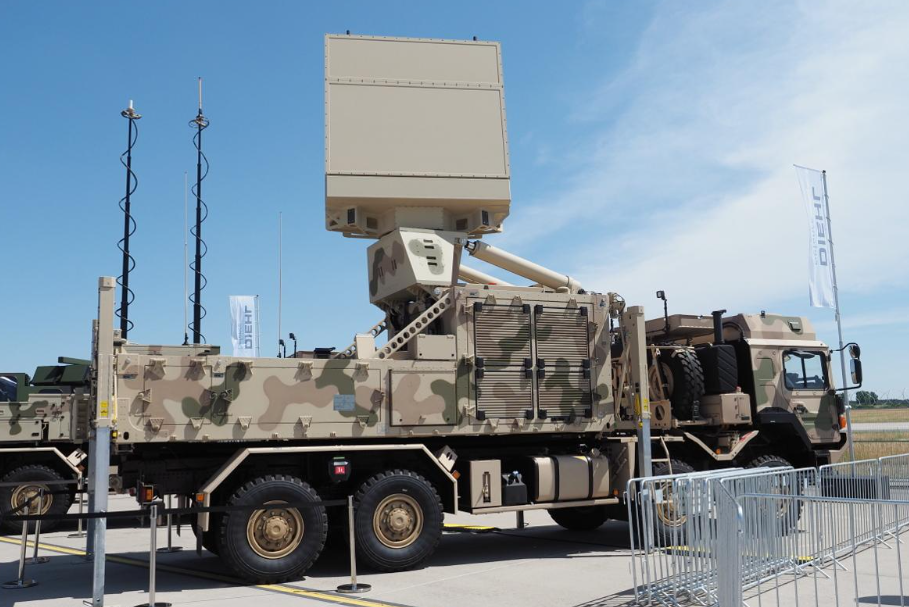
The TRML-4D is one of HENSOLDT’s important products within the ground-based air defense market.
It is a mobile, C-band active electronically scanned array (AESA) radar designed to detect, track and classify airborne threats. Its intended target set includes aircraft, helicopters, cruise missiles and unmanned aerial vehicles.
According to HENSOLDT, the radar can track more than 1,500 targets simultaneously. The manufacturer lists tracking ranges exceeding 120 kilometers for fighter aircraft and 60 kilometers for supersonic missiles. These are manufacturer-published performance figures, not independently established operational results.
The radar is particularly relevant to the IRIS-T SLM air defense system developed by Diehl Defence.
Within this system, the TRML-4D provides surveillance and target acquisition, supporting the command-and-control element and missile launchers. The combination allows air defense units to identify potential threats and coordinate engagements.
The system’s relevance has increased as European armed forces seek additional protection against cruise missiles, aircraft and drones.
HENSOLDT’s production plans are therefore connected not only to its corporate expansion but also to the wider requirement for additional ground-based air defense equipment.
New manufacturing facilities support higher output
The planned increase in TRML-4D capacity forms part of a wider industrial expansion.
HENSOLDT says it has increased its TRML-4D manufacturing capacity fivefold over the previous three years. A further doubling is planned over the next two years.
The company has also expanded its industrial infrastructure by approximately 49,000 square meters since 2023. Another 46,000 square meters of facilities are planned from 2027.
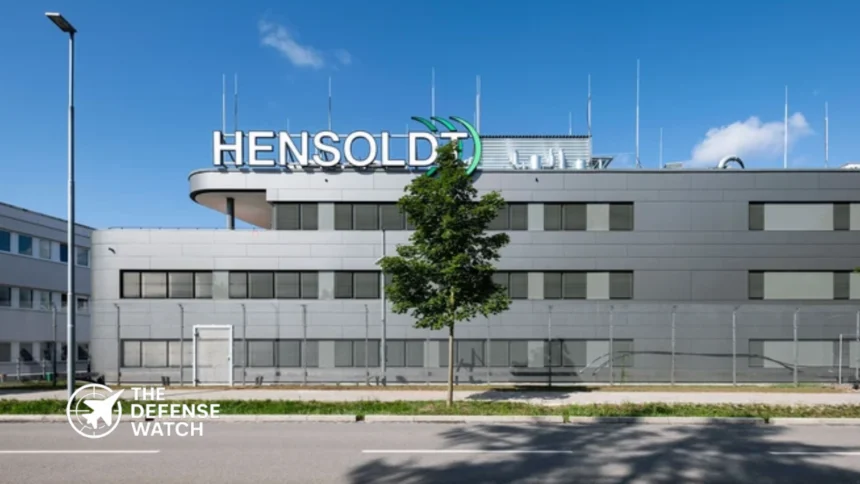
One important addition is a new air defense radar production site scheduled to begin series production in the second quarter of 2027. HENSOLDT also plans a service center for its optronics business.
Earlier reporting by Janes provides additional information about the company’s production plans in Ulm, Germany.
According to Janes, HENSOLDT intends to manufacture both TRML-4D and Spexer radar systems at the new Ulm facility. A company spokesperson told the publication that the site is expected to produce approximately 1,000 radars annually from 2027.
That figure refers to the expected output of the facility across the radar production program. It should not be interpreted as 1,000 TRML-4D units specifically.
The expansion also addresses a problem facing several European defense manufacturers: a growing order backlog does not automatically translate into faster deliveries.
Radar manufacturing requires specialized electronic components, skilled labor, testing infrastructure and reliable suppliers. Increasing production capacity therefore involves more than adding factory floor space.
HENSOLDT says it is also improving manufacturing efficiency, strengthening supply-chain resilience and adjusting its level of vertical integration.
Why the TRML-4D matters to European air defense
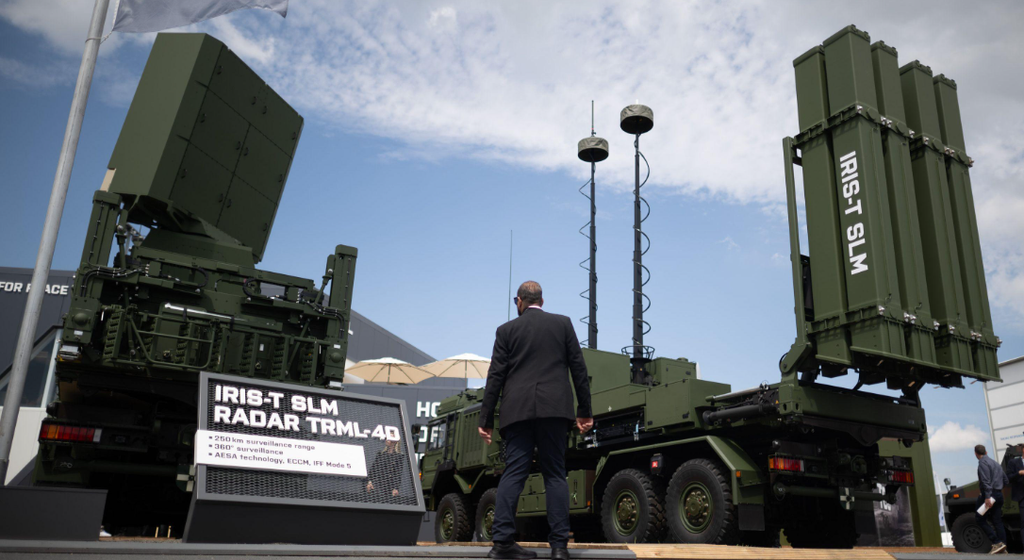
European countries are investing in ground-based air defense following Russia’s full-scale invasion of Ukraine and the increased attention given to missile and drone threats.
The TRML-4D occupies an important position in this market because it provides the radar component for systems such as IRIS-T SLM.
Diehl Defence describes IRIS-T SLM as a medium-range air defense system designed to protect infrastructure, military installations and other high-value targets. Its architecture combines a radar, a tactical operations center and missile launchers.
The radar’s production capacity can consequently influence the availability of complete air defense units, although it is only one part of the procurement and delivery process.
Missile production, launcher manufacturing, command systems, trained personnel and maintenance support also determine how quickly an air defense capability can enter service.
For European governments, additional radar output could help reduce one potential industrial bottleneck as procurement programs expand.
However, HENSOLDT has not disclosed how many additional TRML-4D systems will be delivered to individual customers as a direct result of the planned capacity increase.
Workforce and software expansion support the 2035 ambition
The company’s strategy also extends beyond hardware manufacturing.
HENSOLDT expects its workforce to increase from approximately 10,600 employees in 2026 to around 14,000 by 2029. Most of its new recruitment is intended to support production, engineering and customer services.
Another priority is MDOcore, the company’s software suite for multi-domain operations.
HENSOLDT says a prototype was demonstrated at the ILA air show in June 2026 and subsequently tested during a NATO exercise. The company is negotiating prototype arrangements with three customers and expects its first customer orders from 2027.
The software strategy reflects an effort to expand beyond individual radar and sensor sales. By combining sensors, software integration and lifecycle support, the company wants to generate revenue throughout the operational life of military platforms.
HENSOLDT expects its services business to account for approximately 25% of group revenue over the longer term. It also aims to generate around half of its revenue from customers outside Germany.
Europe remains a central market, while the company has identified India and Canada as additional areas for international expansion.
The challenge is converting demand into deliveries
HENSOLDT’s financial performance indicates that demand is already translating into higher sales and production activity.
Reuters reported on November 5 that the company’s revenue increased 21% to €1.86 billion during the first nine months of 2026. Its order intake rose 77% to €3.56 billion, while its order backlog reached a record €10.37 billion.
Higher deliveries of TRML-4D radars used in the IRIS-T air defense system contributed to growth in its Sensors division.
Nevertheless, the company’s longer-term target depends on maintaining this growth while expanding its industrial capacity.
The €10 billion figure is a corporate revenue ambition rather than a guaranteed outcome. Its achievement will depend on future defense budgets, procurement decisions, export opportunities, manufacturing performance and the timing of major military programs.
For now, the planned TRML-4D expansion provides a measurable part of that strategy. HENSOLDT is seeking to increase the supply of a radar already used in European air defense systems while preparing its production network for a larger market.
The next important indicators will be whether the new manufacturing facilities begin series production on schedule, whether radar output increases as planned and how quickly the company converts its substantial order backlog into completed deliveries.