France is expanding its planned next-generation ground-based air defense fleet with an order for four additional SAMP/T NG systems, bringing the total number of sections ordered for the French Air and Space Force to 12.
The French Directorate General of Armaments (DGA) announced the procurement on October 21, 2026, confirming that the contract was awarded to Eurosam through the Organisation for Joint Armament Cooperation (OCCAR). Eurosam is a joint venture involving MBDA and Thales. Neither the DGA nor OCCAR disclosed the value of the additional order.
The procurement expands France’s planned inventory of a system designed to counter aircraft, cruise missiles, drones and certain ballistic missile threats. It also adds to Europe’s effort to field more capable ground-based air defenses as military planners reassess the protection of air bases, military infrastructure and other critical sites.
The immediate significance is the increase in the number of systems France intends to acquire. The new order does not, by itself, establish how quickly all 12 sections will become operational.
France expands its planned SAMP/T NG fleet to 12 sections
According to the French defense ministry, a first SAMP/T NG system was delivered in early 2026, while 10 sections are scheduled for delivery before the end of 2030. The additional order brings the planned French fleet to 12 sections, although the government has not publicly specified individual delivery dates for all four newly ordered units.
The distinction between procurement and operational availability matters. A delivered system must still complete the relevant integration, testing and acceptance activities before it can be counted on for its intended operational role.
France’s acquisition is part of a wider modernization effort intended to replace or improve existing ground-based air defense capabilities. The original SAMP/T, known as Mamba in French service, provides a medium-range ground-based defense capability against several types of aerial threats.
SAMP/T NG introduces updated radar and engagement systems, alongside compatibility with newer Aster interceptors. The program is being managed by OCCAR on behalf of France and Italy, with the two countries pursuing national configurations of the same broader system family.
What the new SAMP/T NG systems will include
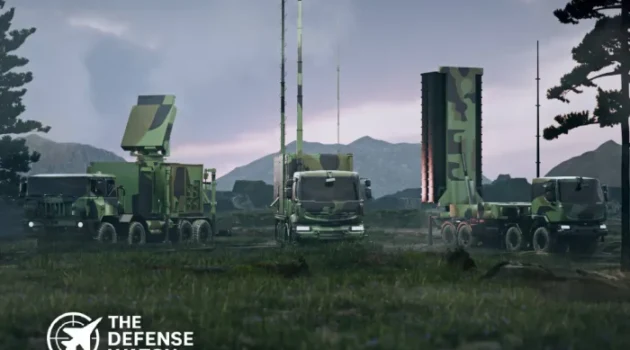
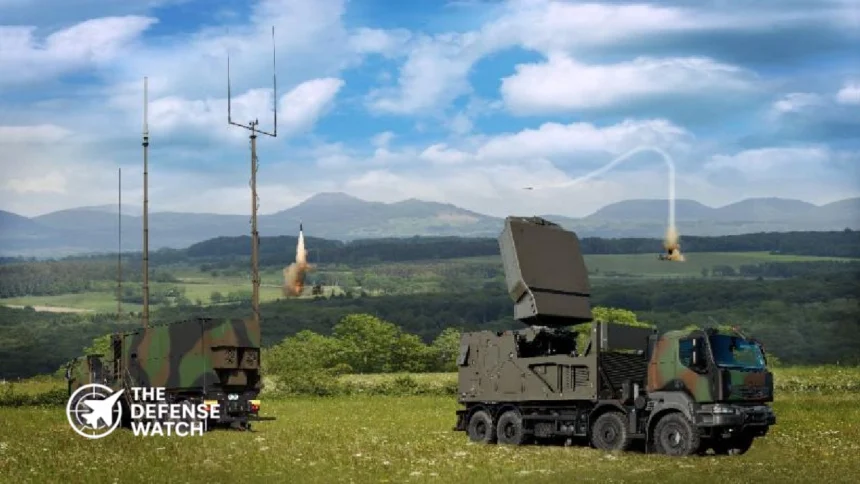
OCCAR confirmed that the additional French sections will include three central elements: next-generation engagement modules, Ground Fire 300 multifunction radar sensors and launchers capable of firing Aster missiles.
Each component serves a different purpose within the air defense system.
- Ground Fire 300 radar: Developed by Thales, the radar provides the system with surveillance and tracking information used to identify and follow potential aerial threats.
- Engagement module: This component processes tactical information and coordinates the engagement sequence between the radar, command functions and launchers.
- Missile launchers: These carry and fire the interceptors selected to engage incoming threats.
The system’s effectiveness depends on how these elements operate together. Radar detection alone does not guarantee a successful interception, which also depends on target tracking, engagement decisions, interceptor performance and the conditions of the encounter.
Eurosam identifies the Aster 30 B1 and Aster 30 B1NT missile variants as part of the SAMP/T NG family. The Aster B1NT is a newer interceptor intended to improve the system’s ability to engage more demanding aerial and ballistic threats. These are program objectives and advertised capabilities, not evidence that every possible target can be intercepted under operational conditions.
The four newly ordered systems are also connected to France’s plan for a layered air defense architecture. Under a separate contract announced by OCCAR in April 2026, France pursued the integration of MICA VL short-range interceptors alongside Aster missiles within the SAMP/T NG framework. Eurosam subsequently described the additional order as using a multilayer Aster and MICA VL configuration.
That configuration could allow the system to coordinate different interceptors according to the threat and engagement conditions. However, the extent to which the integrated configuration has been qualified and accepted for operational service must be distinguished from the capability planned under the contract.
Why France is investing in ground-based air defense
Modern air defense requires more than a single long-range missile system. Aircraft, cruise missiles, ballistic missiles and uncrewed aerial vehicles can present different detection and interception challenges, requiring different sensors, interceptors and engagement procedures.
SAMP/T NG is intended to provide France with a mobile, ground-based capability against a range of aerial threats, including certain ballistic missiles. Its role is different from that of fighter aircraft, which can patrol airspace and intercept threats over a wider operating area but depend on aircraft availability, basing, fuel and airborne sensors.
A ground-based system can help protect designated areas and installations without requiring a fighter to remain continuously on station. Its coverage, however, depends on radar performance, interceptor capabilities, deployment geometry and the surrounding air defense network.
France’s broader procurement priorities reflect this layered approach. The French defense ministry’s 2026 military programming update identified ground-based air defense as an area for additional investment and emphasized improvements across several threat categories, from drones to high-altitude and ballistic threats.
The extra SAMP/T NG sections therefore contribute to a wider effort rather than providing a complete solution on their own. France will still need to coordinate long-range systems with shorter-range defenses, airborne surveillance, command networks and the forces responsible for protecting individual sites.
SAMP/T NG and the European defense industry
The program also has an industrial dimension. Eurosam brings together MBDA and Thales, while OCCAR manages the cooperative program for France and Italy. This arrangement allows the participating countries to share a common program framework while incorporating national requirements into their respective systems.
The additional French order extends demand for radar equipment, engagement modules, launchers and associated missile systems. It also creates further production and integration work for the companies involved.
The order does not establish how much annual production will increase, whether suppliers will add manufacturing capacity or how the additional work will be distributed among industrial partners. Those details have not been disclosed in the public announcements reviewed for this report.
Production capacity is relevant because air defense capability depends on both the number of fielded systems and the availability of interceptors. A larger fleet can provide more deployment options, but its practical value also depends on ammunition stocks, maintenance, trained crews and the ability to sustain operations over time.
The European program has already moved beyond its initial development phase. OCCAR announced the launch of SAMP/T NG development and qualification in March 2021, followed by production-related contracts for France and Italy. In December 2025, the organization reported successful firings involving the next-generation system in French and Italian configurations. Those tests demonstrated progress in the program, but they should not be confused with proof that every contracted system has completed operational acceptance.
What the order does not yet establish
Several important procurement details remain unavailable.
The French government has not publicly disclosed the value of the four-system order, the detailed delivery schedule for those units or the date by which all 12 sections will be operational. The latest announcement also does not provide a revised production rate for SAMP/T NG or a confirmed breakdown of the additional interceptor quantities associated with the order.
These omissions limit the conclusions that can be drawn about the immediate effect on France’s air defense posture. The order increases the number of systems planned for acquisition, but its eventual operational impact will depend on delivery, acceptance, crew preparation, integration and interceptor availability.
The clearest confirmed result is that France has expanded its planned SAMP/T NG fleet from the previously contracted total to 12 sections. The procurement strengthens the long-term basis for French ground-based air and missile defense, while leaving the timetable for the complete fleet and the cost of the additional order undisclosed.