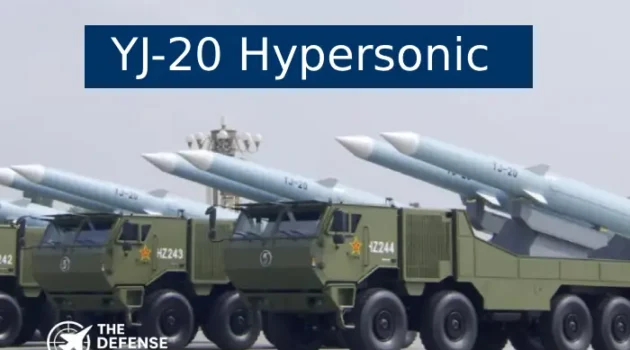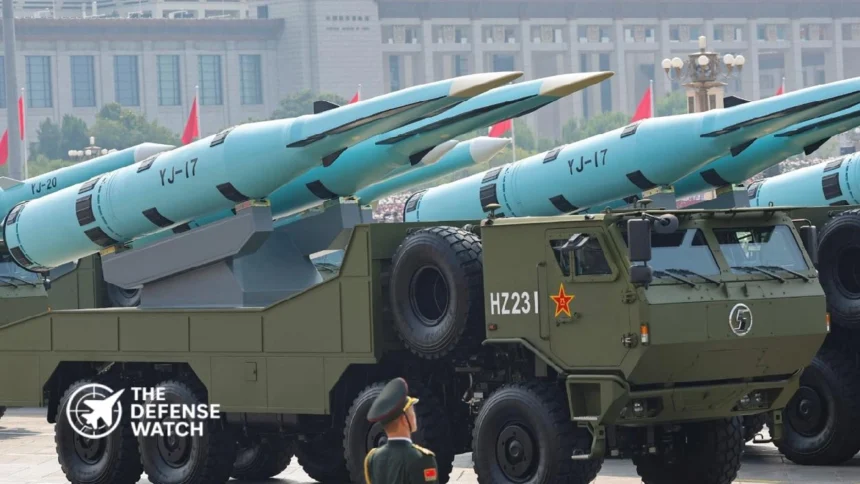
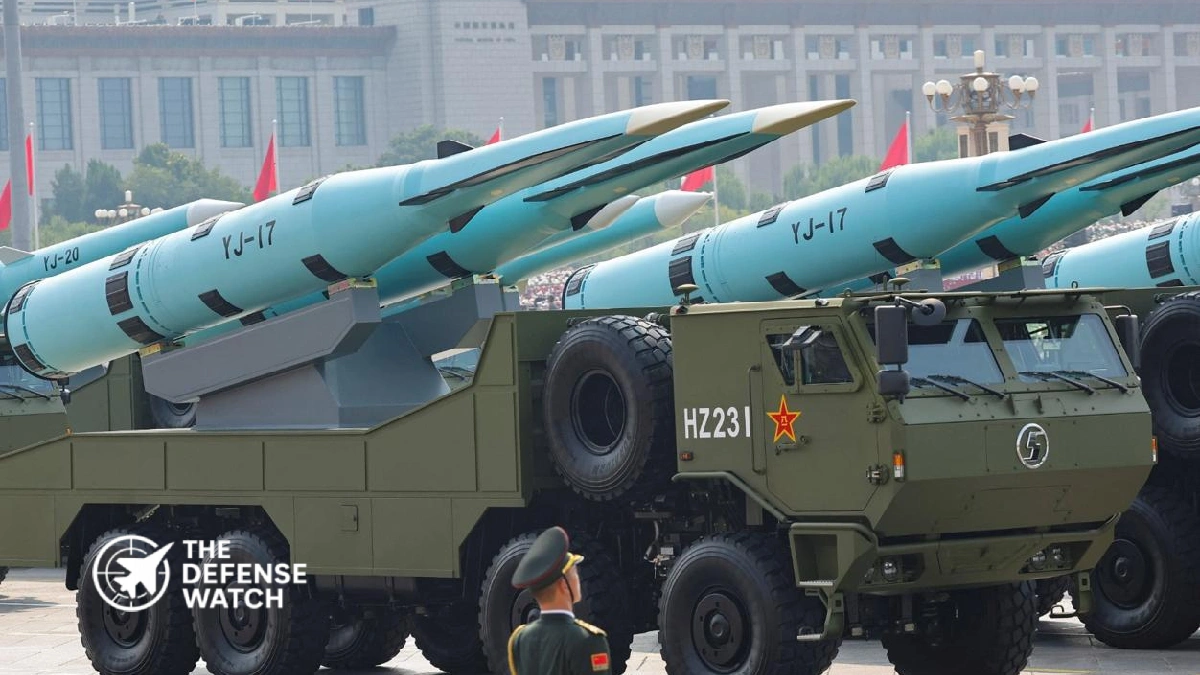
China’s YJ-20 and YJ-17 missiles illustrate two different approaches to high-speed maritime strike, combining rocket-powered flight with designs intended to complicate naval air defense. Both were publicly displayed during China’s military parade in Beijing on September 3, 2025, alongside the YJ-15 and YJ-19. Chinese state media described the group as part of the country’s expanding hypersonic strike capabilities.
- What are the YJ-20 and YJ-17 missiles?
- YJ-20: An aeroballistic approach to maritime strike
- YJ-17: A hypersonic glide vehicle concept
- YJ-20 vs. YJ-17: The main differences
- YJ-21 vs. YJ-20: Why the designations matter
- What these missiles mean for naval air defense
- The key unknowns behind China’s hypersonic missile program
The distinction between the two systems matters. Specialist defense reporting identifies the YJ-17 as a likely hypersonic glide vehicle, while the YJ-20 appears to use a ballistic or aeroballistic flight profile with potential maneuvering during its terminal approach. Those assessments are based on public imagery and analysis, not a complete set of official technical specifications.
Neither missile has a publicly established maximum range, verified operational speed profile or independently confirmed probability of penetrating modern naval defenses. Claims about their performance should therefore be treated cautiously.
What are the YJ-20 and YJ-17 missiles?
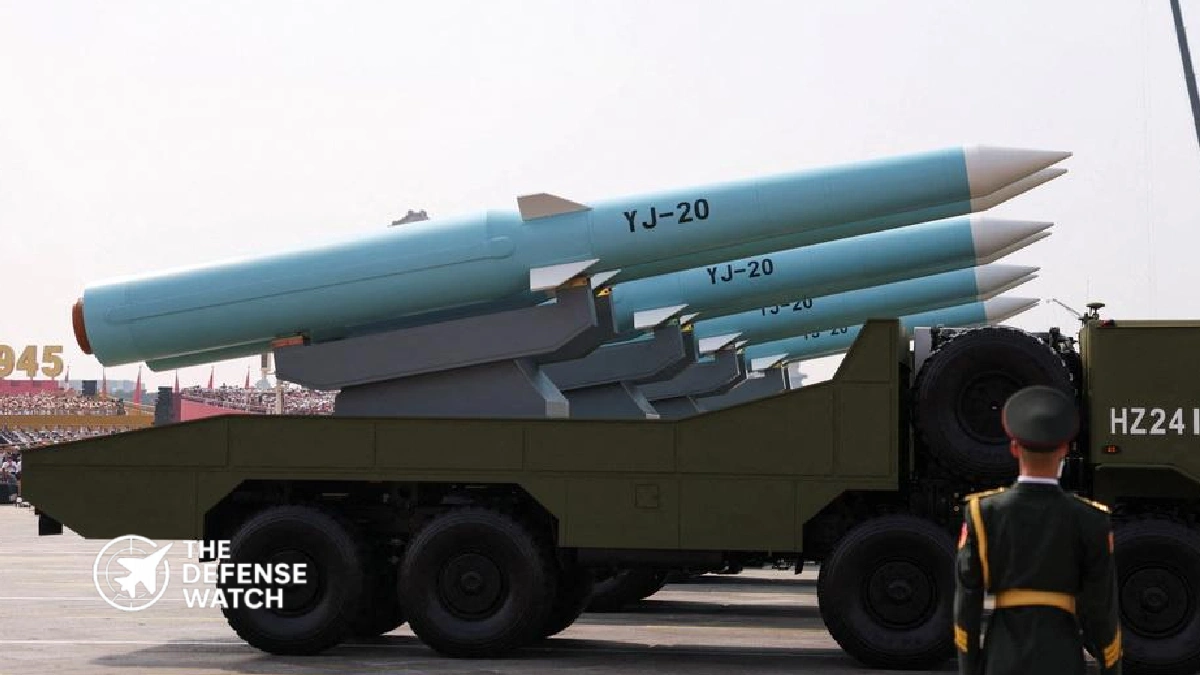
YJ-20
Assessed as an aeroballistic anti-ship missile, potentially using a maneuvering terminal flight phase.
YJ-17
Assessed as a rocket-boosted hypersonic glide vehicle designed to maneuver after its boost phase.
The September 2025 parade provided public identification of both missiles, but it did not establish their full technical specifications. Their precise development histories, production quantities and service-wide deployment status remain incompletely documented in public sources.
YJ-20: An aeroballistic approach to maritime strike
The YJ-20 has attracted attention because a missile with a ballistic or aeroballistic flight profile can approach a naval target differently from a conventional sea-skimming cruise missile.
Naval News assessed the YJ-20 as an aeroballistic or ballistic anti-ship weapon, with the possibility of maneuvering during the terminal phase. The publication also reported that a similar-looking missile had appeared in footage of a Chinese Type 055 destroyer launch in 2022, before its public identification during the 2025 parade.
That history is important because some earlier reporting and online discussion used the YJ-21 designation for the weapon seen in the footage. The parade subsequently displayed the YJ-20 and YJ-21 as distinct missiles, helping clarify the distinction between the systems.
How the YJ-20 could threaten warships
An aeroballistic missile accelerates through a powered phase before following a trajectory that has ballistic characteristics. Depending on its design, it can maneuver during parts of its flight rather than follow a completely predictable path.
For a naval defender, the challenge is not simply the missile’s speed. Detection, accurate tracking, prediction of the impact point and coordination of interceptors all have to occur within a limited time.
A high-speed missile that can alter its trajectory during the terminal approach could make those tasks more difficult. However, maneuverability does not make a weapon impossible to intercept. The actual result depends on the missile’s flight profile, guidance performance, target information and the defending ship’s sensors and weapons.
What is known about YJ-20 range?
The YJ-20’s maximum range has not been officially established in publicly available technical documentation identified for this article.
Some secondary reporting has circulated estimates in the 1,000 to 1,500-kilometer range. Those figures should be treated as estimates rather than verified specifications, particularly because the available public evidence does not provide a complete test record or an official range statement.
Its launch platform and integration with Chinese naval vertical launch systems have also attracted attention. Public imagery supports an association with the Type 055 destroyer, but the full range of compatible platforms and the extent of operational deployment are less certain.
YJ-17: A hypersonic glide vehicle concept
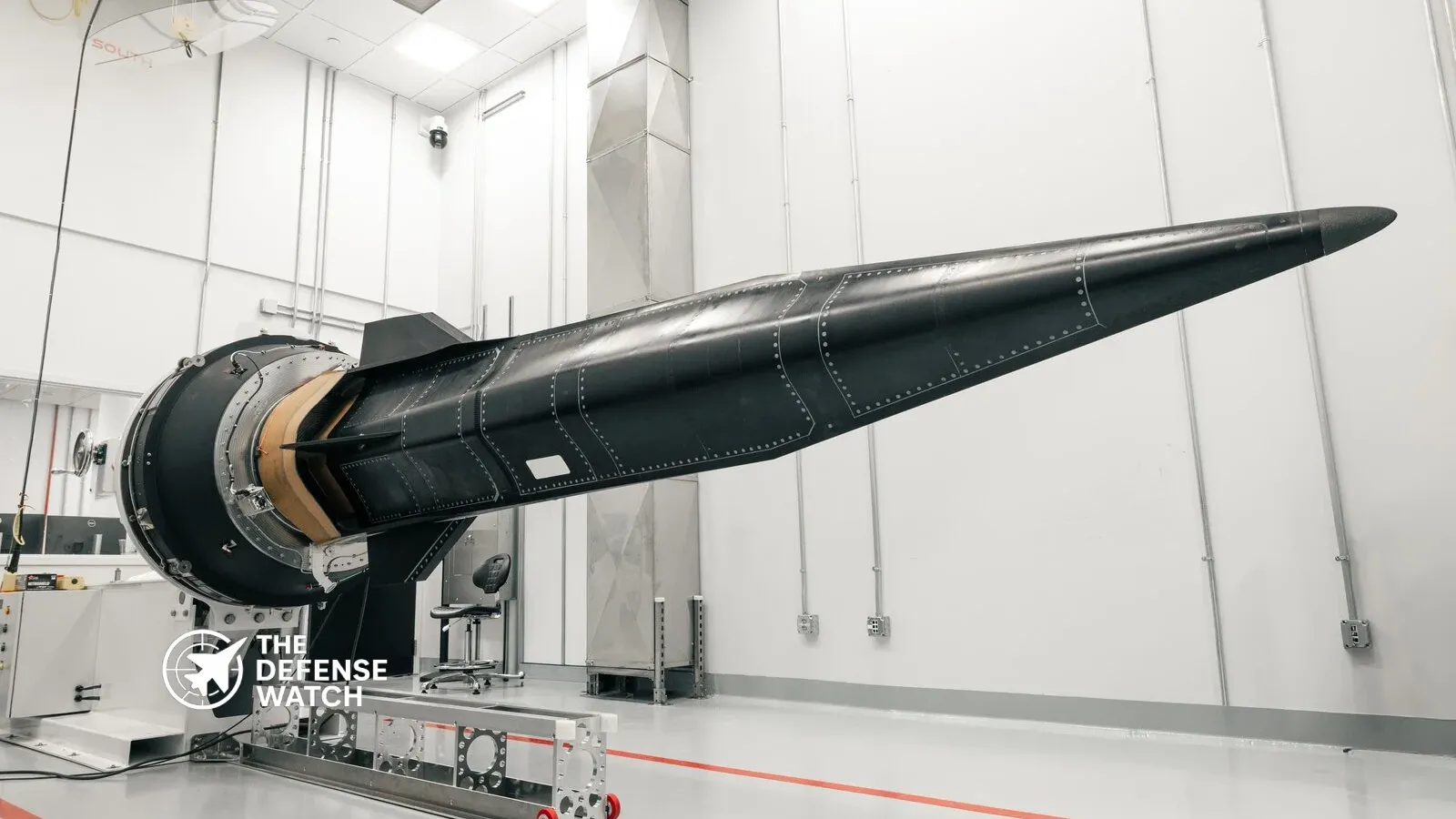
The YJ-17 appears to use a different approach. Naval News assessed the missile displayed in 2025 as a hypersonic glide vehicle mounted above a large booster. Japan’s National Institute for Defense Studies also identified the YJ-17 as a surface-launched hypersonic glide vehicle in its January 2026 review of global hypersonic weapons programs.
A hypersonic glide vehicle is accelerated by a rocket booster, separates after the boost phase and then glides through the upper atmosphere at hypersonic speeds. Unlike a conventional ballistic reentry vehicle, it can maneuver during the glide phase.
Hypersonic generally means speeds above Mach 5, although speed varies during flight. That definition alone does not establish how fast a particular missile travels throughout its trajectory or at impact.
Why the glide profile matters
The YJ-17’s potential value lies in the combination of high speed and a flight path that may be less predictable than a conventional ballistic trajectory.
Traditional ballistic missile defense systems can use established trajectory models to estimate where an incoming weapon is likely to travel. A maneuvering glide vehicle can complicate that calculation and may require defenders to maintain tracking across a wider range of possible flight paths.
This creates additional demands on radar coverage, sensor networking and interceptor performance. It does not mean existing defenses automatically fail. Detection and interception depend on the engagement geometry, sensor capability and the defender’s available response time.
The YJ-17’s exact propulsion details, operational speed, range and terminal guidance system have not been publicly confirmed. Its appearance is consistent with a boost-glide design, but photographs alone cannot establish the missile’s complete performance.
YJ-20 vs. YJ-17: The main differences
The two missiles are best compared by their apparent flight concepts rather than by unverified range or speed figures.
Attribute YJ-20 YJ-17 Broad role Anti-ship strike Anti-ship strike Assessed flight concept Ballistic or aeroballistic Rocket-boosted hypersonic glide Maneuvering Potential terminal-phase maneuvering Potential maneuvering during glide Launch integration Associated with Type 055 launch footage Surface-launch configuration assessed from parade imagery Confirmed maximum range Not publicly established Not publicly established Verified maximum speed Not publicly established Not publicly established Full operational status Not publicly established Not publicly established Sources: Naval News analysis of the September 2025 parade and Japan’s National Institute for Defense Studies.
The distinction is meaningful, but the available information is not sufficient to declare one missile superior to the other. A ballistic or aeroballistic profile and a boost-glide profile present different tracking and interception challenges. Their actual effectiveness depends on factors that remain classified or undisclosed.
YJ-21 vs. YJ-20: Why the designations matter
The YJ-21 is another Chinese missile associated with high-speed anti-ship strike, but it should not be treated as an alternative name for the YJ-20.
Chinese state-linked reporting on the September 2025 parade identified the YJ-21 as an air-launched ballistic missile displayed in a separate formation. The YJ-20 appeared among the four newer anti-ship missile designs, alongside the YJ-15, YJ-17 and YJ-19.
The distinction helps prevent a common mistake in missile comparisons: assuming that weapons with similar intended targets or related naming conventions have identical propulsion, launch arrangements or flight characteristics.
Missile Publicly reported distinction Important limitation YJ-20 Sea-based anti-ship weapon, assessed as ballistic or aeroballistic Range and detailed flight performance remain unverified YJ-17 Surface-launched hypersonic glide vehicle assessment Detailed specifications and deployment status remain unclear YJ-21 Air-launched ballistic missile identified in Chinese parade reporting Its specifications should not be transferred to the YJ-20 The YJ-19 is also relevant to the wider picture. Specialist observers have assessed it as a possible air-breathing hypersonic missile, although its propulsion and launch arrangements have not been fully confirmed. The four designs therefore appear to represent a broader set of missile-development approaches rather than a single weapon with minor variations.
What these missiles mean for naval air defense
The operational concern is not simply that China is developing weapons that travel at hypersonic speeds. It is that different high-speed weapons may force naval forces to defend against several flight profiles at once.
A fleet operating near China’s coastline or in the western Pacific could face threats from aircraft-launched missiles, ship-launched weapons, submarines and land-based strike systems. Each launch method creates a different detection problem, and a coordinated attack could place additional pressure on defensive sensors and interceptor inventories.
Long-range anti-ship missiles also depend on information beyond the weapon itself. To engage a moving ship at extended distances, a force needs a sufficiently accurate target location and a way to update or maintain that information as the target moves. The effectiveness of a missile therefore depends on the wider reconnaissance and targeting network, not just its advertised speed or nominal range.
For defenders, the response involves several layers:
- Early warning: Detecting launches and maintaining track data through suitable radar and space-based sensors.
- Sensor integration: Sharing information between ships, aircraft and other surveillance assets.
- Missile defense: Using interceptors suited to the incoming weapon’s altitude, speed and trajectory.
- Electronic warfare: Protecting friendly sensors and communications while disrupting an attacker’s targeting chain where possible.
- Force protection: Managing distance, positioning and operational exposure to reduce the chance of a successful engagement.
Japan’s National Institute for Defense Studies notes that hypersonic weapons present challenges for conventional missile defenses, while also emphasizing unresolved technical and interception questions. It identifies maneuvering, aerodynamic heating and the difficulty of maintaining speed during flight as important engineering issues.
The YJ-20 and YJ-17 could add complexity to naval defense planning, but public evidence does not establish their effectiveness against a particular ship or air-defense system under combat conditions.
The key unknowns behind China’s hypersonic missile program
China’s public display of the missiles provides evidence of development and intended military roles. It does not provide a complete account of their readiness.
Several questions remain open:
- What are the independently verified maximum ranges of the YJ-20 and YJ-17?
- Which platforms can carry and launch each missile?
- What guidance and in-flight targeting-update systems do they use?
- How many missiles have entered operational service?
- How reliable are their flight profiles under realistic conditions?
- How well can they penetrate modern, networked naval defenses?
These are not minor details. They determine whether a missile is a limited experimental capability, a weapon available to a small number of units, or a widely fielded component of a fleet’s strike architecture.
The September 2025 parade established that the YJ-20 and YJ-17 are part of China’s publicly presented missile portfolio. Their exact performance, inventory and operational effectiveness remain less certain. For defense planners, the appropriate response is to assess the range of possible capabilities without treating the most ambitious estimates as confirmed fact.