Indonesia Expects J-10 Fighters Within Six Months
Indonesia could begin receiving Chinese-made J-10 fighter aircraft within roughly six months, according to Indonesian media reporting, adding a new element to Jakarta’s long-running effort to rebuild and diversify its combat-aircraft fleet.
The reported timetable would place an initial delivery around April 2027. However, neither the Indonesian Air Force nor the Ministry of Defense has publicly disclosed how many aircraft would arrive in the first batch.
Air Force Chief of Staff Air Marshal Mohamad Tonny Harjono gave little detail when asked about the aircraft at TNI headquarters in Cilangkap, East Jakarta, on October 5. His response, reported by Republika, was simply, Just wait. Republika subsequently reported that the aircraft were expected to arrive approximately six months later.
That distinction matters. The six-month delivery window is an Indonesian media report based on information obtained by Republika, not a publicly released Indonesian government delivery schedule. The quantity, exact variant, weapons package and contractual details remain important unanswered questions.
From evaluation to reported delivery
Indonesia’s interest in the J-10 is not new.
In June 2025, Reuters reported that Jakarta was evaluating China’s J-10 alongside other fighter options. Indonesian Deputy Defense Minister Donny Ermawan Taufanto said officials were examining the aircraft’s price, system compatibility and after-sales support. China was also offering other defense equipment as part of discussions with Indonesia.
The Indonesian government subsequently made increasingly direct statements about the aircraft.
In October 2025, Defense Minister Sjafrie Sjamsoeddin said the J-10 would soon fly in Jakarta. At the time, however, Indonesian defense officials were still describing the aircraft as being under evaluation. Indonesia’s military headquarters also said the decision to acquire the aircraft rested with the Ministry of Defense.
China’s Ministry of National Defense confirmed the broader procurement discussion without releasing an aircraft quantity or delivery schedule. Asked in October 2025 about Indonesia’s planned J-10 acquisition, spokesperson Zhang Xiaogang said China takes a prudent and responsible approach to military exports and is willing to share the results of its equipment modernization with peace-loving countries.
The public record therefore shows a progression from evaluation, to political confirmation of an intended acquisition, and now to a reported delivery window.
It does not yet provide a complete public contract.
The J-10 variant remains important
One of the most consequential unresolved details is the configuration Indonesia will receive.
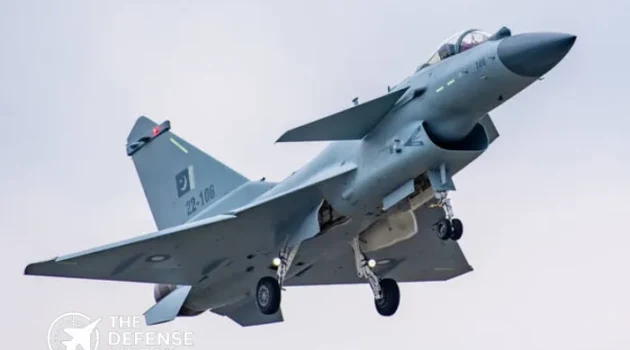
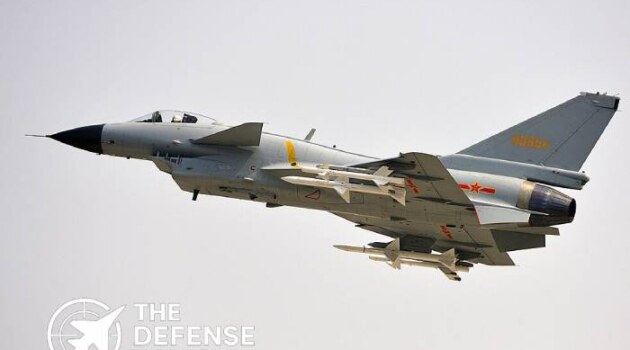
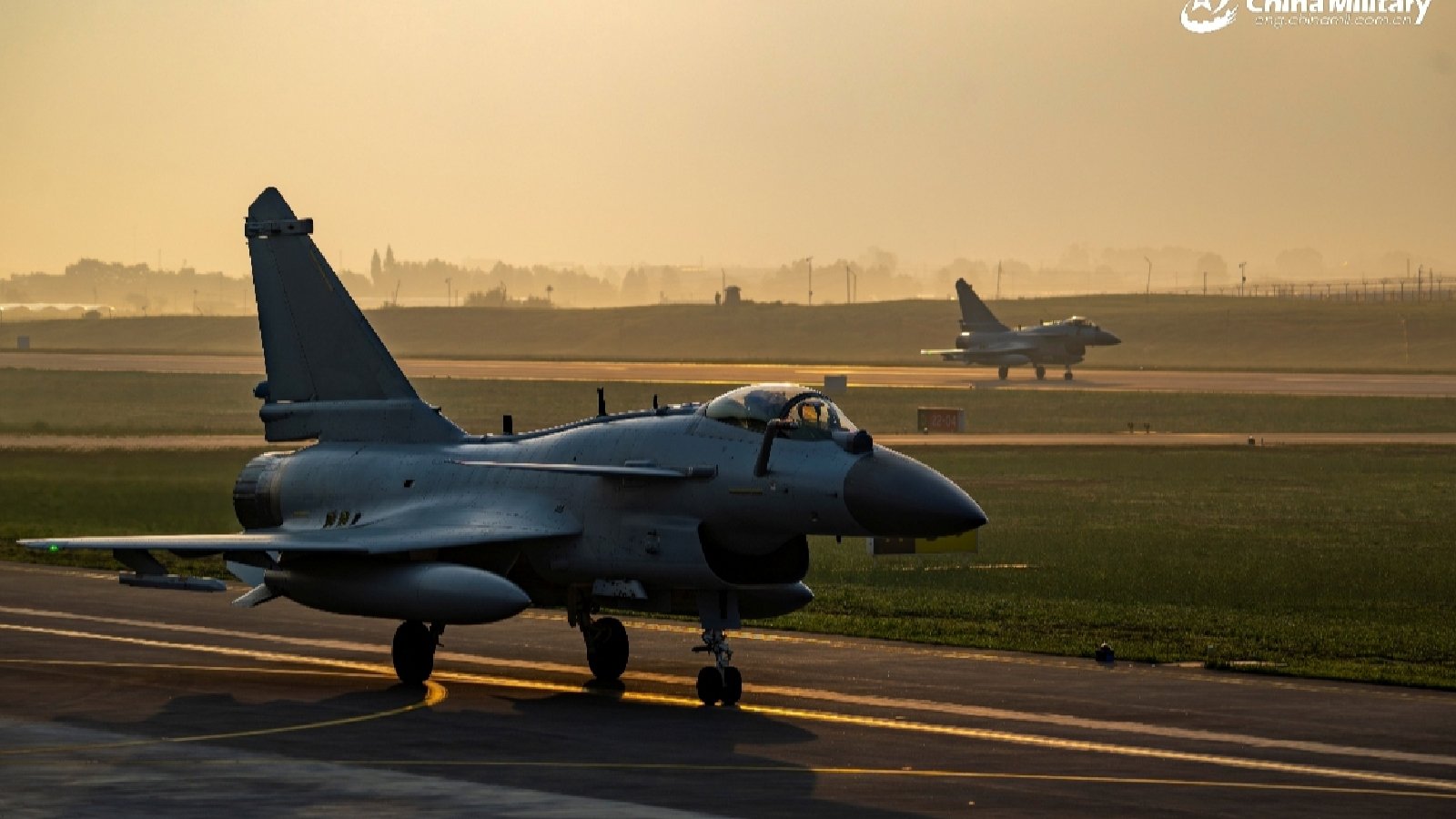
The supplied reporting describes the aircraft as the J-10CE, China’s export version of the J-10C. But separate reporting by Janes has identified an Indonesian plan involving second-hand J-10B aircraft from Chinese People’s Liberation Army Air Force stocks.
According to Janes, Indonesia’s Ministry of Finance approved foreign-loan financing of up to $1.6 billion for the J-10B portion of a broader package involving Chinese defense equipment. The same reporting said Indonesia was planning to acquire used J-10B airframes.
That creates an important distinction between the aircraft described in different reports.
The J-10B and J-10CE are not simply interchangeable labels. The J-10C family represents a later development of the J-10 design, while the J-10B is an earlier configuration. Consequently, claims about the sensors, weapons and combat performance of a J-10CE should not automatically be applied to an Indonesian J-10B fleet.
Until Jakarta identifies the configuration it has selected, assessments of the future Indonesian capability should therefore remain conditional.
Why the J-10 has attracted attention
The J-10 has gained greater international attention since the May 2025 India-Pakistan conflict, when Pakistani J-10s were reported to have been used in air combat.
Reuters reporting based on interviews with Indian and Pakistani officials found that Pakistani J-10 fighters were involved in the May fighting and that PL-15 air-to-air missiles played an important role in the engagement. The same reporting attributed the outcome to a combination of factors, including intelligence and tactical issues, rather than treating the J-10 as independently responsible for the result.
That distinction is important for Indonesia.
Combat experience can provide evidence about how an aircraft and its weapons performed in a particular operational environment, but it does not establish universal superiority over other fighter types. Mission planning, electronic warfare, airborne early warning, intelligence, pilot training, missile employment and command-and-control all affect the outcome of air combat.
The J-10CE’s appeal to prospective customers is therefore better understood in terms of the capability package China can export rather than a single combat claim.
Indonesia is building a mixed fighter fleet
The J-10 would also enter an Indonesian Air Force undergoing a broader modernization programme.
Indonesia has a confirmed programme for 42 Dassault Rafale fighters, while the first Rafales have already entered Indonesian service. Janes reported that three aircraft arrived in January 2026 as part of the initial six-aircraft tranche.
Indonesia has also signed a contract with Türkiye for 48 KAAN fighters, although that programme represents a much longer-term capability path rather than an immediate replacement for existing aircraft.
This means the J-10 would not be entering an air force that is replacing its entire fighter inventory with a single platform.
Instead, Jakarta appears to be building a highly diverse fleet involving French, U.S., South Korean, Chinese and potentially Turkish aircraft. That approach can provide supplier diversification, but it also creates a complicated logistics and training environment.
Every additional fighter family requires its own maintenance ecosystem, technical training, spare parts, weapons integration and support infrastructure.
Indonesia’s geography makes this especially important. The country’s territory stretches across thousands of islands, requiring combat aircraft to operate from multiple locations and maintain sufficient readiness to respond to threats across widely separated airspace.
An aircraft purchase therefore has to be judged not only by its performance on paper, but by how many aircraft can actually be kept serviceable and how effectively they can be distributed across the country’s air-defense requirements.
The procurement evidence is still incomplete
The financing picture also requires caution.
Indonesian Finance Minister Purbaya Yudhi Sadewa said in October 2025 that his ministry had approved a request involving $9 billion, but he said he could not confirm that the amount specifically represented funding for the J-10 purchase. He also said the ministry would need to verify how the procurement was being financed.
Separately, Janes reported that up to $3.1 billion in foreign loans had been approved for three Chinese defense programmes, including J-10B fighters, Type 22 fast attack craft and CM-302 coastal anti-ship missiles. The J-10B component was allocated up to $1.6 billion in that financing plan.
These figures should not be combined into a single J-10 programme value.
They relate to different financing discussions and potentially different acquisition packages. Public information also does not establish a reliable per-aircraft cost because training, weapons, spares, infrastructure and aircraft condition can substantially alter the value of a fighter package.
The number of aircraft remains equally important. A first delivery of a small batch would have a very different operational effect from the rapid arrival of a complete squadron or larger fleet.
A new supplier relationship for Jakarta
The J-10 programme also has implications beyond the Indonesian Air Force.
Indonesia has historically purchased combat aircraft from several countries, including the United States, Russia, South Korea and France. Adding a Chinese fighter would further diversify its supplier base.
That could give Jakarta greater flexibility in defense procurement, but it also means maintaining another independent logistics and weapons ecosystem.
The Australian government has already indicated that an Indonesian decision to acquire Chinese fighters would not undermine the broader Australia-Indonesia military relationship. Australian Defence Force chief Admiral David Johnston said in October 2025 that Canberra respected Indonesia’s right to make defense decisions based on its own interests.
For China, an Indonesian J-10 sale would carry particular significance because Indonesia is a major Southeast Asian military power and a strategically important state bordering critical maritime routes.
For Jakarta, however, the immediate question is more practical: whether the aircraft can be delivered, supported and integrated quickly enough to provide useful additional combat capacity.
What the six-month timeline would mean
If the reported schedule is accurate, Indonesia could begin receiving J-10s in the first half of 2027.
That would still not mean the aircraft were immediately available as a fully operational combat force. Pilots and maintainers would require training, infrastructure would have to support the aircraft, and weapons and mission-support systems would have to be available.
The aircraft’s eventual contribution will also depend heavily on the configuration selected.
A J-10CE equipped with modern Chinese sensors and export air-to-air weapons would represent a different capability from a used J-10B acquisition. At present, public information does not conclusively resolve which configuration Indonesia will operate.
For that reason, the most significant development is not yet a specific performance claim about the J-10. It is the possibility that Indonesia is moving from years of evaluation and political discussion toward actual delivery of a Chinese fighter.
The first aircraft, their configuration and the size of the initial batch should provide the clearest evidence of how far the programme has progressed.
Reporting note: The reported six-month delivery window and the expected initial aircraft quantity have not been accompanied by a publicly released Indonesian delivery schedule or detailed contract covering the aircraft configuration. Those details should therefore be treated as reported rather than confirmed procurement specifications.
 previous post
Pakistan Tests Extended-Range Fatah-4 Cruise Missile