

Executive Summary:
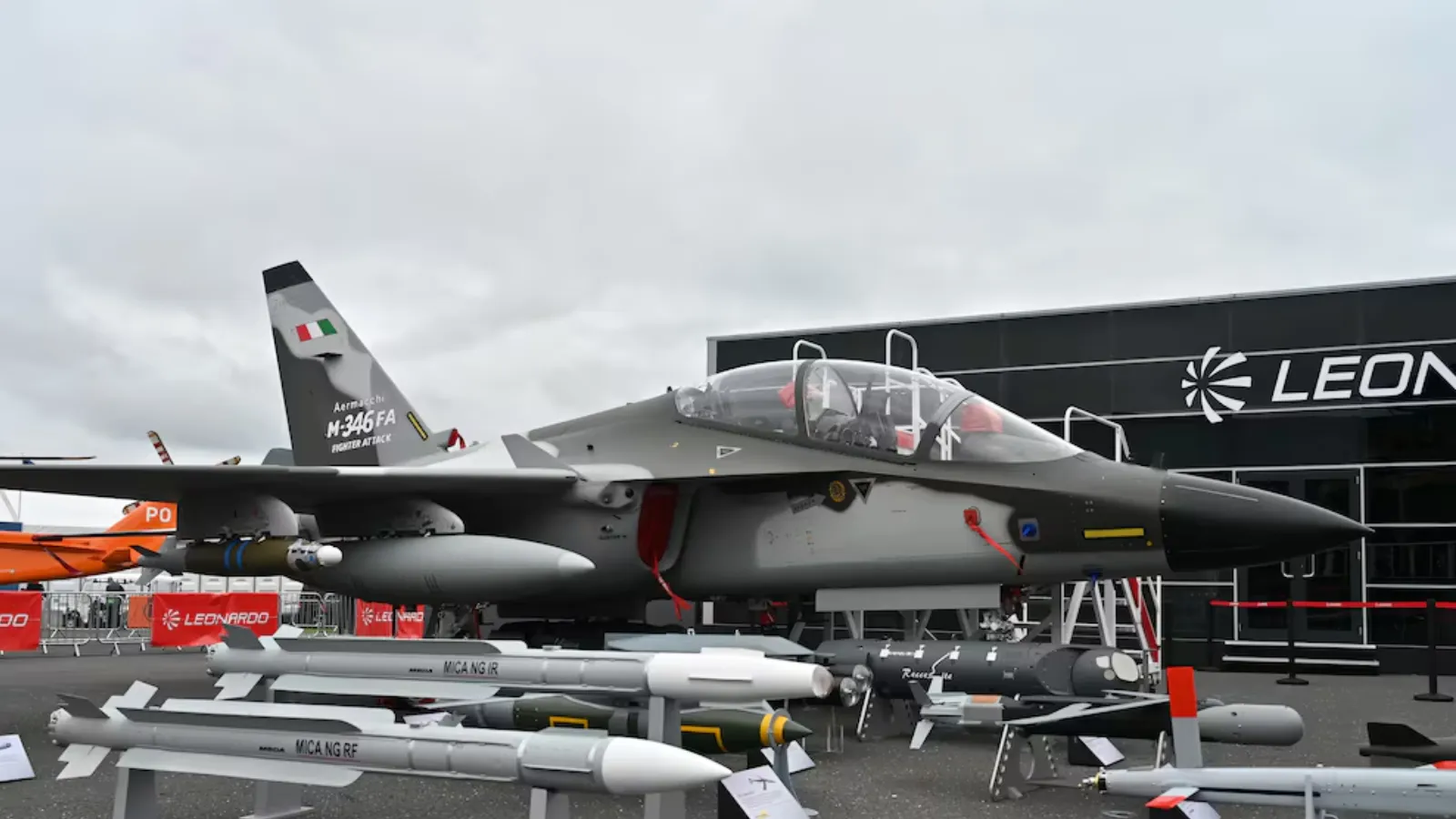
Indonesia has finalized an order for 12 Leonardo M-346F Block 20 light fighter aircraft, marking the country’s latest investment in combat aviation modernization. At the same time, Jakarta has signed a Letter of Intent to explore procurement of AW149 naval helicopters, expanding cooperation with the Italian defense company across both air force and naval aviation programs.
Indonesia Orders Leonardo M-346F Light Fighters To Expand Air Combat Capability
Indonesia has ordered 12 Leonardo M-346F Block 20 light fighters, reinforcing its long term air force modernization strategy while broadening defense cooperation with Italy. The agreement, announced by Leonardo during the Farnborough International Airshow, includes aircraft deliveries beginning in 2030 alongside localized maintenance, overhaul, training, and industrial support capabilities.
The procurement makes Indonesia the 23rd operator of the M,346 family and the first customer in Asia for the latest Block 20 fighter variant. According to Leonardo, the agreement also supports technology transfer and workforce development through cooperation with Indonesian industry.
What Indonesia Is Buying
Unlike the well known M,346 advanced jet trainer, the M-346F Block 20 is configured as a dedicated multirole light fighter capable of both combat and operational conversion training.
Key capabilities include:
| Capability | Details |
|---|---|
| Radar | Active Electronically Scanned Array (AESA) radar |
| Data Link | Link 16 tactical network |
| Weapons | Seven external hardpoints |
| Refueling | Air to air refueling capability |
| Survivability | Integrated electronic countermeasures |
| Role | Light attack, air policing, advanced pilot training |
Leonardo says the M-346 fleet has accumulated more than 170,000 flight hours worldwide, demonstrating operational maturity across multiple international operators.
Local Industry Plays A Major Role
Beyond the aircraft themselves, the contract places significant emphasis on Indonesia’s domestic aerospace sector.
The package includes:
- Local maintenance and overhaul capability
- Training infrastructure
- Technical support
- Human capital development
- Industrial cooperation with Indonesian partners
These provisions align with Jakarta’s broader defense industrial policy of pairing major foreign acquisitions with technology transfer and local capability development.
AW149 Naval Helicopters Also Under Consideration
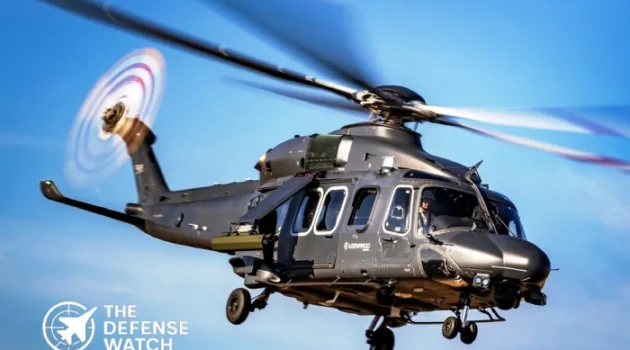
Alongside the fighter agreement, Leonardo, Indonesia’s Ministry of Defense, and PT ESystem Solutions signed a Letter of Intent covering the potential acquisition of AW149 medium military helicopters for the Indonesian Navy.
The proposed helicopters would support:
- Search and rescue missions
- Disaster response
- Maritime security
- Shipborne operations
- Land based utility missions
Indonesian defense officials emphasized that the Letter of Intent is an exploratory step rather than a finalized procurement contract. Officials have not disclosed the number of helicopters or a delivery timeline.
A More Diverse Air Force
The Leonardo purchase adds another platform to an already diverse Indonesian Air Force inventory.
Current and planned fighter aircraft include:
- F,16 Fighting Falcon
- Su,27 Flanker
- Su,30 Flanker
- T,50i Golden Eagle
- Dassault Rafale
- Leonardo M-346F Block 20
Indonesia also remains involved in South Korea’s KF,21 fighter development while continuing discussions surrounding other future combat aircraft programs.
This diversified procurement strategy reduces dependence on any single supplier but also increases long term demands for logistics, maintenance, pilot training, spare parts management, and interoperability.
Why The Procurement Matters
From a strategic perspective, the M-346F fills an important niche between advanced trainers and high end multirole fighters.
Rather than replacing aircraft such as the Rafale, the platform offers Indonesia a lower operating cost solution for:
- Air sovereignty patrols
- Pilot transition training
- Close air support
- Maritime strike with compatible weapons
- Homeland defense missions
This layered force structure allows expensive frontline fighters to focus on higher threat missions while the lighter M-346F performs routine operational tasks.
For Indonesia, whose territory stretches across more than 17,000 islands, maintaining persistent air coverage requires both capability and affordability. Light fighters can provide greater sortie generation at lower operating costs than larger fourth or fifth generation combat aircraft.
Implications For Regional Defense
The agreement also strengthens Italy’s position as an increasingly important defense partner in Southeast Asia.
Leonardo is no longer supplying only aircraft. Its growing role now includes:
- Combat aircraft
- Helicopter programs
- Industrial partnerships
- Training infrastructure
- Sustainment support
For Indonesia, this approach supports its long standing policy of diversifying defense suppliers while encouraging domestic industrial participation.
The proposed AW149 program similarly reflects Jakarta’s effort to expand naval aviation capabilities as it seeks greater maritime awareness across one of the world’s largest archipelagic regions. Additional medium helicopters would improve search and rescue coverage, humanitarian assistance, and embarked operations aboard future naval platforms.
Outlook
If deliveries proceed as scheduled, Indonesia is expected to begin receiving its M-346F Block 20 aircraft in 2030. Meanwhile, negotiations over the AW149 remain at the Letter of Intent stage and will require a formal procurement contract before production begins.
Together, the two initiatives highlight Jakarta’s continued investment in modernizing both its air force and naval aviation while expanding industrial cooperation with international defense partners.

Strategic Shift: A New Chapter in Indonesia’s Procurement
Indonesia has officially moved to acquire at least 42 Chengdu J-10C multirole fighter jets from China, marking the largest non-Western aircraft purchase in its history. According to Indonesia’s Finance Minister Purbaya Yudhi Sadewa, the procurement—valued at over USD 9 billion—has secured budget approval and is poised to go forward.
Defense Minister Sjafrie Sjamsoeddin confirmed that the decision aligns with Jakarta’s broader military modernization campaign, which has long relied on Western (U.S., European) platforms. This pivot represents a major recalibration of Indonesia’s defense partnerships and procurement strategy.
Current Defense Portfolio & Procurement Landscape
Existing Fleet Challenges
Indonesia’s air force currently fields a mixed fleet of U.S.-made F-16s, Russian Su-27/30s, and British-origin platforms, many of which are aging or nearing modernization limits. The need for fleet renewal—with higher availability, supportability, and regional relevance—has been a pressing concern.
In 2022, Jakarta committed to acquiring 42 Dassault Rafale jets from France (worth ~USD 8.1 billion), with first deliveries expected in early 2026. Indonesia has also weighed U.S. options: it signed a memorandum with Boeing for 24 F-15EX fighters (estimated USD 8 billion).
Meanwhile, Turkey has secured a separate deal to export 48 KAAN fifth-generation fighters to Indonesia (first export sale), including local production and technology transfer clauses.
Why China’s J-10C?
Chinese offers are seen by Jakarta as competitively priced and more flexible in terms of export controls and local-industrial cooperation. Jakarta officials also reportedly view the J-10C as meeting their performance criteria affordably.
Some reports suggest Indonesia may acquire used PLAAF J-10s to accelerate delivery, reducing lead times relative to new-build orders. Sources also suggest first deliveries could begin as early as 2026.
Technical and Operational Considerations
The Chengdu J-10 is a single-engine 4+/4.5-generation multirole fighter widely deployed in China’s air force. Its variants include modern avionics, active electronically scanned array (AESA) radar, and compatibility with China’s domestic weapons.
Integration with Indonesia’s existing systems (e.g., command & control, datalinks, logistics) will require significant investments in interoperability and maintenance infrastructure. Jakarta is reportedly evaluating these compatibility factors alongside long-term support and sustainment.
The inclusion of local content or assembly is also under discussion, which could help Indonesia’s defense industrial base.
Analysis: Implications for U.S. Defense & Global Security
Strategic Realignment in Southeast Asia
Indonesia’s shift toward Chinese aircraft signals a recalibration of regional defense alignments. This move may give Beijing deeper influence over Jakarta’s strategic posture—especially in contested zones like the South China Sea where Indonesia has overlapping maritime interests.
For U.S. defense planners, this development complicates efforts to maintain influence in the Indo-Pacific. Washington has long viewed Indonesia as a critical partner in regional security architectures. A procurement tilt toward China may undermine U.S. leverage and deterrent posture.
Technology & Export Competition
China’s success in selling combat aircraft beyond its traditional markets puts pressure on Western defense exporters. The ability to offer lower cost, fewer restrictions, and more flexible industrial collaboration is a competitive edge in emerging markets.
Meanwhile, U.S. firms may be forced to offer more aggressive offset packages or export concessions to remain competitive in regional arms markets.
Interoperability Risks & Supply Chain Concerns
Indonesia’s mixed fleet—if including Chinese and Western platforms—poses logistics, training, and interoperability challenges. The U.S. may have to negotiate sensitive arrangements or risk information flow restrictions.
Additionally, the Chinese supply chain is tightly controlled by Beijing; Jakarta’s reliance on Chinese parts could give China leverage in critical maintenance or upgrades.
Looking Ahead: What to Watch
- Delivery Timeline & Pilot Training — Will Indonesia meet 2026 delivery targets? Will pilots train in China or locally?
- Interoperability Moves — Will Jakarta invest in bridging datalinks or systems to maintain integration with ASEAN, U.S., or allied platforms?
- Offset & Local Production Clauses — How much transfer of tech will China concede?
- U.S. Response — Will the U.S. counter with new offers (e.g. further F-15EX entice, F-35 options, or defense cooperation incentives)?
- Regional Reactions — Neighboring states will observe closely. If Indonesia shifts further from the U.S., it may spur similar procurement realignments in Southeast Asia.
If implemented successfully, Indonesia’s Chinese procurement could mark a turning point: from being a passive recipient of Western arms to a strategic actor willing to diversify among great-power suppliers. For U.S. defense engagement, it underscores the urgency of refining competitive offers and maintaining diplomatic-on defense presence.