Australia Expands AIR6500 With A$1.32 Billion Lockheed Martin Contract
Lockheed Martin Australia has secured an A$1.32 billion contract to advance and sustain Australia’s AIR6500 Joint Air Battle Management System, strengthening the command-and-control architecture intended to integrate the Australian Defence Force’s air and missile defense capabilities. The six-year Tranche 2B award was announced on September 9, 2026, as part of a broader Australian government investment of A$2.4 billion in the second tranche of AIR6500.
Takeaways
Australia is expanding AIR6500 as the command-and-control backbone of its future integrated air and missile defense architecture.
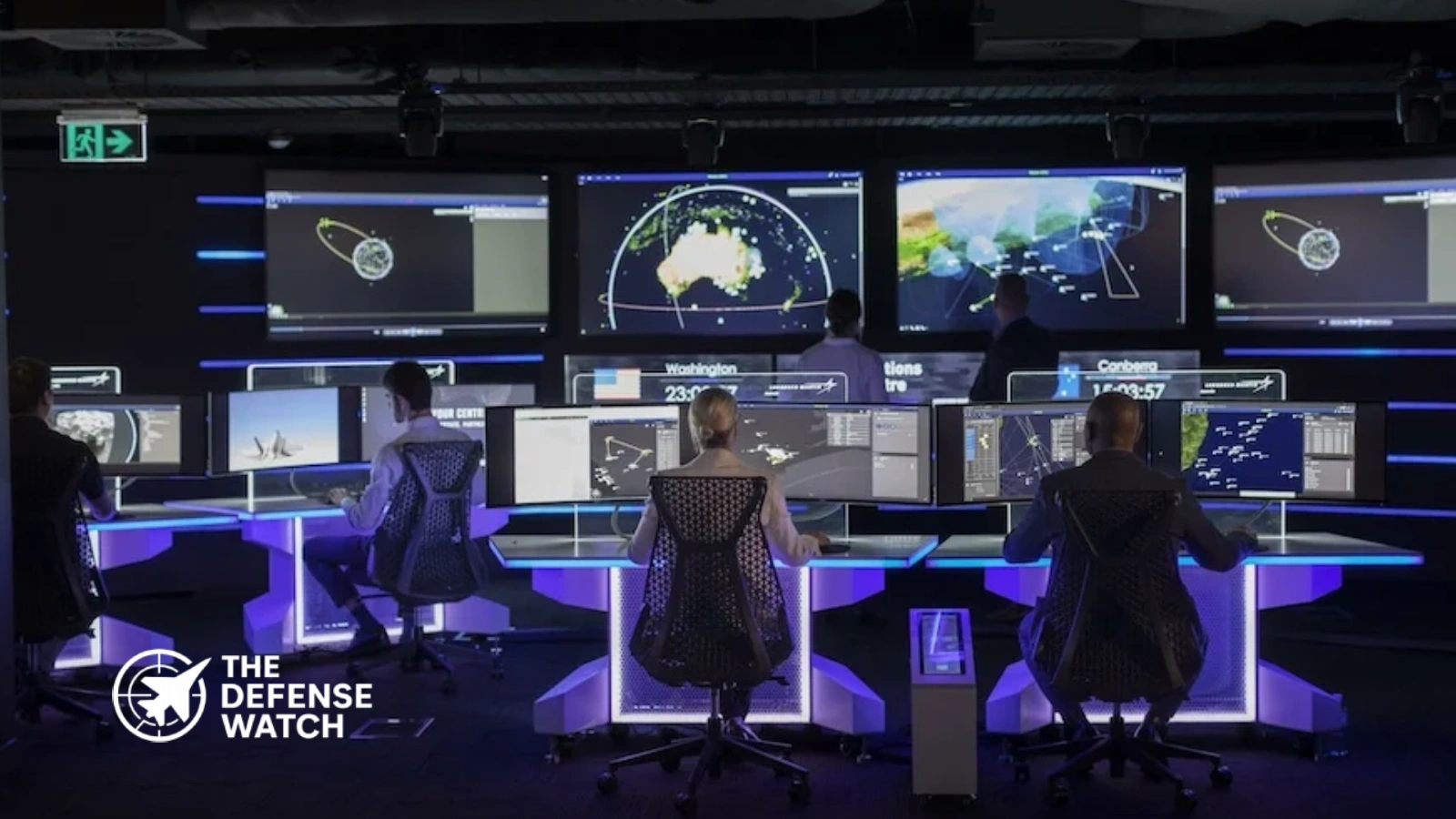
Australia’s Department of Defence describes the Joint Air Battle Management System as a foundational element of the country’s future integrated air and missile defense capability. The system is intended to connect information from different ADF platforms and systems, giving commanders a more comprehensive view of the battlespace and supporting faster decision-making.
The distinction between the two figures is important. The <strong>A$1.32 billion</strong> figure refers to Lockheed Martin Australia’s Tranche 2B contract, while the Australian government’s <strong>A$2.4 billion</strong> announcement covers the wider second-tranche investment in air and missile defense capabilities.
What AIR6500 Tranche 2B Will Deliver
Under Tranche 2B, Lockheed Martin Australia will work with Australia’s Department of Defence and local industry to enhance the AIR6500 architecture with advanced command-and-control aids, expanded communications and cybersecurity capabilities. The objective is to maintain resilient, networked sensor and command-and-control capabilities while integrating them with Australia’s targeting enterprise, allies and partners.
The program therefore goes beyond the acquisition of a single radar or interceptor. Its central function is to provide the digital architecture through which information from multiple sensors and operational systems can be combined and used by commanders.
That distinction is significant for integrated air and missile defense. Individual sensors and weapons can provide detection or interception capabilities, but their effectiveness depends heavily on how quickly information moves between sensing, identification, command, targeting and engagement functions.
Australia’s Department of Defence has previously described JABMS as a joint system-of-systems that will connect disparate ADF systems and platforms across multiple domains.
Key AIR6500 Tranche 2B Elements
| Area | Tranche 2B Focus |
|---|---|
| Contract value | A$1.32 billion |
| Duration | Six years |
| Prime contractor | Lockheed Martin Australia |
| Core capability | Joint Air Battle Management System |
| Command and control | Advanced C2 aids |
| Communications | Expanded network connectivity |
| Cybersecurity | Enhanced cyber protection |
| Integration | ADF targeting enterprise, allies and partners |
| Workforce | More than 360 skilled personnel currently supported |
| Planned workforce | More than 400 personnel within 18 months |
The workforce figures were provided by Lockheed Martin Australia as part of the contract announcement. The company said more than 360 engineers and technical specialists are currently supporting the program and that it plans to expand the workforce beyond 400 within 18 months.
AIR6500 Is Becoming the Backbone of Australia’s Integrated Air Defense
Australia’s approach places command and control at the center of its future air and missile defense architecture.
The government says AIR6500 will connect current and future defense platforms, including <strong>Hobart-class destroyers, F-35A Lightning II aircraft and the accelerated Medium-Range Ground-Based Air Defence system</strong>. This is intended to allow the ADF to operate these capabilities as part of a more integrated force.
The architecture also builds on earlier AIR6500 work.
In 2024, Australia awarded Lockheed Martin Australia an approximately A$500 million contract for the next stage of the Joint Air Battle Management System. That phase included development of the core command-and-control architecture, deployable air-battle management capabilities and initial integration with priority platforms.
Lockheed Martin says work completed during Tranche 2A included a modular battle-management prototype, two joint tactical operations centers and a persistent operations node for testing and evaluation. The company has also trained Royal Australian Air Force personnel and completed the fit-out of an AIR6500 integration laboratory in Adelaide.
This progression matters because Australia is moving from developing individual components toward building an operational architecture capable of connecting them.
Four CEA Radars Provide Part of the Sensor Layer
AIR6500 is not solely a Lockheed Martin program.
The first tranche includes four advanced active electronically scanned array radars manufactured by Canberra-based CEA Technologies. Australia’s Department of Defence says these radars are intended to provide greater detection range and accuracy against aircraft and missile threats, giving commanders additional warning and decision time.
The radar layer and the battle-management layer perform different functions.
The radar detects and tracks objects. The command-and-control architecture receives and processes information from available sensors and other sources, creates a broader operational picture and distributes information to relevant users and systems.
The value of an integrated architecture is therefore not measured solely by the performance of an individual sensor. It also depends on data quality, communications, processing, interoperability and the speed with which information can reach the appropriate decision-maker or weapon system.
Why Allied Interoperability Matters
The latest AIR6500 contract explicitly emphasizes integration with allies and partners.
Australia operates closely with the United States and other regional partners, including through long-standing arrangements such as ANZUS and increasingly integrated defense activities across the Indo-Pacific. The ability to exchange usable information between national command networks can become particularly important when air and missile threats extend across large geographic areas.
AIR6500 is being developed to connect Australia’s targeting enterprise with allied and partner capabilities.
For the United States, this type of architecture can also have implications for coalition operations. Australia’s F-35A fleet, naval combatants and other systems can contribute sensors and effects to joint operations, but that contribution depends on secure communications, compatible data exchange and command structures that can operate across national boundaries.
The challenge is not simply connecting more systems. Networks must maintain reliable information flows while operating in environments where communications can be disrupted, degraded or attacked.
Cybersecurity Is Becoming a Core Air Defense Requirement
Tranche 2B specifically includes cybersecurity improvements alongside expanded communications and command-and-control capabilities. That reflects a broader shift in the design of modern integrated air and missile defense systems.
A network that links sensors, command centers, targeting systems and weapons becomes a critical operational dependency. Protecting the network, its data and the integrity of the information being exchanged is therefore part of the air defense problem rather than a separate information-technology concern.
Australia’s own digital engineering work on AIR6500 has emphasized software integration laboratories, digital twins, modeling and simulation, and engineering tools intended to support interoperability and future technology insertion.
That approach is intended to make the architecture adaptable as new sensors, weapons and command systems are introduced.
The Broader A$2.4 Billion AIR6500 Investment
The Lockheed Martin contract sits within a larger A$2.4 billion Australian government investment announced September 9.
The government said the investment will be made over six years and is part of a broader commitment of A$30 billion over the coming decade for a layered, integrated air and missile defense system.
The Australian government also said the second tranche will replace the existing system and modernize air surveillance and aircraft-control functions while supporting defense operations in Australia and overseas.
The investment is consequently about more than protecting individual bases or military units. It is intended to establish an architecture through which Australia’s air defense forces can operate as an integrated network.
Australian Industry Is Central to the Program
Sovereign industrial capability is another major element of AIR6500.
The Australian government said the A$2.4 billion investment will support more than 360 highly skilled Australian jobs. Lockheed Martin Australia has separately stated that a substantial share of the Tranche 2B work will be performed by Australian industry partners.
Earlier AIR6500 work involved companies including Boeing Defence Australia, C4i, Leidos Australia, Lucid Consulting Australia, Raytheon Australia, Shoal Group and Silentium Defence.
Lockheed Martin Australia is also investing A$85.9 million in a national integrated air and missile defense facility, according to the company.
For Australia, sustaining engineering and integration expertise domestically is strategically important because an air and missile defense architecture must evolve as threats, sensors, communications systems and weapons change.
What AIR6500 Means for Indo-Pacific Defense
The immediate effect of Tranche 2B is an expansion of Australia’s ability to integrate information across its own air and missile defense forces.
The longer-term significance is the creation of a command-and-control architecture designed for coalition operations and future capability growth.
Australia faces a geographically demanding operating environment in which air and maritime approaches cover large distances. A networked architecture can help distribute sensor information and coordinate responses across geographically separated forces, although the effectiveness of that architecture will ultimately depend on communications resilience, sensor coverage, interoperability and the performance of connected defensive systems.
AIR6500 also fits into Australia’s broader effort to build a layered air and missile defense capability rather than relying on a single interceptor, radar or platform.
That approach is increasingly important as modern forces must account for a wider range of threats, including aircraft, cruise missiles, ballistic missiles and uncrewed systems.
A Significant Step Toward Networked Air and Missile Defense
Lockheed Martin Australia’s A$1.32 billion Tranche 2B contract marks another stage in Australia’s effort to build a nationally integrated air and missile defense architecture.
The system is being designed around the principle that sensors, command networks, targeting systems and defensive platforms should operate as part of a connected force rather than as isolated capabilities.
The Australian government’s broader A$2.4 billion second-tranche investment provides the financial framework for that effort, while Lockheed Martin’s contract focuses on advancing and sustaining the Joint Air Battle Management System at the center of the architecture.
For Australia and its allies, the central issue will be whether AIR6500 can translate this network architecture into faster, more resilient and more coordinated responses under demanding operational conditions.