U.S. Navy ARAV-6 Launch Highlights Pacific Dragon 2026
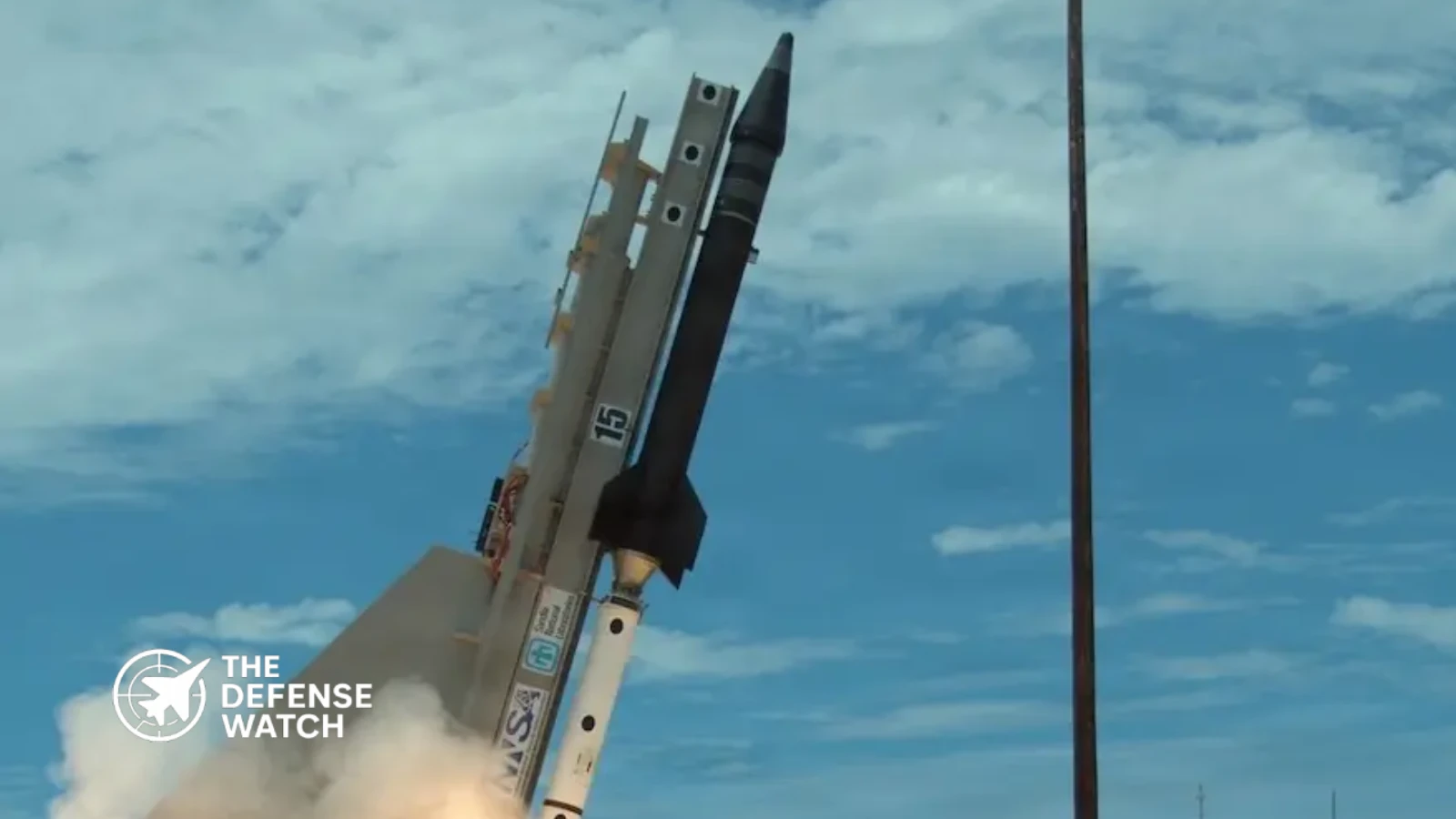
The U.S. Navy has released an image of an Aegis Readiness Assessment Vehicle Six, or ARAV-6, launching from the Pacific Missile Range Facility in Hawaii during Pacific Dragon 2026, a multinational ballistic missile defense exercise led by U.S. 3rd Fleet. The launch took place August 6 as allied and partner forces trained to improve coordinated detection, tracking and engagement of ballistic missile threats.
Takeaways
The ARAV-6 launch formed part of a broader multinational effort to improve ballistic missile defense interoperability in the Indo-Pacific.
1. ARAV-6 Launched in Hawaii
The U.S. Navy released an image of an Aegis Readiness Assessment Vehicle Six launching from the Pacific Missile Range Facility during Pacific Dragon 2026.
2. Multinational Missile Defense Exercise
Pacific Dragon 2026 brought together forces from Australia, Chile, Italy, Japan, South Korea, Spain and the United States for ballistic missile defense and tactical data-link training.
3. Focus on Interoperability
The exercise emphasized shared tactical data links, coordinated ballistic missile defense operations and procedures for multinational integrated air and missile defense.
4. ARAV Targets Simulate Ballistic Threats
Kratos describes the ARAV family as configurable short and medium-range ballistic missile targets designed to emulate different threat profiles for defense testing.
5. Flight III Aegis Destroyer Participated
The U.S. Navy deployed USS Jack H. Lucas, the first Flight III Arleigh Burke-class destroyer, equipped with Baseline 10 and the AN/SPY-6 radar.
Pacific Dragon 2026 was conducted in waters around the Hawaiian Islands from August 6 to 13, according to the U.S. 3rd Fleet. The exercise combined ballistic missile defense operations with tactical data-link information sharing and broader integrated air and missile defense activities.
The exercise involved the U.S. Missile Defense Agency and forces from Australia, Chile, Italy, Japan, the Republic of Korea, Spain and the United States. This year’s iteration also expanded the exercise’s operational scope by introducing Chilean and Spanish participation and a multi-mission event combining ballistic missile defense and integrated air and missile defense scenarios.
What the ARAV-6 Launch Represents
The ARAV family is not an operational ballistic missile. It is a threat-representative target system used to provide realistic targets for missile defense testing and training.
Kratos, which supports the ARAV family, describes its vehicles as configurable short and medium-range ballistic missile targets capable of emulating different threat profiles. The company says the family uses advanced staging to provide flexibility in trajectory design and has supported more than 50 successful defense missions.
The Navy and Missile Defense Agency have used ARAV targets for years to evaluate Aegis ballistic missile defense capabilities. Earlier ARAV missions were designed to provide low-cost, flight-proven targets that could support tracking, engagement and crew training.
That distinction is important when interpreting the ARAV-6 launch image. The vehicle’s purpose is to reproduce selected characteristics of a ballistic threat so that sensors, command systems and interceptors can be evaluated under controlled conditions.
ARAV Family Provides Flexible Ballistic Missile Targets
Kratos currently identifies three principal ARAV configurations: Type B, Type C and Type TTO.
| ARAV Configuration | General Configuration | Key Characteristics |
|---|---|---|
| ARAV Type B | Two-stage, spin-stabilized | Terrier first stage and Oriole second stage |
| ARAV Type C | Two-stage, spin-stabilized | Talos MK11 first stage and Castor IA second stage |
| ARAV Type TTO | Three-stage, spin-stabilized | Two Terrier stages and an Oriole third stage |
Kratos states that the Type B configuration provides selectable flight events and can incorporate optional thrust-vector control. The Type C uses a Talos MK11 first stage and Castor IA second stage, while the three-stage TTO configuration provides additional trajectory and payload options.
Kratos does not publicly provide a separate technical specification sheet for the specific ARAV-6 designation in its current ballistic systems material. As a result, individual performance characteristics should not be attributed to ARAV-6 unless they are confirmed by the Navy, MDA or the manufacturer.
Pacific Dragon 2026 Focused on Allied Missile Defense Integration
Pacific Dragon is designed around a problem that extends beyond the performance of an individual missile or radar: how several countries combine sensors, communications networks, command systems and weapons during a missile engagement.
The 2026 exercise included both in-port and underway phases. In-port activities included interoperability training and work at the Pacific Integrated Air and Missile Defense Center before forces moved into maritime operations.
The U.S. 3rd Fleet said the exercise improved interoperability through shared tactical data links and coordinated ballistic missile defense operations. These activities are intended to refine the procedures required for allied forces to operate together within an integrated air and missile defense architecture.
For a multinational force, this can be as important as the interceptor itself. A missile defense engagement depends on timely detection, accurate tracking, reliable communications and a clear command relationship before a weapon is launched.
U.S. and Allied Ships Bring Different Capabilities
The participating naval forces included HMAS Sydney, the Chilean Navy’s Almirante Cochrane, Italian Navy ship Giovanni delle Bande Nere, Japan Maritime Self-Defense Force destroyer JS Kongo, Republic of Korea Navy destroyer ROKS Jeongjo the Great, Spanish Navy frigate SPS Álvaro de Bazán and U.S. Navy destroyer USS Jack H. Lucas.
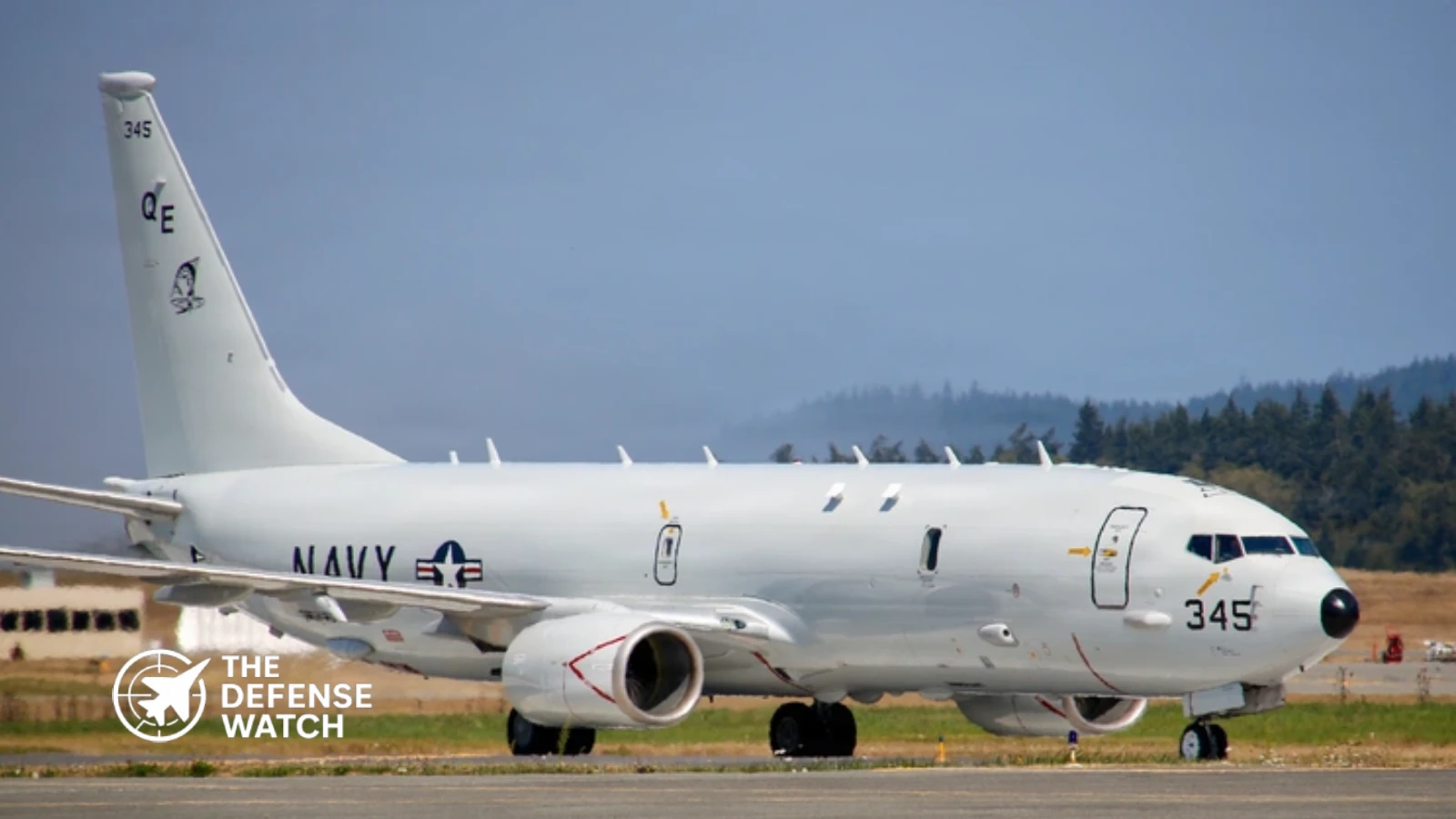
The exercise also incorporated an Australian E-7A Wedgetail airborne early warning and control aircraft, alongside U.S. P-8A Poseidon aircraft, F/A-18 Hornets, MQ-9 Reapers and BQM-177A subsonic aerial targets.
This combination allowed Pacific Dragon 2026 to move beyond a single ballistic missile defense scenario. The inclusion of aircraft and other aerial targets supported a broader integrated air and missile defense environment.
USS Jack H. Lucas Brings Flight III Aegis Capability
A notable U.S. Navy participant was USS Jack H. Lucas, the Navy’s first Flight III Arleigh Burke-class guided missile destroyer.
The destroyer is equipped with the AN/SPY-6 radar and Aegis Baseline 10, providing the ship with the sensor and combat-system architecture associated with the Navy’s latest Arleigh Burke-class configuration.
The significance of the ship’s participation is therefore broader than the presence of another destroyer. Flight III ships are being introduced as the Navy’s next-generation surface combatants for demanding air and missile defense missions, making multinational exercises such as Pacific Dragon an opportunity to train those capabilities alongside allied systems.
The exercise also demonstrates why interoperability remains a central requirement for the U.S. Navy in the Indo-Pacific. Potential missile threats do not respect national boundaries, while regional defense networks increasingly depend on multiple sensors and weapons operated by different militaries.
Why Tactical Data Links Matter
A modern missile defense architecture is built around the rapid movement of information.
A sensor may detect a target without being the system that ultimately engages it. Information therefore has to move across the network, be processed into an actionable track and reach an appropriate command-and-control node or weapon system.
Pacific Dragon’s tactical data-link component addresses this layer of the problem. The exercise specifically focused on information sharing and coordinated operations among participating forces.
The practical objective is not simply to prove that individual systems work. It is to establish whether different national forces can exchange usable information quickly enough and with sufficient accuracy to support a coordinated defense response.
That becomes increasingly important as air and missile defense expands from individual ship or battery engagements toward networked regional architectures.
Pacific Dragon’s Broader Indo-Pacific Significance
The exercise took place against the wider requirement for integrated air and missile defense across the Indo-Pacific. The U.S. Navy’s Pacific forces operate with allies and partners whose ships, aircraft, sensors and weapons systems were developed under different national requirements.
Pacific Dragon provides a controlled environment for testing how those capabilities work together.
The 2026 exercise also added a multi-mission element combining ballistic missile defense with integrated air and missile defense scenarios. That development reflects the operational reality that forces may need to address different airborne threats within the same battlespace rather than treating ballistic missile defense as an isolated mission.
For the United States, the value lies partly in developing repeatable procedures with regional partners. For participating allies, the exercise provides an opportunity to train alongside U.S. Navy and Missile Defense Agency forces and improve familiarity with multinational command, control and information-sharing processes.
ARAV Targets Support Repeated Missile Defense Testing
The ARAV program also illustrates an important element of missile defense development: realistic testing requires dedicated targets.
Kratos has previously supplied ARAV targets for U.S. Navy and allied missile defense exercises. In Pacific Dragon 2022, for example, an ARAV-B short-range ballistic missile target was launched and successfully intercepted by USS Fitzgerald using an SM-3 Block IA interceptor.
The company has also supported other multinational missile defense exercises, including NATO’s Formidable Shield campaign, where ARAV ballistic targets have been used for live-fire engagements involving Standard Missile-3 interceptors.
These exercises provide data that can be used to assess sensors, combat systems, engagement planning and interceptor performance. They also allow crews to practice the decision-making and coordination required for a real engagement without relying solely on computer simulations.
What Pacific Dragon 2026 Shows About Modern Missile Defense
The ARAV-6 launch itself is only one part of Pacific Dragon 2026. The more important development is the combination of a realistic ballistic missile target with multinational sensors, combat systems, tactical data links and command procedures.
The exercise therefore provides a useful demonstration of how modern missile defense is moving toward networked operations.
For the U.S. Navy and its Indo-Pacific partners, the ability to share information and coordinate actions across national boundaries is increasingly important. A successful regional defense architecture depends not only on the range or speed of individual weapons, but also on whether participating forces can detect, track, communicate and respond as a connected force.
Pacific Dragon 2026 offered another opportunity to test those relationships in a live operational environment around Hawaii.
The U.S. Navy’s release of the ARAV-6 launch image provides a visible snapshot of that effort, while the wider exercise demonstrates the continuing U.S. focus on integrated air and missile defense and multinational interoperability in the Indo-Pacific.
Enjoying our coverage?
Make The Defense Watch a preferred source on Google to see more of our geopolitical and defense insights when relevant to you.