• Home
  • About
  • Defense Systems
  • Manufacturer
  • Comparisons
  • Compare 
  • Tools
TheDefenseWatch.com
  • Aerospace & Aviation
  • Military & Ordnance
  • Naval & Maritime
  • Cyber & Space Defense
  • Policy & Strategy
  • Global News
  • Tools Library
    • Smart Calculator
    • Drone Flight Time Calculator
    • Drone Range Calculator
    • Counter-Drone Jammer Effective Range Calculator
    • Counter-Battery Radar Detection Calculator
    • Artillery Fire Correction Calculator
    • Thermal Camera Detection Range Calculator
    • Missile Range & Time-of-Flight Calculator
    • Radar Detection Range Calculator
    • FPV Strike Drone Payload vs Range Calculator
    • Loitering Munition Endurance Calculator
    • Sniper Ballistic Drop & Windage Calculator
    • Bullet Drop Calculator
    • U.S. Army Combat Fitness Test (ACFT) Calculator
    • Military Pension Calculator
    • Military Retirement Calculator
    • Military Pension Calculator
    • Large Number Calculator
Font ResizerAa

TheDefenseWatch.com

The Defense Watch | U.S. & Global Defense News, Analysis & Military Updates

Search
  • Home
  • About
  • Defense Systems
  • Manufacturer
  • Comparisons
  • Compare 
  • Tools

Stay Updated

Get the latest update

Subscribe

Explore

  • Drone
  • Fighter Jets & Military Aircraft
  • Hypersonic Weapons
  • Aircraft Carriers
  • Strategic History & Missions
  • Tools Library
Home » Royal Navy Moves To Replace Wildcat Helicopters With Drones As UK Accelerates Shift To Autonomous Warfare
Drones & UAVsNaval & Maritime

Royal Navy Moves To Replace Wildcat Helicopters With Drones As UK Accelerates Shift To Autonomous Warfare

Daniel Mercer / Defense & Aerospace Analyst
Last updated: July 1, 2026 7:42 am
Daniel Mercer / Defense & Aerospace Analyst
Share
2 Min Read
UK Wildcat deployment Eastern Mediterranean
SHARE
Follow The Defense Watch on Google:

Executive Summary:

The United Kingdom is preparing to replace Royal Navy Wildcat helicopters with uncrewed aerial systems as part of its 2026 Defence Investment Plan. The move reflects a wider modernization effort that prioritizes autonomous reconnaissance, artificial intaelligence, and distributed sensor networks while reducing risks to aircrews in increasingly contested environments.

Royal Navy Begins Transition From Wildcat Helicopters To Drones

The Royal Navy Wildcat replacement program is moving from concept toward implementation as the UK government reshapes military aviation under its newly released Defence Investment Plan.

Contents
Royal Navy Begins Transition From Wildcat Helicopters To DronesPart Of A Much Broader Defense Modernization StrategyWildcat Has Remained An Important Naval AircraftWhy Britain Is Choosing DronesStrategic AnalysisWhat Comes Next

According to the Ministry of Defence, the transition will see Wildcat helicopters gradually replaced in reconnaissance missions by uncrewed aerial systems capable of scouting ahead of friendly forces without exposing aircrews to enemy air defenses.

Officials said the decision reflects operational lessons learned from the war in Ukraine, where inexpensive drones have increasingly displaced traditional reconnaissance aircraft in high-threat environments. Rather than sending crewed helicopters deep into contested airspace, autonomous platforms can provide persistent surveillance at significantly lower cost and risk.

Part Of A Much Broader Defense Modernization Strategy

The retirement of Wildcat reconnaissance helicopters is one element of Britain’s broader shift toward autonomous warfare.

- Advertisement -

The Defence Investment Plan allocates approximately £5 billion to drones and autonomous systems while expanding investment in artificial intelligence, digital targeting networks, electronic warfare, and long-range precision fires.

The strategy also includes:

Modernization AreaPlanned Capability
Autonomous systemsExpanded air, surface, and underwater drones
AI integrationDigital targeting web connecting sensors and shooters
Electronic warfareImproved battlefield sensing and resilience
Long-range firesGreater strike capability for land forces
Naval operationsHybrid fleets combining crewed and uncrewed platforms

Together, these investments represent one of the UK’s largest shifts toward autonomous military capabilities in decades.

Wildcat Has Remained An Important Naval Aircraft

The decision does not diminish the operational value the Wildcat has provided.

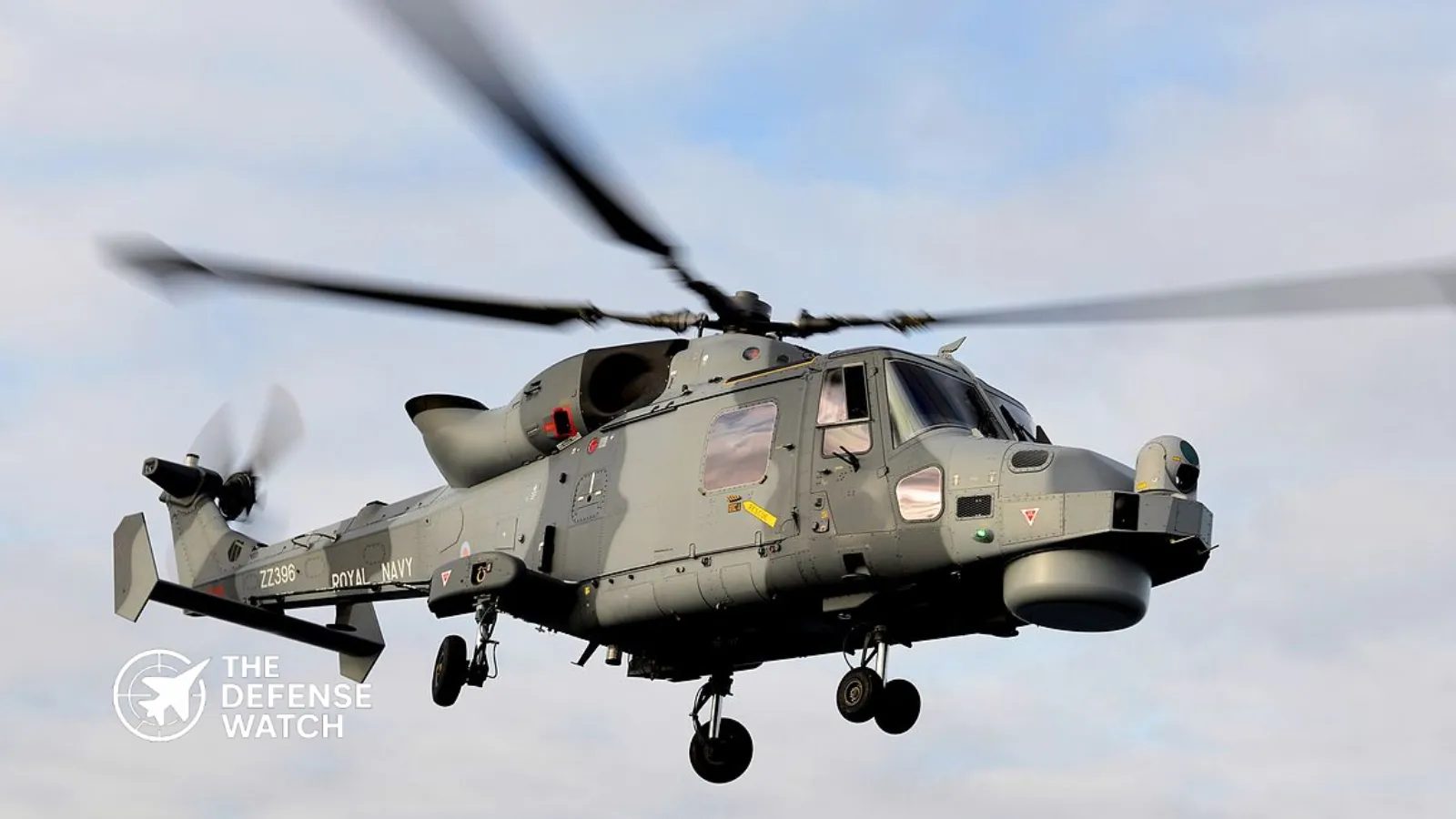
The Royal Navy’s AW159 Wildcat HMA2 has served in anti-surface warfare, maritime surveillance, force protection, and counter-drone operations. Earlier this year, Wildcats deployed to Cyprus armed with Martlet missiles to strengthen British air defenses against unmanned aerial threats in the Eastern Mediterranean.

  • AW159 Wildcat Helicopter

    AW159 Wildcat Helicopter

    • Advanced Avionics: Fully digital cockpit with integrated mission systems
    • High Maneuverability: Optimized rotor and flight control design
    • Multi-role Capability: Naval strike, reconnaissance, and utility missions
    • Superior Survivability: Defensive aids and low observable design
    • View Details →
    8.0

    The helicopter has also demonstrated growing integration with autonomous systems.

    In January, Royal Navy trials successfully linked Wildcat helicopters with multiple drones through a distributed communications network, allowing helicopter crews to receive live targeting data from uncrewed aircraft beyond visual range. The demonstration provided an early example of the UK’s emerging “hybrid air wing” concept.

    Those experiments now appear to have laid the technological groundwork for the broader transition outlined in the Defence Investment Plan.

    Why Britain Is Choosing Drones

    The operational logic behind the move is increasingly difficult for modern militaries to ignore.

    Modern battlefields are saturated with:

    • Long-range surface-to-air missiles
    • Electronic warfare systems
    • Counter-air radars
    • One-way attack drones
    • Precision-guided artillery

    These threats make low-flying reconnaissance helicopters significantly more vulnerable than they were during previous decades.

    Uncrewed aircraft offer several advantages:

    • Longer endurance over target areas
    • Lower procurement and operating costs
    • Reduced risk to personnel
    • Easier deployment in large numbers
    • Faster replacement if lost

    Military planners increasingly view drones as expendable sensors rather than high-value aviation assets that require extensive protection.

    Strategic Analysis

    Britain’s decision represents more than a platform replacement.

    It signals an institutional shift away from using helicopters as the primary battlefield reconnaissance asset and toward distributed autonomous sensor networks.

    That mirrors trends already visible across NATO. The United States, several European allies, and Indo-Pacific partners are investing heavily in crewed and uncrewed teaming rather than relying solely on traditional aviation platforms.

    For the Royal Navy, this evolution also supports the government’s wider concept of a hybrid fleet. The Defence Investment Plan calls for new Common Combat Vessels designed to command air, surface, and underwater drones while integrating autonomous systems across maritime operations.

    From a U.S. defense perspective, Britain’s approach closely aligns with ongoing efforts across NATO to create resilient, networked forces capable of operating in highly contested environments where traditional reconnaissance aircraft face increasing survivability challenges.

    The transition is unlikely to eliminate crewed helicopters entirely. Wildcats will continue performing missions that require human judgment, weapons employment, and maritime aviation flexibility during the transition period. However, reconnaissance, historically one of the helicopter’s defining missions, is expected to become increasingly autonomous over the coming years.

    What Comes Next

    The British Army’s Wildcat reconnaissance fleet is scheduled to begin retiring from 2027, with uncrewed systems assuming its scouting role. Although the Ministry of Defence has not yet detailed the specific drone platforms that will replace every Wildcat mission, officials have confirmed that future reconnaissance will rely on networked autonomous systems integrated with AI-enabled targeting and electronic warfare capabilities.

    The transition marks one of the clearest examples yet of how lessons from recent conflicts are reshaping Western military doctrine, replacing traditional reconnaissance helicopters with autonomous systems designed for contested battlefields.

Enjoying our coverage?

Make The Defense Watch a preferred source on Google to see more of our geopolitical and defense insights when relevant to you.


TAGGED:Royal NavyWildcat helicopter
Share This Article
Facebook Copy Link Print
ByDaniel Mercer / Defense & Aerospace Analyst
Follow:
Daniel Mercer is a defense and aerospace analyst at TheDefenseWatch.com covering military aviation, aerospace technology, unmanned systems, air warfare, and defense procurement. His reporting uses official documents, government and military statements, company announcements, and other public sources.
Leave a Comment

Leave a Reply Cancel reply

Your email address will not be published. Required fields are marked *

Search Defense Systems

Latest Defense Systems

  • F-15J Eagle Fighter Jet F-15J Eagle Fighter Jet
  • China’s GJ-21 Stealth Drone China’s GJ-21 Stealth Drone
  • China’s GJ-11 Stealth Drone China’s GJ-11 Stealth Drone
  • F-15EX Eagle Fighter Jet F-15EX Eagle Fighter Jet
  • TRML-4D Radar TRML-4D Radar
  • F-47A Fighter Jet F-47A Fighter Jet
  • China DF-61 Missile China DF-61 Missile
  • B61 Nuclear Bomb B61 Nuclear Bomb
  • Japan E-767 Airborne Japan E-767 Airborne

Recent Compares

  • J-10C vs JF-17 Thunder: Which Fighter Is More Capable? J-10C vs JF-17 Thunder: Which Fighter Is More Capable? View Comparison →
  • Tejas vs Gripen: Key Differences and Capabilities Tejas vs Gripen: Key Differences and Capabilities View Comparison →
  • Tejas vs MiG-21 Bison: How India Replaced Its Iconic Supersonic Fighter Tejas vs MiG-21 Bison: How India Replaced Its Iconic Supersonic Fighter View Comparison →
  • F-35 vs F-16: Stealth, Sensors and Combat Roles F-35 vs F-16: Stealth, Sensors and Combat Roles View Comparison →
  • Tejas Fighter Jet vs F-16 Fighting Falcon: Capability Compared Tejas Fighter Jet vs F-16 Fighting Falcon: Capability Compared View Comparison →
  • Rafale Fighter Jet vs F-16 Fighting Falcon : Which Fighter Has the Edge? Rafale Fighter Jet vs F-16 Fighting Falcon : Which Fighter Has the Edge? View Comparison →
  • Su-57 Fighter Jet vs J-20 Fighter Jet: Stealth and Air Combat Compared Su-57 Fighter Jet vs J-20 Fighter Jet: Stealth and Air Combat Compared View Comparison →
  • Mirage 2000 vs Tejas Mk1A: Legacy Combat Power vs Indigenous Modernization Mirage 2000 vs Tejas Mk1A: Legacy Combat Power vs Indigenous Modernization View Comparison →
  • Rafale Fighter Jet vs F-22 Raptor: Which Air Dominance Fighter Has the Edge? Rafale Fighter Jet vs F-22 Raptor: Which Air Dominance Fighter Has the Edge? View Comparison →
  • Tejas Fighter Jet vs. Rafale Fighter Jet: India’s Indigenous Fighter Meets France’s Proven Multirole Combat Aircraft Tejas Fighter Jet vs. Rafale Fighter Jet: India’s Indigenous Fighter Meets France’s Proven Multirole Combat Aircraft View Comparison →

Recent Posts

  • Boeing B-1B LAM Pylon Clears Design Review, Advancing Hypersonic Weapons Integration
  • Pakistan, Türkiye Explore Deeper Air Force Cooperation in Drones and Electronic Warfare
  • Meta Muse AI Agent Faces Privacy Concerns After Reports of Unauthorized Data Access
  • Trump Nominates Christopher LaNeve for Permanent U.S. Army Chief of Staff
  • Sweden and UK Plan Meteor Missile Support for Ukraine’s Gripen Fighters

You Might Also Like

UK workboat contract review
Naval & MaritimeNaval Strategy & Maritime Security

UK Workboat Contract Sparks Calls for Review After £200m Deal Awarded Abroad

January 9, 2026
USS Zumwalt sea trials
Naval & MaritimeNaval Strategy & Maritime Security

U S Navy First Stealth Hypersonic Strike Destroyer USS Zumwalt Completes Builder’s Sea Trials

September 7, 2026
New Zealand MH-60R Seahawk order
Defense ContractsNaval & Maritime

New Zealand Signs Deal for Five MH-60R Seahawk Helicopters

October 20, 2026
India NASM-SR missile test
Naval & MaritimeNaval Strategy & Maritime Security

India Expands Naval Strike Reach With NASM-SR Helicopter Missile Salvo

September 12, 2026

Logo

Copyright © 2026 TheDefenseWatch.com

Helpful Links

  • Home
  • About Us
  • Privacy Policy
  • Terms of Use / Disclaimer
  • U.S. Privacy Notice – CCPA Compliance

Defense Systems

  • Defense Systems
  • Comparisons 
  • Manufacturer
  • Tactical Calculators

Popuplar

Which 5 Air Forces Possess the Costliest Fighter Jet Fleets in the World
Evolving Strategic Value: Carrier Strike Groups in the Indo-Pacific’s Future Security Architecture
Autonomous Weapon Systems Spark U.S. Ethics Debate Amid Rapid Military AI Integration

We report on developments involving military forces, governments, defense companies, research organizations, and security institutions around the world. 

Welcome Back!

Sign in to your account

Username or Email Address
Password

Lost your password?

Enjoying our coverage?

Make The Defense Watch a preferred source on Google to see more insights.