• Home
  • About
  • Defense Systems
  • Manufacturer
  • Comparisons
  • Compare 
  • Tools
TheDefenseWatch.com
  • Aerospace & Aviation
  • Military & Ordnance
  • Naval & Maritime
  • Cyber & Space Defense
  • Policy & Strategy
  • Global News
  • Tools Library
    • Smart Calculator
    • Drone Flight Time Calculator
    • Drone Range Calculator
    • Counter-Drone Jammer Effective Range Calculator
    • Counter-Battery Radar Detection Calculator
    • Artillery Fire Correction Calculator
    • Thermal Camera Detection Range Calculator
    • Missile Range & Time-of-Flight Calculator
    • Radar Detection Range Calculator
    • FPV Strike Drone Payload vs Range Calculator
    • Loitering Munition Endurance Calculator
    • Sniper Ballistic Drop & Windage Calculator
    • Bullet Drop Calculator
    • U.S. Army Combat Fitness Test (ACFT) Calculator
    • Military Pension Calculator
    • Military Retirement Calculator
    • Military Pension Calculator
    • Large Number Calculator
Font ResizerAa

TheDefenseWatch.com

The Defense Watch | U.S. & Global Defense News, Analysis & Military Updates

Search
  • Home
  • About
  • Defense Systems
  • Manufacturer
  • Comparisons
  • Compare 
  • Tools

Stay Updated

Get the latest update

Subscribe

Explore

  • Drone
  • Fighter Jets & Military Aircraft
  • Hypersonic Weapons
  • Aircraft Carriers
  • Strategic History & Missions
  • Tools Library
Home » Italy Moves To Expand GCAP Fighter Program As More Nations Seek Entry
Aerospace & AviationFighter Jets & Military Aircraft

Italy Moves To Expand GCAP Fighter Program As More Nations Seek Entry

Daniel Mercer / Defense & Aerospace Analyst
Last updated: September 7, 2026 5:50 am
Daniel Mercer / Defense & Aerospace Analyst
Share
2 Min Read
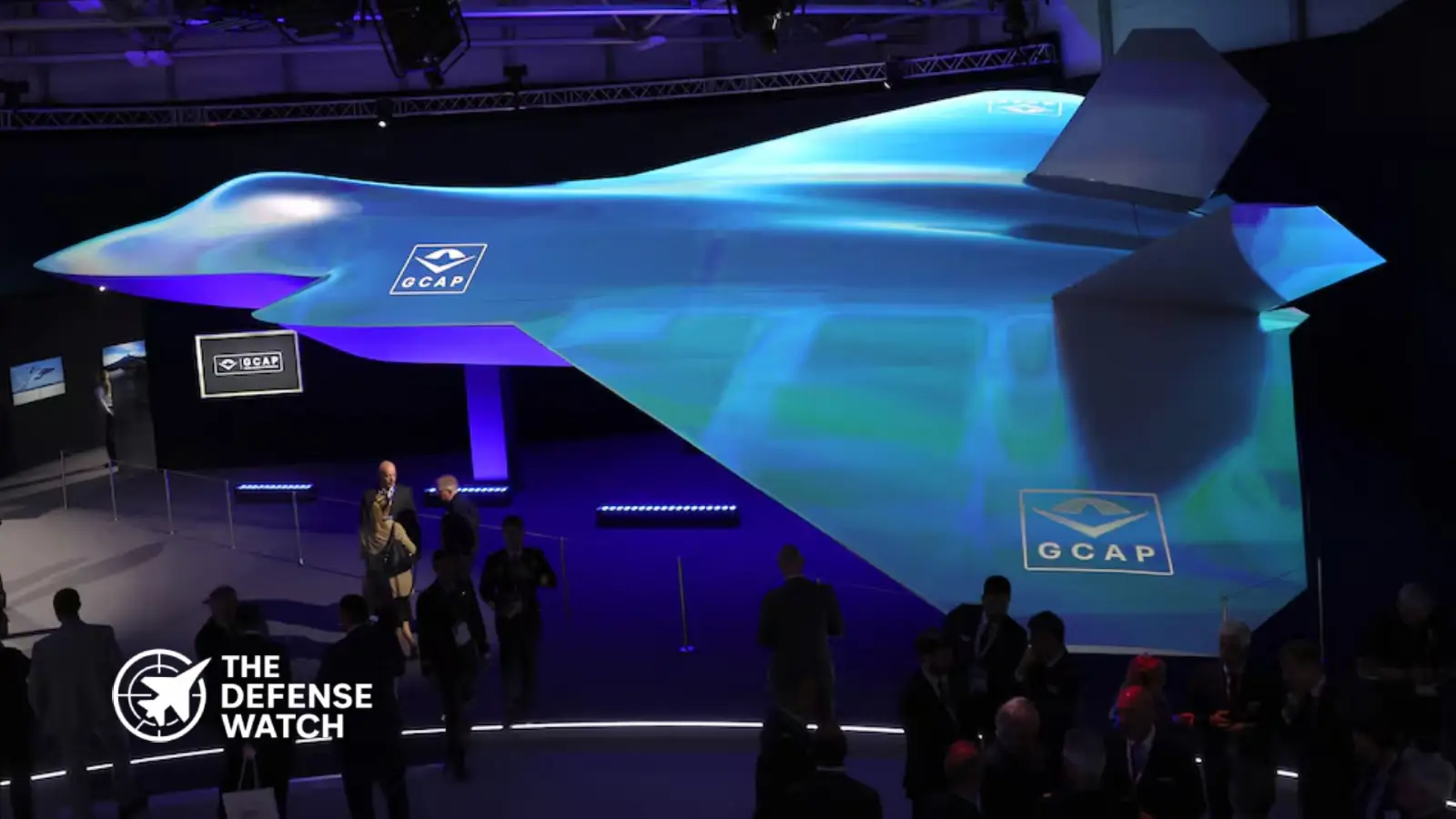
Concept model of the GCAP next generation fighter aircraft displayed during an international aerospace exhibition.
Concept model of the GCAP next generation fighter aircraft
SHARE

Executive Summary:

Italy has signaled that additional countries could join the Global Combat Air Programme (GCAP), the multinational effort to develop a next generation fighter aircraft by 2035. Canadian interest appears to be the most advanced, while Germany and Saudi Arabia have also been mentioned as potential future participants. Expansion could spread development costs and strengthen the program’s industrial base.

GCAP Fighter Program Gains New International Interest

The GCAP fighter program could soon attract additional international partners as Italy pushes for broader participation in one of the world’s most ambitious military aviation projects.

Contents
GCAP Fighter Program Gains New International InterestWhat Is The Global Combat Air Programme?Germany Emerges As A Potential PartnerAnalysis: Why Germany MattersRising Costs Drive Interest In ExpansionCanada’s Observer Role Could Be First StepStrategic Implications

Speaking in Rome on June 23, Italian Defense Minister Guido Crosetto said several countries have expressed interest in the Global Combat Air Programme, which is jointly led by the United Kingdom, Italy, and Japan. According to Crosetto, Canada currently appears to be the most interested nation, initially seeking observer status within the program.

  • GCAP Sixth-Generation Stealth Fighter

    GCAP Sixth-Generation Stealth Fighter

    • Primary Effect / Kill Mechanism: Kinetic strike, air dominance, electronic warfare
    • Operational Range / Engagement Envelope: ~1,500–2,000 km
    • Autonomy / Guidance Level: Human-in-loop with AI decision support
    • Power / Propulsion Type: Adaptive-cycle twin-engine turbine
    • View Details →
    8.0

    Crosetto added that Italy would also welcome participation from Germany, Saudi Arabia, or other interested nations, arguing that a larger partnership would increase industrial cooperation while reducing financial burdens on existing members.

    What Is The Global Combat Air Programme?

    The Global Combat Air Programme (GCAP) was launched in 2022 through a partnership between the United Kingdom, Italy, and Japan. The initiative aims to deliver a sixth generation fighter aircraft by 2035, integrating advanced sensors, networking technologies, artificial intelligence, and unmanned teaming capabilities.

    The industrial team behind the aircraft includes:

    • BAE Systems
    • Leonardo
    • Mitsubishi Heavy Industries through the Japan Aircraft Industrial Enhancement Corporation (JAIEC) consortium.

    Program partners intend to field the aircraft by 2035, positioning it as a successor to current fourth and fifth generation combat aircraft.

    Germany Emerges As A Potential Partner

    Interest in Germany joining GCAP has intensified following the collapse of the rival Future Combat Air System (FCAS) effort involving Germany, France, and Spain.

    Earlier this month, Germany and France reportedly agreed to abandon the long troubled FCAS project after failing to resolve industrial disagreements among participating companies.

    Leonardo CEO Lorenzo Mariani recently described Germany as a particularly valuable potential partner because of its industrial expertise and manufacturing capabilities. He noted that German participation could strengthen the program’s long term prospects, although integrating a new full partner at this stage could require adjustments to existing agreements.

    Analysis: Why Germany Matters

    Germany’s potential involvement carries significance beyond additional funding.

    The country remains one of Europe’s largest defense markets and possesses a substantial aerospace industrial base. Bringing Germany into GCAP could increase production scale, improve export opportunities, and strengthen European defense cooperation at a time when many NATO members are accelerating military modernization.

    • GCAP Sixth-Generation Stealth Fighter

      GCAP Sixth-Generation Stealth Fighter

      • Primary Effect / Kill Mechanism: Kinetic strike, air dominance, electronic warfare
      • Operational Range / Engagement Envelope: ~1,500–2,000 km
      • Autonomy / Guidance Level: Human-in-loop with AI decision support
      • Power / Propulsion Type: Adaptive-cycle twin-engine turbine
      • View Details →
      8.0

      However, adding a major new partner could also complicate governance, workshare arrangements, and development timelines. Current members have already spent years negotiating industrial responsibilities and technology sharing frameworks. Any expansion would need to balance new contributions against existing commitments.

      Rising Costs Drive Interest In Expansion

      Cost sharing remains one of the strongest arguments for expanding the program.

      In February 2026, Italy’s parliament approved approximately €8.77 billion for the initial phases of GCAP. Updated estimates indicate early phase costs have risen significantly compared with original projections, reflecting increasing technology development, testing, and design requirements.

      For participating governments, attracting additional partners could help distribute these costs across a broader group of nations while expanding the program’s industrial and technological resources.

      Canada’s Observer Role Could Be First Step

      Among prospective participants, Canada appears to be the closest to formal involvement.

      Italian officials identified Canada as the most interested country at present, potentially joining initially as an observer. Such a role would allow Ottawa to evaluate the program while gaining insight into technology development and future procurement options.

      Canadian participation would also align with broader efforts by Ottawa to diversify defense partnerships and strengthen cooperation with key allies beyond traditional procurement channels.

      Strategic Implications

      The growing interest surrounding the GCAP fighter program highlights a wider trend across allied nations: the rising cost and complexity of developing next generation combat aircraft increasingly require multinational collaboration.

      Unlike previous fighter programs that were often led by a single nation, sixth generation systems demand investments in artificial intelligence, advanced propulsion, secure networking, electronic warfare, and autonomous capabilities. These requirements make international partnerships more attractive and, in many cases, financially necessary.

      If additional countries ultimately join GCAP, the program could emerge as one of the largest multinational aerospace initiatives outside the United States, strengthening its position in the increasingly competitive future combat aircraft market.

TAGGED:Defense PolicyGlobal NewsMilitary Aircraft
Share This Article
Facebook Copy Link Print
ByDaniel Mercer / Defense & Aerospace Analyst
Follow:
Daniel Mercer is a defense and aerospace analyst at TheDefenseWatch.com covering military aviation, aerospace technology, unmanned systems, air warfare, and defense procurement. His reporting uses official documents, government and military statements, company announcements, and other public sources.
Leave a Comment

Leave a Reply Cancel reply

Your email address will not be published. Required fields are marked *

Search Defense Systems

Latest Defense Systems

  • F-47A Fighter Jet F-47A Fighter Jet
  • China DF-61 Missile China DF-61 Missile
  • B61 Nuclear Bomb B61 Nuclear Bomb
  • Japan E-767 Airborne Japan E-767 Airborne
  • Remington 870 Shotgun Remington 870 Shotgun
  • RUTA B1 Cruise Missile RUTA B1 Cruise Missile
  • XQ-67A Drone XQ-67A Drone
  • B-25 Mitchell Bomber B-25 Mitchell Bomber
  • F-100 Super Sabre F-100 Super Sabre

Recent Compares

  • J-10C vs JF-17 Thunder: Which Fighter Is More Capable? J-10C vs JF-17 Thunder: Which Fighter Is More Capable? View Comparison →
  • Tejas vs Gripen: Key Differences and Capabilities Tejas vs Gripen: Key Differences and Capabilities View Comparison →
  • Tejas vs MiG-21 Bison: How India Replaced Its Iconic Supersonic Fighter Tejas vs MiG-21 Bison: How India Replaced Its Iconic Supersonic Fighter View Comparison →
  • F-35 vs F-16: Stealth, Sensors and Combat Roles F-35 vs F-16: Stealth, Sensors and Combat Roles View Comparison →
  • Tejas Fighter Jet vs F-16 Fighting Falcon: Capability Compared Tejas Fighter Jet vs F-16 Fighting Falcon: Capability Compared View Comparison →
  • Rafale Fighter Jet vs F-16 Fighting Falcon : Which Fighter Has the Edge? Rafale Fighter Jet vs F-16 Fighting Falcon : Which Fighter Has the Edge? View Comparison →
  • Su-57 Fighter Jet vs J-20 Fighter Jet: Stealth and Air Combat Compared Su-57 Fighter Jet vs J-20 Fighter Jet: Stealth and Air Combat Compared View Comparison →
  • Mirage 2000 vs Tejas Mk1A: Legacy Combat Power vs Indigenous Modernization Mirage 2000 vs Tejas Mk1A: Legacy Combat Power vs Indigenous Modernization View Comparison →
  • Rafale Fighter Jet vs F-22 Raptor: Which Air Dominance Fighter Has the Edge? Rafale Fighter Jet vs F-22 Raptor: Which Air Dominance Fighter Has the Edge? View Comparison →
  • Tejas Fighter Jet vs. Rafale Fighter Jet: India’s Indigenous Fighter Meets France’s Proven Multirole Combat Aircraft Tejas Fighter Jet vs. Rafale Fighter Jet: India’s Indigenous Fighter Meets France’s Proven Multirole Combat Aircraft View Comparison →

Recent Posts

  • Marine One Explained: The Presidential Helicopter, Its Fleet and the VH-92A Transition
  • Sikorsky Wins South Korea Contract for Four S-92A+ Presidential Helicopters
  • Saudi Arabia Intercepts Missiles Targeting Riyadh as Aramco Building Is Damaged
  • US Approves Potential $1.08 Billion Black Hawk Helicopter Sale to Mexico
  • NASA Completes Final ISS Solar Array Installation, Raising Station Power Capacity by 30%

You Might Also Like

Uzbekistan J-10CE fighters
Aerospace & AviationFighter Jets & Military Aircraft

Uzbekistan Moves To Chinese J-10CE Fighters As First Aircraft Break Cover

September 9, 2026
UH-60M Black Hawk armored seat
Defense Contracts

US Army Expands UH-60M Black Hawk Crew Protection Program With $13.8 Million Contract Modification

June 8, 2026
USSOCOM OA-1K Skyraider II
Aerospace & AviationFighter Jets & Military Aircraft

USSOCOM On Track To Receive 31 OA-1K Skyraider II Aircraft By End Of FY 2026

August 17, 2026
Brazil Albatroz Vortex jet UAV
Aerospace & AviationDrones & UAVs

Brazil First Flight of Albatroz Vortex Jet UAV With Domestic ATJR 15-5 Turbine

January 31, 2026

Logo

Copyright © 2026 TheDefenseWatch.com

Helpful Links

  • Home
  • About Us
  • Privacy Policy
  • Terms of Use / Disclaimer
  • U.S. Privacy Notice – CCPA Compliance

Defense Systems

  • Defense Systems
  • Comparisons 
  • Manufacturer
  • Tactical Calculators

Popuplar

Which 5 Air Forces Possess the Costliest Fighter Jet Fleets in the World
Evolving Strategic Value: Carrier Strike Groups in the Indo-Pacific’s Future Security Architecture
Autonomous Weapon Systems Spark U.S. Ethics Debate Amid Rapid Military AI Integration

We report on developments involving military forces, governments, defense companies, research organizations, and security institutions around the world. 

Welcome Back!

Sign in to your account

Username or Email Address
Password

Lost your password?