• Home
  • About
  • Defense Systems
  • Manufacturer
  • Comparisons
  • Compare 
  • Tools
TheDefenseWatch.com
  • Aerospace & Aviation
  • Military & Ordnance
  • Naval & Maritime
  • Cyber & Space Defense
  • Policy & Strategy
  • Global News
  • Tools Library
    • Smart Calculator
    • Drone Flight Time Calculator
    • Drone Range Calculator
    • Counter-Drone Jammer Effective Range Calculator
    • Counter-Battery Radar Detection Calculator
    • Artillery Fire Correction Calculator
    • Thermal Camera Detection Range Calculator
    • Missile Range & Time-of-Flight Calculator
    • Radar Detection Range Calculator
    • FPV Strike Drone Payload vs Range Calculator
    • Loitering Munition Endurance Calculator
    • Sniper Ballistic Drop & Windage Calculator
    • Bullet Drop Calculator
    • U.S. Army Combat Fitness Test (ACFT) Calculator
    • Military Pension Calculator
    • Military Retirement Calculator
    • Military Pension Calculator
    • Large Number Calculator
Font ResizerAa

TheDefenseWatch.com

The Defense Watch | U.S. & Global Defense News, Analysis & Military Updates

Search
  • Home
  • About
  • Defense Systems
  • Manufacturer
  • Comparisons
  • Compare 
  • Tools

Stay Updated

Get the latest update

Subscribe

Explore

  • Drone
  • Fighter Jets & Military Aircraft
  • Hypersonic Weapons
  • Aircraft Carriers
  • Strategic History & Missions
  • Tools Library
Home » Saab, GA-ASI Unveil MQ-9B Airborne Early Warning Drone To Expand Persistent ISR Capability
Aerospace & AviationDrones & UAVs

Saab, GA-ASI Unveil MQ-9B Airborne Early Warning Drone To Expand Persistent ISR Capability

Daniel Mercer / Defense & Aerospace Analyst
Last updated: September 8, 2026 10:10 pm
Daniel Mercer / Defense & Aerospace Analyst
Share
2 Min Read
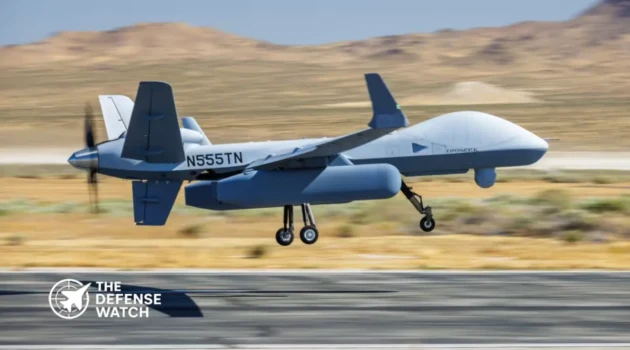
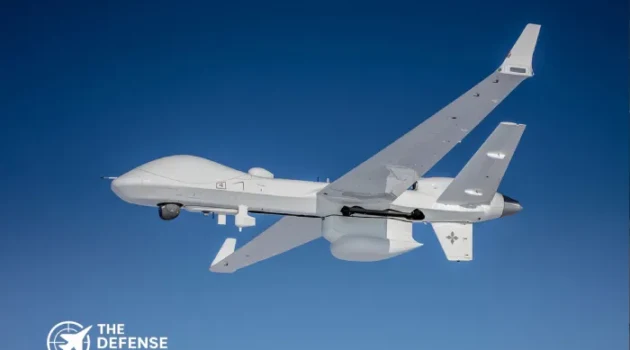
Saab LoyalEye radar integrated onto a General Atomics MQ-9B drone during airborne early warning flight testing in California
Image Source : Saab
SHARE
Follow The Defense Watch on Google:

Executive Summary:
Saab and General Atomics Aeronautical Systems successfully completed the first flight of an unmanned airborne early warning solution using the MQ-9B drone and Saab’s LoyalEye radar. The program aims to deliver long-endurance airborne surveillance capabilities while reducing operational risk to aircrews and expanding persistent ISR coverage.

(adsbygoogle = window.adsbygoogle || []).push({});

Saab And GA-ASI Advance MQ-9B Airborne Early Warning Capability

The MQ-9B airborne early warning program reached a major milestone after Saab and General Atomics Aeronautical Systems, Inc. (GA-ASI) completed the first flight of Saab’s LoyalEye radar aboard an unmanned MQ-9B aircraft.

Contents
Saab And GA-ASI Advance MQ-9B Airborne Early Warning CapabilityLoyalEye Radar Expands MQ-9B Mission SetWhy Unmanned AEW MattersGrowing Demand For Persistent ISR And Air SurveillanceStrategic Implications For Future Air Operations

The test flight took place on May 19 at GA-ASI’s Desert Horizon flight operations facility in Southern California. According to both companies, the successful sortie marks the beginning of a multi-month evaluation campaign that will conclude with a full operational capability demonstration later in 2026.

  • MQ-9B Airborne Drone

    MQ-9B Airborne Drone

    • Maximum Speed: 440 km/h
    • Endurance: 40+ hours
    • Operational Range: Global via SATCOM
    • Payload Capacity: 1,700 kg
    • View Details →
    8.3

    The flight represents what Saab and GA-ASI describe as the world’s first unmanned airborne early warning (AEW) solution. The system combines Saab’s radar surveillance expertise with the MQ-9B’s long-endurance unmanned flight profile.

    The development comes as defense planners increasingly seek persistent intelligence, surveillance, and reconnaissance (ISR) capabilities that can remain airborne for extended periods while reducing exposure of manned crews to contested environments.

    LoyalEye Radar Expands MQ-9B Mission Set

    Saab’s LoyalEye sensor is designed to provide airborne detection and tracking capabilities traditionally associated with larger manned AEW&C aircraft.

    • MQ-9B SeaGuardian Drone

      MQ-9B SeaGuardian Drone

      • Maximum Speed: ~390 km/h
      • Endurance: 40+ hours
      • Operational Range: Global via SATCOM
      • Payload Capacity: ~2,155 kg
      • View Details →
      8.0

      The system was integrated onto the MQ-9B platform under a partnership announced in 2025 between Saab and GA-ASI. The companies say the aircraft will support missions including:

      • Early warning and threat detection
      • Long-range aerial surveillance
      • Multi-target tracking
      • Beyond-line-of-sight operations
      • SATCOM-enabled ISR missions

      Carl Johan Bergholm, Head of Saab’s Surveillance business area, said the unmanned configuration is intended to complement existing manned airborne surveillance fleets rather than replace them.

      According to Saab, the MQ-9B airborne early warning system could provide extended operational reach and improved flexibility for military commanders operating in large theaters where persistent sensor coverage is essential.

      The addition of airborne radar surveillance also significantly expands the MQ-9B’s traditional ISR mission profile. The aircraft family has primarily been associated with reconnaissance and strike operations, but the LoyalEye integration positions the platform for theater-wide air surveillance and command support roles.

      Why Unmanned AEW Matters

      The unmanned airborne early warning concept reflects broader military trends toward distributed sensing and lower-risk ISR operations.

      Traditional AEW&C aircraft such as the Boeing E-3 Sentry or Saab’s GlobalEye provide powerful surveillance capabilities but require large crews and high operational support demands.

      (adsbygoogle = window.adsbygoogle || []).push({});

      By contrast, the MQ-9B airborne early warning system is designed around a medium-altitude, long-endurance unmanned platform capable of remaining airborne far longer than many crewed aircraft.

      GA-ASI President David R. Alexander stated that the new system is intended to defend against a range of threats, including guided missiles, drones, tactical air munitions, fighter aircraft, and bomber platforms.

      The use of an unmanned aircraft also aligns with evolving operational concepts focused on survivability and distributed operations. In high-threat environments, commanders increasingly favor systems that can continue operating without placing pilots and onboard crews directly at risk.

      That operational logic has become particularly important as modern battlefields see expanding use of long-range missiles, electronic warfare systems, and layered air defense networks.

      Growing Demand For Persistent ISR And Air Surveillance

      The MQ-9B airborne early warning initiative also highlights growing global demand for persistent airborne sensing.

      NATO members and Indo-Pacific allies have accelerated investments in ISR and early warning systems following lessons drawn from the war in Ukraine, tensions in the Indo-Pacific, and expanding drone warfare capabilities worldwide.

      Persistent radar coverage is increasingly viewed as critical for detecting:

      • Low-flying cruise missiles
      • Small unmanned aerial systems
      • Swarming drone attacks
      • Long-range aviation threats
      • Maritime air activity

      The MQ-9B’s endurance profile may offer advantages in these missions. Unlike traditional AEW aircraft that often require larger support structures and shorter operational rotations, an unmanned system can potentially maintain surveillance coverage for significantly longer durations.

      This could prove particularly valuable for maritime security operations, border surveillance, expeditionary deployments, and dispersed force structures.

      (adsbygoogle = window.adsbygoogle || []).push({});

      The development may also strengthen Saab’s position in the airborne surveillance sector beyond its established GlobalEye program. Meanwhile, GA-ASI continues expanding the MQ-9B family into specialized mission roles beyond conventional ISR and strike operations.

      Strategic Implications For Future Air Operations

      The successful flight test signals a broader shift in how militaries may approach airborne command and surveillance missions over the next decade.

      • MQ-9B SeaGuardian Drone

        MQ-9B SeaGuardian Drone

        • Maximum Speed: ~390 km/h
        • Endurance: 40+ hours
        • Operational Range: Global via SATCOM
        • Payload Capacity: ~2,155 kg
        • View Details →
        8.0

        Rather than relying solely on a limited number of high-value manned AEW&C aircraft, future air operations may increasingly use a mix of crewed and uncrewed platforms operating in coordinated networks.

        This distributed approach could improve operational resilience while reducing vulnerability to long-range precision strikes targeting critical airborne assets.

        The MQ-9B airborne early warning program remains in its testing phase, but the successful first flight demonstrates that unmanned platforms are moving into mission areas once considered exclusive to large crewed aircraft.

        If the evaluation program proceeds successfully later this year, the Saab and GA-ASI partnership could establish a new category of operational airborne surveillance capability for allied militaries seeking persistent and lower-risk ISR coverage.
Enjoying our coverage?

Make The Defense Watch a preferred source on Google to see more of our geopolitical and defense insights when relevant to you.


TAGGED:Aerospace & AviationAI & Electronic Warfaredrones & UAVs
Share This Article
Facebook Copy Link Print
ByDaniel Mercer / Defense & Aerospace Analyst
Follow:
Daniel Mercer is a defense and aerospace analyst at TheDefenseWatch.com covering military aviation, aerospace technology, unmanned systems, air warfare, and defense procurement. His reporting uses official documents, government and military statements, company announcements, and other public sources.
Leave a Comment

Leave a Reply Cancel reply

Your email address will not be published. Required fields are marked *

Search Defense Systems

Latest Defense Systems

  • FGM-148 Javelin Anti-Tank Missile FGM-148 Javelin Anti-Tank Missile
  • F-104 Starfighter F-104 Starfighter
  • F-15J Eagle Fighter Jet F-15J Eagle Fighter Jet
  • China’s GJ-21 Stealth Drone China’s GJ-21 Stealth Drone
  • China’s GJ-11 Stealth Drone China’s GJ-11 Stealth Drone
  • F-15EX Eagle Fighter Jet F-15EX Eagle Fighter Jet
  • TRML-4D Radar TRML-4D Radar
  • F-47A Fighter Jet F-47A Fighter Jet
  • China DF-61 Missile China DF-61 Missile

Recent Compares

  • J-10C vs JF-17 Thunder: Which Fighter Is More Capable? J-10C vs JF-17 Thunder: Which Fighter Is More Capable? View Comparison →
  • Tejas vs Gripen: Key Differences and Capabilities Tejas vs Gripen: Key Differences and Capabilities View Comparison →
  • Tejas vs MiG-21 Bison: How India Replaced Its Iconic Supersonic Fighter Tejas vs MiG-21 Bison: How India Replaced Its Iconic Supersonic Fighter View Comparison →
  • F-35 vs F-16: Stealth, Sensors and Combat Roles F-35 vs F-16: Stealth, Sensors and Combat Roles View Comparison →
  • Tejas Fighter Jet vs F-16 Fighting Falcon: Capability Compared Tejas Fighter Jet vs F-16 Fighting Falcon: Capability Compared View Comparison →
  • Rafale Fighter Jet vs F-16 Fighting Falcon : Which Fighter Has the Edge? Rafale Fighter Jet vs F-16 Fighting Falcon : Which Fighter Has the Edge? View Comparison →
  • Su-57 Fighter Jet vs J-20 Fighter Jet: Stealth and Air Combat Compared Su-57 Fighter Jet vs J-20 Fighter Jet: Stealth and Air Combat Compared View Comparison →
  • Mirage 2000 vs Tejas Mk1A: Legacy Combat Power vs Indigenous Modernization Mirage 2000 vs Tejas Mk1A: Legacy Combat Power vs Indigenous Modernization View Comparison →
  • Rafale Fighter Jet vs F-22 Raptor: Which Air Dominance Fighter Has the Edge? Rafale Fighter Jet vs F-22 Raptor: Which Air Dominance Fighter Has the Edge? View Comparison →
  • Tejas Fighter Jet vs. Rafale Fighter Jet: India’s Indigenous Fighter Meets France’s Proven Multirole Combat Aircraft Tejas Fighter Jet vs. Rafale Fighter Jet: India’s Indigenous Fighter Meets France’s Proven Multirole Combat Aircraft View Comparison →

Recent Posts

  • PLA Expands Joint Training to Improve Navy, Air Force and Rocket Force Coordination
  • How the Korean Service Corps Supports U.S.-ROK Military Readiness
  • Northrop Grumman Highlights 500,000 Hours of Autonomous ISR Flight Experience
  • 101st Airborne Tests Drones for Explosive and Smoke Delivery
  • U.S. Army Plans 20 IFPC Launchers for Guam Missile Defense by 2027

You Might Also Like

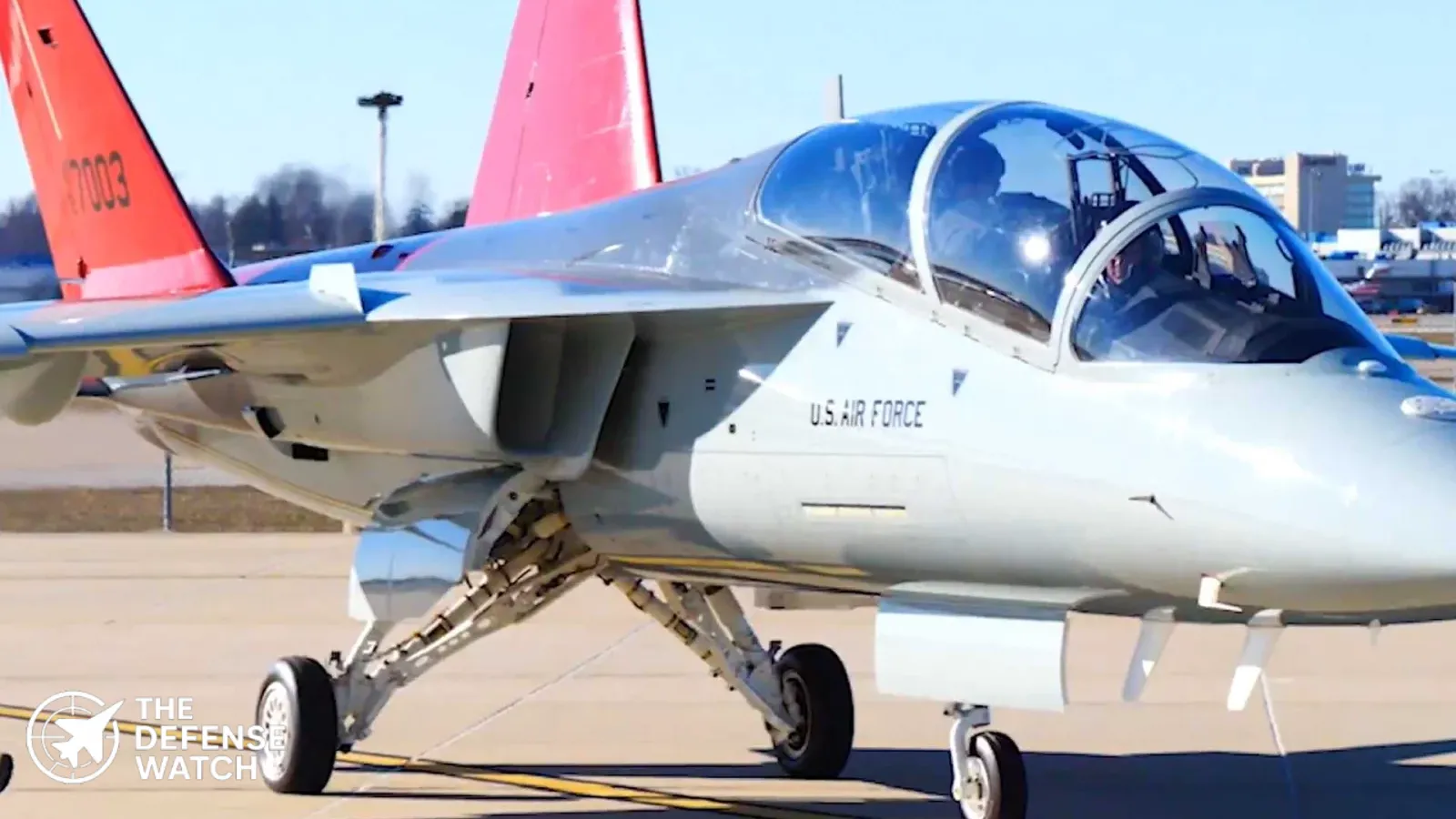
U.S. Air Force T-7A Red Hawk
Aerospace & AviationFighter Jets & Military Aircraft

U.S. Air Force Receives Second T-7A Red Hawk Jet, Advancing Next-Generation Pilot Training

September 12, 2026
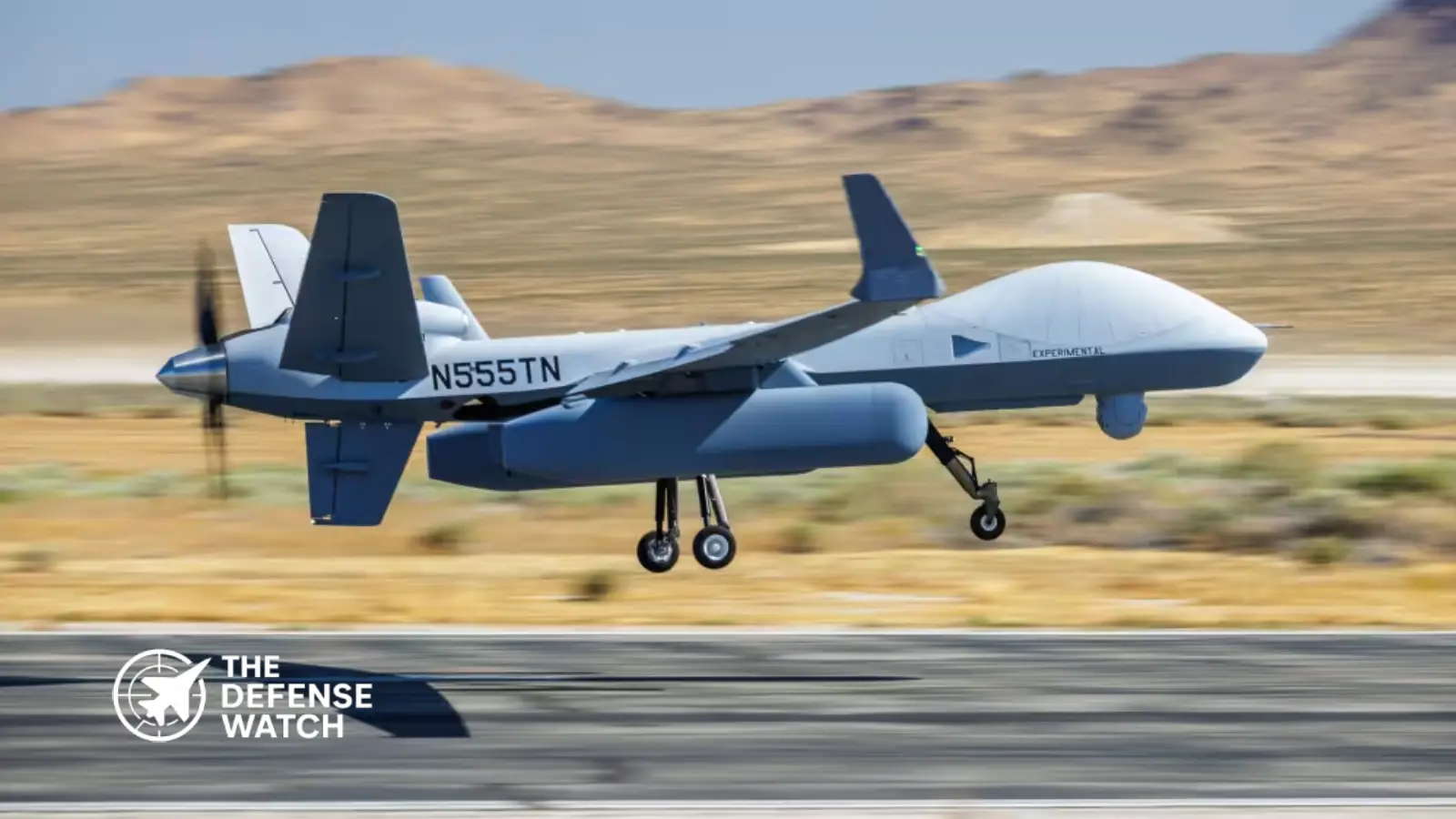
The MQ-72C Lakota autonomous helicopter demonstrator during a logistics test flight for the US Marine Corps.
Aerospace & AviationDrones & UAVs

US Marines Accelerate MQ-72C Lakota Autonomous Helicopter Integration for Pacific Combat Resupply

September 12, 2026
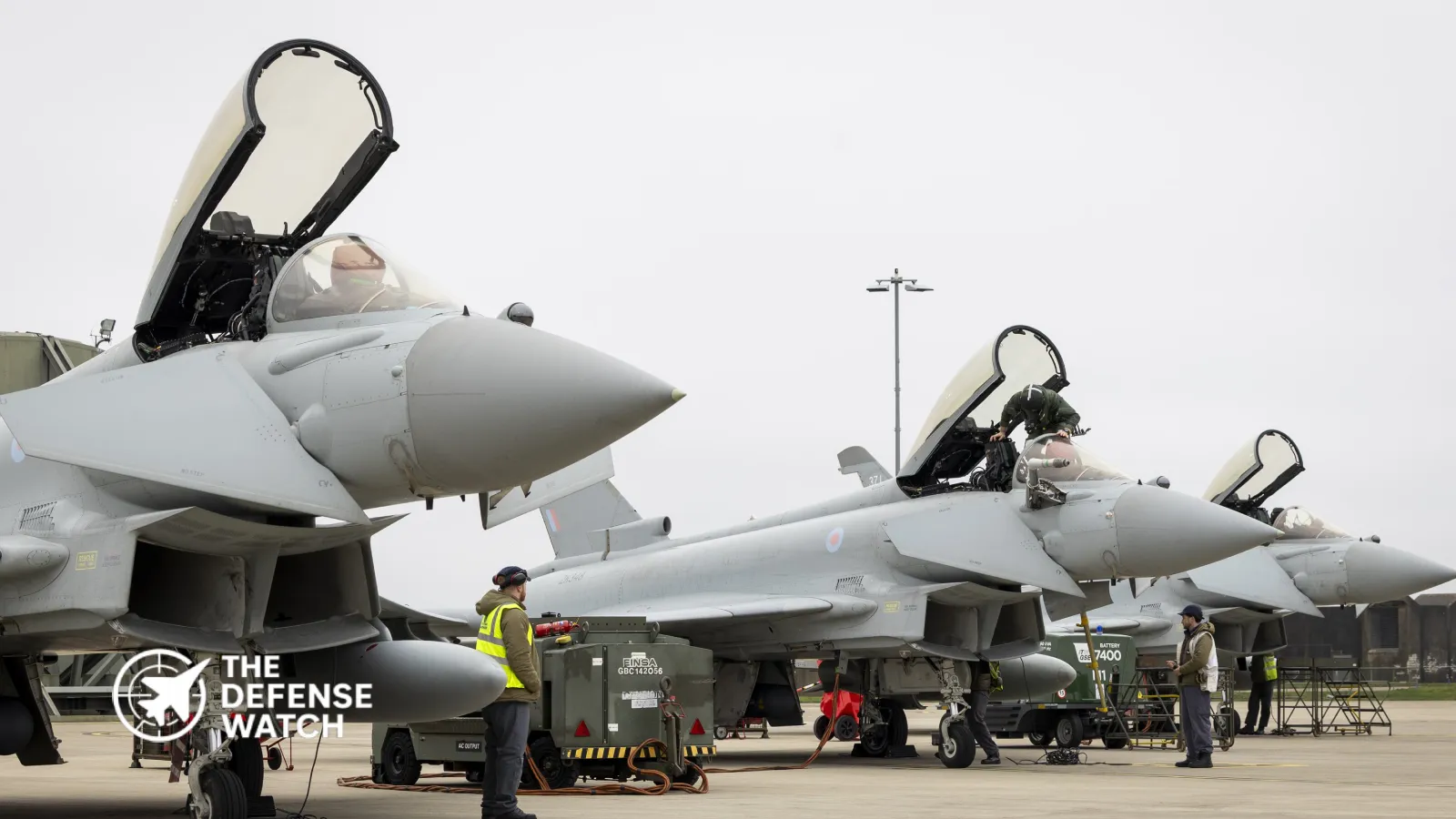
UK RAF Typhoons deploy to Qatar
Aerospace & AviationFighter Jets & Military Aircraft

UK RAF Typhoons Deploy To Qatar To Reinforce UK Air Power In The Gulf

September 7, 2026
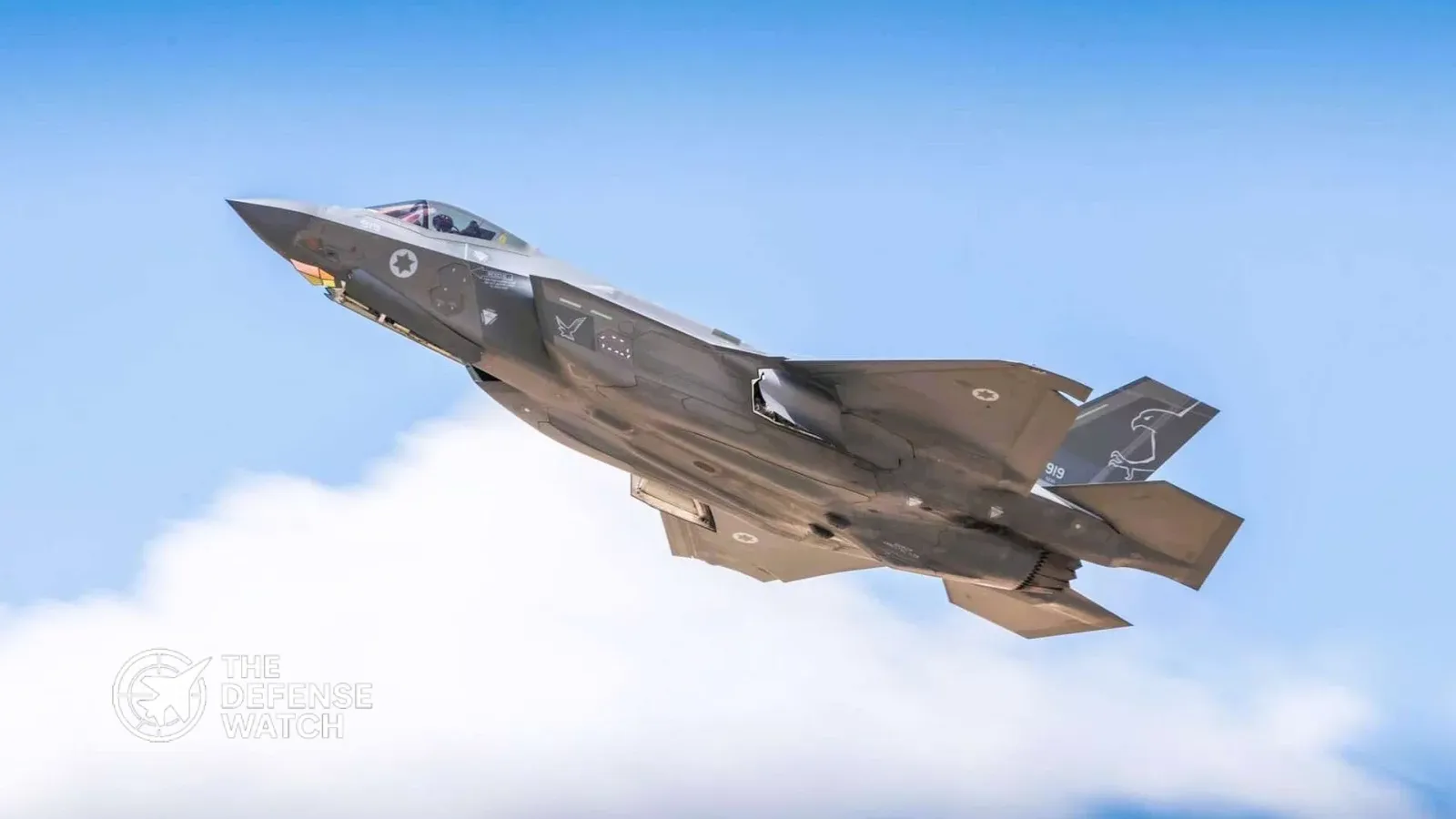
F-35I Adir stealth fuel tanks
Aerospace & AviationFighter Jets & Military Aircraft

Israel Equips F-35I Adir With Stealth Fuel Tanks to Extend Long-Range Strike Reach Against Iran

September 12, 2026

Logo

Copyright © 2026 TheDefenseWatch.com

Helpful Links

  • Home
  • About Us
  • Privacy Policy
  • Terms of Use / Disclaimer
  • U.S. Privacy Notice – CCPA Compliance

Defense Systems

  • Defense Systems
  • Comparisons 
  • Manufacturer
  • Tactical Calculators

Popuplar

Which 5 Air Forces Possess the Costliest Fighter Jet Fleets in the World
Evolving Strategic Value: Carrier Strike Groups in the Indo-Pacific’s Future Security Architecture
Autonomous Weapon Systems Spark U.S. Ethics Debate Amid Rapid Military AI Integration

We report on developments involving military forces, governments, defense companies, research organizations, and security institutions around the world. 

Welcome Back!

Sign in to your account

Username or Email Address
Password

Lost your password?

Enjoying our coverage?

Make The Defense Watch a preferred source on Google to see more insights.