• Home
  • About
  • Defense Systems
  • Manufacturer
  • Comparisons
  • Compare 
  • Tools
TheDefenseWatch.com
  • Aerospace & Aviation
  • Military & Ordnance
  • Naval & Maritime
  • Cyber & Space Defense
  • Policy & Strategy
  • Global News
  • Tools Library
    • Smart Calculator
    • Drone Flight Time Calculator
    • Drone Range Calculator
    • Counter-Drone Jammer Effective Range Calculator
    • Counter-Battery Radar Detection Calculator
    • Artillery Fire Correction Calculator
    • Thermal Camera Detection Range Calculator
    • Missile Range & Time-of-Flight Calculator
    • Radar Detection Range Calculator
    • FPV Strike Drone Payload vs Range Calculator
    • Loitering Munition Endurance Calculator
    • Sniper Ballistic Drop & Windage Calculator
    • Bullet Drop Calculator
    • U.S. Army Combat Fitness Test (ACFT) Calculator
    • Military Pension Calculator
    • Military Retirement Calculator
    • Military Pension Calculator
    • Large Number Calculator
Font ResizerAa

TheDefenseWatch.com

The Defense Watch | U.S. & Global Defense News, Analysis & Military Updates

Search
  • Home
  • About
  • Defense Systems
  • Manufacturer
  • Comparisons
  • Compare 
  • Tools

Stay Updated

Get the latest update

Subscribe

Explore

  • Drone
  • Fighter Jets & Military Aircraft
  • Hypersonic Weapons
  • Aircraft Carriers
  • Strategic History & Missions
  • Tools Library
Home » Saudi Arabia Launches Covert Strikes On Iran As Gulf Conflict Deepens
Middle East Defense & Security

Saudi Arabia Launches Covert Strikes On Iran As Gulf Conflict Deepens

Kaleem Sheikh | Regional Defense Correspondent
Last updated: September 7, 2026 10:40 am
Kaleem Sheikh | Regional Defense Correspondent
Share
3 Min Read
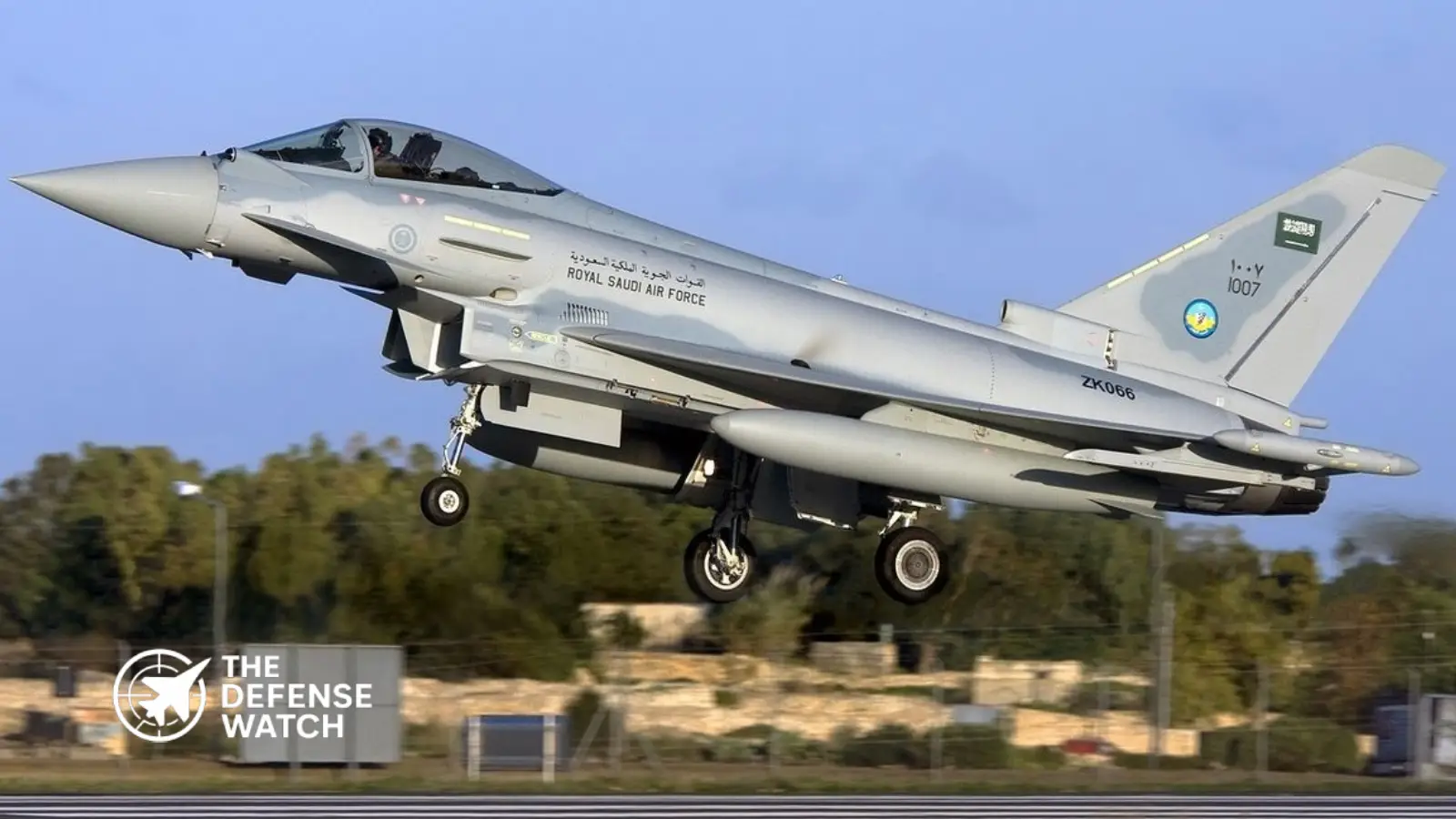
Saudi fighter jets flying during heightened Middle East tensions after reported covert strikes on Iran
SHARE

Executive Summary:
Saudi Arabia reportedly carried out covert airstrikes inside Iran during the 2026 Middle East conflict, according to Reuters sources. The attacks marked the kingdom’s first known direct military action on Iranian territory and reflected a broader shift in Gulf security dynamics as regional tensions escalated.

Saudi Arabia Launches Covert Strikes On Iran During Regional Conflict

Saudi Arabia covert attacks on Iran have reportedly emerged as a significant turning point in the ongoing Middle East conflict, according to a Reuters investigation published on May 12. Multiple Western and Iranian officials told Reuters that Saudi forces conducted undisclosed retaliatory strikes against Iranian territory in late March after the kingdom came under sustained missile and drone attacks.

Contents
Saudi Arabia Launches Covert Strikes On Iran During Regional ConflictGulf Security Landscape Shifts RapidlySaudi Arabia Balances Retaliation And DiplomacyMilitary Implications For The Gulf RegionRegional Stability Remains FragileOriginal Analysis: Why The Saudi Strikes Matter

The reported operations marked the first publicly known instance of direct Saudi military action on Iranian soil. The strikes were allegedly carried out by the Royal Saudi Air Force as part of a broader regional response to escalating attacks linked to the widening conflict involving Iran, Israel, and the United States.

Reuters stated that the exact targets inside Iran could not be independently confirmed. Saudi officials did not directly acknowledge the operations, while Iran’s foreign ministry declined to comment.

Gulf Security Landscape Shifts Rapidly

The reported Saudi operations illustrate how the regional conflict has expanded beyond its original scope. Since the February 2026 U.S. and Israeli strikes on Iran, Tehran has reportedly launched attacks against all six Gulf Cooperation Council states, targeting military facilities, airports, civilian infrastructure, and energy assets.

- Advertisement -

The conflict also disrupted maritime trade after Iran moved to restrict traffic through the Strait of Hormuz, one of the world’s most critical energy chokepoints. Reuters and other regional reporting indicate that Gulf states increasingly viewed direct retaliation as necessary after repeated Iranian strikes overwhelmed existing regional defenses.

The Saudi response reportedly differed from the more aggressive posture adopted by the United Arab Emirates. Reuters noted that Riyadh simultaneously pursued military retaliation and diplomatic de-escalation with Tehran.

Saudi Arabia Balances Retaliation And Diplomacy

According to Reuters sources, Saudi officials informed Iran through diplomatic channels after the strikes occurred. The two sides then entered intensive negotiations aimed at preventing further escalation.

Analysts cited in the Reuters report argued that both governments appeared motivated by the high economic and security risks of an uncontrolled regional war. Ali Vaez of the International Crisis Group described the situation as a pragmatic effort by both sides to impose limits on confrontation before the conflict spiraled further.

The diplomatic effort reportedly contributed to a reduction in direct Iranian attacks against Saudi Arabia in early April. Reuters data showed drone and missile strikes on the kingdom dropped significantly after the reported Saudi retaliation and subsequent warnings of further military action.

This development is particularly notable because Saudi Arabia and Iran had restored diplomatic relations only three years earlier under a China-brokered agreement reached in 2023. That détente had helped stabilize parts of the Gulf region, including Yemen.

Military Implications For The Gulf Region

The Saudi Arabia covert attacks on Iran also reveal changing defense calculations among Gulf states. For decades, Saudi Arabia relied heavily on U.S. military protection and missile defense systems to deter Iranian threats. However, the recent conflict exposed vulnerabilities in Gulf air defenses and regional infrastructure protection.

The reported Saudi air operations suggest Riyadh may now be more willing to conduct direct offensive action rather than rely solely on deterrence and diplomacy. Defense analysts view this as a major shift in Gulf security doctrine.

- Advertisement -

The conflict additionally highlighted the growing role of regional airpower and precision strike capabilities. While details of the Saudi missions remain undisclosed, the ability to carry out strikes inside Iranian territory would require advanced planning, intelligence coordination, and long-range operational capability.

Saudi Arabia has invested heavily in modernizing its air force over the past decade, operating advanced combat aircraft including the Eurofighter Typhoon and F-15SA fleets.

Regional Stability Remains Fragile

Despite reported de-escalation efforts, regional tensions remain high. Reuters noted that attacks against Saudi Arabia resumed from Iraqi territory during the ceasefire period, complicating efforts to stabilize the conflict.

The broader strategic picture also remains uncertain as Gulf states attempt to balance relations with Washington, Tehran, and emerging regional partners. The conflict has reinforced concerns about energy security, maritime trade, and the vulnerability of critical infrastructure across the Gulf.

The Reuters report further suggests that much of the regional military activity during the 2026 conflict occurred outside public view, raising questions about the true scale of Gulf involvement in the war.

Original Analysis: Why The Saudi Strikes Matter

Saudi Arabia’s reported decision to strike Iranian territory directly represents more than a tactical military response. It signals a strategic evolution in Riyadh’s threat perception and willingness to project force.

For years, Gulf security strategy centered on deterrence through alliances, particularly with the United States. The 2026 conflict appears to have accelerated a transition toward more autonomous regional defense actions.

At the same time, Saudi Arabia’s simultaneous pursuit of de-escalation demonstrates the kingdom’s continued emphasis on economic stability and energy security. Riyadh appears determined to avoid a prolonged regional war that could threaten oil exports, maritime trade, and foreign investment initiatives tied to Vision 2030.

The dual-track approach of limited retaliation combined with diplomatic outreach may become the defining model for future Gulf crisis management.


TAGGED:Gulf securityIranMiddle East conflictRegional WarfareSaudi Arabia
Share This Article
Facebook Copy Link Print
ByKaleem Sheikh | Regional Defense Correspondent
Follow:
Kaleem Sheikh is a regional defense correspondent at TheDefenseWatch.com covering defense and security developments across Asia and the Middle East, including military operations, procurement, and regional security issues.
Leave a Comment

Leave a Reply Cancel reply

Your email address will not be published. Required fields are marked *

Search Defense Systems

Latest Defense Systems

  • TRML-4D Radar TRML-4D Radar
  • F-47A Fighter Jet F-47A Fighter Jet
  • China DF-61 Missile China DF-61 Missile
  • B61 Nuclear Bomb B61 Nuclear Bomb
  • Japan E-767 Airborne Japan E-767 Airborne
  • Remington 870 Shotgun Remington 870 Shotgun
  • RUTA B1 Cruise Missile RUTA B1 Cruise Missile
  • XQ-67A Drone XQ-67A Drone
  • B-25 Mitchell Bomber B-25 Mitchell Bomber

Recent Compares

  • J-10C vs JF-17 Thunder: Which Fighter Is More Capable? J-10C vs JF-17 Thunder: Which Fighter Is More Capable? View Comparison →
  • Tejas vs Gripen: Key Differences and Capabilities Tejas vs Gripen: Key Differences and Capabilities View Comparison →
  • Tejas vs MiG-21 Bison: How India Replaced Its Iconic Supersonic Fighter Tejas vs MiG-21 Bison: How India Replaced Its Iconic Supersonic Fighter View Comparison →
  • F-35 vs F-16: Stealth, Sensors and Combat Roles F-35 vs F-16: Stealth, Sensors and Combat Roles View Comparison →
  • Tejas Fighter Jet vs F-16 Fighting Falcon: Capability Compared Tejas Fighter Jet vs F-16 Fighting Falcon: Capability Compared View Comparison →
  • Rafale Fighter Jet vs F-16 Fighting Falcon : Which Fighter Has the Edge? Rafale Fighter Jet vs F-16 Fighting Falcon : Which Fighter Has the Edge? View Comparison →
  • Su-57 Fighter Jet vs J-20 Fighter Jet: Stealth and Air Combat Compared Su-57 Fighter Jet vs J-20 Fighter Jet: Stealth and Air Combat Compared View Comparison →
  • Mirage 2000 vs Tejas Mk1A: Legacy Combat Power vs Indigenous Modernization Mirage 2000 vs Tejas Mk1A: Legacy Combat Power vs Indigenous Modernization View Comparison →
  • Rafale Fighter Jet vs F-22 Raptor: Which Air Dominance Fighter Has the Edge? Rafale Fighter Jet vs F-22 Raptor: Which Air Dominance Fighter Has the Edge? View Comparison →
  • Tejas Fighter Jet vs. Rafale Fighter Jet: India’s Indigenous Fighter Meets France’s Proven Multirole Combat Aircraft Tejas Fighter Jet vs. Rafale Fighter Jet: India’s Indigenous Fighter Meets France’s Proven Multirole Combat Aircraft View Comparison →

Recent Posts

  • Saab Secures SEK 350 Million Danish Order for Combat Training Systems
  • Thales Accelerates Delivery of Two Radar Systems to Romania
  • Pakistan Marks Dome Placement Milestone at Chashma-5 Nuclear Plant
  • SpaceX Wins $12.7 Million SDA Contract for Plaser Laser Study
  • Hegseth and Polish Defense Chief Seek Closer Military Cooperation

You Might Also Like

U.S. Navy Iranian tanker
Naval & MaritimeNaval Strategy & Maritime Security

U.S. Navy Moves To Intercept Iranian Oil Tanker As Maritime Blockade Tightens In Arabian Sea

April 28, 2026
UAE air defenses intercept Iranian missiles
Middle East Defense & Security

UAE Air Defenses Intercept Second Wave Of Iranian Missiles, No Casualties Reported

February 28, 2026
Skynex 35mm air defense Qatar
Middle East Defense & Security

Qatar Unveils Rheinmetall Skynex 35mm Air Defense at DIMDEX 2026 to Counter Drone and Missile Threats

September 16, 2026
IRGC speedboats patrol the Strait of Hormuz near Hormuz Island as a tanker navigates Iran-designated shipping corridors, May 2026.
Middle East Defense & Security

Iran Moves To Institutionalize Hormuz Control As Global Shipping Crisis Deepens

September 7, 2026

Logo

Copyright © 2026 TheDefenseWatch.com

Helpful Links

  • Home
  • About Us
  • Privacy Policy
  • Terms of Use / Disclaimer
  • U.S. Privacy Notice – CCPA Compliance

Defense Systems

  • Defense Systems
  • Comparisons 
  • Manufacturer
  • Tactical Calculators

Popuplar

Which 5 Air Forces Possess the Costliest Fighter Jet Fleets in the World
Evolving Strategic Value: Carrier Strike Groups in the Indo-Pacific’s Future Security Architecture
Autonomous Weapon Systems Spark U.S. Ethics Debate Amid Rapid Military AI Integration

We report on developments involving military forces, governments, defense companies, research organizations, and security institutions around the world. 

Welcome Back!

Sign in to your account

Username or Email Address
Password

Lost your password?