• Home
  • About
  • Defense Systems
  • Manufacturer
  • Comparisons
  • Compare 
  • Tools
TheDefenseWatch.com
  • Aerospace & Aviation
  • Military & Ordnance
  • Naval & Maritime
  • Cyber & Space Defense
  • Policy & Strategy
  • Global News
  • Tools Library
    • Smart Calculator
    • Drone Flight Time Calculator
    • Drone Range Calculator
    • Counter-Drone Jammer Effective Range Calculator
    • Counter-Battery Radar Detection Calculator
    • Artillery Fire Correction Calculator
    • Thermal Camera Detection Range Calculator
    • Missile Range & Time-of-Flight Calculator
    • Radar Detection Range Calculator
    • FPV Strike Drone Payload vs Range Calculator
    • Loitering Munition Endurance Calculator
    • Sniper Ballistic Drop & Windage Calculator
    • Bullet Drop Calculator
    • U.S. Army Combat Fitness Test (ACFT) Calculator
    • Military Pension Calculator
    • Military Retirement Calculator
    • Military Pension Calculator
    • Large Number Calculator
Font ResizerAa

TheDefenseWatch.com

The Defense Watch | U.S. & Global Defense News, Analysis & Military Updates

Search
  • Home
  • About
  • Defense Systems
  • Manufacturer
  • Comparisons
  • Compare 
  • Tools

Stay Updated

Get the latest update

Subscribe

Explore

  • Drone
  • Fighter Jets & Military Aircraft
  • Hypersonic Weapons
  • Aircraft Carriers
  • Strategic History & Missions
  • Tools Library
Home » UK Races To Expand Munitions Production As Stockpile Pressures Mount
Defense Budgets & PolicyPolicy & Strategy

UK Races To Expand Munitions Production As Stockpile Pressures Mount

Daniel Mercer / Defense & Aerospace Analyst
Last updated: April 5, 2026 10:32 am
Daniel Mercer / Defense & Aerospace Analyst
Share
2 Min Read
UK munitions production plan
SHARE
Follow The Defense Watch on Google:

UK Munitions Production Plan Targets Industrial Expansion

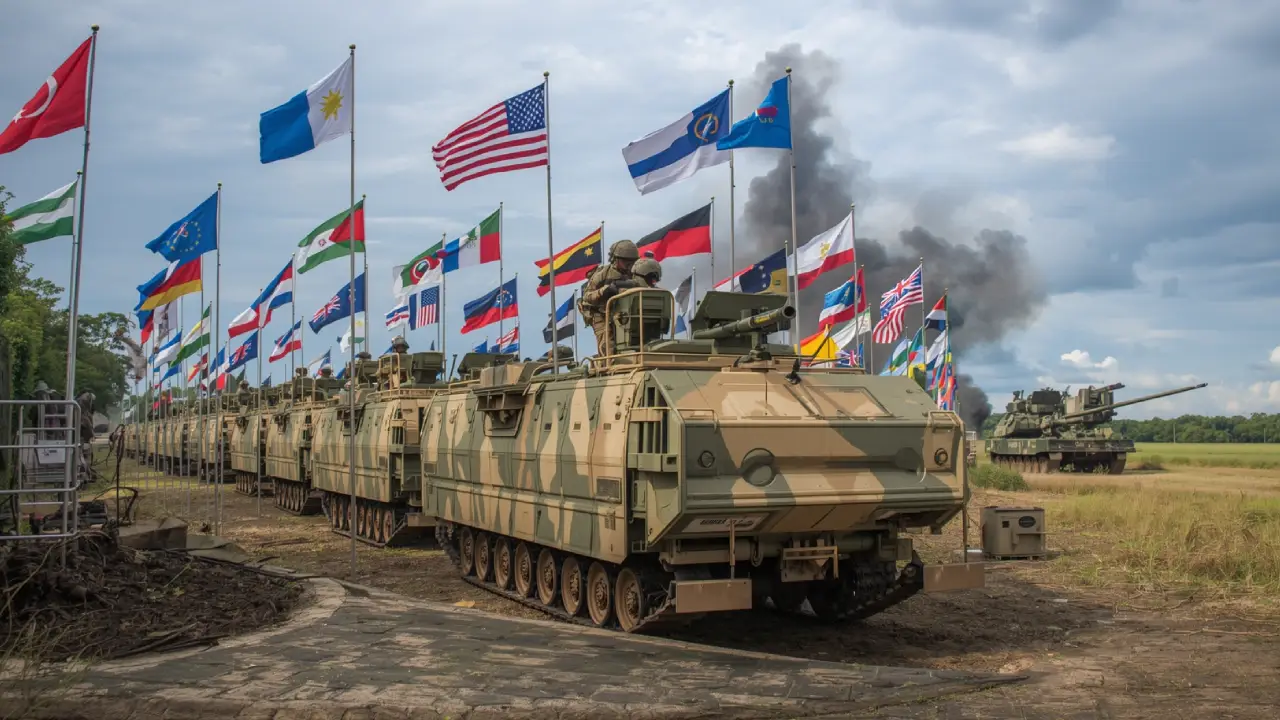
The UK munitions production plan marks a significant step in rebuilding the country’s defense industrial base, as the UK Ministry of Defence moves to expand factory capacity and secure long-term ammunition supply.

Contents
UK Munitions Production Plan Targets Industrial ExpansionIndustrial Shortfalls Exposed By Ukraine WarFunding Model Signals Long-Term CommitmentStrategic Implications For NATO And AlliesChallenges Ahead For ImplementationA Shift Toward Industrial Resilience

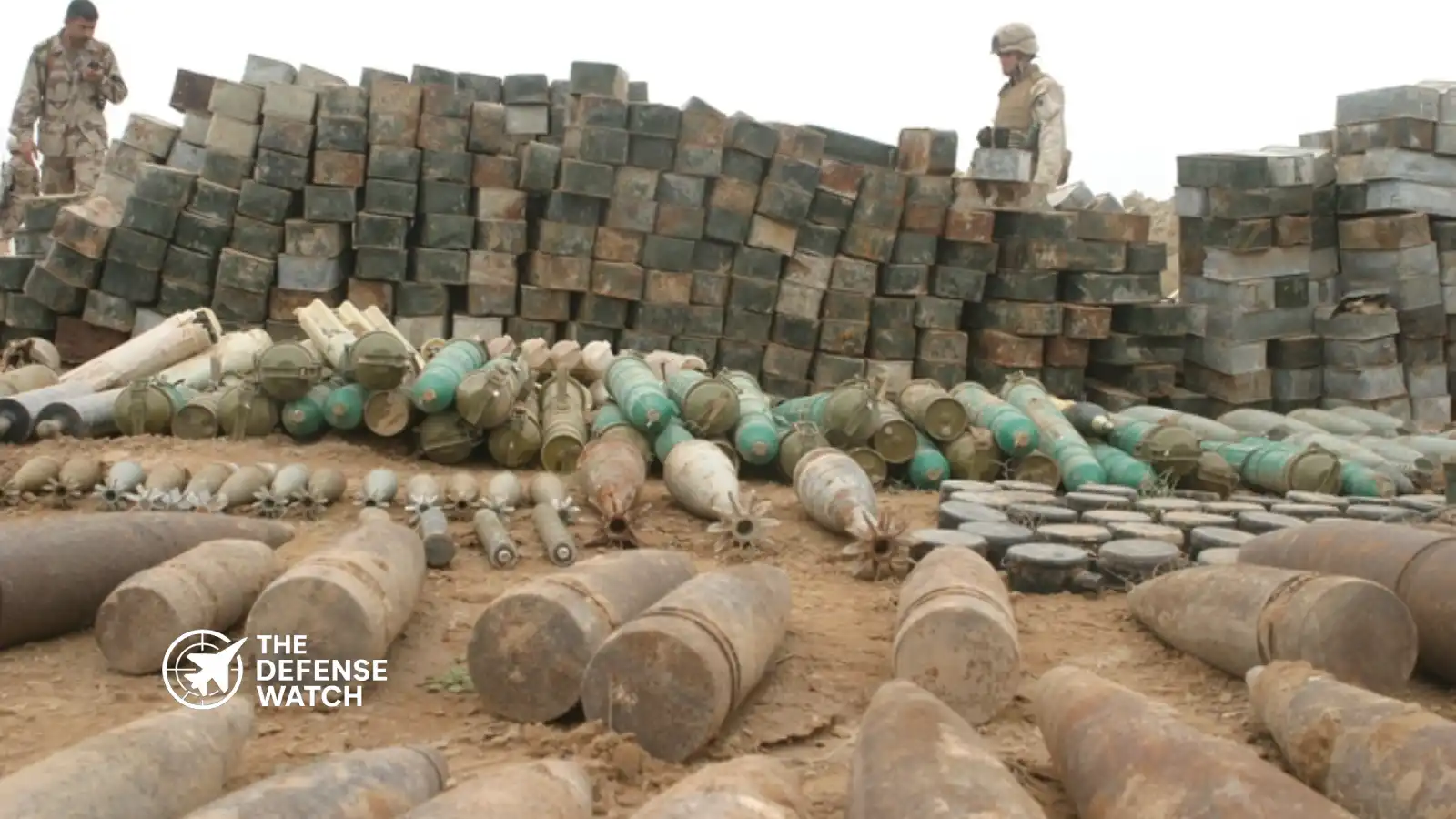
The plan outlines funding mechanisms to support both the construction of new facilities and the modernization of existing production lines. The focus is on critical munitions, particularly artillery shells, which have seen unprecedented demand due to ongoing conflict in Europe.

This initiative reflects a broader recognition across NATO that current industrial capacity is insufficient for sustained high-intensity warfare.

¦ KEY FACTS AT A GLANCE
  • The UK has outlined a funding plan to expand domestic munitions production capacity.
  • New and upgraded factories will focus on artillery shells and critical ammunition types.
  • The initiative aims to address supply shortages highlighted by the Ukraine war.
  • Industry partners are expected to play a central role in scaling production output.
  • The move reflects broader NATO efforts to rebuild stockpiles and sustain long-term readiness.

Industrial Shortfalls Exposed By Ukraine War

The UK munitions production plan comes in direct response to supply chain vulnerabilities exposed during the war in Ukraine. Western nations have struggled to maintain consistent ammunition deliveries while also preserving their own stockpiles.

- Advertisement -

Officials have acknowledged that decades of reduced defense spending and reliance on lean manufacturing left the UK and its allies with limited surge capacity. Rebuilding that capacity now requires long-term investment rather than short-term procurement fixes.

Artillery ammunition, particularly 155mm shells, has become a central concern. Consumption rates in Ukraine have far exceeded pre-war production levels across Europe, forcing governments to rethink industrial policy.

This shift signals a transition from efficiency-driven defense procurement to resilience-focused manufacturing.

Funding Model Signals Long-Term Commitment

A key feature of the UK munitions production plan is its structured funding approach. Rather than relying solely on one-off contracts, the government is expected to provide sustained financial backing to give industry partners confidence to invest in infrastructure and workforce expansion.

This includes support for:

  • New production facilities
  • Upgrades to existing plants
  • Workforce training and retention
  • Supply chain stabilization

The approach aligns with similar efforts across NATO, where governments are increasingly adopting multi-year procurement frameworks to ensure predictable demand.

From an industrial perspective, this reduces risk for manufacturers and encourages scaling beyond peacetime requirements.

Strategic Implications For NATO And Allies

The UK munitions production plan is not just a national initiative, it has alliance-wide implications. As a key NATO member, the UK plays a role in collective deterrence and logistical support.

- Advertisement -

Increased British production capacity could help:

  • Backfill depleted European stockpiles
  • Support ongoing military aid to Ukraine
  • Reduce dependence on external suppliers
  • Strengthen NATO’s overall readiness posture

The move also complements efforts by the North Atlantic Treaty Organization to coordinate ammunition production across member states.

However, scaling production is not immediate. Industry timelines suggest that meaningful increases in output could take several years due to infrastructure constraints and workforce limitations.

Challenges Ahead For Implementation

Despite its strategic importance, the UK munitions production plan faces several challenges.

First, supply chain bottlenecks remain a persistent issue. Key المواد such as explosives, propellants, and specialized metals are often sourced globally, creating dependencies that are difficult to eliminate quickly.

Second, workforce shortages in skilled manufacturing roles could slow expansion. Defense production requires highly trained personnel, and rebuilding that talent base takes time.

Third, cost pressures may complicate execution. Inflation in raw materials and energy prices has already increased the cost of ammunition production across Europe.

These factors mean that while the plan sets a clear direction, execution will require sustained political and financial commitment.

A Shift Toward Industrial Resilience

The UK munitions production plan ultimately reflects a broader doctrinal shift in defense policy. Industrial capacity is increasingly viewed as a core component of military power, not just a supporting function.

This mirrors Cold War-era thinking, where nations maintained large-scale production capabilities to sustain prolonged conflict. In contrast, post-Cold War strategies prioritized efficiency and reduced stockpiles.

The return to high-intensity warfare planning has reversed that trend.

For the UK, this means rebuilding not only physical infrastructure but also institutional knowledge and supply networks that have atrophied over decades.

Enjoying our coverage?

Make The Defense Watch a preferred source on Google to see more of our geopolitical and defense insights when relevant to you.


TAGGED:Defense Policymilitary industrymunitions productionNATO supply chainUK defense
Share This Article
Facebook Copy Link Print
ByDaniel Mercer / Defense & Aerospace Analyst
Follow:
Daniel Mercer is a defense and aerospace analyst at TheDefenseWatch.com covering military aviation, aerospace technology, unmanned systems, air warfare, and defense procurement. His reporting uses official documents, government and military statements, company announcements, and other public sources.
Leave a Comment

Leave a Reply Cancel reply

Your email address will not be published. Required fields are marked *

Search Defense Systems

Latest Defense Systems

  • F-104 Starfighter F-104 Starfighter
  • F-15J Eagle Fighter Jet F-15J Eagle Fighter Jet
  • China’s GJ-21 Stealth Drone China’s GJ-21 Stealth Drone
  • China’s GJ-11 Stealth Drone China’s GJ-11 Stealth Drone
  • F-15EX Eagle Fighter Jet F-15EX Eagle Fighter Jet
  • TRML-4D Radar TRML-4D Radar
  • F-47A Fighter Jet F-47A Fighter Jet
  • China DF-61 Missile China DF-61 Missile
  • B61 Nuclear Bomb B61 Nuclear Bomb

Recent Compares

  • J-10C vs JF-17 Thunder: Which Fighter Is More Capable? J-10C vs JF-17 Thunder: Which Fighter Is More Capable? View Comparison →
  • Tejas vs Gripen: Key Differences and Capabilities Tejas vs Gripen: Key Differences and Capabilities View Comparison →
  • Tejas vs MiG-21 Bison: How India Replaced Its Iconic Supersonic Fighter Tejas vs MiG-21 Bison: How India Replaced Its Iconic Supersonic Fighter View Comparison →
  • F-35 vs F-16: Stealth, Sensors and Combat Roles F-35 vs F-16: Stealth, Sensors and Combat Roles View Comparison →
  • Tejas Fighter Jet vs F-16 Fighting Falcon: Capability Compared Tejas Fighter Jet vs F-16 Fighting Falcon: Capability Compared View Comparison →
  • Rafale Fighter Jet vs F-16 Fighting Falcon : Which Fighter Has the Edge? Rafale Fighter Jet vs F-16 Fighting Falcon : Which Fighter Has the Edge? View Comparison →
  • Su-57 Fighter Jet vs J-20 Fighter Jet: Stealth and Air Combat Compared Su-57 Fighter Jet vs J-20 Fighter Jet: Stealth and Air Combat Compared View Comparison →
  • Mirage 2000 vs Tejas Mk1A: Legacy Combat Power vs Indigenous Modernization Mirage 2000 vs Tejas Mk1A: Legacy Combat Power vs Indigenous Modernization View Comparison →
  • Rafale Fighter Jet vs F-22 Raptor: Which Air Dominance Fighter Has the Edge? Rafale Fighter Jet vs F-22 Raptor: Which Air Dominance Fighter Has the Edge? View Comparison →
  • Tejas Fighter Jet vs. Rafale Fighter Jet: India’s Indigenous Fighter Meets France’s Proven Multirole Combat Aircraft Tejas Fighter Jet vs. Rafale Fighter Jet: India’s Indigenous Fighter Meets France’s Proven Multirole Combat Aircraft View Comparison →

Recent Posts

  • Saab and Poland’s Dezamet Sign MAPAM Mortar Ammunition Production Deal
  • Nordic Air Defence to Send K200 Drone Interceptor to Ukraine for Trials
  • Türkiye Inducts First Three Bayraktar Kızılelma Unmanned Fighter Aircraft
  • U.S. Army Tests SIG Sauer M7 Rifle in Indo-Pacific Jungle Training
  • India’s Rafale Fleet Listed at 32 Aircraft After 2025 Pakistan Conflict

You Might Also Like

pentagon indo pacific strategy 2025
Policy & Strategy

Why the Pentagon Is Reorienting Its Strategy Toward the Indo-Pacific in 2025

September 1, 2025
war powers resolution fails in Senate
Global NewsPolicy & Strategy

U.S. Senate Rejects War Powers Resolution, Preserving Trump’s Military Authority on Venezuela

January 15, 2026
F-35 fighter jets Portugal
Alliances & DoctrinesPolicy & Strategy

US Ambassador Urges Portugal To Buy F-35 Fighter Jets, Join Top Tier Air Forces

September 7, 2026
Pentagon Iran war cost
Defense Budgets & PolicyPolicy & Strategy

Pentagon Moves To Secure More Iran War Funding As Hegseth Puts Conflict Cost At $37.5 Billion

September 7, 2026

Logo

Copyright © 2026 TheDefenseWatch.com

Helpful Links

  • Home
  • About Us
  • Privacy Policy
  • Terms of Use / Disclaimer
  • U.S. Privacy Notice – CCPA Compliance

Defense Systems

  • Defense Systems
  • Comparisons 
  • Manufacturer
  • Tactical Calculators

Popuplar

Which 5 Air Forces Possess the Costliest Fighter Jet Fleets in the World
Evolving Strategic Value: Carrier Strike Groups in the Indo-Pacific’s Future Security Architecture
Autonomous Weapon Systems Spark U.S. Ethics Debate Amid Rapid Military AI Integration

We report on developments involving military forces, governments, defense companies, research organizations, and security institutions around the world. 

Welcome Back!

Sign in to your account

Username or Email Address
Password

Lost your password?

Enjoying our coverage?

Make The Defense Watch a preferred source on Google to see more insights.