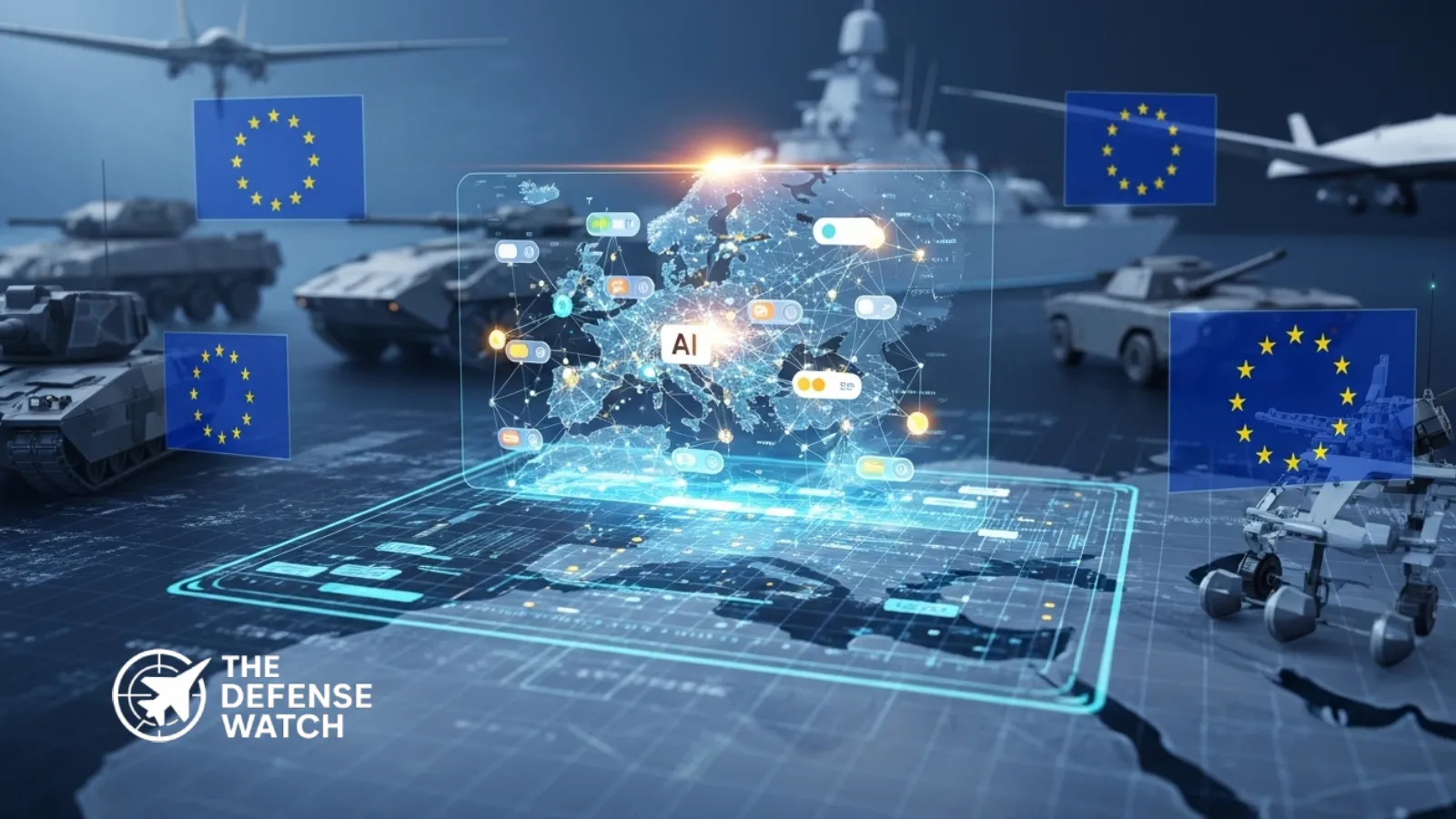
- European Commission launched a €115 million Agile Programme to accelerate defense innovation across the EU.
- The initiative focuses on rapid development and deployment of advanced military technologies.
- Programme supports startups, SMEs, and research institutions within the European defense ecosystem.
- Agile Programme aligns with broader EU efforts to strengthen strategic autonomy and defense readiness.
- Funding targets emerging technologies including AI, robotics, and next-generation battlefield systems.
European Commission Agile Programme Targets Faster Defense Innovation
The European Commission Agile Programme marks a €115 million push to accelerate defense innovation and shorten deployment timelines across Europe, reflecting growing urgency around military readiness and technological competitiveness.
Announced as part of broader EU defense initiatives, the program is designed to bridge the gap between research and operational capability. It focuses on enabling faster development cycles, reducing bureaucratic delays, and improving collaboration among member states, according to reporting from Defence Industry Europe.
The initiative comes amid increasing pressure on European governments to modernize armed forces and respond more quickly to evolving threats, particularly following lessons learned from recent conflicts.
Accelerating From Concept To Capability
A central objective of the European Commission Agile Programme is to compress the timeline between concept development and field deployment. Traditionally, European defense projects have faced long procurement cycles and fragmented coordination among member states.
The Agile Programme seeks to address this by introducing more flexible funding mechanisms and streamlined project approval processes. This approach mirrors practices seen in U.S. defense innovation frameworks, where rapid prototyping and iterative testing have become standard.
By focusing on speed and adaptability, the program aims to ensure that emerging technologies can be tested, validated, and deployed in operational environments without prolonged delays.
Startups And SMEs In Defense Ecosystem
The European Commission Agile Programme places strong emphasis on supporting startups, small and medium-sized enterprises, and research institutions. These actors are often at the forefront of innovation but face barriers in accessing defense contracts.
Through targeted funding and simplified participation requirements, the initiative aims to integrate these players into the European defense industrial base. This reflects a broader shift in defense procurement strategies, where governments increasingly rely on commercial innovation to maintain technological edge.
According to the European Commission, expanding participation across the private sector will enhance competition, diversify technological solutions, and reduce dependency on a limited number of major defense contractors.
Focus On Emerging Technologies
The program prioritizes investment in high-impact technologies expected to shape future warfare. These include artificial intelligence, autonomous systems, robotics, advanced sensors, and digital battlefield integration tools.
Such capabilities are seen as critical for improving situational awareness, decision-making speed, and operational effectiveness. The European Commission Agile Programme also aligns with ongoing EU efforts to strengthen capabilities in cyber defense and electronic warfare.
By concentrating resources on these areas, the EU aims to close capability gaps and maintain relevance in an increasingly technology-driven security environment.
Strategic Context And Policy Alignment
The launch of the European Commission Agile Programme is part of a broader policy framework aimed at enhancing European strategic autonomy. This includes reducing reliance on external suppliers and strengthening internal defense industrial capacity.
The initiative complements existing EU programs such as the European Defence Fund and Permanent Structured Cooperation, which focus on collaborative development and capability building among member states.
From a geopolitical perspective, the program reflects Europe’s response to shifting security dynamics, including increased competition among major powers and the need for rapid response capabilities in crisis scenarios.
Analysis: Bridging Structural Gaps In EU Defense Innovation
The European Commission Agile Programme addresses a long-standing structural issue in European defense policy: the gap between innovation and deployment. While Europe has strong research capabilities, translating those advances into operational systems has often lagged behind.
This initiative signals a recognition that speed is now a critical factor in military effectiveness. Modern conflicts have demonstrated that technological superiority must be paired with rapid integration into operational forces.
However, the program’s success will depend on implementation. Coordination among EU member states remains complex, and aligning national priorities with collective goals can be challenging. Additionally, scaling successful prototypes into full production will require sustained funding and political commitment.
If effectively executed, the Agile Programme could significantly improve Europe’s ability to respond to emerging threats and compete with other global defense powers.
Implications For Transatlantic Defense Cooperation
For the United States, the European Commission Agile Programme may enhance interoperability and burden-sharing within NATO. A more capable and technologically advanced European defense base could strengthen alliance readiness.
At the same time, increased EU focus on strategic autonomy may influence procurement decisions, potentially affecting U.S. defense exports. Balancing autonomy with alliance integration will remain a key consideration for policymakers on both sides of the Atlantic.