• Home
  • About
  • Defense Systems
  • Manufacturer
  • Comparisons
  • Compare 
  • Tools
TheDefenseWatch.com
  • Aerospace & Aviation
  • Military & Ordnance
  • Naval & Maritime
  • Cyber & Space Defense
  • Policy & Strategy
  • Global News
  • Tools Library
    • Smart Calculator
    • Drone Flight Time Calculator
    • Drone Range Calculator
    • Counter-Drone Jammer Effective Range Calculator
    • Counter-Battery Radar Detection Calculator
    • Artillery Fire Correction Calculator
    • Thermal Camera Detection Range Calculator
    • Missile Range & Time-of-Flight Calculator
    • Radar Detection Range Calculator
    • FPV Strike Drone Payload vs Range Calculator
    • Loitering Munition Endurance Calculator
    • Sniper Ballistic Drop & Windage Calculator
    • Bullet Drop Calculator
    • U.S. Army Combat Fitness Test (ACFT) Calculator
    • Military Pension Calculator
    • Military Retirement Calculator
    • Military Pension Calculator
    • Large Number Calculator
Font ResizerAa

TheDefenseWatch.com

The Defense Watch | U.S. & Global Defense News, Analysis & Military Updates

Search
  • Home
  • About
  • Defense Systems
  • Manufacturer
  • Comparisons
  • Compare 
  • Tools

Stay Updated

Get the latest update

Subscribe

Explore

  • Drone
  • Fighter Jets & Military Aircraft
  • Hypersonic Weapons
  • Aircraft Carriers
  • Strategic History & Missions
  • Tools Library
Home » Iran Confirms Death Of Security Chief Ali Larijani Amid Heightened Regional Tensions
Global News

Iran Confirms Death Of Security Chief Ali Larijani Amid Heightened Regional Tensions

Kaleem Sheikh | Regional Defense Correspondent
Last updated: March 17, 2026 11:09 pm
Kaleem Sheikh | Regional Defense Correspondent
Share
2 Min Read
Iran security chief Ali Larijani Death
SHARE
¦ KEY FACTS AT A GLANCE
  • Iran confirms death of senior security figure Ali Larijani.
  • Larijani held key roles across Iran’s political and security apparatus.
  • Development comes amid heightened regional military tensions involving Iran.
  • Timing coincides with ongoing conflict dynamics affecting Iranian strategic posture.
  • Leadership transition may impact Iran’s security coordination and decision making.

Iran Confirms Death Of Ali Larijani

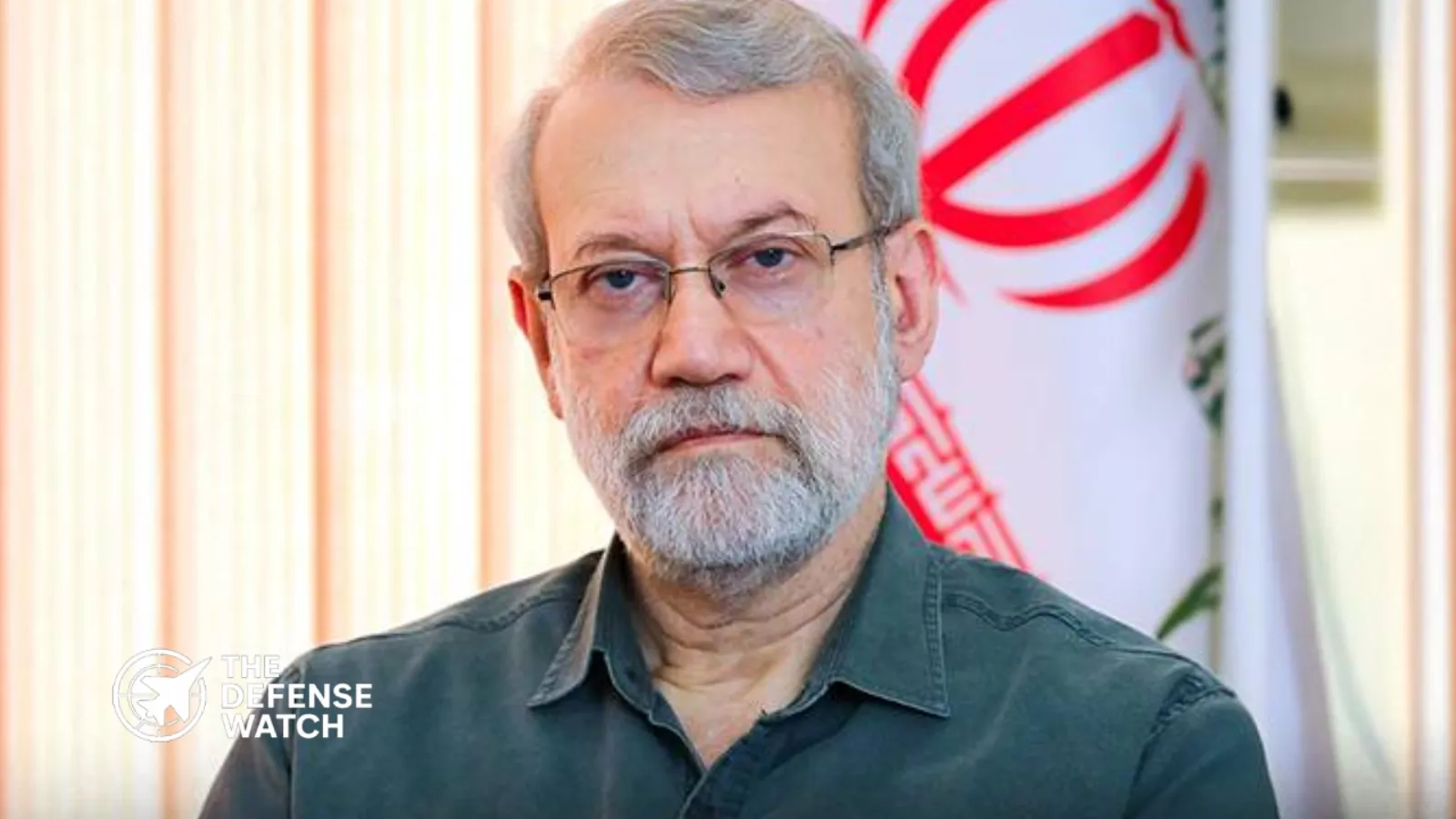
Iran security chief Ali Larijani has died, according to official confirmation from Tehran, marking a significant development within the country’s political and security leadership structure.

Contents
  • Iran Confirms Death Of Ali Larijani
  • The Big Picture
  • What’s Happening
  • Why It Matters
  • Strategic Implications
  • Competitor View
  • What To Watch Next
  • Capability Gap
  • The Bottom Line

The announcement comes at a time of heightened regional tensions, with Iran actively engaged in a complex security environment shaped by military operations, geopolitical rivalries, and internal coordination demands.

The Big Picture

Iran’s security architecture relies on a tightly interconnected network of political leaders, military commanders, and intelligence officials. Figures like Larijani often bridge civilian governance and national security decision making.

The loss of a senior figure at this level is not just symbolic. It affects institutional continuity at a time when Iran faces sustained external pressure, particularly from the United States and regional adversaries.

- Advertisement -

Iran’s strategic posture in the Middle East has become more assertive in recent years, combining conventional military capabilities with proxy networks and asymmetric warfare strategies. Leadership stability plays a key role in maintaining that posture.

What’s Happening

Iranian authorities confirmed the death of Ali Larijani, a prominent political figure who previously held senior roles including parliamentary leadership and advisory positions tied to national security.

Reports indicate that Larijani served in influential capacities connected to Iran’s broader security and political framework. His experience and access to leadership circles made him a key figure in policy coordination.

The announcement was made on March 18, 2026, though details surrounding the cause and circumstances of his death remain limited in public reporting.

Why It Matters

Leadership continuity is critical in states facing sustained external pressure. Iran’s decision making system depends on experienced figures who understand both domestic politics and strategic military considerations.

Larijani’s death removes a figure with deep institutional knowledge and long standing relationships across Iran’s political and security elite. That creates a potential gap in coordination, especially in crisis conditions.

The development also comes as Iran continues to manage military tensions in the region, including air operations, proxy engagements, and deterrence signaling. Leadership disruptions during such periods can affect response speed and policy alignment.

Strategic Implications

Iran’s military readiness depends on synchronized coordination between political leadership and organizations such as the Islamic Revolutionary Guard Corps. Senior political figures often play a quiet but critical role in aligning strategic objectives.

- Advertisement -

A leadership loss at this level may temporarily slow decision cycles or shift influence among competing factions within Iran’s power structure. That could affect how Iran calibrates its military posture in the near term.

Regional stability may also feel indirect effects. Allies and adversaries alike monitor leadership changes in Tehran closely, as these shifts can signal changes in policy direction or internal priorities.

Competitor View

The United States and its regional partners will likely assess this development through the lens of Iranian command resilience. Leadership turnover during periods of tension may be viewed as a potential vulnerability.

Russia and China, both of which maintain strategic ties with Iran, may interpret the event as a need for continuity in diplomatic and security coordination with Tehran.

Regional rivals such as Israel and Gulf states will focus on whether the leadership shift alters Iran’s operational tempo or strategic messaging.

What To Watch Next

Iran is expected to move quickly to ensure continuity in advisory and coordination roles tied to national security.

Key indicators to monitor include:

Appointments of replacement figures within Iran’s leadership structure
Changes in public messaging from Iranian officials
Any shifts in military activity or regional engagement patterns
Statements from senior leadership including Ali Khamenei

Capability Gap

Iran’s system is designed to absorb leadership losses through institutional redundancy, but individual experience still matters. Larijani’s long tenure gave him a unique understanding of both domestic politics and international strategy.

The immediate gap is not in military capability but in strategic coordination and advisory depth. Replacing that level of experience takes time, particularly during periods of active tension.

The Bottom Line

Iran confirms the death of Ali Larijani at a sensitive moment, introducing a leadership variable that could influence how Tehran manages regional security challenges.


TAGGED:GeopoliticsIranleadershipMiddle Eastsecurity
Share This Article
Facebook Copy Link Print
ByKaleem Sheikh | Regional Defense Correspondent
Follow:
Kaleem Sheikh is a regional defense correspondent at TheDefenseWatch.com covering defense and security developments across Asia and the Middle East, including military operations, procurement, and regional security issues.
Leave a Comment

Leave a Reply Cancel reply

Your email address will not be published. Required fields are marked *

Latest Defense Systems

  • RUTA B1 Cruise Missile RUTA B1 Cruise Missile
  • XQ-67A Drone XQ-67A Drone
  • B-25 Mitchell Bomber B-25 Mitchell Bomber
  • F-100 Super Sabre F-100 Super Sabre
  • North American F-86 Sabre North American F-86 Sabre
  • North American XB-70 Valkyrie North American XB-70 Valkyrie
  • Northrop YF-23 Fighter Northrop YF-23 Fighter
  • P-51 Mustang Fighter Aircraft P-51 Mustang Fighter Aircraft
  • Rafale F5 Fighter Rafale F5 Fighter

Recent Compares

  • J-10C vs JF-17 Thunder: Which Fighter Is More Capable? J-10C vs JF-17 Thunder: Which Fighter Is More Capable? View Comparison →
  • Tejas vs Gripen: Key Differences and Capabilities Tejas vs Gripen: Key Differences and Capabilities View Comparison →
  • Tejas vs MiG-21 Bison: How India Replaced Its Iconic Supersonic Fighter Tejas vs MiG-21 Bison: How India Replaced Its Iconic Supersonic Fighter View Comparison →
  • F-35 vs F-16: Stealth, Sensors and Combat Roles F-35 vs F-16: Stealth, Sensors and Combat Roles View Comparison →
  • Tejas Fighter Jet vs F-16 Fighting Falcon: Capability Compared Tejas Fighter Jet vs F-16 Fighting Falcon: Capability Compared View Comparison →
  • Rafale Fighter Jet vs F-16 Fighting Falcon : Which Fighter Has the Edge? Rafale Fighter Jet vs F-16 Fighting Falcon : Which Fighter Has the Edge? View Comparison →
  • Su-57 Fighter Jet vs J-20 Fighter Jet: Stealth and Air Combat Compared Su-57 Fighter Jet vs J-20 Fighter Jet: Stealth and Air Combat Compared View Comparison →
  • Mirage 2000 vs Tejas Mk1A: Legacy Combat Power vs Indigenous Modernization Mirage 2000 vs Tejas Mk1A: Legacy Combat Power vs Indigenous Modernization View Comparison →
  • Rafale Fighter Jet vs F-22 Raptor: Which Air Dominance Fighter Has the Edge? Rafale Fighter Jet vs F-22 Raptor: Which Air Dominance Fighter Has the Edge? View Comparison →
  • Tejas Fighter Jet vs. Rafale Fighter Jet: India’s Indigenous Fighter Meets France’s Proven Multirole Combat Aircraft Tejas Fighter Jet vs. Rafale Fighter Jet: India’s Indigenous Fighter Meets France’s Proven Multirole Combat Aircraft View Comparison →

Recent Posts

  • U.S. Plans Resilient Military Bases With Independent Power and Water Systems
  • China Addresses Report on New Nuclear Submarine Missile Test
  • Destinus Produces 1,750 Ruta B1 Cruise Missiles as European Output Expands
  • Boeing Wins $11.1 Million Contract Modification for Kuwait F/A-18 Training Support
  • U.S. Navy Awards $23.1 Million Contract for Cybersecurity of Shipboard Power Systems

You Might Also Like

Spain frigate F-102 deployment
Global News

Spain Deploys Frigate Almirante Juan de Borbón (F-102) to Lead NATO Maritime Group 1

January 10, 2026
U.S. and Moroccan military personnel during African Lion exercise operations in Morocco following search and recovery efforts.
Global News

US Military Recovers Remains Of Soldier Missing During Morocco Exercise

May 11, 2026
PL 16 air to air missile
Global News

China Reveals J 20 Launch of PL 16 Long Range Air to Air Missile

September 9, 2026
US B 1B bombers Iran
Global News

US B 1B Bombers Loaded With Bunker Buster JDAMs At RAF Fairford As Iran Strike Campaign Expands

September 7, 2026

Logo

Copyright © 2026 TheDefenseWatch.com

Helpful Links

  • Home
  • About Us
  • Privacy Policy
  • Terms of Use / Disclaimer
  • U.S. Privacy Notice – CCPA Compliance

Defense Systems

  • Defense Systems
  • Comparisons 
  • Manufacturer
  • Tactical Calculators

Popuplar

Which 5 Air Forces Possess the Costliest Fighter Jet Fleets in the World
Evolving Strategic Value: Carrier Strike Groups in the Indo-Pacific’s Future Security Architecture
Autonomous Weapon Systems Spark U.S. Ethics Debate Amid Rapid Military AI Integration

We report on developments involving military forces, governments, defense companies, research organizations, and security institutions around the world. 

Welcome Back!

Sign in to your account

Username or Email Address
Password

Lost your password?