• Home
  • About
  • Defense Systems
  • Manufacturer
  • Comparisons
  • Compare 
  • Tools
TheDefenseWatch.com
  • Aerospace & Aviation
  • Military & Ordnance
  • Naval & Maritime
  • Cyber & Space Defense
  • Policy & Strategy
  • Global News
  • Tools Library
    • Smart Calculator
    • Drone Flight Time Calculator
    • Drone Range Calculator
    • Counter-Drone Jammer Effective Range Calculator
    • Counter-Battery Radar Detection Calculator
    • Artillery Fire Correction Calculator
    • Thermal Camera Detection Range Calculator
    • Missile Range & Time-of-Flight Calculator
    • Radar Detection Range Calculator
    • FPV Strike Drone Payload vs Range Calculator
    • Loitering Munition Endurance Calculator
    • Sniper Ballistic Drop & Windage Calculator
    • Bullet Drop Calculator
    • U.S. Army Combat Fitness Test (ACFT) Calculator
    • Military Pension Calculator
    • Military Retirement Calculator
    • Military Pension Calculator
    • Large Number Calculator
Font ResizerAa

TheDefenseWatch.com

The Defense Watch | U.S. & Global Defense News, Analysis & Military Updates

Search
  • Home
  • About
  • Defense Systems
  • Manufacturer
  • Comparisons
  • Compare 
  • Tools

Stay Updated

Get the latest update

Subscribe

Explore

  • Drone
  • Fighter Jets & Military Aircraft
  • Hypersonic Weapons
  • Aircraft Carriers
  • Strategic History & Missions
  • Tools Library
Home » Israel’s 5,000 Ballistic Missile Threat And What It Means For U.S. Missile Defense In The Gulf
Military & OrdnanceMissile Defense Systems

Israel’s 5,000 Ballistic Missile Threat And What It Means For U.S. Missile Defense In The Gulf

Daniel Mercer / Defense & Aerospace Analyst
Last updated: September 7, 2026 6:40 pm
Daniel Mercer / Defense & Aerospace Analyst
Share
3 Min Read
Israel Iran ballistic missile threat
SHARE
Follow The Defense Watch on Google:
■ KEY FACTS AT A GLANCE
  • ► Israeli officials assess Iran could possess up to 5,000 ballistic missiles by 2027.
  • ► Iran fields short and medium range ballistic missiles capable of reaching Israel and U.S. bases in the Gulf.
  • ► Israel operates a layered missile defense network including Iron Dome, David’s Sling, and Arrow systems.
  • ► U.S. forces in the Middle East rely on Patriot and THAAD batteries to defend key installations.
  • ► Iranian missile production has continued despite sanctions and export control regimes.
  • ► Large scale missile salvos pose saturation risks to existing regional missile defense systems.

Israel Iran Ballistic Missile Threat: A Growing Strategic Challenge

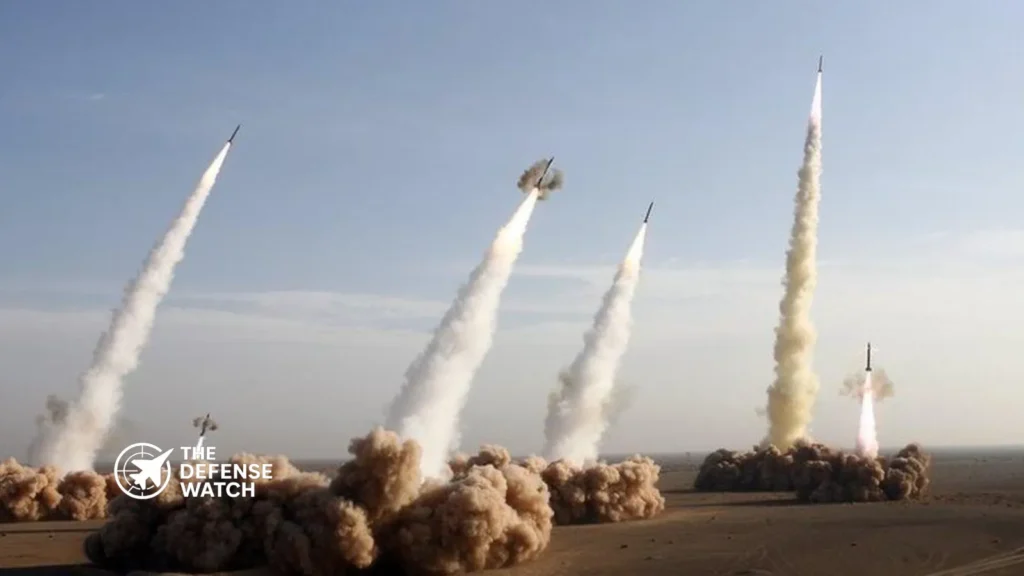
The Israel Iran ballistic missile threat is entering a new phase as Israeli officials warn that Tehran could field up to 5,000 ballistic missiles by 2027.

Contents
Israel Iran Ballistic Missile Threat: A Growing Strategic ChallengeOperational Impact: Stress Testing Missile DefenseRegional Security ContextIndustrial And Budget DimensionsComparison With CompetitorsStrategic AssessmentWhy This Matters Now
(adsbygoogle = window.adsbygoogle || []).push({});

The warning reflects more than a raw number. It signals a shift in regional military balance, particularly for Israel’s layered missile defense architecture and for U.S. forces deployed across the Gulf.

Iran has steadily expanded its ballistic missile inventory over the past decade, despite international sanctions. Its arsenal now includes short range and medium range systems such as the Shahab and Sejjil families, along with precision guided variants that improve targeting accuracy. Israeli assessments suggest production capacity, not just stockpile size, is accelerating.

For Israel and its U.S. partners, the issue is no longer whether Iran has missiles. It is whether existing defensive systems can absorb sustained, large scale salvos.

- Advertisement -

Operational Impact: Stress Testing Missile Defense

Israel’s air and missile defense network is built around layered interception.

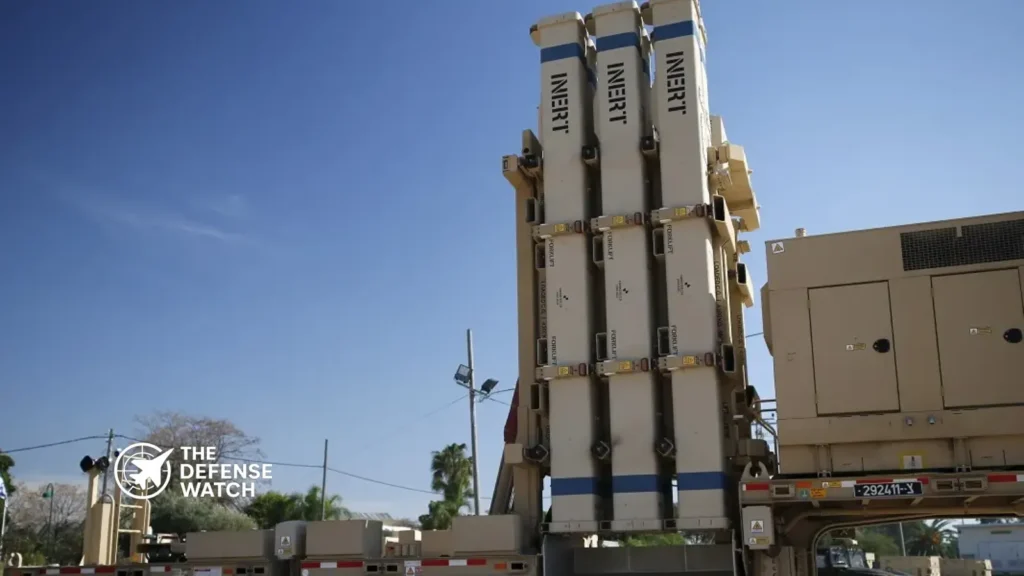
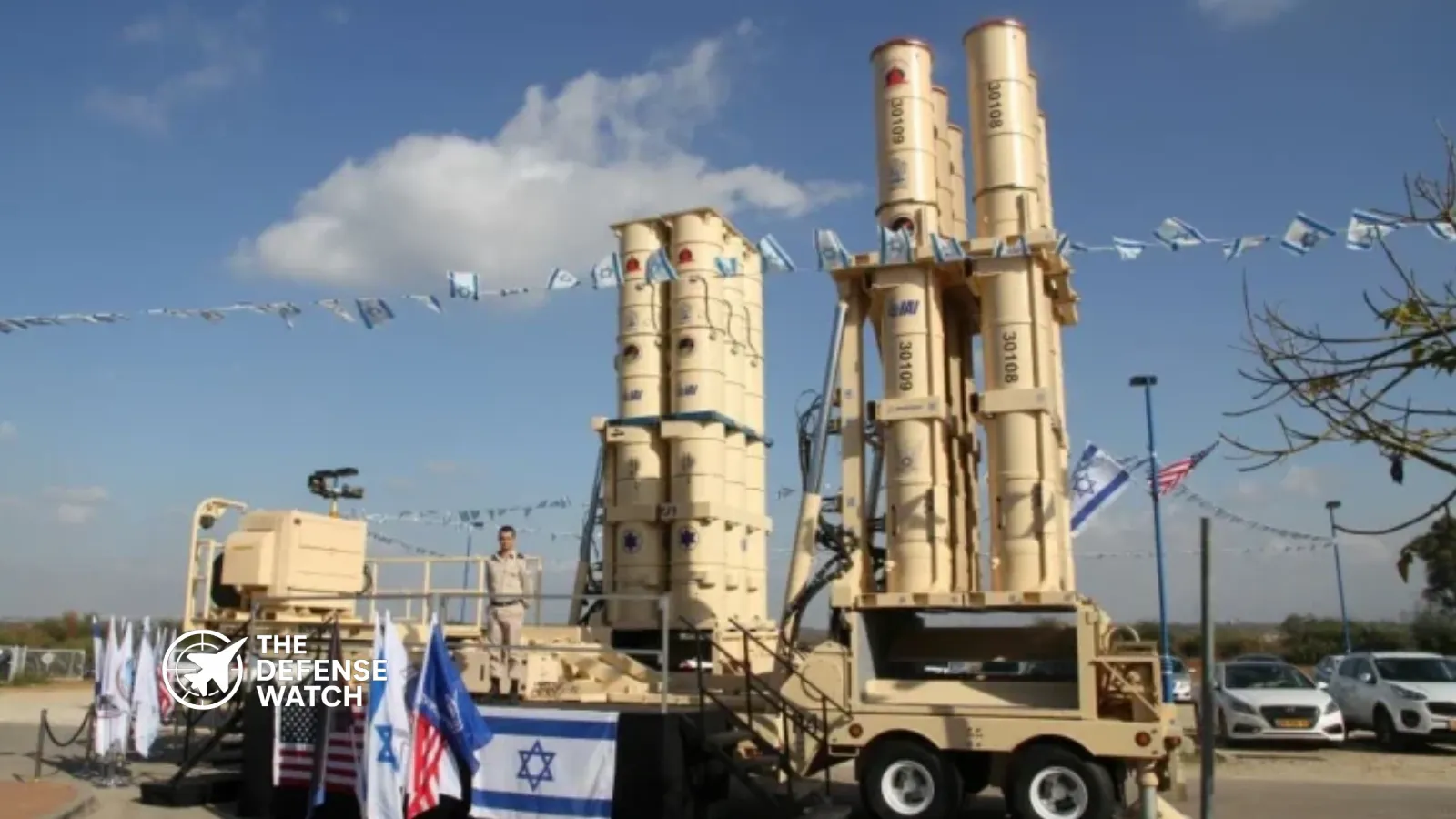
The lowest tier is the Iron Dome, designed primarily for short range rockets. Above it sits David’s Sling, intended for medium range threats. At the top tier is the Arrow system, developed with U.S. support to intercept longer range ballistic missiles outside the atmosphere.

  • Iron Dome Missile Defense System

    Iron Dome Missile Defense System

    • Maximum Range: 70 km
    • Maximum Altitude: 10 km
    • Radar Detection Range: 100–150 km
    • Missile Speed: Mach 2.2
    • View Details →
    8.0

    This structure has proven effective against limited salvos from Gaza and sporadic launches from regional actors. A potential inventory of 5,000 Iranian ballistic missiles presents a different challenge.

    (adsbygoogle = window.adsbygoogle || []).push({});

    Ballistic missile defense is constrained by interceptor inventory and reload time. Even high success rates can be strained if dozens or hundreds of missiles are launched in waves. Each interceptor carries significant cost, often in the millions of dollars per round.

    • David's Sling Air Defense System

      David's Sling Air Defense System

      • Maximum Range: Up to 300 km
      • Maximum Altitude: High altitude interception
      • Radar Detection Range: 250 plus km
      • Missile Speed: Mach 3 plus
      • View Details →
      8.0
      Israel Iran ballistic missile threat

      For the United States, the operational concern centers on forward deployed forces. U.S. installations in Qatar, Bahrain, Kuwait, and the United Arab Emirates host air assets, logistics hubs, and command nodes. Many rely on the MIM-104 Patriot and THAAD for protection.

      Those systems were designed to counter limited missile threats from state actors. A surge in Iranian production shifts the problem from capability to capacity.

      Regional Security Context

      Iran’s missile doctrine emphasizes deterrence through volume and survivability. Lacking a modern air force comparable to Israel or the United States, Tehran has invested heavily in ballistic and cruise missiles as asymmetric tools.

      Over the past decade, Iran has demonstrated the ability to strike regional targets, including U.S. positions in Iraq in 2020. That strike highlighted improvements in accuracy and coordination.

      If the projected growth materializes, the Israel Iran ballistic missile threat will not be confined to Israel. Gulf states hosting U.S. forces would also fall within range of large portions of Iran’s inventory.

      (adsbygoogle = window.adsbygoogle || []).push({});

      This dynamic complicates coalition planning. It increases the demand for integrated air and missile defense, data sharing, and coordinated early warning across the region.

      Industrial And Budget Dimensions

      Missile defense is expensive on both sides of the equation.

      Iran’s production of solid fuel ballistic missiles suggests a growing domestic industrial base. Solid fuel systems reduce launch preparation time and increase survivability.

      On the defensive side, interceptors are costly and production lines are finite. U.S. budget documents from recent fiscal years show continued funding for Patriot and THAAD modernization, as well as support for Israeli systems through joint programs.

      • THAAD Missile Defense System

        THAAD Missile Defense System

        • Maximum Range: 200 km
        • Maximum Altitude: 150 km
        • Radar Detection Range: 1,000 km (AN/TPY-2)
        • Missile Speed: Mach 8
        • View Details →
        8.0

        If threat assessments drive increased interceptor procurement, Congress will face tradeoffs. Resources allocated to missile defense may affect funding for other priorities such as next generation aircraft or naval modernization.

        For Israel, sustained high interceptor usage in a major conflict would require rapid resupply, likely with U.S. assistance. That creates a direct linkage between U.S. industrial capacity and Israeli homeland defense.

        Comparison With Competitors

        Other regional actors face missile threats, but few match the scale projected for Iran.

        North Korea maintains a significant ballistic missile force, though its focus is oriented toward Northeast Asia and the United States. Russia and China field larger arsenals, but their strategic focus lies elsewhere.

        Israel Iran ballistic missile threat

        What differentiates Iran is the combination of geographic proximity to Israel and Gulf bases, growing missile numbers, and the potential use of proxy groups to complicate defense planning.

        The Israel Iran ballistic missile threat is therefore distinct in its regional density. Distances are short, warning times are limited, and saturation attacks are feasible.

        Strategic Assessment

        The projected expansion of Iran’s missile arsenal has direct implications for regional power balance.

        First, it reinforces deterrence through the threat of mass retaliation. Even if Israeli and U.S. defenses intercept a high percentage of incoming missiles, a small number penetrating defenses could inflict significant damage.

        Second, it pressures defense budgets. Sustaining sufficient interceptor stocks requires steady procurement and industrial readiness. That benefits defense contractors involved in missile defense programs, but it also strains fiscal planning.

        • Iron Dome Missile Defense System

          Iron Dome Missile Defense System

          • Maximum Range: 70 km
          • Maximum Altitude: 10 km
          • Radar Detection Range: 100–150 km
          • Missile Speed: Mach 2.2
          • View Details →
          8.0

          Third, it strengthens the case for deeper U.S. and regional integration. Shared radar networks, joint exercises, and coordinated command structures become more critical as missile numbers grow.

          (adsbygoogle = window.adsbygoogle || []).push({});

          Fourth, escalation risks increase. In a crisis, preemptive strikes against missile launchers could be seen as necessary by one side and escalatory by the other. The speed of ballistic missile exchanges leaves limited room for diplomatic intervention once hostilities begin.

          Finally, the signal to allies and adversaries is clear. Missile capability is central to modern deterrence in the Middle East. Airpower alone no longer defines regional superiority.

          What happens next will depend on three factors: the pace of Iranian production, the scale of Israeli and U.S. interceptor procurement, and whether regional states move toward a more unified air and missile defense architecture.

          Why This Matters Now

          This issue matters now because timelines are compressing. A projected 2027 benchmark is within current defense budget cycles.

          Procurement decisions made in Washington and Jerusalem over the next two years will determine whether defensive capacity keeps pace with offensive growth.

          • Iron Dome Missile Defense System

            Iron Dome Missile Defense System

            • Maximum Range: 70 km
            • Maximum Altitude: 10 km
            • Radar Detection Range: 100–150 km
            • Missile Speed: Mach 2.2
            • View Details →
            8.0

            For the United States, the question is not only about defending Israel. It is about protecting U.S. forces and preserving freedom of action in the Gulf.

            (adsbygoogle = window.adsbygoogle || []).push({});

            For Iran, expanding missile inventories enhances leverage without crossing the nuclear threshold.

            For Israel, maintaining credible deterrence depends on proving that even a large scale missile campaign would fail to achieve strategic objectives.

            The Israel Iran ballistic missile threat is therefore not just a numbers game. It is a test of industrial capacity, alliance cohesion, and the credibility of layered missile defense under stress.

Enjoying our coverage?

Make The Defense Watch a preferred source on Google to see more of our geopolitical and defense insights when relevant to you.


TAGGED:ballistic missile threatIran missilesIsrael defenseMiddle East securityU.S. missile defense
Share This Article
Facebook Copy Link Print
ByDaniel Mercer / Defense & Aerospace Analyst
Follow:
Daniel Mercer is a defense and aerospace analyst at TheDefenseWatch.com covering military aviation, aerospace technology, unmanned systems, air warfare, and defense procurement. His reporting uses official documents, government and military statements, company announcements, and other public sources.
Leave a Comment

Leave a Reply Cancel reply

Your email address will not be published. Required fields are marked *

Search Defense Systems

Latest Defense Systems

  • F-104 Starfighter F-104 Starfighter
  • F-15J Eagle Fighter Jet F-15J Eagle Fighter Jet
  • China’s GJ-21 Stealth Drone China’s GJ-21 Stealth Drone
  • China’s GJ-11 Stealth Drone China’s GJ-11 Stealth Drone
  • F-15EX Eagle Fighter Jet F-15EX Eagle Fighter Jet
  • TRML-4D Radar TRML-4D Radar
  • F-47A Fighter Jet F-47A Fighter Jet
  • China DF-61 Missile China DF-61 Missile
  • B61 Nuclear Bomb B61 Nuclear Bomb

Recent Compares

  • J-10C vs JF-17 Thunder: Which Fighter Is More Capable? J-10C vs JF-17 Thunder: Which Fighter Is More Capable? View Comparison →
  • Tejas vs Gripen: Key Differences and Capabilities Tejas vs Gripen: Key Differences and Capabilities View Comparison →
  • Tejas vs MiG-21 Bison: How India Replaced Its Iconic Supersonic Fighter Tejas vs MiG-21 Bison: How India Replaced Its Iconic Supersonic Fighter View Comparison →
  • F-35 vs F-16: Stealth, Sensors and Combat Roles F-35 vs F-16: Stealth, Sensors and Combat Roles View Comparison →
  • Tejas Fighter Jet vs F-16 Fighting Falcon: Capability Compared Tejas Fighter Jet vs F-16 Fighting Falcon: Capability Compared View Comparison →
  • Rafale Fighter Jet vs F-16 Fighting Falcon : Which Fighter Has the Edge? Rafale Fighter Jet vs F-16 Fighting Falcon : Which Fighter Has the Edge? View Comparison →
  • Su-57 Fighter Jet vs J-20 Fighter Jet: Stealth and Air Combat Compared Su-57 Fighter Jet vs J-20 Fighter Jet: Stealth and Air Combat Compared View Comparison →
  • Mirage 2000 vs Tejas Mk1A: Legacy Combat Power vs Indigenous Modernization Mirage 2000 vs Tejas Mk1A: Legacy Combat Power vs Indigenous Modernization View Comparison →
  • Rafale Fighter Jet vs F-22 Raptor: Which Air Dominance Fighter Has the Edge? Rafale Fighter Jet vs F-22 Raptor: Which Air Dominance Fighter Has the Edge? View Comparison →
  • Tejas Fighter Jet vs. Rafale Fighter Jet: India’s Indigenous Fighter Meets France’s Proven Multirole Combat Aircraft Tejas Fighter Jet vs. Rafale Fighter Jet: India’s Indigenous Fighter Meets France’s Proven Multirole Combat Aircraft View Comparison →

Recent Posts

  • NASA’s Voyager 1 Reaches One Light-Day From Earth After 49 Years in Space
  • Russian Missiles Enter Polish Airspace During European Military Exercises
  • L3Harris Wins $28 Million Australian Defence Contract for Advanced Capability System
  • F-35C Completes First Launch and Recovery Trials Aboard Ford-Class Carrier
  • Northrop Grumman Declares $2.47 Per-Share Dividend for Fourth Quarter 2026

You Might Also Like

Pakistan Qatar defense pact
Middle East Defense & Security

Qatar Moves To Forge Historic Defense Pact With Pakistan As Saudi Agreement Sets Precedent

April 20, 2026
Iran ICBM development threat
Global News

Trump Says Iran Is Developing Missiles That Can Reach US, Signals New Security Threat

February 25, 2026
Operation Roar Of The Lion
Global News

Israel Launches Operation Roar Of The Lion, IDF Strikes Hundreds Of Targets In Western Iran

February 28, 2026
Iran US bases warning
Global News

G7 Foreign Ministers Condemn Iran Crackdown on Protests

January 15, 2026

Logo

Copyright © 2026 TheDefenseWatch.com

Helpful Links

  • Home
  • About Us
  • Privacy Policy
  • Terms of Use / Disclaimer
  • U.S. Privacy Notice – CCPA Compliance

Defense Systems

  • Defense Systems
  • Comparisons 
  • Manufacturer
  • Tactical Calculators

Popuplar

Which 5 Air Forces Possess the Costliest Fighter Jet Fleets in the World
Evolving Strategic Value: Carrier Strike Groups in the Indo-Pacific’s Future Security Architecture
Autonomous Weapon Systems Spark U.S. Ethics Debate Amid Rapid Military AI Integration

We report on developments involving military forces, governments, defense companies, research organizations, and security institutions around the world. 

Welcome Back!

Sign in to your account

Username or Email Address
Password

Lost your password?

Enjoying our coverage?

Make The Defense Watch a preferred source on Google to see more insights.