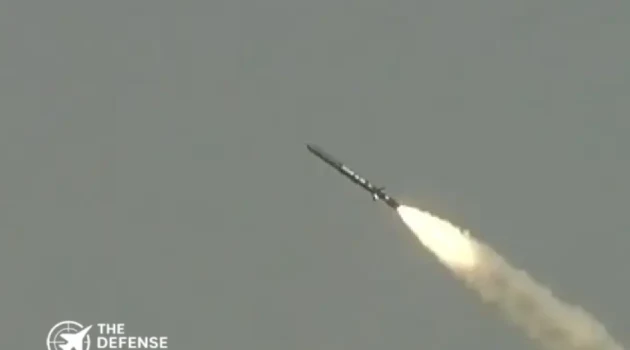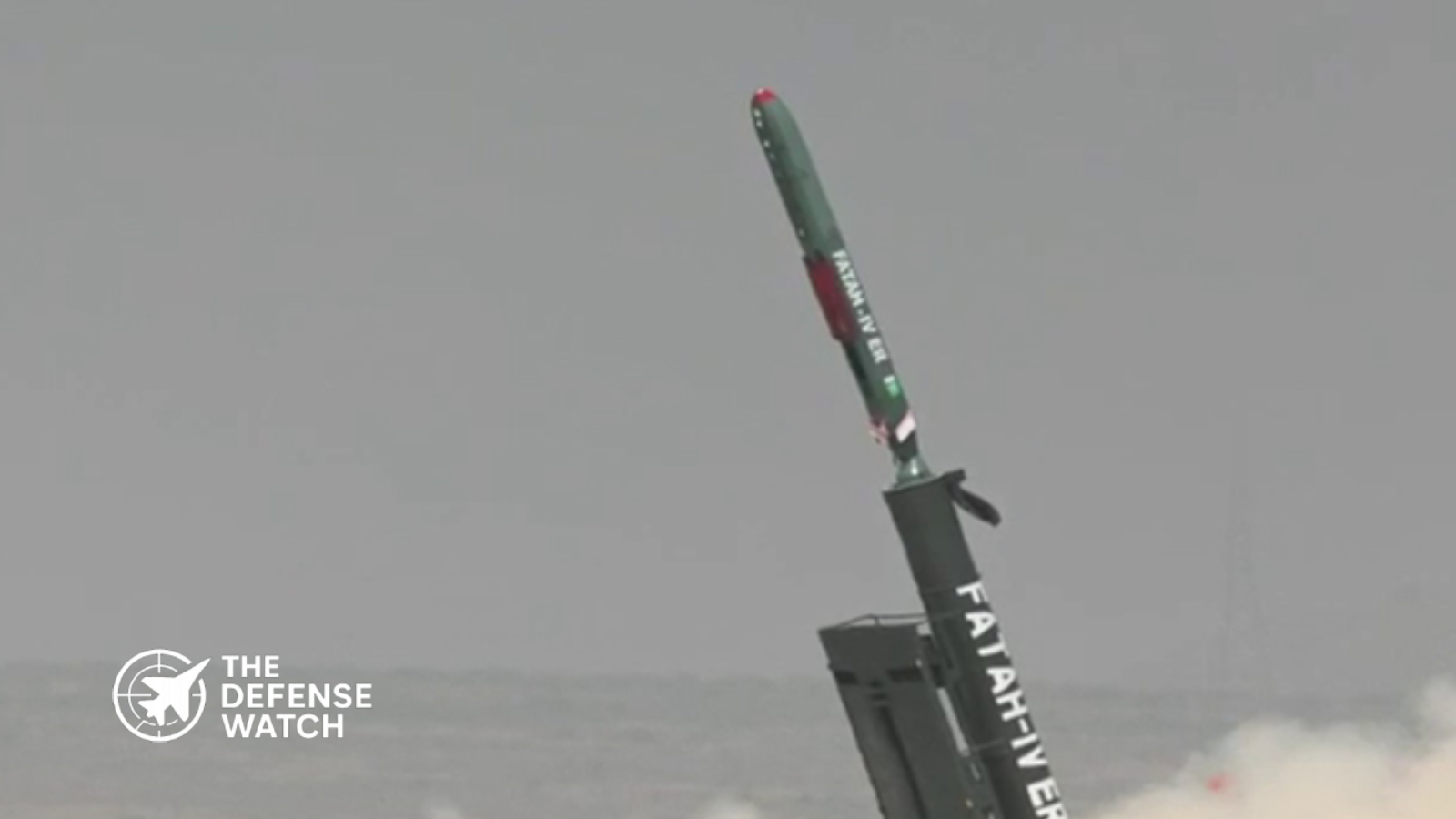
Pakistan has conducted a successful test launch of an extended-range version of its Fatah-4 ground-launched cruise missile, adding another test milestone to the country’s developing conventional long-range precision-strike capability.
The October 6, 2026 launch was conducted by the Pakistan Army and involved the extended version of the indigenously developed Fatah-4. Pakistan’s official government reporting, citing the Inter-Services Public Relations (ISPR), said the weapon incorporates advanced avionics and navigational aids and that the latest test validated additional technical parameters intended to improve accuracy and survivability.
The official announcement did not disclose the missile’s maximum range.
Reports circulating around the test have suggested that the extended-range Fatah-4 may have a range exceeding 1,000 kilometers. That figure has not been confirmed by Pakistan’s military or government in the official material reviewed for this report and should therefore be treated as unverified.
What the Latest Test Confirms
The October launch is important because Pakistan described the weapon specifically as an extended version of the Fatah-4 rather than simply repeating the earlier description of the baseline missile.
According to the official account, the test assessed additional technical parameters of various subsystems. The stated objectives included improvements in accuracy and survivability.
Pakistan did not publicly identify which individual subsystems were modified, nor did it disclose detailed guidance architecture, propulsion changes, warhead characteristics, flight profile, or the distance covered during the October test.
That distinction matters. A test of an extended-range configuration demonstrates continued development, but it does not by itself establish the final operational range or configuration of the weapon.
The launch was witnessed by senior Pakistan Army officers, scientists and engineers from the development organization, according to the official statement.
From the 750 km Fatah-4 to the Extended Version
Pakistan first publicly disclosed the Fatah-4 as a ground-launched cruise missile in September 2025. During a training launch on September 30 that year, the Pakistan Army stated that the missile had a range of 750 kilometers.
The military also said the system used advanced avionics and navigational aids and was designed with terrain-hugging characteristics intended to make it more difficult for missile-defense systems to detect and engage.
The Fatah-4 was associated with the newly established Army Rocket Force Command, which Pakistan announced in August 2025 as a formation intended to strengthen the country’s conventional warfare capabilities.
The Army Rocket Force Command represents an important organizational change. Rather than treating long-range conventional rocket and missile systems only as individual weapons programs, Pakistan has created a dedicated command structure around conventional precision strike.
The Fatah-4 therefore fits into a broader effort to give the Pakistan Army a longer-range conventional strike option that is distinct from its nuclear deterrence architecture.
A Development Path Rather Than a Single Test
The Fatah-4 program has now accumulated several publicly reported test milestones.
In September 2025, Pakistan conducted the initial training launch at the publicly stated 750 km range. In May 2026, the Army Rocket Force Command conducted another Fatah-4 training fire, saying the event was intended to improve troop operational efficiency and validate technical parameters related to accuracy and survivability.
The October test went further by explicitly identifying the missile as an extended version.
That progression suggests that Pakistan is continuing to refine the system rather than treating the original 750 km configuration as the final form of the weapon.
However, the available official information does not establish whether the extended version has entered operational service, whether it has completed a full qualification program, or whether the reported range above 1,000 km represents an actual demonstrated capability.
Why the Range Question Matters
A range increase from the previously disclosed 750 km figure to more than 1,000 km would materially expand the geographic area that could be reached from Pakistani territory.
For a conventional land-attack cruise missile, range is only one part of the military equation. Guidance accuracy, target intelligence, mission planning, launch survivability, communications, terrain-following performance and the ability to penetrate air defenses all affect operational value.
Pakistan’s official statements have emphasized accuracy and survivability, but have provided few technical details that would allow an independent assessment of those characteristics.
The absence of a disclosed range for the October test also prevents a firm comparison between the original Fatah-4 and the extended version.
For now, the defensible conclusion is that Pakistan is developing a longer-range version of an already established ground-launched cruise missile capability. The scale of that increase remains unclear.
Implications for Pakistan’s Conventional Strike Force
The development is consistent with Pakistan’s broader effort to strengthen conventional stand-off strike capabilities.
The Army Rocket Force Command was announced in August 2025, with Prime Minister Shehbaz Sharif describing the new formation as a means of strengthening Pakistan’s conventional warfare capability. The Fatah-4 became one of the first long-range systems publicly associated with the command.
The significance of the extended-range missile is therefore not limited to the weapon itself. It also concerns the force structure being developed around conventional precision strike.
A longer-range cruise missile could provide commanders with additional options for engaging targets beyond the immediate battlefield while potentially reducing reliance on aircraft for certain strike missions. Its practical value, however, would depend on the number of missiles available, launch-platform survivability, intelligence support and the ability to operate against modern integrated air-defense networks.
Those factors are not publicly detailed for the extended Fatah-4.
What Remains Undisclosed
Pakistan has not publicly released a comprehensive specification sheet for the extended-range Fatah-4.
Among the most important unanswered questions are:
- The demonstrated range of the extended version
- Whether the system has actually exceeded 1,000 km in a test
- Changes to propulsion or fuel capacity
- Warhead configuration
- Guidance and terminal navigation systems
- Cruise speed
- Operational altitude
- Production quantities
- Deployment status
- Full operational qualification timeline
Consequently, claims that the missile has a range exceeding 1,000 km should not yet be presented as an established specification.
The October test does establish that Pakistan is continuing development of an extended-range Fatah-4 configuration and that the military is testing additional subsystems related to accuracy and survivability.
For the moment, the most significant development is the continued expansion of Pakistan’s conventional long-range precision-strike architecture, rather than a confirmed numerical increase in missile range.