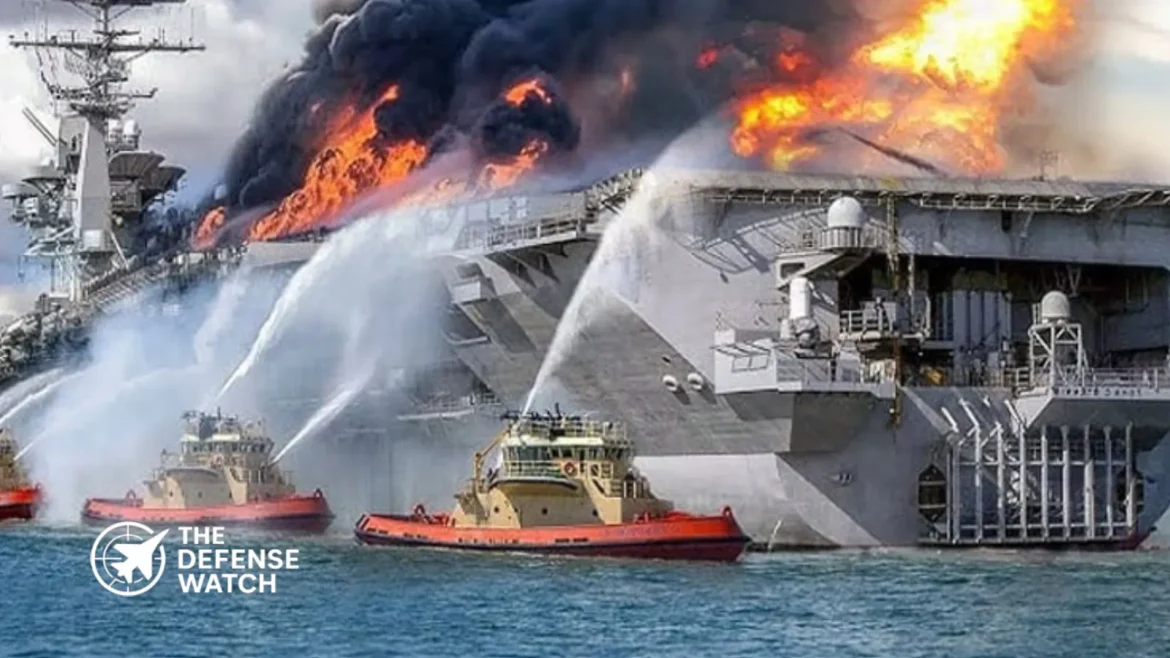
- Fire aboard USS Gerald R. Ford lasted nearly 30 hours before being contained.
- Over 600 crew members lost access to normal living spaces during the incident.
- Extended deployment of 10 months contributed to operational strain on personnel.
- Dozens of sailors reported smoke inhalation related health issues.
- Incident may temporarily impact US Navy carrier readiness and maintenance cycles.
USS Gerald R. Ford Fire Incident
The USS Gerald R. Ford fire incident underscores the risks faced by deployed US Navy carriers, after a prolonged onboard blaze disrupted operations and affected hundreds of sailors.
The Big Picture
The US Navy aircraft carrier fleet remains central to American power projection, particularly in contested regions such as the Indo Pacific and the Middle East. The USS Gerald R. Ford, the lead ship of its class, represents the most advanced carrier design, incorporating electromagnetic aircraft launch systems, advanced radar, and improved sortie generation capabilities.
Sustained deployments have become more common as the US Navy balances global commitments with a limited number of available carriers. This operational tempo places increasing pressure on both platforms and personnel.
The incident highlights a persistent challenge. Even the most advanced platforms remain vulnerable to onboard hazards such as fires, especially during extended deployments where maintenance cycles are compressed.
What’s Happening
Reports from major US outlets, including The New York Times, indicate that a significant fire broke out aboard the USS Gerald R. Ford during ongoing operations at sea.
The fire lasted approximately 30 hours before crews brought it under control. During that period:
- More than 600 sailors lost access to their berthing areas
- Crew members were forced to sleep on floors and workspaces
- Dozens experienced breathing issues due to smoke exposure
The carrier had reportedly been deployed for nearly 10 months, conducting missions and training activities. US Navy officials confirmed that once the fire was extinguished, safety checks and repair efforts began immediately.
No fatalities have been reported, but the scale and duration of the fire indicate a serious onboard emergency.
Why It Matters
The USS Gerald R. Ford fire incident matters because it directly affects operational readiness at a time when US carrier presence is in high demand.
Aircraft carriers function as mobile airbases. Any disruption, especially one lasting more than a day, can degrade sortie generation rates, delay missions, and reduce overall combat effectiveness.
Crew fatigue adds another layer of concern. Sailors operating under sleep deprivation and stress are more likely to face reduced performance, increasing risks during flight operations and damage control scenarios.
The incident also raises questions about maintenance intervals. Extended deployments often delay routine inspections, which can increase the likelihood of technical failures or onboard hazards.
Strategic Implications
The US Navy relies on a limited number of carriers to maintain global presence. A temporary reduction in availability, even from a single ship, can ripple across multiple theaters.
The USS Gerald R. Ford fire incident may force adjustments in deployment schedules or require other carriers to fill operational gaps. This could strain the broader fleet, particularly as older Nimitz class carriers approach retirement.
The event also highlights the importance of damage control training. US Navy crews are known for strong firefighting capabilities, and successfully containing a 30 hour fire demonstrates resilience. However, the duration suggests the complexity of the incident and the challenges posed by modern carrier systems.
Competitor View
China and Russia closely monitor US carrier operations as indicators of American naval readiness.
China, in particular, is expanding its own carrier fleet and may view such incidents as evidence of operational strain within the US Navy. Beijing continues to invest in anti access and area denial systems designed to challenge US carriers in the Western Pacific.
Russia may interpret the event through a different lens, focusing on maintenance and deployment sustainability issues within the US fleet.
While a single incident does not alter the balance of power, repeated operational disruptions could influence perceptions of US naval reliability.
What To Watch Next
The immediate focus will remain on damage assessment and repair timelines aboard the USS Gerald R. Ford.
Key developments to monitor include:
- Official US Navy investigation into the cause of the fire
- Duration of repairs and any required port visits
- Impact on the carrier’s deployment schedule
- Crew recovery and rotation measures
The Navy may also review safety protocols and maintenance procedures, particularly for carriers on extended deployments.
Capability Gap
The USS Gerald R. Ford fire incident highlights a broader capability gap related to sustained operations at sea.
The US Navy aims to maintain continuous global presence, but limited carrier numbers force longer deployments. This increases wear on systems and personnel.
Modern carriers are highly complex platforms. While advanced systems improve combat capability, they also introduce new maintenance challenges. Fires remain one of the most dangerous onboard threats, capable of disrupting operations regardless of technological sophistication.
The incident reinforces the need for balanced deployment cycles, adequate maintenance windows, and continued investment in crew resilience.
The Bottom Line
The USS Gerald R. Ford fire incident reveals how even advanced US Navy carriers face operational strain during extended deployments, with direct implications for readiness and global naval posture.
 KEY FACTS AT A GLANCE
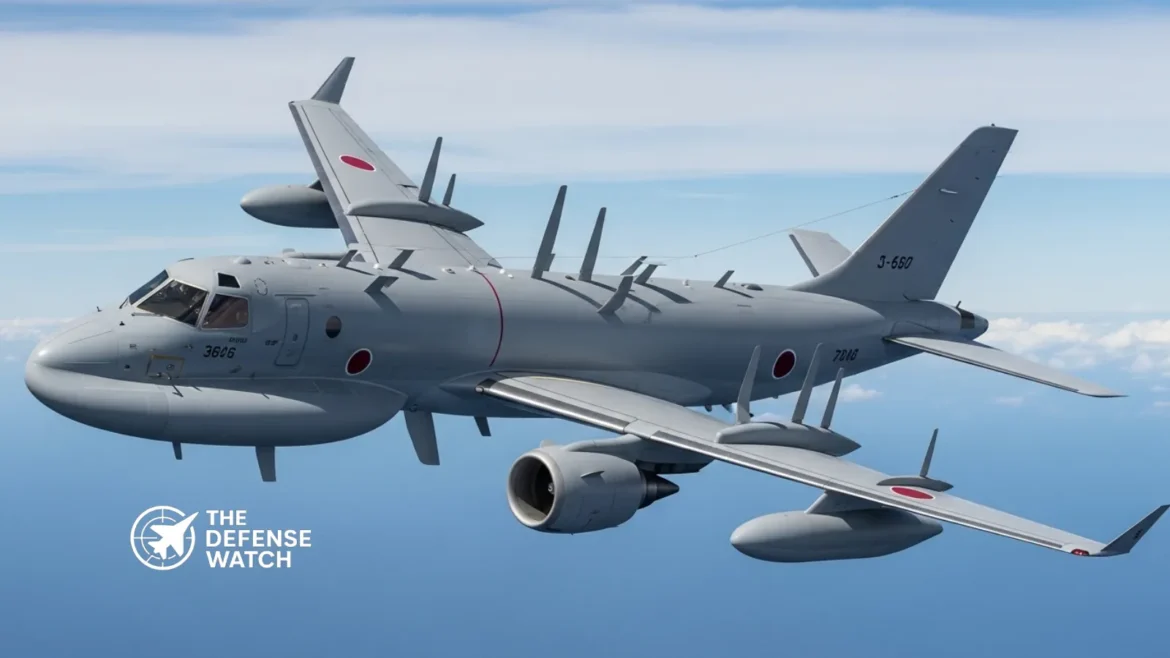
- Japan is preparing a new airborne electronic warfare aircraft derived from the Kawasaki P-1 maritime patrol platform.
- The aircraft will conduct signals intelligence, radar detection, and electronic jamming missions.
- The system is intended to replace aging EP-3 Orion electronic intelligence aircraft used by the Japan Maritime Self-Defense Force.
- Development funding includes roughly 41.4 billion yen requested in Japan’s FY2025 defense budget.
- The platform will support Japan’s growing focus on electromagnetic warfare and cross-domain military operations.
Japan Electronic Warfare Aircraft Program Moves Toward Testing
Japan’s new electronic warfare aircraft is moving toward testing as Tokyo accelerates efforts to strengthen its electromagnetic warfare capabilities. The aircraft, derived from the Kawasaki P-1 maritime patrol aircraft, is designed to conduct signals intelligence collection, radar detection, and electronic attack missions for the Japan Maritime Self-Defense Force (JMSDF).
The platform forms part of a broader Japanese defense modernization initiative aimed at improving the country’s ability to detect, disrupt, and exploit adversary communications and radar systems. Once operational, the aircraft will replace the JMSDF’s aging EP-3 Orion electronic intelligence aircraft, which have been in service since the early 1990s.
Japan’s Ministry of Defense has requested approximately 41.4 billion yen (about $288 million) in its fiscal year 2025 defense budget to continue development of the program.
The Big Picture
Electronic warfare has become a central domain in modern military operations. Control of the electromagnetic spectrum determines how effectively forces can detect threats, communicate, guide weapons, and disrupt enemy systems.
Japan’s defense strategy increasingly emphasizes this domain as regional security conditions grow more complex. Chinese and Russian military activity in the East China Sea and Western Pacific has increased significantly over the past decade, placing greater pressure on Japan’s surveillance and electronic intelligence capabilities.
Modern conflicts rely heavily on networked sensors, digital command systems, and advanced radar. Electronic warfare platforms can degrade these systems without firing a shot. They can jam communications, deceive radar networks, or collect intelligence on adversary capabilities.
For Tokyo, developing a modern Japan electronic warfare aircraft allows the Self-Defense Forces to operate more effectively in a highly contested electromagnetic environment.
What’s Happening
Japan’s Ministry of Defense is developing a specialized electronic warfare aircraft based on the domestically produced Kawasaki P-1 maritime patrol aircraft. The P-1 already serves as Japan’s primary anti-submarine and maritime surveillance aircraft.
The electronic warfare variant will incorporate a wide range of sensors and systems designed to monitor and manipulate the electromagnetic spectrum.
According to Japanese defense planning documents, the aircraft will support missions including:
- Signals intelligence (SIGINT)
- Electronic intelligence (ELINT)
- Communications intelligence (COMINT)
- Radar detection and classification
- Electronic jamming and deception
The aircraft is expected to carry multiple antennas, sensor arrays, and specialized radomes positioned around the fuselage. These features enable the platform to collect electronic emissions from radar and communication systems over long distances.
Japanese defense officials describe the platform as a multi-sensor electronic intelligence aircraft designed to support joint operations across multiple domains.
Prototype development began in fiscal year 2024, with production and testing expected to continue through the early 2030s.
Why It Matters
Electronic warfare capability is essential for modern military operations.
Advanced air defense systems rely on radar networks that track aircraft, guide missiles, and coordinate defenses. Electronic warfare platforms can interfere with those networks by jamming signals or feeding false information into radar systems.
The new Japan electronic warfare aircraft will give Tokyo a stronger ability to monitor foreign military activity and disrupt hostile sensors if necessary.
This capability is particularly important for maritime security. Japan sits along major sea lanes that connect the Pacific and Indian Oceans. Monitoring electromagnetic emissions from ships, aircraft, and military installations helps the Self-Defense Forces maintain situational awareness across vast areas.
Electronic intelligence aircraft also support targeting, early warning, and battle management during joint operations.
Strategic Implications
The development of a modern electronic warfare aircraft reflects Japan’s broader shift toward advanced defense technologies.
Tokyo’s latest national defense strategies emphasize:
- Cross-domain operations
- Integrated command and control networks
- Long range strike capabilities
- Advanced intelligence and surveillance systems
Electronic warfare sits at the center of all these capabilities.
If deployed effectively, the platform could support operations involving fighter aircraft, naval forces, and missile defense systems. It could also help protect friendly aircraft by degrading enemy radar and missile guidance systems.
For allied operations, the aircraft could contribute to intelligence sharing and joint situational awareness across the Indo Pacific.
Competitor View
China will likely view the new Japan electronic warfare aircraft as part of a broader regional trend toward advanced electromagnetic warfare capabilities.
The People’s Liberation Army has invested heavily in electronic warfare platforms, including specialized aircraft designed to jam radar systems and support suppression of enemy air defenses.
From Beijing’s perspective, Japan’s development of a modern airborne electronic warfare capability strengthens the technological edge of U.S. allied forces operating in the Western Pacific.
Russia may also monitor the program closely, particularly given its growing military presence in the Sea of Japan and surrounding areas.
However, Japan has framed the program as a defensive measure intended to improve surveillance, intelligence collection, and operational resilience.
Capability Gap
The program addresses a clear capability gap in Japan’s current electronic intelligence fleet.
The JMSDF currently operates a small number of EP-3 Orion aircraft that perform signals intelligence missions. These aircraft have served for decades and are becoming increasingly difficult to maintain.
Older platforms also struggle to keep pace with modern digital radar systems, encrypted communications networks, and advanced electronic warfare techniques.
By replacing these aircraft with a new system derived from the P-1, Japan aims to deploy a platform with:
- Greater sensor sensitivity
- Expanded data processing capacity
- Improved survivability
- Longer operational endurance
Despite these advantages, electronic warfare aircraft often operate close to contested airspace, which exposes them to potential interception or missile threats.
For that reason, these platforms typically operate with escort aircraft or maintain stand-off distances from hostile defenses.
What To Watch Next
Several milestones will shape the future of the program.
Key developments include:
- Prototype production and ground testing
- Initial flight testing of the electronic warfare configuration
- Integration of advanced signal processing systems
- Operational evaluation with the JMSDF
Full operational capability is expected later in the next decade once testing and system integration are completed.
Japan’s defense planners may also expand the program depending on operational requirements and budget priorities.
The Bottom Line
Japan’s new electronic warfare aircraft program marks a significant step toward strengthening electromagnetic dominance and intelligence collection capabilities in the Indo Pacific.
¦ KEY FACTS AT A GLANCE- North Korea conducted a repeat ripple launch of strategic cruise missiles from its new Choe Hyon destroyer.
- The missiles followed preset flight paths for more than 10,000 seconds before striking targets in the Yellow Sea.
- The test evaluated the destroyer’s integrated combat system and strategic weapons control network.
- The launch occurred within days of a similar demonstration, suggesting the vessel is nearing operational readiness.
- The test highlights North Korea’s growing emphasis on sea based nuclear capable strike platforms.
North Korean Destroyer Conducts Strategic Cruise Missile Ripple Launch
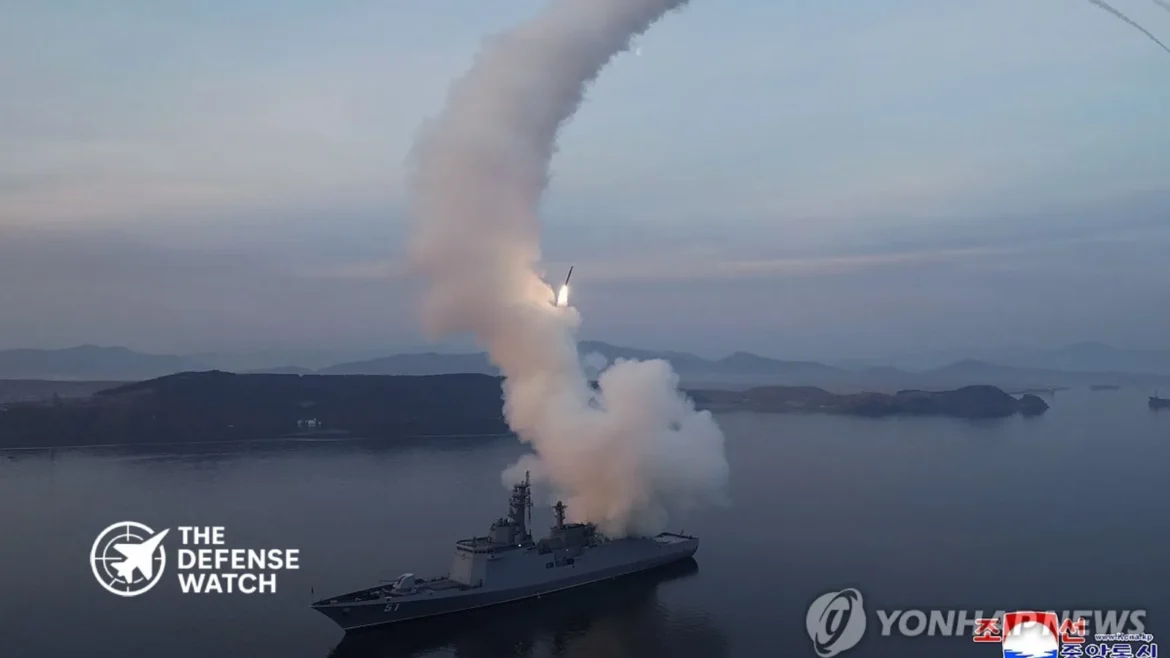
A North Korean destroyer conducted a repeat ripple launch of strategic cruise missiles in a test that underscores Pyongyang’s efforts to operationalize a new class of missile armed warships.
State media reported that the 5,000 ton destroyer Choe Hyon launched multiple strategic cruise missiles during a weapons test on March 10. The missiles followed preset flight paths for more than 10,000 seconds before striking designated targets in the Yellow Sea.
The launch marks the second demonstration within a week, indicating that the vessel and its weapons systems are approaching operational readiness as part of North Korea’s ongoing naval modernization program.
North Korean leader Kim Jong Un reportedly observed the exercise via remote link and praised the results, describing the test as confirmation of the reliability of the country’s integrated strategic weapons control system.
The Big Picture
North Korea’s repeat strategic cruise missile launch reflects a broader shift in Pyongyang’s military strategy toward survivable nuclear delivery systems.
For decades, the Korean People’s Navy primarily focused on coastal defense using small missile boats and submarines. The introduction of large missile carrying destroyers represents an effort to transform the fleet into a more capable strike force able to launch weapons from offshore positions.

Image : North Korea’s official Korean Central News Agency on March 11, 2026 Sea based cruise missile platforms complicate the defensive planning of the United States, South Korea, and Japan. Unlike fixed land based launchers, warships can maneuver and disperse across coastal waters, making them harder to track and target.
This approach mirrors a wider global trend in which states deploy mobile and distributed missile forces to improve survivability in high intensity conflict.
What’s Happening
North Korea carried out the latest test on March 10 using the destroyer Choe Hyon, a 5,000 ton multipurpose warship introduced in 2025 as the largest vessel in the country’s navy.
According to official reporting, the destroyer launched several strategic cruise missiles in rapid succession, a technique known as a ripple launch. In this method, multiple missiles fire sequentially within seconds, allowing a warship to saturate enemy defenses.
The missiles flew between 10,116 and 10,138 seconds before striking their designated targets in the Yellow Sea.
The test evaluated several components of the ship’s combat system, including:
- The integrated control system for strategic weapons
- The destroyer’s sensors and targeting systems
- Launch authorization procedures
- Coordination between command networks and onboard weapons
North Korean officials said the results confirmed the reliability of the vessel’s integrated combat architecture.
Why It Matters
Strategic cruise missile launches from surface combatants significantly expand North Korea’s potential strike options.
The term strategic in North Korean military terminology typically indicates nuclear capable systems. Analysts believe several of the country’s cruise missiles are designed to carry tactical nuclear warheads.
A destroyer armed with such missiles can perform several operational roles:
- Land attack missions against regional bases or ports
- Anti ship strikes against naval forces
- Saturation attacks designed to overwhelm missile defense systems
Unlike ballistic missiles, cruise missiles fly at lower altitudes and follow complex routes. This flight profile makes them more difficult for radar systems to detect early.
For regional missile defense planners, this introduces an additional layer of complexity in tracking and intercepting incoming threats.
Strategic Implications
The emergence of missile armed destroyers suggests North Korea is pursuing a more diversified nuclear deterrent structure.
Until recently, Pyongyang relied heavily on land based missile launchers and submarine launched systems. Surface warships provide a third delivery option, allowing missiles to be launched from multiple directions.
Such capabilities can complicate preemptive strike strategies and increase the survivability of North Korea’s nuclear forces.
The development also reflects Pyongyang’s long term goal of expanding its naval power beyond coastal defense. A fleet capable of launching cruise missiles at sea offers greater operational flexibility and strengthens deterrence messaging during periods of regional tension.
Competitor View
Regional powers are likely to interpret the test as another step in North Korea’s steady expansion of its missile forces.
South Korea and the United States already operate layered missile defense systems designed primarily to counter ballistic threats. The increasing use of cruise missiles requires adjustments in detection, tracking, and interception capabilities.
China and Russia will also monitor the development closely. Both countries have extensive experience with cruise missile equipped surface combatants and may view North Korea’s efforts as an attempt to replicate similar operational concepts on a smaller scale.
For U.S. and allied naval planners, the appearance of cruise missile armed destroyers introduces new variables in maritime security operations in the Yellow Sea and surrounding waters.
What To Watch Next
Several developments could follow this series of missile tests.
First, the Choe Hyon destroyer is likely to undergo additional operational evaluations before full commissioning into active naval service.
Second, North Korea has signaled plans to expand its destroyer fleet. Kim Jong Un has previously called for the construction of additional ships of the same class or larger designs.
Finally, future tests may focus on integrating additional weapons systems, including supersonic missiles or upgraded strike platforms for larger warships.
Capability Gap
North Korea historically lacked large surface combatants capable of launching multiple guided missiles from vertical launch systems.
Most of its fleet consisted of aging Soviet era designs or small coastal patrol craft. These vessels offered limited strike range and survivability.
The introduction of the Choe Hyon destroyer appears aimed at addressing this gap by providing:
- Greater missile capacity
- Improved sensors and combat management systems
- A platform capable of coordinated strike operations
However, the overall effectiveness of these ships remains uncertain. Sustained operations require advanced logistics, training, and maintenance infrastructure that North Korea is still developing.
The Bottom Line
North Korea’s repeat strategic cruise missile launch from a new destroyer signals Pyongyang’s growing ambition to field a more capable missile armed navy.
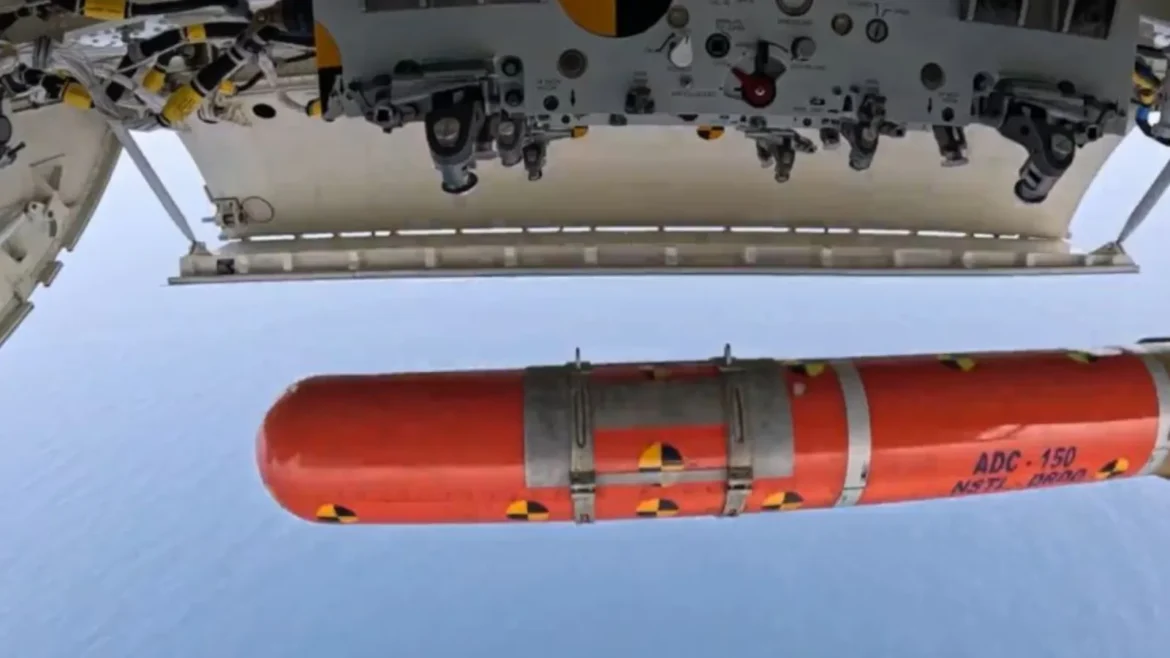
¦ KEY FACTS AT A GLANCE- India successfully tested the ADC-150 air droppable container during joint trials by DRDO and the Indian Navy.
- The system can deliver up to 150 kilograms of critical supplies to ships operating far from shore.
- Trials were conducted from a P-8I maritime patrol aircraft off the coast of Goa.
- Four release trials took place between February 21 and March 1, 2026 under extreme release conditions.
- The system strengthens naval logistics for blue water operations and emergency maritime support.
India Tests ADC-150 Air Droppable Container From P-8I
The ADC-150 air droppable container has successfully completed in flight release trials conducted by the Defence Research and Development Organisation and the Indian Navy, marking a new step in India’s effort to strengthen maritime logistics capabilities.
According to a March 2026 government release, the trials involved multiple airborne deployments from a Boeing P-8I Poseidon maritime patrol aircraft off the coast of Goa. The system is designed to deliver essential supplies to naval vessels operating far from the shoreline.
The tests confirmed that the container can safely deploy a payload of up to 150 kilograms under various operational conditions.
The Big Picture
Naval forces operating in blue water environments often face logistical challenges, especially when ships operate hundreds or thousands of miles from shore based supply points.
Modern naval strategy depends heavily on sustained logistics. Aircraft, submarines, and surface vessels require continuous access to spare parts, emergency medical supplies, and critical equipment.
Many navies address this challenge through underway replenishment ships or helicopter resupply operations. However, aircraft based container delivery systems provide an additional rapid response option.
The ADC-150 air droppable container fits into this broader effort to build flexible logistics capabilities that can support distributed maritime operations.
For India, which maintains growing naval deployments across the Indian Ocean Region, logistics resilience has become a key operational requirement.
What Is Happening
Engineers from the Defence Research and Development Organisation designed and developed the ADC-150 air droppable container as a lightweight logistics delivery system.
Between February 21 and March 1, 2026, the Indian Navy conducted four separate release trials from a P-8I aircraft near Goa. The trials tested the system across several extreme release conditions.
The container is capable of transporting up to 150 kilograms of supplies. Potential payloads include:
- emergency equipment
- spare parts for ship systems
- critical operational stores
- medical supplies
Once released from the aircraft, the container descends safely and can be retrieved by ships at sea.
Officials stated that the system will support naval vessels deployed far from the coastline that require urgent logistical support.
The tests confirmed the container’s ability to function reliably under demanding operational scenarios.
Why It Matters
The ADC-150 air droppable container addresses a practical operational challenge faced by modern navies.
Ships deployed on extended patrols may encounter mechanical issues or urgent supply needs. Waiting for replenishment ships or returning to port can disrupt operations.
Aircraft based resupply reduces response time.
The P-8I aircraft already plays a central role in India’s maritime surveillance and anti submarine warfare missions. Integrating a logistics delivery capability expands its operational utility.
In crisis situations such as mechanical breakdowns, medical emergencies, or equipment failures, rapid aerial delivery could significantly improve response time.
The concept also supports distributed naval operations, where smaller task groups operate across large maritime areas rather than concentrating around a single fleet formation.
Strategic Implications
India’s expanding maritime footprint across the Indian Ocean increases the importance of flexible logistics systems.
The Indian Navy regularly deploys ships across key sea lanes that connect the Middle East, Africa, and Southeast Asia. Sustaining these deployments requires resilient support networks.
Air droppable logistics containers allow aircraft to act as rapid response supply platforms.
This capability complements traditional naval replenishment ships while providing an additional layer of operational flexibility.
It also strengthens humanitarian and disaster relief operations. Aircraft can deliver supplies directly to ships assisting disaster zones without requiring port access.
From a broader strategic perspective, improving naval logistics enhances operational endurance, which directly affects maritime presence and deterrence.
Competitor View
Regional naval powers closely monitor logistics innovations because sustainment capabilities often determine the real effectiveness of naval deployments.
China has heavily invested in replenishment ships and overseas support infrastructure to sustain its expanding naval operations.
India has pursued a different approach that combines logistics vessels, forward basing arrangements, and aircraft supported resupply options.
Air droppable container systems like ADC-150 provide a low cost method to extend operational reach without building additional logistics vessels.
Such systems also align with broader trends in distributed maritime operations seen across several modern navies.
What To Watch Next
Future testing will likely focus on additional operational scenarios and platform integration.
Possible next steps may include:
- integration with other maritime patrol aircraft
- testing under night or adverse weather conditions
- expanded payload configurations
- operational deployment during naval exercises
Operational doctrine and training will also play a role in determining how widely the system is used during routine missions.
Capability Gap
Traditional naval logistics relies heavily on large replenishment ships. These vessels provide fuel, ammunition, and stores but operate at limited speeds and require coordinated rendezvous with receiving ships.
Aircraft based resupply fills a gap between large scale replenishment and helicopter logistics.
However, the ADC-150 system has clear limitations. Its payload capacity of 150 kilograms means it is suited only for critical supplies rather than large scale logistics deliveries.
Still, its value lies in speed and flexibility rather than volume.
The Bottom Line
The ADC-150 air droppable container strengthens India’s ability to sustain naval operations at sea by enabling rapid aerial delivery of critical supplies to ships operating far from shore.
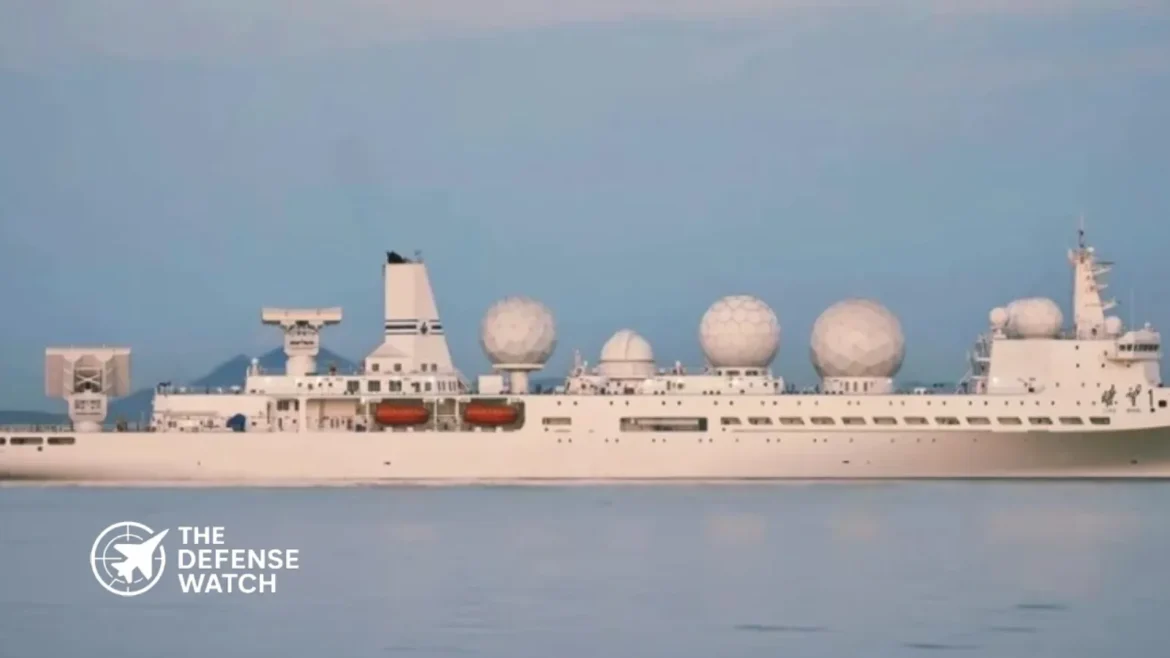
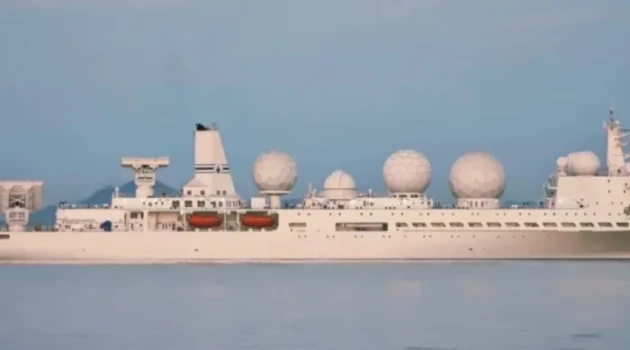
¦ KEY FACTS AT A GLANCE- Chinese surveillance vessel Liaowang-1 has been reported operating near the coast of Oman in the Arabian Sea.
- The ship is equipped with large radar domes and electronic intelligence sensors designed to track military signals and missile activity.
- Its presence comes amid heightened US military operations across the Middle East and growing geopolitical tensions.
- Surveillance vessels such as Liaowang-1 can monitor radar emissions, satellite communications, and aircraft operations over long distances.
- The deployment reflects increasing Chinese interest in monitoring US military activity far beyond the Indo-Pacific.
Chinese Spy Ship Liaowang-1 Operating Near Oman
Chinese spy ship Liaowang-1 has reportedly been operating near the coast of Oman in the Arabian Sea, drawing attention from defense observers monitoring intelligence activity around ongoing US military operations in the Middle East.
Open source tracking data and defense analysts indicate that the surveillance vessel has remained in international waters while collecting electronic signals and radar emissions from regional military forces. Such ships are commonly used to monitor missile tests, naval deployments, and aircraft activity.
The presence of the Liaowang-1 spy ship underscores the growing importance of signals intelligence in modern military competition and reflects China’s expanding interest in observing US force movements outside the Indo-Pacific.
The Big Picture
China has steadily expanded its global intelligence collection network over the past decade. The effort includes satellites, cyber capabilities, and specialized surveillance vessels designed to gather electronic and communications intelligence.
Signals intelligence ships play a critical role in this system. These vessels can track radar emissions from warships and air defense systems, monitor communications links, and observe flight activity across large regions.
The United States has long used similar platforms. US Navy surveillance ships frequently monitor missile tests and naval exercises conducted by other major powers.
China’s deployment of the Liaowang-1 surveillance vessel near the Middle East reflects Beijing’s broader goal of understanding US military operations, particularly those involving advanced aircraft, naval platforms, and missile defense systems.
The Middle East has become an increasingly active operating environment for US forces, including aircraft carriers, destroyers, and stealth aircraft.
What Is Happening
Defense analysts tracking maritime activity have identified the Chinese spy ship Liaowang-1 operating in waters near Oman and the Arabian Sea.
The vessel belongs to China’s fleet of ocean tracking and signals intelligence ships. These platforms typically carry large antenna arrays and radar domes designed to detect and analyze electronic signals from military equipment.
Operating in international waters allows such ships to legally observe military activities conducted by other nations.
Surveillance vessels commonly monitor:
• radar emissions from air defense systems
• communications between ships and aircraft
• satellite uplinks and downlinks
• missile launch telemetryShips like Liaowang-1 often accompany or observe major military exercises or conflict zones because these environments generate large volumes of electronic signals.
The concentration of US military assets in the Middle East makes the region a valuable intelligence collection opportunity.
Why It Matters
Electronic intelligence has become one of the most valuable forms of military information.
Modern platforms such as stealth aircraft, missile defense systems, and advanced radars rely heavily on electronic signatures. Collecting those signatures allows analysts to study how systems operate and potentially identify vulnerabilities.
Surveillance ships can gather information about radar frequencies, operating modes, and communications protocols. This data can help analysts develop countermeasures or refine electronic warfare tactics.
The presence of the Liaowang-1 spy ship near Oman therefore highlights the growing role of information warfare in military competition.
The United States and China increasingly compete not only in weapons development but also in the collection and analysis of operational data.
Strategic Implications
Signals intelligence vessels positioned near active military operations can provide valuable insights into force posture and readiness.
By monitoring electronic activity across the region, a ship like Liaowang-1 may observe patterns such as:
• carrier strike group communications
• radar operations of missile defense systems
• aircraft sortie patterns
• electronic warfare activityThis type of intelligence does not directly alter battlefield outcomes but contributes to long term military analysis.
For China, understanding how US systems operate in real combat environments can inform the development of countermeasures and future defense technologies.
For the United States, the presence of foreign surveillance ships reinforces the need for strong operational security and electronic emission control procedures.
Competitor View
China has increasingly deployed surveillance ships beyond its traditional operating areas.
These vessels have appeared near US missile tests in the Pacific and near international military exercises involving allies such as Australia, Japan, and India.
From Beijing’s perspective, observing US military activity provides valuable technical intelligence while remaining within the boundaries of international maritime law.
Iran and Russia also maintain strong interest in US operations in the region. Intelligence gathered through open sources, satellite imagery, and electronic monitoring contributes to their understanding of US capabilities.
However, analysts caution that linking specific battlefield outcomes directly to foreign surveillance platforms requires clear evidence and verified sources.
What To Watch Next
Several developments will shape how surveillance operations evolve in the region.
First, the scale of US military deployments in the Middle East will determine how attractive the region remains for intelligence collection.
Second, advances in electronic warfare and emissions control could limit how much data surveillance vessels can gather.
Third, China is expected to expand its fleet of intelligence collection ships and satellites, improving its ability to monitor global military activity.
In the long term, these platforms will likely become a routine feature around major military operations.
Capability Gap
Signals intelligence ships address a critical requirement for understanding foreign military technologies and operational behavior.
However, they also face limitations.
Their sensors rely on the emission of electronic signals. Systems operating in low probability of intercept modes or strict emissions control can reduce the amount of information available.
Weather conditions, distance from the target area, and counter surveillance tactics also limit the effectiveness of such platforms.
Despite these constraints, intelligence ships remain valuable tools for gathering long term technical data.
The Bottom Line
The presence of the Chinese spy ship Liaowang-1 near Oman highlights the expanding role of electronic surveillance in global military competition and the increasing intelligence focus on US operations in the Middle East.
KEY FACTS AT A GLANCE- Dominican Republic signed a contract to acquire four surplus Portuguese Tejo class patrol ships.
- The agreement is valued at up to €24.37 million and includes modernization, training, and logistics support.
- The ships will strengthen surveillance and law enforcement across the Dominican Republic’s Exclusive Economic Zone.
- Delivery will occur in phases over roughly 40 months, with the first vessel expected within a year after logistics preparation.
- The transfer reflects growing international cooperation in maritime security and fleet modernization.
Dominican Republic Patrol Ships Deal With Portugal
The Dominican Republic patrol ships acquisition marks a significant step in strengthening maritime security in the Caribbean, following a contract signed with Portugal for four surplus coastal patrol vessels.
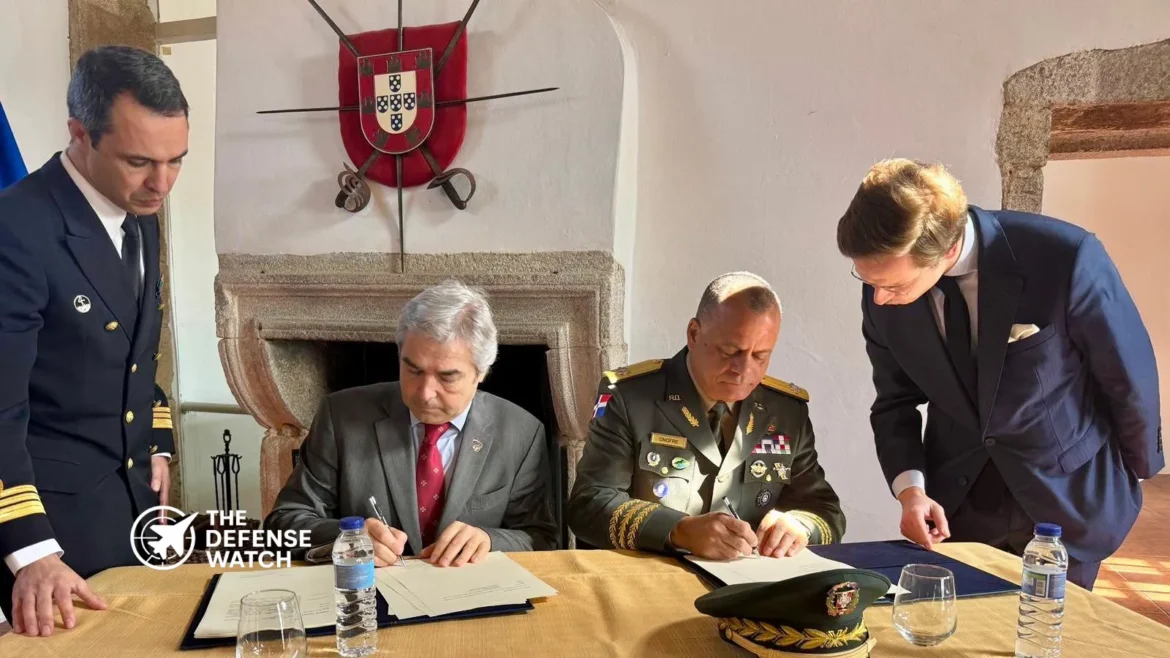
The agreement, announced by the Portuguese Ministry of National Defence, covers the transfer of four Standard Flex 300 Series 2 patrol ships, known in Portuguese service as the Tejo-class vessels. The contract has a maximum value of approximately €24.37 million, depending on the installation of additional equipment and systems.
The ships were previously operated by the Portuguese Navy and are reaching the end of their operational life in Portugal. However, they remain suitable for coastal security and patrol missions in the Dominican Republic’s maritime environment.
Officials from both countries finalized the agreement after Dominican defense representatives inspected the vessels at the Lisbon Naval Base in February.
The Big Picture
Caribbean nations face growing pressure to secure large maritime zones against illegal fishing, narcotics trafficking, and maritime crime. The Dominican Republic sits at a strategic crossroads between Central America, South America, and major Atlantic shipping routes.
For smaller navies, maintaining constant surveillance across wide exclusive economic zones is a persistent challenge. Purchasing surplus patrol vessels from partner nations provides a cost effective way to expand maritime coverage without the financial burden of building new warships.

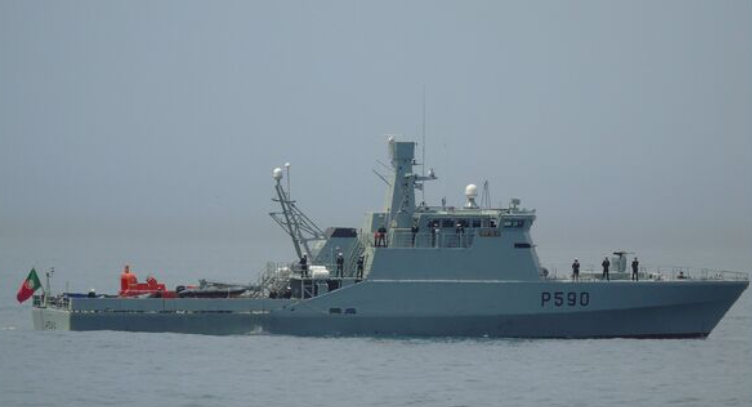
In Portugal, the Tejo-class fleet principally carried out patrol, surveillance, and Search and Rescue missions. (Victor Barreira)The Dominican Republic patrol ships acquisition reflects a broader trend among medium and small maritime forces that rely on second hand platforms from NATO countries to modernize fleets quickly.
Portugal’s sale also fits into its own naval modernization program, which includes replacing older patrol ships with newer vessels and multipurpose platforms.
What Is Happening
The Dominican Republic will receive four patrol vessels formerly operated by the Portuguese Navy: Tejo, Douro, Mondego, and Guadiana.
Key details of the deal include:
• Total contract value of roughly €24 million
• Options for additional systems and equipment up to €24.37 million
• Integrated support package including maintenance, training, and spare parts
• Phased delivery over a period of about 40 monthsThe ships measure roughly 50 meters in length and displace about 345 tons, making them suitable for coastal patrol, surveillance operations, search and rescue missions, and maritime security enforcement.
According to Dominican defense officials, the vessels will support patrol and monitoring operations designed to counter illicit maritime activities across national waters and the country’s Exclusive Economic Zone.
Why It Matters
Strengthening maritime security has become a priority for Caribbean states facing rising transnational crime.
Drug trafficking routes frequently pass through Caribbean waters, and law enforcement agencies must patrol vast maritime areas with limited resources. Additional patrol ships significantly expand operational coverage and allow naval forces to maintain a more persistent presence at sea.
For the Dominican Navy, acquiring these vessels provides an immediate improvement in maritime domain awareness and response capability.
The deal also demonstrates how defense cooperation between European and Latin American partners can support regional security objectives while extending the useful service life of existing naval platforms.
Strategic Implications
Improved patrol capabilities will likely enhance the Dominican Republic’s ability to enforce maritime laws and support regional security partnerships.
Caribbean maritime security operations often involve cooperation with the United States, regional coast guards, and multinational anti narcotics missions. Expanded naval capacity allows the Dominican Republic to participate more effectively in these coordinated operations.
The acquisition may also contribute to stronger monitoring of fishing zones, an increasingly sensitive issue as illegal and unregulated fishing expands in parts of the Caribbean.
In addition, the deal reflects how smaller navies are prioritizing maritime surveillance and constabulary missions rather than high end naval combat platforms.
Competitor View
Major geopolitical competitors such as China and Russia maintain limited direct naval presence in the Caribbean compared with the United States and regional partners.
However, both countries have expanded diplomatic and security ties across Latin America. Strengthening maritime security capabilities among Caribbean states may therefore be viewed as part of broader Western security cooperation in the region.
While the patrol ships themselves are not combat vessels designed for high intensity conflict, they improve regional maritime governance and law enforcement capacity.
What To Watch Next
The transfer of the patrol ships will unfold over the next several years.
Key milestones include:
• Completion of modernization and logistics preparation
• Delivery of the first vessel within roughly 12 months
• Sequential delivery of the remaining ships at 20, 30, and 40 month intervals
• Crew training and operational integration within the Dominican NavyObservers will also watch whether the Dominican Republic adds additional equipment or upgrades to the ships during the transfer process.
Capability Gap
The Dominican Navy faces the common challenge of securing large maritime zones with limited numbers of ships.
Patrol vessels such as the Tejo class address this gap by providing endurance, surveillance capability, and rapid response capacity for coastal security missions.
However, these vessels are not designed for high end naval warfare. Their primary role is maritime policing, search and rescue, and surveillance operations rather than fleet combat.
The Bottom Line
The Dominican Republic patrol ships acquisition provides a cost effective boost to maritime security while strengthening defense cooperation with Portugal.
KEY FACTS AT A GLANCE- Iranian landing ship IRIS Lavan docked inside a controlled naval zone at Kochi, India.
- The vessel reportedly developed technical problems and requested emergency port access.
- The docking occurred during escalating maritime tensions linked to the Iran conflict.
- India approved the docking request on March 1 after Iran submitted it on February 28.
- The ship’s 183 crew members are being supported at Indian naval facilities in Kochi.
Iranian Landing Ship Kochi Docking Highlights Rising Indian Ocean Tensions
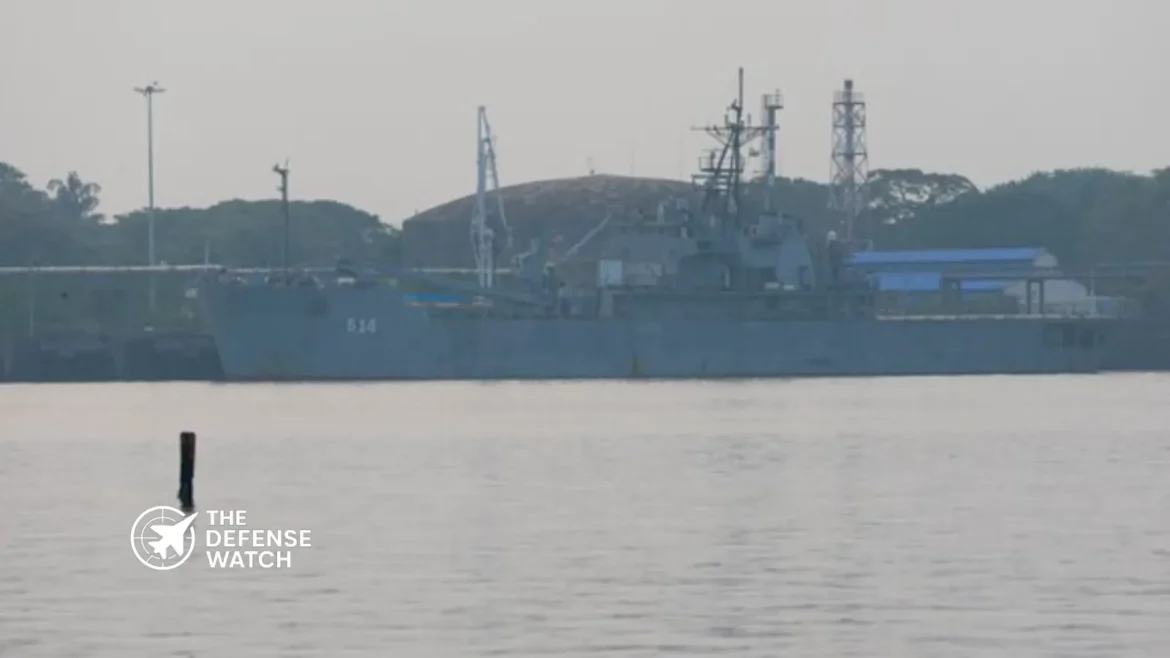
The Iranian landing ship Kochi docking incident has drawn attention after the Iranian Navy vessel IRIS Lavan entered a restricted naval zone at Kochi, India, amid rising maritime tensions linked to the ongoing Iran conflict. Satellite imagery confirms the amphibious vessel is moored within a secured area normally used by the Indian Navy.
Indian authorities granted the ship permission to dock after Tehran reported technical issues while the vessel was operating in the Indian Ocean region. The decision allowed the Iranian vessel and its crew to access naval facilities in Kochi, a major Indian naval hub on the Arabian Sea.
The development occurred during a volatile period in regional security, shortly after another Iranian warship was sunk in the Indian Ocean during escalating hostilities.
The Big Picture
Naval activity across the Indian Ocean has intensified as the Iran conflict expands beyond the Persian Gulf and into critical maritime corridors linking the Middle East and Asia.
The Indian Ocean hosts some of the world’s busiest sea lanes, including energy supply routes connecting Gulf producers to Asian markets. Increased naval deployments, surveillance missions, and military exercises have turned the region into a strategic crossroads for several major powers.
Iran has periodically deployed naval task groups into the Indian Ocean as part of diplomatic and training missions. These deployments often include surface combatants, logistics ships, and amphibious platforms designed to demonstrate blue water operational capability.
The docking of an Iranian naval vessel at an Indian naval facility therefore carries geopolitical significance beyond a routine port call. It highlights the complex balance regional states must maintain as tensions between Iran and Western powers escalate.
What’s Happening
The Iranian landing ship IRIS Lavan docked at Kochi on March 4 after reporting technical issues while operating in the region. Iranian authorities submitted a request for emergency docking on February 28, which India approved on March 1.
Satellite imagery analyzed by defense observers shows the ship positioned alongside a reinforced pier inside a fenced naval zone surrounded by restricted access roads, indicating the vessel is being hosted within a secure military facility rather than a commercial port.
The vessel reportedly carries 183 crew members, including naval cadets participating in training activities linked to international maritime events in the region.
The docking took place the same day an Iranian frigate, IRIS Dena, was sunk by a United States Navy submarine off the coast of Sri Lanka during the escalating Iran conflict.
Indian officials stated the decision to allow the vessel into Kochi was based on humanitarian considerations after the ship experienced technical problems during its deployment.
Why It Matters
The Iranian landing ship Kochi docking illustrates how regional navies are managing operational realities amid a rapidly expanding maritime security crisis.
Port access for naval vessels in distress is permitted under international maritime practice. However, allowing a warship from a country involved in active hostilities to dock at a military facility requires careful political calculation.
India has traditionally maintained a policy of strategic autonomy in its foreign and defense policy. That approach allows New Delhi to sustain defense cooperation with the United States while preserving longstanding diplomatic and economic ties with Iran.
Providing humanitarian assistance to an Iranian naval vessel fits within that framework, but the decision also reflects the practical need to maintain maritime stability in the Indian Ocean.
Strategic Implications
The presence of an Iranian naval ship inside an Indian naval zone highlights the growing operational complexity of the Indo Pacific maritime environment.
First, the incident demonstrates how the Iran conflict now intersects with one of the world’s most strategically important naval theaters. The Indian Ocean is increasingly central to global energy flows, submarine patrol routes, and multinational naval exercises.
Second, it underscores India’s role as a regional maritime stabilizer. By allowing the vessel to dock, India ensured the safety of the crew and prevented a potentially dangerous maritime incident involving a disabled warship.
Third, the episode shows how naval diplomacy remains a key tool in crisis management. Controlled access to naval bases allows states to provide assistance while maintaining strict operational oversight of foreign military assets.
Competitor View
Regional powers and global competitors will interpret the docking through different strategic lenses.
Iran may view India’s decision as evidence that it retains access to diplomatic and logistical support networks beyond the Middle East. Such access could prove valuable for long distance naval deployments.
China is likely monitoring the development closely. Beijing has steadily expanded its naval presence in the Indian Ocean through ports and bases linked to the People’s Liberation Army Navy.
The United States may view the event primarily through the lens of maritime safety and humanitarian practice, though the broader Iran conflict ensures that any Iranian naval activity in the region remains closely watched by U.S. forces.
What To Watch Next
Several developments could shape the next phase of the situation.
Repairs and inspections aboard IRIS Lavan will determine how long the vessel remains at Kochi. If significant mechanical problems are confirmed, the ship could remain in port for an extended period.
Regional naval patrols are also likely to increase following the sinking of the Iranian frigate IRIS Dena, which has heightened security concerns across the Indian Ocean.
Diplomatic messaging from New Delhi, Tehran, and Washington will also be closely examined for signals about how each government intends to manage naval interactions in the region.
Capability Gap
The episode highlights a persistent operational challenge for long range naval deployments.
Iran’s navy has expanded its presence in distant waters over the past decade, but many of its ships are aging platforms that require significant maintenance during extended missions.
Landing ships such as IRIS Lavan, part of Iran’s Hengam class amphibious fleet, are designed for logistics transport and amphibious operations rather than sustained blue water operations. Mechanical issues during long deployments are therefore not uncommon.
For Iran, improving logistics support and overseas maintenance access remains a key capability gap if it intends to maintain persistent naval operations far from its home ports.
The Bottom Line
The Iranian landing ship Kochi docking highlights how the expanding Iran conflict is reshaping naval dynamics across the Indian Ocean and testing regional diplomatic balance.
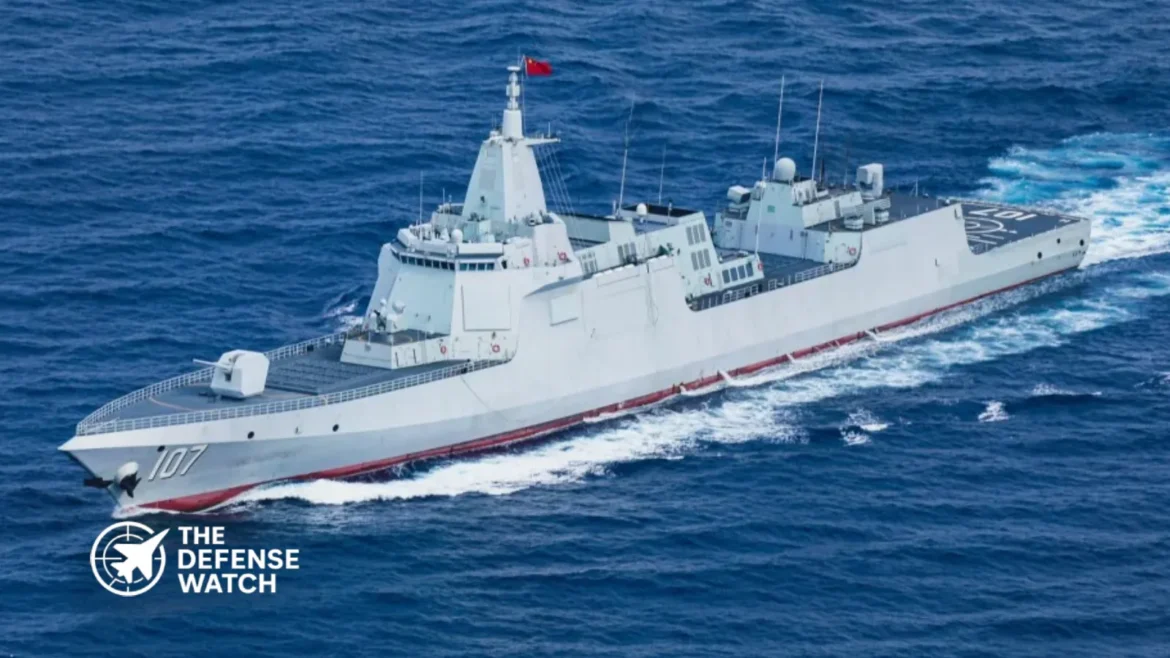
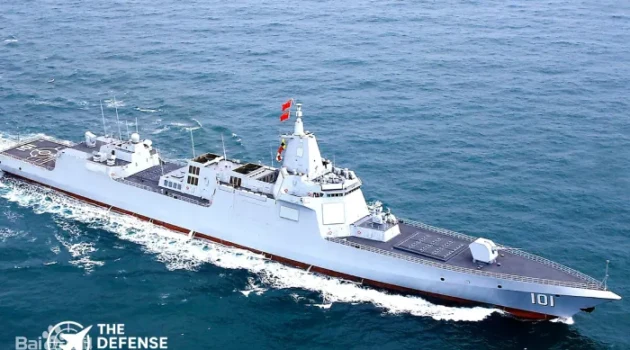
¦ KEY FACTS AT A GLANCE- PLA Navy commissions Dongguan (Hull 109) and Anqing (Hull 110) as the ninth and tenth Type 055 guided-missile destroyers.
- The 12,000-ton-class ships feature 112 vertical launch system cells and advanced integrated mast radar.
- Both vessels assigned to Eastern Theater Command Navy, the first Type 055s in Taiwan-facing waters.
- First batch of eight ships completed service entry by 2023; second batch now entering fleet.
- Type 055 fleet expansion supports PLAN carrier escort and multi-domain operations across three theater commands.
The Chinese People’s Liberation Army Navy has commissioned two new Type 055 guided-missile destroyers, Dongguan (Hull 109) and Anqing (Hull 110), bringing the total number of these 10,000-ton-class warships to 10.
The vessels entered service with the Eastern Theater Command Navy, according to official Chinese military reporting broadcast by China Central Television on March 9, 2026. This marks the first deployment of Type 055 destroyers to the East Sea Fleet, which operates in waters directly facing Taiwan and the first island chain.
The Big Picture
China continues rapid naval modernization as part of its broader military buildup. The People’s Liberation Army Navy now operates the world’s largest fleet by hull count and fields increasingly capable surface combatants. The Type 055 program forms a central element of this effort, providing large, multi-mission platforms that bridge the gap between traditional destroyers and cruisers. U.S. Department of Defense assessments note steady progress toward Beijing’s 2027 goals, including enhanced capabilities for potential Taiwan contingencies and operations beyond the first island chain.
What’s Happening
Dongguan and Anqing represent the lead ships of the second production batch. The first eight hulls — Nanchang (101) through Xianyang (108) — entered service between 2020 and 2023. The new pair received hull numbers 109 and 110 and appeared in official media footage confirming commissioning. Chinese state sources list the full fleet as Nanchang, Lhasa, Anshan, Wuxi, Dalian, Yan’an, Zunyi, Xianyang, Dongguan, and Anqing. All ten ships now serve across three theater commands, with the latest pair assigned to the Eastern Theater.
Why It Matters
The Type 055 class delivers significant combat power in a single hull. Each ship displaces approximately 12,000–13,000 tons at full load, measures 180 meters in length, and carries 112 vertical launch system cells. These cells accommodate a mix of HHQ-9 long-range surface-to-air missiles, YJ-18 anti-ship cruise missiles, CJ-10 land-attack cruise missiles, and anti-submarine weapons. The integrated mast houses advanced radars capable of tracking hundreds of aerial targets simultaneously. A 130 mm main gun and multiple close-in weapon systems round out the suite.
Operationally, the ships serve as principal escorts for Chinese aircraft carriers and amphibious assault groups. Their size and sensor suite enable command-and-control functions previously limited to larger cruisers. The rapid transition from first to second batch production demonstrates sustained industrial capacity at Jiangnan and Dalian shipyards.
Strategic Implications
Assignment of the first Type 055 destroyers to the Eastern Theater Command alters the balance in waters around Taiwan. These vessels extend air-defense umbrellas, support long-range precision strikes, and enhance anti-submarine coverage in a high-threat environment. Their presence allows the PLAN to conduct more credible escort missions for carrier groups operating east of Taiwan or pushing toward the Philippine Sea. The move also signals Beijing’s intent to project power beyond coastal defense into sustained blue-water operations.
Competitor View
U.S. defense planners view the Type 055 as a key component of China’s anti-access/area-denial strategy. Pentagon reports highlight the class’s role in challenging American and allied forces in the western Pacific. The ships’ missile capacity and sensor reach complicate U.S. carrier strike group operations and increase the risk profile for surface forces inside the first island chain. Allies in Japan, Australia, and the Philippines monitor the development closely, as it directly affects maritime security in the East and South China Seas.
What To Watch Next
Analysts expect additional second-batch Type 055 hulls to reach commissioning milestones throughout 2026 and 2027. Satellite imagery already shows further vessels under construction at both major shipyards. The PLAN may integrate incremental upgrades, including improved electronics or future high-energy weapons, as production continues toward a potential total of 16 ships. Fleet exercises involving multiple Type 055 units alongside carriers will provide the clearest indicator of operational maturity.
Capability Gap
The Type 055 program addresses the PLAN’s previous shortfall in large, multi-mission surface combatants capable of independent operations far from shore. Earlier Chinese destroyers lacked the vertical launch capacity, radar performance, and command facilities required for modern carrier task groups. While the ships close that gap effectively, they still operate within a fleet that trails the U.S. Navy in overall experience and allied integration. Realistic limitations include dependence on shore-based logistics for extended deployments and vulnerability to advanced submarine threats in open ocean.
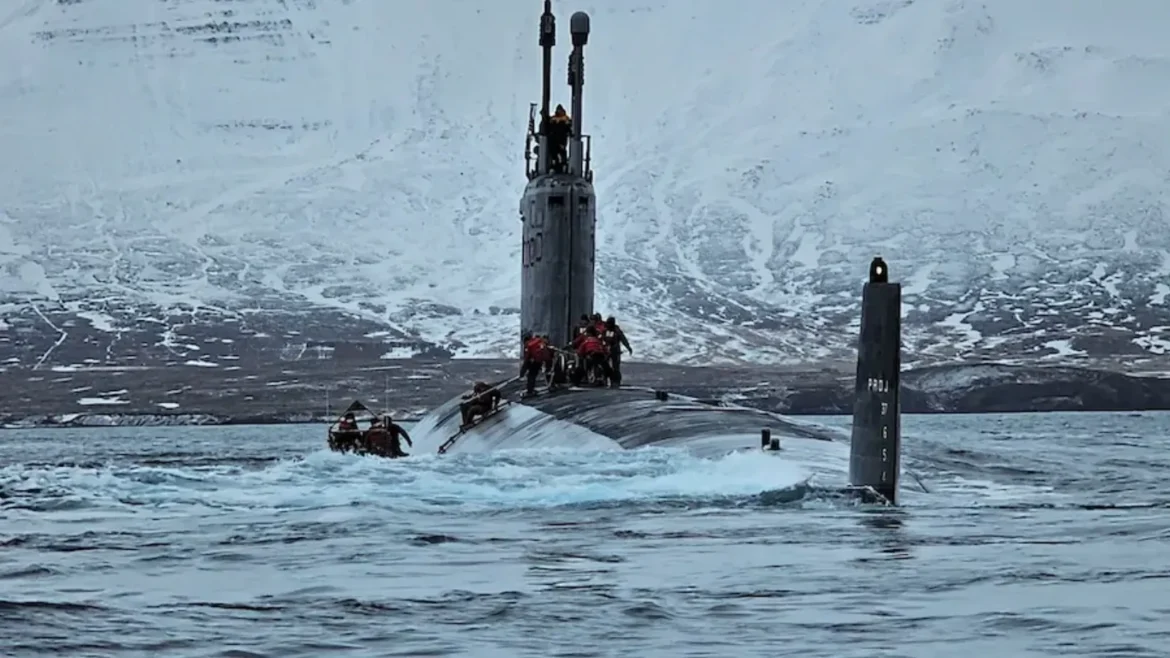
¦ KEY FACTS AT A GLANCE- The U.S. Navy launched Operation Ice Camp Boarfish in the Arctic Ocean on March 7, 2026.
- Fast attack submarines USS Delaware (SSN 791) and USS Santa Fe (SSN 763) are conducting under ice operational testing.
- The mission includes multinational participation and focuses on Arctic submarine warfare readiness.
- The three week operation is conducted from a temporary ice camp built on a drifting Arctic ice floe.
- Ice Camp Boarfish represents the 100th major U.S. submarine under ice evolution.
Operation Ice Camp Boarfish Begins In The Arctic
The US Navy Operation Ice Camp Boarfish has begun in the Arctic Ocean, bringing together submarines, allied personnel, and specialized Arctic research teams to test under ice operational capabilities. The mission officially started on March 7, 2026, following the construction of a temporary ice camp and the arrival of two U.S. Navy fast attack submarines, USS Delaware (SSN 791) and USS Santa Fe (SSN 763).
The three week operation focuses on research, training, and capability testing in one of the most demanding maritime environments on Earth. Personnel from the U.S. Navy, U.S. Marine Corps, and Air National Guard are participating alongside international partners from Australia, Canada, France, Japan, Norway, and the United Kingdom.
The mission operates from Ice Camp Boarfish, a temporary installation built on a drifting Arctic ice floe that serves as the command center for submarine operations, logistics, and research activities.
The Big Picture: The Arctic As A Strategic Maritime Domain
The Arctic has become a growing focus for global military planners. Climate change and receding sea ice are opening new shipping routes and expanding access to natural resources across the region.
U.S. defense planners increasingly view the Arctic as an operational theater where maritime traffic, resource exploration, and military presence will expand over the coming decades. Estimates suggest the Arctic may contain about 13 percent of the world’s undiscovered oil reserves and roughly 30 percent of undiscovered natural gas resources.
These developments have heightened strategic competition.
Russia maintains the largest military presence in the Arctic, with a network of bases, airfields, and ice capable naval forces across its northern coastline. China, though not an Arctic state, has also declared itself a “near Arctic power” and has expanded scientific research and polar shipping initiatives.
Against this backdrop, Operation Ice Camp Boarfish demonstrates Washington’s effort to maintain operational readiness in the region while reinforcing alliances with Arctic and NATO partners.
What’s Happening
Operation Ice Camp Boarfish centers on the deployment of two nuclear powered fast attack submarines:
- USS Delaware (SSN 791), a Virginia class submarine
- USS Santa Fe (SSN 763), a Los Angeles class submarine
During the operation, crews conduct a range of activities designed to test submarine systems in extreme Arctic conditions. These include navigation under polar ice, communication testing, sonar performance evaluation, and vertical surfacing through thick sea ice.
The camp itself consists of modular shelters, communications equipment, and operational infrastructure that allow personnel to coordinate submarine activities while operating on a constantly shifting sheet of ice.
The Arctic Submarine Laboratory, a specialized unit within the Navy’s Undersea Warfighting Development Center, leads the planning and execution of the operation. The organization serves as the Navy’s center of excellence for Arctic submarine operations.
Why It Matters
Arctic submarine operations pose unique technical and operational challenges.
Under the ice, submarines face a complex acoustic environment caused by the irregular underside of the ice canopy, which reflects sound and complicates sonar detection and navigation. Communication with forces above the surface can also become more difficult.
These factors make Arctic training essential for maintaining operational proficiency.
Submarines remain one of the few naval platforms capable of operating freely beneath the polar ice cap. This provides a significant strategic advantage, allowing covert movement, intelligence collection, and potential strike operations in areas where surface ships and aircraft have limited access.
Exercises like Operation Ice Camp Boarfish allow the U.S. Navy to refine tactics and technologies specifically designed for these conditions.
Strategic Implications
Operation Ice Camp Boarfish highlights the importance of undersea dominance in the evolving Arctic security environment.
Submarines play a central role in deterrence and intelligence gathering. By maintaining the ability to operate under ice, the U.S. Navy preserves freedom of maneuver across northern sea lanes and strengthens its strategic reach between the Atlantic and Pacific oceans.
The Arctic also offers shorter transit routes for submarines moving between major operational theaters. Control of these routes could prove critical during a future high end conflict.
From a NATO perspective, Arctic submarine proficiency also supports defense planning for northern Europe and the North Atlantic. Allied participation in the operation reflects a broader effort to build interoperability among Western naval forces in polar environments.
Competitor View
Russia closely monitors Western military activity in the Arctic.
Moscow has invested heavily in Arctic infrastructure, including upgraded airbases, radar networks, and naval facilities along the Northern Sea Route. Russian submarines routinely operate under the polar ice and are considered among the most capable Arctic naval forces.
China has also increased its Arctic research activities and maritime presence. While Beijing does not operate combat submarines in the Arctic today, its expanding polar strategy could eventually lead to a greater military role.
Exercises like Operation Ice Camp Boarfish therefore serve not only as training events but also as signals of U.S. commitment to maintaining access and operational capability in the Arctic domain.
What To Watch Next
Several developments will shape future Arctic naval operations.
First, the U.S. Navy continues to expand its Virginia class submarine fleet, including newer variants equipped with the Virginia Payload Module for increased strike capacity.
Second, NATO allies are increasing their Arctic training activities, particularly Norway, Canada, and the United Kingdom, which operate forces designed for cold weather operations.
Finally, the Navy is investing in technologies that improve under ice navigation, autonomous underwater systems, and Arctic communications networks.
These capabilities will likely play a key role in future iterations of Ice Camp operations.
Capability Gap
Operating under Arctic ice requires specialized training, navigation techniques, and equipment that differ significantly from standard submarine operations.
Without regular Arctic deployments, naval forces risk losing the institutional knowledge required to operate safely in the region. Ice Camp missions help maintain those skills while validating new systems designed for polar conditions.
However, logistical challenges remain significant. The Arctic’s extreme weather, limited infrastructure, and communications constraints complicate sustained operations.
As competition in the region increases, maintaining a consistent training presence will remain essential for closing these operational gaps.
Historical Context
The U.S. Navy has conducted submarine operations beneath the Arctic ice for more than six decades.
The first nuclear powered submarine to transit under the polar ice cap was USS Nautilus in 1958, followed by USS Skate, which became the first submarine to surface at the North Pole in 1959.
Earlier experiments also played a critical role. In 1947, the submarine USS Boarfish conducted pioneering under ice navigation tests during Operation Blue Nose, demonstrating that extended submarine operations beneath polar ice were feasible.
Operation Ice Camp Boarfish continues that legacy and marks the 100th major U.S. submarine under ice evolution conducted by the Navy.
The Bottom Line
Operation Ice Camp Boarfish reinforces the U.S. Navy’s ability to operate submarines under Arctic ice, a capability that remains essential for maintaining strategic deterrence and maritime access in a rapidly evolving polar region.
■ KEY FACTS AT A GLANCE- ► The United Kingdom has deployed Wildcat helicopters to the Eastern Mediterranean to support counter-UAS operations.
- ► The move comes amid escalating tensions linked to the ongoing Iran conflict in the region.
- ► Royal Navy Wildcat helicopters are equipped with sensors and weapons suitable for tracking and engaging aerial threats.
- ► The aircraft will operate in coordination with British naval assets already positioned in the Mediterranean.
- ► The deployment highlights growing Western focus on counter-drone defense in regional maritime operations.
UK Deploys Royal Navy Wildcat Helicopters in Counter-Drone Role Amid Escalating Iran Conflict
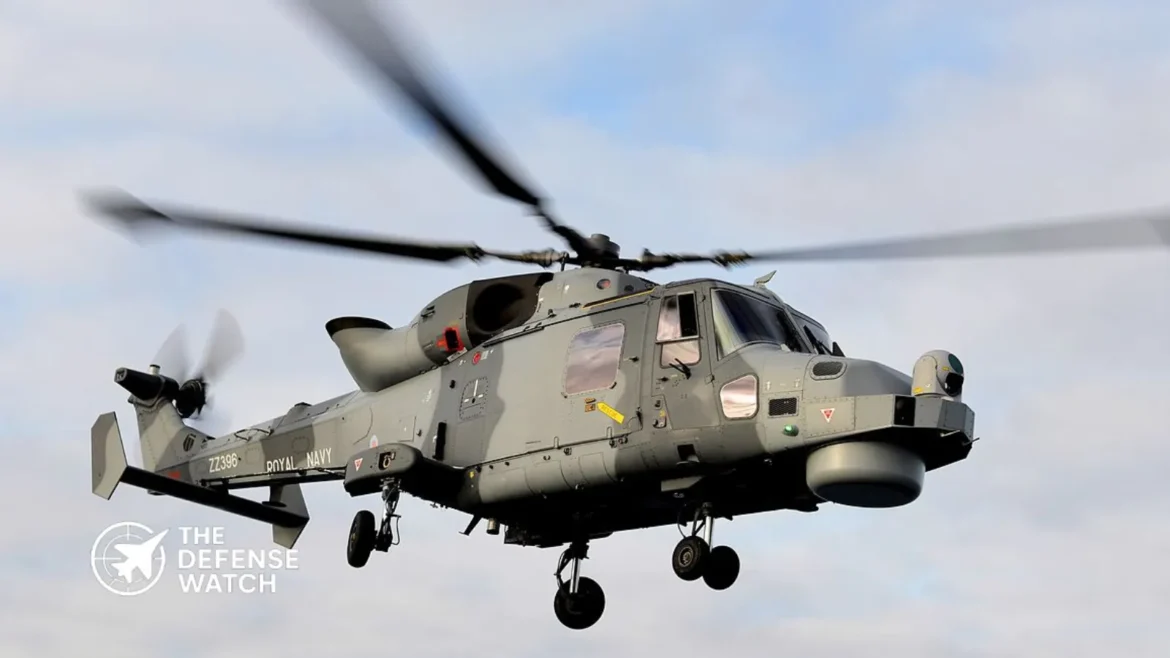
The United Kingdom has moved to reinforce its defensive posture in the Eastern Mediterranean by deploying two Royal Navy Wildcat HMA2 helicopters specifically for counter-unmanned aircraft system (C-UAS) operations. The decision, detailed in a March 3, 2026, announcement from the UK Ministry of Defence (MoD), comes amid heightened tensions in the Iran conflict 2026 and follows a direct drone incident targeting British assets.
(adsbygoogle = window.adsbygoogle || []).push({});On the night of March 1, 2026, a single Shahed-type one-way attack unmanned aerial system (UAS)—attributed by sources to Hezbollah militia operating from Lebanon—struck the edge of the runway at RAF Akrotiri in Cyprus. The base, a key UK sovereign facility, supports regional operations and hosts RAF aircraft. No casualties were reported, but the incident underscored vulnerabilities to low-cost, proliferating drone threats linked to Iranian proxies.
In response, the MoD confirmed the rapid deployment of two Wildcat flights from 815 Naval Air Squadron (NAS), based at RNAS Yeovilton. These Leonardo AW159 Wildcat HMA2 maritime attack helicopters are equipped with active electronically scanned array (AESA) radar for enhanced detection and carry the Thales Martlet lightweight multimode guided weapon system. Martlet, integrated following successful trials—including an air-to-air firing during Exercise Wildfire in September 2025—enables precise engagement of aerial threats at ranges suitable for countering drones, cruise missiles, and other low-altitude targets.
The MoD emphasized the helicopters’ versatility: “The Wildcat helicopters, armed with the Martlet missile system, will be able to hunt and shoot down aerial threats, adding a powerful counter-drone capability to the region.” A statement from 815 NAS highlighted operational flexibility, noting that Wildcat with AESA radar “can hunt and destroy UAS from ship or shore, bringing flexibility and a rapid lethal response anywhere in the world at very short notice.”
This deployment coincides with the movement of the Type 45 destroyer HMS Dragon to the Eastern Mediterranean. The Daring-class vessel provides advanced area air defense via its Sea Viper (Aster) missile system, capable of engaging multiple high-speed threats simultaneously. Together, the assets form a layered defense: ship-based radar and missiles for broader coverage, complemented by agile helicopter-borne interceptors for closer-in, dynamic threats.
The UK’s actions align with broader allied efforts to safeguard regional stability as the Iran conflict 2026 involves sustained exchanges, including Iranian retaliatory strikes and coalition defensive intercepts. Recent reports indicate UK forces have neutralized Iranian-linked drones in Iraqi and Qatari airspace using RAF Typhoons and other platforms. Prime Minister Keir Starmer and Defence Secretary John Healey have framed the moves as protective measures for British personnel, Cypriot partners, and collective self-defense—without direct offensive involvement in strikes on Iran.
The Wildcat’s new C-UAS mission builds on its established maritime roles, including anti-surface warfare. The Martlet system’s introduction expands the platform’s utility against asymmetric threats, a growing priority as one-way attack drones proliferate in regional conflicts. This capability enhances rapid response options, allowing operations independent of fixed bases when needed.
(adsbygoogle = window.adsbygoogle || []).push({});Analysts note that the Eastern Mediterranean deployment addresses gaps in countering low-signature, swarming UAS threats, which traditional air defenses sometimes struggle to prioritize amid higher-end missile risks. By integrating rotorcraft with advanced sensors and precision munitions, the UK adds a mobile, expeditionary layer that can operate from forward sites like Cyprus or allied vessels.
The move also reflects strategic signaling: reinforcing commitments to NATO southern flank partners and deterring further proxy attacks on Western infrastructure. As the conflict evolves, such deployments may set precedents for rotary-wing C-UAS integration in contested environments.