(adsbygoogle = window.adsbygoogle || []).push({});Executive Summary:
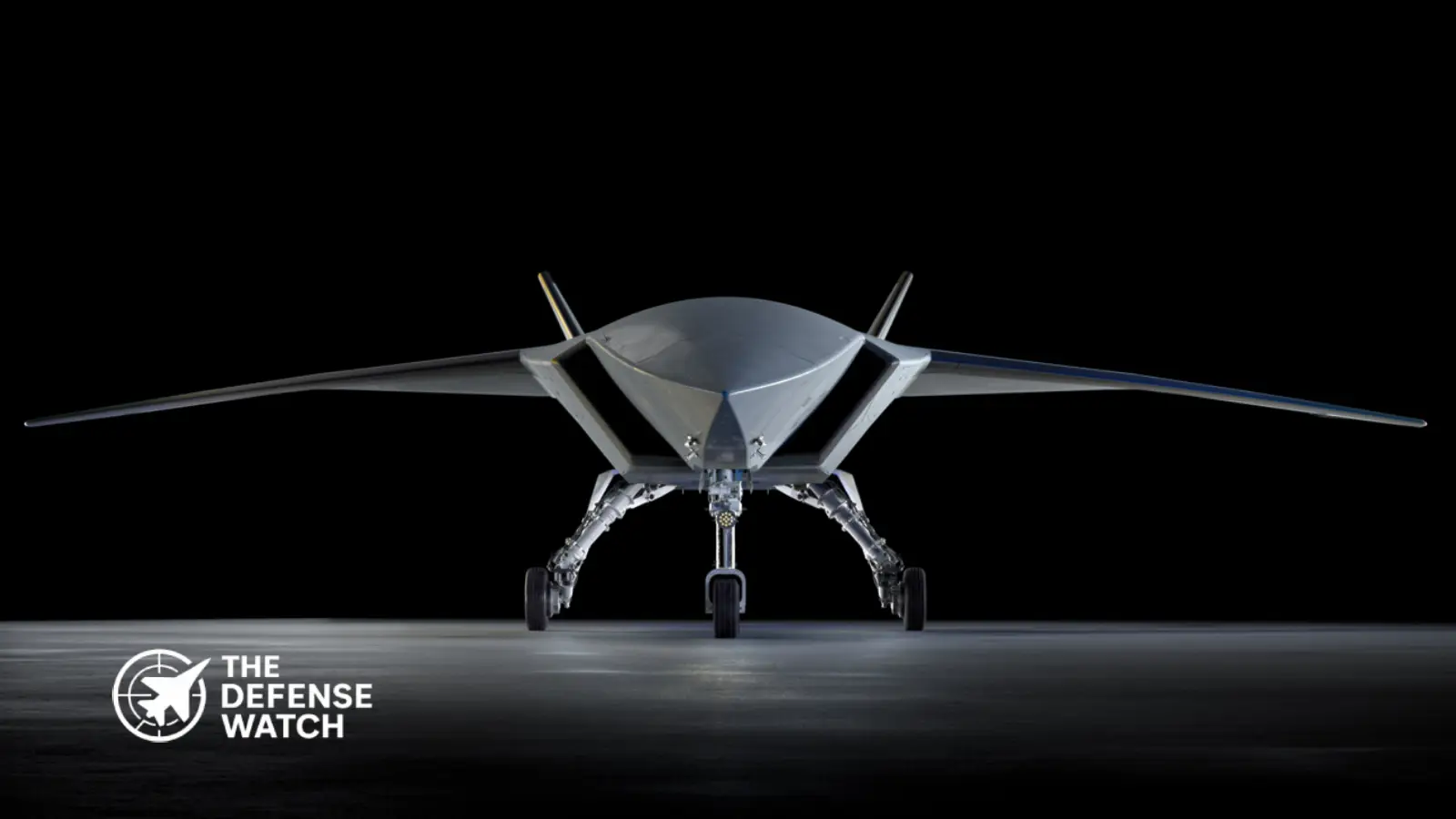
Boeing has unveiled a significantly upgraded MQ-28 Ghost Bat collaborative combat aircraft, adding larger wings, internal weapons stations, and extended operational range.
The enhancements strengthen the platform’s ability to support crewed aircraft, carry additional payloads, and meet growing demand for autonomous combat aircraft among allied air forces.
Boeing MQ-28 Ghost Bat Upgrade Expands Combat Reach
Boeing’s MQ-28 Ghost Bat collaborative combat aircraft has received a major capability upgrade aimed at increasing range, payload capacity, and mission flexibility as global militaries accelerate investment in autonomous air combat systems.
The company unveiled the latest enhancements during the ILA Berlin Air Show 2026, presenting a roadmap that significantly expands the aircraft’s operational capabilities while preserving its role as a force multiplier for crewed fighter aircraft.
Developed in partnership with the Royal Australian Air Force (RAAF), the MQ-28 Ghost Bat is designed to operate alongside manned aircraft, conducting missions that include intelligence gathering, electronic warfare, air combat support, and strike operations.
According to Boeing, the upgraded configuration introduces a wing that is more than 25 percent larger than previous variants, allowing the aircraft to carry an additional 2,000 pounds of fuel, mission payloads, or stores. The increase provides operators greater flexibility to balance endurance and combat loadouts based on mission requirements.
(adsbygoogle = window.adsbygoogle || []).push({});Internal Weapons Bays Add New Combat Capability
One of the most significant additions is the introduction of internal weapons stations.
The upgraded MQ-28 can now be configured to carry up to two AIM-120 AMRAAM air-to-air missiles or four Small Diameter Bombs internally. By carrying weapons inside the airframe rather than on external hardpoints, the aircraft can retain lower observable characteristics while expanding its combat role.
The move reflects a broader trend across next generation unmanned combat aircraft programs, where survivability and weapons integration are becoming increasingly important requirements.
Boeing officials stated that the new capabilities are part of a spiral development approach, enabling future upgrades to be integrated incrementally as operational requirements evolve.
(adsbygoogle = window.adsbygoogle || []).push({});Beyond-Line-of-Sight Operations Expand Mission Flexibility
Another notable enhancement is the addition of beyond-line-of-sight communications capability.
This allows operators to control and coordinate MQ-28 missions over significantly greater distances than earlier configurations, expanding operational flexibility in large theaters such as the Indo-Pacific.
The capability is particularly important for collaborative combat aircraft, which are expected to operate alongside advanced fighters, airborne early warning aircraft, and other networked platforms across dispersed battlespaces.
As air forces increasingly emphasize distributed operations, secure long-range connectivity has become a key requirement for future autonomous systems.
(adsbygoogle = window.adsbygoogle || []).push({});Growing Importance Of Collaborative Combat Aircraft
The latest MQ-28 improvements come as collaborative combat aircraft programs gain momentum across the United States, Australia, Europe, and Asia.
Military planners view autonomous wingmen as a cost-effective way to increase combat mass without procuring large numbers of expensive crewed aircraft. These systems can perform reconnaissance, electronic attack, decoy missions, and strike operations while reducing risk to pilots.
The MQ-28 has emerged as one of the most mature programs in this rapidly evolving sector. Boeing and the RAAF have already completed extensive flight testing, including autonomous teaming demonstrations, operational deployments, and missile firing trials.
The platform has also undergone radar cross-section validation testing to verify its survivability characteristics in contested environments.
(adsbygoogle = window.adsbygoogle || []).push({});From a strategic perspective, the latest upgrades indicate Boeing is positioning the Ghost Bat not only for Australian requirements but also for a growing international market. Germany has shown interest in collaborative combat aircraft concepts, and Boeing recently expanded its industrial partnerships in Europe to support future opportunities.
Why The Upgrade Matters
The significance of the MQ-28 upgrade extends beyond individual performance improvements.
Modern air warfare increasingly depends on a combination of crewed and uncrewed systems operating as an integrated force. Larger payload capacity, longer endurance, internal weapons carriage, and improved connectivity directly enhance the aircraft’s ability to perform that role.
Rather than serving solely as a reconnaissance platform, the upgraded Ghost Bat moves closer to becoming a true combat asset capable of contributing meaningful firepower while supporting manned aircraft in high-threat environments.
As air forces prepare for future conflicts involving advanced air defenses and long-range engagements, collaborative combat aircraft such as the MQ-28 are expected to play an increasingly central role in force structure planning.

(adsbygoogle = window.adsbygoogle || []).push({});Executive Summary:
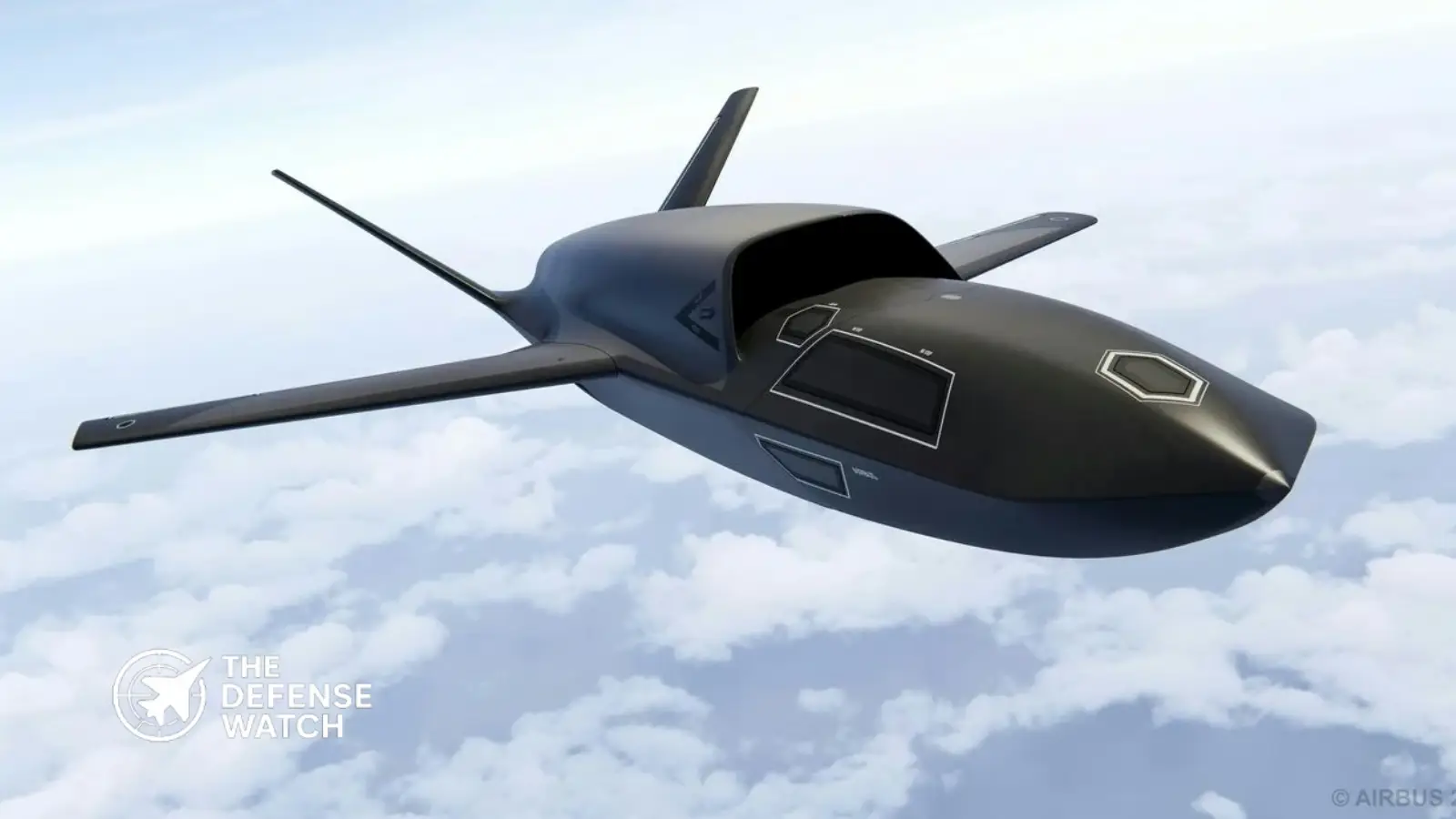
Airbus has unveiled its most comprehensive military drone portfolio to date at ILA Berlin 2026, led by the new U760 Ravenstorm combat drone and autonomous U145 helicopter.
The announcement highlights Europe’s growing focus on sovereign unmanned systems, collaborative combat aircraft, and AI-enabled defense technologies amid rising security demands.
Airbus Drone Portfolio Takes Center Stage At ILA Berlin 2026
Airbus drone portfolio capabilities were on full display at ILA Berlin 2026 as the European aerospace giant showcased a broad range of unmanned systems designed for surveillance, reconnaissance, intelligence gathering, and future multi-domain operations.
The exhibition comes as European governments continue investing in defense modernization programs following years of increased security concerns across the continent. Airbus positioned its unmanned systems lineup as a key component of Europe’s effort to strengthen technological sovereignty while expanding operational flexibility for military forces.
The company presented platforms covering multiple mission categories, ranging from small tactical drones to long-endurance strategic systems capable of supporting joint military operations.
(adsbygoogle = window.adsbygoogle || []).push({});Broad UAV Portfolio Targets Multiple Mission Sets
At the center of Airbus’ display was the company’s growing family of unmanned aerial systems designed to support land, air, and maritime operations.
The portfolio includes tactical reconnaissance drones, larger intelligence and surveillance platforms, and collaborative systems intended to operate alongside manned aircraft. Airbus emphasized interoperability and mission adaptability, reflecting the evolving requirements of modern armed forces.
Military planners increasingly seek UAVs capable of conducting intelligence, surveillance, target acquisition, reconnaissance, communications relay, and battle damage assessment missions within a single operational framework. Airbus’ presentation highlighted how its systems can contribute to these requirements across varying operational environments.
The company’s unmanned systems strategy aligns with broader NATO and European defense priorities focused on improving situational awareness and accelerating decision-making during military operations.
(adsbygoogle = window.adsbygoogle || []).push({});Eurodrone Remains A Key Strategic Program
A major element of the Airbus drone portfolio is the Eurodrone program, one of Europe’s most significant collaborative defense aviation projects.
Developed jointly by Germany, France, Italy, and Spain, Eurodrone is intended to provide a sovereign medium-altitude, long-endurance (MALE) capability for European armed forces. Airbus serves as the program’s industrial lead alongside major European defense partners.
The aircraft is designed to perform long-duration intelligence, surveillance, reconnaissance, and target acquisition missions while operating in controlled airspace. The program aims to provide European nations with an alternative to reliance on imported strategic UAV systems.
Eurodrone continues to be viewed as a cornerstone of Europe’s future airborne intelligence architecture and remains one of the continent’s most closely watched defense aviation programs.
(adsbygoogle = window.adsbygoogle || []).push({});Growing Demand For Autonomous And Unmanned Systems
The Airbus drone portfolio arrives at a time when military organizations worldwide are accelerating investments in autonomous and remotely operated systems.
Recent conflicts have demonstrated the growing importance of drones across tactical and strategic levels of warfare. UAVs are increasingly used for reconnaissance, electronic warfare support, targeting assistance, and operational intelligence.
European governments have responded by increasing procurement budgets and supporting domestic industrial capabilities. Airbus’ emphasis on a fully European drone ecosystem reflects these trends and addresses concerns about supply chain security, operational independence, and long-term sustainment.
From a strategic perspective, the company’s approach extends beyond individual platforms. Airbus is positioning itself as a provider of integrated unmanned solutions capable of supporting networked military operations and future multi-domain battle management systems.
(adsbygoogle = window.adsbygoogle || []).push({});Analysis: Why The Airbus Drone Portfolio Matters
The significance of Airbus’ showcase extends beyond product marketing.
Europe’s defense sector is entering a period of rapid transformation driven by higher military spending, changing security requirements, and increasing demand for indigenous defense technologies. In this environment, unmanned systems have become a central pillar of modernization efforts.
Airbus’ decision to present its entire UAV ecosystem at ILA Berlin demonstrates how drone technology is moving from a niche capability to a core military requirement.
The company’s strategy also reflects a broader industrial competition underway between European manufacturers and established global drone producers. While many nations continue to procure proven foreign systems, European governments increasingly seek locally developed alternatives that provide greater control over technology, maintenance, and operational data.
Another notable aspect is the emphasis on scalability. Modern militaries require drone fleets spanning multiple operational levels, from small tactical units to strategic intelligence platforms. Airbus appears focused on addressing this full spectrum rather than relying on a single flagship program.
As European defense budgets continue to rise, companies capable of offering integrated and sovereign unmanned solutions may gain a significant advantage in upcoming procurement competitions.
(adsbygoogle = window.adsbygoogle || []).push({});Outlook For European UAV Development
The Airbus drone portfolio showcased at ILA Berlin 2026 highlights the company’s ambition to play a leading role in Europe’s expanding unmanned aviation sector.
With programs such as Eurodrone advancing and demand for military UAVs continuing to grow, Airbus is positioning itself to support future European requirements across surveillance, reconnaissance, intelligence gathering, and multi-domain operations.
The exhibition also reinforces a broader trend within European defense policy: strengthening indigenous industrial capabilities while reducing dependence on external suppliers for critical military technologies.
As governments across Europe continue modernizing their armed forces, unmanned systems are expected to remain a major investment priority, creating opportunities for both established aerospace firms and emerging defense technology providers.

(adsbygoogle = window.adsbygoogle || []).push({});Executive Summary:
Brazilian aerospace manufacturer Embraer has confirmed it has no plans to develop an indigenous fighter jet, choosing instead to expand its partnership with Saab on the Gripen program. The decision reinforces Brazil’s role in international combat aircraft production while avoiding the financial and technological risks associated with launching a new fighter aircraft project.
Embraer Reaffirms Commitment To Saab Gripen Partnership
Embraer Saab partnership remains central to Brazil’s military aviation strategy after Embraer CEO Francisco Gomes Neto stated that the company has no intention of developing its own fighter aircraft.
Speaking to reporters in São José dos Campos on June 10, Gomes Neto said Embraer is satisfied with its cooperation with Swedish defense company Saab and sees no need to enter the highly competitive fighter jet development market independently.
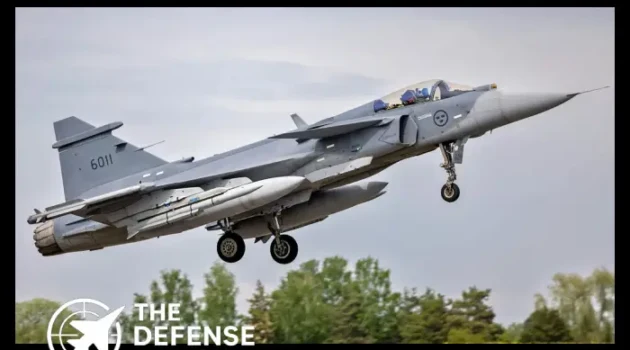
The announcement comes only months after Embraer and Saab unveiled the first Gripen fighter assembled in Brazil at Embraer’s Gavião Peixoto facility, a milestone that highlighted the success of technology transfer agreements between the two companies.
According to Embraer, the facility could support additional production if Saab secures future aircraft orders in South America or other export markets requiring expanded manufacturing capacity.
(adsbygoogle = window.adsbygoogle || []).push({});Focus Remains On C-390 Millennium And Super Tucano
Rather than pursuing a costly fighter development effort, Embraer continues to prioritize platforms where it already holds strong market positions.
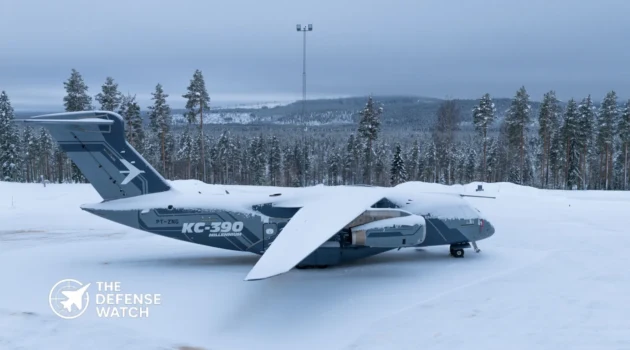
The company remains focused on expanding exports of the C-390 Millennium tactical airlifter and the A-29 Super Tucano light attack and training aircraft. Both platforms have generated growing international demand in recent years, particularly among NATO and allied nations seeking cost effective military aviation solutions.
This strategy reflects a broader industry reality. Developing a modern combat aircraft requires decades of investment, advanced industrial capabilities, and extensive government support. Even major aerospace powers often rely on multinational partnerships to share costs and technological risks.
(adsbygoogle = window.adsbygoogle || []).push({});By leveraging Saab’s fighter expertise while concentrating on transport and light attack aircraft, Embraer avoids duplicating capabilities already available through its existing alliance.
Brazil’s Gripen Program Continues To Expand
The Saab Gripen program remains one of the most significant defense industrial partnerships in Latin America.
Brazil selected the Gripen in 2014 to modernize its air force fleet. Under the agreement, Saab transferred technology and established local production capabilities through cooperation with Embraer. Fifteen aircraft from the original order are scheduled to be assembled in Brazil.
The program reached a major milestone in March 2026 when Brazil unveiled its first domestically assembled Gripen fighter, making it the first country in Latin America to assemble a supersonic combat aircraft locally.
Brazil may also expand the fleet. Swedish officials recently stated that Brazil has expressed interest in purchasing an additional 20 Gripen E and F fighters beyond the original 36 aircraft order. If approved, the aircraft would be manufactured in Brazil, further strengthening local aerospace capabilities.
- (adsbygoogle = window.adsbygoogle || []).push({});
Strategic Implications For Global Fighter Markets
The timing of Embraer’s announcement is significant.
It comes amid major uncertainty within Europe’s next generation fighter aircraft sector following the collapse of the Franco-German Future Combat Air System (FCAS) project. The program, valued at approximately €100 billion, was intended to produce a sixth generation combat aircraft for several European nations.
Following FCAS’s breakdown, Reuters reported that Airbus has increasingly explored deeper cooperation with Saab as European aerospace companies reassess future fighter development partnerships.
Against that backdrop, Embraer’s decision highlights a pragmatic approach increasingly adopted across the defense aerospace industry. Rather than launching independent fighter programs, many manufacturers are choosing collaborative models that reduce costs while preserving industrial participation.
For Brazil, continued cooperation with Saab provides access to advanced combat aviation technology while maintaining domestic manufacturing and engineering expertise.
(adsbygoogle = window.adsbygoogle || []).push({});Why Embraer’s Decision Matters
The decision underscores the growing importance of international defense industrial partnerships.
While some nations view indigenous fighter programs as symbols of strategic autonomy, such efforts often require enormous financial commitments and sustained political support. Even established aerospace powers face challenges funding next generation combat aircraft independently.
Embraer’s position suggests the company sees greater value in expanding production, technology transfer, and export opportunities through the Saab Gripen program than in pursuing a separate fighter design.
(adsbygoogle = window.adsbygoogle || []).push({});For Saab, the partnership provides a manufacturing hub in Latin America and potentially additional production capacity for future export campaigns. For Brazil, it secures long term participation in advanced combat aircraft production without assuming the risks of a standalone fighter development effort.
Conclusion
Embraer has made clear that its future in military aviation does not include developing a new fighter jet. Instead, the company is doubling down on its successful partnership with Saab, expanding Brazil’s role in Gripen production while focusing its own resources on proven platforms such as the C-390 Millennium and Super Tucano.
As global defense budgets tighten and combat aircraft programs become increasingly expensive, Embraer’s strategy reflects a broader industry trend toward international collaboration rather than independent fighter development.
- (adsbygoogle = window.adsbygoogle || []).push({});

(adsbygoogle = window.adsbygoogle || []).push({});Executive Summary:
Airbus is increasingly looking toward Saab as a potential strategic partner after the collapse of the Franco-German Future Combat Air System (FCAS) fighter program. The development could reshape Europe’s sixth-generation combat aircraft landscape and influence future defense industrial cooperation across the continent.
Airbus Saab Partnership Emerges After FCAS Breakdown
The Airbus Saab partnership is gaining attention following the reported collapse of the Franco-German Future Combat Air System (FCAS), one of Europe’s most ambitious defense aviation programs.
According to Reuters, Airbus has been holding exploratory discussions with Swedish defense company Saab for at least six months. The talks have accelerated as France and Germany officially acknowledged that disagreements between industrial partners had become impossible to resolve within the FCAS fighter effort.
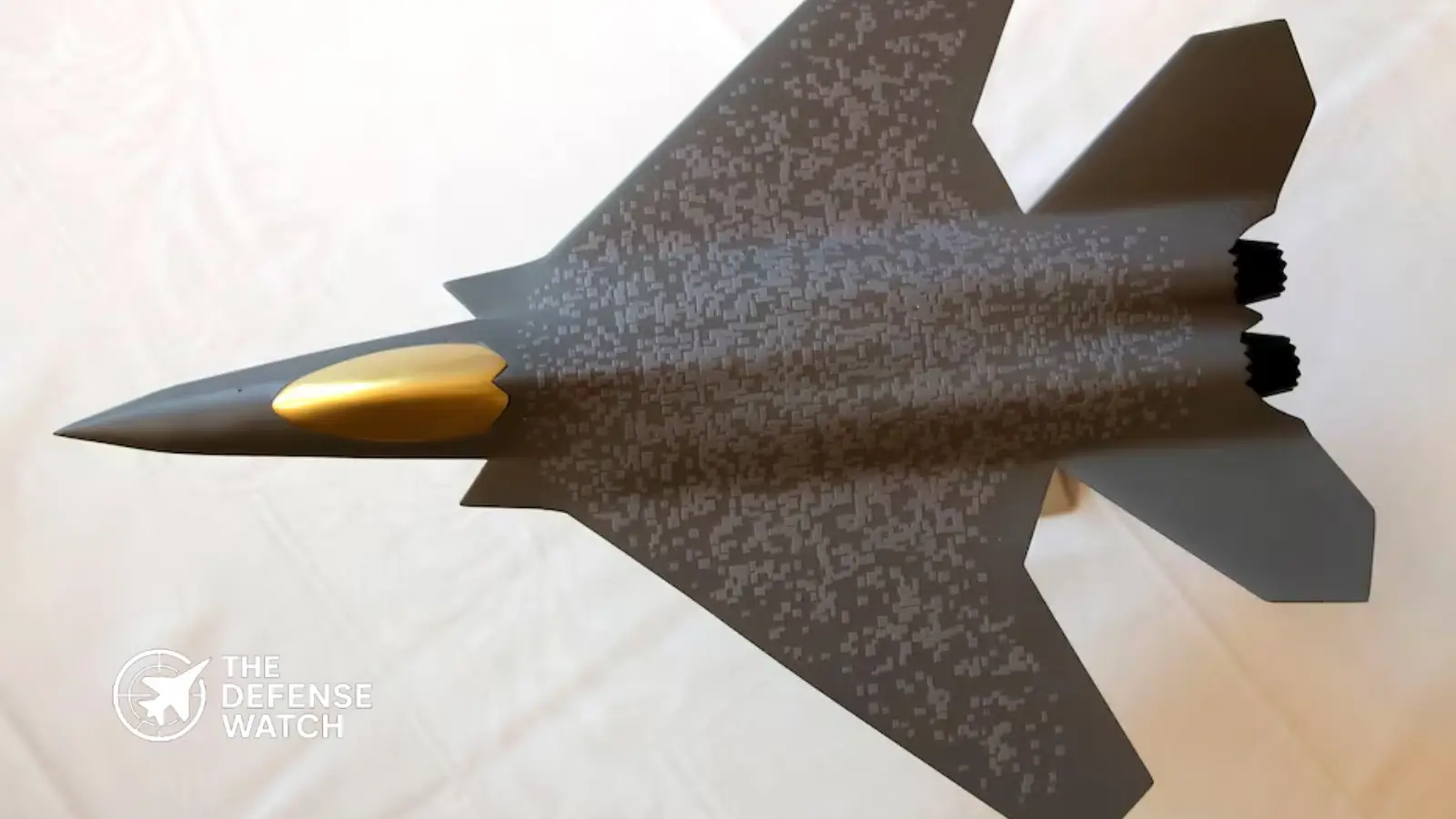
The FCAS program was originally designed to deliver a sixth-generation combat aircraft alongside advanced drones, networking systems, and a combat cloud architecture for France, Germany, and Spain. However, disputes over leadership and industrial responsibilities between Airbus and Dassault Aviation repeatedly delayed progress.
(adsbygoogle = window.adsbygoogle || []).push({});Why Saab Has Become An Attractive Option
Saab, best known for producing the Gripen fighter aircraft, is increasingly viewed as a credible partner for Airbus as Europe reassesses its next-generation combat aviation strategy.
Reuters reported that improved defense relations between Germany and Sweden have helped create momentum for deeper industrial cooperation. Airbus and Saab have already collaborated on unmanned technologies, providing a foundation for broader future projects.
Unlike larger multinational programs, Saab brings extensive experience in fighter design, systems integration, and defense innovation while maintaining a relatively flexible industrial structure. Sweden also remains one of the few European nations with an active domestic fighter aircraft development capability.
Saab has publicly stated that any future partnership would ultimately depend on political decisions, while maintaining an open approach toward collaboration with defense industry partners.
(adsbygoogle = window.adsbygoogle || []).push({});Airbus Keeps Other Options Open
While the Airbus Saab partnership appears to be gaining momentum, Airbus has not committed exclusively to a Swedish path.
Reuters reported that Airbus has also maintained high-level contacts related to the separate Global Combat Air Programme (GCAP), the multinational sixth-generation fighter initiative involving the United Kingdom, Italy, and Japan.
Industry executives have indicated that multiple partnership models remain under consideration as Germany seeks to preserve its role in future combat aircraft development. Airbus Defence and Space CEO Michael Schoellhorn recently acknowledged Saab as a potential partner while emphasizing that other options remain available.
Strategic Implications For European Air Power
The collapse of FCAS represents a major setback for European defense cooperation. Analysts note that the program’s failure highlights the challenges of aligning military requirements, industrial interests, and national priorities across multiple countries.
From a strategic perspective, the Airbus Saab partnership could offer Germany and Sweden an opportunity to preserve critical fighter aircraft expertise while avoiding some of the governance challenges that affected FCAS.
However, significant questions remain. Future combat aircraft programs require substantial financial investment, advanced propulsion technologies, sophisticated sensor integration, and long-term political commitment. Any new partnership would also need to address export policies, operational requirements, and production responsibilities.
A key consideration will be whether Europe ultimately converges around a smaller number of sixth-generation fighter programs or continues pursuing multiple competing initiatives, including France’s independent path, GCAP, and any future Airbus-Saab effort.
What Happens Next
The expected formal separation between Airbus and Dassault regarding the fighter component of FCAS could create greater freedom for Airbus to pursue alternative partnerships. Meanwhile, Germany continues to evaluate options for maintaining a domestic industrial role in next-generation combat aviation.
Although the FCAS fighter aircraft effort appears to have reached its end, elements of the broader program, including combat cloud networking systems and collaborative combat drone technologies, may continue under separate cooperative arrangements.
For Airbus, Saab, and European defense planners, the coming months could determine the future structure of Europe’s sixth-generation air combat ecosystem.
(adsbygoogle = window.adsbygoogle || []).push({});Analysis
The emerging Airbus Saab partnership reflects a broader shift in European defense procurement. Recent geopolitical tensions have increased pressure on European nations to field advanced combat aircraft while reducing dependence on external suppliers.
Rather than pursuing highly complex multinational programs with overlapping industrial interests, future partnerships may favor smaller coalitions built around complementary capabilities and clearer leadership structures.
If Airbus and Saab deepen their cooperation, the partnership could combine Germany’s industrial scale with Sweden’s fighter aircraft expertise, potentially creating a new center of gravity within Europe’s combat aviation sector. However, success will depend on whether political leaders can align long-term funding and operational requirements more effectively than previous multinational fighter efforts.
(adsbygoogle = window.adsbygoogle || []).push({});Executive Summary:
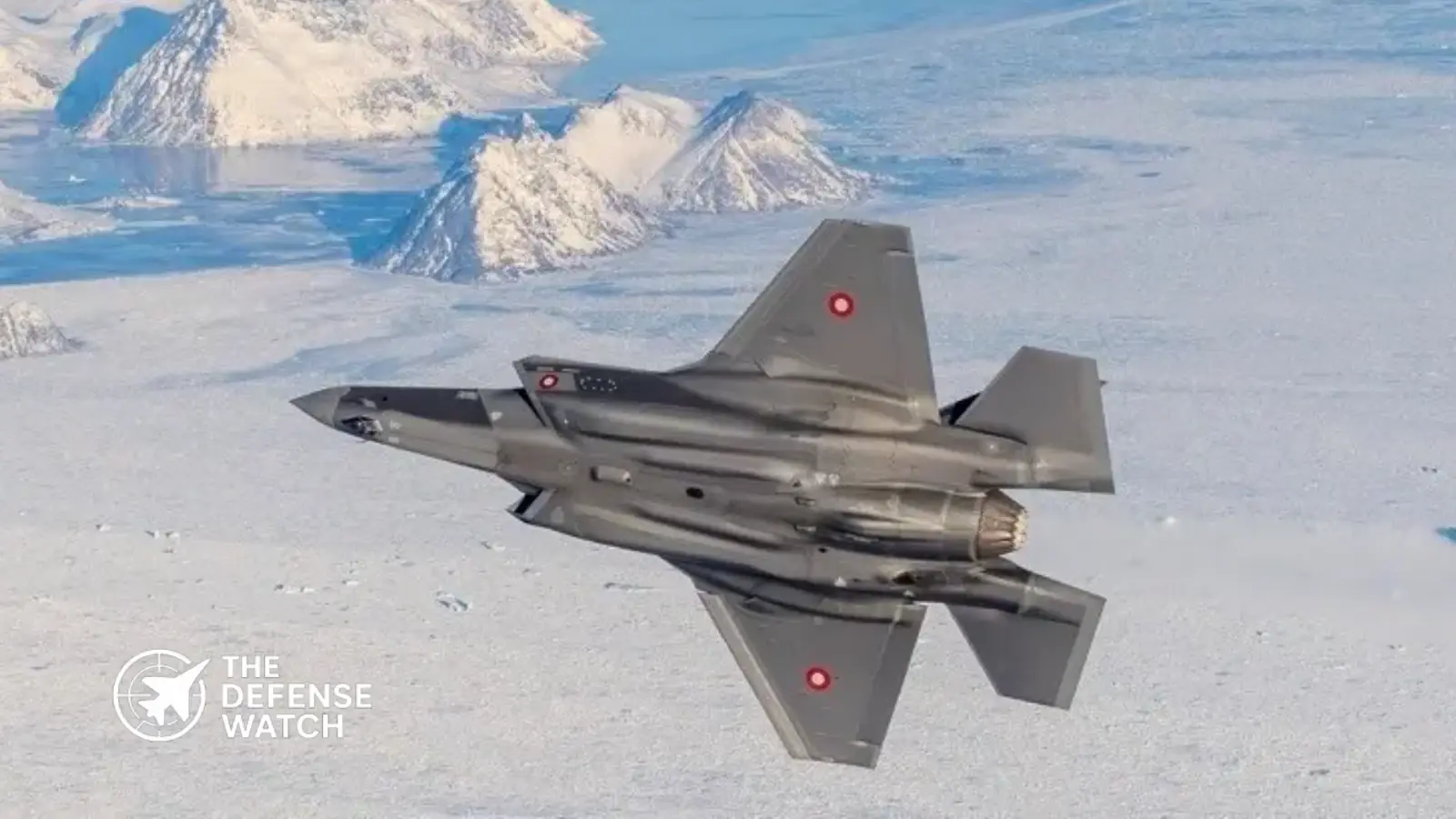
Denmark’s F35 procurement program has exceeded initial cost estimates by approximately 2 point 2 billion dollars, according to a national audit review. The report points to rising acquisition and long term sustainment expenses tied to the Lockheed Martin built fighter fleet. The findings raise fresh concerns over lifecycle affordability and defense budget planning.
Denmark F35 costs have increased significantly, with new audit findings showing a multi billion dollar rise in the country’s fighter acquisition program led by Lockheed Martin and the F35 Lightning II fleet. The report, published by the Danish National Audit Office, highlights higher than expected expenses across procurement and long term sustainment, underscoring broader challenges in managing next generation combat aircraft programs.
The findings arrive as European NATO members continue expanding fifth generation capabilities while facing inflationary pressure on defense budgets and supply chain constraints.
Rising Costs in Denmark’s F35 Program
A national audit review in Denmark found that total expected costs for the F35 program have increased by roughly 2 point 2 billion dollars compared to earlier projections. The review was conducted by the Danish National Audit Office, which tracks public spending and defense procurement performance.
The increase is attributed to a combination of factors including updated lifecycle estimates, infrastructure requirements, and long term maintenance assumptions tied to operating a fifth generation stealth fighter fleet.
(adsbygoogle = window.adsbygoogle || []).push({});While the initial procurement phase remains on schedule, long term sustainment is emerging as the primary cost driver.
What Is Driving the Cost Increase
The audit identifies several structural pressures affecting the program:
First, sustainment costs for advanced stealth aircraft are higher than early planning models anticipated. The F35 fleet requires specialized maintenance facilities, secure software updates, and continuous systems integration.
Second, inflation in defense supply chains has increased the cost of parts, logistics, and training infrastructure.
Third, Denmark’s expansion of operational readiness requirements has led to additional investments in basing and support systems.
Together, these factors have created a wider gap between initial procurement estimates and full lifecycle cost projections.
(adsbygoogle = window.adsbygoogle || []).push({});Strategic Role of the F35 Fleet
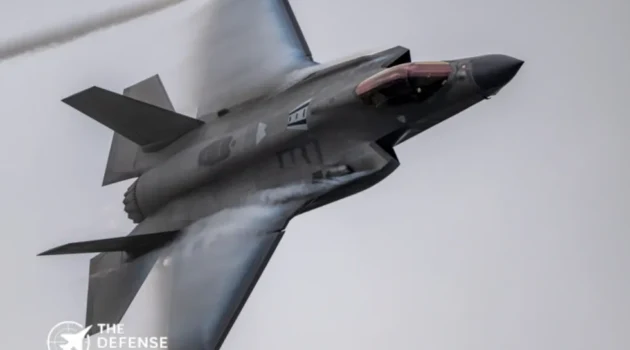
Denmark is transitioning from legacy fourth generation aircraft to the F35 Lightning II platform as part of its NATO modernization commitments. The aircraft is designed for multirole operations including air superiority, strike missions, and intelligence collection.
The F35 program is central to Denmark’s long term defense posture, ensuring interoperability with allied NATO forces and enhancing participation in joint operations across Europe and the North Atlantic.
However, the rising cost profile highlights the broader challenge facing multiple NATO members that have adopted the platform, balancing capability gains against long term affordability.
(adsbygoogle = window.adsbygoogle || []).push({});Broader NATO Procurement Pressure
The Danish case reflects a wider trend across Europe and NATO allies investing in fifth generation airpower. Several countries have reported upward revisions in total program costs as fleets mature and sustainment phases expand.
Defense analysts note that while platforms like the F35 deliver advanced stealth and sensor fusion capabilities, they also introduce long term financial commitments that extend decades beyond initial purchase contracts.
This creates pressure on defense ministries to adjust long term budgeting strategies and procurement planning models.
(adsbygoogle = window.adsbygoogle || []).push({});Operational Impact for Denmark
Despite rising costs, Denmark continues to move forward with its F35 transition. The aircraft is expected to form the backbone of its combat air capability for decades, replacing older fighter platforms and integrating into NATO air policing and rapid response missions.
The audit does not indicate program cancellation risk, but it emphasizes the importance of clearer long term cost forecasting and improved budget transparency.
For planners, the key challenge is ensuring sustained funding for readiness, training, and upgrades without compromising other defense priorities.
Analysis
The findings come from an official audit authority, providing a high level of credibility and transparency in public defense spending analysis. The data aligns with broader international assessments of fifth generation aircraft lifecycle costs.
Programs like the F35 Lightning II continue to be central to Western airpower strategy, but also highlight the growing complexity of defense acquisition in an era of advanced systems integration and long term sustainment dependency.
(adsbygoogle = window.adsbygoogle || []).push({});Executive Summary:
The 104th Fighter Wing has marked a major milestone in its F-35A transition by signing the fuselage bulkhead of one of its first aircraft at Lockheed Martin’s Fort Worth facility. The event highlights the Air National Guard unit’s shift from the F-15 Eagle to the fifth generation F-35A, securing its future mission and expanding operational capabilities.
104th Fighter Wing F-35A Transition Reaches Major Milestone
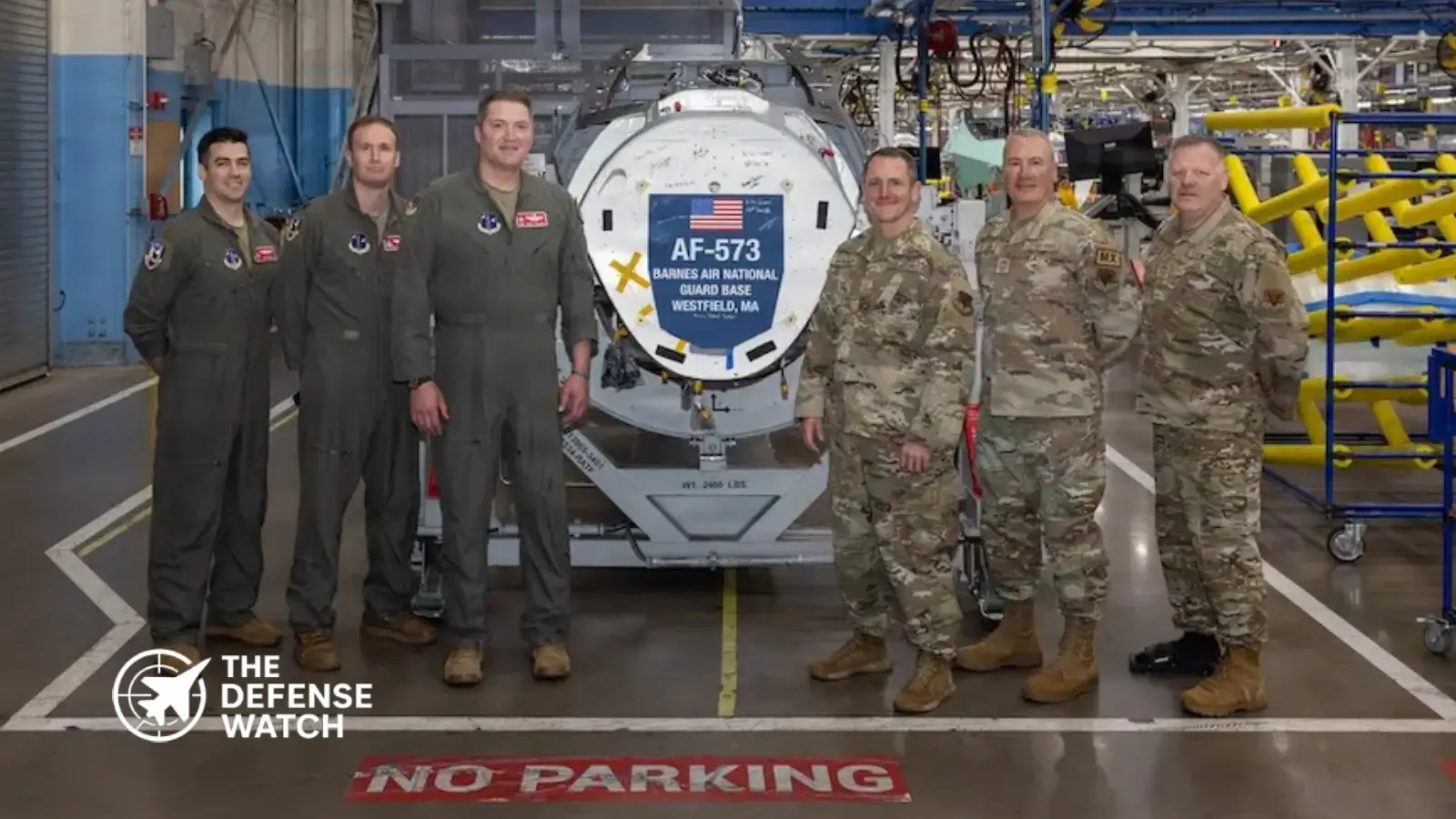
The 104th Fighter Wing F-35A transition moved one step closer to reality after senior leaders from the Massachusetts Air National Guard visited Lockheed Martin’s production facility in Fort Worth, Texas, to sign the fuselage bulkhead of one of the wing’s first F-35A Lightning II aircraft. The ceremony marked a symbolic and operational milestone as the unit prepares to receive its first fifth generation fighters.
According to the 104th Fighter Wing, the visit took place on May 27 and included wing leadership, pilots, and senior enlisted personnel. Signing a partially assembled aircraft is a long standing military aviation tradition that allows future operators to leave their mark on an aircraft while it remains on the production line.
For the Massachusetts-based unit, the moment represented far more than a ceremonial event.
Col. Michael Glass, commander of the 104th Fighter Wing, described the signing as a pivotal moment that reinforces the future of the wing and its readiness mission. Wing leaders emphasized that the arrival of the F-35A secures the unit’s long term role within the Air National Guard and the broader U.S. Air Force force structure.
(adsbygoogle = window.adsbygoogle || []).push({});From F-15 Eagles To Fifth Generation Fighters
The 104th Fighter Wing previously operated the F-15 Eagle for nearly two decades. The aircraft served at Barnes Air National Guard Base from 2007 until the fleet was retired from the unit in 2025 as part of a broader Air Force modernization effort.
The transition to the F-35A represents one of the most significant capability upgrades in the wing’s history.
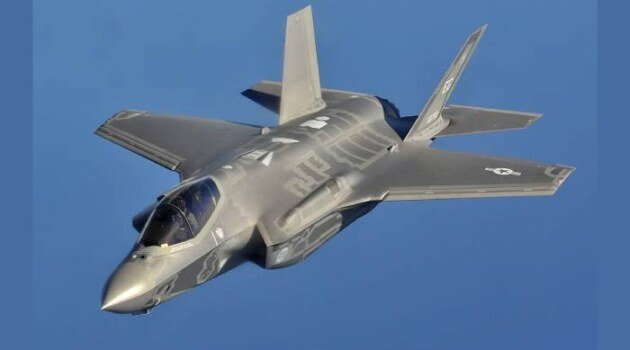
Unlike the F-15C, the F-35A combines low observable characteristics, advanced sensors, electronic warfare systems, and data fusion capabilities into a single platform. The aircraft is designed to operate effectively in highly contested environments while sharing information across joint and allied networks.
This transition reflects a wider trend across the Air National Guard, where legacy fourth generation fighter fleets are increasingly being replaced by fifth generation aircraft capable of supporting modern air superiority and multi domain operations.
(adsbygoogle = window.adsbygoogle || []).push({});Production Progress Signals Growing Momentum
The Fort Worth facility remains the centerpiece of global F-35 production. According to the 104th Fighter Wing, the assembly complex can accommodate up to 155 aircraft simultaneously, while each F-35 requires roughly 18 months to move from initial assembly to final delivery.
The signing ceremony also gave wing personnel a firsthand look at aircraft already progressing through production.
The event follows another major milestone announced in May, when the 104th Fighter Wing received more than 1,000 pieces of support equipment valued at nearly $1 billion. Those deliveries included critical infrastructure and logistics systems required to sustain F-35 operations at Barnes Air National Guard Base.
Taken together, the equipment deliveries and aircraft production progress indicate that the wing’s conversion effort is entering a more advanced phase.
Why The F-35A Matters For The Air National Guard
The significance of the 104th Fighter Wing F-35A transition extends beyond Massachusetts.
Across the United States, Air National Guard units play a critical role in homeland defense, expeditionary operations, and contingency response. Equipping Guard units with the F-35 ensures that reserve component forces remain interoperable with active duty, allied, and coalition air forces operating the same platform.
(adsbygoogle = window.adsbygoogle || []).push({});The F-35’s sensor fusion capabilities allow pilots to detect, track, and share information across the battlefield more effectively than legacy fighters. As potential adversaries field increasingly sophisticated air defense systems and advanced combat aircraft, access to fifth generation capabilities becomes increasingly important for maintaining operational effectiveness.
The transition also preserves the strategic relevance of the 104th Fighter Wing within future force planning. Air National Guard units selected for F-35 operations are expected to remain integral contributors to U.S. airpower for decades.
Strategic Analysis
While the fuselage signing itself was ceremonial, the broader significance lies in what it represents.
The U.S. Air Force continues to balance modernization requirements against budget pressures, force structure changes, and evolving global threats. Selection for the F-35A demonstrates confidence in the 104th Fighter Wing’s operational record, infrastructure, and long term value to national defense.
The transition also underscores a larger shift within the Air National Guard toward maintaining frontline combat relevance. Rather than relegating Guard units to legacy platforms, the Air Force is increasingly integrating them into advanced combat aviation planning.
For Barnes Air National Guard Base, the arrival of the F-35A secures a future mission set that is expected to remain central to U.S. airpower well into the 2040s and beyond.
Conclusion
The 104th Fighter Wing F-35A transition reached a visible milestone with the signing of one of the unit’s first aircraft at Lockheed Martin’s Fort Worth production facility. As aircraft move through final assembly and support equipment continues arriving in Massachusetts, the wing is steadily progressing toward full fifth generation operations.
The event highlights not only the future of the 104th Fighter Wing but also the continuing modernization of the Air National Guard as it prepares for the demands of future air combat.
(adsbygoogle = window.adsbygoogle || []).push({});Executive Summary:
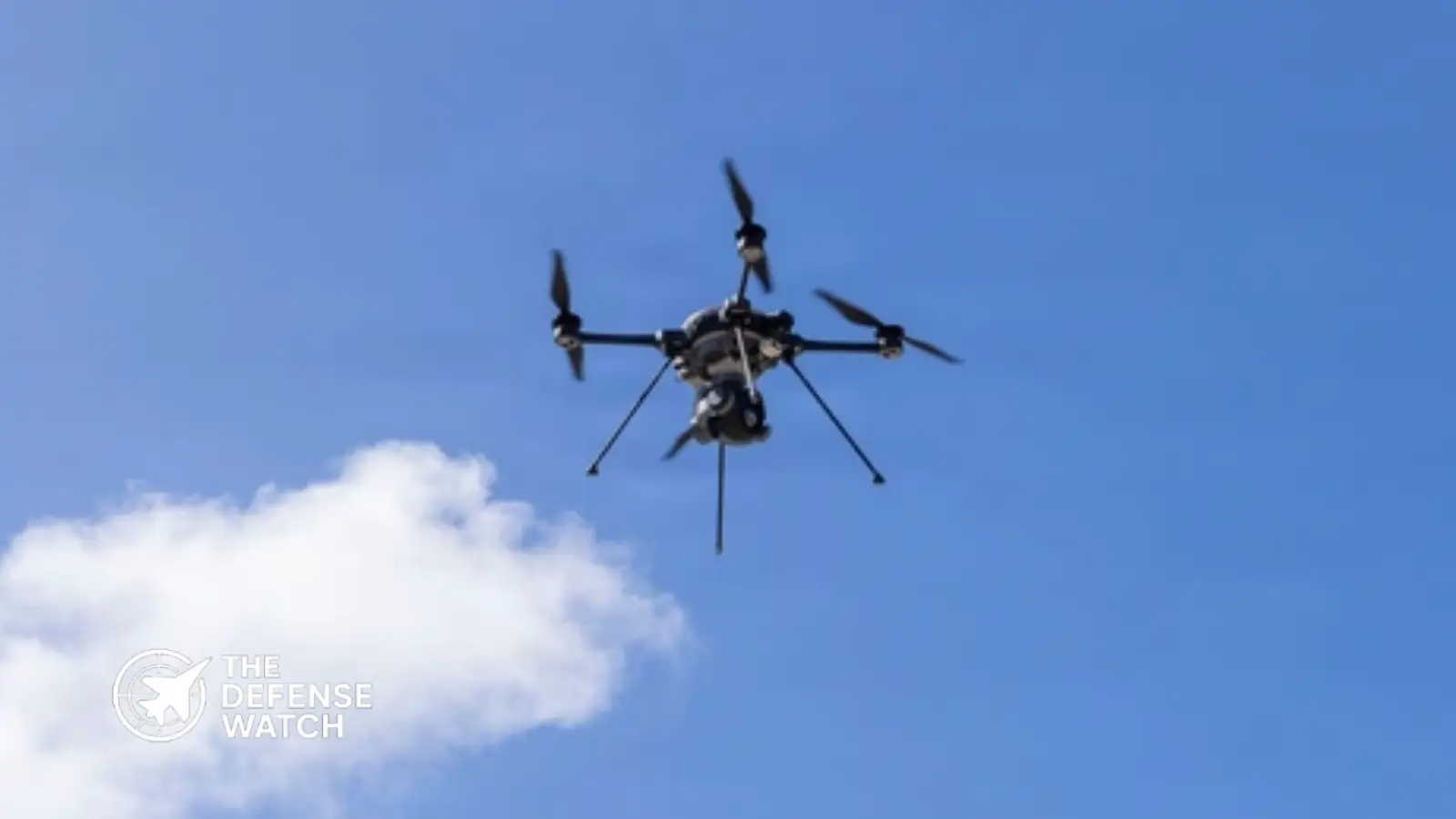
The United Kingdom has confirmed that the majority of funding for its largest-ever drone package for Ukraine will be directed to British-based manufacturers, including Tekever, Windracers, and Malloy Aeronautics. The initiative aims to deliver at least 120,000 drones to Ukraine in 2026 while simultaneously strengthening the UK’s domestic defense industrial base and sustaining high-skilled jobs.
UK Ukraine Drone Deal Drives Investment Into Domestic Drone Industry
The UK Ukraine drone deal is set to become one of the most significant defense industrial initiatives undertaken by London since the start of Russia’s full-scale invasion of Ukraine.
According to a statement presented to Parliament by Minister for Defence Readiness and Industry Luke Pollard, the majority of spending associated with the United Kingdom’s largest drone support package for Ukraine will remain within the country, benefiting British manufacturers and expanding domestic production capacity.
The package, first announced during the Ukraine Defence Contact Group meeting in April, will provide at least 120,000 drones to Ukrainian forces during 2026. Deliveries are already underway.
Pollard stated that the government intends to use the initiative not only to support Ukraine’s battlefield requirements but also to strengthen Britain’s long-term defense manufacturing capabilities.
(adsbygoogle = window.adsbygoogle || []).push({});British Firms Selected For Major Drone Production Effort
Three companies were specifically identified as key beneficiaries of the program:
Tekever
Tekever has become one of Europe’s most recognized drone manufacturers following the operational success of its AR3 and AR5 unmanned aerial systems.
The company’s long-endurance reconnaissance drones have been employed extensively by Ukrainian forces for intelligence, surveillance, and maritime monitoring missions. The systems have reportedly supported operations against Russian naval assets in the Black Sea and along key frontline sectors.
Tekever has steadily expanded its manufacturing footprint in the United Kingdom, positioning itself as a major supplier of tactical and operational-level surveillance drones.
(adsbygoogle = window.adsbygoogle || []).push({});Windracers
Windracers, headquartered at Solent Airport in Hampshire, produces the ULTRA autonomous cargo aircraft.
Designed for logistics and resupply missions, the twin-engine aircraft can transport cargo autonomously across challenging environments. Military planners increasingly view autonomous logistics platforms as critical force multipliers capable of reducing risk to personnel while sustaining frontline operations.
The inclusion of Windracers highlights the growing importance of autonomous logistics technologies within modern military operations.
Malloy Aeronautics
Malloy Aeronautics, acquired by BAE Systems in 2024, develops heavy-lift quadcopter systems including the T150 and T400 platforms.
These drones are designed to transport supplies, ammunition, and equipment to forward positions. Ukrainian forces have employed heavy-lift unmanned systems to address logistical challenges created by contested battlefields and persistent artillery threats.
The company’s integration into BAE Systems has also increased its ability to scale production and support larger defense programs.
Why The Deal Matters Beyond Ukraine
While the immediate objective of the Ukraine drone package is to support Kyiv’s military requirements, the program reflects a broader shift in Western defense procurement strategies.
Governments across NATO are increasingly using operational assistance programs to stimulate domestic defense production and secure long-term manufacturing capacity.
The war in Ukraine has demonstrated that modern conflicts can consume drones at unprecedented rates. Both Ukraine and Russia have used thousands of unmanned systems each month for reconnaissance, strike missions, electronic warfare support, and logistics operations.
As a result, industrial scalability has become nearly as important as technological sophistication.
The UK’s approach mirrors similar efforts in the United States and across Europe, where governments are investing heavily in drone production lines, supply chains, and advanced manufacturing facilities.
(adsbygoogle = window.adsbygoogle || []).push({});Growing Demand For Military Drones Across Europe
The UK Ukraine drone deal also reflects the broader transformation of Europe’s defense landscape.
Since 2022, military planners have accelerated procurement of tactical reconnaissance drones, loitering munitions, autonomous logistics platforms, and electronic warfare-enabled unmanned systems.
Lessons learned from Ukraine continue to influence procurement decisions throughout NATO, particularly regarding affordability, rapid production, and operational adaptability.
Unlike traditional defense acquisition programs that often require years of development, drone technologies can be updated and fielded at a much faster pace. This agility has become a key factor in military modernization strategies.
For British industry, the program offers an opportunity to demonstrate production capacity while securing future export opportunities in a rapidly expanding global drone market.
Strengthening The UK’s Defense Industrial Base
The government’s emphasis on domestic suppliers underscores a growing recognition that industrial resilience is a strategic asset.
Pollard told Parliament that directing investment toward UK-based firms would support high-skilled employment while strengthening production capacity across the defense sector.
The strategy seeks to ensure that emergency support for Ukraine generates lasting economic and industrial benefits within the United Kingdom.
As demand for unmanned systems continues to grow globally, British manufacturers positioned within the UK Ukraine drone deal could emerge as important players in future NATO and allied procurement programs.
(adsbygoogle = window.adsbygoogle || []).push({});Strategic Outlook
The delivery of at least 120,000 drones represents one of the largest unmanned system support initiatives announced by any Western nation for Ukraine.
Beyond the immediate military impact, the program highlights how governments are increasingly linking defense assistance, industrial policy, and long-term national security objectives.
For Ukraine, the package provides a substantial influx of unmanned capabilities. For Britain, it serves as an opportunity to strengthen domestic manufacturing capacity and reinforce its position within the rapidly evolving global drone sector.
(adsbygoogle = window.adsbygoogle || []).push({});Executive Summary:
The U.S. Air Force says it is confident Boeing has resolved a critical flaw affecting the KC-46 Pegasus aerial refueling tanker. The upgraded Remote Vision System 2.0 has completed testing and is expected to enter production aircraft in 2028, a key milestone for one of the Air Force’s most important mobility programs.
US Air Force Confident KC-46 Tanker Fix Is Working
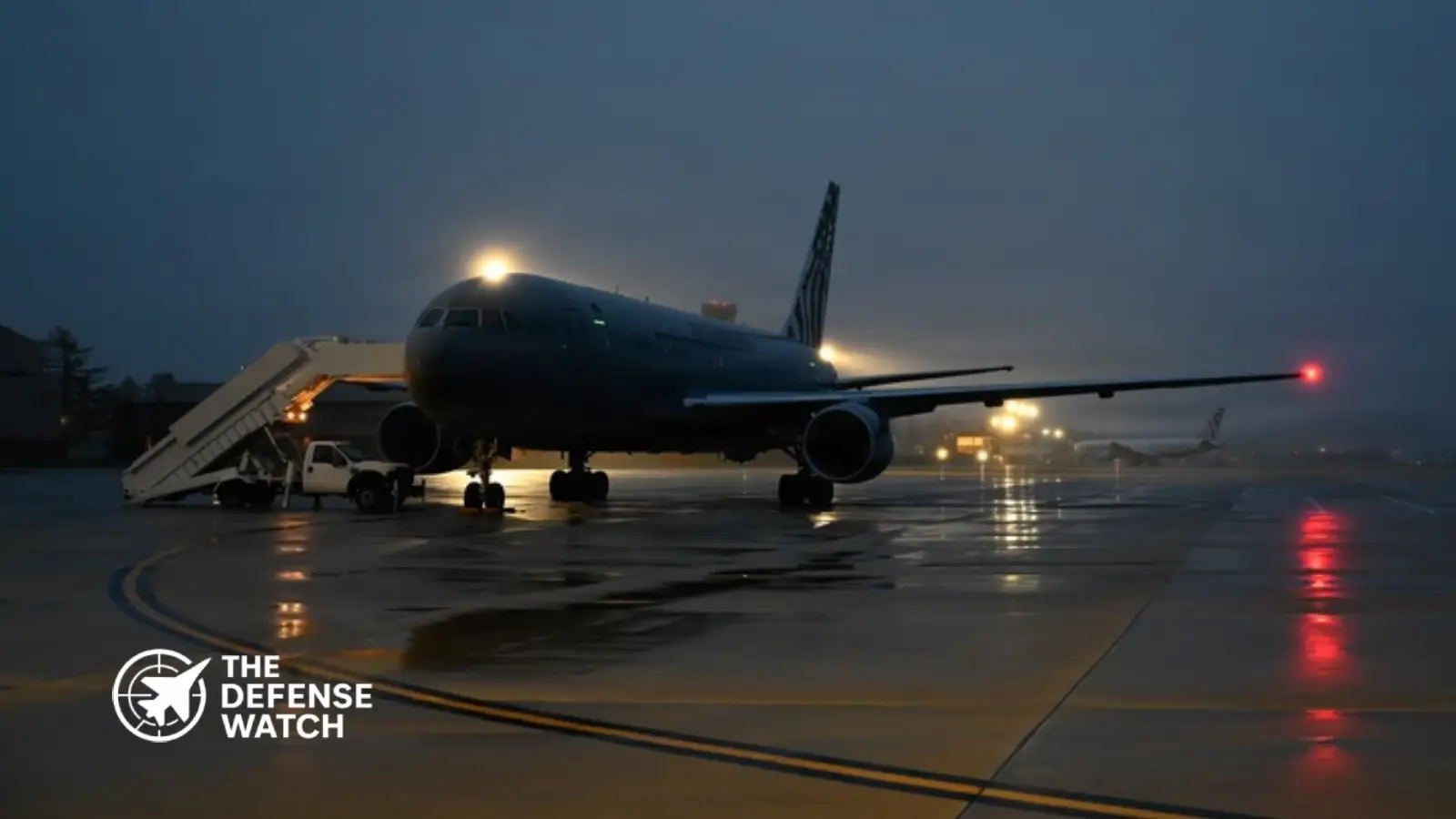
The KC-46 tanker upgrade program reached a significant milestone this week as U.S. Air Force Secretary Troy Meink told lawmakers that the service believes Boeing has successfully fixed the aircraft’s troubled Remote Vision System (RVS), a critical component used during aerial refueling operations.
Speaking before a Senate appropriations subcommittee, Meink said the new Remote Vision System 2.0 has been tested successfully and is expected to begin entering the production line in 2028. The announcement marks one of the strongest endorsements yet from Air Force leadership regarding Boeing’s efforts to address a problem that has plagued the tanker program for years.
The KC-46 Pegasus relies on the vision system to allow boom operators to remotely guide the aircraft’s refueling boom into receiving aircraft. Deficiencies in image quality and depth perception under certain lighting conditions have limited the system’s effectiveness and delayed full operational capability.
(adsbygoogle = window.adsbygoogle || []).push({});A Decade-Long Challenge For Boeing
The KC-46 program has faced technical and schedule setbacks since its development phase. Beyond the Remote Vision System issues, Boeing and the Air Force have worked through problems involving the refueling boom, fuel systems, and production quality concerns.
The aircraft, derived from the commercial Boeing 767 platform, was selected to replace portions of the aging KC-135 Stratotanker fleet. While the tanker has entered operational service and supports missions worldwide, unresolved deficiencies have prevented the program from fully meeting all Air Force expectations.
The latest timeline remains well behind original plans. Air Force officials had initially expected the upgraded vision system years earlier, making the anticipated 2028 production integration roughly five years later than first projected.
(adsbygoogle = window.adsbygoogle || []).push({});Why The KC-46 Matters To US Military Operations
Aerial refueling aircraft are among the most strategically important assets in the U.S. military inventory. They extend the range of fighters, bombers, intelligence aircraft, and transport fleets, enabling global power projection and sustained operations across multiple theaters.
The importance of tanker fleets has become increasingly apparent as the Pentagon focuses on long-range operations in the Indo-Pacific and maintains readiness across Europe and the Middle East. Modern air campaigns depend heavily on reliable aerial refueling capabilities to support extended missions far from established bases.
From an operational perspective, resolving the KC-46’s deficiencies is about more than fixing a single aircraft. It is about ensuring the Air Force can field a modern tanker force capable of supporting future high-end conflicts where range, endurance, and rapid deployment are critical factors.
This broader strategic role explains why Air Force leaders continue to invest heavily in the program despite years of technical challenges.
(adsbygoogle = window.adsbygoogle || []).push({});Additional Orders Depend On Successful Fixes
The Air Force has already ordered 188 KC-46 tankers and received more than 100 aircraft. However, future procurement plans remain tied to Boeing’s ability to fully resolve outstanding deficiencies.
Earlier this year, Air Force Vice Chief of Staff Gen. John Lamontagne stated that the service would not move forward with a potential follow-on order for an additional 75 aircraft until key issues are corrected.
That position makes the successful testing of RVS 2.0 particularly important. If the upgraded system performs as expected during further validation and fleet integration, it could remove one of the largest obstacles standing between Boeing and future tanker contracts.
The Air Force and Boeing recently announced a joint readiness improvement plan focused on accelerating upgrades, improving aircraft availability, and speeding installation of the new vision system across the fleet. Officials believe the effort could significantly improve tanker readiness by the end of the decade.
(adsbygoogle = window.adsbygoogle || []).push({});Analysis: A Critical Turning Point For The KC-46
The Air Force’s confidence in the upgraded Remote Vision System represents an important turning point for a program that has often been defined by technical setbacks rather than operational achievements.
While successful testing does not eliminate all remaining challenges, it signals that one of the aircraft’s most persistent deficiencies may finally be nearing resolution. The next phase, integrating the system into production aircraft and retrofitting the existing fleet, will determine whether Boeing can fully restore confidence in the KC-46 program.
Retrofitting aircraft already in service is expected to take several years, meaning the benefits of the upgrade will be realized gradually rather than immediately. Nevertheless, the Air Force’s public endorsement of the fix suggests that program leaders believe the effort is finally moving in the right direction.
For Boeing, which has absorbed more than $7 billion in losses on the fixed-price tanker contract, a successful RVS 2.0 rollout could help stabilize one of its most challenging defense programs and support future tanker production opportunities.

Executive Summary:
The U.S. Air Force is training A-10C Thunderbolt II aircraft to operate in increasingly contested environments where advanced air defenses, drones, and electronic warfare systems pose significant threats. The exercises demonstrate how the service is adapting the iconic close air support platform to remain operationally relevant while continuing to deliver precision strike capabilities.
U.S. Air Force Highlights A-10C Thunderbolt II Training Against Modern Air Defense Threats
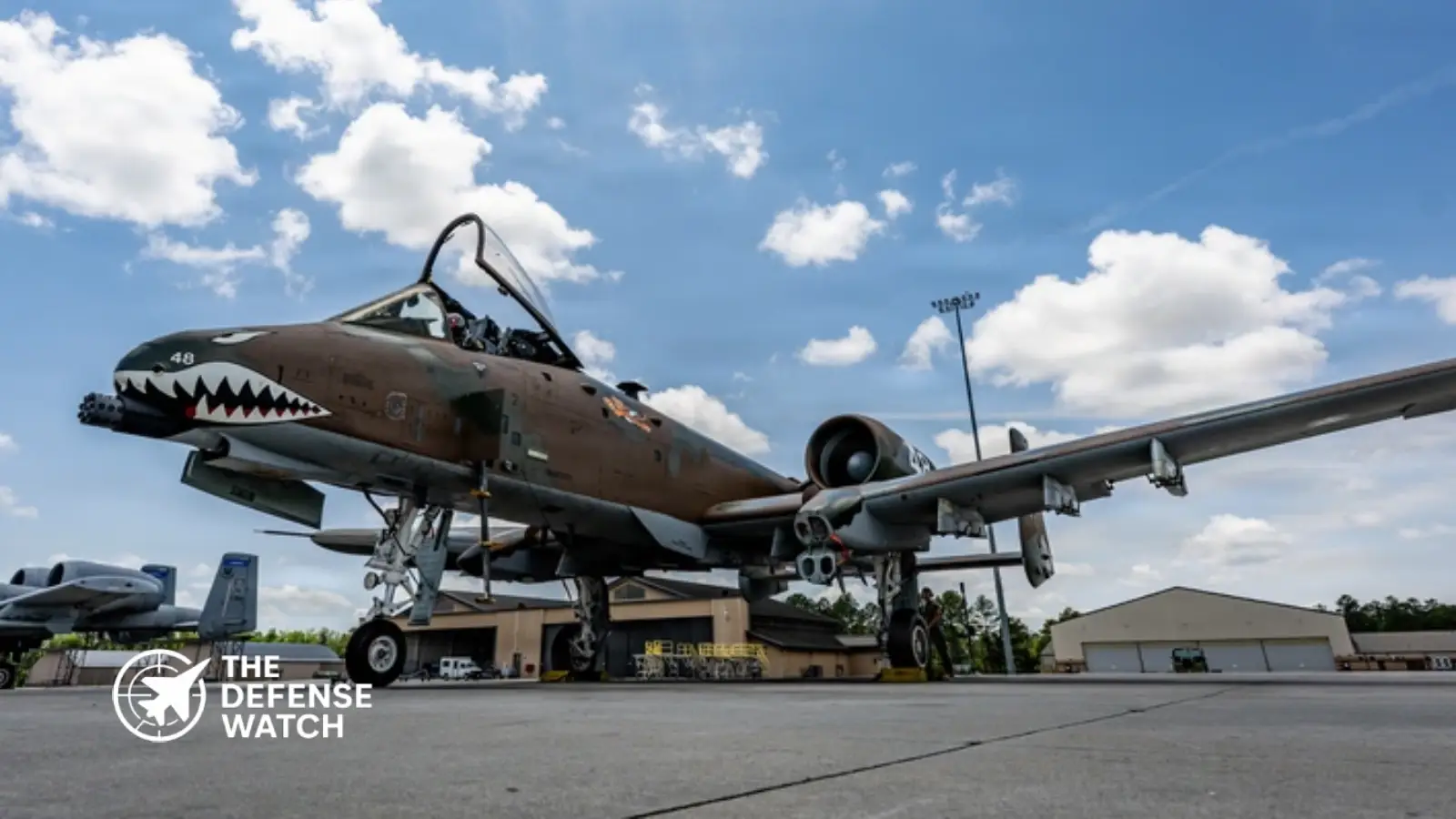
The U.S. Air Force’s A-10C Thunderbolt II is undergoing advanced training designed to improve survivability against modern air defense systems while maintaining its ability to deliver precision strikes in support of ground forces.
Recently released imagery from the U.S. Defense Visual Information Distribution Service (DVIDS) showed an A-10C assigned to the 66th Weapons Squadron deploying defensive flares during operations over the Nevada Test and Training Range. The exercise focused on preparing pilots to operate in environments increasingly populated by infrared-guided missiles, unmanned aerial systems, electronic warfare threats, and mobile surface-to-air defenses.
The training reflects a broader shift across the U.S. Air Force as legacy aircraft are adapted for operations in contested battlespaces rather than permissive environments.
Adapting The Warthog For A Changing Battlefield
For decades, the A-10 Thunderbolt II has been synonymous with close air support missions. Designed during the Cold War to destroy armored formations and support ground troops, the aircraft remains one of the most recognizable platforms in the U.S. inventory.
According to official U.S. Air Force fact sheets, the A-10C combines long loiter time, low-speed maneuverability, survivability features, and the ability to employ both guided and unguided munitions. Its avionics suite includes electronic countermeasures and systems designed to help crews operate in the presence of surface-to-air threats.
However, modern warfare has evolved significantly. Adversaries increasingly field layered integrated air defense networks capable of detecting and engaging aircraft at greater distances than in previous conflicts. The widespread use of drones, mobile missile systems, and electronic attack capabilities has further complicated the operating environment for low-altitude attack aircraft.
As a result, Air Force training now emphasizes threat avoidance, defensive maneuvering, electronic warfare awareness, and precision weapons employment while minimizing exposure to enemy air defenses.
Why The Training Matters
The latest A-10C Thunderbolt II training demonstrates that the Air Force continues to extract operational value from the platform despite long-standing retirement discussions.
The service has increasingly explored ways to employ the aircraft beyond traditional close air support. Recent exercises have included operations from austere airfields under the Agile Combat Employment concept, enabling aircraft to disperse across multiple locations rather than relying on large, vulnerable bases. Such concepts are intended to complicate enemy targeting and improve force survivability during high-intensity conflict.
The emphasis on contested-environment training suggests the Air Force recognizes that future operations may require legacy aircraft to operate under greater threat conditions than those encountered during counterinsurgency campaigns in Iraq and Afghanistan.
While the A-10 is not designed to penetrate advanced integrated air defense systems in the same manner as stealth aircraft, improving pilot tactics and defensive procedures can expand the aircraft’s usefulness in lower-tier contested environments and during support missions conducted after enemy air defenses have been degraded.
A-10 Remains Relevant As Retirement Debate Continues
The A-10’s future has been the subject of debate for more than a decade. Air Force leadership has repeatedly sought to retire the fleet to free resources for newer aircraft such as the F-35 and F-15EX. However, lawmakers have often intervened to preserve portions of the fleet due to its unique close air support capabilities.
In April 2026, the Air Force confirmed that selected A-10 squadrons would remain in service through 2030 following operational reviews and congressional restrictions on fleet reductions.
The aircraft’s continued participation in operational deployments, maritime security missions, and close air support exercises demonstrates that it still fills mission sets valued by combatant commanders.
From a strategic perspective, the latest training underscores a broader reality facing modern air forces. Even as stealth fighters and next-generation systems receive increasing attention, military planners continue to invest in enhancing the effectiveness and survivability of existing platforms.
For the A-10C Thunderbolt II, adapting to modern air defense threats may prove essential to maintaining relevance during the final years of its operational service.
(adsbygoogle = window.adsbygoogle || []).push({});Executive Summary:
General Atomics AeroTec Systems has officially unveiled the Do228 NXT, a next-generation evolution of the Dornier 228 aircraft built in Germany. The platform combines updated avionics, mission systems integration, and proven short takeoff and landing performance to serve military, government, and civilian operators worldwide. The rollout marks a significant milestone for German aircraft manufacturing and the revival of series production of a well-established utility aircraft.
Do228 NXT Marks New Chapter For German Aircraft Production
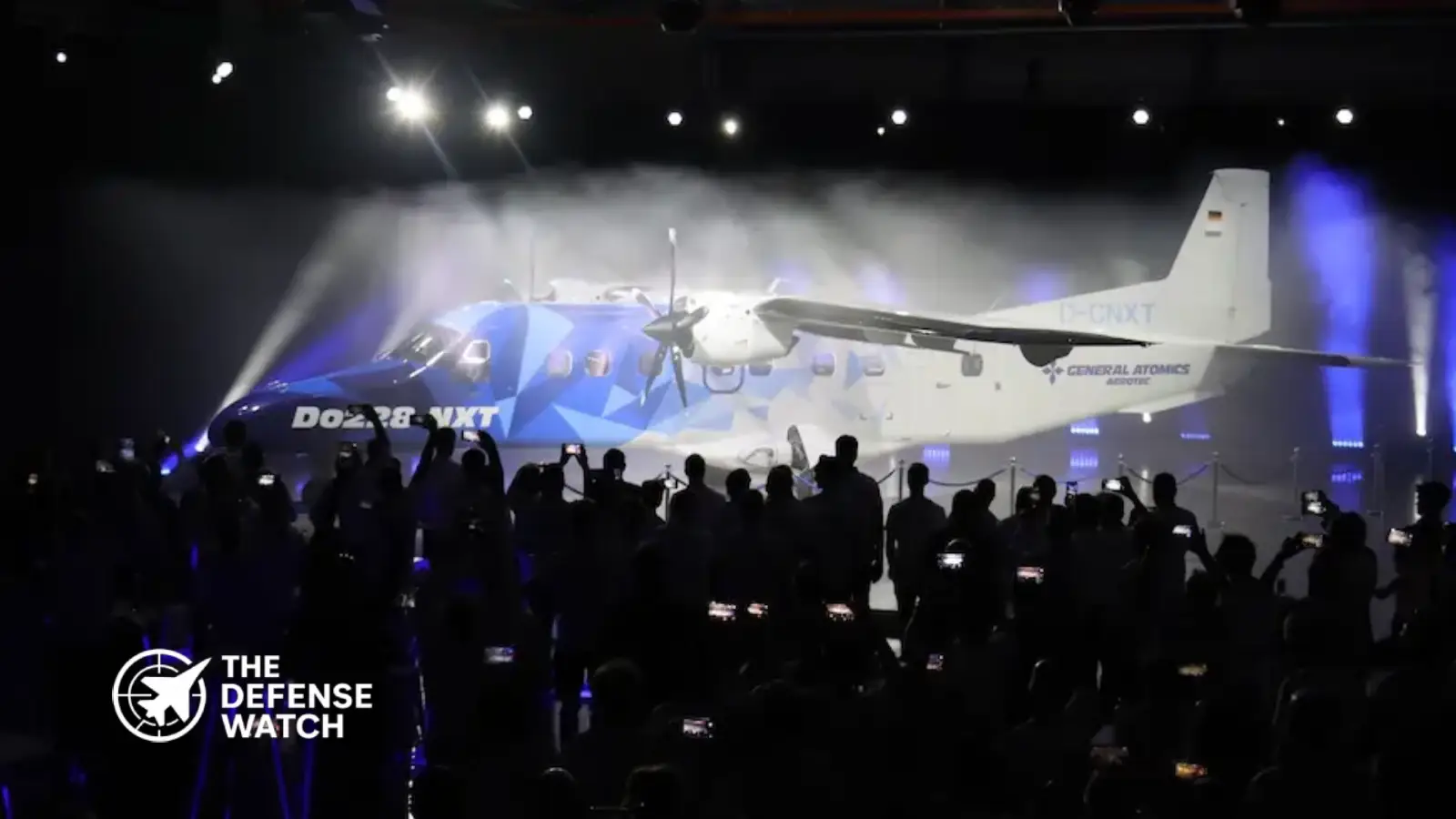
The Do228 NXT aircraft was officially unveiled by General Atomics AeroTec Systems (GA-ATS) during a rollout ceremony at the company’s Oberpfaffenhofen facility in Germany, presenting the next-generation version of the long-serving Dornier 228 platform to international customers and industry stakeholders.
According to GA-ATS, the event represents one of the few recent introductions of a newly manufactured aircraft series produced in Germany. The company positions the aircraft as a versatile platform capable of supporting civilian, military, government, and special mission requirements.
The unveiling follows the successful first flight of the Do228 NXT demonstrator on May 2, 2026, a milestone achieved nearly 45 years after the original Do228 first entered service. The aircraft’s development also reflects the re-establishment of aircraft production capabilities at the Oberpfaffenhofen site following General Atomics’ acquisition and modernization efforts over the past several years.
(adsbygoogle = window.adsbygoogle || []).push({});Designed For Military, Government, And Commercial Missions
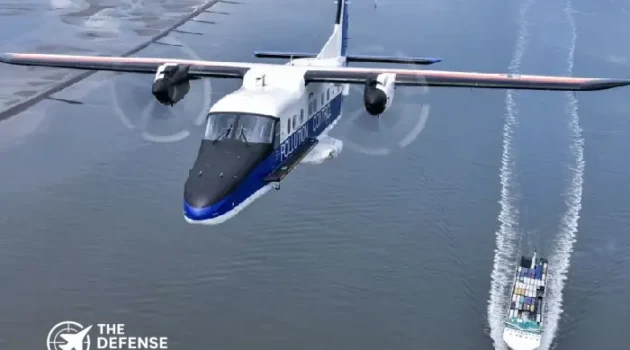
The Do228 NXT aircraft builds upon the operational reputation of the original Dornier 228, which earned widespread adoption for utility transport, surveillance, maritime patrol, and special mission operations.
The latest variant incorporates a modernized cockpit, upgraded avionics architecture, expanded communications capabilities, and enhanced mission equipment integration options. Operators can configure the aircraft with surveillance sensors, radar systems, electro-optical payloads, and other specialized mission equipment depending on operational requirements.
GA-ATS has emphasized the aircraft’s flexibility across a broad range of missions, including:
- Maritime surveillance
- Border security operations
- Environmental monitoring
- Disaster response
- Passenger transport
- Cargo transport
- Medical evacuation
- Paratrooper operations
The platform’s ability to support both civilian and defense missions makes it attractive for nations seeking cost-effective multi-role aviation assets rather than dedicated fleets for individual tasks.
(adsbygoogle = window.adsbygoogle || []).push({});STOL Capability Remains A Key Advantage
One of the most important features retained in the Do228 NXT is the aircraft’s short takeoff and landing (STOL) capability.
Powered by twin Honeywell TPE331-10 turboprop engines, each producing approximately 776 shaft horsepower, the aircraft is designed to operate from short and austere airstrips, including unprepared surfaces where larger aircraft may face restrictions.
This capability remains highly relevant for military and government operators conducting missions in remote regions, island territories, Arctic environments, or areas with limited aviation infrastructure.
In an era when many nations are focusing on distributed operations and resilient logistics networks, aircraft capable of operating from small forward locations offer practical advantages. The Do228 NXT enters a market where flexibility and operating efficiency often outweigh the need for larger, more expensive platforms.
(adsbygoogle = window.adsbygoogle || []).push({});Strategic Importance Beyond The Aircraft
Beyond the technical aspects of the program, the Do228 NXT carries broader significance for Europe’s aerospace sector.
The rollout demonstrates the continuation of aircraft manufacturing in Germany and highlights ongoing investment in specialized aviation platforms despite increasing competition from larger aerospace programs. The project also reflects General Atomics’ growing industrial footprint in Europe through its German subsidiary.
For defense customers, the aircraft fills a niche between light utility aircraft and larger maritime patrol or intelligence platforms. Many governments continue to seek affordable solutions for surveillance, transport, and homeland security missions, areas where the Do228 family has historically performed well.
The timing of the unveiling is also notable as European governments continue investing in defense modernization, border security, maritime domain awareness, and disaster response capabilities. Multi-role aircraft that can be adapted across several mission sets may become increasingly attractive amid budget pressures and evolving operational demands.
(adsbygoogle = window.adsbygoogle || []).push({});International Debut Ahead
The Do228 NXT demonstrator is scheduled to make its global public debut at the ILA Berlin Air Show 2026, where military, government, and commercial customers will have an opportunity to evaluate the aircraft firsthand. The company is also expected to showcase the platform internationally during upcoming industry events, including the Farnborough Airshow.
As flight testing continues, GA-ATS aims to demonstrate the aircraft’s performance characteristics and mission adaptability to potential customers worldwide.