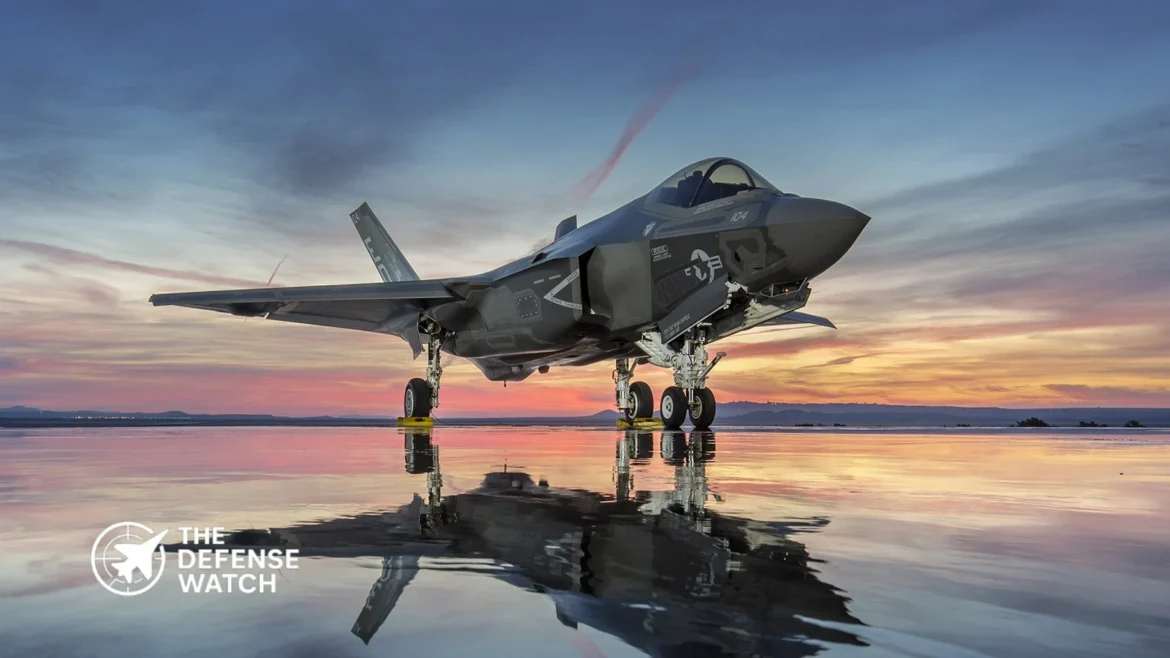
Why AESA Radar Matters in Modern Warfare
AESA radar, short for Active Electronically Scanned Array radar, has become one of the most important sensor technologies in modern military aviation, air defense and naval warfare. Instead of mechanically moving a radar antenna to point its beam, an AESA system uses numerous electronic transmit and receive elements to steer radar energy rapidly across the battlespace.
That difference has major operational consequences.
Modern forces increasingly operate in environments filled with low observable aircraft, cruise missiles, unmanned aerial systems, electronic jamming, long range weapons and dense electromagnetic activity. In such conditions, radar is no longer simply a device for finding aircraft. It is part of a larger network of sensors, weapons, electronic warfare systems and command and control architecture.
Takeaways
Why AESA radar has become a core technology for modern military sensing
1. Electronic Beam Steering
AESA radar uses multiple transmit and receive modules to steer the radar beam electronically, allowing extremely rapid changes in direction without mechanically rotating the antenna.
2. Multifunction Sensing
Modern AESA systems can support air to air, air to ground and surveillance functions while rapidly switching between different tasks and targets.
3. Better Survivability
Advanced waveforms, electronic protection and low probability of intercept techniques can make AESA equipped platforms more difficult for hostile forces to detect, classify or jam.
4. Reduced Mechanical Complexity
The absence of a mechanically scanned antenna reduces dependence on moving components and can improve reliability, maintainability and graceful degradation when individual modules experience faults.
5. Central to Networked Warfare
AESA radar is increasingly integrated with electronic warfare, infrared sensors, datalinks, command systems and weapons to create a broader picture of the battlespace.
AESA technology supports that shift by allowing a radar to perform several functions with high speed and flexibility. Depending on the design, a single array can support air to air detection, air to ground mapping, maritime surveillance, target tracking, electronic support and electronic attack functions.
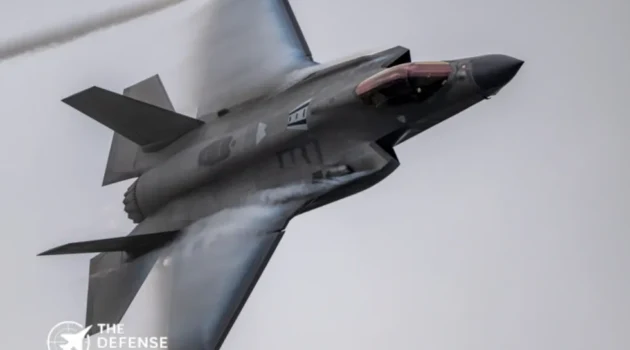
The technology is now deployed across multiple generations of military systems. Northrop Grumman, RTX’s Raytheon business, Lockheed Martin, Leonardo and other major defense companies are developing AESA based systems for fighters, ground based air defense and naval platforms. Northrop Grumman, for example, supplies the AN/APG-81 AESA radar for the F-35 Lightning II and the AN/APG-77 for the F-22 Raptor.
What Is an AESA Radar?
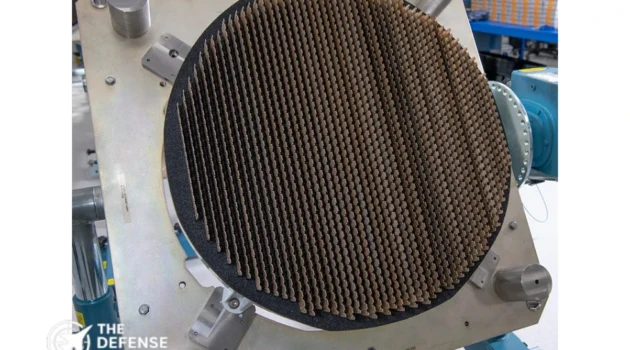
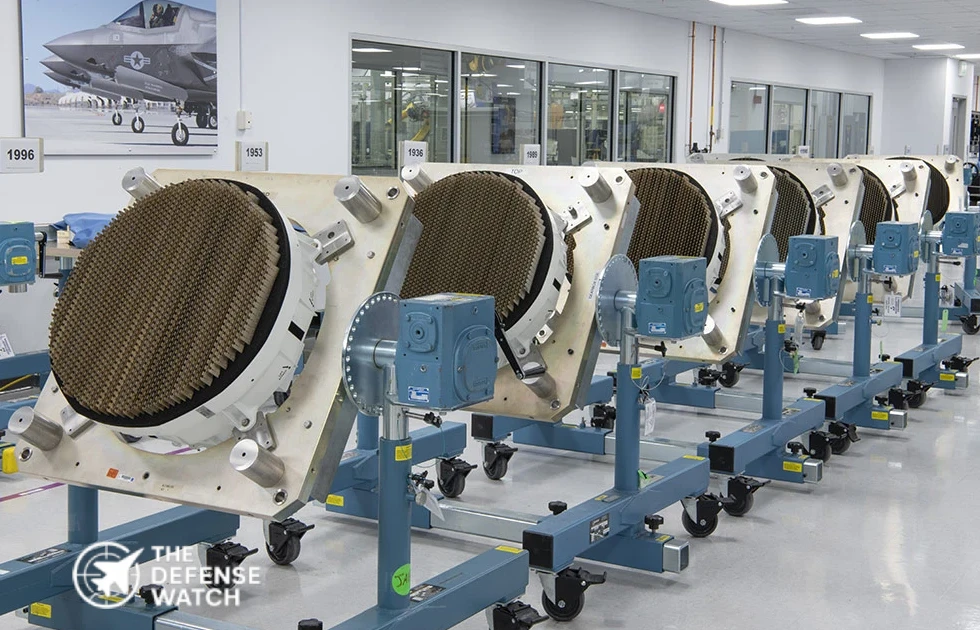
An AESA radar consists of a large number of individual transmit/receive modules, often abbreviated as T/R modules. These modules work together as an electronically controlled array.
Traditional mechanically scanned radars generally move an antenna or reflector to change the direction of the radar beam. AESA systems instead control the phase and amplitude of signals across their individual modules.
By adjusting these signals, the radar can direct and shape its beam without physically moving the antenna.
This allows the radar to rapidly shift between different portions of the sky or surface environment. It can also allocate radar resources to different missions according to the tactical situation.
Northrop Grumman describes AESA arrays as using miniature transmit/receive modules that are electronically steered together, allowing nearly instantaneous beam repositioning. The company also notes that AESA systems eliminate the moving parts associated with mechanically scanned designs.
The practical result is not simply a faster radar. It is a more flexible sensor.
How AESA Radar Works
The basic operating process involves several major stages.
1. Signal Generation
The radar generates radio frequency energy using an exciter and associated processing hardware.
2. Transmission Through T/R Modules
The signal is distributed across many individual transmit/receive modules. Each module can contribute a controlled amount of energy to the overall radar beam.
3. Electronic Beam Steering
The radar adjusts the phase relationships between signals from individual modules. This causes the combined electromagnetic energy to reinforce in the desired direction.
The beam can therefore be moved without physically turning the antenna.
4. Echo Reception
When the radar signal encounters an object, part of the energy is reflected back toward the array.
The T/R modules receive the returning signals and send information to the radar’s digital processing architecture.
5. Signal Processing
Advanced processors analyze the returned signals to determine information such as range, direction, velocity and other target characteristics.
Modern processing techniques also help distinguish genuine targets from clutter, interference and electronic deception.
6. Track Formation
The radar can combine successive detections into tracks. Multiple tracks can be maintained simultaneously, allowing crews and combat systems to build a broader picture of the battlespace.
Key Technical Advantages of AESA Radar
The most important advantage of AESA technology is flexibility.
Rapid Beam Steering
Because the radar does not depend on mechanical antenna movement, its beam can shift rapidly between targets and search sectors.
This is especially valuable when an aircraft faces multiple threats approaching from different directions.
Multifunction Operation
A modern AESA radar can perform several missions using software controlled waveforms and signal processing.
Depending on the system, these can include:
- Air to air search
- Air to air target tracking
- Air combat support
- Air to ground mapping
- Maritime surveillance
- Synthetic aperture radar imaging
- Ground moving target indication
- Terrain mapping
- Electronic support
- Electronic attack
- Missile support and target illumination functions
The AN/APG-81 on the F-35 is an example of this multifunction approach. Northrop Grumman states that the radar supports air to air and air to ground missions and includes synthetic aperture radar mapping and electronic warfare functions.
Electronic Protection
Modern combat aircraft can encounter hostile jamming and other forms of electromagnetic interference.
AESA radars can use techniques such as agile waveforms, adaptive beam control, frequency management and advanced signal processing to maintain radar performance in contested electromagnetic environments.
Exact techniques and performance parameters are frequently classified, so public sources do not provide a complete picture of the electronic warfare capabilities of operational AESA systems.
Reliability
The absence of a mechanically rotating antenna can reduce mechanical failure points.
Northrop Grumman says the solid state architecture of the AN/APG-81, combined with replaceable subassemblies, has improved reliability and maintenance characteristics compared with legacy systems.
AESA Radar and Gallium Nitride
One of the important developments in modern radar engineering is the growing use of gallium nitride, or GaN, semiconductor technology.
Earlier AESA generations commonly relied on gallium arsenide, or GaAs, semiconductor technology. GaN offers higher power density and can improve efficiency and thermal performance when appropriately integrated into a radar design.
The technology is increasingly appearing in modern radar upgrades.
RTX’s APG-82(V)X AESA radar, for example, uses GaN technology and is designed to provide advanced air to air, air to ground and electronic warfare capabilities for fighter aircraft.
Lockheed Martin’s TPY-4 ground based radar also uses GaN transmitter technology alongside an AESA architecture and advanced digital processing.
However, GaN does not automatically make every radar superior. Radar performance depends on the complete system, including antenna size, power generation, cooling, receiver sensitivity, processing, waveform design, software and integration.
AESA Radar on Fifth Generation Fighters
The relationship between AESA radar and fifth generation aircraft is particularly important.
F-35 AN/APG-81
The F-35 Lightning II uses Northrop Grumman’s AN/APG-81 AESA radar as a central component of its sensor suite.
The radar is integrated with the aircraft’s other sensors and mission systems rather than operating as an isolated sensor. This allows radar information to contribute to the aircraft’s broader sensor fusion architecture.
Northrop Grumman says more than 1,000 APG-81 radars had been produced and delivered by December 2022. The company also identifies the radar as a key component of the F-35’s advanced sensor suite.
F-22 AN/APG-77
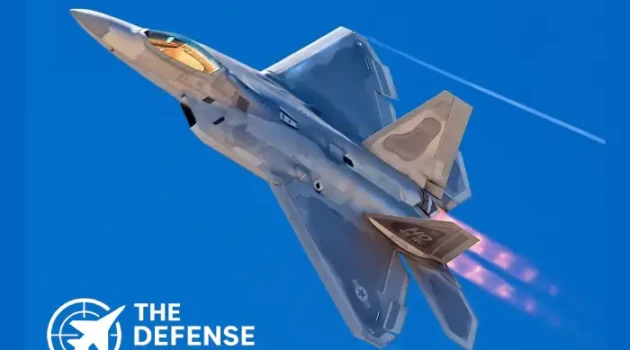
The F-22 Raptor uses the AN/APG-77 AESA radar.
It was developed around the requirements of a stealth air superiority fighter, where detection, tracking, electronic protection and emissions management are closely connected to survivability.
Northrop Grumman identifies the APG-77 and APG-81 as its AESA fire control radar systems for the F-22 and F-35 respectively.
F-16 AESA Upgrades
AESA technology is not limited to fifth generation aircraft.
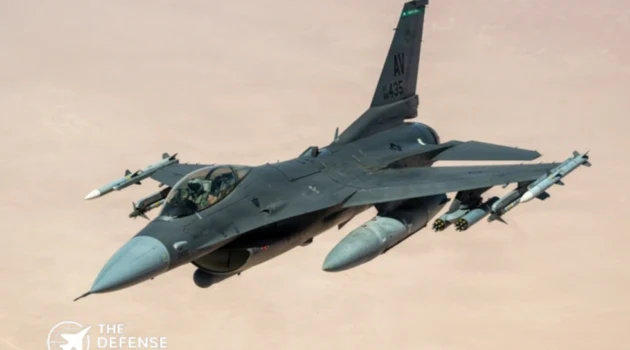
The AN/APG-83 Scalable Agile Beam Radar, or SABR, provides modern AESA capability to upgraded F-16 fleets. Northrop Grumman says the system has been deployed in nine countries and is designed to provide a modern radar capability without requiring replacement of the entire aircraft.
This is strategically important because radar modernization can extend the useful combat life of existing fourth generation fleets.
AESA Radar in Naval Warfare
AESA technology has also become a major part of modern naval air defense.
Warships increasingly require sensors capable of tracking aircraft, cruise missiles, ballistic missile related threats and other objects while operating in complex electromagnetic environments.
The U.S. Navy’s SPY-6 family is a major example of the broader move toward modern digital array radar technology.
RTX announced in July 2026 that Raytheon received a $1.8 billion contract extension for SPY-6 radar hardware production and sustainment, with options that could increase the cumulative value to $3.3 billion.
The significance extends beyond the radar itself. Modern naval radar systems feed combat management systems and contribute to integrated air and missile defense networks.
AESA Radar in Ground Based Air Defense
AESA technology is also changing ground based air surveillance and counterfire systems.
The U.S. Army’s AN/TPQ-53 radar uses a software controlled AESA architecture and supports counterfire target acquisition, counter UAS operations and aircraft surveillance. Lockheed Martin says the system has been deployed in combat since 2010.
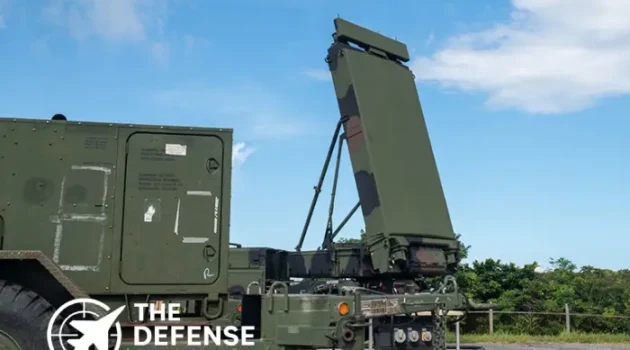
The U.S. Marine Corps’ AN/TPS-80 G/ATOR is another example. Northrop Grumman describes it as a multifunction radar capable of air surveillance, air defense and counterfire target acquisition. The system is designed to integrate with U.S., NATO and other command and control architectures.
This multifunction approach can reduce the need for separate sensors performing narrowly defined missions.
AESA Radar and Stealth Aircraft
AESA radar does not defeat stealth by itself.
Stealth aircraft are designed to reduce their radar cross section and control how electromagnetic energy is reflected toward hostile sensors.
The detection problem depends on many variables, including:
- Radar frequency
- Antenna aperture
- Transmitter power
- Target radar cross section
- Aspect angle
- Atmospheric conditions
- Signal processing
- Electronic warfare activity
- Target behavior
- Radar operating mode
An AESA radar can provide important advantages in detection and tracking, but claims that any specific AESA system can detect a particular stealth aircraft at a fixed publicized distance should be treated carefully.
Actual detection and engagement ranges are highly scenario dependent and many relevant parameters remain classified.
Low Probability of Intercept and Electronic Warfare
One of the most discussed AESA characteristics is low probability of intercept, or LPI, although the term should not be treated as meaning invisible radar emissions.
The objective is to make radar transmissions harder for an opposing electronic support system to detect, recognize and exploit.
This can involve combinations of waveform agility, frequency management, beam control, transmission scheduling and signal characteristics.
A modern AESA radar may also contribute directly to electronic warfare.
Northrop Grumman says the F-35’s AN/APG-81 can operate as an electronic warfare aperture and support electronic protection, electronic attack and electronic support functions.
This convergence between radar and electronic warfare is one of the most important trends in modern combat aviation.
AESA Radar vs. Mechanically Scanned Radar
Characteristic AESA Radar Mechanically Scanned Radar Beam steering Electronic Mechanical Moving antenna components Generally no Yes Beam repositioning Very rapid Slower Multifunction capability High on modern systems Varies by design Electronic warfare integration Strong potential More limited on legacy designs Reliability Generally improved by solid state architecture More mechanical wear points Upgrade path Strong software and hardware potential Often constrained by legacy architecture Maintenance Modular designs can simplify repair Mechanical components can increase maintenance burden Cost High acquisition cost Often lower for legacy systems Modern contested environment Designed for high flexibility Performance depends heavily on generation and upgrade level The comparison should not be interpreted as meaning every AESA radar automatically outperforms every mechanically scanned radar. Radar performance is determined by the complete architecture and mission requirements.
AESA Radar: Key Data Summary
System Platform / Domain Developer or Manufacturer Major Function Technology Status AN/APG-81 F-35 Northrop Grumman Air to air, air to ground, EW AESA Operational AN/APG-77 F-22 Northrop Grumman Air superiority and multifunction sensing AESA Operational AN/APG-83 SABR F-16 Northrop Grumman Fighter modernization AESA Operational and deployed APG-82(V)X F-15 RTX Raytheon Air superiority and multifunction sensing AESA with GaN Development and modernization SPY-6 family U.S. Navy surface fleet RTX Raytheon Air and missile defense Digital array radar Production and deployment AN/TPQ-53 U.S. Army Lockheed Martin Counterfire and counter UAS AESA Operational AN/TPS-80 G/ATOR U.S. Marine Corps Northrop Grumman Air defense and counterfire AESA Operational ECRS Mk0 Eurofighter Typhoon Leonardo and European industry Air surveillance and multifunction sensing AESA In service Public specifications for military AESA systems are often incomplete. Exact detection ranges, effective radiated power, sensitivity, electronic attack performance and detailed waveform characteristics are commonly classified or vary with operational configuration.
AESA Radar and NATO Networked Warfare
The value of an AESA radar increasingly depends on what happens to the information after detection.
Modern military operations are moving toward networked architectures in which aircraft, ships, ground radars, satellites, command centers and weapons systems exchange information.
This creates a distinction between sensor performance and kill chain performance.
A radar may detect and track a target, but the wider military system must then distribute, validate and act on that information.
A modern AESA sensor can therefore become one node in a larger network that includes:
- Fighter aircraft
- Airborne early warning aircraft
- Ground based air defense
- Naval combat systems
- Electronic warfare platforms
- Unmanned systems
- Command and control centers
- Tactical datalinks
- Precision weapons
Northrop Grumman emphasizes open architectures and interoperability across its modern radar portfolio, while its G/ATOR system is designed to operate with U.S., NATO and other command and control systems.

Image : Northrop Grumman Operational Advantages in a Contested Electromagnetic Environment
Near peer warfare places increasing pressure on military sensors.
Potential threats include:
- Electronic jamming
- Deception techniques
- Passive detection systems
- Anti radiation weapons
- Long range precision fires
- Unmanned aerial systems
- Low observable aircraft
- Cruise missiles
- Hypersonic weapons
- Dense civilian and military electromagnetic activity
A modern AESA radar can help address some of these challenges through rapid beam management, frequency agility, advanced signal processing and electronic protection.
But AESA is not a standalone solution.
Survivability increasingly depends on emissions control, distributed sensing, mobility, deception, redundancy and networking.
Limitations and Challenges
Despite its advantages, AESA radar comes with significant engineering and procurement challenges.
Cost and Complexity
AESA arrays contain large numbers of sophisticated semiconductor modules and associated electronics.
The system also requires advanced cooling, power management, processing and software.
Thermal Management
High power electronics generate heat. Aircraft designers must balance radar performance against the limited electrical power and cooling capacity available on a fighter aircraft.
Software Dependence
Modern radar performance increasingly depends on software.
That creates opportunities for rapid capability upgrades but also introduces development, testing, cybersecurity and sustainment challenges.
Maintenance and Supply Chain
Although AESA eliminates many mechanical components, individual electronic modules and other components can still fail.
Large military fleets also require long term access to specialized semiconductor and electronic manufacturing capacity.
Classified Performance
Public comparisons are often difficult because key performance data remains classified.
This makes it risky to rank national radar systems using a single advertised detection range or power figure.
Future of AESA Radar
The next stage of AESA development is likely to involve greater integration between radar, electronic warfare and other sensors.
The distinction between radar and electronic warfare equipment is already becoming less clear.
Future systems are expected to place greater emphasis on:
- Digital beamforming
- GaN based transmit technology
- Advanced signal processing
- Artificial intelligence assisted signal classification
- Distributed sensing
- Multifunction apertures
- Electronic attack from radar apertures
- Open mission systems
- Software defined capabilities
- Sensor fusion
- Cooperative engagement
This trend is visible in current modernization programs.
RTX’s APG-82(V)X combines AESA technology, GaN and electronic warfare functions, while Northrop Grumman continues to develop AESA architectures for air, land and maritime applications.
The larger direction is clear: future radar systems will increasingly operate as software intensive multifunction sensors rather than standalone search devices.
Analytical Conclusion
AESA radar has moved from being a premium technology found mainly on advanced fighter aircraft to becoming a major architecture for modern military sensing across air, land and sea domains.
Its advantages come from the combination of electronic beam steering, solid state technology, rapid signal processing, multifunction operation and integration with electronic warfare and networked command systems.
For fighter aircraft, AESA can improve situational awareness and support air to air and air to ground missions. For ground forces, it can combine surveillance, counterfire and counter UAS functions. For naval forces, modern array radars are becoming central to integrated air and missile defense.
The strategic importance of AESA radar therefore extends beyond the radar antenna itself. Its real value emerges when the sensor is connected to a wider combat architecture capable of turning detection into a decision and, when authorized, a weapon engagement.
As the United States, NATO allies and other advanced militaries prepare for increasingly contested electromagnetic environments, AESA technology will remain a central component of military modernization. The next generation will likely focus less on simply detecting farther and more on processing information faster, surviving electronic attack, sharing data across domains and performing multiple missions from a common aperture.

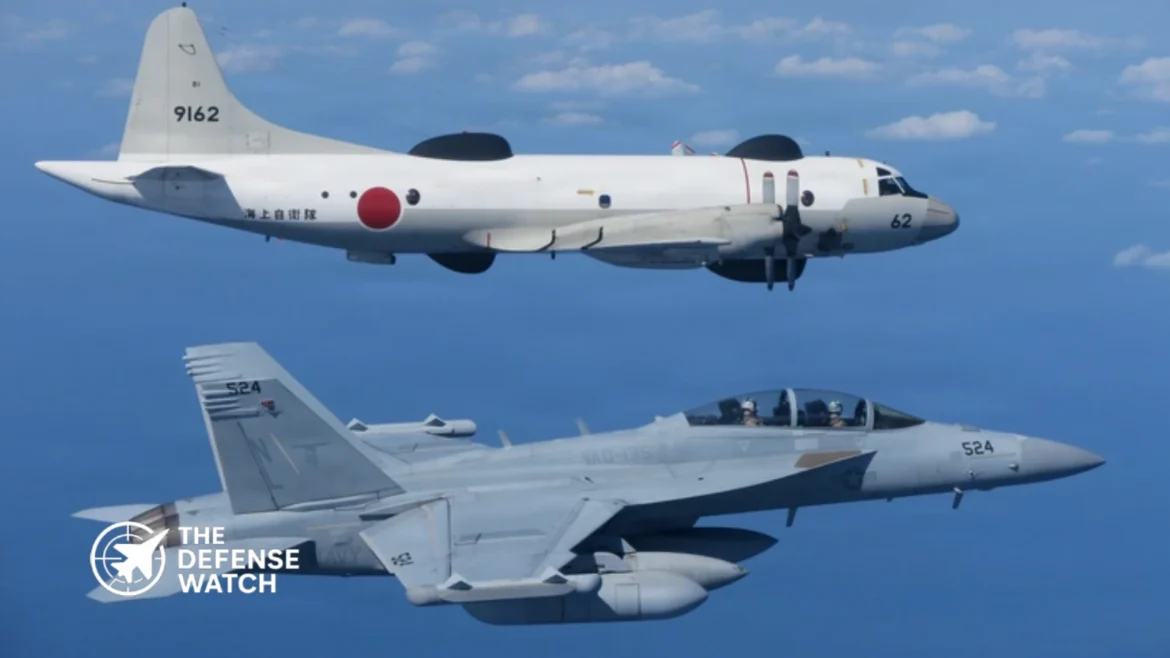
Boeing And U.S. Navy Modernize The EA-18G Growler
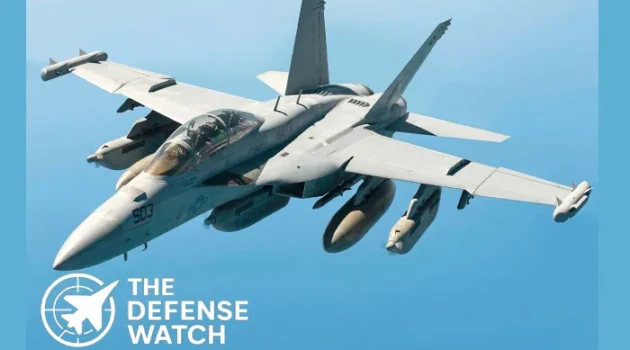
Boeing and the U.S. Navy are continuing upgrades to the EA-18G Growler to strengthen airborne electronic attack against increasingly sophisticated radar, communications and air defense systems. Boeing highlighted the modernization effort as the Growler reaches 20 years since its first flight in August 2006.
Takeaways
The U.S. Navy is modernizing the EA-18G Growler to keep airborne electronic attack effective against increasingly capable threats.
1. Growler Reaches 20 Years Since First Flight
The first EA-18G Growler flew on August 15, 2006, beginning the replacement of the EA-6B Prowler as the Navy’s dedicated airborne electronic attack aircraft.
2. Growler Capability Modification
The Navy’s Growler Capability Modification program adds upgrades intended to increase processing power, detection capability and compatibility with new electronic warfare systems.
3. Next Generation Jammer Integration
The EA-18G is being adapted to employ the AN/ALQ-249 Next Generation Jammer, which uses digital and electronically scanned technologies to improve airborne electronic attack against modern threats.
4. Mid-Band Capability Is Already Operational
The Navy declared Initial Operational Capability for Next Generation Jammer Mid-Band in December 2024, with the capability subsequently deployed operationally aboard a carrier strike group.
5. Modernization Extends the Growler’s Relevance
The upgrade approach allows the Navy to improve a proven carrier-based aircraft rather than replace its airframe, while adding new electronic warfare hardware and software as the threat environment changes.
The modernization centers on the Growler Capability Modification program, increased onboard processing and detection capabilities, and integration of the Next Generation Jammer family. These changes are intended to keep the aircraft effective as adversaries field more capable and networked electromagnetic systems.
The Navy describes the EA-18G as a derivative of the F/A-18F Super Hornet that combines the aircraft’s carrier suitability with a specialized electronic warfare suite. The platform replaced the EA-6B Prowler and provides airborne electronic attack, electronic surveillance and support for suppression of enemy air defenses.
From EA-6B Replacement To Core Electronic Warfare Platform
The first EA-18G flew from Lambert International Airport in St. Louis, Missouri, on August 15, 2006. The aircraft subsequently entered the Navy’s test and fleet organizations before achieving its first combat deployment in 2011.
The first fleet Growler was delivered to Electronic Attack Squadron VAQ-129 in June 2008. Boeing delivered the 100th aircraft to the Navy in May 2014, while Australia became the first international operator of the aircraft.
The aircraft is designed to operate from aircraft carriers while conducting electronic attack missions that can include stand-off and escort jamming. Its role is not limited to disrupting hostile emitters. The Growler can also collect electronic intelligence, provide threat information and support the wider air wing with targeting and warning data.
This makes the aircraft an important part of the carrier air wing’s broader sensing and survivability architecture rather than simply a dedicated jammer.
Growler Capability Modification Targets The Aircraft’s Electronic Warfare Architecture
The Navy began its five-year Growler Capability Modification program in 2021. NAVAIR described the effort as the first major capability upgrade to the EA-18G since the aircraft entered service.
The program supports modifications required to integrate the Next Generation Jammer Mid-Band system and establish a foundation for further upgrades.
Boeing’s current description of the aircraft identifies Growler modernization with H16 and Next Generation Jammer integration. The company also emphasizes the aircraft’s open mission systems approach, which is intended to support the insertion of additional capabilities as requirements evolve.
Modernization area Purpose Processing power Supports faster handling of electronic warfare information Detection Improves identification and characterization of electromagnetic threats Next Generation Jammer integration Enables newer external jamming capabilities Software and mission systems Provides a path for future capability insertion Growler Capability Modification Integrates multiple aircraft and electronic warfare improvements The importance of processing power is particularly significant because modern electronic warfare is increasingly dependent on rapidly identifying emitters, determining their characteristics and selecting appropriate responses.
An aircraft that can detect more signals but cannot process them quickly enough may gain less operational value than one able to turn electromagnetic information into timely decisions.
Next Generation Jammer Replaces The Legacy ALQ-99
The most important part of the modernization effort is the transition from the legacy ALQ-99 Tactical Jamming System toward the Next Generation Jammer family.
The Navy says the Next Generation Jammer is designed to augment and eventually replace the ALQ-99. It uses digital technologies and electronically scanned arrays to provide greater airborne electronic attack capability, including improved ability to disrupt, deny and degrade hostile air defense and communications systems.
The transition is occurring incrementally rather than through a single replacement program.
The Next Generation Jammer Mid-Band, or NGJ-MB, addresses the middle portion of the electromagnetic spectrum. The Navy declared the system operationally ready in December 2024, and it was subsequently deployed with an EA-18G squadron aboard USS Abraham Lincoln during a carrier strike group deployment.
The Navy identifies NGJ-MB as the AN/ALQ-249(V)1. Production pods began reaching the fleet in 2023 after the program passed Milestone C in 2021.
Why The Upgrade Matters For Carrier Aviation
The strategic value of the Growler is closely linked to the changing character of air defense.
Modern integrated air defense networks can combine multiple radar types, communications networks, command systems and mobile missile units. These systems can also operate across different frequency ranges, making electronic attack more complicated than simply overpowering one radar.
The Navy’s Next Generation Jammer architecture is therefore being developed in multiple frequency bands.
NAVAIR identifies NGJ-MB as the mid-band component and NGJ-LB as the low-band component. The low-band system remains in the Engineering and Manufacturing Development phase, demonstrating that the broader replacement of the ALQ-99 is a continuing modernization effort rather than a completed transition.
This incremental approach also matters for fleet availability. Rather than waiting for an entirely new electronic warfare architecture to mature, the Navy can introduce individual capabilities as they become available while retaining legacy equipment where necessary.
Growler Supports More Than Jamming
Electronic attack is only one part of the EA-18G mission.
The aircraft can contribute to electronic surveillance and threat characterization while supporting other aircraft operating in contested electromagnetic environments. Boeing says the Growler can provide threat warnings and targeting information to platforms including the F/A-18 and F-35.
That role becomes increasingly important as aircraft depend on networked sensors and communications.
For a carrier air wing, electronic warfare can affect the conditions under which other aircraft operate. A Growler may help reduce the effectiveness of hostile sensors while simultaneously improving the air wing’s understanding of the electromagnetic environment.
The aircraft therefore functions as both an electronic attack platform and an airborne contributor to the wider kill chain.
The Technical Challenge Is Keeping Pace With Threat Evolution
The central challenge for the EA-18G modernization program is not simply adding more power to a jammer.
Electronic warfare is a contest between sensing, processing and adaptation. Hostile systems can change frequencies, alter waveforms, use different emitters or operate as part of distributed networks. An effective airborne electronic attack system must therefore respond to a changing electromagnetic environment rather than rely exclusively on fixed threat libraries.
The Navy’s use of digital and electronically scanned technologies in the Next Generation Jammer reflects this requirement. NAVAIR specifically identifies rapid hardware and software updates as part of the NGJ architecture, allowing the system to adapt as threats evolve.
That adaptability also explains why aircraft processing and mission-system upgrades are important.
A new jammer pod alone does not determine the effectiveness of the electronic warfare aircraft. The aircraft must be able to carry, communicate with and employ the new system while integrating information from its own sensors and other platforms.
Modernization Extends A Proven Carrier Aircraft
The EA-18G’s commonality with the F/A-18 Super Hornet provides an important sustainment advantage.
Boeing says the Growler shares more than 90 percent of its components and systems with the Super Hornet family. That commonality supports carrier operations, maintenance infrastructure and training across the two aircraft types.
The Navy’s modernization strategy consequently combines an established airframe with new mission systems.
This is significant because electronic warfare technology can change considerably faster than an aircraft’s basic airframe. Upgrading processors, software, sensors and external jamming equipment can allow the platform to absorb new capabilities without requiring the Navy to develop an entirely new carrier-based electronic attack aircraft.
The Navy’s FY2026 budget documentation also identifies Growler Capability Modification as supporting H16 and Airborne Electronic Attack System Enhancement and Next Generation Jammer Mid-Band software and hardware integration.
What Comes Next For The EA-18G
The Growler’s modernization path is likely to remain centered on incremental improvements rather than a single major redesign.
The immediate foundation is the integration of current Next Generation Jammer capabilities, continued aircraft modifications and improvements to processing and detection. The longer-term objective is a broader electronic warfare architecture capable of operating across additional portions of the electromagnetic spectrum.
For the U.S. Navy, the value of this approach is operational continuity. Carrier air wings can retain a dedicated airborne electronic attack aircraft while progressively replacing aging electronic warfare equipment.
For allied forces operating alongside U.S. naval aviation, the Growler also provides an electronic warfare capability that can support fourth- and fifth-generation aircraft operating in the same battlespace.
Twenty years after its first flight, the EA-18G remains a specialized component of U.S. naval aviation. Its future effectiveness will depend less on the age of the airframe than on the Navy’s ability to keep its sensors, processors, software and jamming systems ahead of changing electromagnetic threats.
Northrop Grumman Advances LITENING For F-16 Modernization
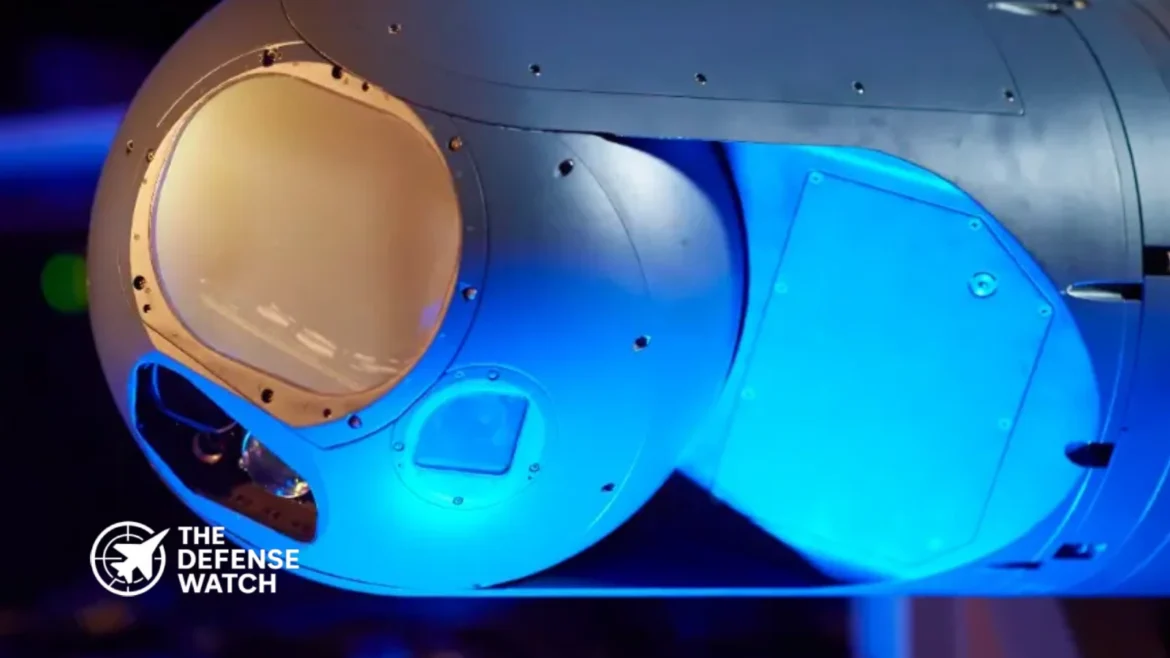
Northrop Grumman is advancing the LITENING targeting pod as a way to give F-16s and other fourth generation fighters stronger sensing, targeting and networking capabilities, according to company information and recent program updates. The latest LITENING Large Aperture configuration combines upgraded electro optical and infrared sensors, image processing and digital data links in a modular podded system.
Takeaways
Northrop Grumman is using the LITENING targeting pod to extend the sensing and networking capabilities of fourth generation fighters.
1. LITENING Targets the F-16 Modernization Gap
Northrop Grumman is advancing the LITENING family as a modular sensor and targeting system for fourth generation aircraft, including the F-16.
2. Large Aperture Adds Six High Definition Sensors
The LITENING Large Aperture configuration uses six high definition sensors and is designed to provide about a 50 percent increase in range compared with earlier configurations.
3. Networking Is Central To The Upgrade
Plug and play data links allow LITENING to exchange information with aircraft and ground forces, supporting a more connected battlefield.
4. The Pod Can Be Upgraded Independently
Northrop Grumman’s modular approach allows capability improvements to the pod without requiring a complete redesign of the aircraft.
5. Fourth Generation Aircraft Remain Important
The approach is significant because large F-16 fleets remain in service with the United States and allied air forces, making incremental modernization an important part of maintaining combat relevance.
The company has positioned the system as part of a broader effort to modernize proven aircraft rather than replace them. That approach is increasingly relevant as air forces seek to extend the useful life of fourth generation fighters while introducing fifth generation aircraft and other networked systems.
What LITENING Adds To The F-16
LITENING is an external electro optical and infrared targeting system designed to detect, acquire, identify and track targets. U.S. Air Force documentation describes the system as supporting precision targeting, surveillance and non traditional intelligence, surveillance and reconnaissance missions.
The system has evolved considerably since earlier versions entered operational service. Current Northrop Grumman material describes LITENING as a multi sensor system with digital color video, infrared sensing, laser imaging, advanced image processing and data link capabilities.
For the F-16, the significance is not simply improved imagery. The larger objective is to provide pilots with more useful information at longer ranges and connect that information to the wider force.
That distinction matters in modern air operations, where the ability to find and identify a target is only one part of the engagement process. Information must also move between aircraft, weapons, command elements and other sensors quickly enough to support a decision.
LITENING Large Aperture Pushes Sensor Performance Further
Northrop Grumman describes LITENING Large Aperture as its most advanced LITENING targeting pod. The system uses six high definition sensors, enhanced image processing and advanced data links, with the company stating that the configuration provides a 50 percent increase in range.
The Large Aperture architecture also expands the sensor coverage available to the pod. Northrop Grumman identifies color daylight, mid wave infrared, short wave infrared and long wave infrared sensing among the capabilities supported by the three aperture configuration.
This combination can improve the information available to a pilot before weapon employment. Higher quality imagery and stronger processing can help distinguish targets, assess the environment and maintain tracks under conditions where visual identification is difficult.
The practical benefit is particularly relevant to long range precision engagement. A targeting pod does not make an F-16 a stealth aircraft, but improved passive sensing can help the aircraft collect and act on information without relying exclusively on its own radar.
Networking Is A Major Part Of The Capability
One of the most important aspects of the current LITENING architecture is its data connectivity.
Northrop Grumman says LITENING uses Plug and Play III data link architecture that can support two way communications and networking applications. The company’s documentation also identifies NET-T and other data link options intended to connect the pod with aircraft and land forces.
This moves the system beyond the traditional role of a targeting sensor. The pod can function as part of a wider information architecture in which sensor data contributes to a broader operational picture.
The concept is consistent with the U.S. military’s continuing emphasis on networked operations. A fourth generation fighter does not need to independently carry every sensor required for a mission if it can receive useful information from other platforms and share its own observations with the force.
Northrop Grumman has previously demonstrated technologies intended to connect fourth and fifth generation aircraft through gateways and existing tactical data links. The company has also developed communications systems for the F-35, including the Multifunction Advanced Data Link used for fifth generation aircraft networking.
Why Fifth Generation Like Sensing Does Not Mean A Fifth Generation Fighter
The description of LITENING as providing fifth generation like sensing should be understood in terms of individual mission capabilities, not aircraft classification.
Fifth generation fighters such as the F-35 combine low observability, advanced sensors, onboard processing, communications and sensor fusion as an integrated aircraft architecture. Northrop Grumman itself identifies the F-35’s sensor suite, communications system and other mission systems as part of a broader integrated design.
A podded targeting system cannot reproduce all of those characteristics on an F-16. It does, however, allow selected capabilities associated with modern networked combat operations to be added to an existing platform.
That distinction is important for defense planners. Upgrading an aircraft’s sensors and connectivity can extend its usefulness, but it does not eliminate limitations associated with airframe design, radar signature, propulsion, weapons carriage or onboard architecture.
Modular Upgrades Reduce Pressure On Existing Fleets
The modular nature of LITENING is one of its most important characteristics for operators.
Northrop Grumman says the system is designed for upgrades over time, allowing users to adopt new capabilities as mission requirements change. The company also says LITENING pods can be upgraded to newer configurations rather than requiring operators to replace the entire system.
This approach can be particularly useful for air forces operating mixed fleets. Instead of waiting for a new fighter procurement program to deliver a capability, an operator can modernize selected aircraft and sensors within the existing fleet.
The U.S. Air Force has already operated LITENING across multiple aircraft types. Its fact sheet lists the A-10, B-52H, F-15E and multiple F-16 blocks among U.S. aircraft associated with LITENING AT.
The system has also been used by international operators. Northrop Grumman has previously identified Denmark, Australia, Finland, Italy, the Netherlands, Portugal, Spain and Israel among LITENING users.
F-16 Modernization Is Becoming A Broader Technology Effort
LITENING is only one element of the larger F-16 modernization picture.
Northrop Grumman is also developing the AN/ALQ-257 Integrated Viper Electronic Warfare Suite, or IVEWS, which is intended to provide advanced electronic warfare capabilities for the F-16. The company describes IVEWS as providing capabilities comparable to those found on fifth generation aircraft, including radar warning and electronic attack functions.
Recent reporting indicates that both IVEWS and LITENING Large Aperture have been progressing through testing and evaluation. Air & Space Forces Magazine reported in July 2026 that LITENING Large Aperture had entered operational test flight activity after earlier flight testing.
Together, these programs illustrate a broader modernization strategy. Sensors, electronic warfare, communications and mission computing can be upgraded as separate components while preserving the underlying aircraft.
For the F-16, this is particularly relevant because the aircraft remains one of the most widely operated fourth generation fighters in the world.
What The Upgrade Means For Combat Operations
The operational value of LITENING Large Aperture is likely to be strongest in missions where target identification, passive sensing and precision engagement are central requirements.
The pod can support air to ground targeting, intelligence collection and surveillance while also contributing information to a networked force. Northrop Grumman says LITENING supports precision targeting, air superiority, close air support and surveillance missions.
Its passive electro optical and infrared sensors also provide an alternative to relying solely on active radar emissions for target detection and identification. Northrop Grumman describes its airborne EO/IR systems as passive sensors capable of operating across visible and infrared spectral bands without emitting detectable energy.
That capability can matter in environments where aircraft must manage their electromagnetic signature carefully.
At the same time, the effectiveness of any targeting pod depends on factors beyond the sensor itself. Weather, atmospheric conditions, target contrast, range, aircraft geometry, electronic warfare activity and the availability of supporting networks all affect operational performance.
A Cost Conscious Path To Extending Fighter Capability
The larger strategic issue is fleet modernization.
Fourth generation aircraft are not disappearing from military inventories simply because fifth generation fighters are entering service. Many countries will continue operating F-16s and other legacy fighters for years, creating a requirement for upgrades that can keep those aircraft useful alongside newer platforms.
LITENING provides one example of that approach. Rather than attempting to transform the F-16 into an F-35, the system adds specific sensing, targeting and networking functions that can improve the aircraft’s contribution to a modern force.
Northrop Grumman’s broader modernization strategy similarly focuses on combining digital engineering, sensors, electronic warfare, networking and other technologies to extend the capabilities of established fleets.
For U.S. and allied air forces, that can provide an important bridge between legacy aircraft and newer fifth generation fleets. The result is not a replacement for fifth generation fighters, but a more capable fourth generation aircraft that can operate as part of the same increasingly networked combat environment.
LITENING Capability At A Glance
Capability LITENING Large Aperture Primary role Electro optical and infrared targeting and surveillance Sensor architecture Six high definition sensors Range improvement About 50 percent increase, according to Northrop Grumman Imaging Digital color, infrared and multi spectral sensing Processing Advanced image processing and computing Data connectivity Plug and Play III architecture and advanced data links Target functions Detection, acquisition, identification and tracking Aircraft relevance F-16 and other LITENING compatible aircraft Upgrade approach Modular architecture designed for future upgrades Source: Northrop Grumman and U.S. Air Force program information.
The Bottom Line
Northrop Grumman’s LITENING program shows how established fighter fleets can gain selected fifth generation style sensing and networking functions without undergoing complete aircraft replacement.
For the F-16, the LITENING Large Aperture upgrade combines improved sensors, processing and data connectivity in a podded architecture. Its importance is therefore less about changing the identity of the F-16 and more about improving what the aircraft can see, understand and share in a networked battlespace.
As fourth generation fighters remain central to U.S. and allied inventories, upgrades such as LITENING Large Aperture will remain an important part of the transition toward increasingly connected air operations.
Eurofighter IPA6 Reaches 1,000 Flight Hours
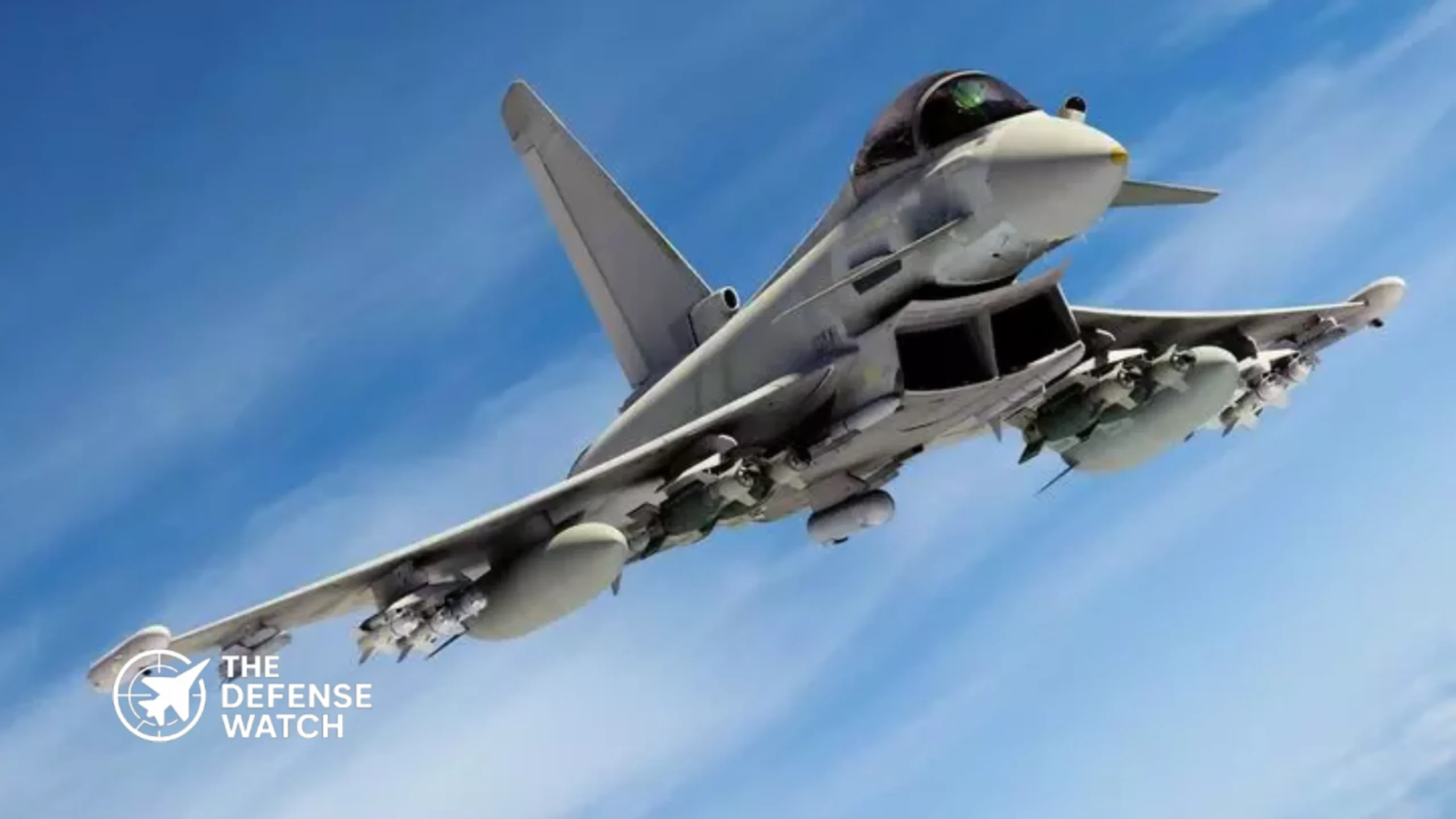
Eurofighter’s IPA6 instrumented test aircraft has passed 1,000 flight hours, marking an important milestone in the continuing development of the Eurofighter Typhoon and its weapons, avionics and mission systems. The milestone was highlighted by Eurofighter as part of its wider flight-test and capability development activity.
Takeaways
IPA6 has become a key flight-test asset for the continued development of the Eurofighter Typhoon.
1. 1,000 Flight-Hour Milestone
Eurofighter’s IPA6 instrumented production aircraft has surpassed 1,000 flying hours during development and qualification work for Typhoon capabilities.
2. Airborne Test Laboratory
IPA6 carries specialized flight-test instrumentation that records aircraft responses, pilot inputs and system behavior during development sorties.
3. Brimstone 2 Integration
IPA6 became the first Typhoon to jettison and subsequently fire the Brimstone 2 missile during the weapon’s integration campaign.
4. Supports Multiple Upgrades
The aircraft has contributed to Typhoon avionics upgrades, helmet-mounted system trials and air-to-air refueling testing, among other development activities.
5. Data Drives Future Fleet Capability
The flight-test data collected by IPA6 helps engineers validate new configurations and establish the evidence needed before capabilities are introduced to operational aircraft.
IPA6 is one of the program’s Instrumented Production Aircraft. These aircraft are based on production-standard Typhoons but are equipped with additional instrumentation that allows engineers to collect detailed flight and systems data during development testing.
The significance of the 1,000 hours is therefore different from a conventional operational flying milestone. IPA6 spends substantial time being configured for individual test campaigns, making each flight part of a controlled engineering process rather than routine training or operational flying.
What Makes IPA6 Different From a Standard Typhoon?
Instrumented Production Aircraft are effectively airborne test laboratories. Their instrumentation records aircraft behavior and system performance throughout a sortie, while telemetry allows engineers on the ground to monitor selected parameters in real time.
This data becomes particularly important when engineers are testing systems close to their operational limits. A flight-control change, weapons separation event or aerial refueling activity can involve interactions between multiple aircraft systems that cannot be fully reproduced through computer modeling alone.
Eurofighter says the test process combines modeling, ground work and flight testing. When a capability reaches the flight stage, instrumentation provides measured evidence of what actually happens in the aircraft rather than relying solely on predicted performance.
IPA6 at a Glance
Item Detail Aircraft Eurofighter Typhoon IPA6 Role Instrumented Production Aircraft Milestone More than 1,000 flight hours Primary function Development and qualification testing Major activities Weapons, avionics, flight controls and refueling Notable weapon work Brimstone 2 integration and firing Test data Aircraft instrumentation, telemetry and video First flight November 1, 2007 Configuration Originally Tranche 1 Block 5, modified before first flight Eurofighter’s own historical data records IPA6’s first flight on November 1, 2007. The aircraft was originally built as a single-seat Tranche 1 Block 5 airframe and was modified to a Block 8 standard before its first flight, with Tranche 2 avionics equipment incorporated for development work.
IPA6 Played a Major Role in Brimstone 2 Integration
One of the most significant weapons programs associated with IPA6 was the integration of MBDA’s Brimstone 2 missile onto the Typhoon.
IPA6 became the first Typhoon to jettison and later fire Brimstone 2 during the development campaign. Engineers collected information from the aircraft, missile telemetry and airborne video to compare actual missile behavior with predicted performance.
The testing was not limited to determining whether the missile could safely leave the aircraft. Engineers also needed to evaluate aircraft and weapon interactions, mission-system behavior, flight-control responses and the conditions under which the weapon could be safely employed.
That distinction is important for modern combat aircraft. Integrating a weapon involves more than attaching it to a pylon. The aircraft must accommodate the weapon aerodynamically, communicate with its systems, manage release conditions and provide the pilot with the required controls and information.
The UK Ministry of Defence previously identified Brimstone 2 integration as part of the Typhoon’s Phase 3 Capability Enhancements. The program also covered improvements involving other weapons and aircraft systems.
The RAF subsequently conducted the first operational firing of Brimstone 2 from a Typhoon FGR4 in February 2019 during operations in Syria.
Avionics Testing Is Central to Typhoon’s Evolution
IPA6 has also supported a broad range of avionics development. According to Eurofighter and BAE Systems, the aircraft has been involved in much of the Typhoon’s avionics upgrade work, along with trials of the Striker II helmet-mounted system and air-to-air refueling testing.
For a fighter aircraft with a long service life, avionics development is particularly important because software, sensors, communications systems and mission computers can evolve substantially without replacing the entire airframe.
Eurofighter’s current development path includes improvements to radar, electronic warfare, communications, mission systems and weapons integration. The program’s P3Ec work, for example, is intended to improve interoperability, connectivity, sensor performance, survivability and situational awareness.
The broader modernization effort also includes the Captor-E active electronically scanned array radar family and further development of the aircraft’s electronic warfare capabilities.
Flight Testing Establishes the Evidence for Operational Use
The 1,000-hour milestone matters because flight testing is the bridge between engineering design and operational capability.
A new weapon or avionics function can perform correctly in simulations and laboratory tests but still require extensive airborne validation. Aircraft vibration, aerodynamic loads, electromagnetic interactions, temperature, fuel-state changes and flight-control responses can affect how a system behaves in actual flight.
IPA6 allows engineers to measure these interactions directly.
For weapons integration, testing can involve dummy stores before live firings. Engineers gradually expand the tested flight envelope as confidence increases, assessing factors such as speed, altitude and aircraft loading before moving toward more demanding conditions.
This approach reduces technical uncertainty before a capability is cleared for operational aircraft. It also creates a documented evidence base for safety and qualification decisions.
The Milestone Comes During a Broader Typhoon Modernization Cycle
The importance of IPA6 is greater when viewed against the current direction of the Eurofighter program.
The Typhoon is no longer being developed simply as an air-superiority fighter. Its evolution has increasingly focused on a broad swing-role mission set combining air-to-air combat, precision strike, electronic warfare, networking and advanced sensing.
Eurofighter’s published program roadmap includes further enhancements to the aircraft’s sensors, connectivity, mission systems and weapons. The planned Aerodynamic Modification Kit is intended to support more flexible weapon configurations and accelerate integration of additional external stores.
The program also envisions a longer-term evolution of the aircraft’s avionics architecture, cockpit, networking and ability to operate alongside future combat systems and uncrewed platforms.
That means flight-test infrastructure such as IPA6 remains important even as newer Typhoon production standards enter service.
Why the IPA6 Milestone Matters to the U.S. and NATO
For the United States and its NATO allies, the significance of the milestone extends beyond the Eurofighter program itself.
European air forces are increasingly expected to maintain capable fourth-generation and fourth-generation-plus aircraft alongside newer fifth-generation platforms. The ability to continue upgrading existing fighters can help sustain combat capacity while newer systems enter service.
The Eurofighter program has also become increasingly important to NATO airpower. Airbus reported that Eurofighter fleets from the UK, Germany, Spain and Italy supported NATO air-policing activity over Romania, Bulgaria and the Baltic region during 2025.
The program has now surpassed one million cumulative Typhoon flight hours, according to Eurofighter, demonstrating the scale of the operational and development ecosystem supporting the aircraft.
The continued use of dedicated test aircraft helps ensure that new weapons and systems can be evaluated without relying solely on frontline aircraft for developmental work.
For NATO, that has a practical value. Faster and better-supported integration of weapons, sensors and communications can help allied aircraft remain interoperable as the threat environment and operational requirements change.
IPA6 Provides a Development Path for the Next Typhoon Upgrades
IPA6’s 1,000 flight hours should therefore be viewed less as a standalone record and more as evidence of the infrastructure required to keep Typhoon evolving.
The aircraft has supported weapons releases, live missile firings, avionics development, helmet-mounted systems, refueling trials and flight-control work. Each campaign contributes technical data that can be used to refine designs and establish safe operating limits.
That process becomes increasingly important as Typhoon receives more advanced sensors, weapons and networking functions.
The Eurofighter program is also pursuing upgrades intended to keep the aircraft relevant into the coming decades. The program describes future developments involving new avionics architecture, a digital cockpit, improved helmet-mounted displays and high-speed data networking as part of its longer-term evolution.
The role of IPA6 is consequently straightforward but important: collect the flight data needed to turn those engineering developments into capabilities that can eventually be fielded on operational aircraft.
What Comes Next for the Eurofighter Typhoon?
Eurofighter’s development roadmap points toward continued integration of weapons, sensors and electronic warfare capabilities rather than a fixed configuration.
The program is also progressing work on the Aerodynamic Modification Kit, which is intended to support new weapon configurations and future weapon integration while improving aspects of the aircraft’s aerodynamic performance.
For operators, the value of this approach is the ability to update a mature combat aircraft without treating each new capability as a completely separate platform development effort.
IPA6’s milestone illustrates the engineering work behind that process. Its 1,000 flight hours represent a large body of test data supporting the continued evolution of a fighter aircraft that remains in production, modernization and operational service across multiple European and international air forces.
U.S. Navy Advances E-2D Block II Toward Flight Testing
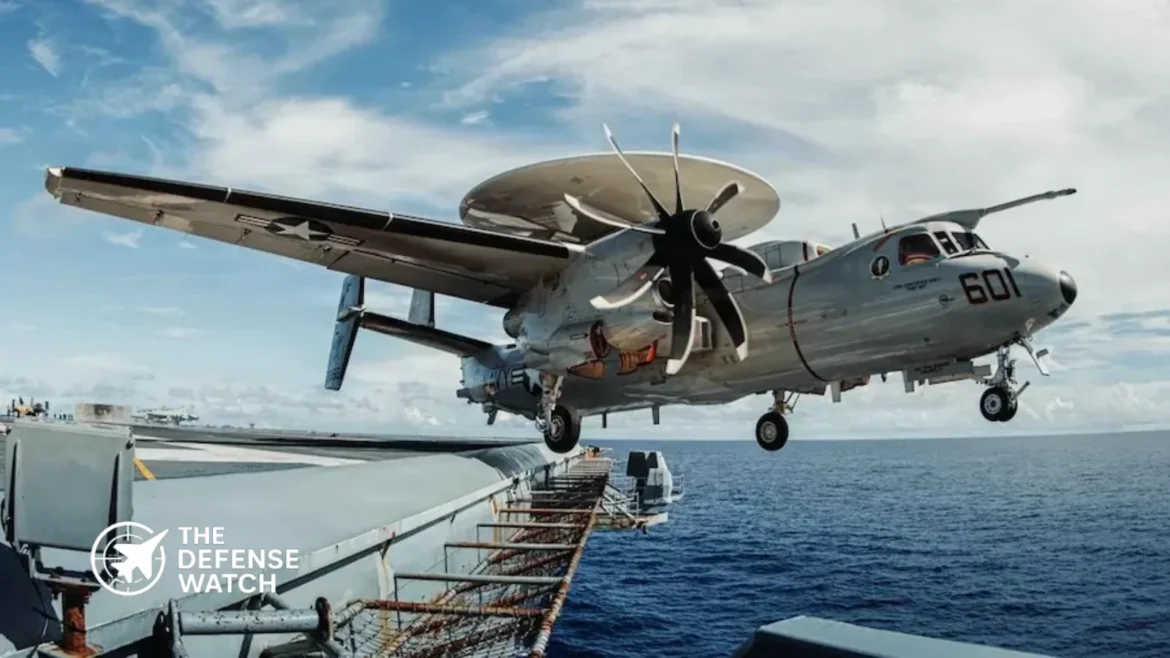
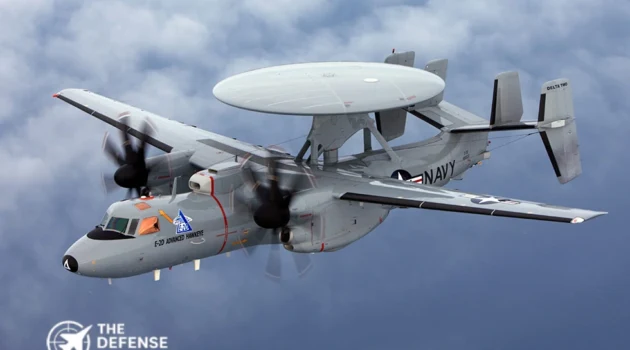
Northrop Grumman and the U.S. Navy have completed the E-2D Block II critical design review, moving the carrier-based airborne command-and-control aircraft into the next stage of modernization ahead of planned flight testing in fiscal 2029. The milestone was completed in May through cooperation between Northrop Grumman and the Navy’s E-2/C-2 Airborne Command & Control Systems Program Office, PMA-231.
Takeaways
The E-2D Block II is moving from design work toward physical aircraft modification and flight testing.
1. Critical Design Review Completed
Northrop Grumman and the U.S. Navy completed the E-2D Block II Critical Design Review in May 2026, establishing the finalized system design baseline.
2. Flight Testing Planned for FY2029
The program is now progressing toward aircraft modification and flight evaluation, with testing planned for fiscal 2029.
3. New Computing and Mission Architecture
Block II will introduce a modernized cockpit, greater computing capacity and an Open Mission Systems approach designed to simplify future technology insertion.
4. Cybersecurity and Software Resilience
The upgrade is intended to improve software resilience and cybersecurity while addressing component obsolescence across the aircraft’s mission systems.
5. Sustains the Navy’s Airborne Command Node
The modernization is intended to keep the E-2D effective as an airborne command-and-control platform supporting carrier strike groups and contested maritime operations.
The review established the finalized system product baseline and clears the program to proceed toward physical aircraft modifications. The Block II effort builds on the E-2D’s Delta System Software Configuration 6, or DSSC-6, and focuses heavily on computing, software architecture, cockpit modernization and cybersecurity.
The development is significant because the E-2D is not simply an airborne surveillance aircraft. The Navy uses the Advanced Hawkeye as an airborne command-and-control node that extends the sensor and decision-making reach of carrier strike groups.
What the E-2D Block II Will Change
Northrop Grumman describes the Block II modernization as an effort to keep the E-2D relevant against evolving threats well into the 2040s and beyond. The company says the upgrade will improve operational availability, software resilience and security, while strengthening interoperability.
The centerpiece is a modernized mission architecture based on an Open Mission Systems approach. Rather than relying as heavily on proprietary hardware and software interfaces, the architecture is intended to make it easier to introduce new technologies as requirements change.
That matters for an aircraft such as the E-2D because its value depends on its ability to collect, process and distribute information across a wider force. The aircraft must remain compatible with changing sensors, communications systems, weapons networks and other command-and-control nodes during a service life that can span decades.
Northrop Grumman says the Block II upgrade will also provide greater computing power and a new software foundation for faster capability insertion.
E-2D Block II Modernization
Area Block II objective Mission architecture Open Mission Systems approach Computing Increased processing capacity Cockpit Modernized cockpit architecture Software Faster capability insertion and improved resilience Cybersecurity Enhanced security architecture Human factors Reduced pilot workload Interoperability Improved integration with wider command-and-control networks Testing Flight testing planned for fiscal 2029 Why Open Architecture Matters
The most important aspect of Block II may be less visible than the aircraft’s radar or rotodome.
The Navy is increasingly treating software and computing architecture as central components of combat power. An aircraft that can receive new applications and processing capabilities without extensive redesign can potentially remain useful longer and reduce the disruption associated with technology refresh cycles.
The E-2D’s Block II architecture is therefore aimed at a recurring problem across modern military aviation: rapid technological change combined with long aircraft lifecycles.
A platform can remain structurally sound while its processors, displays, interfaces and software become obsolete. Open architecture provides a way to separate some future upgrades from the original design assumptions, allowing individual components and applications to evolve more quickly.
Northrop Grumman specifically identifies component obsolescence as one of the issues the Open Mission Systems approach is intended to address.
The E-2D’s Role in Carrier Operations
The E-2D Advanced Hawkeye is the U.S. Navy’s carrier-based airborne early warning and command-and-control aircraft. According to the Navy’s FY2026 budget documentation, the platform provides advance warning of approaching aircraft and surface forces, vectors interceptors and strike aircraft, supports area surveillance and communications relay, and contributes to theater air and missile defense operations.
The aircraft’s APY-9 radar is central to that mission. The Navy says the radar provides enhanced detection and tracking capability against advanced aircraft and cruise missile threats in overland, littoral and open-ocean environments.
That combination of sensing and command functions makes the E-2D particularly important to the carrier strike group. The aircraft can operate above and forward of the carrier formation, helping commanders build a wider picture of the battlespace and distribute information to other forces.
The Navy has also continued to expand the E-2D’s operational capabilities. In 2025, U.S. and French forces conducted aerial refueling testing involving French Rafale aircraft, A330 MRTT tankers and A400M aircraft. The testing demonstrated an additional way to extend E-2D endurance and operational reach.
Block II Builds on DSSC-6
The Block II effort is closely associated with the Navy’s DSSC-6 modernization program.
In September 2023, the Navy awarded Northrop Grumman an $845.5 million contract for DSSC-6. NAVAIR described the configuration as the most significant change to the E-2D platform since its introduction and said it would reduce pilot workload, improve situational awareness and add readiness, reliability and cybersecurity improvements.
DSSC-6 replaces existing navigation, controls, displays and tactical mission computing equipment with a modernized cockpit and mission-system architecture. NAVAIR said the architecture was intended to allow rapid integration of new capabilities, including non-proprietary applications from industry partners. Fleet fielding was scheduled to begin in 2028.
The latest design review represents the next step in that modernization path. Instead of remaining primarily a software and architecture development effort, Block II is now moving toward physical modification and eventual flight evaluation.
A Wider Navy Push to Modernize the E-2D
The Block II program is part of a broader effort to keep the E-2D fleet operationally relevant while improving readiness and supportability.
In April 2026, NAVAIR announced a $33 million contract with Northrop Grumman to integrate Precision Approach Landing Capability into the E-2D. The system is intended to improve carrier approaches during adverse weather, low visibility and nighttime operations.
NAVAIR has also been working on additional E-2D software and networking improvements. The PMA-231 program office identifies reduced pilot workload, improved situational awareness, readiness, reliability and cybersecurity as important elements of the broader modernization effort.
The Navy’s FY2026 procurement documentation lists a total E-2D program procurement baseline of 86 aircraft and identifies the Advanced Hawkeye as a key carrier-based airborne command, control and surveillance platform. The FY2026 request included funding for four E-2D aircraft.
What the 2029 Test Schedule Means
The move toward fiscal 2029 flight testing gives the Navy and Northrop Grumman several years to complete aircraft modifications, ground testing, systems integration and verification before the upgraded configuration is evaluated in flight.
That schedule is important because Block II changes more than individual components. It involves the interaction of cockpit systems, mission computing, software, communications, cybersecurity and the wider combat system.
The technical challenge is therefore not simply installing new equipment. Engineers must demonstrate that the upgraded architecture works reliably as an integrated system and that it can support the E-2D’s demanding carrier-based mission.
Flight testing will provide an opportunity to evaluate those changes under operationally relevant conditions and determine whether the upgraded configuration meets its requirements.
Why the Upgrade Matters for the Indo-Pacific
For U.S. naval forces, the timing is particularly relevant to operations in large maritime theaters such as the Indo-Pacific.
The E-2D provides airborne sensing and command-and-control reach beyond the immediate carrier formation. In a distributed maritime operation, that role becomes increasingly important because aircraft, ships, unmanned systems and other forces may need to share information across greater distances.
The Block II architecture is designed to help the aircraft remain adaptable as those networks evolve. The emphasis on open interfaces, computing capacity and cybersecurity reflects a broader shift in U.S. military modernization toward software-defined and networked combat systems.
The Navy’s objective is not to replace the E-2D’s basic role. Instead, the modernization seeks to ensure that the aircraft can continue performing that role as the surrounding force becomes more connected, distributed and technologically complex.
The Strategic Value of Keeping the Hawkeye Adaptable
The E-2D is a mature aircraft program, but its mission continues to evolve.
The Navy’s modernization strategy increasingly treats the aircraft as an airborne information and command node rather than simply a radar platform. That makes the ability to update its software, processors and interfaces a core requirement for long-term relevance.
Block II addresses that requirement through an architecture intended to make future upgrades easier. The approach could also reduce the impact of component obsolescence by making it less necessary to redesign the entire system when individual technologies reach the end of their useful lives.
Northrop Grumman says the modernization is intended to keep the E-2D adaptable into the 2040s and beyond.
The completion of the Critical Design Review is therefore an important program milestone, but it is not the end of development. The next major phase will involve aircraft modification, integration and testing before the Navy can assess the complete Block II configuration in flight.
With flight testing planned for fiscal 2029, the program has moved from defining the future architecture toward demonstrating that architecture on an operational aircraft.
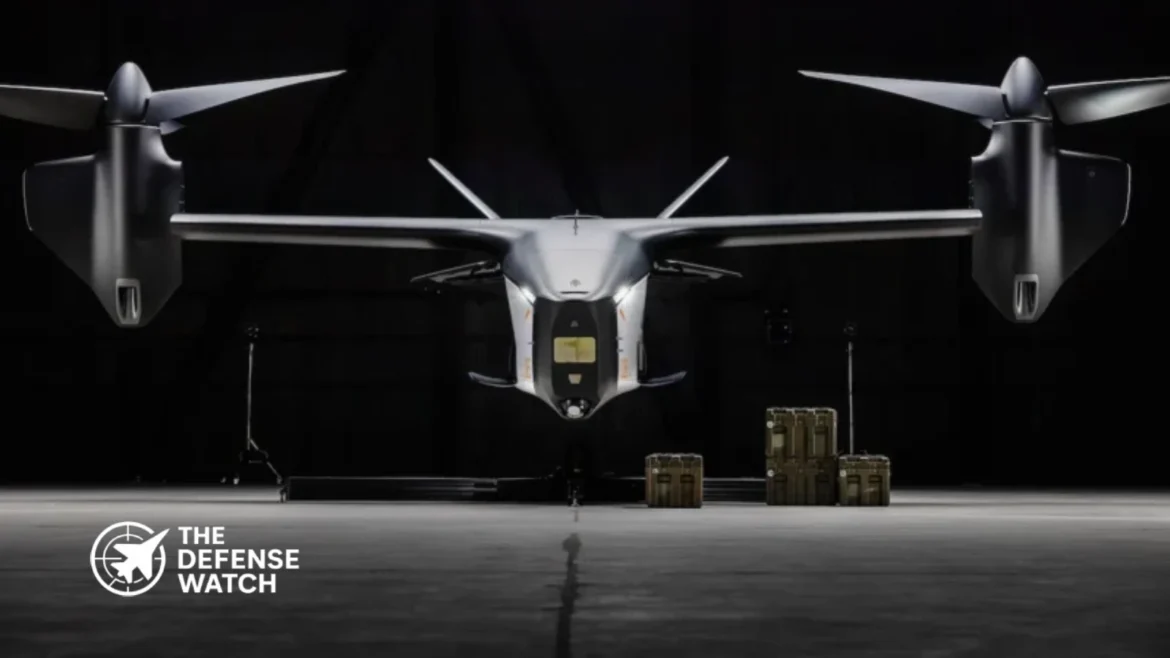
Elroy Air Inc. has received a $46.06 million firm-fixed-price Phase III Small Business Innovation Research contract from the U.S. Army to develop an autonomous Group IV hybrid vertical takeoff and landing unmanned aircraft system for modular multi-mission payload delivery. Army Contracting Command, Aberdeen Proving Ground, Maryland, is the contracting activity under contract W911QX-26-C-A016.
Takeaways
Elroy Air receives a major Army development award for autonomous heavy cargo operations
1. $46 Million Phase III Award
Elroy Air has received a $46.06 million firm-fixed-price Phase III SBIR contract from the U.S. Army for autonomous Group IV UAS development.
2. Autonomous Hybrid VTOL Aircraft
The program targets a hybrid-electric vertical takeoff and landing aircraft capable of delivering modular payloads with limited operator intervention.
3. $5.14 Million Initially Obligated
The Army obligated $5.135 million in FY2026 research, development, test and evaluation funding at award, about 11.2% of the contract’s total value.
4. Work Runs Through February 2029
All identified contract work will be performed in South San Francisco, California, with completion scheduled for Feb. 18, 2029.
5. Designed For Distributed Logistics
The aircraft’s VTOL architecture and modular payload concept are suited to logistics missions where conventional runways, crewed aircraft and exposed ground routes can create operational constraints.
The award runs through Feb. 18, 2029, with work to be performed in South San Francisco, California. The Army obligated $5.135 million in fiscal 2026 research, development, test and evaluation funding when the contract was awarded. The procurement notice states that the Army solicited bids through the internet and received one proposal.
The award represents a significant step for Elroy Air because Phase III SBIR work is intended to advance technology developed through earlier SBIR efforts toward government use and broader acquisition. Under Defense Federal Acquisition Regulation Supplement guidance, Phase III work derives from, extends or completes earlier SBIR or STTR efforts and is funded outside the traditional SBIR program structure.
Hybrid VTOL Design Targets Distributed Military Logistics
The Army’s interest centers on a class of unmanned aircraft substantially larger than the small tactical drones commonly used for reconnaissance and short-range missions. Under the Department of Defense UAS classification system, Group IV aircraft weigh more than 1,320 pounds and normally operate below 18,000 feet, although the classification is based on multiple operating characteristics rather than payload alone.
That distinction is important. A Group IV autonomous cargo aircraft is intended to move meaningful quantities of equipment rather than simply provide sensing or targeting data. The combination of vertical takeoff and landing, autonomous flight and modular payload handling can allow military units to establish aerial logistics links without building or relying on conventional runways at every destination.
Elroy Air’s Chaparral is the company’s principal autonomous cargo platform and closely matches the capabilities described in the Army award. The company describes Chaparral as a hybrid-electric VTOL aircraft designed for military resupply, with eight vertical-lift propellers and four forward-flight propellers. Current company specifications list a 500-plus-pound payload, 450-mile maximum range and 132 mph cruise speed.
The platform uses separate vertical and forward-flight propulsion arrangements. During takeoff and landing, the vertical rotors provide lift, while the aircraft transitions to wingborne flight for more efficient cruise operations. Elroy Air demonstrated autonomous transition from vertical flight to forward flight in 2025, reaching a reported 70 mph during those tests.
The modular payload concept is equally important for military use. Earlier Army SBIR work identified cargo pods that could carry supplies, sensors and fuel, with the aircraft autonomously locating and handling assigned pods using LiDAR-based perception and ultra-wideband identification technology.
That architecture gives the Army a potential logistics aircraft that can be configured around the mission rather than requiring a separate airframe for every payload category.
Contract Breakdown & Financial Allocation
$46.06 Million Total Contract Value
- Contract value: $46,058,871
- Contract type: Firm-fixed-price
- Acquisition pathway: Phase III Small Business Innovation Research
- Solicitation: Internet-based solicitation
- Proposals received: One
- Contract number: W911QX-26-C-A016
A firm-fixed-price contract places substantial cost and performance risk on the contractor. The government generally agrees to pay the established price for the defined work, while the contractor must manage its labor, materials and execution costs within that price.
$5.14 Million Initial Obligation
- FY2026 RDT&E obligation: $5,135,354
- Initial obligation as share of total contract value: approximately 11.2%
- Remaining contract value not initially obligated: approximately $40.92 million
The relatively small initial obligation compared with the contract ceiling indicates that the Army is not committing the full $46.06 million as an immediate cash outlay. Instead, funding is being obligated as authorized work progresses.
The funding is classified as research, development, test and evaluation, reinforcing that this award is centered on development and maturation rather than a straightforward production purchase.
South San Francisco Work Location
- Primary work location: South San Francisco, California
- Geographic allocation: 100% of identified contract work
- Estimated completion: Feb. 18, 2029
No foreign military sales funding, overseas work locations or separate international funding streams are identified in the award information.
From Earlier Army SBIR Work To Phase III
The new award follows a series of Army-supported development efforts involving Elroy Air’s Chaparral architecture.
In 2024, an Army Phase I SBIR award examined improvements to the aircraft’s lift capacity and utility, including skid landing gear for austere landing areas. That effort described a hybrid-electric autonomous VTOL aircraft capable of carrying approximately 300 to 400 pounds over more than 300 miles and using modular cargo pods.
A subsequent $1.9 million Army Phase II SBIR award, announced for Chaparral airdrop capability development, focused on integrating an airworthy cargo pod capable of delivering mission-relevant payloads. The effort included planned design and fabrication work followed by testing and validation of airdrop functions.
The timing of the new Phase III award is therefore significant. It comes after several years of technology maturation, including autonomous flight testing, cargo-pod integration and flight demonstrations. Elroy Air reported its first point-to-point cargo delivery with Chaparral in December 2025.
Industry Impact & Acquisition Insight
The Army’s award strengthens Elroy Air’s position in the emerging market for autonomous heavy-cargo aircraft. The company has also been pursuing commercial and dual-use applications, while expanding its manufacturing strategy with Kratos Defense & Security Solutions. In 2026, Elroy Air announced a proposed transaction that would provide capital for scaled Chaparral production, subject to closing conditions.
For the Army, the more important issue is whether the technology can transition from a technically successful aircraft into a repeatable logistics capability. Autonomous cargo aircraft have to solve more than flight autonomy. They must demonstrate reliable navigation, communications, cargo handling, maintenance, airspace integration, cyber resilience and safe operations around deployed forces.
The modular architecture could also prove important in contested logistics environments. A single aircraft capable of carrying different payload modules could support resupply, specialized equipment delivery, sensor carriage or other missions without requiring an entirely new air vehicle for each role. Earlier Army SBIR work specifically examined the use of modular pods for supplies, sensors and fuel.
The award also reflects a broader shift in military aviation toward autonomous logistics. The Army does not necessarily need unmanned cargo aircraft to replace every crewed transport or helicopter. Their value may instead come from performing repetitive or hazardous resupply missions while reducing exposure of pilots and ground convoys.
For Elroy Air, the next challenge is translating an established prototype into a system that can meet military reliability, maintainability and operational test requirements. The Phase III award gives the company a multi-year pathway to do that, with the program now scheduled to run into 2029.
USSOCOM OA-1K Skyraider II Fleet Set To Reach 31 Aircraft
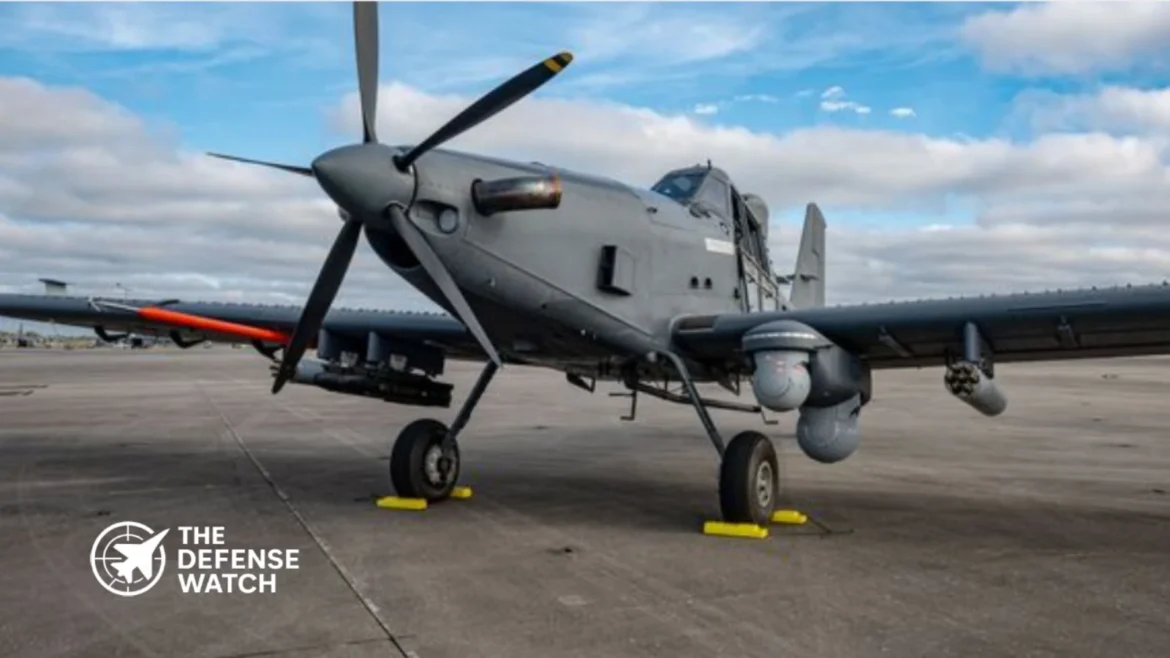
The USSOCOM OA-1K Skyraider II fleet is on track to reach 31 aircraft by the end of fiscal year 2026, as U.S. Special Operations Command prepares to receive 11 additional aircraft for Air Force Special Operations Command.
Takeaways
USSOCOM is expanding its OA-1K Skyraider II fleet while reducing the program’s long-term planned size.
1. 31 Aircraft By FY 2026
USSOCOM expects to receive 11 additional OA-1K aircraft by the end of FY 2026, raising the total fleet to 31.
2. 53-Aircraft Program
The FY 2027 budget request reduces the planned OA-1K fleet from 62 to 53 aircraft, down from the original 75-aircraft requirement.
3. Armed Overwatch Mission
The Skyraider II is intended to conduct close air support, precision strike and armed ISR for special operations forces in austere environments.
4. Six Aircraft In FY 2026
USSOCOM’s FY 2026 procurement request funded six OA-1K aircraft, compared with 12 planned for FY 2025.
5. Procurement Continues Into FY 2029
The current acquisition plan continues procurement beyond FY 2026, although the FY 2027 budget requests only two additional aircraft.
USSOCOM currently has 20 OA-1K aircraft associated with the Armed Overwatch program, according to U.S. Air Force officials cited by Janes. The command told Janes that another 11 aircraft are expected to be delivered by the end of FY 2026.
The planned deliveries represent an important step in fielding a new crewed aircraft designed specifically for special operations missions that require persistent presence, close air support, armed intelligence, surveillance and reconnaissance, and precision strike capability.
The OA-1K, also known as the Skyraider II and based on the Air Tractor AT-802 airframe, was selected by USSOCOM in 2022 as the winner of the Armed Overwatch competition. L3Harris is responsible for the military aircraft configuration and associated mission systems.
Program Size Has Been Reduced
While the near-term fleet is expanding, USSOCOM has reduced the overall size of the program.
The command originally planned to acquire 75 OA-1K aircraft. That requirement was subsequently reduced to 62 aircraft, and the FY 2027 budget request lowers the planned fleet again to 53 aircraft. The Pentagon describes the reduction as a strategic reallocation of resources to support USSOCOM’s changing priorities.
The change is significant because the OA-1K program was established around the requirements of irregular warfare. USSOCOM is now balancing the Skyraider II against other aviation, intelligence and unmanned capabilities as the force prepares for a wider range of operational environments.
The FY 2027 procurement documents show two OA-1K aircraft requested for FY 2027, followed by four in FY 2028 and two in FY 2029. The documents also state that funding for the aircraft transitions into a dedicated Skyraider II procurement line beginning in FY 2027.
Six OA-1Ks Funded For FY 2026
USSOCOM’s FY 2026 procurement request funded six OA-1K aircraft at a total program cost of approximately $156.6 million, including associated procurement elements. The FY 2026 request reduced the annual buy from 12 aircraft to six.
The reduction does not mean the aircraft is being abandoned. Instead, current procurement plans show a slower path toward the revised fleet objective.
The FY 2027 budget documents identify the OA-1K as a multi-role platform capable of operating in austere locations while supporting close air support, precision strike and armed ISR. The aircraft combines sensors, communications equipment and precision weapons to support geographically isolated special operations forces.
That mission profile remains central to the aircraft’s value.
Designed For Austere Special Operations
The OA-1K is intended to provide a relatively small and deployable aircraft option for missions that do not require a high-end fighter or larger special operations gunship.
USSOCOM’s 2026 fact book lists the aircraft’s primary function as armed overwatch. It gives the OA-1K an empty weight of approximately 7,836 pounds and a gross weight of about 16,000 pounds. The aircraft can carry up to 6,000 pounds of payload across 10 hardpoints.
The aircraft’s design also emphasizes expeditionary operations.
In May 2026, Air Force Special Operations Command disclosed that the Skyraider II can be rapidly disassembled and transported inside a larger aircraft. Once moved to another location, the aircraft can be reassembled and returned to an operational configuration. AFSOC said the capability is intended to improve expeditionary agility and help overcome long distances between operating locations.
This feature gives the platform a different deployment model from conventional combat aircraft that normally require established airfields and extensive ground infrastructure.
Transition From Legacy ISR Aircraft
The OA-1K program is also connected to USSOCOM’s broader aviation modernization effort.
The FY 2027 budget documents identify reductions in support for the U-28A as aircrews transition toward the OA-1K program. The same budget request calls for the divestment of the command’s long-endurance aircraft capability by the end of FY 2026.
That transition places additional importance on how USSOCOM integrates the Skyraider II with other manned and unmanned systems.
The command’s FY 2026 research and development documents also included mixed-reality training development for OA-1K aircrew and maintenance personnel, indicating that training infrastructure is being developed alongside the aircraft fleet.
What The 31-Aircraft Milestone Means
Reaching 31 aircraft by the end of FY 2026 would put USSOCOM more than halfway toward its revised 53-aircraft program objective.
The milestone therefore represents two developments at the same time. First, the Armed Overwatch concept is moving from procurement into a larger operational fleet. Second, the overall program is becoming smaller than originally envisioned.
That distinction is important when assessing the future of the OA-1K.
The aircraft continues to receive funding and planned deliveries, but procurement rates have slowed. USSOCOM’s current budget plan points toward a more selective fleet structure rather than the 75-aircraft force originally envisioned.
The program’s future will consequently depend on how effectively the OA-1K fills its intended role alongside special operations helicopters, fixed-wing aircraft and unmanned systems.
For now, the immediate objective remains clear: USSOCOM expects to bring its OA-1K inventory to 31 aircraft by the end of FY 2026, providing AFSOC with a growing fleet dedicated to armed overwatch, close air support, armed ISR and precision strike missions.
Executive Summary: U.S. Central Command imagery released through DVIDS shows a U.S. Air Force F-16 operating in the CENTCOM area of responsibility with an apparent eight-weapon GBU-39/B Small Diameter Bomb load. The configuration uses two BRU-61/A four-place carriages while retaining external fuel, targeting equipment and air-to-air missiles, demonstrating how the F-16 can generate a high density of precision effects without being configured solely as a strike aircraft.
U.S. F-16 Carries Eight GBU-39/Bs in CENTCOM
The F-16 GBU-39/B loadout revealed in recent U.S. Central Command imagery provides a clear example of how the Air Force is increasing precision strike capacity from an established fourth-generation fighter. U.S. Air Forces Central released imagery through the Defense Visual Information Distribution Service showing an F-16 receiving fuel from a KC-135 Stratotanker in the CENTCOM area of responsibility on August 7, with the imagery released August 13.
The aircraft appears to carry two BRU-61/A smart pneumatic carriages, each holding four GBU-39/B Small Diameter Bombs. That produces an apparent total of eight precision-guided weapons on one fighter.
The configuration is notable because the F-16 does not appear to be dedicated exclusively to ground attack. The aircraft also carries external fuel, targeting equipment and a mixed air-to-air weapons load, preserving capabilities needed for a multirole mission.
What the Eight-Bomb Configuration Provides
The GBU-39/B was designed around a simple operational requirement: increase the number of precision weapons that a fighter can carry without consuming a proportional number of weapons stations.
The U.S. Air Force describes the SDB as a 250-pound-class, all-weather, day-or-night guided air-to-surface weapon using GPS and inertial navigation. The Air Force lists a range of more than 40 nautical miles and says the weapon is intended for high-priority fixed and stationary targets.
Boeing’s published SDB specifications list the weapon at approximately 268 pounds and 70.8 inches long. The company also identifies the BRU-61/A as a four-weapon carriage, allowing four SDBs to occupy a single compatible aircraft weapons station.
Capability GBU-39/B SDB Weapon class 250-pound-class guided munition Weight About 268 pounds Length About 70.8 inches Guidance GPS/INS Published range More than 40 nautical miles Carriage BRU-61/A, four weapons Apparent F-16 load Eight GBU-39/Bs Primary target type Fixed and stationary targets Eight weapons do not necessarily mean eight targets in every mission. Actual employment depends on target planning, rules of engagement, weapon availability, aircraft configuration and the quality of target coordinates.
The important point is the potential number of precision effects available from a single aircraft. Compared with a conventional load of larger weapons, the SDB’s compact design allows the F-16 to carry more individually guided weapons while retaining other mission equipment.
Why the BRU-61/A Matters
The BRU-61/A carriage is central to the configuration. Instead of mounting each GBU-39/B individually, the four-place carriage groups four weapons into a single carriage assembly.
The Air Force identifies the smart carriage as a system capable of carrying four 250-pound-class guided munitions. Boeing likewise describes the four-weapon carriage as a major part of the SDB’s ability to increase the number of precision weapons carried by a combat aircraft.
Two such carriages therefore provide eight weapons while allowing the F-16 to retain additional stations for other stores.
That creates what can be described as precision-strike density. The aircraft does not need to become physically larger to increase the number of available precision effects.
This distinction matters in sustained air operations. Aircraft numbers are finite, and each sortie involves fuel, maintenance, crews and support assets. Increasing the number of precision weapons carried per sortie can raise the number of targets a force can potentially service without increasing aircraft numbers at the same rate.
The F-16 Remains a Multirole Platform
The CENTCOM aircraft is particularly significant because the visible loadout combines strike weapons with systems associated with targeting and self-defense.
Army Recognition’s assessment of the imagery identifies an apparent LITENING targeting pod and AN/ASQ-213 HARM Targeting System, or HTS, along with two external fuel tanks and apparent AIM-120 AMRAAM and AIM-9 Sidewinder missiles. These identifications are based on visual assessment of the released imagery rather than an official detailed U.S. description of every store.
The distinction is important. The GBU-39/B is not an anti-radiation missile and does not home on radar emissions.
The HTS, where carried, supports the detection, identification and geolocation of hostile radar emitters. The LITENING pod provides electro-optical and infrared sensing and targeting functions. Together, these systems can support a broader targeting architecture in which information from different sensors contributes to the development of target coordinates.
That does not mean the photographed aircraft was necessarily conducting a specific suppression or destruction of enemy air defenses mission. The imagery alone cannot establish the aircraft’s tasking.
It does show, however, that the F-16 can combine precision strike weapons with sensors and electronic-support equipment rather than operating as a simple bomb carrier.
Tanker Support Adds Operational Flexibility
The aircraft was photographed receiving fuel from a KC-135 Stratotanker, providing another important part of the configuration.
Aerial refueling is particularly relevant when an F-16 carries external fuel and multiple mission systems. Tanker support can extend the aircraft’s time and distance available for operations, although the precise effect depends on the mission profile, fuel state, weather and other operational factors.
U.S. Central Command and Air Forces Central have repeatedly documented KC-135 support for F-16 operations in the theater. DVIDS imagery from April and June 2026 also shows F-16s receiving tanker support during CENTCOM operations.
The combination of tanker support, external fuel and air-to-air missiles is therefore significant. It indicates that the aircraft can remain part of a broader tactical air operation while carrying a substantial precision strike load.
From Four SDBs to Eight
The latest imagery also provides an interesting comparison with another F-16 configuration previously observed in the CENTCOM region.
Army Recognition reported in August that an F-16 photographed on July 17 appeared to carry one BRU-61/A with four GBU-39/Bs, alongside rocket launchers, HTS and LITENING equipment, external fuel and air-to-air missiles. The newly released imagery appears to show a second BRU-61/A, increasing the apparent SDB load from four weapons to eight.
That difference illustrates how the same aircraft can be configured for different mission priorities.
A mixed weapons load can provide greater effector diversity, while two SDB carriages place more emphasis on precision-strike capacity. Neither configuration is inherently superior. The appropriate load depends on the target set and the tactical situation.
The ability to change the balance between sensors, weapons, fuel and self-defense equipment is one of the enduring characteristics of the F-16 platform.
What This Means for U.S. Airpower
The significance of the eight-GBU-39/B configuration extends beyond the number of bombs carried by one aircraft.
The F-16 first entered U.S. service decades ago, but its continued integration with precision weapons, targeting systems, electronic-support equipment and modern mission planning allows the platform to remain useful in contemporary operations.
The GBU-39/B supports that approach because its relatively small size enables more weapons to be carried on a fighter. The Air Force specifically identifies increased aircraft loadout, reduced logistical requirements and improved sortie-generation efficiency among the weapon’s advantages.
The result is a different form of combat mass. Instead of relying only on larger numbers of aircraft, a force can increase the number of precision effects generated by each sortie.
For CENTCOM, where U.S. aircraft routinely operate across a large geographic area and must balance strike, air defense, reconnaissance and force protection requirements, that flexibility has practical value.
The imagery also illustrates why legacy platforms continue to receive attention even as the Air Force fields fifth-generation fighters. An F-16 equipped with modern sensors, precision weapons, communications and tanker support can perform missions that require a combination of range, weapons capacity and multirole flexibility.
The Limits of the GBU-39/B
The eight-weapon configuration should not be interpreted as a universal replacement for heavier precision weapons.
The GBU-39/B is optimized around a relatively small, guided munition and is primarily intended for fixed and stationary targets. Boeing describes it as a weapon capable of attacking targets including command facilities, air-defense assets, airfields, fuel sites, missiles and artillery positions.
Target hardness, desired effects and the need for greater warhead mass can dictate the use of other weapons.
The SDB’s value is therefore not simply its explosive payload. Its operational advantage comes from the combination of precision, compact dimensions, standoff capability and the ability to carry multiple weapons on one fighter.
That makes the GBU-39/B particularly useful when commanders need multiple precision effects against a distributed set of suitable targets.
A Mature Fighter Gains Greater Strike Density
The latest CENTCOM imagery offers a useful snapshot of how the U.S. Air Force continues to extract additional combat utility from the F-16.
An apparent eight GBU-39/B load gives one fighter a significantly greater precision-strike inventory than a four-weapon SDB configuration, while the aircraft retains fuel, targeting equipment and air-to-air weapons. The aircraft can therefore remain part of a multirole package rather than being configured exclusively for ground attack.
The broader lesson is about weapons integration rather than the F-16 alone. Compact precision munitions allow existing fighters to generate more individual effects per sortie, while sensors and tanker support help preserve the aircraft’s broader mission flexibility.
For U.S. air operations in the Middle East, the configuration demonstrates how precision weapons, targeting systems, aerial refueling and established fourth-generation aircraft can be combined to produce greater strike capacity from each available fighter.
As the Air Force continues to balance legacy platforms with newer aircraft, the eight-GBU-39/B F-16 provides a concrete example of how weapon integration can increase the effectiveness of an existing fleet without requiring a new aircraft design.
Executive Summary: A Spanish F-18 operating under NATO’s enhanced Air Policing mission shot down an unidentified drone after it entered Romanian airspace early August 16 near Galați, close to the Moldovan border. The engagement was the fourth drone shootdown reported over Romania this year and underscores the growing burden on NATO fighters and air-defense networks along the alliance’s eastern flank.
Spanish F-18 Shoots Down Drone Over Romania
A Spanish F-18 fighter has shot down a drone that breached Romanian airspace, marking the latest confrontation involving an unmanned aircraft near NATO’s eastern frontier. Romania’s Ministry of National Defence said the target was detected early Sunday, August 16, and was intercepted after entering Romanian territory from the direction of Moldova.
The incident occurred near Galați, approximately 24 kilometers north of the city, according to Romanian authorities cited by Reuters. The drone was destroyed at about 5:01 a.m. local time, with debris falling in an uninhabited area between Băleni and Cudalbi in Galați County. No injuries or significant property damage were reported.
Romania has not publicly established the launcher’s identity for the latest drone. Early reporting has described it as suspected Russian, but the investigation remains underway. That distinction is important because drones operating around the Ukraine conflict have crossed NATO airspace for different reasons, including possible navigation disruption and loss of control.
Two Spanish F-18s Were Scrambled
Two Spanish F-18s deployed to Romania were scrambled after the drone was detected. The aircraft were already assigned to NATO’s enhanced Air Policing mission and were operating from Mihail Kogălniceanu Air Base on Romania’s Black Sea coast.
Spain deployed its Paznic tactical air detachment to Romania in late July. The current deployment includes about 200 personnel, seven F-18M fighters, an A400M transport aircraft during the first part of the mission, and three NH-90 helicopters scheduled for the final phase, with the helicopters assigned in part to counter-uncrewed-aircraft missions.
The Spanish deployment is scheduled to support NATO’s enhanced Air Policing mission for four months. Its location at Mihail Kogălniceanu gives NATO a forward fighter presence close to the Black Sea and the Ukrainian border.
The choice to use a fighter against a drone also illustrates a difficult operational problem. A fast jet provides the speed, sensors and weapons needed for a rapid response, but routinely using high-end fighter aircraft against inexpensive unmanned systems can impose substantial costs in fuel, maintenance, flight hours and readiness.
How NATO’s Air Policing Command Chain Works
The interception was not simply a national Romanian response. It took place inside NATO’s Integrated Air and Missile Defence System, which connects surveillance sensors, command centers, national control facilities and Quick Reaction Alert aircraft.
NATO’s Allied Air Command, headquartered at Ramstein Air Base in Germany, oversees the alliance’s Air Policing mission. The mission operates around the clock and is ultimately conducted under the responsibility of the Supreme Allied Commander Europe.
For Romania, NATO’s command-and-control architecture has a particularly important role. The Combined Air Operations Centre at Torrejón, Spain, coordinates Air Policing activities in the southern part of NATO’s European airspace, while Romanian Control and Reporting Centres provide the local tactical picture and control aircraft operating in Romanian airspace.
NATO describes the CAOCs as responsible for planning, directing, coordinating, monitoring and reporting Air Policing operations. Quick Reaction Alert fighters remain ready to launch when surveillance systems identify an unknown, potentially unsafe or otherwise suspicious aircraft.
A previous NATO operation in Romania illustrates the process. In April 2025, the CAOC at Torrejón issued an Alpha-Scramble order after a potential threat was detected. Italian Eurofighters and Romanian F-16s subsequently operated under the direction of Romania’s Control and Reporting Centre.
That architecture matters because a drone crossing a national border can move faster than traditional political decision-making. NATO’s Air Policing system is designed to shorten the distance between detection, identification, authorization and interception.
Romania Has Faced Repeated Drone Incursions
The August 16 shootdown follows a series of increasingly serious drone incidents in Romanian airspace.
Romanian officials reported in May that a Russian Geran-2 drone entered Romanian territory and crashed onto an apartment building in Galați, injuring two people. A subsequent technical investigation identified the system as a Russian-made Geran-2, a one-way attack unmanned aircraft.
Romania has also used its own F-16 fighters during previous airspace incidents. In July, Romanian authorities reported two separate drone shootdowns within successive days, with Romanian F-16s and allied aircraft involved in the response.
The Romanian Defence Ministry said in May that 14 incidents involving Russian drones entering Romanian airspace had been recorded since the beginning of 2026 at that point, including three involving drones carrying explosive charges.
The August incident therefore represents more than an isolated encounter. It is part of a sustained air-defense challenge facing a NATO member positioned directly alongside the war zone.
The Eastern Flank Is Becoming a Counter-Drone Test
Romania is not facing this problem alone.
On August 14, an Italian NATO fighter shot down a drone that entered Latvian airspace. Italian Eurofighters and Turkish F-16s were involved in the response, while authorities investigated the origin of the unmanned aircraft.
Earlier incidents this year also involved drones entering the airspace of Estonia, Latvia, Lithuania and Finland. Some of those cases have been associated with Ukrainian military drones whose navigation may have been affected by Russian electronic warfare, although the circumstances differ from incident to incident.
Bulgaria has also experienced a recent incident. On August 8, a drone believed to be Ukrainian crossed from Romania into Bulgarian airspace and exploded near infrastructure associated with the Trans-Balkan gas pipeline. Bulgarian authorities said the incident appeared accidental and was not believed to have been intentional.
Taken together, these incidents demonstrate why NATO increasingly treats small unmanned aircraft as an air-defense problem rather than simply an aviation nuisance.
Why Fighter Interceptions Are Operationally Significant
The immediate advantage of using an F-18 is responsiveness. A fighter can cover substantial distances quickly, climb above low-altitude threats and use its onboard sensors to identify and engage an aircraft before it reaches populated areas.
The challenge is efficiency.
Small drones can be considerably cheaper than the fighter aircraft, air-to-air weapons and support infrastructure used to intercept them. NATO officials have therefore increasingly emphasized the need for dedicated counter-drone capabilities rather than relying exclusively on traditional fighter interceptors.
NATO Secretary General Mark Rutte highlighted this issue in June, saying the alliance needed to deploy more counter-drone technology so that it would become less dependent on expensive traditional interceptors. He also pointed to the Eastern Sentry effort as a mechanism for improving cooperation from the Black Sea and Türkiye through Romania and Bulgaria and toward the Baltic and High North regions.
This points toward a layered model for NATO’s eastern defenses.
Layer Primary Function Ground and airborne sensors Detect and track low-altitude targets Control and Reporting Centres Build the recognized air picture and direct aircraft NATO CAOCs Coordinate regional Air Policing and interception missions QRA fighters Rapid identification and engagement Ground-based air defenses Defend key areas against aircraft, missiles and drones Counter-UAS systems Provide lower-cost responses to smaller drones Electronic warfare Disrupt or defeat selected unmanned systems The objective is not to replace fighters. It is to ensure that expensive fighter aircraft remain available for threats that genuinely require their capabilities.
Why Romania Matters to NATO
Romania occupies a critical position on NATO’s southeastern flank. Its territory borders Ukraine, Moldova and the Black Sea region, putting Romanian airspace close to an active combat zone where Russian and Ukrainian forces conduct large-scale drone operations.
Mihail Kogălniceanu has consequently become an important hub for allied air operations in the region. NATO has used the base for enhanced Air Policing deployments involving several allied air forces, while Romania continues to operate its own F-16s.
The base also provides NATO with a forward location for surveillance and rapid response. Its importance extends beyond Romania because air incidents near the Black Sea can quickly become multinational problems.
For Washington and other NATO capitals, the lesson is straightforward. Eastern-flank air defense increasingly requires a network capable of detecting low-cost unmanned systems, determining whether they are hostile or accidentally diverted, and responding proportionally before they reach civilian areas or critical infrastructure.
What Happens Next
Romanian authorities are investigating the wreckage from the latest drone to establish its origin and characteristics. Until that investigation is complete, attributing the launch of the aircraft should be treated cautiously.
The broader pattern, however, is already clear. NATO aircraft are increasingly being called upon to respond to unmanned systems crossing the alliance’s borders, while member states are developing additional counter-drone measures to reduce the pressure on high-end fighter fleets.
The Spanish F-18 engagement therefore has significance beyond the individual drone. It demonstrates that NATO’s Air Policing architecture can move from detection to fighter interception in a matter of minutes, while also exposing a central challenge for European air defense: how to protect large areas of allied territory against growing numbers of relatively inexpensive unmanned threats without consuming disproportionate amounts of high-value combat aviation resources.
As drone warfare continues to shape the security environment around the Black Sea and Baltic regions, that balance between fighter readiness, ground-based defenses, electronic warfare and dedicated counter-UAS systems will remain a central issue for NATO’s eastern-flank posture.
Executive Summary: RAF Typhoon fighters launched from RAF Lossiemouth on Friday night after an unidentified aircraft approached UK airspace. An RAF Voyager tanker supported the Quick Reaction Alert mission, but the aircraft remained far enough away that no interception was required.
RAF Typhoons Scrambled North of Scotland
RAF Typhoons scrambled north of Scotland on Friday night after an unidentified aircraft approached UK airspace, according to the UK Defence Journal. The fighters launched from RAF Lossiemouth in Moray as part of the Royal Air Force’s Quick Reaction Alert, or QRA, system. An RAF Voyager tanker also took part in the sortie.
The aircraft that triggered the response remained sufficiently distant from the UK that the Typhoons did not conduct an interception. The RAF aircraft were subsequently observed returning to base.
The incident demonstrates the purpose of the QRA system, which keeps fighter aircraft and crews at high readiness to respond rapidly when an unidentified or potentially concerning aircraft is detected near UK airspace.
How The Quick Reaction Alert System Works
The UK maintains QRA forces at RAF Lossiemouth and RAF Coningsby. Lossiemouth is responsible for the northern approaches to the United Kingdom, including Scotland, while Coningsby provides coverage for the south.
The RAF says its QRA Typhoons remain on standby around the clock. When an aircraft is detected that cannot immediately be identified or whose behavior requires investigation, information from military and civilian surveillance systems can be assessed before a decision is made to launch fighters.
The RAF’s published QRA process involves surveillance and command elements including the Control and Reporting Centre at RAF Boulmer and the National Air and Space Operations Centre. Once authorization is given, pilots at the appropriate QRA station can be ordered to launch.
Importantly, a QRA launch does not automatically mean that an aircraft has violated sovereign UK airspace.
The RAF explains that fighters can be dispatched to identify an aircraft, establish communications, monitor its movements, or escort it if required. An interception may ultimately be unnecessary if the aircraft changes course or remains outside the area where direct engagement is required.
That distinction is important in the latest incident. The available reporting does not identify the aircraft involved or establish that it entered UK sovereign airspace. The UK Defence Journal reported only that the aircraft was approaching UK airspace and remained sufficiently distant for an interception not to take place.
RAF Lossiemouth Remains Key To Northern Air Defense
RAF Lossiemouth has a central role in Britain’s northern air defense posture.
The station, located in Moray in northeastern Scotland, is one of two RAF QRA bases protecting UK airspace. It is home to four Typhoon squadrons alongside the RAF’s P-8A Poseidon maritime patrol aircraft capability.
The RAF specifically notes that normal Typhoon flying from Lossiemouth generally takes place during daytime and evening hours, but QRA aircraft remain on standby 24 hours a day and can launch without notice.
That helps explain why unusual aircraft activity can occur outside normal scheduled flying periods.
The station’s geographic position is also significant. Lossiemouth provides a northern base from which RAF fighters can respond to activity around Scotland, the North Atlantic and approaches to the United Kingdom.
The UK government has previously described Lossiemouth as the northern QRA station and highlighted its role in responding to unidentified aircraft and potential threats.
Voyager Tanker Adds Endurance
The involvement of an RAF Voyager tanker provides an additional indication of how the QRA force can be supported during longer-range sorties.
Voyager is the RAF’s air-to-air refueling and strategic air transport aircraft. Its tanker capability allows compatible aircraft such as the Typhoon to receive fuel while airborne, extending their endurance and operational reach.
For northern air-defense missions, this capability can be particularly useful because aircraft detected well away from the UK may require fighters to remain airborne for an extended period while the situation is assessed.
In the latest incident, the Voyager was airborne in support of the Typhoons, according to open-source flight tracking information cited by the UK Defence Journal. The publication reported that the Typhoon departed Lossiemouth on a north-easterly heading while the tanker was also airborne.
Typhoon Remains Central To RAF Air Defense
The Eurofighter Typhoon FGR4 is the RAF’s primary fighter for QRA duties in the United Kingdom.
The aircraft was developed as an air-superiority fighter but has evolved into a multirole platform capable of performing air defense, strike and other missions. The RAF says Typhoon continues to play a major role in UK QRA operations as well as NATO air-policing missions.
For air-defense missions, RAF Typhoons can employ weapons including the Advanced Short Range Air-to-Air Missile and Meteor beyond-visual-range air-to-air missile. The aircraft is also equipped with sensors and radar designed to support detection, tracking and identification of airborne targets.
The latest RAF Typhoons scrambled north of Scotland incident therefore fits into an established UK air-defense framework rather than representing a new type of mission.
What The Incident Shows
The key point is that the QRA system is designed to respond before an unidentified aircraft necessarily becomes a direct threat to UK territory.
The fighters were launched, supported by a tanker, and prepared to investigate the aircraft. Because the target remained sufficiently distant, an interception was ultimately not required. That outcome illustrates one of the principal functions of QRA: maintaining the ability to investigate potential concerns quickly while avoiding unnecessary escalation.
It also demonstrates the importance of maintaining fighters at readiness in Scotland. RAF Lossiemouth’s location gives the UK a standing fighter presence positioned close to the country’s northern approaches.
There is no evidence in the available reporting that the unidentified aircraft entered British sovereign airspace, nor has the UK Defence Journal publicly identified it. Those details should not be inferred beyond the information currently available.
For readers tracking UK and NATO air activity, the episode is another example of how fighter aircraft, surveillance networks and tanker support work together to maintain continuous air-defense coverage.