

Takeaways
What the DGMO-level communication reveals about the May 2025 India-Pakistan confrontation
1. Pakistan Initiated The May 10 Contact
India said Pakistan’s DGMO, Maj. Gen. Kashif Abdullah, contacted Indian DGMO Lt. Gen. Rajiv Ghai at about 3:35 p.m. on May 10, 2025, proposing that the two sides cease hostilities.
2. Fighting Halted At 5 P.M.
The two sides agreed to stop cross-border firing and air intrusions, with the arrangement taking effect at 5 p.m. Indian Standard Time on May 10.
3. The Exact Plea Came Later From Modi
Lt. Gen. Ghai publicly described the Pakistani proposal as a request to cease hostilities. The more dramatic wording that Pakistan allegedly said, “Please stop, we’ve had enough,” was later used by Prime Minister Narendra Modi in Parliament.
4. The Confrontation Involved Multiple Domains
The escalation included missile and drone attacks, air-defense engagements, artillery fire and strikes against military infrastructure. Indian and Pakistani accounts differ substantially over the damage inflicted.
5. The Ceasefire Was Not An End To Tensions
The May 10 understanding halted military action, but both countries subsequently reported violations and maintained heightened military readiness along the border.
Operation Sindoor Put DGMO Communications At The Center Of The Ceasefire
Operation Sindoor ended its most intense phase on May 10, 2025, after Pakistan’s Director General of Military Operations contacted India’s Lt. Gen. Rajiv Ghai and proposed an end to hostilities.
The communication provided a direct military channel between the two nuclear-armed neighbors at a point when missile, drone and artillery exchanges had created a serious risk of further escalation.
According to Ghai’s account, the Pakistani DGMO contacted him at approximately 3:35 p.m. on May 10. The call resulted in an understanding that cross-border firing and air intrusions would cease from 5 p.m. that day. Indian media reports identified Pakistan’s DGMO at the time as Maj. Gen. Kashif Abdullah.
The Indian government has subsequently described the contact as the mechanism through which Pakistan sought to halt the fighting.
However, an important distinction is needed when reporting the often-repeated quote that Pakistan allegedly told India, “Sir, having hit so many BrahMos missiles at us, you should now be satisfied, and we can bring this to a stop.””
That wording was not the wording publicly attributed to Lt. Gen. Ghai in his May 11 briefing. Ghai said his Pakistani counterpart had proposed that the two sides “cease hostilities.” The more detailed wording was later publicly presented by Prime Minister Narendra Modi during a parliamentary discussion on Operation Sindoor.
That distinction matters for accurate reporting.
What Lt. Gen. Rajiv Ghai Revealed
During the May 11 military briefing, Ghai outlined the sequence of communications that led to the cessation of military activity.
He said the Pakistani DGMO contacted him on May 10 and proposed that hostilities be stopped. The understanding took effect at 5 p.m., covering cross-border firing and air intrusions. The two sides also agreed to communicate again to discuss arrangements supporting the understanding.
The following day, the Indian and Pakistani DGMOs held another conversation. Indian authorities said the discussion focused on maintaining the commitment that neither side would fire or initiate aggressive action and on measures to reduce troop alert levels along the border.
The sequence illustrates the role of military-to-military communication in controlling escalation. Rather than relying exclusively on political channels, the DGMOs were able to establish an immediate mechanism for stopping battlefield activity.
Operation Sindoor Escalated Beyond The Initial Strikes
India launched Operation Sindoor during the night of May 6-7, 2025, following the April 22 terrorist attack in Pahalgam, Jammu and Kashmir, in which 26 people were killed.
India’s Ministry of Defence said the initial operation targeted nine locations associated with terrorist infrastructure in Pakistan and Pakistan-administered territory. The government initially characterized the strikes as focused, measured and non-escalatory and said Pakistani military facilities were not targeted in that opening phase.
The conflict subsequently expanded.
India reported Pakistani drone and missile attacks against military locations and responded with strikes against air-defense systems and other military targets. Indian authorities said an integrated counter-UAS and air-defense network was used to defeat incoming threats.
By May 10, the confrontation had moved well beyond the initial counterterrorism strikes. Both countries were conducting attacks against military infrastructure, while artillery exchanges and unmanned aerial activity continued along the frontier.
Pakistan’s government presented a substantially different account of the conflict, including its own claims regarding Indian missile attacks and Pakistani retaliation. Pakistan’s official statement on May 10 described the confrontation as a response to Indian strikes and said Islamabad had agreed to a ceasefire understanding.
For that reason, claims concerning the scale of damage or the relative battlefield performance of either side should be treated carefully unless supported by independently verifiable evidence.
Where BrahMos Fits Into The Story
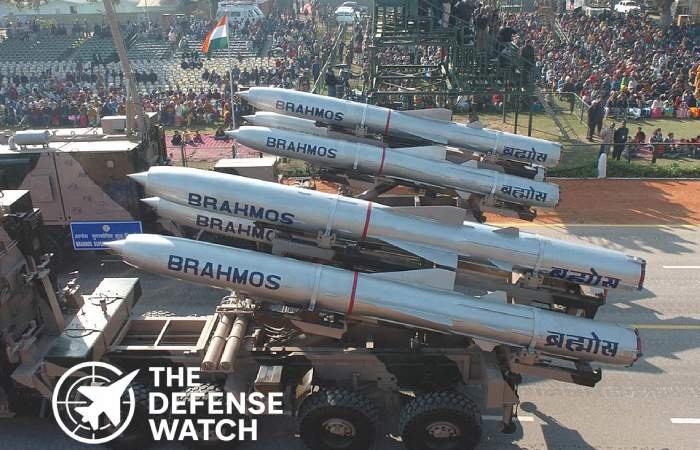
The confrontation also drew attention to India’s long-range precision-strike capabilities, including BrahMos.
Pakistan’s government specifically referred to BrahMos missile fire in its May 10 statement. Indian defense reporting and later Indian government material also highlighted the broader use of indigenous precision weapons during Operation Sindoor.
A Defense Research and Development Organisation compilation later reported claims that BrahMos missiles were used during the operation, including strikes associated with the May 10 attacks. However, the precise weapons used against individual targets remain an area where public evidence and competing official narratives do not always align.
The wider significance is that Operation Sindoor demonstrated how India is attempting to integrate long-range precision weapons, combat aircraft, drones, intelligence and layered air defenses into a broader operational framework.
Why The DGMO Call Matters
The May 10 call is significant not simply because one side requested a halt to fighting. It demonstrates how quickly a military hotline can become critical during a rapidly escalating confrontation.
India and Pakistan have fought several wars and remain separated by one of the world’s most heavily militarized borders. Both possess nuclear weapons, making escalation management a central concern whenever conventional fighting intensifies.
The DGMO channel provided a direct link between operational commanders while political leaders and diplomatic officials continued managing the broader crisis.
India’s official account says Pakistan initiated the May 10 contact and that the resulting agreement stopped military action at 5 p.m. The Pakistani government also confirmed that the two countries reached a ceasefire understanding that day, although its description of the events leading to the agreement differs sharply from India’s narrative.
The distinction between those narratives is important.
There is strong evidence that the DGMO-level communication occurred and that it produced the May 10 cessation of military action. There is also official Indian evidence that Prime Minister Modi later characterized the Pakistani request in much stronger language.
What remains less certain is the exact wording used during the private hotline conversation because the full transcript has not been publicly released.
A Military Hotline Became The Final Escalation Control Mechanism
Operation Sindoor therefore offers an important case study in crisis management between nuclear-armed states.
The initial strikes were followed by a wider exchange involving aircraft, missiles, drones, air defenses and artillery. As the confrontation intensified, military commanders used an established communication channel to establish a halt to active combat.
Lt. Gen. Ghai’s account provides the clearest publicly reported timeline: Pakistan’s DGMO called on May 10, proposed ending hostilities, and the resulting understanding took effect at 5 p.m.
The later political description of the conversation adds context but should not be presented as a direct quotation from Ghai.
For defense analysts, the episode underscores the importance of reliable command channels, escalation control and military-to-military communication when conventional conflict occurs between nuclear-armed rivals.
The ceasefire did not resolve the underlying India-Pakistan dispute. It instead stopped the immediate military confrontation and created space for both sides to reduce the risk of further escalation.
