China’s J-35 Stealth Fighter Draws Attention Over Reflective Surface
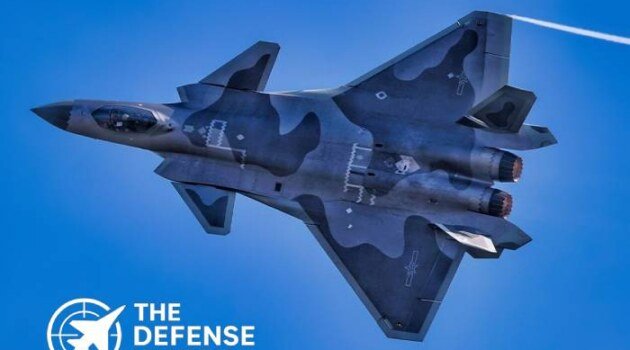
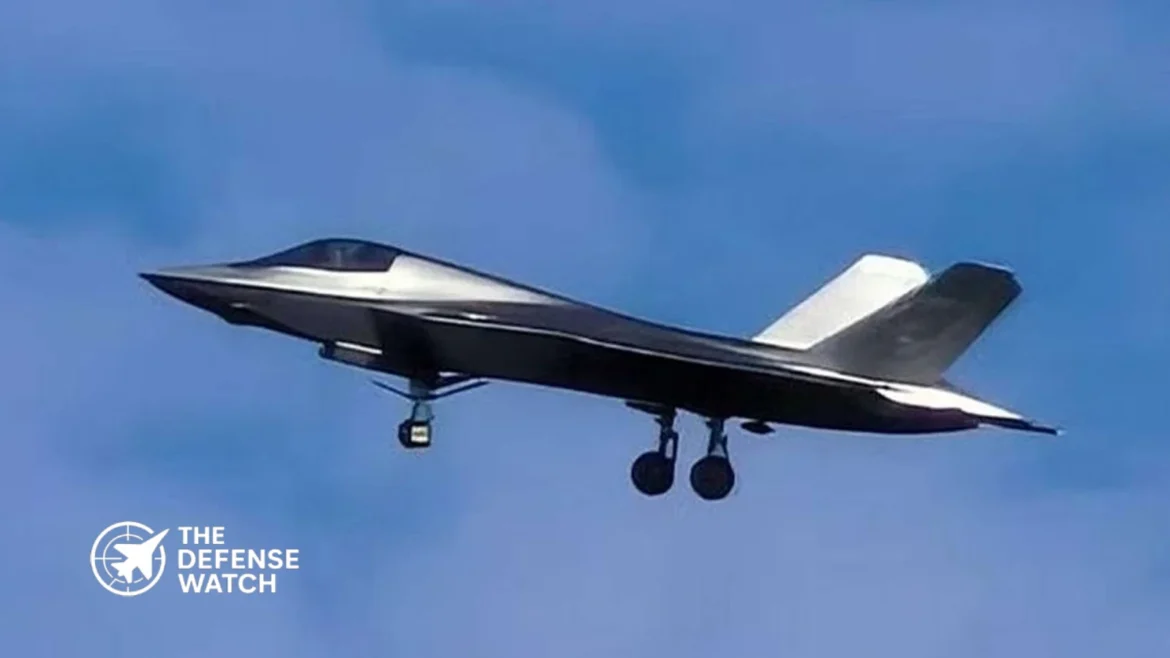
The J-35 stealth fighter has appeared in recent imagery with an unusually bright, mirror-like surface, prompting renewed interest in China’s efforts to develop and sustain low-observable aircraft. The photographs, which circulated during August 2026, show a carrier-based J-35 with a finish that appears significantly more reflective than the subdued gray surfaces normally associated with stealth aircraft.
Takeaways
New imagery highlights an unusual surface treatment on China’s carrier-based stealth fighter
1. Unusual Reflective Surface
Recent photographs appear to show a highly reflective, silver-like surface across portions of a Chinese J-35 carrier-based fighter.
2. Purpose Remains Unconfirmed
Chinese authorities have not publicly identified the material or confirmed that the finish represents a new radar-absorbing or infrared-signature technology.
3. U.S. Test Aircraft Provide A Comparison
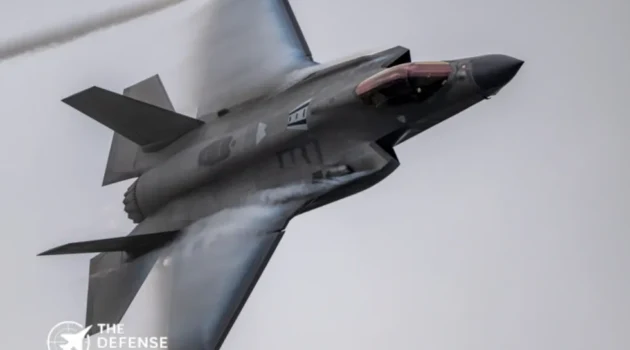
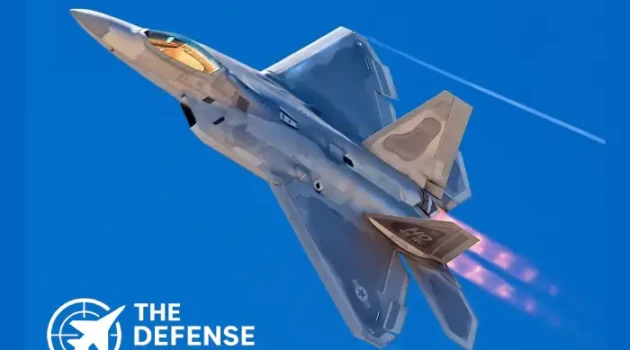
Similar mirror-like treatments have previously been observed on U.S. F-22A Raptor and F-35C Lightning II test aircraft, although the objectives of those treatments have not been publicly established.
4. J-35 Is Already A Carrier-Based Stealth Platform
The J-35 has conducted catapult launches and arrested landings aboard China’s Fujian aircraft carrier, demonstrating its integration with the ship’s electromagnetic launch system.
5. Appearance Alone Cannot Prove Stealth Performance
Visible reflectivity does not establish radar cross-section reduction or improved infrared concealment. The material’s electromagnetic and thermal properties would require testing to determine its actual purpose.
The appearance has attracted particular attention because U.S. Air Force F-22A Raptor and U.S. Navy F-35C Lightning II aircraft have previously been photographed with experimental mirror-like treatments. Those American examples were associated with flight-test activity, but their precise purposes have not been publicly disclosed.
For the J-35, however, there is currently no public Chinese statement identifying the material or confirming that it represents a new stealth coating.
What The New J-35 Imagery Shows
Photographs circulating since mid-August appear to show a J-35 with a strongly reflective surface across parts of its fuselage, wings and tail. The aircraft can appear almost metallic when viewed under direct sunlight.
That visual effect is notable, but it should not be treated as proof of a new low-observable technology.
Several factors can affect how an aircraft surface appears in photographs. Sun angle, viewing geometry, camera exposure, image processing and compression can all increase apparent reflectivity. The surface could also represent an experimental treatment, protective film, revised topcoat, manufacturing-stage finish or another temporary application.
The distinction matters because visible appearance and radar signature are not the same thing.
A Mirror-Like Finish Does Not Automatically Mean Better Stealth
The effectiveness of a stealth aircraft depends on far more than what its surface looks like to the human eye.
Radar signature is affected by aircraft geometry, surface continuity, material properties, panel joints, access doors, antennas, sensor apertures and the electromagnetic behavior of coatings. A surface that looks reflective in visible light can interact with electromagnetic energy differently at radar frequencies.
The U.S. Air Force has described the F-22’s low-observable system as a multilayered coating system that requires continuous inspection and maintenance. The service has also noted that low-observable coatings are an important part of maintaining the aircraft’s stealth characteristics.
This provides useful context for interpreting the J-35 photographs. A visible change in the outer surface does not necessarily indicate that the aircraft has received a completely new stealth architecture.
Why The F-22 And F-35C Comparison Matters
The comparison with American aircraft comes from several earlier U.S. test aircraft.
In 2021 and afterward, F-22 Raptors were photographed with highly reflective, chrome-like surface treatments. Similar treatments were later observed on F-35C aircraft operated by the U.S. Navy’s VX-9 test squadron. The F-35C examples displayed distinctive geometric panels across portions of the aircraft.
The Aviationist reported that these treatments were applied around, rather than indiscriminately across, areas such as access panels, weapon bays, sensors and antennas. The exact purpose has not been officially confirmed. Various possibilities have been discussed publicly, including research into infrared signatures and other aspects of signature management.
That history makes the new J-35 imagery worth monitoring, but it does not demonstrate that China is using the same materials or pursuing the same test objectives.
J-35 Already Has A Major Naval Role
The reflective finish is appearing at an important stage in the development of China’s carrier aviation.
China has already demonstrated J-35 operations from the Fujian aircraft carrier. In September 2025, Chinese authorities reported that the J-35, J-15T and KJ-600 had conducted electromagnetic catapult launches and arrested recoveries from the carrier. The Fujian was subsequently commissioned in November 2025.
Janes has also reported that the J-35 has become part of the emerging air wing associated with the Fujian, alongside the J-15T and KJ-600.
That carrier environment creates a particularly demanding materials problem.
A naval stealth fighter must operate in salt-laden air, humidity, ultraviolet exposure and repeated cycles of launch, recovery, maintenance and flight. Surface treatments must also tolerate servicing and environmental stresses without creating excessive maintenance requirements.
For that reason, if the reflective J-35 finish is an experimental material, its long-term durability could be as important as its signature characteristics.
What Analysts Should Watch Next
The most useful evidence will come from repeated observations rather than a single photograph.
If the same treatment appears on multiple J-35 aircraft, particularly with consistent panel shapes and carefully defined areas around sensors, antennas and access points, that would provide stronger evidence of a deliberate engineering program.
Further evidence could also come from photographs after extended flight operations. Wear, peeling, repairs or changes in the treatment could reveal whether the surface is a temporary test application or a more durable material system.
Carrier operations would be particularly informative. Repeated catapult launches, arrested landings and maritime deployments would provide a much better indication of whether the treatment is intended for operational use.
The Larger Stealth Competition
The J-35 development reflects China’s broader effort to expand fifth-generation airpower and carrier aviation. The aircraft is designed around a low-observable configuration and is now associated with China’s increasingly capable carrier force. Chinese official reporting has highlighted its carrier integration and electromagnetic catapult compatibility.
For the United States, the development is relevant because carrier-based stealth aircraft are central to future operations in heavily defended environments. The U.S. Navy’s F-35C provides a mature example of a carrier-capable fifth-generation fighter, while the J-35 represents China’s effort to field a comparable category of naval combat aircraft.
The new reflective finish therefore deserves attention, but it should be viewed as an observation rather than a confirmed technological breakthrough.
At present, the strongest conclusion is straightforward: the J-35 has been photographed with an unusual mirror-like surface, but there is insufficient evidence to determine exactly what the treatment is designed to accomplish.
That distinction is important. The aircraft’s visible appearance can generate useful questions about Chinese signature-management research, but only additional imagery, official disclosures or technical testing can establish whether the treatment changes radar, infrared or other observable signatures.

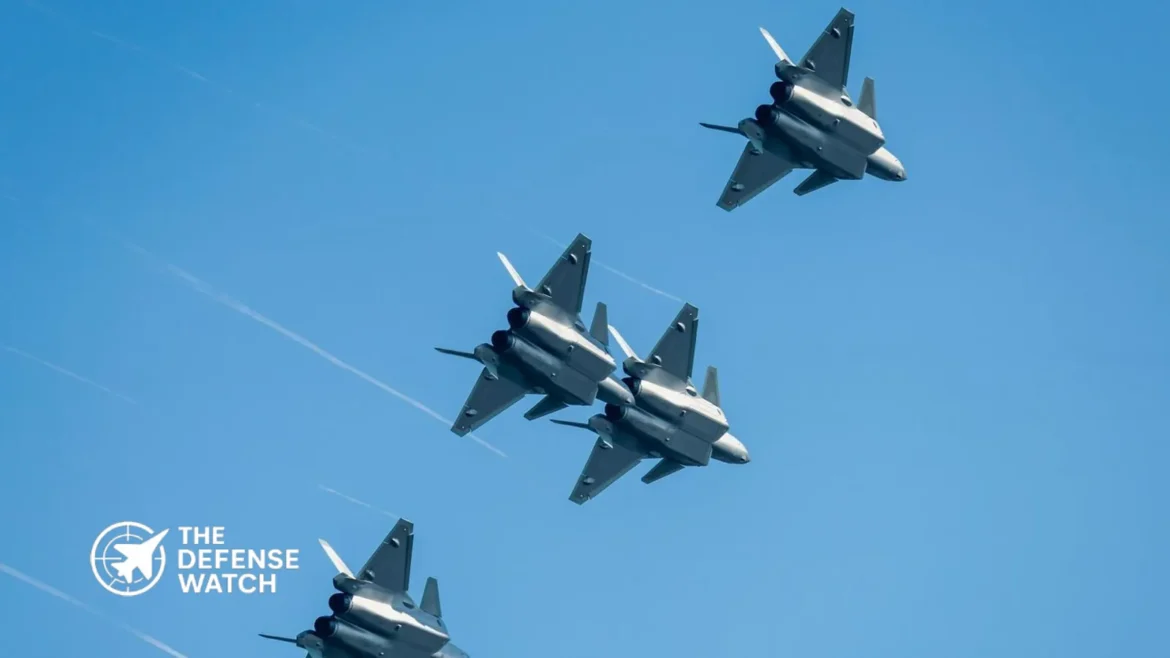
- China is increasing production capacity for both J-20 and J-35 stealth fighters.
- Expanded manufacturing lines aim to accelerate delivery of fifth-generation aircraft to the PLA.
- The move supports China’s broader strategy to compete with U.S. and allied airpower in the Indo-Pacific.
- J-20 production continues to scale, while J-35 is positioned for both naval and export roles.
- China is shifting from limited production to sustained high-rate output of stealth fighters.
China Stealth Fighter Production Expands Rapidly
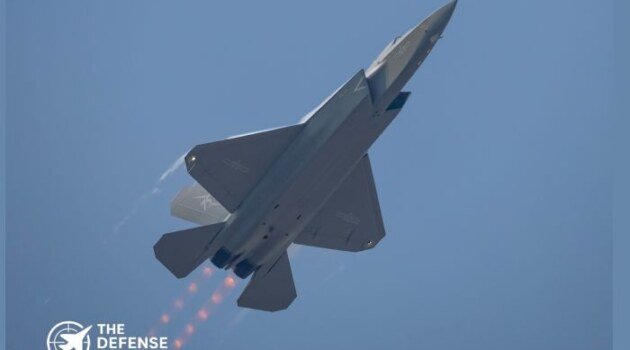
China stealth fighter production is accelerating as Beijing increases manufacturing capacity for both the J-20 and the emerging J-35 programs, signaling a sustained push to expand its fifth-generation combat aircraft fleet.
The Big Picture
China is moving from incremental modernization to large-scale force expansion. The focus is no longer just on fielding advanced platforms, but on producing them in volume.
The United States has long maintained an advantage in fifth-generation aircraft numbers through the F-22 and F-35 programs. China’s current effort suggests a shift toward narrowing that gap, not only in capability but in fleet size.
The Indo-Pacific remains the central theater for this competition. Air superiority, long-range strike, and survivability against advanced air defenses define operational planning for both sides.
What’s Happening
China is increasing production capacity for the J-20, its primary fifth-generation stealth fighter, while also advancing the J-35, a carrier-capable platform under development.
According to Source, new or expanded production lines are enabling higher output rates. The J-20 program, already in serial production, continues to scale, with improved variants and engine upgrades expected to support sustained manufacturing.
The J-35, often compared to U.S. carrier-based stealth fighters, is progressing toward operational deployment. It is expected to serve both the People’s Liberation Army Air Force and the People’s Liberation Army Navy.
Chinese industry appears to be transitioning toward parallel production of multiple stealth aircraft types, a capability historically associated with mature aerospace powers.
Why It Matters
Higher production capacity directly translates into operational mass. Even the most advanced aircraft cannot shape the battlefield if available in limited numbers.
China’s ability to produce the J-20 at scale strengthens its air dominance strategy. The aircraft’s stealth profile, long-range engagement capability, and networked operations make it central to Beijing’s air combat doctrine.
The addition of the J-35 expands flexibility. A carrier-capable stealth fighter enhances naval aviation, supporting power projection beyond China’s immediate coastline.
This dual-track production model reduces reliance on a single platform and creates redundancy in force structure.
Strategic Implications
China’s expanding stealth fighter production affects regional military balance in several ways.
First, it increases pressure on U.S. and allied air forces to maintain qualitative and quantitative advantages. Countries such as Japan and Australia rely heavily on the F-35 program, but production rates and fleet size remain critical factors.
Second, it strengthens China’s anti-access and area denial strategy. A larger stealth fleet complicates adversary planning by increasing the number of survivable strike and interception assets.
Third, it enhances China’s ability to sustain operations in a prolonged conflict. High production capacity suggests resilience, allowing the replacement of losses and continuous force generation.
Competitor View
The United States and its allies are likely to view China’s production surge as a signal of long-term strategic intent rather than a short-term buildup.
Washington has emphasized distributed operations and advanced networking to offset numerical challenges. However, increased Chinese output could erode that advantage over time.
Regional actors may interpret the J-35’s development as a direct response to carrier-based airpower in the Pacific. Its potential export role could also influence defense partnerships, particularly in regions where access to Western systems is limited.
Russia, while a traditional aerospace competitor, may view China’s industrial scaling as a benchmark for its own production challenges.
What To Watch Next
Key indicators will shape how this development unfolds.
Engine maturity remains critical. Indigenous engine programs will determine whether China can sustain high production rates without foreign dependencies.
Operational deployment timelines for the J-35 will also be closely watched, particularly its integration with aircraft carriers.
Production tempo is another factor. If China maintains consistent output growth, it will signal a durable industrial base rather than a temporary surge.
Export activity could further amplify the impact. If the J-35 enters the international market, it could reshape the global fighter landscape.
Capability Gap
China’s push addresses a clear gap in fleet size relative to the United States and its allies.
While the J-20 provides advanced capabilities, earlier production levels limited overall operational impact. Scaling production helps close that gap.
The J-35 addresses another gap, carrier-based stealth aviation. China’s naval air wing has historically relied on non-stealth platforms, limiting survivability in contested environments.
However, challenges remain. Engine performance, pilot training, and integration into joint operations will determine real-world effectiveness.
The Bottom Line
China’s expansion of J-20 and J-35 production marks a shift toward sustained, high-volume stealth fighter output that could reshape the balance of airpower in the Indo-Pacific.

China J 36 Sixth Generation Fighter Flight Update
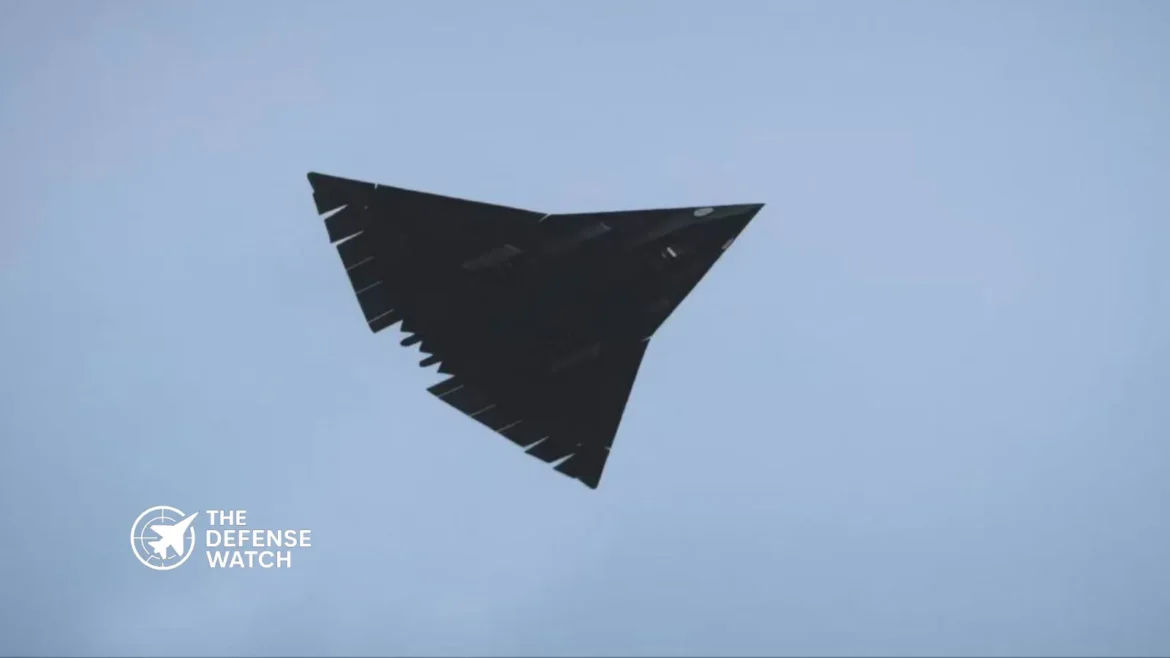
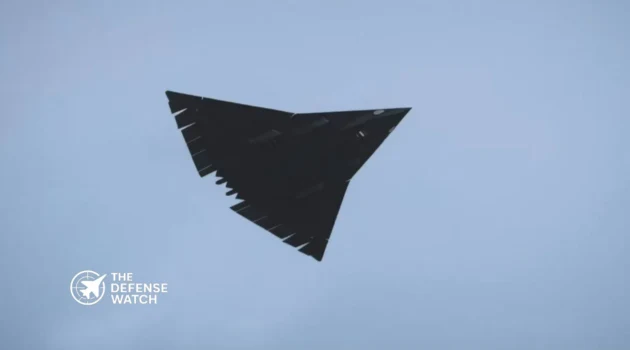
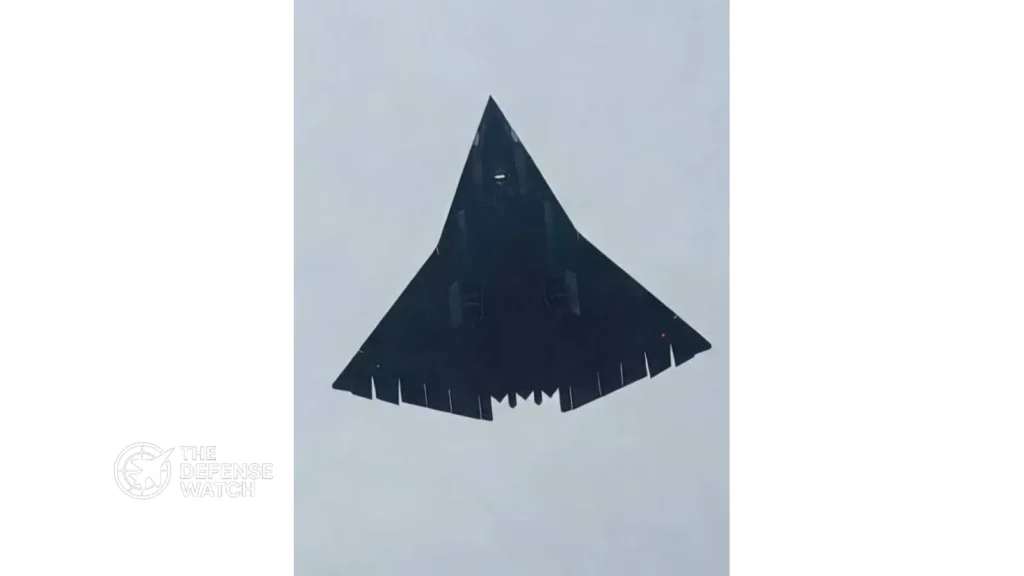
China has flown a third prototype of the J 36 sixth generation fighter, according to recent open source imagery and analyst assessments circulating among defense watchers. The aircraft, developed by Chengdu Aircraft Corporation, represents China’s most advanced known effort to field a future air dominance platform for the People’s Liberation Army Air Force.
(adsbygoogle = window.adsbygoogle || []).push({});The new flight activity follows earlier sightings of two J 36 prototypes and signals steady progress in a program Beijing has not publicly acknowledged. Defense analysts say the appearance of a third prototype points to an expanded flight test campaign rather than a limited technology demonstrator effort.
Open source aviation trackers and regional defense analysts first flagged the latest aircraft movement through imagery shared on Chinese social media platforms and later assessed by independent researchers. Publications such as Janes and Aviation Week have previously noted similar patterns in past Chinese combat aircraft programs, including the J 20 stealth fighter, where multiple prototypes appeared within short timeframes during early testing.
What the Third J 36 Prototype Tells Analysts
The emergence of a third J 36 airframe suggests the program has moved beyond initial proof of concept testing. In previous Chinese fighter developments, the introduction of additional prototypes often coincided with parallel testing of avionics, propulsion, and low observable shaping.
Available imagery indicates the J 36 maintains a tailless or near tailless configuration, consistent with sixth generation fighter design trends focused on reduced radar signature, improved aerodynamic efficiency, and enhanced internal volume. Analysts caution that exact conclusions remain limited due to the lack of official data and the controlled nature of available imagery.
Still, the pace of prototype appearances aligns with China’s broader military aviation modernization drive, which has emphasized rapid iteration and early flight testing to compress development timelines.
Chengdu Aircraft Corporation and China’s Fighter Development Track Record
Chengdu Aircraft Corporation has played a central role in China’s modern combat aircraft portfolio. The company developed the J 10 multirole fighter and later the J 20 stealth fighter, which entered operational service with the PLA Air Force in the late twenty tens.

In both cases, Chengdu relied on multiple flying prototypes early in development to mature flight controls, stealth shaping, and systems integration. Defense analysts see similarities in the J 36 program structure, though they stress that a sixth generation fighter brings a far higher level of technical complexity.
Key focus areas likely include advanced sensors, artificial intelligence assisted decision support, networked operations, and improved propulsion. None of these elements have been officially confirmed for the J 36, but they are widely considered core attributes of sixth generation combat aircraft across major air forces.
Implications for PLA Air Force Modernization
The third J 36 prototype flight reinforces assessments that China intends to maintain momentum in high end air combat capabilities. The PLA Air Force has already fielded large numbers of fifth generation J 20 fighters and continues to upgrade legacy platforms with improved sensors and weapons.
A future sixth generation fighter would likely complement the J 20 rather than replace it outright, focusing on air superiority, command and control roles, and deep penetration missions in highly contested environments. U.S. and allied defense planners closely watch such developments, particularly as Washington advances its own Next Generation Air Dominance effort.
While timelines remain uncertain, analysts generally agree that sustained prototype testing is a prerequisite for any eventual operational fielding. The appearance of multiple J 36 airframes suggests China is laying that groundwork.
How the J 36 Fits Global Sixth Generation Fighter Trends
Globally, sixth generation fighter programs remain in early stages. The United States, through its Air Force and Navy, has acknowledged flying a Next Generation Air Dominance demonstrator. Europe is pursuing the Future Combat Air System and the Global Combat Air Programme.
Common themes across these efforts include stealth optimized shapes, increased range, manned and unmanned teaming, and resilient networking under electronic attack. The J 36’s observed configuration appears broadly aligned with these concepts, though analysts warn against assuming direct equivalence without verified data.
(adsbygoogle = window.adsbygoogle || []).push({});China has historically followed a different development path, often emphasizing rapid prototyping and incremental capability growth. The third J 36 prototype flight may reflect this approach, allowing engineers to validate multiple design elements in parallel.
What Comes Next for the J 36 Program
Without official statements from Beijing or Chengdu Aircraft Corporation, the next steps remain unclear. However, defense observers will likely watch for signs of expanded flight testing, new airframe variations, or changes in engine configuration.
Satellite imagery of test facilities, increased flight activity, and additional prototype sightings will continue to shape external assessments. Past Chinese programs suggest that once multiple prototypes are airborne, testing can accelerate quickly.
For now, the third J 36 prototype flight stands as another data point in China’s evolving military aviation landscape, underscoring sustained investment in future air combat capabilities.