European governments are discussing the possible transfer of U.S. Air National Guard F-16 Fighting Falcon aircraft to Ukraine, potentially giving Kyiv another source of combat aircraft as Russian forces expand their use of jet-powered attack drones.
Dutch State Secretary for Defence Derk Boswijk confirmed the discussions in comments to Politico on November 22, 2026, during the Halifax International Security Forum in Canada. The negotiations involve European governments and the Pentagon, with the aircraft potentially coming from existing U.S. Air National Guard inventories.
The discussions remain at the negotiation stage. No agreement to release American-operated F-16s has been publicly announced, and there is no confirmed transfer schedule, aircraft quantity or identified donor unit.
The proposal is notable because Ukraine has so far received its F-16 fighters primarily through European partners, following U.S. authorization for transfers from countries that already operated the aircraft.
Ukraine Wants 40 Additional F-16 Fighters
The discussions follow Ukrainian President Volodymyr Zelenskyy’s November 17 appeal for another 40 F-16 fighters.
Speaking to participants in the 37th Ukraine Defense Contact Group meeting in Brussels, Zelenskyy said Ukraine needed additional aircraft because its existing fighters were spending considerable time undergoing maintenance and repairs rather than conducting operational missions.
He also called for additional Gripen, Rafale and Mirage aircraft to strengthen Ukraine’s air force.
The request reflects a broader challenge facing Kyiv: maintaining sufficient aircraft availability while conducting air defense operations against Russian missiles and unmanned aircraft.
Belgium has committed to transferring 10 F-16s to Ukraine by the end of 2026, according to the Ukrainian Ministry of Defence. The commitment forms part of a broader military assistance package that also includes air defense missiles and ammunition for the aircraft.
However, the Belgian contribution alone would not satisfy Ukraine’s request for 40 additional fighters.
The possibility of accessing American aircraft therefore offers another potential route to increasing Ukraine’s fighter inventory, particularly as European countries face competing requirements to modernize their own air forces.
Why F-16s Are Becoming Important for Countering Russian Drones
Ukraine’s requirement for additional F-16s is not limited to conventional air-to-air combat.
The aircraft have increasingly been used as part of Ukraine’s layered air defense network, particularly against Russian attack drones and cruise missiles.
Russian forces have expanded their use of Shahed-type unmanned aircraft, including faster jet-powered variants. These targets create different interception challenges compared with slower, propeller-driven drones.
F-16s offer Ukraine a mobile airborne interception capability. Their onboard radar, air-to-air weapons and 20mm M61 Vulcan cannon provide several engagement options, depending on the target, operational conditions and available ammunition.
Ukrainian F-16s have been reported using AIM-9 Sidewinder and AIM-120 AMRAAM missiles against aerial threats. The aircraft have also been observed carrying APKWS II laser-guided 70mm rockets, offering another potential method of engaging unmanned aircraft.
The cannon is particularly relevant to the economics of counter-drone operations. Using expensive air-to-air missiles against relatively inexpensive unmanned aircraft can place pressure on Ukraine’s limited missile stocks.
Gun ammunition and guided rockets offer alternative engagement methods, although neither eliminates the risks and operating costs associated with sending a fighter into an interception mission.
The Ukrainian government has also been working with partners to secure additional 20mm ammunition for its F-16 fleet. At the November 17 Ramstein meeting, Germany and Canada announced further ammunition support, according to Ukraine’s Ministry of Defence.
Why European F-16 Stocks May Not Be Enough
European governments have already contributed significant numbers of F-16s, but the pool of readily available aircraft is becoming more limited.
The Netherlands, Denmark and Norway have transferred aircraft or committed retired fighters to Ukraine. Belgium is continuing its own transition toward the F-35 and has pledged additional F-16s.
However, the remaining European fleets are subject to national operational requirements, maintenance schedules and modernization plans.
A November 23 assessment by Breaking Defense identified several obstacles to further European transfers, including the need to reactivate retired aircraft, complete maintenance work and obtain authorization for third-party transfers.
This makes American aircraft an attractive possibility, although transferring them would introduce a different set of political and logistical considerations.
What a U.S. Air National Guard Transfer Would Involve
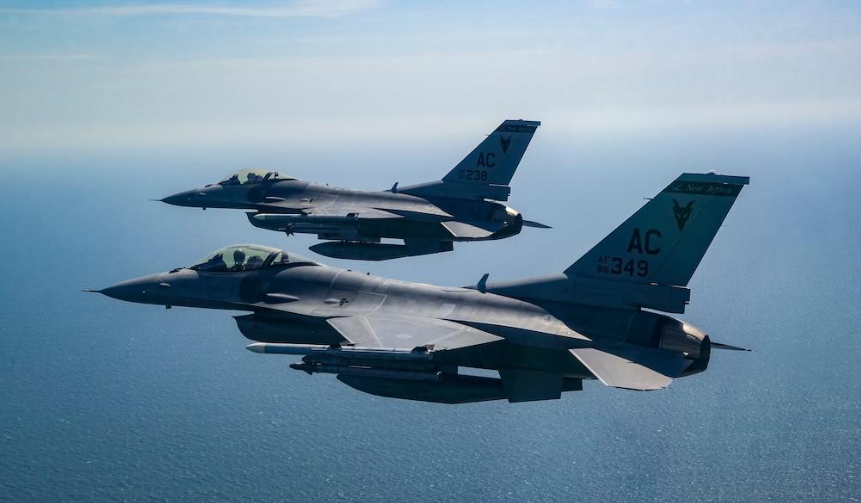
The Air National Guard operates F-16s alongside its other fighter aircraft as part of the U.S. Air Force’s broader force structure.
Its aircraft support operational missions, air defense responsibilities, training and other requirements. Consequently, the existence of F-16s within the Guard’s inventory does not automatically mean those aircraft are available for transfer.
Any proposed release would require decisions by the U.S. government concerning force requirements, aircraft condition, replacement capacity and military assistance priorities.
There are also technical considerations.
Ukraine’s existing F-16 fleet is largely based on European F-16AM/BM aircraft upgraded through the Mid-Life Update program. American Air National Guard aircraft could include F-16C/D variants from different production blocks.
Although all belong to the F-16 family, differences in configuration, avionics, engines and maintenance requirements could complicate fleet integration.
Additional aircraft would therefore require appropriate technical documentation, spare parts, ground-support equipment, pilot training and maintenance arrangements.
These requirements would influence how quickly any transferred fighters could become operational in Ukraine.
The Pentagon’s Decision Is the Critical Step
The proposed transfer would represent a potentially important change in the sources of Ukraine’s F-16 supply.
Since the beginning of the European F-16 transfer effort, Washington has played an important role in authorizing third-party transfers and supporting the wider aircraft supply chain.
A transfer involving operational U.S. Air National Guard aircraft would go further by making American-owned fighters available directly from an existing U.S. military inventory.
However, the reported negotiations should not be interpreted as a U.S. commitment to release aircraft.
The Pentagon would need to consider the impact on Air National Guard readiness, existing U.S. Air Force requirements and the availability of replacement aircraft.
The condition and remaining service life of individual fighters would also matter. Older aircraft may require structural inspections, component replacement or modernization before they can be transferred for sustained combat operations.
There is also a question of quantity. Even if Washington approves the proposal, the number of aircraft that could be released has not been established publicly.
For Ukraine, the timing of deliveries could be as important as the total number of fighters received.
A Wider Air Defense Requirement
The fighter discussions are part of a larger effort to strengthen Ukraine’s ability to defend its airspace.
At the November 17 Ramstein meeting, Ukraine’s partners announced additional support covering air defense systems, interceptor drones, radar equipment, missiles and aircraft ammunition.
Germany announced support that includes 20mm ammunition for F-16s, while Canada also committed to supplying aircraft ammunition. Norway separately allocated funding for capabilities intended to counter jet-powered Shahed drones.
Ukraine is also developing and procuring more domestic interceptor drones, which could reduce the need to use expensive fighter aircraft and air defense missiles against every incoming unmanned aircraft.
President Zelenskyy reiterated the need for additional F-16s during a November 23 meeting focused on protection against Russian jet-powered drones. He also pointed to the growing role of Ukrainian-made interceptors.
This suggests that Kyiv’s air defense approach is increasingly focused on combining several interception methods rather than relying exclusively on conventional surface-to-air missile systems.
For the F-16 fleet, this means additional aircraft could provide greater operational flexibility, allowing Ukraine to distribute interception responsibilities while preserving some fighters for other missions.
Whether U.S. Air National Guard aircraft become part of that effort will depend on decisions that have not yet been announced.
Enjoying our coverage?
Make The Defense Watch a preferred source on Google to see more of our geopolitical and defense insights when relevant to you.