Japan is looking beyond its traditional defense contractors to strengthen its military manufacturing capacity, turning to an industry better known for producing cars, engines and precision components.
The Japanese government is encouraging automotive parts manufacturers to enter defense production, particularly in the unmanned aircraft sector, as Tokyo prepares for a substantial expansion of its military capabilities.
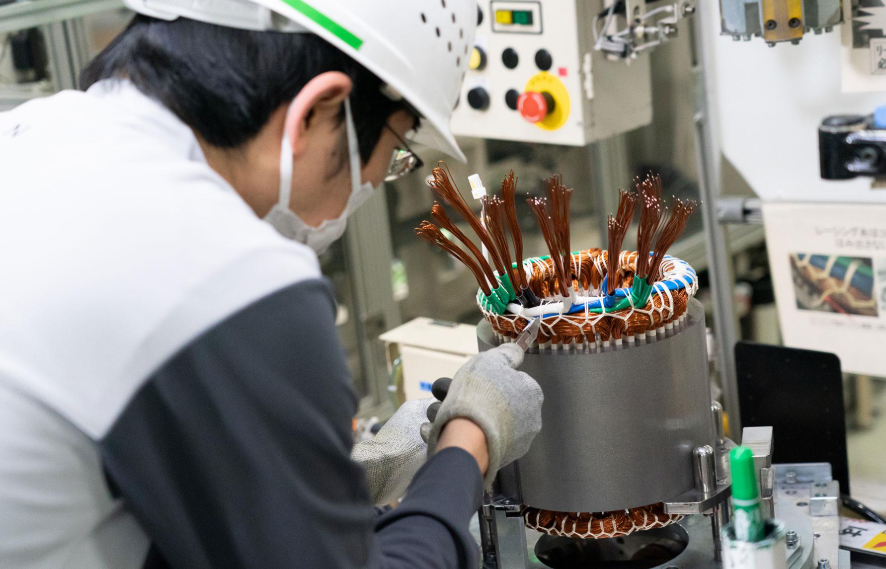
The shift is already producing commercial opportunities for smaller Japanese manufacturers. Some companies are supplying motors for military drones, developing prototype aircraft engines or exploring ways to adapt existing industrial technologies for defense applications.
A November 24 Reuters report, based on interviews with government officials, executives and industry advisers, details how Japan’s Acquisition, Technology & Logistics Agency (ATLA) is helping connect automotive suppliers with defense contractors and potential customers overseas.
The effort also reflects a wider challenge facing Japan: expanding domestic defense production while maintaining a competitive industrial base amid growing regional security concerns.
Why Japan Is Turning to Its Automotive Industry
Japan possesses an extensive manufacturing network that could support defense production without requiring every component to come from a traditional weapons manufacturer.
The country’s automotive industry produces more than 8 million vehicles annually and includes approximately 70,000 companies involved in manufacturing components and related products, according to Reuters.
These manufacturers already work with precision engineering, electric motors, electronics, materials processing and strict quality-control requirements. Many of those capabilities can also support military manufacturing.
Japan’s automotive industry is also facing commercial pressure. Domestic factories produced nearly 900,000 fewer vehicles in 2025 than a decade earlier, according to figures cited by Reuters from the Japan Automobile Manufacturers Association.
For smaller suppliers, defense contracting offers another potential source of revenue as competition in the global automotive market intensifies.
However, transferring automotive manufacturing capabilities into defense production is not simply a matter of changing the customer. Military equipment often requires additional environmental testing, reliability standards, cybersecurity protections and specialized certification.
Tokyo will therefore need to help companies meet defense-specific requirements before they can become dependable suppliers.
Small Manufacturers Are Already Entering the Defense Market
One example is Aster, a Japanese automotive component manufacturer that previously supplied parts for Toyota vehicles.
According to Reuters, the company now manufactures electric motors used in drones produced by U.S. defense technology company Anduril Industries.
Defense-related work accounts for approximately 10% of Aster’s revenue, following its entry into the sector in 2025.
Chief Executive Takenobu Hongo told Reuters that defense-related drone work had become more attractive commercially than some of the company’s traditional automotive motor business.
Another manufacturer, Kyowa Industrial, is receiving increasing orders for prototype drone engines. The company has previously supplied missile-related components, but its defense business has expanded from approximately 3% of annual sales in spring 2025 to around 10%, Reuters reported.
These examples illustrate how defense manufacturing is gradually becoming a more important business opportunity for Japanese component suppliers.
The transition is not limited to established automotive companies.
Japanese drone manufacturer Terra Drone is also exploring opportunities to incorporate components from the country’s automotive supply chain. Its chief executive, Toru Tokushige, told Reuters that ATLA officials introduced the company to Kaaz, a manufacturer of racing car components that has developed a small gasoline-powered aircraft engine.
Kaaz confirmed to Reuters that it had consulted with ATLA and was pursuing military applications for its engine technology.
ATLA Seeks to Connect Suppliers With Defense Contractors
Japan’s Acquisition, Technology & Logistics Agency is playing an important role in bringing new companies into the defense sector.
The agency oversees defense procurement and technology development. Its current industrial policy already recognizes that Japan needs a stronger domestic production and technology base to maintain its defense capabilities.
ATLA has been evaluating potential suppliers, introducing companies to established defense manufacturers and organizing industry events to encourage cooperation.
According to Reuters, 48 Japanese companies from different industries participated in an ATLA event in September aimed at connecting domestic manufacturers with potential Western defense customers. That was twice the number recorded the previous year.
The agency is also supporting research and development through funding opportunities.
Japan’s Ministry of Defense has an established defense innovation framework that allows startups and other technology companies to participate in phased research, development, prototyping and evaluation programs.
This approach could help smaller manufacturers enter defense markets without immediately having to establish the infrastructure of a traditional military contractor.
It also gives established defense companies access to technologies developed outside the conventional defense industry.
Military Drones Are a Major Priority
The growing interest in automotive suppliers is closely connected to Japan’s plans to expand its unmanned military capabilities.
Recent conflicts, particularly the war in Ukraine, have demonstrated the importance of relatively inexpensive unmanned aircraft for reconnaissance, surveillance, targeting and attack missions.
Military drones can also provide additional capabilities without requiring every mission to involve a crewed aircraft.
Japan is considering larger fleets of attack and interceptor drones as part of its military modernization plans.
The country’s domestic drone manufacturing capacity, however, remains comparatively limited.
Reuters cited trade figures compiled by Taiwan’s Research Institute for Democracy, Society and Emerging Technology, indicating that Japan exported slightly more than 1,100 drones in the previous year, compared with approximately 123,000 unmanned aircraft sold overseas by Taiwan.
The figures illustrate the difference in export activity, although they do not provide a complete comparison of military drone production or domestic inventories.
For Japan, the challenge is to develop a domestic industrial network capable of supplying sufficient quantities of reliable unmanned systems.
Automotive manufacturers could contribute electric motors, combustion engines, electronic components, manufacturing equipment and precision-engineered parts.
Some suppliers are also exploring gasoline-powered propulsion for unmanned aircraft.
Ishikawa Energy Research, a Japanese drone manufacturer founded by a former Honda engineer, is seeking military applications for its agricultural aircraft technology.
Its gasoline-powered drones are primarily used for agricultural operations, including crop spraying. Founder Mitsuru Ishikawa told Reuters that the aircraft could potentially support military logistics and reconnaissance missions.
More than half of the components used in the company’s drones come from automotive suppliers connected to the regional manufacturing network around Subaru.
These are potential applications rather than evidence that the aircraft have entered Japanese military service.
Japan’s Defense Budget and Industrial Expansion
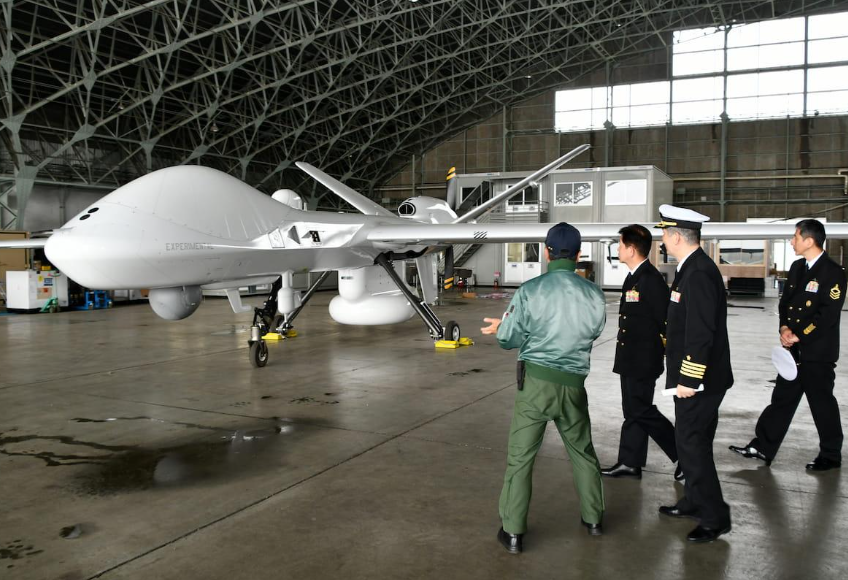
The industrial transition is taking place alongside a broader increase in Japanese defense spending.
Japan’s Ministry of Defense requested approximately 8.9 trillion yen ($55.6 billion) for fiscal year 2027, with priorities including unmanned systems, artificial intelligence, long-range strike capabilities and improvements to the country’s defense infrastructure.
The government’s existing Defense Buildup Program also emphasizes strengthening domestic production and technology capabilities.
Japan’s official defense industrial strategy identifies supply-chain vulnerabilities, manufacturing capacity and the preservation of specialized technical skills as important national security concerns.
The Act on Enhancing Defense Production and Technology Bases, enacted in 2023, provides additional mechanisms to support domestic manufacturers.
These include assistance for supply-chain security, manufacturing improvements, business succession and access to financing. Under certain conditions, the government can also acquire manufacturing facilities and outsource their operation to private companies.
This policy framework is particularly relevant to smaller manufacturers that may possess useful technical expertise but lack the financial resources or established relationships needed to enter the defense market.
Japan’s planned revision of its national security documents by the end of 2026 is expected to provide further direction for its defense industrial development, according to Reuters.
Major Automakers Remain Cautious
Despite government encouragement, Japan’s largest automotive manufacturers have not embraced defense production on the same scale as smaller component suppliers.
Toyota, Honda and Nissan remain cautious about expanding into military manufacturing.
Their concerns include reputational risks, relationships with international customers and existing commercial interests in China.
Toyota executive Hiroyuki Ueda told Reuters that the company’s position was not to pursue defense-related activities at this stage.
Honda also said it had no specific plans to enter the sector, while Nissan declined to comment on potential defense work.
Resistance also exists among smaller suppliers.
Mitsubishi Electric’s chief financial officer, Kenichiro Fujimoto, told Reuters that some automotive component manufacturers approached for a military drone venture had declined to participate because of concerns about their relationships with existing customers.
This reluctance presents a potential obstacle for Tokyo.
A successful industrial expansion will require more than government funding. Suppliers must be willing to accept defense contracts, invest in specialized production processes and manage the commercial and regulatory implications of military work.
What Japan’s Industrial Shift Means for Its Defense Sector
Japan’s effort to bring automotive manufacturers into defense production offers a potential way to expand industrial capacity without relying entirely on established weapons companies.
The approach is particularly relevant to unmanned aircraft, where production scale, component availability and manufacturing costs can influence how quickly military forces acquire new capabilities.
It could also create opportunities for Japanese suppliers to work with U.S. and European defense contractors facing their own production constraints.
However, automotive manufacturing experience alone does not guarantee that companies can produce operationally reliable military equipment.
Defense suppliers must meet specialized technical requirements, maintain secure supply chains and demonstrate that their products can withstand demanding operational environments.
There is also a distinction between developing a prototype component and producing equipment at the scale required by military procurement programs.
Japan’s challenge will be to turn its extensive civilian manufacturing network into a dependable defense production ecosystem while navigating commercial sensitivities and the country’s longstanding political debate over military industry.
For now, the clearest progress is coming from smaller manufacturers rather than Toyota, Honda or Nissan. Whether this expands into a much larger industrial transformation will depend on sustained government support, commercial demand and the ability of new suppliers to meet military production requirements.
Enjoying our coverage?
Make The Defense Watch a preferred source on Google to see more of our geopolitical and defense insights when relevant to you.