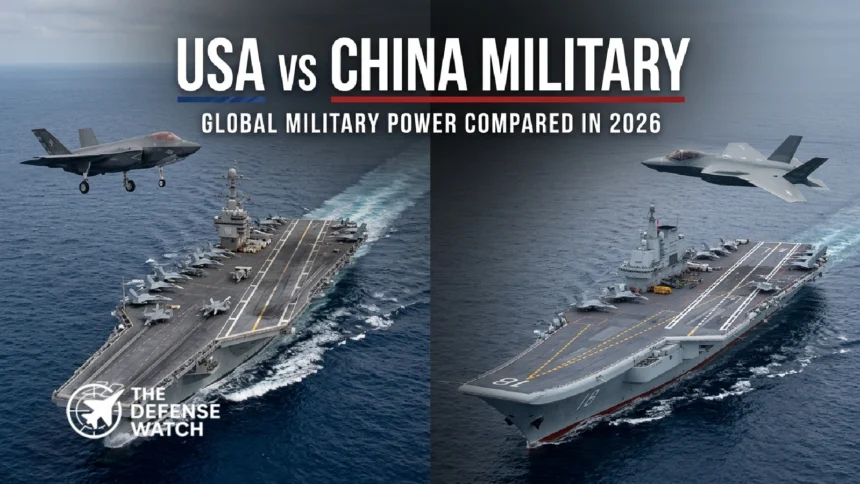
The United States and China possess the world’s two largest military budgets and two of its most capable armed forces. Both are investing heavily in advanced aircraft, naval platforms, long-range missiles, space systems, artificial intelligence and modern command networks. However, their military structures reflect different strategic priorities.
The United States maintains a global military network designed to support operations across multiple regions. China, meanwhile, has concentrated substantial military resources on protecting its territory, expanding its influence in the Indo-Pacific and developing capabilities that could complicate American intervention near Chinese territory.
A comparison of the USA vs China military in 2026 therefore requires more than counting soldiers, aircraft and warships. It must consider where each force operates, how it is organized, what equipment it can deploy and how effectively it can sustain operations.
This assessment compares the United States Armed Forces with China’s People’s Liberation Army (PLA), including their respective land, naval, air, missile, space and cyber capabilities. The U.S. Coast Guard is not included in the principal force comparison because it operates under the Department of Homeland Security during peacetime.
1. Overall Military Strength: United States vs China
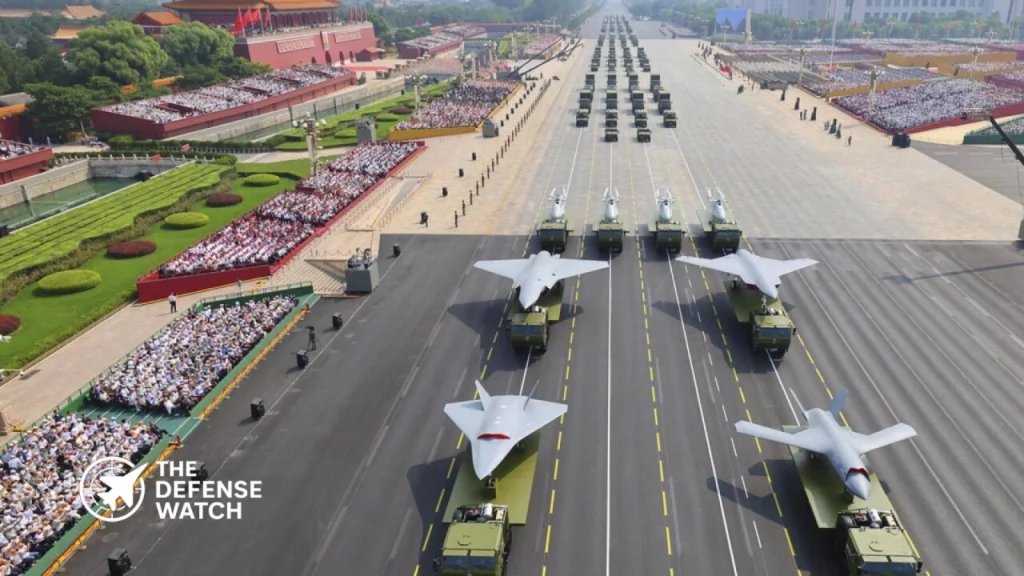
The United States retains major advantages in global military reach, overseas infrastructure, nuclear forces, undersea warfare and a broad network of military partnerships.
China has developed a formidable regional military capability. Its large missile inventory, expanding navy, modernizing air force and extensive domestic defense industry give it significant advantages in the Western Pacific, particularly in scenarios close to the Chinese mainland.
The distinction is important. American military strength is structured around global operations, while China’s military modernization places considerable emphasis on regional military effectiveness.
Neither description means that one force would automatically defeat the other in a conflict.
Overall comparison
| Category | United States | China |
|---|---|---|
| Armed forces | U.S. Armed Forces | People’s Liberation Army |
| Military structure | Global joint-force structure | Centralized party-led military structure |
| Active personnel | Approximately 1.30 million authorized for FY2026 | Approximately 2 million commonly cited estimate |
| Defense spending, 2025 | $954 billion, SIPRI estimate | $336 billion, SIPRI estimate |
| Aircraft carriers | 11 nuclear-powered fleet carriers | Three aircraft carriers |
| Naval fleet | Smaller by total battle-force ship count | Larger by total battle-force ship count |
| Combat aviation | Large fifth-generation aircraft fleet | Expanding fifth-generation aircraft fleet |
| Nuclear weapons | Approximately 5,177 total inventory | Approximately 620 total inventory |
| Global military bases | Extensive overseas network | Limited overseas base network |
| Long-range logistics | Extensive global transportation and sustainment network | Growing overseas logistics capabilities |
| Defense industry | Advanced but faces production and shipbuilding constraints | Large domestic manufacturing and shipbuilding base |
Figures use different reporting methods and dates. Personnel and nuclear figures should not be interpreted as directly equivalent measures of immediately available combat power.
The spending and nuclear figures are based on SIPRI’s 2026 publications. U.S. personnel figures reflect authorized FY2026 end strength, rather than a verified count of personnel serving on November 7. SIPRI+2
2. Military Personnel and Force Structure
Personnel numbers provide an indication of organizational scale, but they do not independently measure military effectiveness.
The United States operates a professional volunteer military supported by active-duty personnel, reserve components and the National Guard. China operates a much larger active military establishment, organized under the Central Military Commission of the Chinese Communist Party.
United States Armed Forces
The American military consists of five principal military services:
- U.S. Army
- U.S. Navy
- U.S. Marine Corps
- U.S. Air Force
- U.S. Space Force
The FY2026 National Defense Authorization Act authorized the following active-duty end strengths for September 30, 2026:
| Service | Authorized personnel |
|---|---|
| U.S. Army | 454,000 |
| U.S. Navy | 344,600 |
| U.S. Marine Corps | 172,300 |
| U.S. Air Force | 321,500 |
| U.S. Space Force | 10,400 |
| Total | 1,302,800 |
These are authorized personnel levels, not a separately verified actual headcount. The figures also exclude the Coast Guard. GovInfo+1
The U.S. military uses joint commands to coordinate operations across multiple services. Geographic combatant commands, including U.S. Indo-Pacific Command, provide an organizational framework for regional operations.
Its reserve components and National Guard also provide additional personnel, specialized capabilities and mobilization capacity.
Chinese People’s Liberation Army
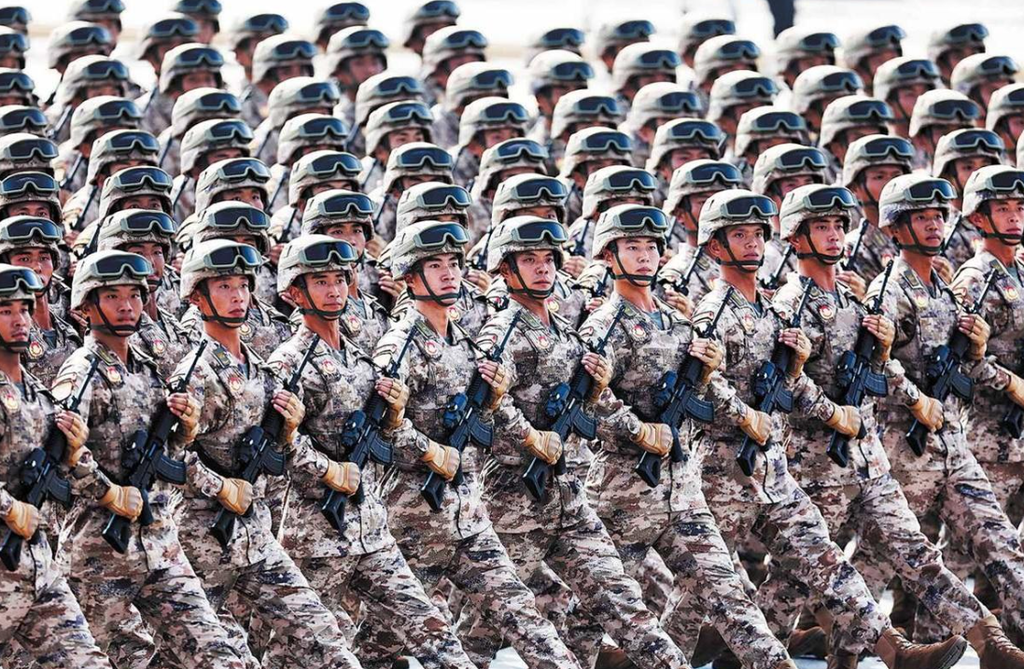
China’s military is organized into five principal services:
- PLA Ground Force
- PLA Navy
- PLA Air Force
- PLA Rocket Force
- PLA Aerospace Force and other supporting organizations within its broader restructured force structure.
The PLA also maintains joint logistical and information-support organizations.
China’s active military personnel strength is commonly estimated at approximately two million. However, this is a rounded public estimate, not a verified November 2026 personnel return.
Unlike the American model, the PLA is under the direct leadership of the Communist Party’s Central Military Commission. Its structure emphasizes centralized command, joint operations and the integration of conventional and strategic forces.
Which country has more military personnel?
China has a larger active-duty military by commonly cited personnel estimates. However, the United States possesses a substantial reserve structure, including the Army National Guard, Army Reserve, Air National Guard and other reserve components.
Personnel comparisons also need to account for mission differences. A soldier assigned to territorial defense, a sailor operating a submarine and an aircrew member supporting strategic aviation perform very different functions.
China’s numerical advantage does not automatically translate into greater expeditionary capability or the ability to sustain military operations far from its territory.
3. Defense Budget: USA vs China
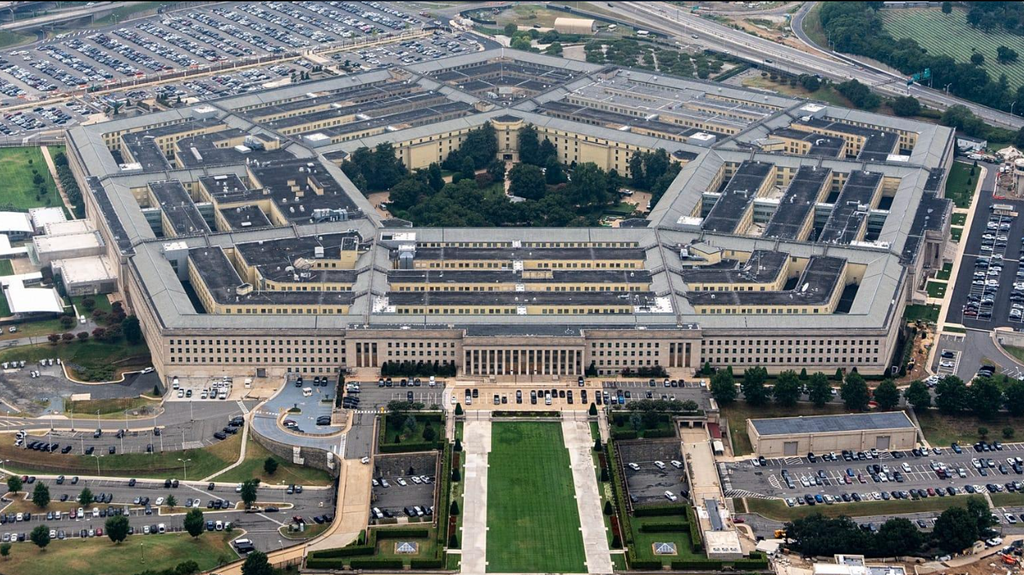
Military expenditure remains one of the clearest differences between the two countries.
According to the Stockholm International Peace Research Institute’s April 2026 military expenditure assessment, the United States spent an estimated $954 billion in 2025, while China’s military expenditure reached approximately $336 billion.

The United States therefore spent approximately 2.8 times as much as China under SIPRI’s methodology.
The figures represent estimated military expenditure, not identical national budget categories. SIPRI’s estimates can include military-related expenditure that may not appear in official defense budget announcements.
China’s 2026 defense budget
China announced a 2026 national defense budget of approximately 1.94 trillion yuan, representing a 6.9% increase over the previous year’s executed budget.
The official announcement described the allocation as part of China’s effort to strengthen national defense and advance military modernization.
U.S. defense expenditure
The United States approved substantial FY2026 defense funding, including investments in shipbuilding, aircraft, missile procurement, military personnel and industrial production.
The FY2026 defense appropriations legislation provided $838.5 billion in defense funding within a broader $838.7 billion discretionary funding package. This appropriations figure should not be directly substituted for SIPRI’s broader military expenditure estimate.
Where does the money go?
The United States allocates substantial resources to:
- Nuclear modernization.
- Aircraft carriers and nuclear submarines.
- Fighter aircraft and strategic bombers.
- Global military transportation.
- Overseas operations and infrastructure.
- Space and intelligence capabilities.
- Precision weapons and missile defense.
China directs substantial resources toward:
- Naval expansion.
- Ballistic and cruise missile forces.
- Advanced combat aircraft.
- Integrated air defense.
- Space-based military capabilities.
- Electronic warfare.
- Domestic military manufacturing.
The United States has a clear advantage in total military expenditure. However, the cost of maintaining worldwide military commitments also means that its budget supports a much broader geographic mission.
China can concentrate a greater proportion of its military resources on regional priorities.
4. Naval Power: U.S. Navy vs People’s Liberation Army Navy
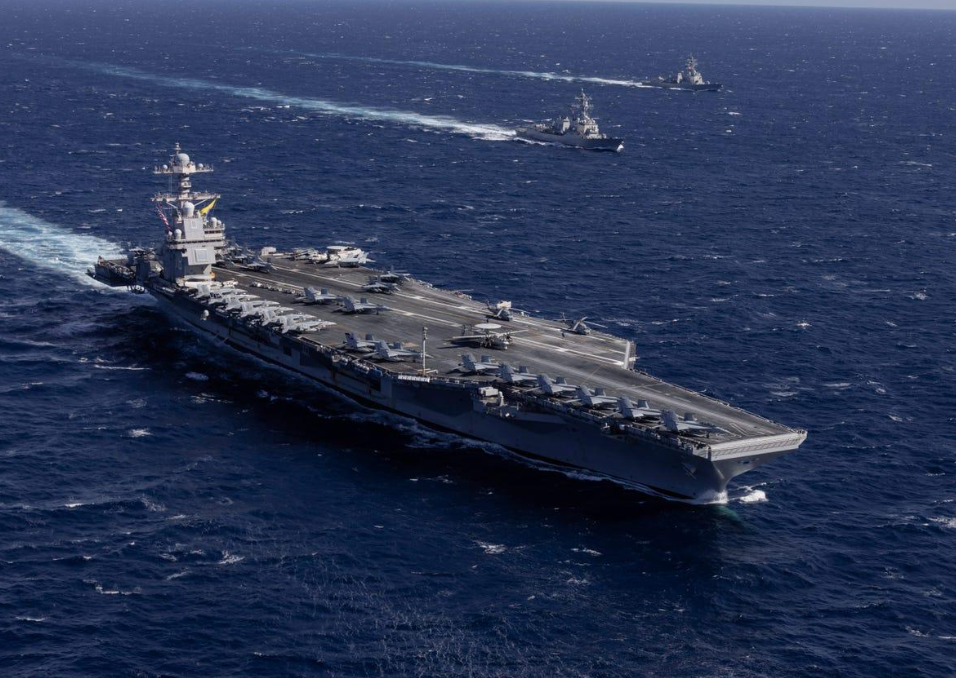
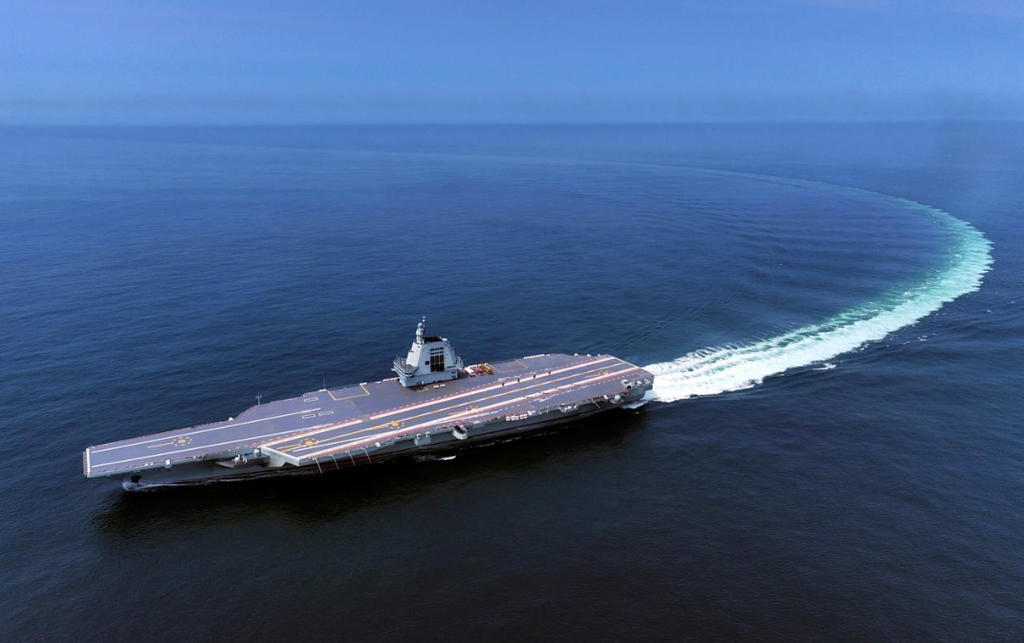
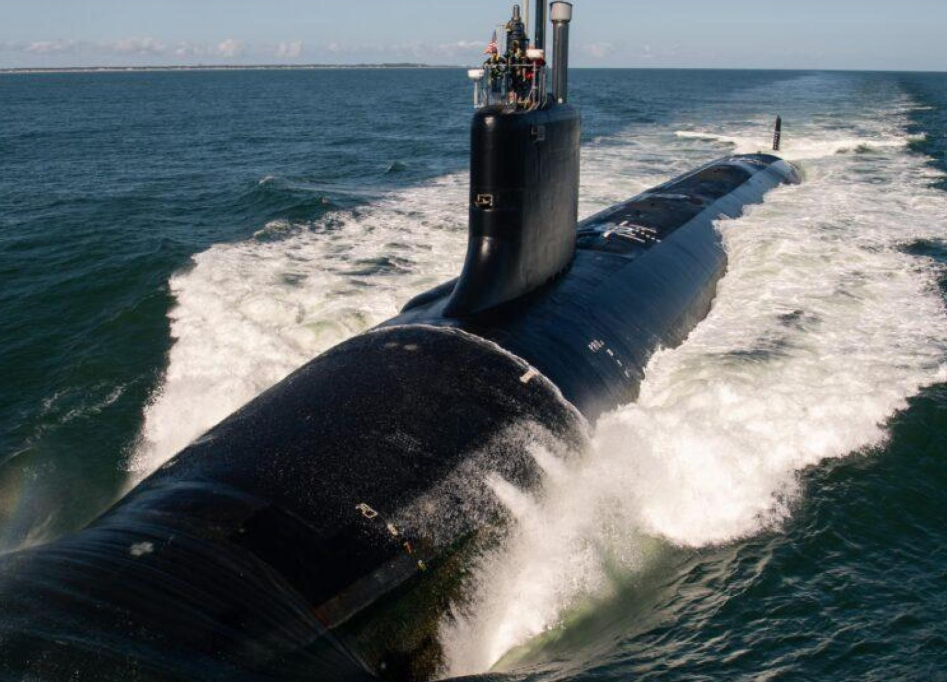
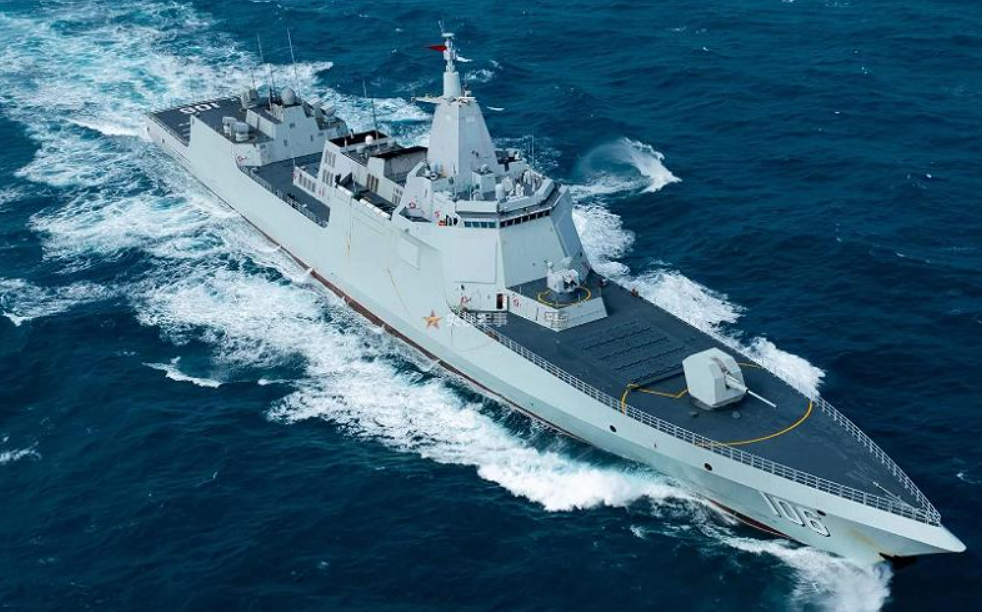
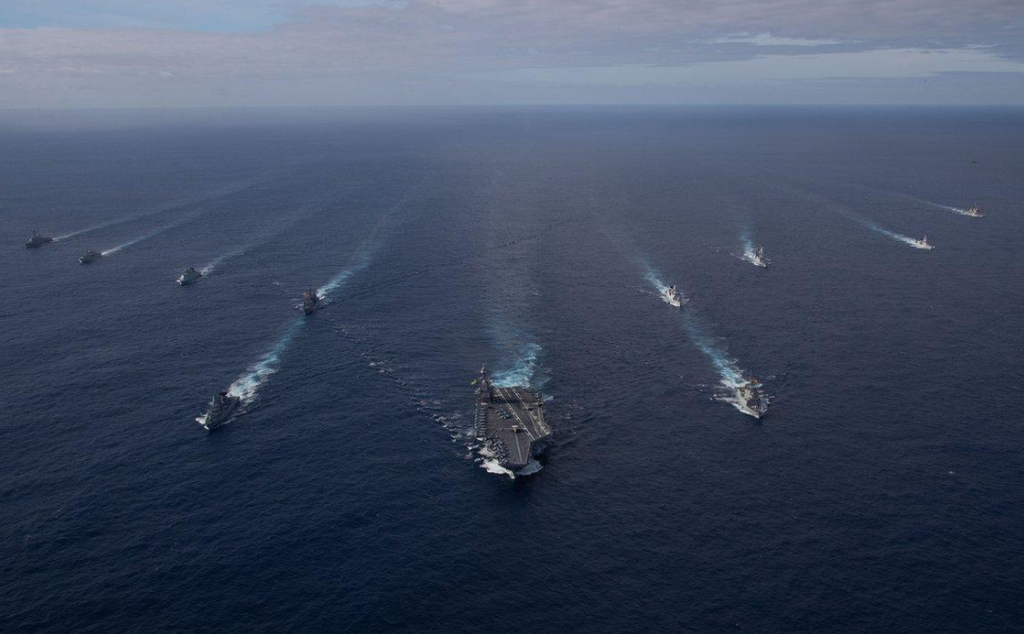
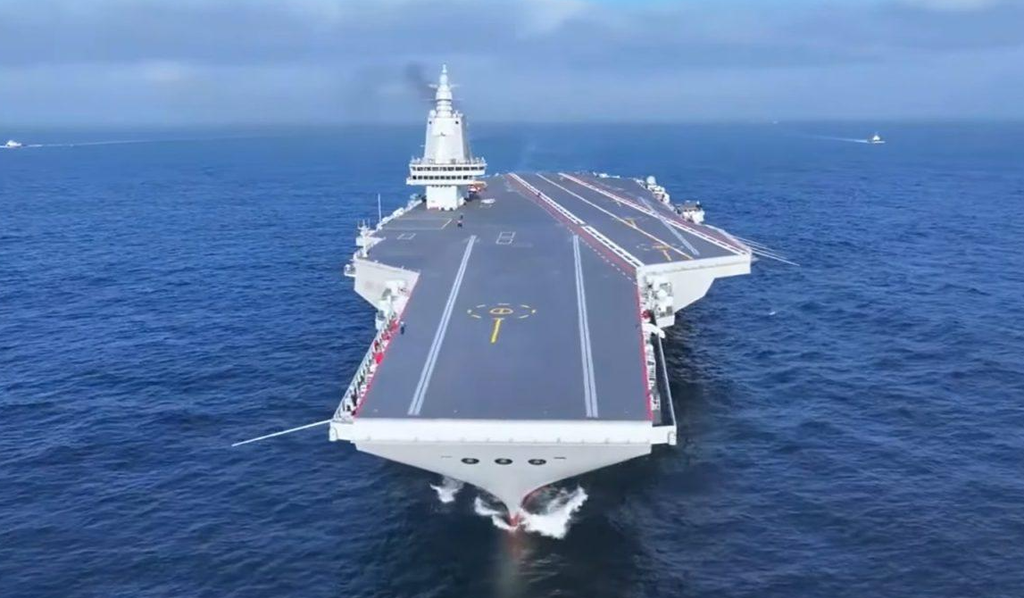
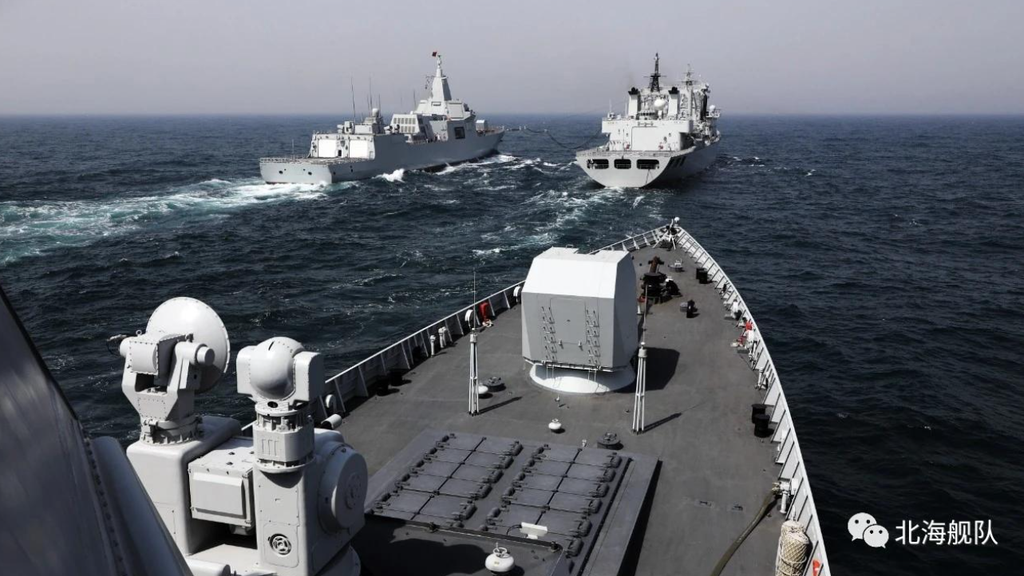
Naval power is one of the most important areas in the USA vs China military comparison. Both countries are investing heavily in surface combatants, submarines, aircraft carriers, naval aviation and long-range maritime weapons.
The United States operates a globally deployed navy with extensive experience in carrier operations, nuclear-powered submarines and sustained overseas deployments.
China has developed the world’s largest navy by the number of battle-force ships, according to the U.S. Department of Defense’s published assessment.
Aircraft carriers
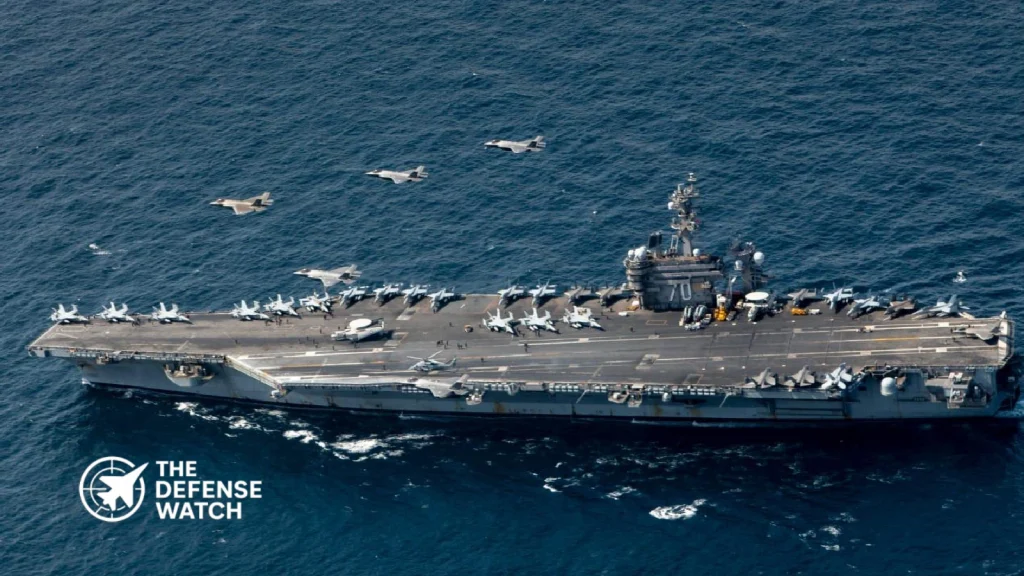
The United States operates 11 nuclear-powered aircraft carriers, including the Nimitz and newer Gerald R. Ford classes.
These ships support carrier air wings equipped with aircraft such as:
- F/A-18E/F Super Hornet
- F-35C Lightning II
- E-2D Advanced Hawkeye
- EA-18G Growler
- MH-60R and MH-60S helicopters
The Ford-class incorporates advanced aircraft launch and recovery systems, including electromagnetic aircraft launch technology.
China operates three aircraft carriers:
- Liaoning, Type 001
- Shandong, Type 002
- Fujian, Type 003
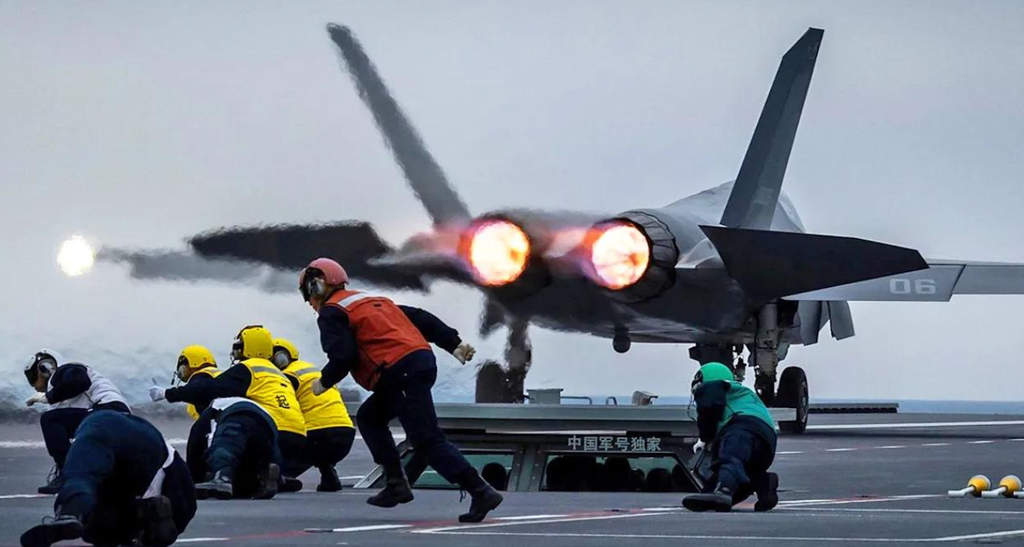
The Fujian represents a significant development in Chinese naval aviation. It uses electromagnetic catapult technology, allowing China to move beyond the ski-jump launch arrangements used by its earlier carriers.
However, the operational maturity of its carrier air wing, training system, aircraft availability and sustained deployment experience remain important considerations.
The United States maintains a substantial advantage in carrier operating experience and the number of nuclear-powered fleet carriers.
Destroyers and surface combatants
The U.S. Navy operates Arleigh Burke-class guided-missile destroyers and Ticonderoga-class cruisers, with the former forming the backbone of its surface combatant fleet.
These ships provide:
- Air and missile defense.
- Anti-submarine warfare.
- Land-attack missile capability.
- Maritime security.
- Carrier strike group protection.
China’s major surface combatants include:
- Type 055 large guided-missile destroyers.
- Type 052D guided-missile destroyers.
- Type 054A and Type 054B frigates.
- Type 056 corvettes.
The Type 055 is particularly significant because of its large vertical-launch weapon capacity and advanced sensor systems.
Naval fleet size
A Congressional Research Service report published in April 2025 cited a U.S. Department of Defense assessment that China’s navy had more than 370 battle-force ships, excluding approximately 60 Houbei-class missile-armed patrol combatants.
The same report listed 296 U.S. Navy battle-force ships as of September 30, 2024.
These figures demonstrate China’s numerical advantage, although ship counts do not account for differences in displacement, weapons, sensors, endurance, training or mission.
Submarine capabilities
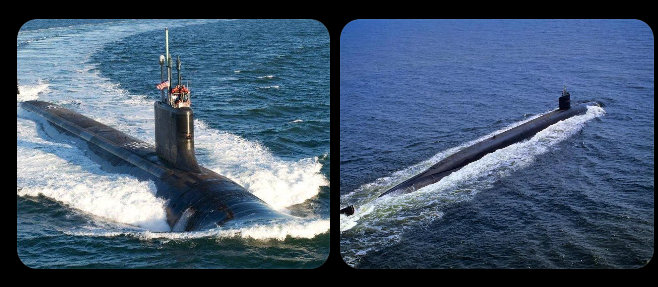
The United States has a major advantage in nuclear-powered submarine operations and undersea warfare.
Its submarine fleet includes:
- Virginia-class nuclear-powered attack submarines.
- Los Angeles-class attack submarines.
- Seawolf-class attack submarines.
- Ohio-class ballistic-missile submarines.
China operates several types of conventional and nuclear-powered submarines, including Type 039A/B diesel-electric submarines, Type 093 nuclear-powered attack submarines and Type 094 ballistic-missile submarines.
China is modernizing its undersea force, but differences in acoustic performance, operational experience, maintenance and submarine warfare integration remain relevant areas of assessment.
Naval assessment: China has the advantage in total battle-force ship numbers and proximity to its regional operating areas. The United States retains important advantages in nuclear-powered carrier operations, submarine warfare, global deployment experience and established naval partnerships.
5. Air Power: U.S. Air Force vs Chinese Air Force
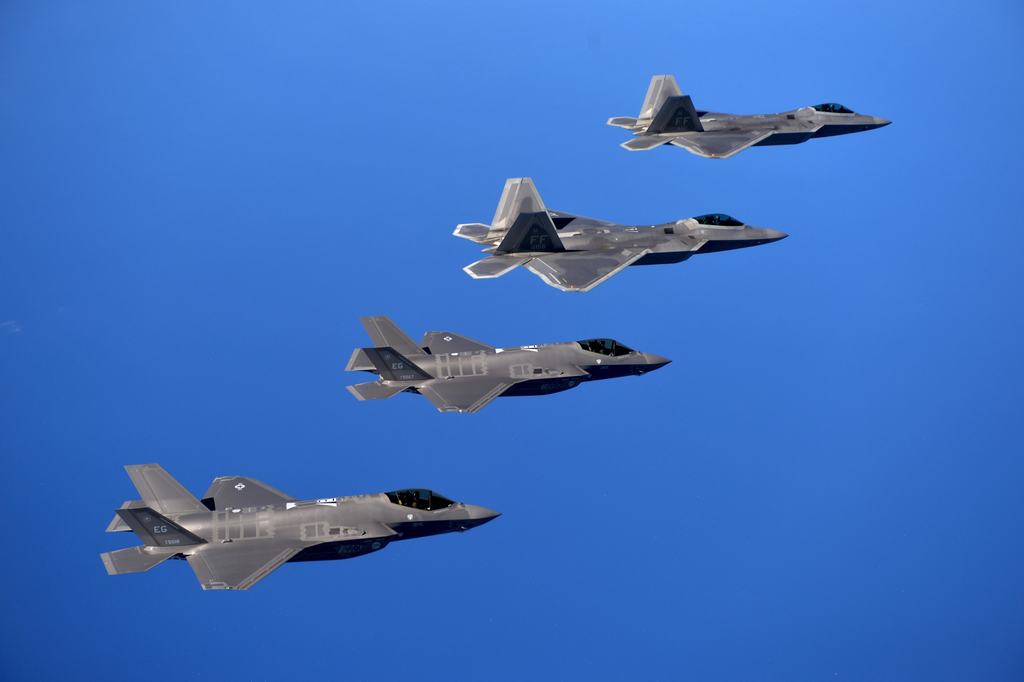
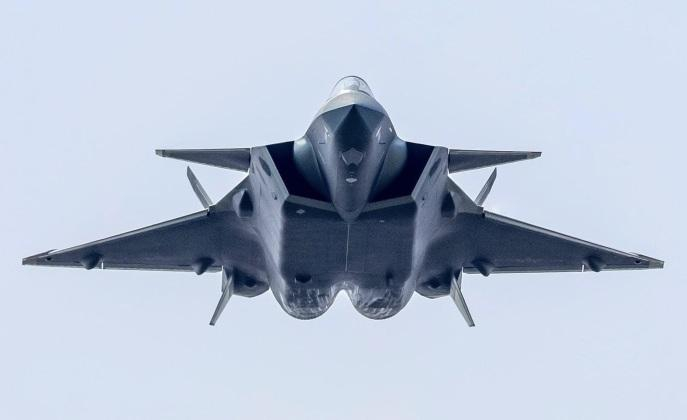
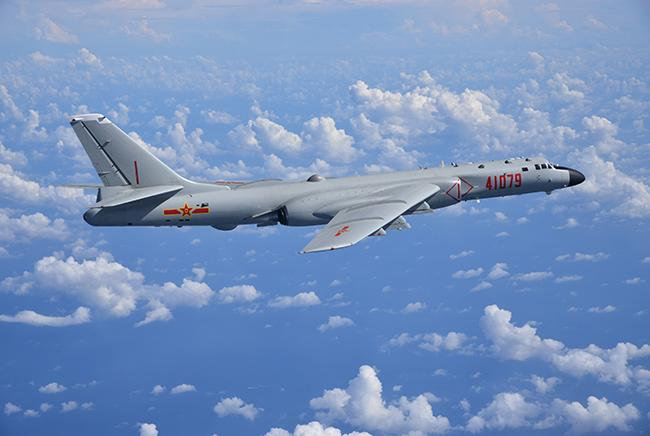
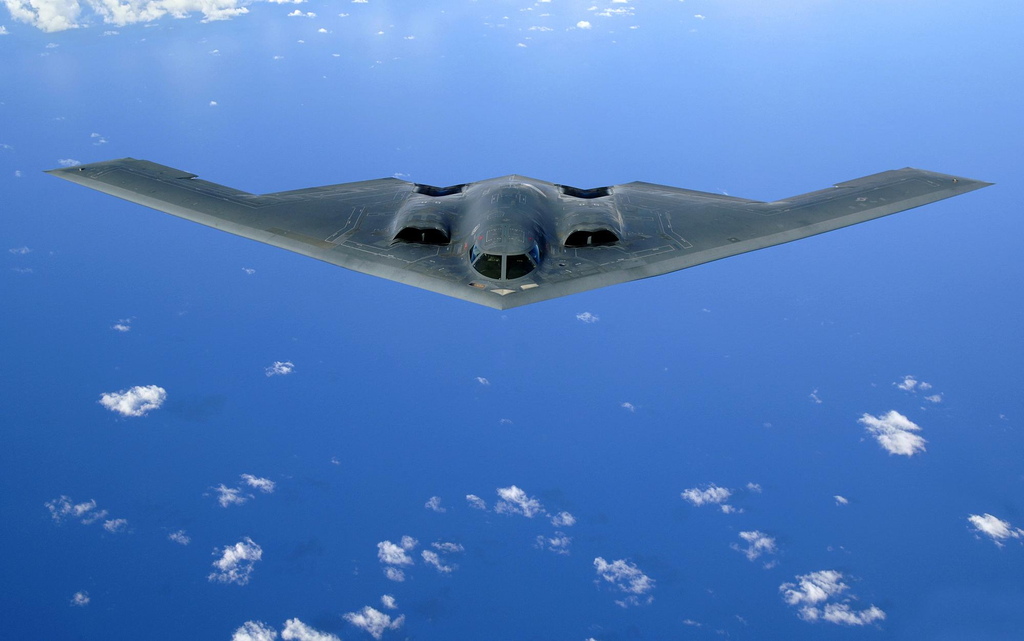
Air power is another central element of the military balance.
The United States operates a large combat aviation force supported by strategic bombers, aerial refueling aircraft, airborne early-warning platforms, electronic warfare systems and transport aircraft.
China has made substantial progress in developing modern combat aircraft, particularly stealth fighters, long-range interceptors and integrated air defense networks.
U.S. combat aircraft
The U.S. Air Force operates several important combat aircraft:
| Aircraft | Primary role |
|---|---|
| F-22 Raptor | Air superiority |
| F-35A Lightning II | Multirole stealth fighter |
| F-15EX Eagle II | Multirole air combat |
| F-15E Strike Eagle | Strike and interdiction |
| F-16 Fighting Falcon | Multirole fighter |
| B-2 Spirit | Stealth strategic bomber |
| B-52H Stratofortress | Long-range strategic bomber |
| B-1B Lancer | Conventional long-range strike |
The U.S. Navy and Marine Corps add further combat aviation capabilities through the F/A-18E/F, F-35C and F-35B.
The F-22 provides specialized air-superiority capabilities, while the F-35 family combines stealth, sensor fusion and multirole operations.
American aviation also benefits from a large fleet of aerial refueling aircraft, allowing combat aircraft to operate across extended distances.
Chinese combat aircraft
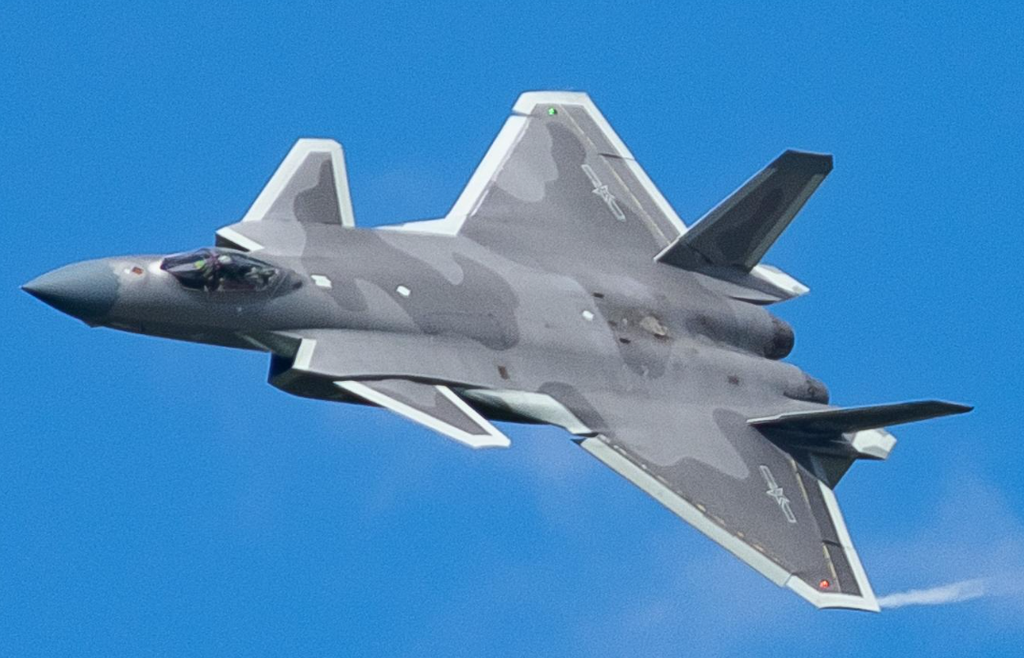
The People’s Liberation Army Air Force operates an increasingly modern fleet.
Important aircraft include:
- J-20 stealth fighter.
- J-16 multirole fighter.
- J-10C multirole fighter.
- J-11 and J-15 fighter variants.
- H-6K and H-6N bomber variants.
- KJ-500 airborne early-warning aircraft.
- Y-20 strategic transport aircraft.
China is also developing carrier-based combat aviation through the J-35 program.
The J-20 is particularly important because it gives China an operational fifth-generation fighter capability. Its role includes air superiority and other missions associated with China’s expanding long-range air operations.
Airborne support and refueling
The United States retains a significant advantage in global aerial refueling and strategic air mobility.
Its tanker fleet includes KC-135 and KC-46 aircraft, while strategic transportation relies on platforms such as the C-17 Globemaster III and C-5M Super Galaxy.
China has introduced the Y-20 transport aircraft and YY-20 tanker variants, expanding its ability to support military operations beyond its immediate territory.
However, the United States has a more established global air mobility system.
Which country has the stronger air force?
The United States retains an overall advantage in global combat aviation integration, stealth aircraft experience, aerial refueling, strategic bombers and airborne support infrastructure.
China has a growing regional air power capability supported by land-based airfields, modern fighters, air defense systems and ground-based missile forces.
The operational environment matters. China can operate closer to its mainland, while American forces must consider the distance between their bases and potential operating areas.
6. Land Forces: U.S. Army vs PLA Ground Force
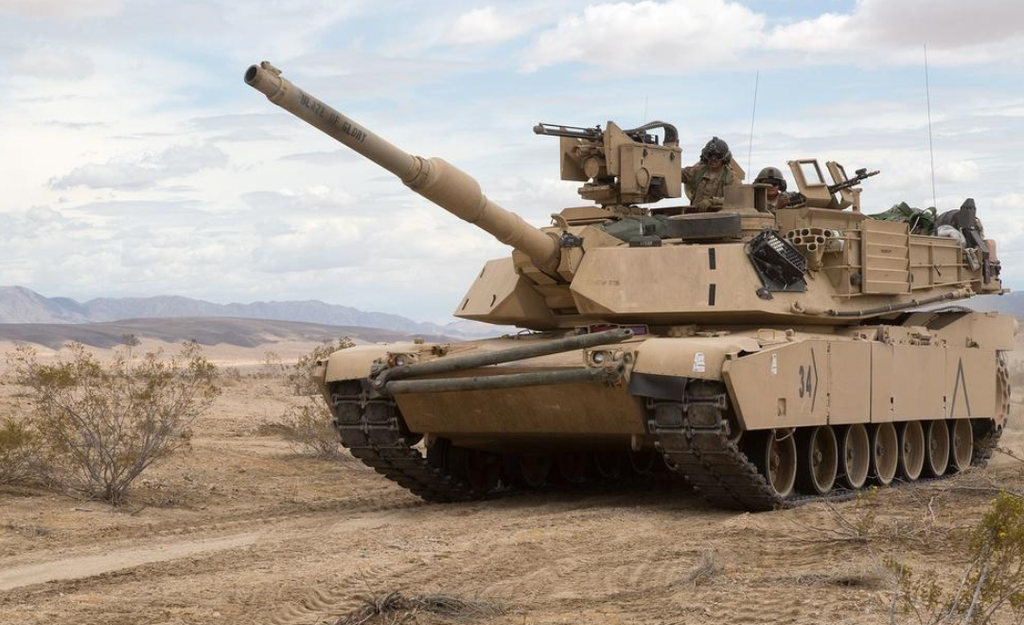
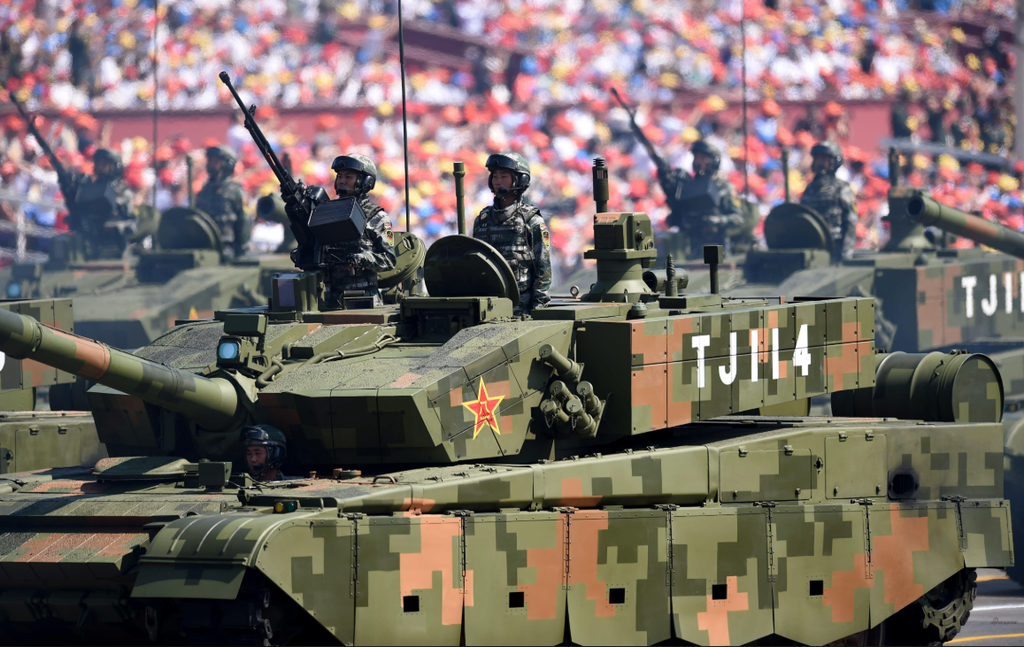
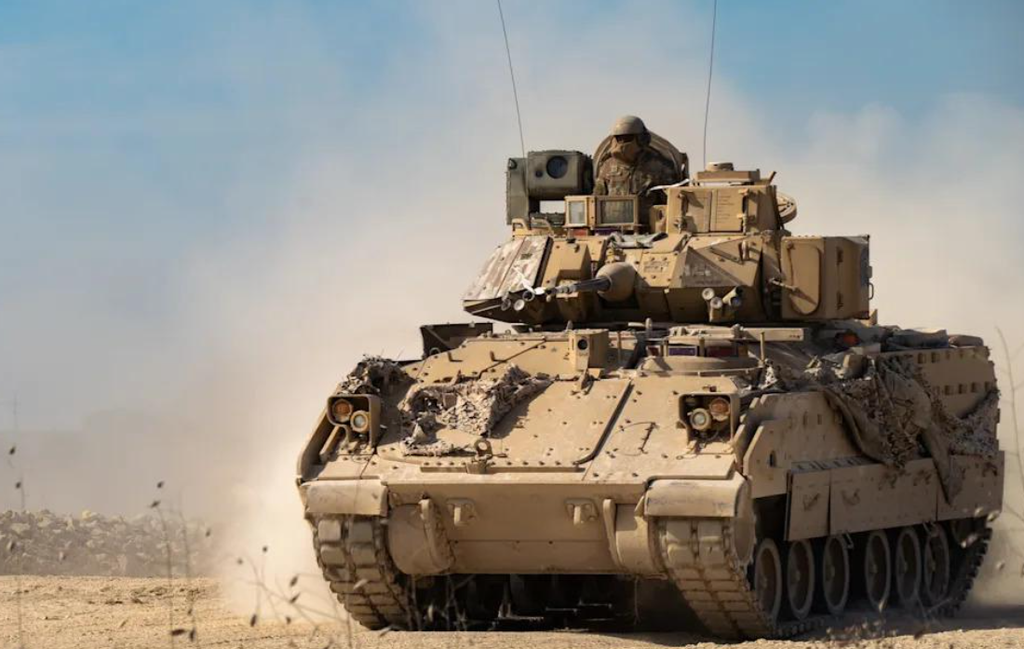
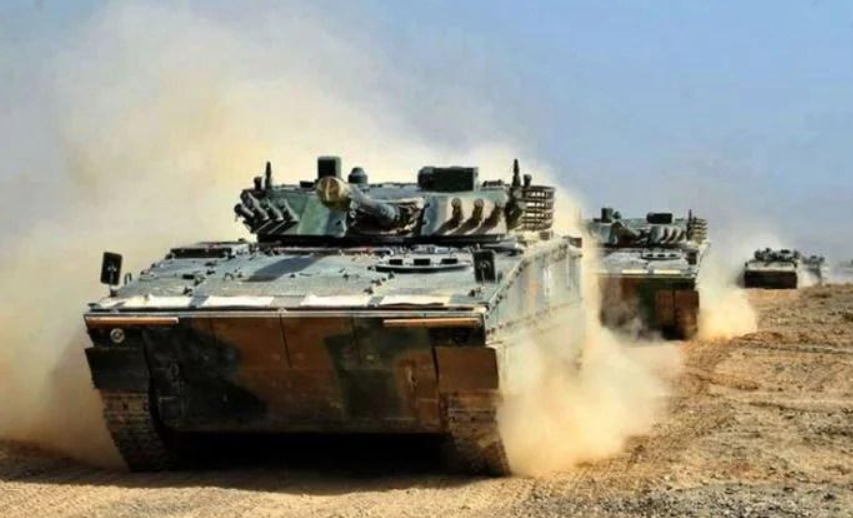
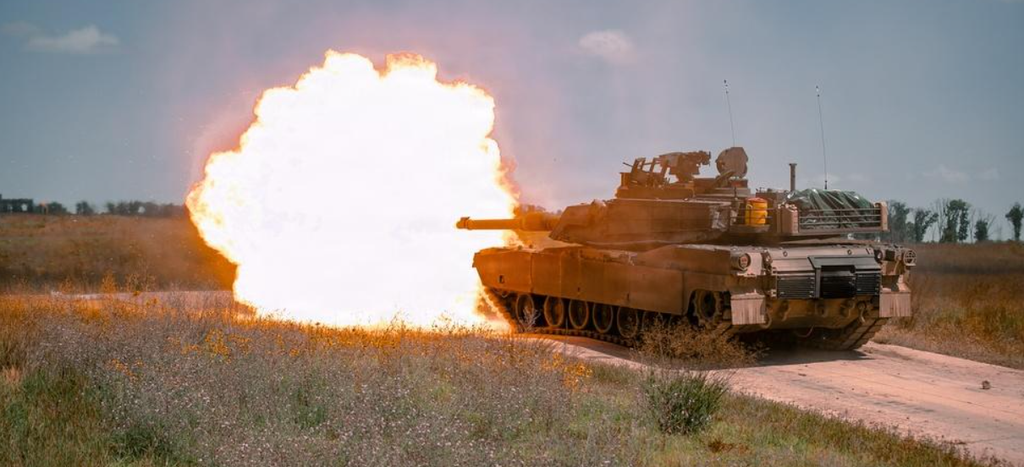
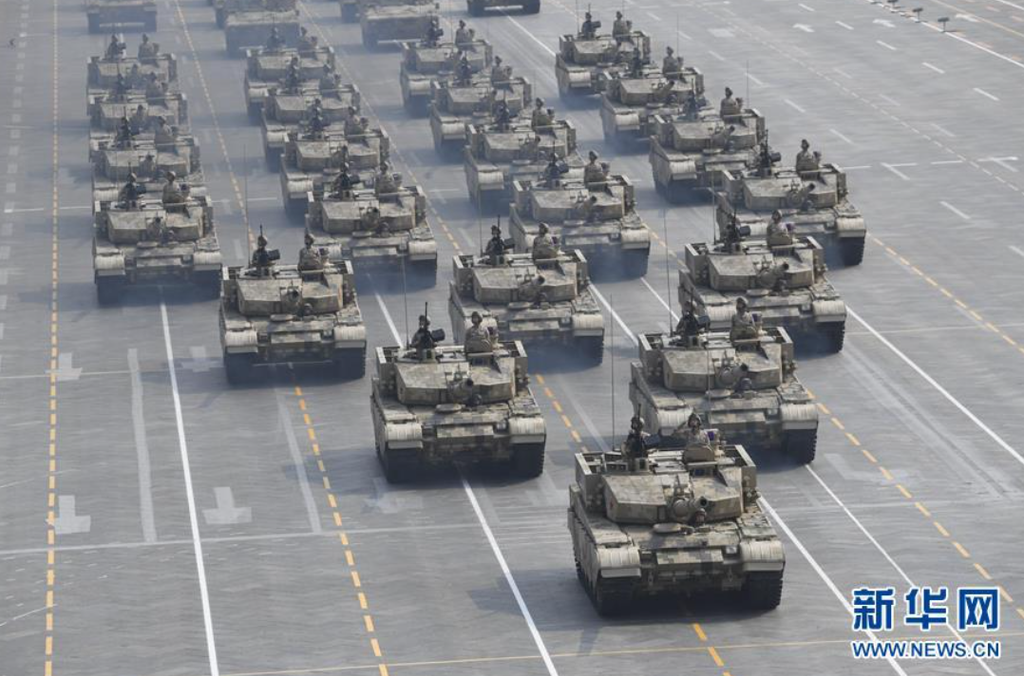
The U.S. Army and China’s PLA Ground Force have different organizational priorities.
The American Army is designed to conduct expeditionary operations, support joint campaigns and operate with allied ground forces. China maintains a large ground force structured around territorial defense, regional military operations and joint operations with other PLA services.
Main battle tanks
The United States operates the M1A2 Abrams family, including modernized SEPv3 variants.
Its principal strengths include:
- Advanced fire-control systems.
- Thermal imaging.
- Heavy armor protection.
- A 120 mm main gun.
- Integration with combined-arms formations.
China’s principal modern main battle tanks include the ZTZ-99A and ZTZ-96A.
The ZTZ-99A represents China’s more advanced heavy tank category, while the ZTZ-96 family provides a larger part of its modern armored force.
Both countries continue to modernize their armored formations.
However, publicly available information does not establish directly comparable armor protection, battlefield availability or fleet-wide operational readiness.
Infantry fighting vehicles and armored mobility
The U.S. Army operates the M2 Bradley infantry fighting vehicle, Stryker family of armored vehicles and M113-derived support platforms.
China fields systems including the ZBD-04 family of infantry fighting vehicles and ZBL-08 wheeled armored vehicles.
The two militaries also employ different approaches to mechanized warfare, reconnaissance, protected mobility and supporting firepower.
Artillery and rocket systems
The United States operates:
- M109A7 Paladin self-propelled howitzers.
- M777 towed artillery.
- M142 HIMARS.
- M270 Multiple Launch Rocket Systems.
China operates:
- PLZ-05 self-propelled howitzers.
- PCL-181 wheeled artillery.
- PHL-16 multiple-launch rocket systems.
- Various conventional and precision-guided missile systems.
China’s long-range rocket artillery and missile capabilities are particularly relevant to regional operations.
The U.S. Army, meanwhile, continues investing in extended-range artillery, precision fires and improved battlefield targeting.
Ground-force assessment: China has considerable numerical depth and strong regional firepower. The United States has extensive combined-arms experience, advanced expeditionary logistics and a mature network of supporting capabilities. Neither country’s ground inventory alone establishes its ability to sustain a prolonged land campaign.
7. Missile Forces and Integrated Air Defense
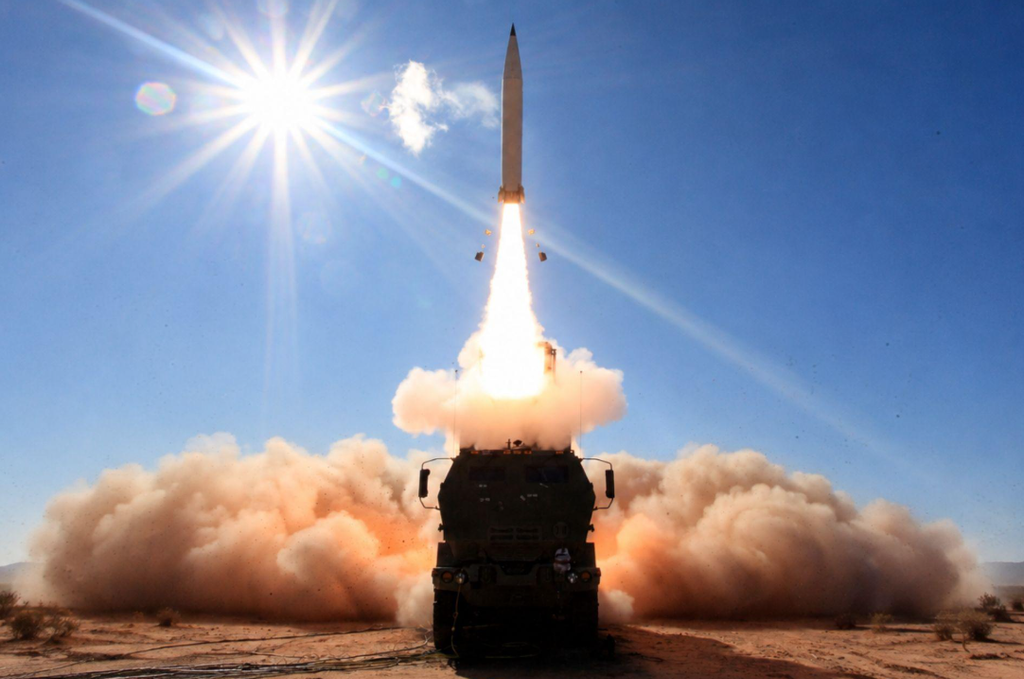
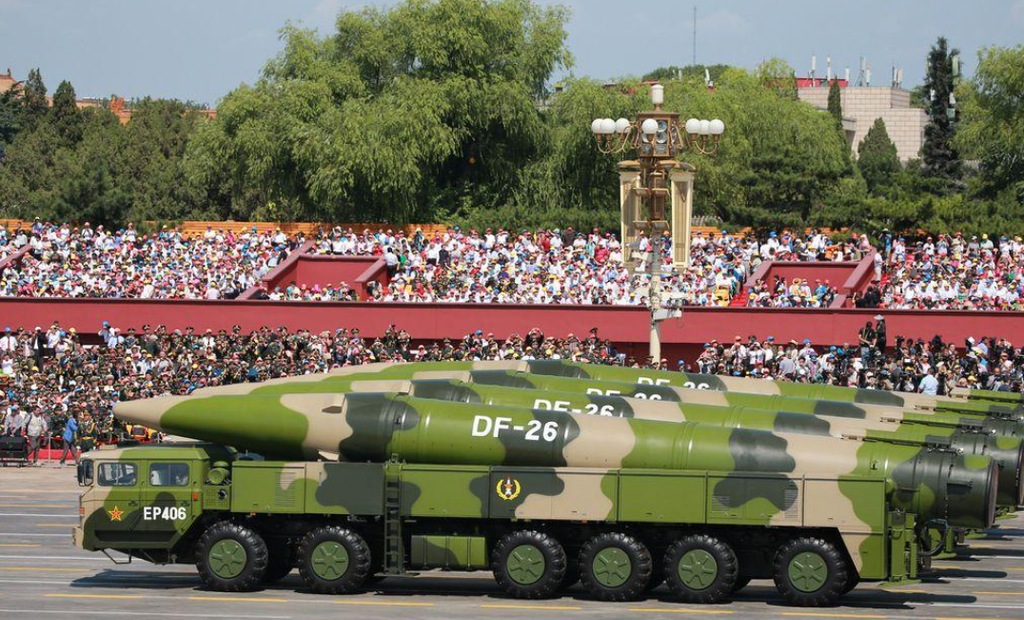
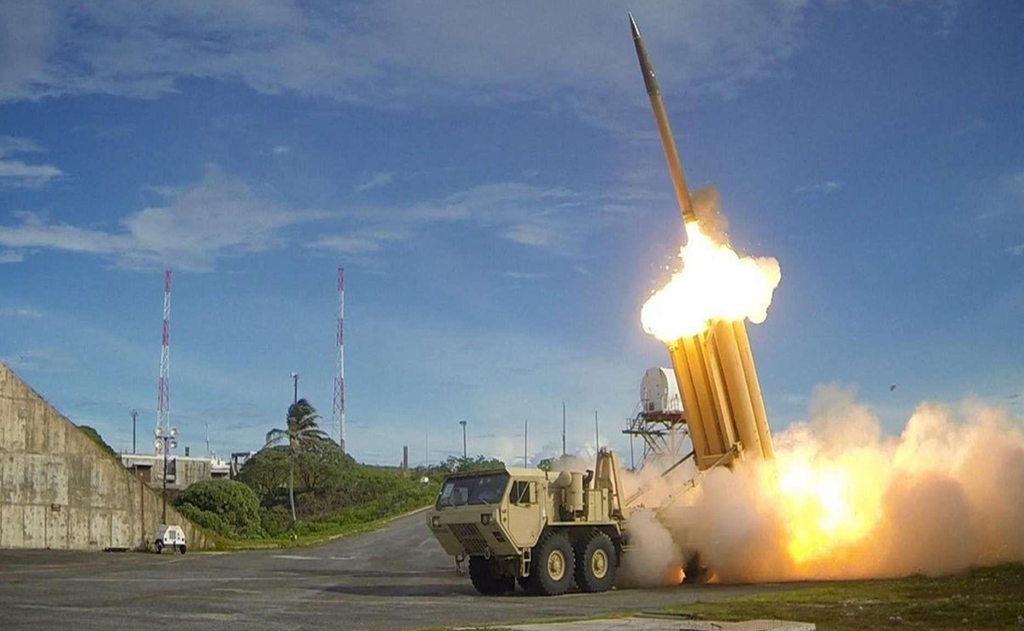
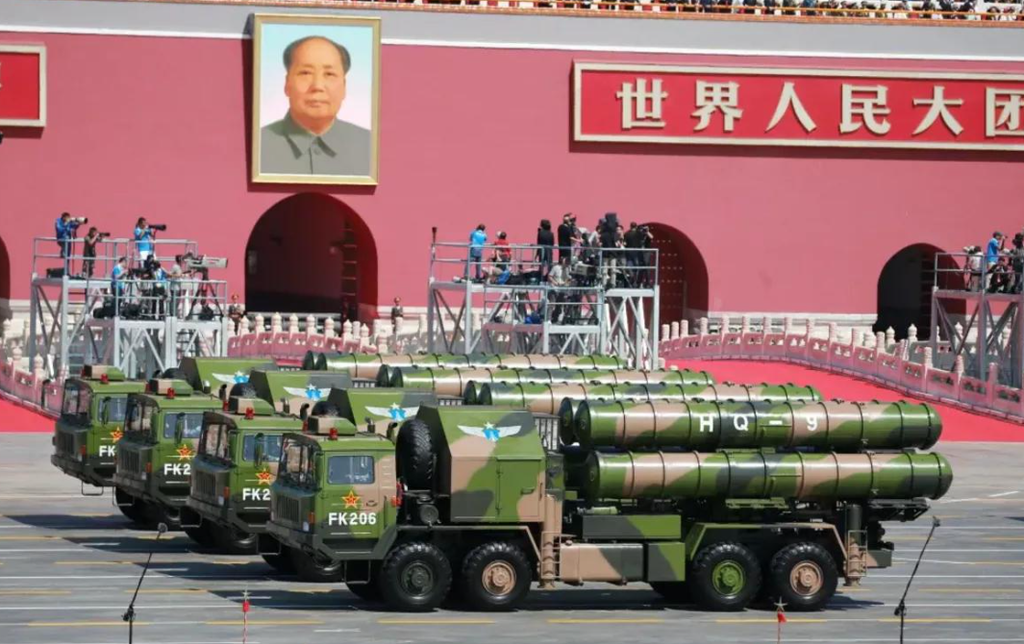
Missile forces are among China’s most important military advantages in the Western Pacific.
Unlike the United States, which distributes many long-range strike capabilities across its air, naval and ground forces, China has a dedicated Rocket Force responsible for conventional and nuclear missile operations.
Chinese missile capabilities
Important Chinese missile families include:
| Missile family | General role |
|---|---|
| DF-11 | Short-range ballistic missile |
| DF-15 | Short-range ballistic missile |
| DF-16 | Conventional ballistic missile |
| DF-17 | Hypersonic glide vehicle delivery system |
| DF-21D | Anti-ship ballistic missile |
| DF-26 | Intermediate-range ballistic missile |
| DF-31 | Intercontinental ballistic missile family |
| DF-41 | Intercontinental ballistic missile family |
The DF-21D and DF-26 are particularly important in discussions of China’s anti-access/area-denial strategy.
These systems are intended to complicate the movement and operations of opposing military forces within the Indo-Pacific.
U.S. missile capabilities
The United States operates a broad range of conventional and nuclear missile systems.
Important examples include:
- Tomahawk land-attack cruise missile.
- Precision Strike Missile.
- ATACMS.
- SM-3 interceptors.
- SM-6 missiles.
- Ground-based Midcourse Defense.
- Trident II D5 submarine-launched ballistic missiles.
The United States also maintains a large network of air and missile defense systems.
Air and missile defense
American systems include Patriot, THAAD, Aegis Ballistic Missile Defense and other integrated defensive capabilities.
China operates the HQ-9 family, HQ-22, HQ-16 and imported or domestically developed systems, supported by extensive radar infrastructure.
The effectiveness of either country’s missile defense network depends on the type of incoming threat, detection quality, interceptor availability, engagement conditions and the ability to coordinate multiple systems.
Missile assessment: China has a particularly significant regional conventional missile advantage through its extensive land-based missile forces. The United States has a wider global strike network and extensive sea, air and land-based capabilities. Neither side can assume that missile defenses will provide complete protection against a large and sophisticated attack.
8. Nuclear Weapons: United States vs China
Nuclear weapons make the military comparison fundamentally different from conventional force rankings.
The United States maintains one of the world’s largest nuclear arsenals and operates a mature nuclear triad consisting of:
- Land-based intercontinental ballistic missiles.
- Submarine-launched ballistic missiles.
- Strategic nuclear-capable bombers.
Its major systems include Minuteman III ICBMs, Trident II D5 missiles and nuclear-capable B-2 and B-52 aircraft.
China has historically maintained a smaller nuclear arsenal, but its strategic modernization program is expanding.
Its nuclear forces include:
- DF-series land-based ballistic missiles.
- Type 094 ballistic-missile submarines.
- JL-series submarine-launched ballistic missiles.
- Nuclear-capable strategic aircraft.
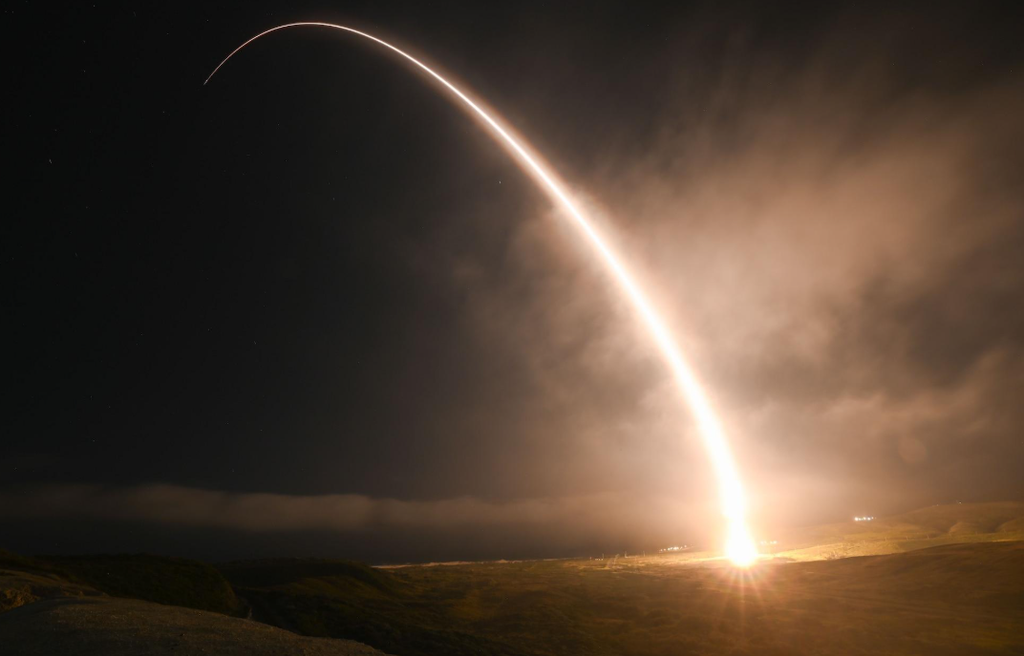
Nuclear arsenal estimates
SIPRI’s January 2026 estimates placed China’s total nuclear warhead inventory at approximately 620.
The United States had approximately 5,177 warheads in its total inventory under the same broad accounting framework.
These figures include different categories of warheads, including retired weapons awaiting dismantlement. They are not equivalent to the number of operationally deployed weapons.
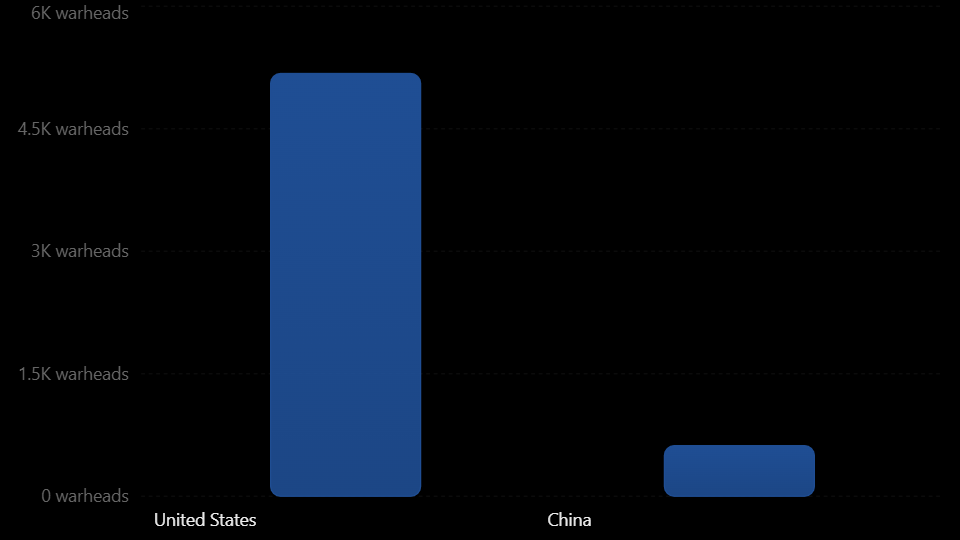
The United States retains a substantial numerical nuclear advantage.
China, however, is expanding its nuclear forces and improving its delivery systems. SIPRI reported that China had loaded hundreds of missiles into three large northern silo fields by January 2026.
The expansion increases the importance of nuclear deterrence, crisis communication and escalation management.
It does not mean that either country can use nuclear weapons without facing catastrophic consequences.
9. Military Technology, Space and Cyber Capabilities
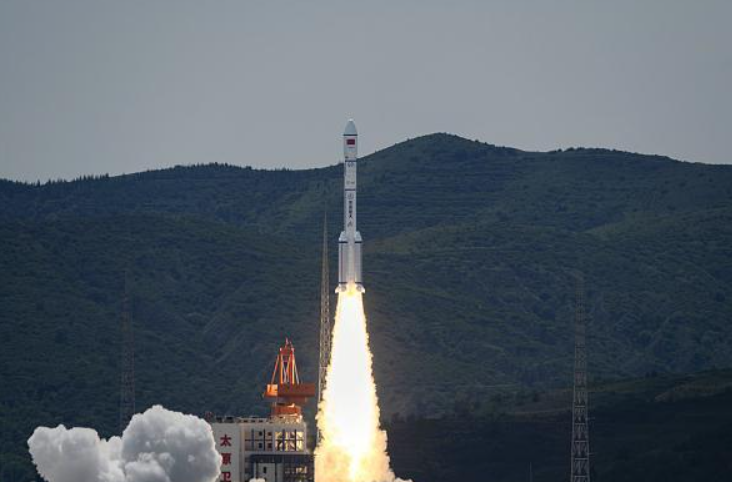
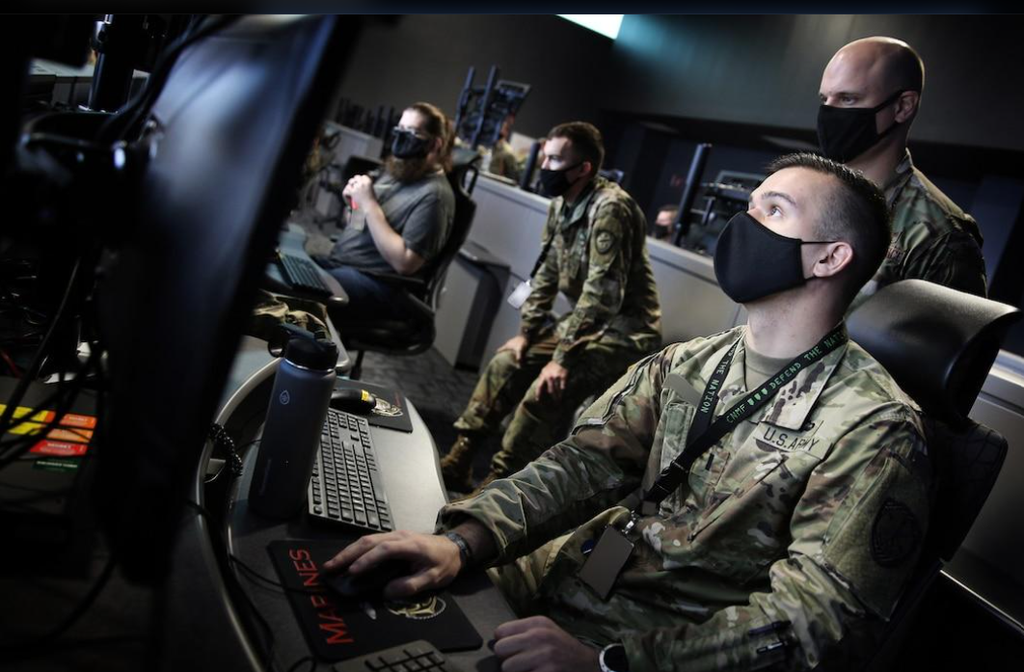

Modern military power increasingly depends on information systems, satellite networks, electronic warfare and the ability to coordinate operations across multiple domains.
Space capabilities
The United States operates a mature military space infrastructure through the U.S. Space Force and supporting organizations.
Its capabilities include:
- Satellite communications.
- Missile warning.
- Positioning, navigation and timing.
- Space surveillance.
- Intelligence collection.
- Military satellite command and control.
China has invested heavily in military space capabilities, including reconnaissance satellites, communications systems, navigation infrastructure and counterspace technologies.
Both countries recognize that space-based systems are essential to modern military operations.
Cyber warfare
The United States has established cyber capabilities through U.S. Cyber Command and service-level cyber organizations.
China has developed extensive cyber and information warfare capabilities, with its military structure incorporating information support and network-related operations.
Public evidence does not permit a reliable comparison of the full offensive and defensive capabilities of either country.
Artificial intelligence and autonomous systems
Both militaries are investing in artificial intelligence, autonomous platforms, robotic systems and advanced command networks.
American development includes collaborative combat aircraft, autonomous maritime systems and AI-enabled intelligence processing.
China is developing autonomous aircraft, uncrewed surface and underwater platforms, and AI-supported military applications.
The important distinction is between development, testing and operational deployment. Announced programs and prototypes should not be treated as established combat capabilities.
10. Military Logistics and Global Deployment

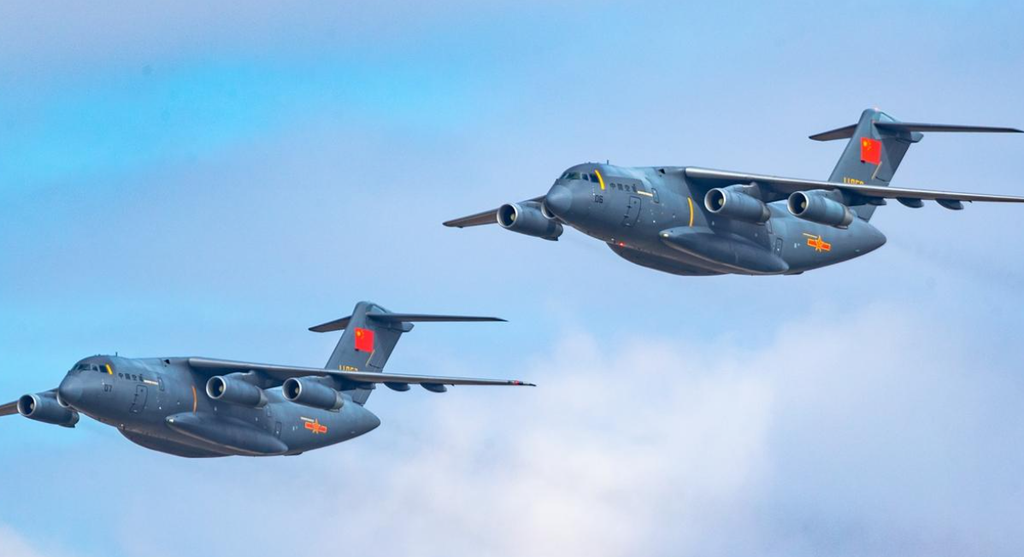
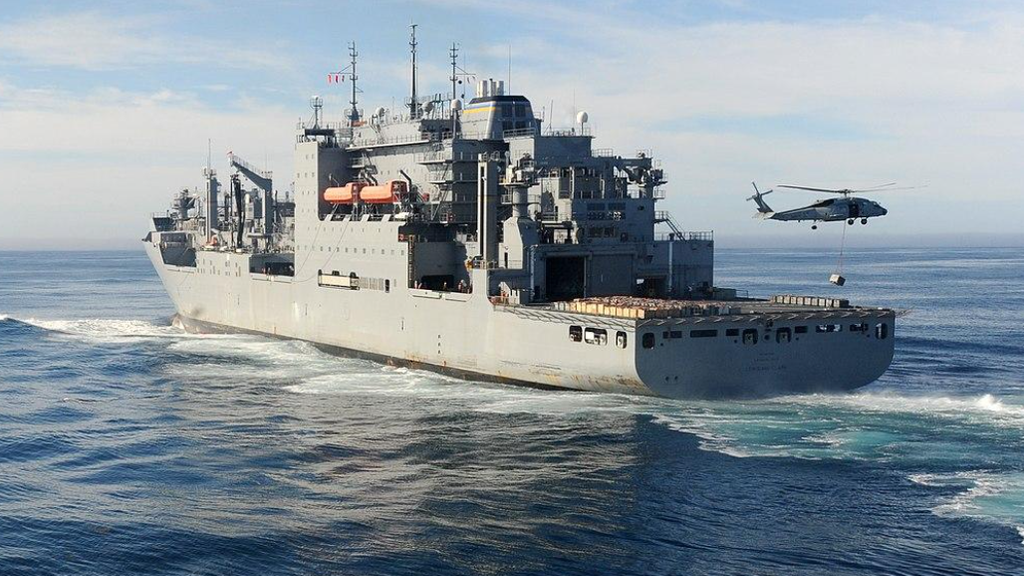
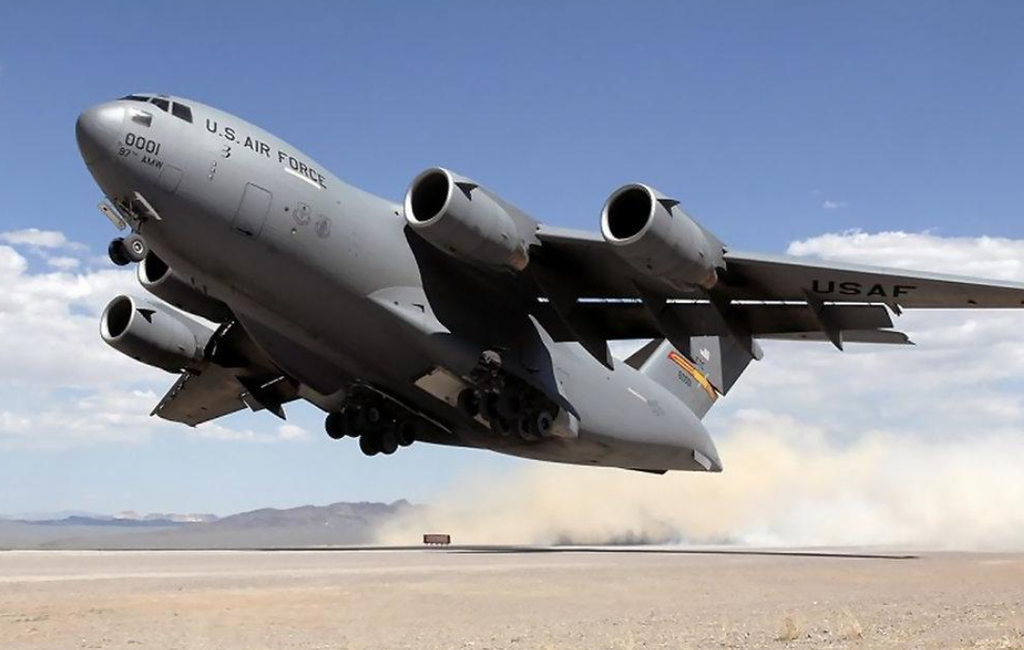
Logistics is one of the most important differences between American and Chinese military power.
The United States has decades of experience supporting forces across the Atlantic, Pacific, Middle East and other operational regions.
Its logistics system includes:
- C-17 and C-5M strategic airlift.
- Military Sealift Command.
- Overseas military installations.
- Forward maintenance facilities.
- Aerial refueling aircraft.
- Prepositioned equipment.
- Allied transportation and support arrangements.
These capabilities allow the United States to deploy forces far from its national territory.
However, maintaining this system is expensive. Long supply lines, vulnerable ports, tanker availability and maintenance capacity can constrain operations.
China’s logistics network
China has strengthened its military transportation and sustainment capabilities through Y-20 aircraft, replenishment ships, improved port infrastructure and overseas military access.
Its first overseas military support base in Djibouti provides an important example of its growing ability to support deployments beyond the Indo-Pacific.
China still faces challenges in maintaining large-scale combat operations far from its mainland.
Its regional position, however, offers a different advantage. In a Western Pacific conflict, Chinese forces could draw on nearby airfields, ports, missile bases, logistics facilities and domestic industrial infrastructure.
Global reach versus regional concentration
The United States has the stronger established global deployment system.
China has a potentially important advantage in concentrating forces close to its mainland.
A conflict near Taiwan or the South China Sea would therefore create vey different logistical conditions from a prolonged American operation in a distant region.
11. Defense Industry and Wartime Production Capacity
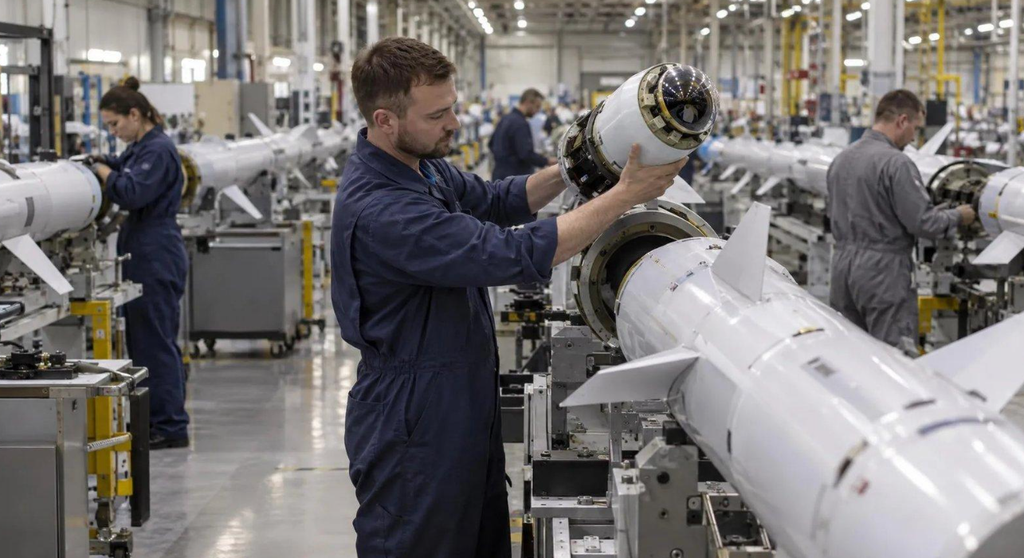
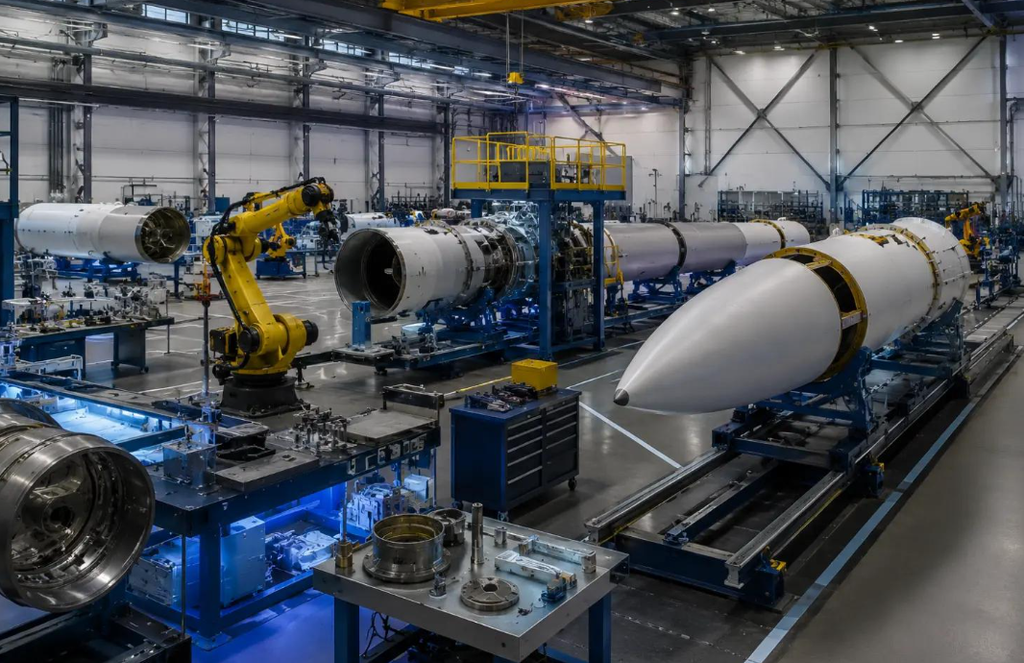
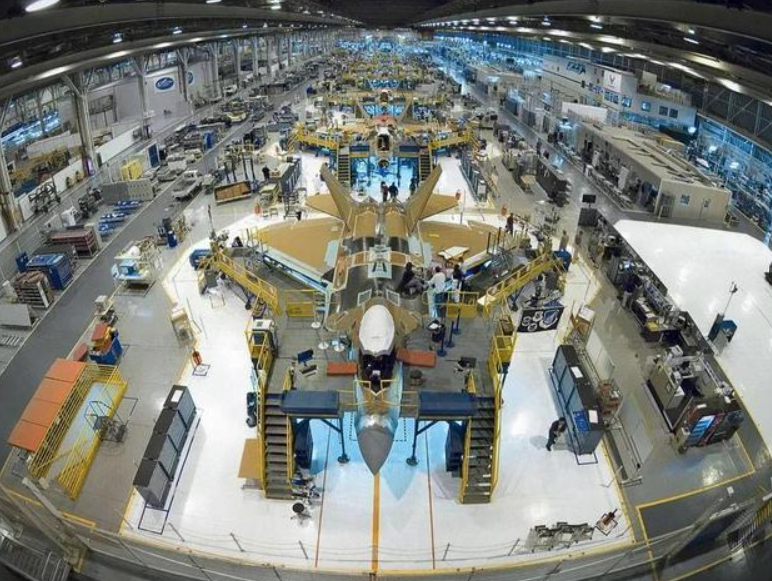

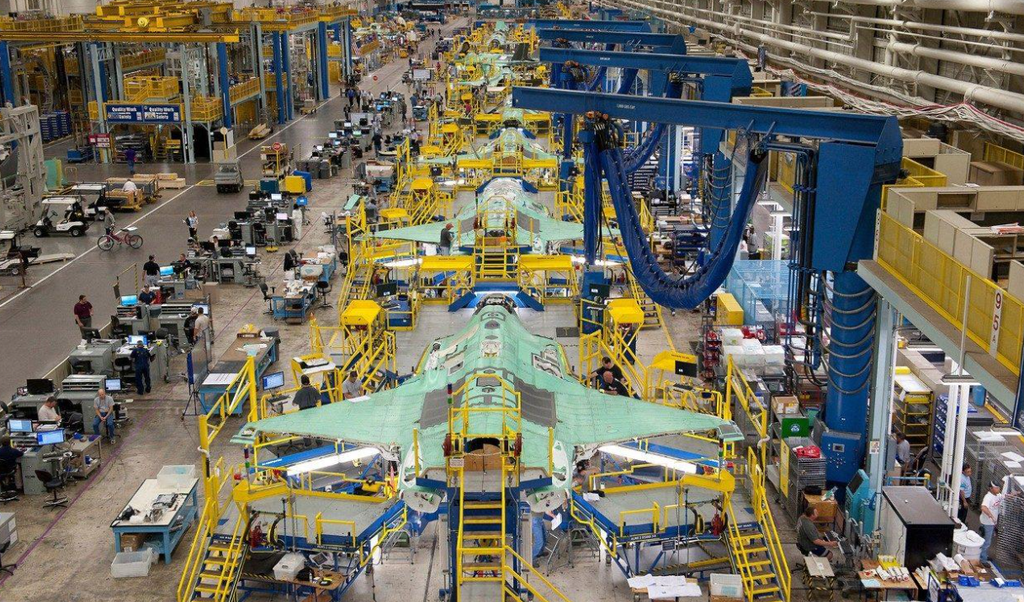
Industrial capacity is increasingly important in determining whether a country can sustain military operations over an extended period.
The United States possesses advanced defense manufacturers, including Lockheed Martin, RTX, Northrop Grumman, General Dynamics and Boeing.
These companies produce aircraft, missiles, ships, sensors, electronics and other military systems.
However, American defense manufacturing faces challenges involving:
- Shipyard capacity.
- Submarine construction schedules.
- Skilled labor shortages.
- Supplier concentration.
- Solid rocket motor production.
- Energetic materials.
- Long procurement timelines.
- Maintenance backlogs.
The United States has funded efforts to expand munitions manufacturing and improve supply-chain resilience.
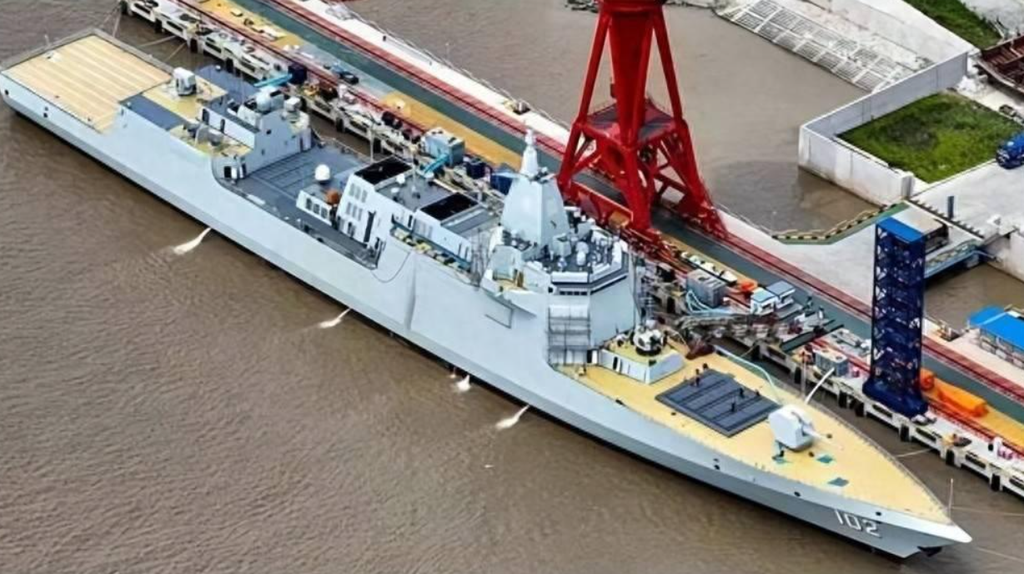
China has a large domestic manufacturing base and substantial shipbuilding capacity. Its industrial sector supports the production of combat aircraft, warships, missiles, armored vehicles, electronics and military components.
China’s commercial shipbuilding industry also provides an industrial foundation that is relevant to naval production capacity.
Ammunition and missile production
Both countries recognize that high-intensity conflict could consume precision weapons, air defense interceptors and artillery ammunition at rates that exceed normal peacetime procurement.
The United States has announced investments in expanding production of important munitions, but announced production targets should not be confused with actual deliveries or available stockpiles.
China’s production capacity is also difficult to assess fully because detailed manufacturing output and military stockpile figures are not publicly disclosed.
There is no reliable open-source basis for declaring exactly how many months either country could sustain a high-intensity conflict.
Industrial assessment
China has important advantages in large-scale manufacturing and shipbuilding capacity.
The United States retains advantages in several advanced aerospace technologies, defense research, specialized military systems and international industrial partnerships.
Both countries face different supply-chain vulnerabilities. A country’s industrial output alone does not establish how quickly its military can replace losses, repair damaged equipment or deliver operationally useful weapons.
12. Training, Combat Experience and Military Doctrine
Training and doctrine influence how effectively military equipment can be used in combat.
The United States has extensive experience conducting joint operations, expeditionary deployments and multinational military exercises. Its forces regularly participate in exercises with NATO members and Indo-Pacific partners, including Japan, South Korea, Australia and the Philippines.
American military training emphasizes:
- Joint-force coordination.
- Combined-arms warfare.
- Carrier strike group operations.
- Expeditionary logistics.
- Intelligence and targeting integration.
- Multinational interoperability.
China has invested heavily in joint military exercises and professional military education.
The PLA has worked to improve coordination between its ground forces, navy, air force and Rocket Force. Its exercises increasingly emphasize joint operations, maritime security, long-range strikes and scenarios involving Taiwan.
Combat experience
The United States has more recent experience conducting large-scale overseas military operations, although the nature of those operations differs from a potential high-intensity conflict against a technologically advanced military.
China has not fought a major conventional war since its 1979 conflict with Vietnam.
This creates an important distinction between training experience and actual combat experience.
Neither factor independently establishes which military would perform better in a future conflict.
13. Geographic Advantages and Strategic Priorities
Geography is one of the most important factors in understanding the USA vs China military balance.
The United States is protected by two large oceans and maintains access to overseas military facilities through established partnerships.
China has a different geographic position. Its military can operate close to its mainland across the East China Sea, South China Sea and Taiwan Strait.
China’s regional advantage
In a potential Western Pacific conflict, China could benefit from:
- Nearby military airfields.
- Land-based missile launch facilities.
- Domestic naval bases.
- Regional radar networks.
- Shorter logistical supply routes.
- Ground-based air defense.
- Domestic manufacturing support.
These capabilities could complicate the deployment of American naval and air forces.
American strategic advantages
The United States benefits from:
- Overseas military installations.
- Alliances with regional partners.
- Strategic airlift and sealift.
- Carrier strike groups.
- Nuclear-powered submarines.
- Global intelligence infrastructure.
- Established military partnerships.
Japan, Australia, South Korea and the Philippines are particularly important to the American military position in the Indo-Pacific.
However, allied assistance would depend on national decisions, political circumstances and the specific nature of a crisis.
The central geographic difference: China is better positioned to concentrate military power close to its mainland, while the United States has a stronger established network for projecting military power across distant regions.
14. Operational Capability: Where Does Each Military Have the Advantage?
The relative strength of the two armed forces changes according to geography, mission and duration.
The following assessments are analytical comparisons, not predictions of actual military outcomes.
| Operational environment | Relevant advantage | Reason |
|---|---|---|
| Global expeditionary operations | United States | Overseas bases, airlift, sealift and alliances |
| Western Pacific regional operations | China | Geographic proximity and regional missile networks |
| Carrier-based global operations | United States | Larger nuclear-powered carrier fleet and operating experience |
| Regional naval ship numbers | China | Larger battle-force ship inventory |
| Nuclear-powered submarine warfare | United States | Larger and more established nuclear submarine capability |
| Land-based conventional missile forces | China | Extensive regional ballistic and cruise missile forces |
| Global aerial refueling | United States | Larger and more established tanker infrastructure |
| Domestic manufacturing scale | China | Large industrial and shipbuilding base |
| Nuclear arsenal size | United States | Considerably larger estimated warhead inventory |
| Overseas military infrastructure | United States | Extensive network of established facilities |
Scenario 1: High-intensity conflict in the Western Pacific
China’s geographic position would be a major consideration.
Its mainland-based missiles, air defense systems, aircraft and naval forces could operate relatively close to supporting infrastructure.
American forces would have to account for distance, access to regional bases, the vulnerability of logistical networks and the availability of allied support.
The United States would retain important advantages in submarine operations, carrier aviation, strategic intelligence and joint-force integration.
However, a regional conflict would not simply be a contest between the total inventories of both countries.
Scenario 2: Long-duration global military operations
The United States would have significant advantages because of its global logistics network, overseas facilities, military partnerships and strategic transportation capabilities.
China’s overseas military infrastructure is expanding, but it does not yet match the scale of the American network.
Scenario 3: Prolonged industrial conflict
Both countries possess substantial manufacturing resources.
China’s shipbuilding and manufacturing capacity is a major consideration. The United States has advanced aerospace, electronics and weapons manufacturing capabilities, but faces constraints in several areas of defense production.
The outcome would depend on production rates, available stockpiles, supply-chain resilience, repair capacity and the ability to protect industrial infrastructure.
Publicly available evidence does not support a definitive calculation of how long either country could sustain a high-intensity war.
15. Strengths and Limitations of the U.S. Military
Major strengths
- Global military reach: Extensive overseas infrastructure and transportation capabilities.
- Advanced aviation: Large fleets of modern combat aircraft, strategic bombers and supporting aircraft.
- Submarine warfare: Mature nuclear-powered submarine operations.
- Nuclear deterrence: A large and diverse nuclear arsenal.
- Military partnerships: Extensive alliances and defense relationships.
- Joint operations: Established coordination across multiple military services.
- Advanced defense technology: Strong capabilities in aerospace, sensors, intelligence and precision weapons.
Major limitations
- Shipbuilding and submarine construction constraints.
- Long procurement and modernization timelines.
- Dependence on complex international supply chains.
- High costs associated with global deployments.
- Challenges expanding missile and ammunition production.
- Vulnerability of distant logistical networks in a major Indo-Pacific conflict.
- Maintenance and equipment availability pressures.
16. Strengths and Limitations of the Chinese Military
Major strengths
- Regional concentration: Ability to deploy forces close to the Chinese mainland.
- Naval expansion: The world’s largest navy by battle-force ship count.
- Missile forces: Extensive conventional and strategic missile capabilities.
- Industrial capacity: Large domestic manufacturing and shipbuilding base.
- Modern combat aviation: Expanding J-20, J-16 and other advanced aircraft fleets.
- Integrated regional defenses: Land-based air defense, radar and missile infrastructure.
- Military modernization: Continued investment across conventional, nuclear, space and cyber domains.
Major limitations
- Limited experience in major modern conventional warfare.
- Smaller overseas military support network.
- Less established global expeditionary logistics.
- Undersea warfare capability gaps that remain difficult to assess publicly.
- Limited transparency regarding equipment readiness and stockpiles.
- Continuing challenges in overseas sustainment.
- Uncertainty surrounding the operational maturity of newer platforms and joint-force concepts.
17. USA vs China Military: Who Has the Stronger Military in 2026?
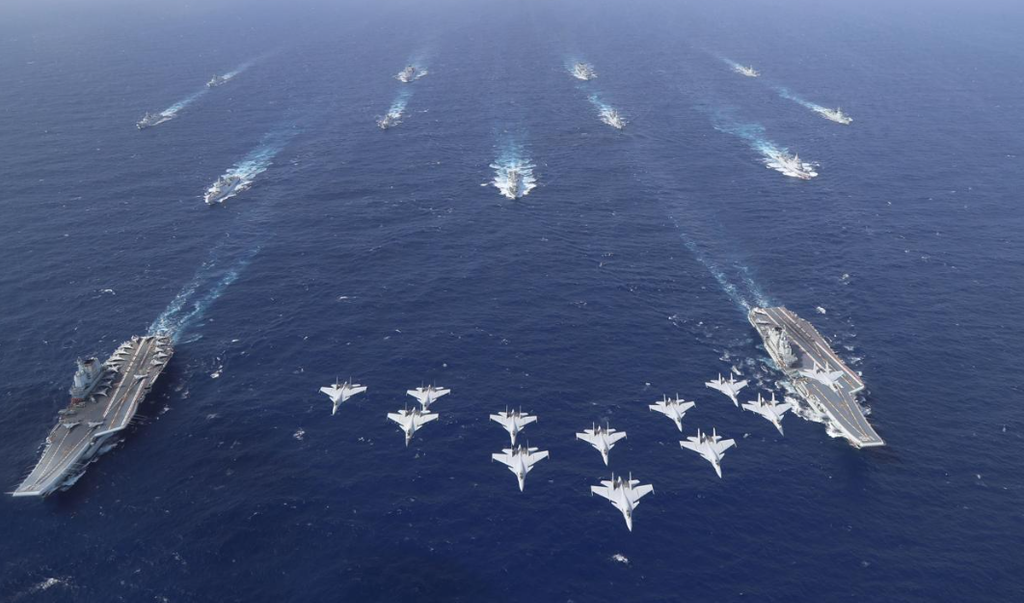
The United States retains an overall advantage in global military power, particularly in nuclear forces, strategic transportation, overseas military infrastructure, carrier operations, undersea warfare and established military partnerships.
China, however, has become a formidable military competitor. Its larger navy by ship count, extensive regional missile capabilities, growing combat aviation fleet and substantial domestic industrial base make it a major military power in the Indo-Pacific.
The distinction becomes clearer when comparing their strategic priorities.
The American military is structured to support worldwide operations. China’s military modernization is more heavily concentrated on regional security, territorial defense and the ability to challenge opposing forces operating near Chinese territory.
Consequently, the United States has important advantages in global power projection, while China has significant advantages in concentrating military resources within its regional operating environment.
Neither country’s defense budget, personnel strength or equipment inventory provides a complete measure of combat effectiveness.
A realistic assessment must account for readiness, training, logistics, ammunition availability, industrial production, geography and allied support.
The overall assessment is that the United States retains the stronger global military position in 2026, while China presents a particularly serious military challenge in the Western Pacific. The balance is domain-dependent, and neither country can be considered certain to achieve its objectives in a direct military confrontation.
Frequently Asked Questions
The United States retains advantages in global military reach, nuclear capabilities, submarine warfare, strategic transportation and overseas military infrastructure. China has important regional advantages, particularly in missile forces, naval ship numbers and geographic proximity to the Western Pacific.
China has approximately two million active military personnel by commonly cited estimates. The U.S. military had authorized active-duty end strength of 1,302,800 for FY2026. These figures use different reporting bases and should not be treated as exact actual headcounts on the same date.
China has the world’s largest navy by total battle-force ship count. However, the United States operates 11 nuclear-powered aircraft carriers and maintains substantial advantages in nuclear-powered submarine operations and global naval deployment experience.
The United States spent an estimated $954 billion in 2025, compared with China’s estimated $336 billion, according to SIPRI. The United States remains the world’s largest military spender.
No. SIPRI estimated approximately 5,177 nuclear warheads in the total U.S. inventory and approximately 620 in China’s inventory in January 2026. China is expanding its arsenal, but the United States retains a substantial numerical advantage.
There is no reliable basis for predicting a definitive outcome. The result would depend on the conflict’s location, objectives, military participation, allied involvement, operational readiness, logistics and escalation. China’s regional military capabilities make a Western Pacific conflict particularly challenging for American forces.