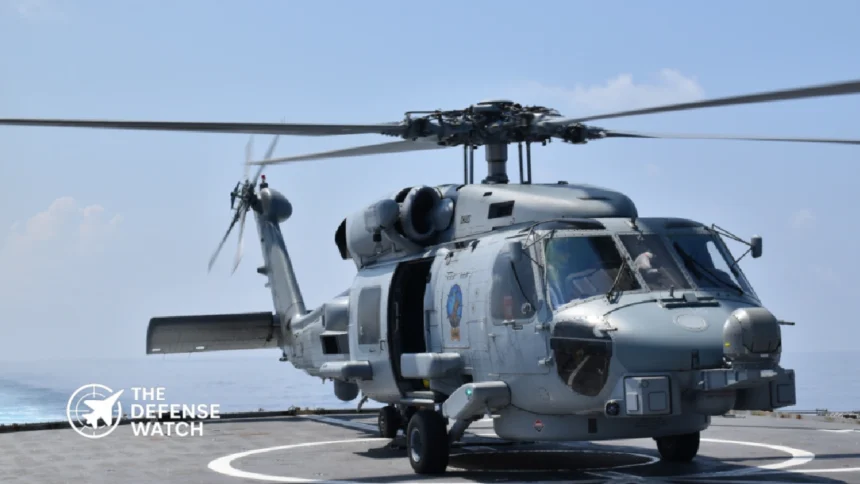
New Zealand has signed an agreement with the United States to acquire five Sikorsky MH-60R Seahawk maritime helicopters, committing NZ$1.648 billion in capital funding to replace its aging naval helicopter fleet. Deliveries are scheduled to begin in 2030, according to the New Zealand Defence Force (NZDF).
Announced on October 16, 2026, the agreement covers the helicopters, associated mission systems, weapons, spare parts and supporting equipment. The aircraft will be operated by Royal New Zealand Navy aircrew, while Royal New Zealand Air Force personnel will handle maintenance.
The purchase moves the maritime helicopter replacement program from selection and negotiation into an agreed acquisition. Its success will depend not only on aircraft delivery, but also on the training, maintenance facilities and ship integration needed to make the new helicopters operational.
Replacing the Seasprite fleet
The MH-60R will replace the Kaman SH-2G(I) Super Seasprite, which has provided New Zealand with a shipborne maritime helicopter capability. Wellington selected the Seahawk as its preferred replacement in August 2025 and chose to pursue the acquisition through the U.S. Foreign Military Sales (FMS) program rather than conduct a wider tender.
The final agreement follows U.S. approval of the proposed sale in June 2026. That approval established the scope of equipment the United States was prepared to offer, while the October announcement confirmed that New Zealand had signed the purchase agreement.
The distinction matters because approval of a possible foreign military sale does not itself mean a purchase has been completed. The October agreement is the more direct indication that the acquisition has moved forward.
The government has allocated NZ$1.648 billion in capital funding and an average of NZ$110 million annually in operating funding over the next decade. The operating allocation is separate from the capital figure and reflects the continuing costs associated with maintaining and using the fleet.
What the MH-60R brings to New Zealand’s frigates
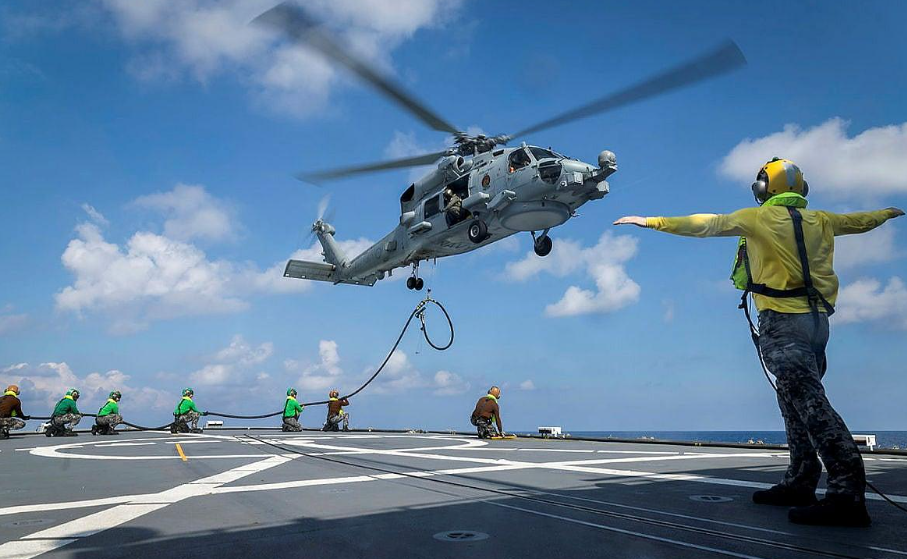
The MH-60R is a multirole naval helicopter designed for anti-submarine warfare, anti-surface warfare and other maritime missions. Its value lies in extending a ship’s sensors and weapons beyond the vessel itself, allowing a frigate to search a wider area and respond to threats at a greater distance.
New Zealand’s Defence Force says the aircraft will increase the surveillance reach and offensive and defensive capabilities of its frigates. Other planned roles include search and rescue, moving personnel and supplies between ships and shore, and supporting maritime counterterrorism operations.
Three capabilities are particularly relevant to the replacement program:
- Anti-submarine warfare: The MH-60R can employ sonar systems and Mk 54 lightweight torpedoes to search for and engage underwater threats.
- Surface surveillance and engagement: Its sensors and weapons provide a means to detect, identify and engage surface targets, extending a frigate’s reach.
- Shipboard operations: The helicopter gives naval commanders an airborne asset for surveillance, logistics and selected support missions without requiring every task to be performed by the ship itself.
The U.S. Defense Security Cooperation Agency’s June 2026 notification listed airborne low-frequency sonar, digital magnetic anomaly detection equipment and Link 16 tactical communications among the requested equipment. It also identified 65 AGM-114R Hellfire missiles and 225 Advanced Precision Kill Weapon System (APKWS) rockets in the proposed package.
These are details of the proposed sale package, rather than confirmation that every listed item has already been delivered or entered service. The New Zealand government has separately confirmed that the agreement includes weapons and equipment, including Mk 54 torpedoes.
The combination of underwater detection, tactical data links and precision weapons gives the aircraft a role in a wider naval sensor and command network. Its effectiveness will nevertheless depend on crew training, communications, maintenance availability and the ability to operate safely from New Zealand’s ships.
Interoperability with Australia
A major consideration for Wellington is compatibility with regional partners, particularly Australia. The Royal Australian Navy already operates MH-60R helicopters, giving the two countries a common aircraft type for selected training, logistics and operational activities. New Zealand’s Ministry of Defence has explicitly identified interoperability with Australia and other partner forces as a reason for selecting the Seahawk.
Common platforms can make combined operations easier by reducing differences in aircraft procedures, maintenance practices and mission-system interfaces. They can also create opportunities to share experience and support arrangements, although common aircraft do not automatically guarantee full interchangeability of every weapon, software configuration or maintenance resource.
For New Zealand, this matters because maritime operations across the South Pacific can require cooperation with allied navies over large distances. A shipborne helicopter that can contribute to anti-submarine warfare and surface surveillance gives frigates another way to collect information and support operations beyond the immediate ship formation.
The purchase should therefore be understood as both a fleet replacement and an investment in coalition compatibility. It does not, by itself, establish how frequently New Zealand will deploy the aircraft with Australian forces or what future joint operating arrangements will be adopted.
The cost extends beyond the aircraft
The NZ$1.648 billion capital allocation is only one part of the long-term commitment. The NZDF says funding has also been set aside for infrastructure design and temporary facilities to accommodate the aircraft at RNZAF Base Auckland in Whenuapai. Further decisions are expected to address infrastructure, training systems and complementary uncrewed aerial systems.
Those supporting elements are essential to operational readiness. Maritime helicopters require trained aircrew, maintainers, mission specialists, spare parts, ground equipment and procedures for operating from naval vessels. Delays in any of these areas could limit the value of receiving the aircraft on schedule.
The Ministry of Defence previously outlined a phased approach to the program, separating the aircraft replacement from subsequent infrastructure and training work, with a further phase examining vertical takeoff and landing uncrewed systems.
Uncrewed aircraft could eventually complement crewed helicopters in selected surveillance tasks, but New Zealand has not yet confirmed a final configuration, procurement schedule or operational concept for that additional capability in the October announcement.
The purchase also brings a long-term sustainment obligation. The annual operating allocation indicates that Wellington is planning for recurring costs beyond acquisition, although public information does not provide a detailed breakdown of maintenance, personnel, fuel, training and weapons expenditure.
Deliveries begin in 2030
The confirmed delivery timeline begins in 2030. The announcement does not provide a detailed schedule for individual aircraft, the date of initial operational capability or the point at which the existing Seasprite fleet will be fully withdrawn.
That transition will be important for maintaining New Zealand’s shipborne aviation capability. The replacement must progress through aircraft acceptance, crew conversion, technical training, maintenance preparation and operational integration before the full benefits can be realized.
For now, the central result is clear: New Zealand has signed for five MH-60R Seahawks, selected a platform already in use by Australia and committed funding for both acquisition and operation. The next measure of progress will be whether aircraft deliveries and supporting infrastructure develop in step, allowing the Royal New Zealand Navy to sustain maritime helicopter operations throughout the transition.