• Home
  • About
  • Defense Systems
  • Manufacturer
  • Comparisons
  • Compare 
  • Tools
TheDefenseWatch.com
  • Aerospace & Aviation
  • Military & Ordnance
  • Naval & Maritime
  • Cyber & Space Defense
  • Policy & Strategy
  • Global News
  • Tools Library
    • Smart Calculator
    • Drone Flight Time Calculator
    • Drone Range Calculator
    • Counter-Drone Jammer Effective Range Calculator
    • Counter-Battery Radar Detection Calculator
    • Artillery Fire Correction Calculator
    • Thermal Camera Detection Range Calculator
    • Missile Range & Time-of-Flight Calculator
    • Radar Detection Range Calculator
    • FPV Strike Drone Payload vs Range Calculator
    • Loitering Munition Endurance Calculator
    • Sniper Ballistic Drop & Windage Calculator
    • Bullet Drop Calculator
    • U.S. Army Combat Fitness Test (ACFT) Calculator
    • Military Pension Calculator
    • Military Retirement Calculator
    • Military Pension Calculator
    • Large Number Calculator
Font ResizerAa

TheDefenseWatch.com

The Defense Watch | U.S. & Global Defense News, Analysis & Military Updates

Search
  • Home
  • About
  • Defense Systems
  • Manufacturer
  • Comparisons
  • Compare 
  • Tools

Stay Updated

Get the latest update

Subscribe

Explore

  • Drone
  • Fighter Jets & Military Aircraft
  • Hypersonic Weapons
  • Aircraft Carriers
  • Strategic History & Missions
  • Tools Library
Home » US-Venezuela Maritime Clash Triggers Venezuela’s Call for UN Emergency Session
Geopolitical & Strategic DoctrinesPolicy & Strategy

US-Venezuela Maritime Clash Triggers Venezuela’s Call for UN Emergency Session

TeamDefenseWatch
Last updated: October 11, 2025 12:07 pm
TeamDefenseWatch
Share
2 Min Read
US military strikes
Image from ungeneva.org
SHARE
Follow The Defense Watch on Google:

What Happened: Venezuela Seeks UN Session After US Strikes

Venezuela has formally requested an emergency session of the United Nations Security Council, following a series of recent U.S. military strikes on vessels suspected of drug trafficking in Caribbean waters. In its submission, Caracas warned that an “armed attack” could occur against the country in the “very short term.”
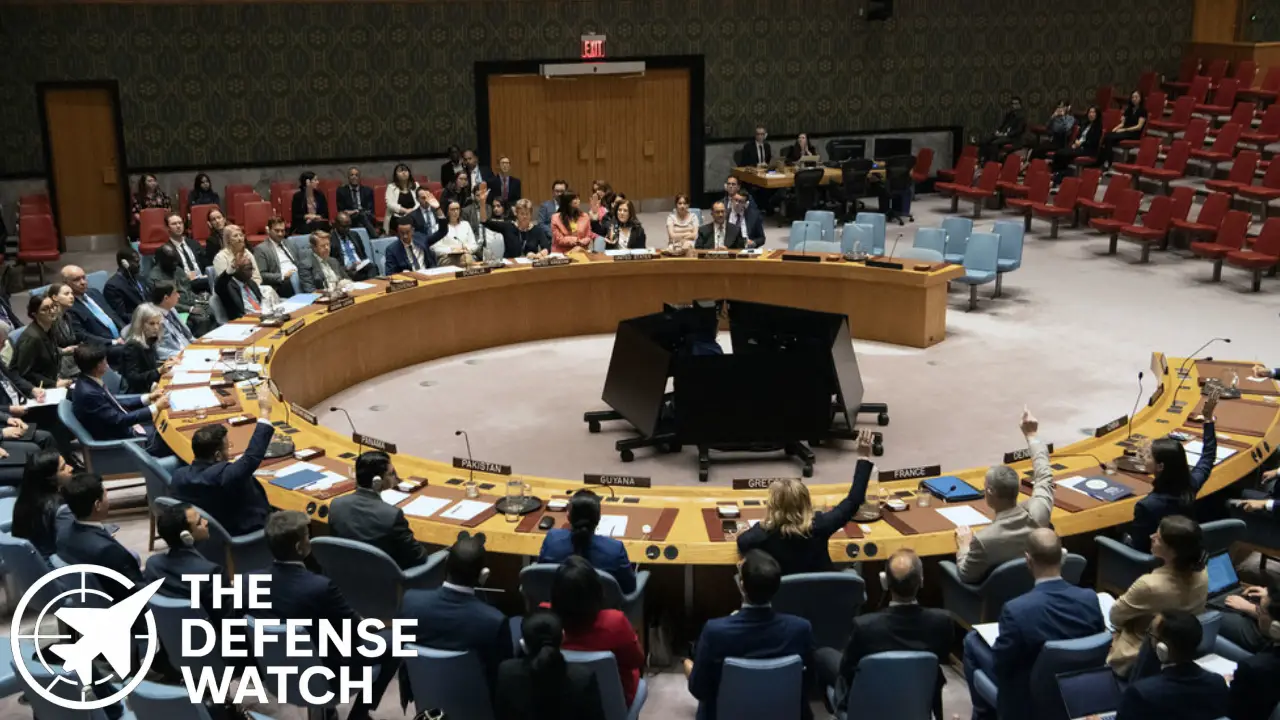
The request was lodged on Thursday, October 9, 2025, and the UNSC meeting was scheduled for Friday afternoon at 3 p.m. local time.

Contents
What Happened: Venezuela Seeks UN Session After US StrikesBackground: Rising Military Tension in the Southern CaribbeanDetails & ReactionsVenezuela’s Position and AppealU.S. Defense and Legal JustificationInternational Voices & ResponsesExpert & Policy LensImpact & What’s Next

Background: Rising Military Tension in the Southern Caribbean

Over recent weeks, the U.S. has significantly escalated its maritime and aerial presence in the southern Caribbean region, citing intensified operations against drug trafficking networks.
Since early September 2025, U.S. forces have conducted at least four lethal strikes on vessels alleged to be carrying narcotics. The total number of casualties reported across these operations is 21 individuals.
The U.S. government frames the campaign under a broader policy shift treating drug cartels as “unlawful combatants,” thereby justifying military engagement beyond traditional law enforcement measures.
Venezuelan authorities have long questioned Washington’s use of counter-narcotics as cover for broader strategic aims—including regime pressure—especially amid large-scale U.S. naval deployments near Venezuelan maritime approaches.

Details & Reactions

Venezuela’s Position and Appeal

Samuel Moncada, Venezuela’s U.N. Ambassador, said in a letter to the Russian UN ambassador (then serving as Security Council president), that U.S. actions risk violating Venezuela’s sovereignty and that “the belligerent action and rhetoric of the U.S. government … objectively point to … a situation in which … an armed attack is to be perpetrated.”
Caracas also accused the U.S. of seeking regime change, arguing that drug-war justifications mask the strategic goal of seizing control over Venezuela’s natural resources.
At the U.N. meeting, Venezuela’s envoy described U.S. claims about internal cartel collusion as a disinformation campaign aimed at criminalizing Venezuelans.

U.S. Defense and Legal Justification

At the Security Council gathering, U.S. Political Counsellor John Kelley defended the strikes, emphasizing that the U.S. was using its “full might” to fight drug trafficking.
Peter Hegseth, U.S. Defense Secretary, asserted he holds “absolute and complete authority” for these operations—citing constitutional, war-powers, and self-defense rationale.
However, critics argue the U.S. has not publicly disclosed evidence showing the vessels were carrying drugs, or that their crews posed imminent threat.

- Advertisement -

International Voices & Responses

At the session, Russia’s U.N. envoy Vassily Nebenzia strongly condemned the U.S. strikes, calling them violations of international law and accusing Washington of preparing an invasion.
China’s UN envoy echoed the concerns, criticizing unilateral U.S. enforcement operations and warning of harm to freedom of navigation and global norms.
Some U.N. Security Council members—France, Greece, and Denmark—called for de-escalation and legal scrutiny of the operations.
Panama and Colombia also voiced concern, emphasizing that drug threats should be addressed through multilateral cooperation rather than militarized intervention.
Colombian President Gustavo Petro, in particular, accused the U.S. of killing Colombian nationals in the strikes—though Washington has not publicly confirmed the identities of the victims.

Expert & Policy Lens

Legal scholars point out that maritime interdiction by one state of vessels flagged by or linked to another sovereign must satisfy rigorous standards under international law—including authorization under the UN Convention on the Law of the Sea (UNCLOS) or a UN mandate. Without such basis, critics argue, the U.S. risks breaching sovereignty and maritime norms.
Analysts also note the mismatch between the heavy naval arsenal deployed and the counter-narcotics mission: destroyers and amphibious assets are overkill for drug-boat interdiction, suggesting strategic signaling may be as important as operational effect.
Finally, the lack of transparency around target selection and assessment amplifies the credibility gap—fueling suspicion that the policy serves multiple geopolitical goals in addition to drug interdiction.

Impact & What’s Next

Venezuela’s appeal to the UN marks a tactical escalation into the diplomatic arena, aiming to rally international legal pressure on Washington.
The Security Council deliberations may force more scrutiny of U.S. rules of engagement and legal posture in maritime counter-drug operations.
But unless the U.S. provides stronger legal justification or backing from allies, its operations risk deeper diplomatic backlash and potential isolation in multilateral fora.
In Venezuela, the perceived threat may be used to rally domestic support, intensify military readiness, or even pursue counter-measures in regional waters.
Over the coming days, key developments to watch include whether the Security Council issues a resolution, whether the U.S. discloses evidence of its strikes, and whether other Latin American governments join or oppose Caracas’s stance.

Source 1 | Source 2 | Source 3

Enjoying our coverage?

Make The Defense Watch a preferred source on Google to see more of our geopolitical and defense insights when relevant to you.


Share This Article
Facebook Copy Link Print
ByTeamDefenseWatch
TeamDefenseWatch is the official editorial byline of TheDefenseWatch.com. Working under one umbrella, TheDefenseWatch.com, the team delivers verified, factual reporting on global defense, military technology, aerospace systems, and security developments. Articles are sourced from official statements, defense industry releases, and trusted media, with editorial review to ensure accuracy and clarity.Contact: info@TheDefenseWtach.com
Leave a Comment

Leave a Reply Cancel reply

Your email address will not be published. Required fields are marked *

Search Defense Systems

Latest Defense Systems

  • Ilyushin Il-20 Coot Aircraft Ilyushin Il-20 Coot Aircraft
  • FGM-148 Javelin Anti-Tank Missile FGM-148 Javelin Anti-Tank Missile
  • F-104 Starfighter F-104 Starfighter
  • F-15J Eagle Fighter Jet F-15J Eagle Fighter Jet
  • China’s GJ-21 Stealth Drone China’s GJ-21 Stealth Drone
  • China’s GJ-11 Stealth Drone China’s GJ-11 Stealth Drone
  • F-15EX Eagle Fighter Jet F-15EX Eagle Fighter Jet
  • TRML-4D Radar TRML-4D Radar
  • F-47A Fighter Jet F-47A Fighter Jet

Recent Compares

  • J-10C vs JF-17 Thunder: Which Fighter Is More Capable? J-10C vs JF-17 Thunder: Which Fighter Is More Capable? View Comparison →
  • Tejas vs Gripen: Key Differences and Capabilities Tejas vs Gripen: Key Differences and Capabilities View Comparison →
  • Tejas vs MiG-21 Bison: How India Replaced Its Iconic Supersonic Fighter Tejas vs MiG-21 Bison: How India Replaced Its Iconic Supersonic Fighter View Comparison →
  • F-35 vs F-16: Stealth, Sensors and Combat Roles F-35 vs F-16: Stealth, Sensors and Combat Roles View Comparison →
  • Tejas Fighter Jet vs F-16 Fighting Falcon: Capability Compared Tejas Fighter Jet vs F-16 Fighting Falcon: Capability Compared View Comparison →
  • Rafale Fighter Jet vs F-16 Fighting Falcon : Which Fighter Has the Edge? Rafale Fighter Jet vs F-16 Fighting Falcon : Which Fighter Has the Edge? View Comparison →
  • Su-57 Fighter Jet vs J-20 Fighter Jet: Stealth and Air Combat Compared Su-57 Fighter Jet vs J-20 Fighter Jet: Stealth and Air Combat Compared View Comparison →
  • Mirage 2000 vs Tejas Mk1A: Legacy Combat Power vs Indigenous Modernization Mirage 2000 vs Tejas Mk1A: Legacy Combat Power vs Indigenous Modernization View Comparison →
  • Rafale Fighter Jet vs F-22 Raptor: Which Air Dominance Fighter Has the Edge? Rafale Fighter Jet vs F-22 Raptor: Which Air Dominance Fighter Has the Edge? View Comparison →
  • Tejas Fighter Jet vs. Rafale Fighter Jet: India’s Indigenous Fighter Meets France’s Proven Multirole Combat Aircraft Tejas Fighter Jet vs. Rafale Fighter Jet: India’s Indigenous Fighter Meets France’s Proven Multirole Combat Aircraft View Comparison →

Recent Posts

  • Russia Uses Cold War-Era Il-20 Spy Plane to Monitor Ukrainian Radar From Belarus
  • Boeing Receives $11.7 Million Air Force Contract Modification for VC-25B Parts Repair
  • U.S. Navy Awards DRS Systems $19.8 Million to Expand DAIRCM Testing Capacity
  • Lockheed Martin Wins $47.9 Million Navy Combat System Integration Contract
  • Florida National Guard Builds Flood Barrier to Protect Sanford Hospital

You Might Also Like

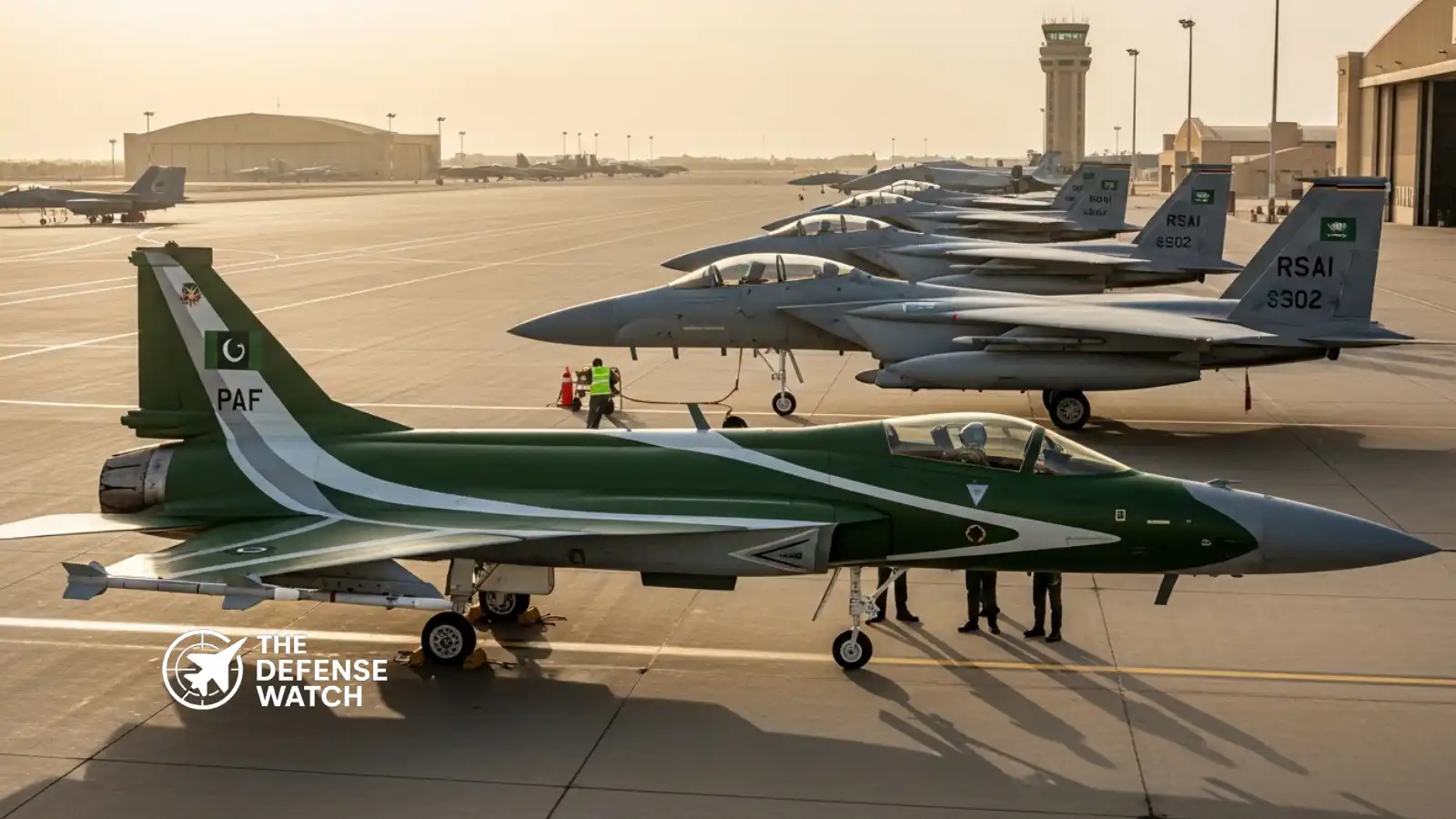
Pakistan fighter jets Saudi Arabia
Alliances & DoctrinesPolicy & Strategy

Pakistan Expands Air Power Presence In Saudi Arabia Under Defense Pact

September 17, 2026
Saab Q1 2026 defense results
Defense Budgets & PolicyPolicy & Strategy

Saab Posts 23% Sales Surge In Q1 2026 As European Defense Demand Accelerates

September 7, 2026
F-14 Tomcat restoration
Defense Budgets & PolicyPolicy & Strategy

Congress Moves To Preserve F-14 Tomcats As Push Grows For Return To Flight

September 12, 2026
mission-critical 5G solution
Geopolitical & Strategic DoctrinesPolicy & Strategy

Lockheed Martin, Nokia Unveil CMOSS-Aligned 5G Solution for U.S. Military Vehicles

May 5, 2026

Logo

Copyright © 2026 TheDefenseWatch.com

Helpful Links

  • Home
  • About Us
  • Privacy Policy
  • Terms of Use / Disclaimer
  • U.S. Privacy Notice – CCPA Compliance

Defense Systems

  • Defense Systems
  • Comparisons 
  • Manufacturer
  • Tactical Calculators

Popuplar

Which 5 Air Forces Possess the Costliest Fighter Jet Fleets in the World
Evolving Strategic Value: Carrier Strike Groups in the Indo-Pacific’s Future Security Architecture
Autonomous Weapon Systems Spark U.S. Ethics Debate Amid Rapid Military AI Integration

We report on developments involving military forces, governments, defense companies, research organizations, and security institutions around the world. 

Welcome Back!

Sign in to your account

Username or Email Address
Password

Lost your password?

Enjoying our coverage?

Make The Defense Watch a preferred source on Google to see more insights.