Lockheed Martin is moving beyond single-effector counter-UAS defenses by linking kinetic, electronic and directed-energy capabilities across land, maritime and autonomous platforms.
Executive Summary : Lockheed Martin is developing a layered counter-drone architecture that combines networked sensors, AI-enabled command and control, JAGM missiles and MORFIUS high-power microwave technology. The approach is intended to give U.S. and allied forces multiple options for detecting and defeating drones across land, maritime and autonomous platforms.
Lockheed Martin Expands Layered Counter-Drone Architecture
The layered counter-drone architecture developed by Lockheed Martin combines sensors, command-and-control software and multiple effectors instead of depending on a single interceptor or defensive technology. The company says the architecture is intended to address increasingly autonomous unmanned aircraft and coordinated drone swarms approaching from multiple directions.
The concept reflects a broader shift in counter-unmanned aircraft systems, or C-UAS, toward networked defenses. Modern systems increasingly need to combine radar, electro-optical and infrared sensors, radio-frequency detection, electronic warfare and kinetic or directed-energy effectors.
Lockheed Martin has previously demonstrated an open-architecture C-UAS concept using AI-enabled detection and tracking software, low-cost sensors and multiple effectors. The company says the architecture is designed to allow new sensors and weapons to be integrated as threats evolve.
JAGM Adds A Kinetic Layer
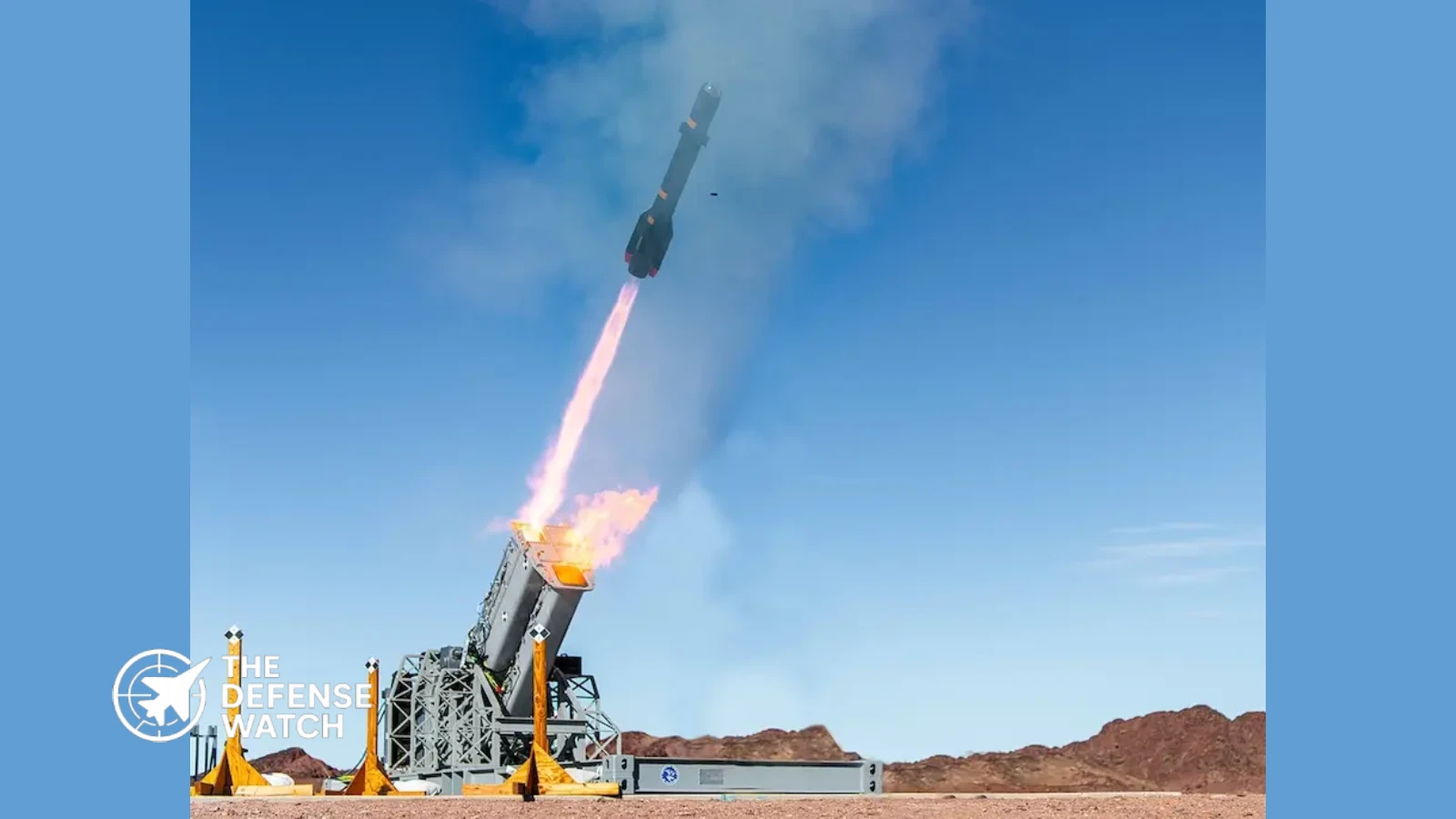
A central element of the architecture is the Joint Air-to-Ground Missile, or JAGM. Lockheed Martin has adapted the missile for counter-UAS missions and demonstrated its use from the GRIZZLY containerized launcher.
In June 2026, Lockheed Martin reported that a Sanctum C-UAS battle manager and Fortem R-40 radar detected and tracked a Group 3 one-way attack drone before a JAGM launched from GRIZZLY intercepted the target. The company said the integrated capability was developed and demonstrated in less than 45 days.
The U.S. Army separately reported that Yuma Proving Ground tested the GRIZZLY vertical launcher with JAGM as part of a counter-UAS demonstration. The launcher is housed in a 10-foot shipping container, providing a relatively compact approach for deploying the missile system.
JAGM brings a dual-mode seeker combining semi-active laser and millimeter-wave radar technologies. Lockheed Martin says this configuration provides the missile with the ability to detect, classify and track certain unmanned aircraft under different environmental conditions.
The significance of JAGM within the architecture is its role as a kinetic option when electronic or directed-energy measures are insufficient. It can also provide a defensive layer against larger or more resilient UAS targets.
AI And Command Systems Form The Network Layer
The layered counter-drone architecture is not centered solely on interceptors. Lockheed Martin is also connecting sensors and command systems to create a common operational picture.
The company describes Sanctum as an AI-enabled C-UAS battle manager capable of processing sensor information, identifying and prioritizing threats, and coordinating responses. The architecture can combine radar, electro-optical and infrared systems and radio-frequency sensors to correlate tracks and help distinguish actual threats from clutter or decoys.
CommandIQ, integrated with Lockheed Martin’s SkyKeeper command-and-control system, adds another component to the network. The intended function is to support identification, classification and tracking while providing a command-and-control foundation for integrated air and missile defense.
From an operational perspective, this networked approach matters because drone attacks can create more targets than a single sensor or weapon can efficiently manage. Automated data processing can help reduce the amount of information that operators must manually evaluate, while human personnel remain responsible for mission decisions.
MORFIUS Adds A High-Power Microwave Layer
The architecture also incorporates MORFIUS, Lockheed Martin’s airborne high-power microwave counter-drone system.
At the Farnborough International Airshow in July 2026, Lockheed Martin unveiled the MORFIUS X-Rotor variant. The company says the reusable system can neutralize more than 50 drones during a single flight and is designed to operate without dependence on a specific sensor or command-and-control system.
MORFIUS uses high-power microwave energy rather than a conventional kinetic interceptor. That gives the architecture a fundamentally different method of engaging multiple electronic targets.
The company has previously described MORFIUS as an airborne high-power microwave C-UAS interceptor capable of engaging multiple threats in a defensive attack. Earlier variants have been flight tested since 2017.
The potential value of this layer is most apparent in scenarios involving numerous relatively inexpensive drones. A reusable directed-energy system can provide a different cost and magazine model from conventional missiles, although actual operational economics depend on factors including deployment, power availability, target characteristics and system availability.
Lockheed Martin’s claim of more than 50 drone neutralizations per flight is a company-reported capability figure and should not be interpreted as an independently verified combat performance measure.
Maritime And Autonomous Platforms Expand The Architecture
Lockheed Martin is also extending its counter-UAS concept beyond fixed land installations.
The company has demonstrated a JAGM Dual Launcher aboard the autonomous Saildrone Surveyor. Lockheed Martin says larger autonomous surface vessels could potentially use the JAGM Quad Launcher, including vertical-launch configurations designed to provide coverage against threats approaching from different directions.
This is important because unmanned surface vessels could potentially act as distributed defensive nodes rather than simply serving as sensors or surveillance platforms.
The architecture therefore spans several operating environments. Ground formations and fixed sites can use containerized launchers and command systems, while maritime platforms can carry missile launchers and autonomous systems can contribute sensors or defensive effects.
Why The Layered Approach Matters
The most important feature of Lockheed Martin’s layered counter-drone architecture is the integration of different effectors rather than the development of another standalone counter-drone weapon.
Drone threats vary substantially in size, speed, signature, maneuverability and cost. A small commercial-type drone may not justify the use of a relatively expensive missile, while a larger Group 3 UAS or one-way attack drone may require a kinetic interceptor.
This creates a weapons allocation problem for C-UAS operators. A defense relying entirely on missiles can face inventory and cost pressures during sustained attacks. A defense relying exclusively on electronic warfare or directed energy may encounter targets that are resistant to those methods or operating conditions that limit their effectiveness.
A layered system can potentially assign different targets to different effectors. Electronic or microwave effects could address suitable targets, while kinetic interceptors such as JAGM provide another option for targets requiring physical destruction.
The architecture also creates a path for integrating future technologies without replacing the entire defensive network. Lockheed Martin’s open-architecture approach is intended to allow additional sensors, effectors and command systems to be incorporated as requirements change.
From Single Weapons To Integrated C-UAS Networks
Lockheed Martin’s recent demonstrations show a progression from individual counter-UAS technologies toward integrated defensive architectures.
The June 2026 GRIZZLY, Sanctum and JAGM test demonstrated a complete detection-to-engagement chain involving radar, AI-enabled battle management and a kinetic interceptor.
The later MORFIUS X-Rotor announcement adds a different type of effector intended to address multiple drones with high-power microwave energy.
Together, these developments point toward a C-UAS model in which sensors, command systems and weapons are treated as connected components rather than isolated systems.
For U.S. forces and allies facing increasingly complex drone attacks, that distinction could be significant. The challenge is not simply detecting a drone or developing a missile capable of destroying it. The larger requirement is building a defense that can process large numbers of targets, select an appropriate response and maintain sufficient capacity during repeated attacks.
Lockheed Martin’s architecture is designed around that requirement, combining JAGM, Sanctum, CommandIQ, SkyKeeper, GRIZZLY and MORFIUS across different defensive layers. The company has demonstrated several components individually and in integrated tests, but the full operational effectiveness of the complete architecture will depend on future testing, deployment and integration with military command networks.
What Comes Next
Lockheed Martin is continuing development and testing of its counter-UAS portfolio, including additional MORFIUS X-Rotor flight testing and prototype production. The company has also continued development of JAGM-based counter-UAS applications following the 2026 GRIZZLY demonstration.
The emerging architecture reflects a broader U.S. defense requirement for counter-drone systems that can scale against increasingly numerous and sophisticated unmanned threats.
Rather than treating every drone as a missile target, the approach seeks to combine sensors, software, electronic effects, directed energy and kinetic weapons within one defensive network. That combination is likely to remain an important area of U.S. C-UAS development as militaries seek greater capacity against drone swarms without relying exclusively on high-cost interceptors.