Executive Summary: The Pentagon has signed seven-year framework agreements with Boeing and RTX to increase production of critical components for the SM-3 Block IB and Block IIA interceptors. The agreements are designed to strengthen the industrial supply chain supporting the Aegis Ballistic Missile Defense System and provide manufacturers with greater certainty to expand capacity.
Pentagon Expands SM-3 Missile Production
The Pentagon’s SM-3 missile production initiative took a major step Aug. 14, 2026, when the Department of War announced two seven-year framework agreements with Boeing and RTX to increase manufacturing of components for the Standard Missile-3 Block IB and Block IIA.
The agreements cover critical hardware, including avionics and ejector assemblies supplied by Boeing to Raytheon, the RTX business that serves as the SM-3 prime contractor. Both interceptor variants operate within the Aegis Ballistic Missile Defense System and are designed to destroy ballistic missile targets outside the atmosphere.
The agreements do not establish a publicly disclosed total dollar value or specific production quantity. Instead, they create a long-term framework under which Boeing can begin producing components while the government, Boeing and RTX negotiate a multiyear production arrangement.
What The Boeing And RTX Agreements Cover
The Pentagon described the agreements as part of a broader effort to increase munitions production and strengthen the U.S. defense industrial base.
Area Details Companies Boeing and RTX Prime contractor Raytheon, an RTX business Interceptors SM-3 Block IB and SM-3 Block IIA Boeing contribution Avionics and ejector assemblies Agreement duration Seven years Production approach Framework supporting future multiyear procurement Dollar value Not publicly disclosed Quantities Not publicly disclosed Missile defense architecture Aegis Ballistic Missile Defense The Department of War said the framework structure is intended to give suppliers a clearer demand signal and greater confidence to invest in manufacturing capacity. That matters because increasing missile output requires more than expanding final assembly. Production must also scale across specialized subcontractors that provide propulsion, guidance, electronics, structures and other components.
For a complex interceptor such as the SM-3, a bottleneck in one component can constrain the delivery rate of complete missiles even when the prime contractor has additional assembly capacity available.
Why The SM-3 Matters To Aegis Missile Defense
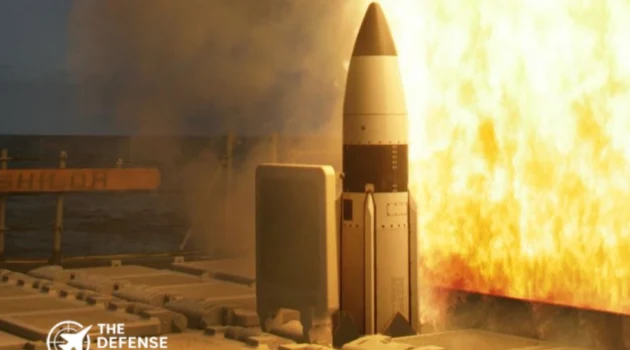
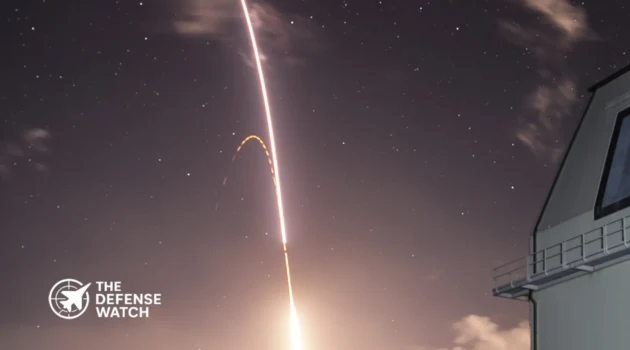
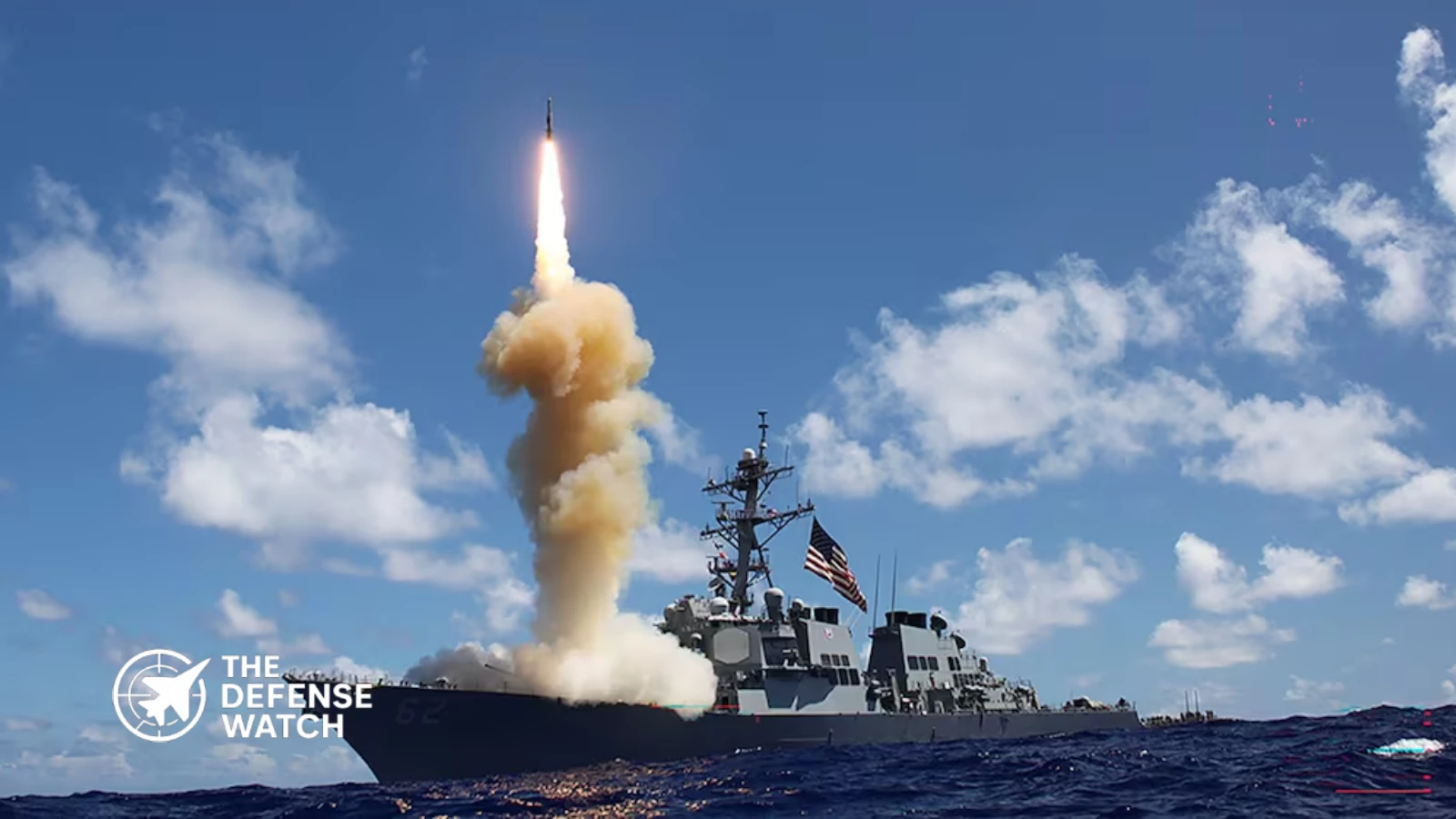
The SM-3 is a central element of the U.S. sea-based ballistic missile defense architecture. It is launched from Aegis-equipped ships and uses hit-to-kill technology to engage ballistic missile threats during the midcourse phase of flight outside the atmosphere.
The Block IB and Block IIA variants represent different stages in the evolution of the system.
The SM-3 Block IB incorporates an improved two-color infrared seeker and upgraded guidance and propulsion functions. The variant became operational aboard U.S. Navy ships in 2014 and can also be deployed from the land-based Aegis Ashore system.
The SM-3 Block IIA, developed through a U.S.-Japanese cooperative program, incorporates larger rocket motors and an enlarged kinetic warhead. These changes are intended to provide greater engagement capability and broader defended areas against short- to intermediate-range ballistic missile threats.
The Block IIA entered full-rate production in 2024, following a Missile Defense Agency determination that the design and manufacturing process had reached the required maturity.
Seven-Year Framework Targets The Industrial Bottleneck
The most significant aspect of the latest agreements is their structure.
Rather than relying exclusively on individual procurement contracts, the seven-year framework gives Boeing and other suppliers a longer planning horizon. Boeing can begin producing components before the final multiyear arrangement is completed, according to Defense News.
That model is important for defense programs with long manufacturing lead times. Specialized production equipment, tooling, qualified personnel and supplier relationships can take years to establish. Short procurement cycles can make companies reluctant to commit significant capital to capacity that may not have guaranteed future demand.
The Pentagon’s approach attempts to reduce that uncertainty by providing a longer-term signal.
The same strategy has been used elsewhere. Boeing reached a separate seven-year arrangement in April to increase production of PAC-3 Missile Segment Enhancement seekers, part of a broader effort to secure capacity deeper in the defense supply chain.
RTX Already Has A Broader SM-3 Expansion Plan
The latest agreement follows a wider RTX effort to increase production of several major U.S. missile programs.
In February, RTX announced framework agreements with the Department of War covering Tomahawk, AMRAAM, SM-3 Block IB, SM-3 Block IIA and SM-6. The company said the arrangements were designed to increase production capacity and accelerate deliveries, with several covered munitions expected to grow by two to four times their existing production rates.
RTX said the associated production work would involve facilities in Tucson, Arizona; Huntsville, Alabama; and Andover, Massachusetts.
The company has also said the SM-3 Block IIA and Block IB production effort is supported by investments in manufacturing capacity, facilities and workforce.
This makes the Boeing agreement significant because it addresses the supply chain feeding the prime contractor rather than focusing solely on final missile assembly.
$745 Million SM-3 Block IIA Contract Adds Momentum
The Pentagon’s latest industrial-base initiative comes shortly after the Missile Defense Agency awarded Raytheon a $745 million contract for fully assembled SM-3 Block IIA interceptors for the United States and Japan.
The two developments are closely connected from a production perspective. A contract for complete interceptors increases the importance of ensuring that component suppliers can meet the required delivery schedule.
The Block IIA program also has an international dimension. Japan has been a major partner in the interceptor’s development and production, while the system forms part of the European missile defense architecture through Aegis Ashore.
As a result, expanding SM-3 production supports not only U.S. Navy requirements but also broader allied missile defense capacity.
Combat Use Has Increased The Importance Of Replenishment
The SM-3 production push also reflects the changing operational environment for U.S. missile defenses.
U.S. Navy destroyers first used SM-3 interceptors in combat in April 2024 during operations connected to an Iranian ballistic missile attack against Israel. Additional interceptors have subsequently been used in combat operations, including Operation Epic Fury.
Combat use changes the industrial calculation for an interceptor program.
Missile defense systems require sufficient inventory not only for immediate operations but also for training, testing, maintenance, contingency reserves and future conflicts. Once interceptors are expended, replenishment can take considerably longer than the operational decision to launch them.
A May 2026 analysis cited by Defense News estimated that wartime SM-3 expenditures could reach between 130 and 250 missiles and warned that replenishment could take years. Defense News also reported a Center for Strategic and International Studies estimate of 414 SM-3 interceptors in inventory as of December 2025.
These figures highlight why production capacity is becoming a strategic consideration alongside interceptor performance.
Block IB Line Remains Important
The Pentagon’s current focus includes both the newer Block IIA and the older Block IB.
That is notable because the Missile Defense Agency had proposed ending new SM-3 Block IB purchases in its fiscal 2025 budget request. Congress subsequently acted to keep the Block IB production line open.
Maintaining the Block IB line provides the United States with an additional interceptor production source while the Block IIA becomes the newer-generation centerpiece of the program.
The two variants therefore have complementary roles within the broader missile defense inventory. The Block IIA provides expanded capability, while continued Block IB production can contribute to fleet depth and replenishment capacity.
What The Agreements Mean For U.S. Missile Defense
The immediate effect of the Boeing and RTX agreements will be industrial rather than operational. The agreements do not mean that the Navy is receiving a sudden increase in deployed interceptors.
Their importance lies in creating the production capacity needed to deliver those interceptors over time.
Three factors are particularly important.
First, supply-chain stability. Long-term agreements can encourage suppliers to invest in equipment and workforce capacity because future demand is less uncertain.
Second, inventory recovery. Increased production provides a mechanism for replacing interceptors used during combat operations, testing and training.
Third, allied defense. The SM-3 is tied to U.S. and allied missile defense networks, particularly through cooperation with Japan and deployment of Aegis Ashore in Europe.
The agreements therefore address a basic requirement of sustained missile defense: having enough interceptors available when the system is needed.
The Larger Defense Industrial Base Picture
The SM-3 arrangements are part of a wider shift toward longer-term production commitments for critical U.S. munitions.
The Pentagon is increasingly seeking to address capacity limitations before they become operational constraints. That means focusing on subcontractors and component manufacturers as well as prime contractors.
For missile defense, this distinction is especially important because interceptor production depends on a network of specialized suppliers. Increasing final assembly without securing sufficient components would not produce a proportional increase in complete missiles.
The Boeing and RTX framework agreements attempt to address that problem by establishing a longer production horizon and allowing component manufacturing to begin while a larger multiyear procurement arrangement is negotiated.
The result is not an immediate surge in deployed SM-3s, but a structural effort to make the production system more capable of sustaining higher output.
For the U.S. Navy and its Aegis-equipped allies, that industrial capacity is an increasingly important part of maintaining credible ballistic missile defense over a prolonged period.