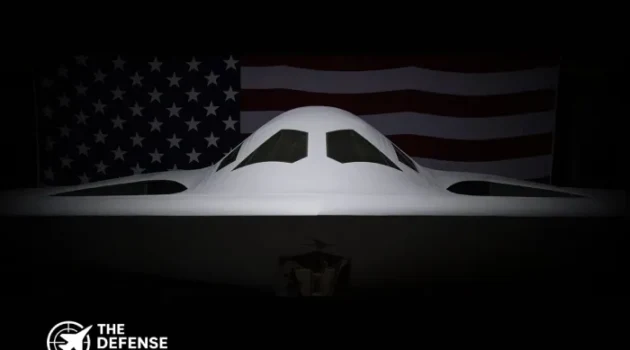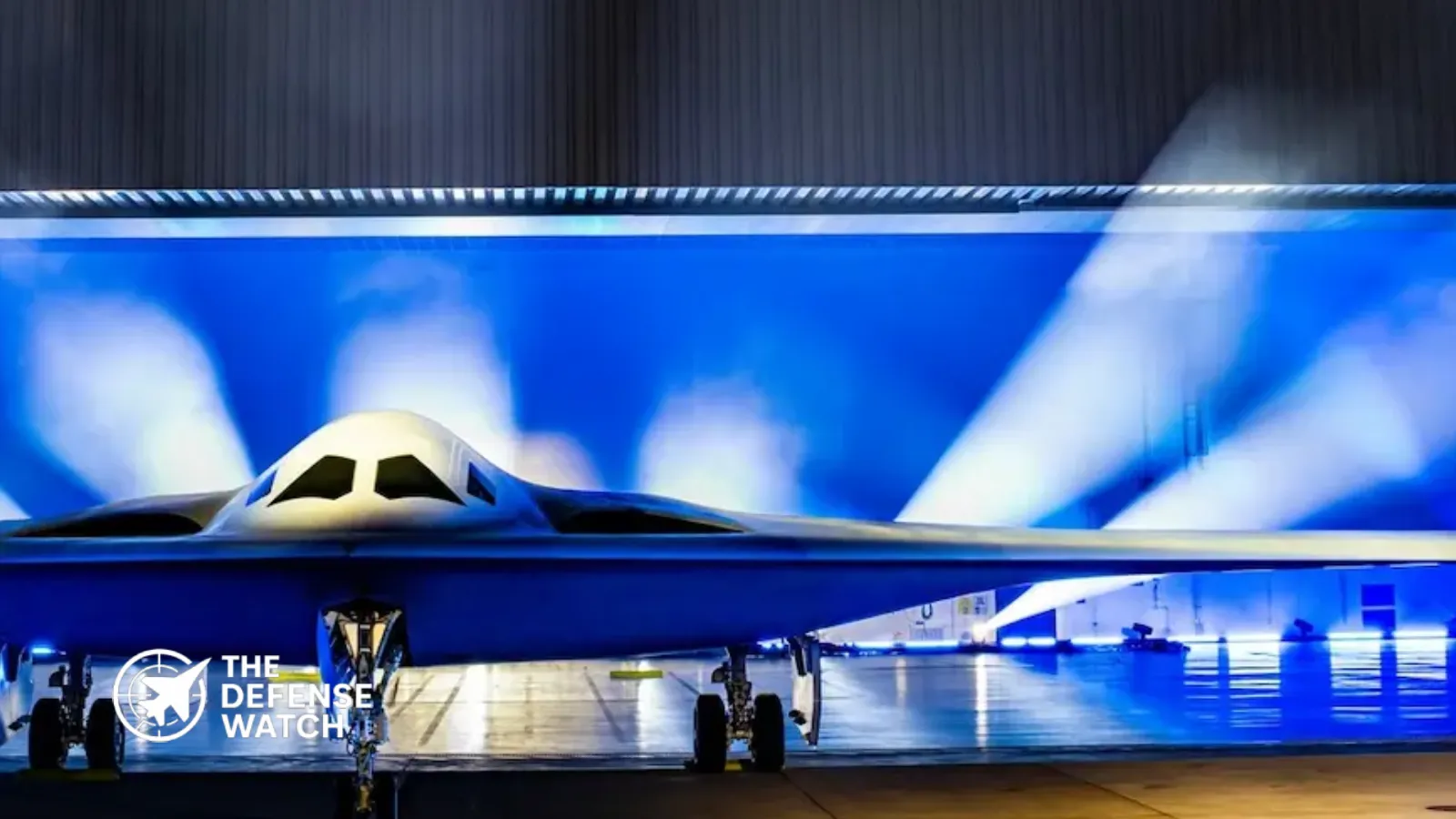
Executive Summary: Northrop Grumman is increasing investment in B-21 Raider production infrastructure as the U.S. Air Force moves ahead with a 25% increase in annual production capacity. The company says the Air Force is also evaluating whether to accelerate production further and expand the program beyond its existing minimum requirement of 100 aircraft.
B-21 Raider Production Moves Into a Higher-Output Phase
The B-21 Raider production program is entering a more aggressive manufacturing phase as Northrop Grumman expands industrial capacity and the U.S. Air Force considers whether the bomber fleet should grow beyond 100 aircraft.
The latest development follows a February 2026 agreement between the Department of the Air Force and Northrop Grumman that increased annual production capacity by 25%. The agreement uses $4.5 billion in funding authorized under fiscal year 2025 reconciliation legislation and is intended to compress delivery timelines while maintaining program cost and performance controls.
Northrop Grumman said in its second-quarter 2026 earnings discussion that its capital spending is expected to reach approximately $1.85 billion during 2026. Company executives linked continued investment in manufacturing infrastructure to the B-21 production ramp.
The company has not disclosed a new annual aircraft production figure. It has also not disclosed how many additional aircraft could ultimately be added if the Air Force expands the program.
Air Force Could Consider More Than 100 B-21s
The current B-21 acquisition plan calls for a minimum of 100 aircraft. The Air Force has described the Raider as a long-range, penetrating stealth bomber intended to replace the B-1B Lancer and B-2 Spirit over time.
Northrop Grumman CEO Kathy Warden said in July that the agreement with the Air Force allows the service to examine both faster production and a larger program of record.
The analysis is expected to continue through the end of 2026. Warden did not identify the production rate being considered or provide a potential size for an expanded fleet.
That distinction is important. The Air Force has increased manufacturing capacity, but an increase in capacity does not automatically mean the government has ordered an equivalent number of additional aircraft.
Current B-21 Production Picture
Area Current Status Program B-21 Raider Manufacturer Northrop Grumman Production increase 25% increase in annual capacity Additional funding $4.5 billion authorized funding Existing production goal Minimum of 100 aircraft First operational base Ellsworth Air Force Base, South Dakota First aircraft at Ellsworth Planned for 2027 Company B-21 infrastructure investment More than $5 billion 2026 Northrop Grumman capital spending outlook Approximately $1.85 billion The Air Force says B-21 aircraft remain on track to arrive at Ellsworth in 2027. The base is preparing facilities for the bomber’s arrival, including infrastructure for operations and training.
Why Northrop Grumman Is Investing Before a Larger Order
The industrial challenge facing the B-21 is not simply the construction of additional aircraft. A higher production rate requires Northrop Grumman and its supplier network to expand manufacturing capacity, tooling, skilled labor, testing capacity and quality-control processes without undermining the program’s low-observable requirements.
Northrop Grumman said it has already invested more than $5 billion in digital engineering and manufacturing infrastructure associated with the Raider. The company also operates a broad industrial network involving more than 400 suppliers across 40 states.
This investment provides an important foundation for scaling production.
The B-21 program was deliberately structured around production-representative test aircraft and digital engineering. The Air Force has said test aircraft are manufactured using the same production line, tooling and processes intended for later aircraft, reducing the separation between development and production.
That approach matters because stealth aircraft are particularly sensitive to manufacturing consistency. Changes in materials, surface treatments, assembly tolerances and production processes can affect the characteristics of a low-observable platform.
A faster production rate therefore has to be accompanied by stable manufacturing processes and sufficient inspection capacity.
Digital Manufacturing Is Central to the Production Strategy
The B-21 is also being developed around a digital engineering environment intended to make future upgrades easier to integrate.
Northrop Grumman says its digital ecosystem has reduced software certification time by 50% and supports real-time analysis of flight-test information. The company has also invested in augmented-reality manufacturing tools designed to connect production personnel with engineering teams.
For a long-life bomber, those capabilities are important beyond the initial production run.
The B-21 is designed around an open systems architecture, allowing the Air Force to insert mature technologies and new capabilities as threats change. That architecture is intended to reduce the need for major redesigns every time a new mission system or weapon capability is introduced.
In practical terms, the value of the digital production model is not only faster aircraft assembly. It also creates a pathway for sustaining and upgrading the aircraft over decades of service.
Flight Testing Continues Alongside Production
The production expansion is taking place while the B-21 remains in flight testing.
The program has progressed into increasingly complex test activity, including aerial refueling trials conducted with a KC-135 Stratotanker. The Air Force said the testing is part of the broader effort to mature the systems required for survivable long-range penetrating strike.
A second B-21 test aircraft arrived at Edwards Air Force Base in September 2025, expanding the test fleet and supporting additional mission-system and weapons integration work.
The combination of flight testing and low-rate initial production is a deliberate feature of the program. It allows production learning to continue while the aircraft undergoes operationally relevant testing.
That model can shorten the transition to operational service, but it also requires careful management of engineering changes. Significant design changes late in a production ramp can create additional cost, schedule and manufacturing disruption.
Strategic Importance for U.S. Long-Range Strike
The B-21 is a central element of the U.S. long-range strike modernization effort.
Unlike aircraft designed primarily for operations in permissive airspace, the Raider is intended to penetrate heavily defended environments and conduct both conventional and nuclear missions. The Air Force identifies the aircraft as a cornerstone of its nuclear modernization strategy.
A larger B-21 fleet would provide the Air Force with more aircraft available for training, maintenance rotation, deployments and contingency operations.
It would also provide greater depth in a force structure where the B-2 fleet is relatively small and the B-1B is being phased toward replacement.
The strategic value is therefore tied not only to the number of aircraft purchased, but to the number that can be generated for operations at any given time.
A Larger Fleet Would Improve Force Resilience
A larger inventory can improve resilience in several ways.
First, more aircraft can absorb scheduled maintenance without reducing the number available for operations. Second, additional aircraft allow more crews and maintenance personnel to train without drawing heavily on operational units. Third, a larger fleet can support geographically distributed operations, which becomes increasingly important when adversaries possess long-range strike capabilities against fixed bases.
The B-21 is also intended to operate as part of a wider network rather than as an isolated bomber platform. Its combination of stealth, networking and modern command-and-control architecture is intended to support operations across a contested battlespace.
This makes fleet size an important component of the overall capability.
Production Speed Must Be Balanced With Cost and Quality
The decision to increase production capacity also reflects a broader shift in U.S. defense acquisition toward faster delivery.
The Air Force has described the B-21 as an example of acquisition reform focused on delivering combat capability more quickly. In July, Gen. Dale White said the service had increased B-21 industrial capacity by 25% and reiterated that Raiders are expected to reach Ellsworth in 2027.
The central challenge now is sustaining that speed as production becomes more complex.
Northrop Grumman’s first-quarter 2026 filing showed that the company expected to invest approximately $2.5 billion over several years to expand B-21 production capacity. The company also recorded a $157 million unfavorable estimate-at-completion adjustment on the first four low-rate initial production lots, although the company said it made no significant change to the previously recognized loss on the program.
Those figures illustrate why production expansion requires more than additional government funding. The manufacturer must invest its own capital, expand facilities and manage production costs while maintaining performance standards.
What Comes Next for the B-21 Program
The immediate milestone remains the planned arrival of B-21 aircraft at Ellsworth Air Force Base in 2027.
The longer-term question is the size and pace of the production program after the Air Force completes its review. Northrop Grumman expects the analysis of a potentially faster production schedule and larger program of record to continue through the end of 2026.
For now, the confirmed change is the 25% increase in annual production capacity, supported by $4.5 billion in government funding and substantial industry investment.
Any decision to purchase more than the existing minimum of 100 aircraft would represent a separate force-structure decision. It would affect long-range strike capacity, nuclear modernization, industrial planning and future operating costs for decades.
The significance of the current investment is therefore broader than a simple production increase. The Air Force and Northrop Grumman are building the industrial capacity needed to make the B-21 a scalable fleet rather than treating the Raider as a small, fixed-size replacement for the B-2.
As the review continues, the key indicators will be the final production rate, any change to the program of record, delivery performance and the ability of the industrial base to sustain higher output without sacrificing cost control or aircraft quality.