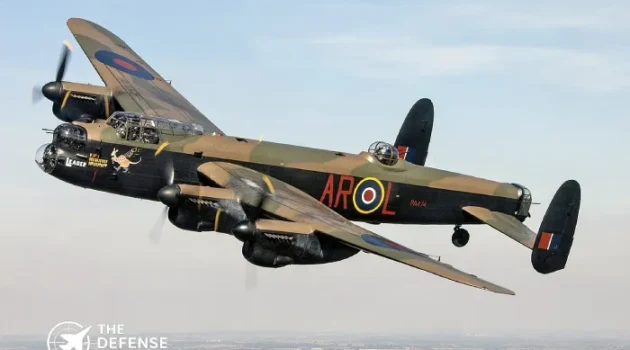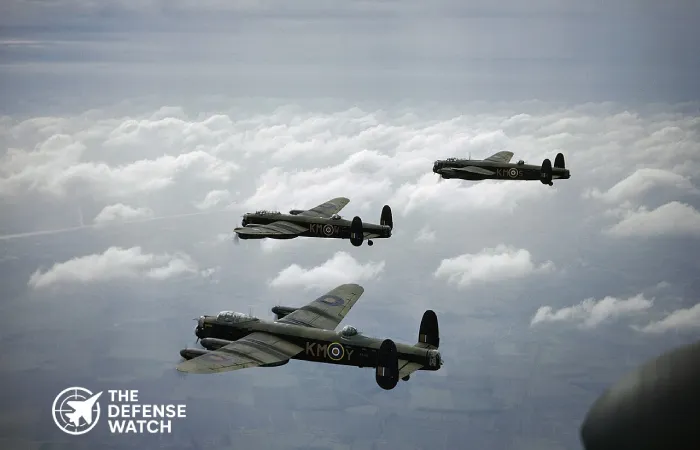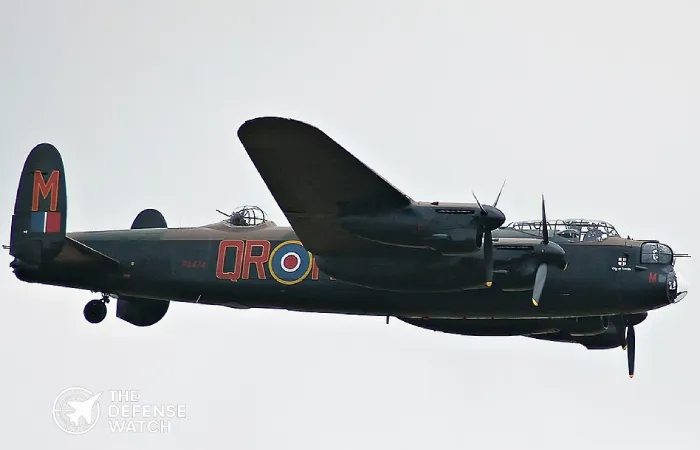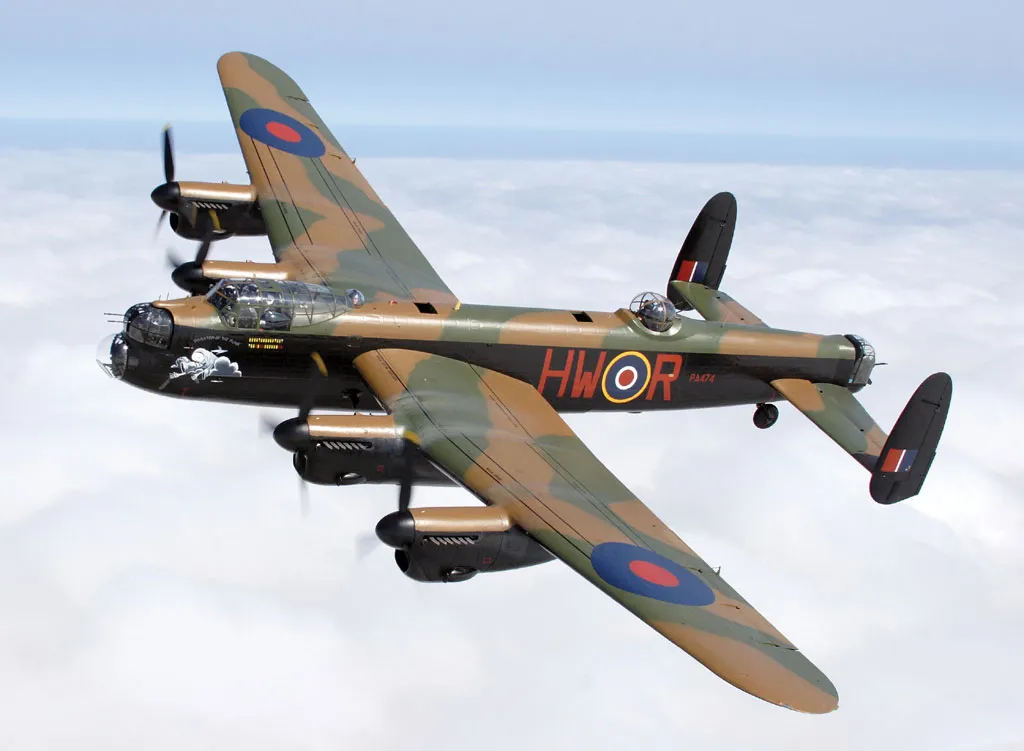
At just after midnight on May 17, 1943, a specially modified Avro Lancaster dropped its altitude to sixty feet above the black water of the Möhne See, held that height on spotlight cross-beams alone, and released a five-tonne cylinder spinning backward at 500 RPM. It skipped four times across the reservoir, struck the dam wall, sank, and detonated against the masonry at the depth Barnes Wallis had calculated it needed to fail structurally. Within minutes, one of the largest dams in Europe was breached and 330 million tonnes of water were pouring into the Ruhr valley below. Operation Chastise — the raid the press would immortalize as “the Dambusters” — remains one of the most audacious precision-strike missions ever flown, and its engineering logic still echoes through how modern militaries think about standoff weapons, low-observable delivery profiles, and infrastructure targeting.
Key Takeaways
- Operation Chastise (May 16–17, 1943) breached the Möhne and Eder dams using Barnes Wallis’ backspin “Upkeep” bouncing mine, delivered by specially modified Type 464 Provisioning Avro Lancasters flying at just sixty feet.
- The Sorpe dam, arguably the most strategically important target, was damaged but never breached — a reminder that even a successful raid can leave its highest-value objective unmet.
- Losses were severe: eight of nineteen aircraft failed to return, and 53 of 133 aircrew were killed, underscoring the real cost of early precision-strike doctrine before stand-off weapons existed.
- The raid’s core logic — engineering the weapon and delivery profile as one system to defeat a hardened target with a small precision force rather than mass bombing — directly foreshadows modern PGM, bunker-buster, and loitering-munition doctrine.
At-a-Glance Executive Summary
| Strategic Brief | Details |
|---|---|
| Codename / Mission | Operation Chastise |
| Date / Theater | Night of May 16–17, 1943; Ruhr industrial region, Nazi Germany |
| Executing Force(s) | No. 617 Squadron, RAF Bomber Command (newly formed for this mission), under Wing Commander Guy Gibson |
| Primary Target | Möhne, Eder, and Sorpe dams, feeding the Ruhr valley’s hydroelectric and industrial water supply |
| Key Platforms & Tech | Avro Lancaster B Mk.III (Type 464 Provisioning), “Upkeep” backspin bouncing mine, dual-spotlight altimetry, Y-shaped release calipers |
| Mission Outcome | Möhne and Eder dams breached; Sorpe damaged but held; significant short-term flooding and industrial disruption; heavy aircrew losses; long-term strategic effect limited but propaganda and doctrinal impact substantial |
Strategic Background & Operational Context
By 1943, RAF Bomber Command’s area-bombing campaign against the Ruhr — Germany’s industrial heartland — was grinding through heavy losses for uneven strategic return. British planners had studied the Ruhr’s dam system since before the war, recognizing that the Möhne, Eder, and Sorpe dams didn’t just hold back water; they underpinned hydroelectric generation, canal transport, and the cooling and process water that steel and munitions plants across the region depended on. Conventional bombing couldn’t crack reinforced gravity dams of that scale — the ordnance of the day lacked both the accuracy and the specific delivery geometry needed to place a large enough charge directly against the wall at depth, where water pressure would do the rest of the structural work.

That bottleneck — the need for pinpoint delivery of a large charge against a hardened, water-defended target without the aircraft flying close enough to be destroyed by torpedo nets or flak — was the problem engineer Barnes Neville Wallis set out to solve. His answer, developed initially through his “Upkeep” and “Highball” weapon programs, was not a smarter guidance system but a smarter physics trick: skip the bomb across the water like a stone, let torpedo nets become irrelevant, and use backspin to keep the weapon hugging the dam face as it sank to a pre-set depth before detonating. Air Chief Marshal Arthur “Bomber” Harris was skeptical of diverting scarce heavy bombers to a single-target special mission, but Chief of the Air Staff Sir Charles Portal and Wallis’ persistent lobbying secured approval in early 1943, giving planners barely two months to form a squadron, modify aircraft, and train crews before the reservoirs reached the water levels needed for the raid to work.
Engineering & Technological Innovation
The mission lived or died on three interlocking pieces of improvised engineering, each addressing a specific tactical constraint:
The Upkeep weapon
Wallis’ bouncing mine was a 9,250-lb cylindrical depth charge containing roughly 6,600 lbs of Torpex explosive, spun backward at approximately 500 RPM by a belt-driven motor mounted in the Lancaster’s modified bomb bay before release. The backspin served two purposes: it let the weapon skip across the water surface in a controlled series of bounces to clear anti-torpedo nets strung in front of the dams, and after the final bounce it caused the mine to roll down the face of the dam wall itself, holding contact until a hydrostatic pistol detonated it at the pre-calculated depth — deep enough for water pressure to amplify the blast against the structure.
The Type 464 Provisioning Lancaster
Standard Avro Lancaster B Mk.IIIs were extensively modified by Avro under the “Type 464 Provisioning” designation: bomb-bay doors were removed entirely to accommodate the Upkeep’s dimensions, a caliper-and-belt release mechanism was fitted to spin the weapon before drop, the mid-upper gun turret was deleted to save weight and drag, and a spotlight altimetry system was installed — two lights mounted in the nose and rear fuselage, angled so their beams converged into a single point on the water only when the aircraft was flying at exactly sixty feet, the release altitude the weapon’s skip physics required.
Precision delivery under fire
Sixty feet is below the effective engagement envelope of most flak fire-control solutions of the era, but it also left crews with virtually no margin for error over blacked-out, unfamiliar terrain at night, navigating largely by dead reckoning and map-reading at low level. A calibrated bombsight — initially an improvised wooden triangle with sighting pins, later refined — let the bomb aimer judge release distance by aligning the dam’s flanking towers, a detail as low-tech as the guidance system was high-concept, and a reminder that 1943-era “precision” still depended on a human eye at the critical moment.
Mission Execution & Key Sorties
No. 617 Squadron formed at RAF Scampton in March 1943 under 24-year-old Wing Commander Guy Gibson, who handpicked crews from experienced bomber units and drove an intense, compressed training program of nighttime low-level flying across British reservoirs chosen for their resemblance to the German targets. Nineteen Lancasters took off in three waves on the night of May 16, flying at extremely low altitude across occupied Europe to avoid radar detection — a profile that itself proved lethal, as several aircraft were lost to high-tension power lines and flak before reaching their targets.
The first wave of nine aircraft, led by Gibson, attacked the Möhne dam. Gibson’s own Upkeep breached the dam on the fifth attacking run after earlier drops failed to hold contact with the wall; remarkably, he then flew a decoy pass alongside the next attacking aircraft to draw flak fire away from it, a tactic he repeated for subsequent runs. With the Möhne breached, the surviving aircraft of the first wave proceeded to the Eder dam, which lacked flak defenses entirely — its remote valley location had been considered protection enough — but presented brutal approach geometry, requiring a steep dive after crossing a ridgeline followed by an immediate pull-up. The Eder was breached after several runs by the remaining aircraft.
The second wave, tasked with the Sorpe dam — an earthen embankment dam requiring a different attack profile with no backspin — suffered heavy losses en route and only a single aircraft reached the target, scoring a hit that damaged but did not breach the structure. A third, reserve wave was scrambled after the raid was already underway, attacking secondary targets including the Sorpe and Ennepe dams with mixed results.
Of the nineteen aircraft that took off, eight failed to return — a 42% loss rate in a single night — and 53 of the 133 aircrew who flew the mission were killed, with three more captured as prisoners of war. Gibson was awarded the Victoria Cross for his leadership during the attack.
Tactical Outcome & Operational Assessment
The immediate physical results were dramatic: the Möhne and Eder breaches released a combined flood of hundreds of millions of tonnes of water down the Ruhr and Eder valleys, destroying bridges, roads, rail lines, and factories, killing an estimated 1,300–1,600 people (a substantial share of them forced laborers from Allied nations housed in camps below the Eder), and temporarily knocking out hydroelectric generation and water supply to Ruhr industry.
The strategic assessment, however, is more nuanced than the raid’s legend suggests. German authorities mobilized an extraordinary repair effort — the Möhne dam was substantially restored within about five months, aided partly by the diversion of labor and material that would otherwise have gone toward the Atlantic Wall, which analysts have since noted as an underappreciated secondary effect. Industrial output in the Ruhr dipped but recovered faster than British planners had hoped, and the Sorpe dam — arguably the most operationally significant target for regional water supply — was never breached at all. Post-war analysis by the British Bombing Survey Unit concluded the material damage, while real, fell well short of the operation’s ambitious industrial-collapse objectives.
Where Chastise unambiguously succeeded was in demonstrating that a small, specially trained force using a purpose-built weapon could achieve an effect that mass conventional bombing had failed to deliver, and in the propaganda and morale value the raid generated for Britain at a difficult point in the war. It also validated, at real operational cost, the principle that a weapon’s release geometry and delivery platform have to be engineered together as a single system — a lesson that shaped how Allied planners approached subsequent special-weapons programs, including the Tallboy and Grand Slam earthquake bombs Wallis later developed for hardened German targets.
The Modern Connection: Lineage to 21st-Century Warfare
Operation Chastise is a useful reference point precisely because it solved a precision-delivery problem with mechanical ingenuity rather than electronics, decades before guidance computers existed — and the underlying tactical logic maps cleanly onto problems modern planners still wrestle with.
Standoff and low-observable delivery profiles
The sixty-foot release altitude was, in effect, a 1943 answer to the same question modern strike planners ask when routing a platform beneath a radar horizon or an integrated air defense envelope: how close does a weapon-delivery platform need to get, and can the flight profile itself substitute for armor or countermeasures? Contemporary terrain-following flight profiles for strike aircraft, and the ultra-low ingress routes used by some cruise missile systems, are direct conceptual descendants.
Purpose-built munitions for hardened, unconventional targets
Upkeep’s core insight — that a standard bomb dropped in a standard way cannot defeat every target class, and that the weapon sometimes has to be redesigned around the target’s specific physics — is the same logic behind modern bunker-buster munitions like the GBU-57 Massive Ordnance Penetrator, and behind the proliferation of purpose-built anti-infrastructure loitering munitions designed to loiter, identify, and strike hardened or moving targets with a single precise hit rather than area saturation.
Precision as a force-multiplier over mass
Chastise used nineteen aircraft to achieve what hundreds of conventional bomber sorties had failed to accomplish against the same target set. That ratio — small precision-capable forces substituting for large area-attack forces — is the founding logic of the entire precision-guided munitions era, from laser-guided bombs in Vietnam through today’s swarming loitering munitions and networked sensor-to-shooter kill chains, where a single UAV or PGM can now do reliably, with GPS/INS guidance and terminal seekers, what Wallis’ crews did once, at enormous risk, with a spinning bomb and a spotlight.
Infrastructure as a target set
The raid also previewed a targeting debate that persists today: dams, power grids, and water systems sit at the intersection of military and civilian value, and striking them produces disproportionate downstream effects — a calculus that shapes modern targeting-law doctrine and the design of “effects-based” strike planning far beyond its WWII origins.
FAQs
What was Operation Chastise?Operation Chastise was the RAF’s May 1943 raid by No. 617 Squadron against the Möhne, Eder, and Sorpe dams in Germany’s Ruhr valley, using Barnes Wallis’ specially developed “bouncing bomb” to breach the dam walls and flood the surrounding industrial region.
Why is it called the “Dambusters” raid?The nickname came from wartime press coverage after the mission, and 617 Squadron itself was later formally nicknamed “The Dambusters” in recognition of the operation; the name has since applied to the squadron’s badge, insignia, and popular history of the raid.
Did the bouncing bomb actually work as intended?Yes, though it required several attempts per target in practice. The backspin let the Upkeep weapon skip over anti-torpedo nets and then roll down the dam face, holding contact until a hydrostatic pistol triggered detonation at a set depth — the mechanism performed as Wallis had calculated at the Möhne and Eder dams, though the Sorpe’s earthen construction required a different, less effective attack profile.
How many aircraft and aircrew were lost during the raid?Eight of the nineteen Lancasters that took off failed to return, and 53 of the 133 aircrew involved were killed, with three more taken prisoner — a loss rate of roughly 40%, among the highest of any single RAF Bomber Command operation of the war.
Did the raid actually damage German war production?It caused significant short-term disruption to Ruhr hydroelectric power, water supply, and industry, and diverted German labor and materials toward rapid repairs. However, most infrastructure was substantially restored within months, and the operation’s long-term strategic impact on German war production is generally assessed by historians as more limited than its propaganda value.
Level Up: The Dambusters in Simulation and Strategy Gaming
For the strategic-gaming and esports audience, Operation Chastise has become a recurring set-piece across combat flight sims and historical strategy titles — and for good reason: it’s one of the rare real-world missions where success hinges on a single, learnable mechanical skill rather than abstract firepower. Flight simulation communities built around titles like War Thunder and IL-2 Sturmovik have long treated the Möhne dam run as an informal benchmark mission, replicating the sixty-foot altitude hold, the spotlight-convergence technique, and the narrow release window as a genuine test of low-level flight discipline under simulated flak. That mirrors the real training bottleneck Gibson’s squadron faced in 1943: the weapon’s physics were solved on paper well before any crew could reliably fly the profile needed to use it. It’s a useful reminder for wargamers and strategy-title players alike that in mission design, as in 1943, the hardest part of a “precision strike” is rarely the warhead — it’s getting the platform to the exact point in space the warhead needs.