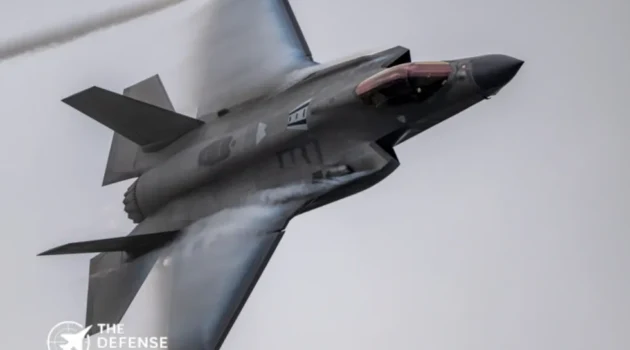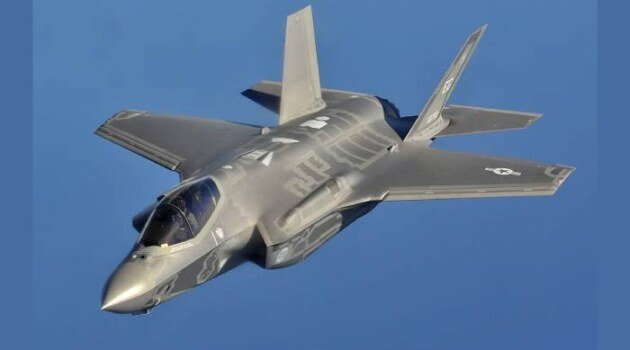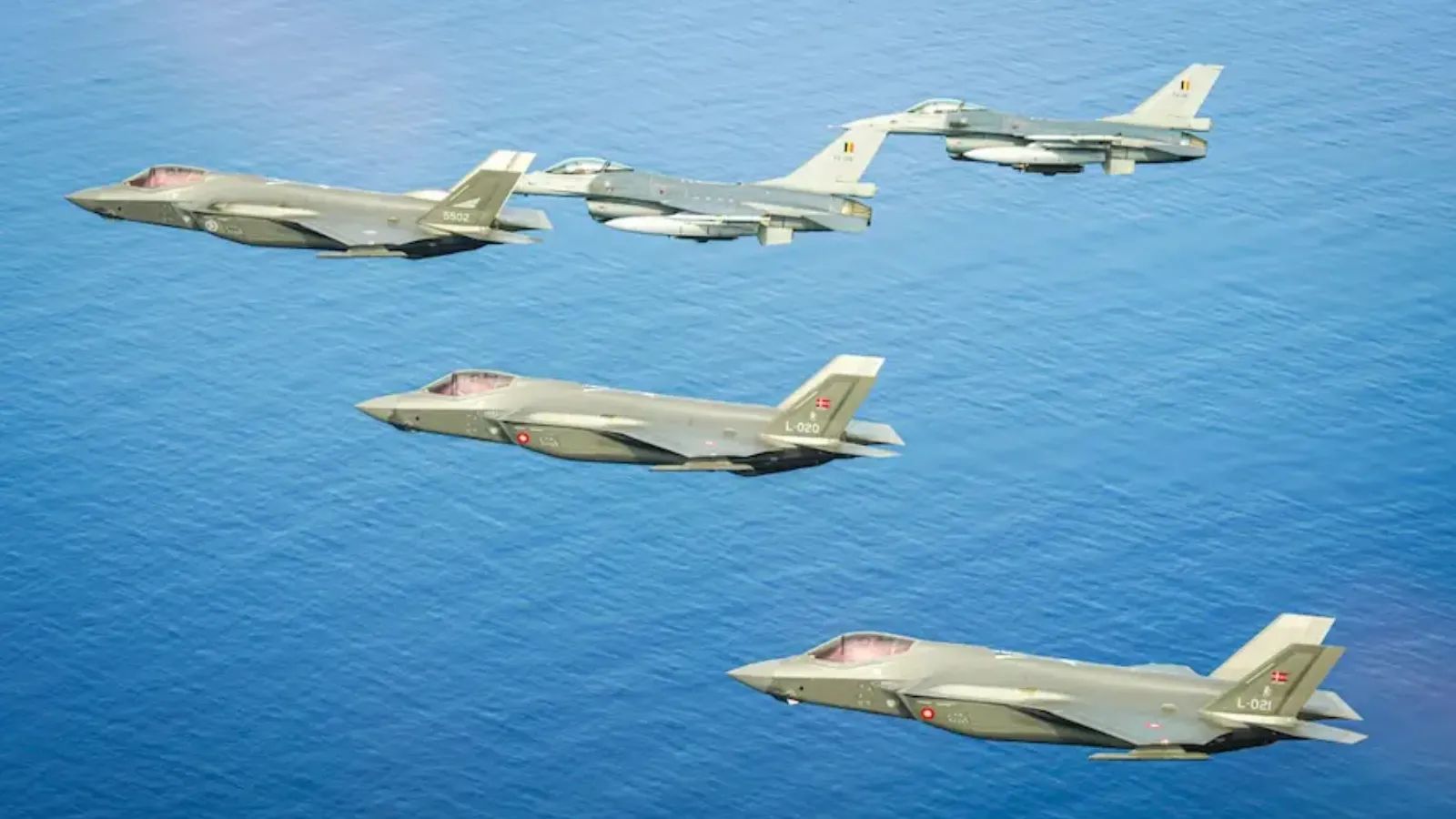
Denmark has moved its F-35 program another step toward dispersed operations by making a deployable command and mission-support facility fully operational after its first field deployment in northern Norway.
Executive Summary: Denmark has declared a new deployable F-35 operations facility fully operational after testing it during NATO’s Ramstein Flag 2026 exercise in northern Norway. The containerized facility allows Danish personnel to plan, command and support F-35 missions from forward locations while maintaining secure operational infrastructure. The capability gives Denmark greater flexibility to disperse its fifth-generation fighters beyond their permanent base at Skrydstrup.
Denmark Expands F-35 Forward Operations
Denmark’s F-35 forward operations capability has reached a new milestone following the successful field deployment of a containerized operations facility during Ramstein Flag 2026 in northern Norway.
The Danish Air Force said the facility is now fully operational after meeting the operational requirements established for the capability. The system was deployed away from Denmark’s permanent air bases and used to support F-35 operations during the NATO exercise.
According to Defence Industry Europe, the facility provides the secure infrastructure required for mission planning, command and operational support at forward locations. Its containerized design allows the system to be transported and established where Danish F-35 aircraft are required to operate.
The development is significant because modern air operations increasingly depend on the ability to distribute aircraft, personnel and command functions across multiple locations rather than concentrating combat power at a small number of permanent bases.
Ramstein Flag Provided The First Major Test
The facility was first used during Ramstein Flag 2026, NATO’s large multinational air exercise held from June 8 to 19.
The exercise brought together forces from up to 18 Allied nations across three joint operations areas stretching from northern Norway to southern Spain. NATO reported that more than 200 aircraft and other aerial assets operated from 20 locations, including conventional air bases and highway strips.
Denmark deployed F-35 aircraft to Ørland in Norway alongside Norwegian and Italian F-35s. The exercise also included F-35 operations from Finland and other locations across northern Europe.
The Royal Danish Air Force had already identified the exercise as the first time its F-35 force would participate using a deployable concept that allows operations outside Fighter Wing Skrydstrup. Denmark deployed four F-35 aircraft, with two additional aircraft held in reserve, according to the Danish Armed Forces.
This provided a practical test of more than the aircraft themselves. It also examined the supporting infrastructure needed to plan and manage missions when the normal home-base environment is unavailable.
What The Deployable Facility Adds
The main value of the new facility is not an additional weapon or sensor. It is the ability to move essential operational functions closer to deployed aircraft.
A forward F-35 detachment needs secure communications, mission planning, command functions and other support services. A deployable operations facility provides these functions without requiring the entire operation to depend on a permanent Danish air base.
That distinction matters for dispersed operations.
A modern air force can increase resilience by separating aircraft and support assets across multiple locations. This can make it harder for an adversary to disrupt an entire force with attacks against a limited number of known airfields.
Denmark has not publicly described every technical element of the facility. Defence Industry Europe reported that the containerized system provides a secure and classified environment for mission planning, command and operational support.
The Danish Armed Forces said the Ramstein Flag deployment demonstrated that the system could be moved to a forward location, established and used under demanding conditions.
Why The Capability Matters For NATO
The new capability fits directly into NATO’s growing emphasis on Agile Combat Employment and dispersed air operations.
Ramstein Flag 2026 specifically trained NATO forces to operate from multiple locations while integrating advanced fighters with airborne surveillance, tankers, unmanned systems and other supporting aircraft.
Lockheed Martin, citing Allied Air Command, said the exercise tested integrated air and missile defense, intelligence sharing, counter anti-access and area denial operations, and Agile Combat Employment. More than 120 aircraft were expected to fly simultaneously during parts of the exercise, with more than 150 sorties per day from as many as 20 operating locations.
For Denmark, the deployable F-35 facility gives the country an additional tool for contributing to this operating model.
The Danish Armed Forces said experience gained during Ramstein Flag will be used to further develop the country’s F-35 capability.
Denmark’s F-35 Force Continues To Expand
The deployable facility arrives as Denmark continues to build its F-35 fleet.
Denmark originally ordered 27 F-35A aircraft. In October 2025, the Danish government announced plans to acquire 16 additional aircraft, bringing the planned national fleet to 43 F-35s. The Danish government said deliveries from the original order were expected to continue through 2026, while the F-35 capability is expected to become fully operational in 2027.
The Danish Armed Forces received its first F-35 aircraft in October 2023 and began operating the aircraft from Fighter Wing Skrydstrup. Denmark also declared its F-35 aircraft ready to participate in national air defense interception readiness in 2025.
The larger fleet will eventually give Denmark more capacity to maintain aircraft at home while also supporting deployed operations abroad.
That will be particularly relevant for NATO missions in northern Europe, where Denmark operates alongside Norway, Sweden, Finland and other Allied forces.
A Wider Nordic Operating Model
Ramstein Flag 2026 also demonstrated how the Nordic region is becoming increasingly integrated into NATO air operations.
The Norwegian Armed Forces said the northern part of the exercise was conducted across Finland, Sweden, Norway and Denmark, with Norwegian bases and airspace supporting Allied training and dispersed operations.
NATO separately reported that the exercise used more than 20 operational locations and included Denmark, Norway, Sweden, Finland and Spain as primary host nations.
For Denmark, the ability to deploy F-35 support infrastructure into this network provides greater operational flexibility.
It also supports a broader shift away from relying exclusively on permanent operating bases. Aircraft can still require established runways, fuel, maintenance and weapons support, but a mobile command and operations element can reduce the dependence on a single fixed headquarters.
What Comes Next
The declaration of the facility as fully operational does not mean Denmark has completed development of its dispersed F-35 concept.
Instead, the Norway deployment represents a practical step toward a larger operating model in which Danish F-35s can be supported from locations outside Skrydstrup.
The next stage will likely focus on building experience in moving the system, integrating it with Allied command structures and sustaining operations from different locations. These are important elements of the broader NATO approach to resilient air operations.
Denmark’s F-35 forward operations capability therefore represents more than a new deployable container system. It provides the infrastructure needed to take the country’s fifth-generation fighter force away from its normal operating environment and into a wider Allied network.
The successful Ramstein Flag deployment showed that Denmark can establish and operate this support architecture in a demanding multinational exercise. With the facility now declared operational, the Danish Air Force has another option for distributing its F-35 force when operational requirements call for greater flexibility.