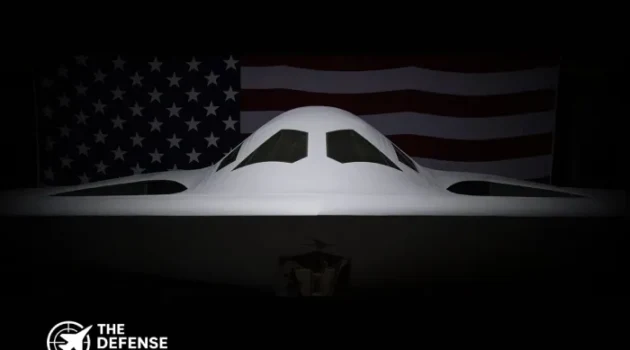
Executive Summary: Northrop Grumman has unveiled a new engineering facility intended to support next-generation aircraft development, adding infrastructure as the company competes for the U.S. Navy’s F/A-XX program. The move comes as the Navy prepares to advance its sixth-generation carrier fighter effort, which is intended to complement the F-35C and eventually replace the F/A-18E/F Super Hornet and EA-18G Growler.
Northrop Grumman Builds Capacity For Sixth-Generation Aircraft
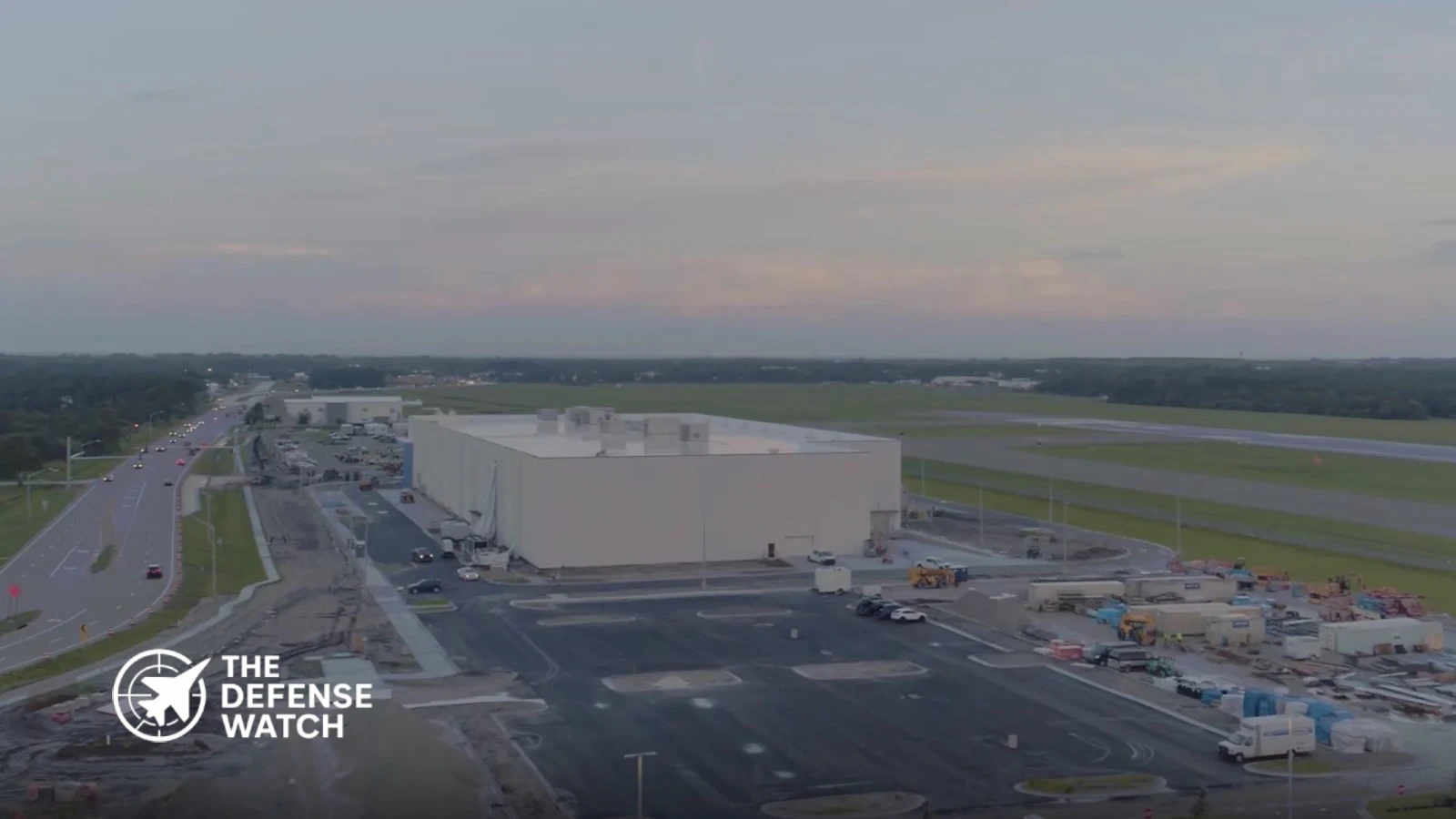
Northrop Grumman’s sixth-generation aircraft effort is gaining an important industrial infrastructure component with the opening of a new engineering site designed to support advanced aircraft development.
The facility includes classified engineering and laboratory capabilities intended for work on highly sensitive aerospace programs. The development comes as Northrop Grumman competes with Boeing for the U.S. Navy’s F/A-XX next-generation carrier-based fighter.
FlightGlobal reported the facility’s opening in August 2026, highlighting its role in Northrop Grumman’s broader sixth-generation aircraft development activity.
Northrop Grumman has not publicly disclosed the full technical scope of classified work conducted at the site. That distinction is important because the facility’s existence does not by itself confirm specific F/A-XX design features, performance characteristics or program milestones.
New Facility Adds Classified Engineering Capacity
The new site is part of Northrop Grumman’s broader investment in advanced aircraft engineering and secure development infrastructure.
The company already operates a major aircraft engineering presence in Melbourne, Florida. Northrop Grumman says its Melbourne campus designs, develops and tests advanced manned aircraft and battle management systems. The campus contains 17 buildings across a 109-acre site near Orlando Melbourne International Airport.
Northrop Grumman has also described its Florida operations as supporting sixth-generation aircraft development. Its corporate material identifies Florida as an important center for advanced aerospace design and engineering, alongside work on the B-21 Raider and other military aircraft.
The company has significant experience with low-observable aircraft. Its B-21 Raider program has moved through flight testing, including aerial refueling testing in 2026, while Northrop Grumman continues to expand production capacity.
That background is relevant to F/A-XX because sixth-generation combat aircraft development requires expertise across low-observable design, advanced mission systems, digital engineering, sensors, communications and aircraft integration.
F/A-XX Remains A Major Navy Modernization Program
The U.S. Navy’s F/A-XX program is intended to provide the next generation of carrier-based tactical aviation.
The aircraft is expected to operate alongside the F-35C and other carrier air wing assets rather than function as a standalone replacement for every existing capability. The Navy has described its future carrier air wing as an integrated force in which crewed and uncrewed aircraft work together.
Recent Navy publications state that the service’s future sixth-generation strike fighter will augment and eventually replace the F/A-18E/F Super Hornet and EA-18G Growler in the carrier air wing. The Navy expects the transition to take place during the 2030s.
The broader direction is also consistent with the Navy’s work on collaborative combat aircraft. In January 2026, Naval Air Systems Command reported a demonstration involving autonomous systems and multi-platform coordination intended to advance future manned-unmanned teaming capabilities.
This means the value of F/A-XX will extend beyond the performance of the crewed aircraft itself. The fighter is being developed within a wider architecture involving sensors, networks, weapons, autonomous aircraft and other carrier air wing platforms.
Northrop Grumman’s Position In The F/A-XX Competition
Northrop Grumman and Boeing are the two remaining major competitors for the Navy’s F/A-XX program.
The competition has taken place against a complicated U.S. fighter development landscape. Boeing is already responsible for the Air Force’s F-47, which was selected in 2025 as the crewed component of the Air Force’s Next Generation Air Dominance effort. The Pentagon’s FY2026 budget briefing identified the F-47 as the Air Force’s first crewed sixth-generation fighter and said the Navy’s F/A-XX program would retain limited development funding.
The F/A-XX program has also faced funding and scheduling pressure. Reuters previously reported that the Navy’s next-generation fighter is intended to provide greater stealth, range and endurance while integrating with uncrewed systems and carrier-based defensive networks.
Against that backdrop, Northrop Grumman’s new engineering infrastructure has significance beyond the physical facility.
It provides additional secure workspace and engineering capacity at a time when the defense industry is competing for personnel with experience in advanced aircraft design. A modern facility can also support digital engineering, systems integration and classified program work without requiring every development activity to take place at an existing production location.
Why The Engineering Site Matters
The most important point is that the facility should be viewed as an industrial capability investment rather than proof that Northrop Grumman has won the F/A-XX competition.
That distinction matters.
A new engineering site can support multiple advanced aerospace programs, including classified projects whose details are not publicly available. Northrop Grumman’s established aircraft portfolio already includes the B-21, E-2D Advanced Hawkeye, F-35 center fuselage work and other specialized aircraft and mission systems.
The company has also demonstrated a willingness to invest in facilities and production capacity as major programs progress. In July 2026, Northrop Grumman reported that its Roy Innovation Center in Utah was expanding with a new building supporting continued growth of the site and its workforce.
For F/A-XX, however, the timing is notable.
A sixth-generation naval fighter will require a long development cycle, extensive ground testing, flight testing and systems integration before operational deployment. Secure engineering infrastructure therefore becomes part of the program’s industrial foundation.
The facility also illustrates a broader shift in U.S. military aviation development. Future combat aircraft programs increasingly depend on digital design, secure software development, advanced manufacturing, sensor integration and networked systems alongside conventional aerodynamic and structural engineering.
Sixth-Generation Aircraft Development Moves Beyond The Airframe
The term sixth-generation aircraft covers more than a new fighter shape or a reduction in radar signature.
The emerging U.S. approach emphasizes a family of connected capabilities. The crewed aircraft is expected to operate with uncrewed platforms, networked sensors and other assets that distribute sensing, targeting and weapons functions across the force.
Northrop Grumman’s B-21 program provides one example of this approach. The company describes the bomber as a sixth-generation aircraft built around advanced stealth, networking and an open systems architecture.
The Navy’s F/A-XX effort is developing within the same broad technological environment, although the requirements for a carrier-based fighter differ substantially from those of a long-range bomber.
For Northrop Grumman, experience from programs such as the B-21 could provide relevant engineering knowledge, particularly in low-observable aircraft design, systems integration and digital development. However, it would be premature to assume that technologies from one program will automatically transfer directly to F/A-XX.
What Comes Next For F/A-XX
The next major milestone is the Navy’s selection of an industrial partner for the F/A-XX development effort.
The decision will determine which company leads the next phase of engineering and manufacturing development and will establish the industrial architecture for a program expected to shape naval aviation for decades.
Northrop Grumman’s new engineering site places additional infrastructure behind its bid, but the facility itself does not determine the outcome of the competition.
For the U.S. Navy, the larger objective is to develop a carrier-based aircraft capable of operating in increasingly contested environments while remaining integrated with the broader carrier air wing.
That requirement explains why the F/A-XX competition is about more than the design of a single fighter. It is also a competition over engineering capacity, classified development infrastructure, advanced manufacturing expertise and the ability to sustain a complex combat aircraft program through several decades of modernization.
As the Navy moves toward its F/A-XX decision, Northrop Grumman’s expansion shows that the industrial base supporting sixth-generation aircraft development is already being built around the next generation of U.S. airpower.