

Executive Summary:
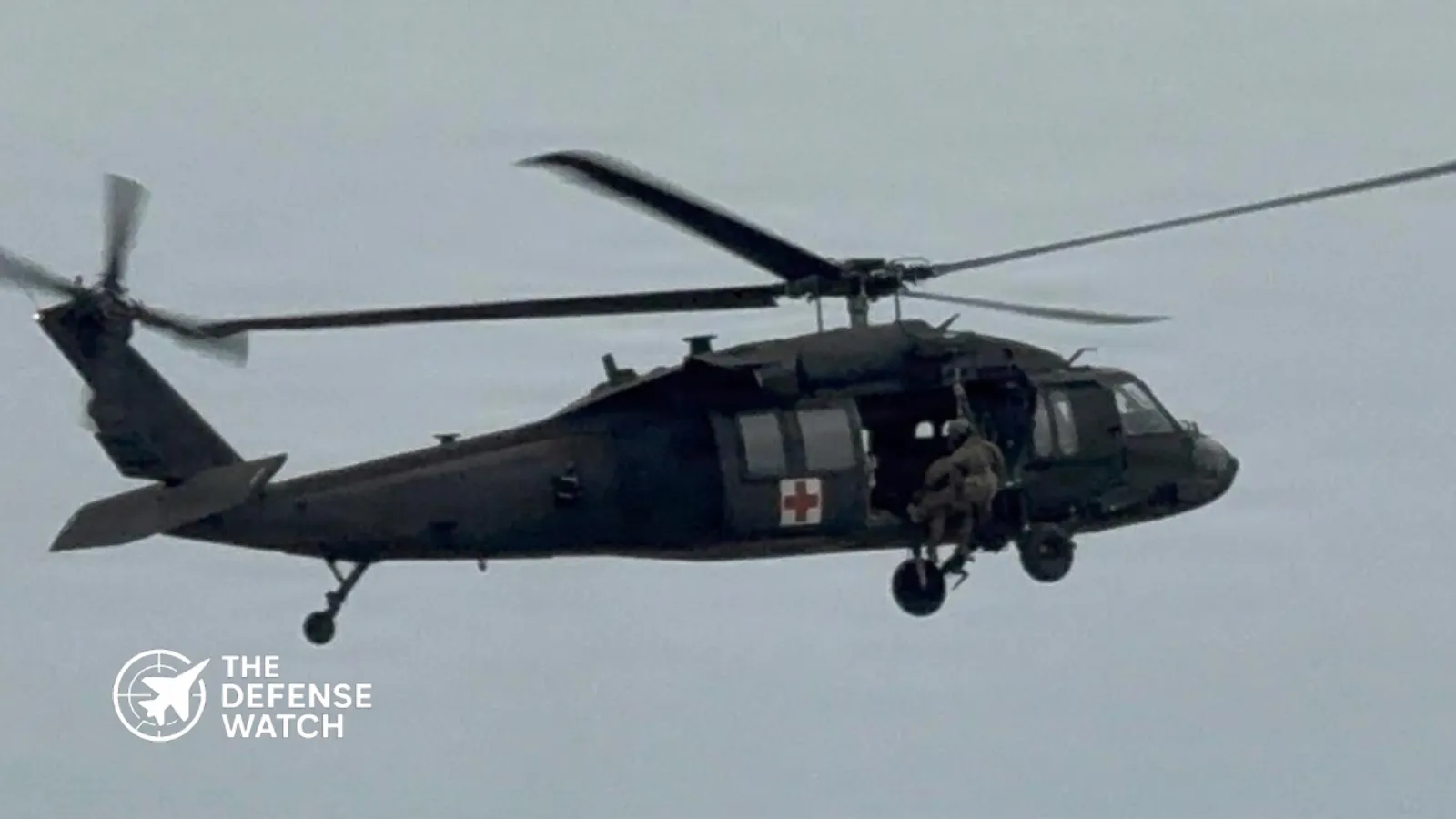
The U.S. Army has awarded Sikorsky Aircraft Corp. a $49.9 million contract modification to continue integrating and qualifying the Improved Turbine Engine (ITE) for the UH/HH-60M Black Hawk fleet. The effort supports the Army’s long term helicopter modernization strategy by improving power, fuel efficiency, and operational performance, with work scheduled to continue through June 2030.
Sikorsky Awarded $49.9 Million For UH-60M Black Hawk Improved Turbine Engine Integration
The U.S. Army has awarded Sikorsky Aircraft Corp. a $49,929,599 cost plus fixed fee contract modification to continue the integration and qualification of the Improved Turbine Engine (ITE) for the UH/HH-60M Black Hawk helicopter fleet. The award was announced by the Department of Defense as part of the Army’s ongoing rotorcraft modernization program.
The modification, identified as P00027 under contract W58RGZ-22-C-0063, increases the contract’s cumulative value to $137,968,024. The work will be performed at Sikorsky’s manufacturing and engineering facilities in Stratford, Connecticut, with completion expected by June 30, 2030.
The Army obligated the full $49.9 million in Fiscal Year 2026 Research, Development, Test and Evaluation (RDT&E) funding at the time of award. The contracting activity is the Army Contracting Command at Redstone Arsenal, Alabama.
What The Improved Turbine Engine Program Delivers
The Improved Turbine Engine is designed to replace the long serving T700 engine family that has powered multiple generations of Black Hawk and Apache helicopters for decades.
The new engine is expected to deliver substantially greater performance while reducing maintenance requirements and improving fuel efficiency. These improvements become increasingly important as Army helicopters carry heavier mission equipment and operate in hotter temperatures and higher altitude environments.
The contract specifically funds engineering services and technical data required to complete integration and qualification activities for the engine on the UH-60M utility helicopter and the HH-60M medical evacuation variant.
Why The Upgrade Matters
Modern military operations have steadily increased the demands placed on utility helicopters.
Today’s Black Hawks routinely carry heavier armor packages, advanced communications equipment, electronic warfare systems, sensors, and larger payloads than previous generations. These additions improve combat effectiveness but also increase aircraft weight and power requirements.
The Improved Turbine Engine is intended to address these challenges by providing:
Capability Operational Benefit Higher engine power Improved lift capacity and better hot and high performance Better fuel efficiency Increased operational range and reduced fuel consumption Improved durability Lower maintenance burden and higher readiness rates Modern digital controls Enhanced engine management and diagnostics Growth margin Supports future mission systems and survivability upgrades These improvements are expected to enhance mission effectiveness across combat, air assault, medical evacuation, logistics, and disaster response operations.
Supporting Long Term Army Aviation Modernization
The latest contract represents another step in the Army’s broader effort to modernize its legacy rotary wing fleet while future aircraft under the Future Vertical Lift initiative continue development.
Rather than replacing thousands of Black Hawks in the near term, the Army is investing in significant capability upgrades that extend the aircraft’s operational relevance for decades.
The UH-60M remains one of the Army’s most widely deployed helicopters, serving across active duty, National Guard, and Army Reserve formations while also supporting numerous international operators.
Integrating the Improved Turbine Engine allows the platform to better support evolving mission requirements without requiring an entirely new aircraft fleet.
Technical Challenges Of Engine Integration
Installing a more powerful engine involves considerably more than replacing the powerplant.
Engine integration requires extensive engineering work to ensure compatibility with:
- Aircraft transmission systems
- Rotor drive components
- Digital flight controls
- Electrical power generation
- Cooling systems
- Aircraft software
- Structural loads
- Flight safety requirements
Qualification testing also includes extensive ground evaluations and flight testing to verify reliability, safety, and performance across a wide range of operational conditions before the upgraded helicopters can enter service.
Because the Black Hawk is expected to remain in Army service for decades, these qualification efforts are essential to ensuring long term fleet reliability.
Strategic Significance
Although this contract focuses on engineering and testing rather than production, it represents an important investment in sustaining one of the U.S. Army’s most critical aviation assets.
The Black Hawk has served in nearly every major U.S. military operation since the late Cold War and continues to perform missions ranging from troop transport and special operations support to casualty evacuation and humanitarian assistance.
Improving engine performance directly enhances operational flexibility, particularly in environments where aircraft must operate with heavy payloads under demanding environmental conditions.
The investment also supports the Army’s strategy of combining new aircraft development with incremental modernization of proven platforms, reducing capability gaps while maintaining high readiness.
Contract Details
Item Details Contractor Sikorsky Aircraft Corp. Contract Modification P00027 Contract Number W58RGZ-22-C-0063 Contract Value $49,929,599 Total Contract Value $137,968,024 Aircraft UH-60M and HH-60M Black Hawk Program Improved Turbine Engine Integration and Qualification Work Location Stratford, Connecticut Completion Date June 30, 2030 Funding FY2026 Army RDT&E Contracting Activity Army Contracting Command, Redstone Arsenal, Alabama Outlook
With this latest contract modification, Sikorsky will continue integrating and qualifying the Improved Turbine Engine for the UH/HH-60M Black Hawk fleet, supporting one of the Army’s highest priority aviation modernization efforts.
Successful completion of the engineering and qualification work will help prepare the platform for future operational demands while improving power, efficiency, and sustainment. As the Army balances modernization with long term fleet readiness, engine upgrades such as the ITE program remain a key component of maintaining the Black Hawk’s role as the service’s primary utility helicopter well into the next decade.

