Executive Summary:
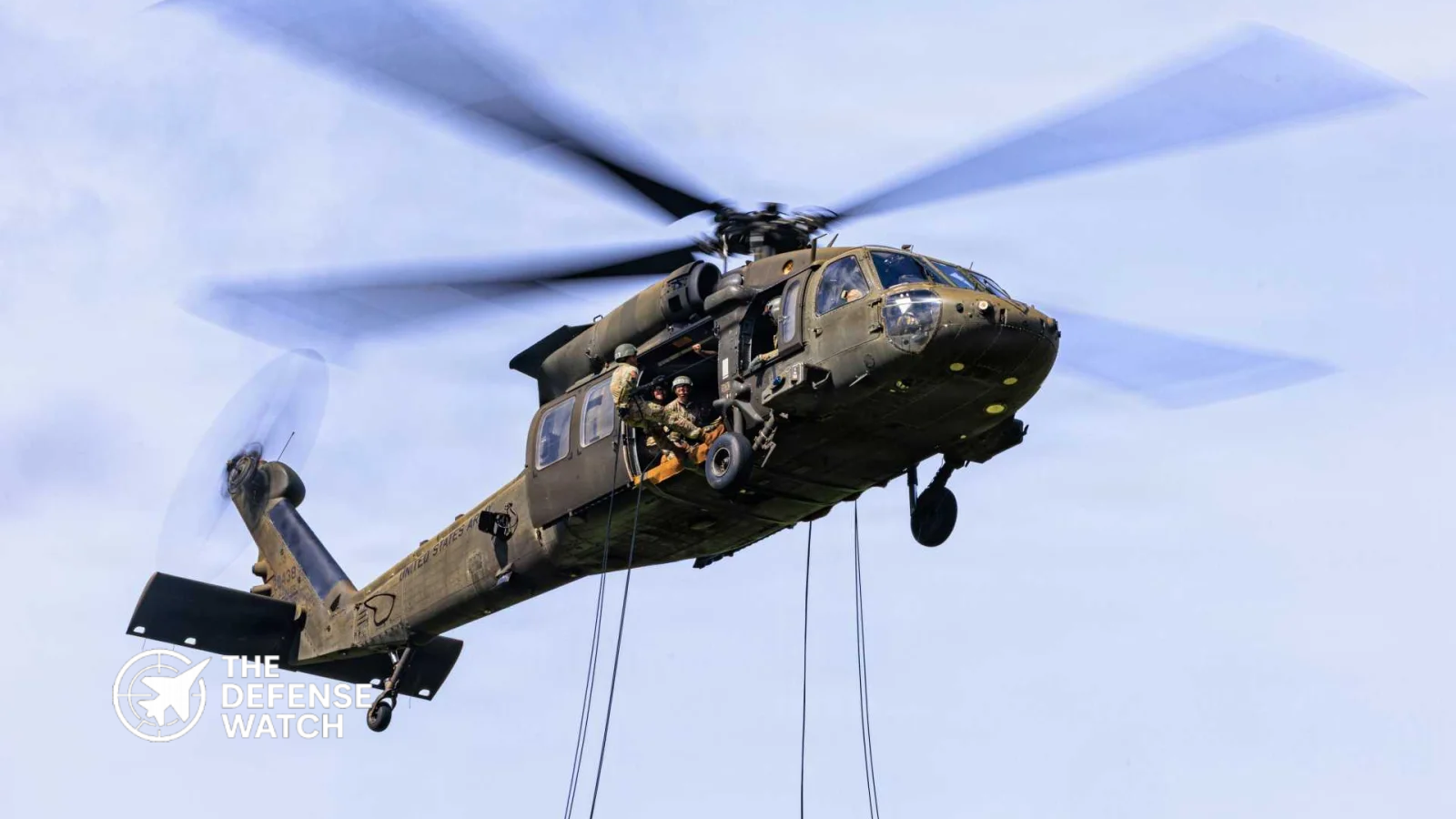
The U.S. Army has awarded Sikorsky Aircraft Corp. a $49.9 million contract modification to continue integrating and qualifying the Improved Turbine Engine (ITE) for the UH/HH-60M Black Hawk fleet. The effort supports the Army’s long term helicopter modernization strategy by improving power, fuel efficiency, and operational performance, with work scheduled to continue through June 2030.
Sikorsky Awarded $49.9 Million For UH-60M Black Hawk Improved Turbine Engine Integration
The U.S. Army has awarded Sikorsky Aircraft Corp. a $49,929,599 cost plus fixed fee contract modification to continue the integration and qualification of the Improved Turbine Engine (ITE) for the UH/HH-60M Black Hawk helicopter fleet. The award was announced by the Department of Defense as part of the Army’s ongoing rotorcraft modernization program.
The modification, identified as P00027 under contract W58RGZ-22-C-0063, increases the contract’s cumulative value to $137,968,024. The work will be performed at Sikorsky’s manufacturing and engineering facilities in Stratford, Connecticut, with completion expected by June 30, 2030.
The Army obligated the full $49.9 million in Fiscal Year 2026 Research, Development, Test and Evaluation (RDT&E) funding at the time of award. The contracting activity is the Army Contracting Command at Redstone Arsenal, Alabama.
What The Improved Turbine Engine Program Delivers
The Improved Turbine Engine is designed to replace the long serving T700 engine family that has powered multiple generations of Black Hawk and Apache helicopters for decades.
The new engine is expected to deliver substantially greater performance while reducing maintenance requirements and improving fuel efficiency. These improvements become increasingly important as Army helicopters carry heavier mission equipment and operate in hotter temperatures and higher altitude environments.
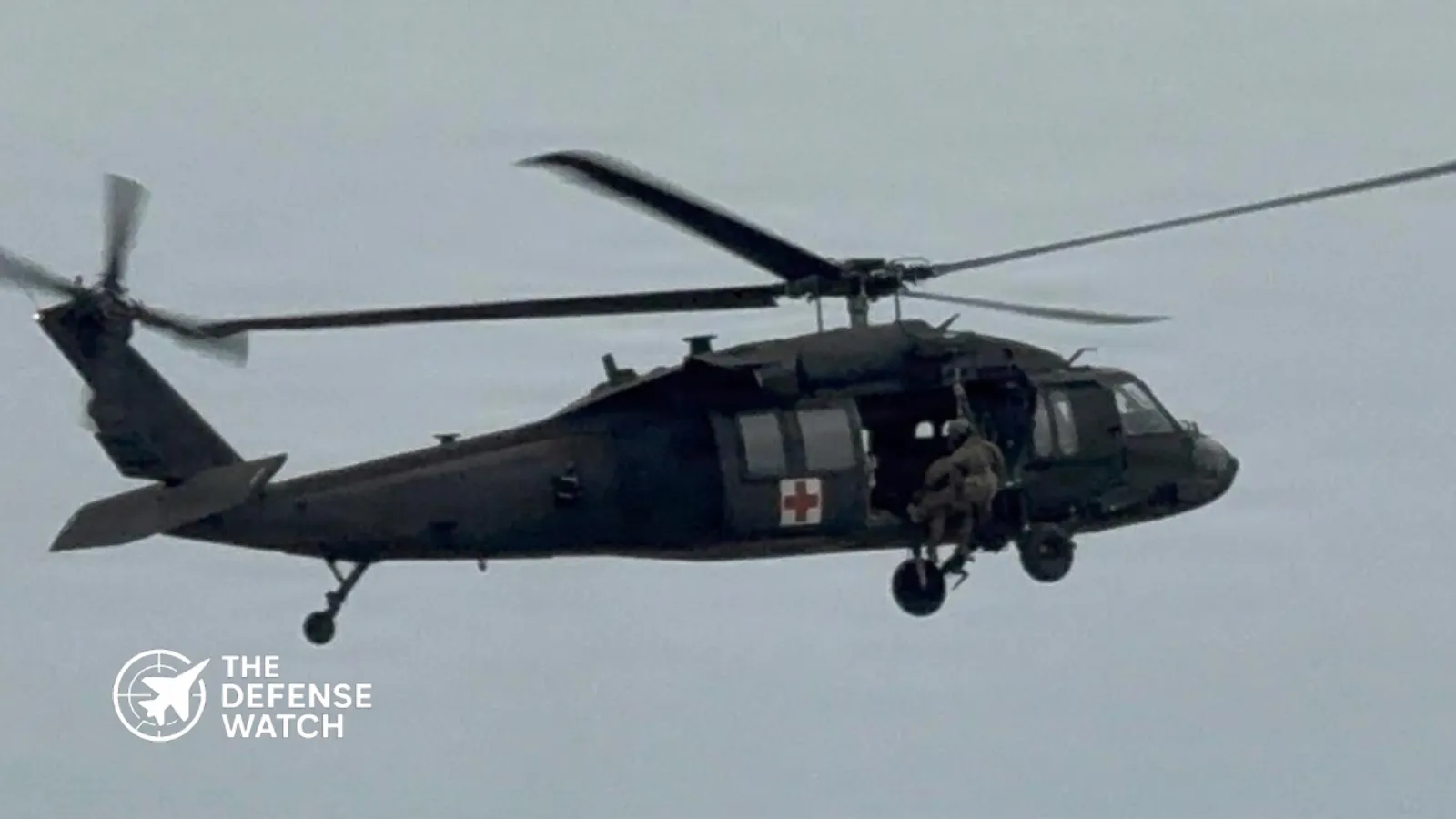
The contract specifically funds engineering services and technical data required to complete integration and qualification activities for the engine on the UH-60M utility helicopter and the HH-60M medical evacuation variant.
Why The Upgrade Matters
Modern military operations have steadily increased the demands placed on utility helicopters.
Today’s Black Hawks routinely carry heavier armor packages, advanced communications equipment, electronic warfare systems, sensors, and larger payloads than previous generations. These additions improve combat effectiveness but also increase aircraft weight and power requirements.
The Improved Turbine Engine is intended to address these challenges by providing:
Capability Operational Benefit Higher engine power Improved lift capacity and better hot and high performance Better fuel efficiency Increased operational range and reduced fuel consumption Improved durability Lower maintenance burden and higher readiness rates Modern digital controls Enhanced engine management and diagnostics Growth margin Supports future mission systems and survivability upgrades These improvements are expected to enhance mission effectiveness across combat, air assault, medical evacuation, logistics, and disaster response operations.
Supporting Long Term Army Aviation Modernization
The latest contract represents another step in the Army’s broader effort to modernize its legacy rotary wing fleet while future aircraft under the Future Vertical Lift initiative continue development.
Rather than replacing thousands of Black Hawks in the near term, the Army is investing in significant capability upgrades that extend the aircraft’s operational relevance for decades.
The UH-60M remains one of the Army’s most widely deployed helicopters, serving across active duty, National Guard, and Army Reserve formations while also supporting numerous international operators.
Integrating the Improved Turbine Engine allows the platform to better support evolving mission requirements without requiring an entirely new aircraft fleet.
Technical Challenges Of Engine Integration
Installing a more powerful engine involves considerably more than replacing the powerplant.
Engine integration requires extensive engineering work to ensure compatibility with:
- Aircraft transmission systems
- Rotor drive components
- Digital flight controls
- Electrical power generation
- Cooling systems
- Aircraft software
- Structural loads
- Flight safety requirements
Qualification testing also includes extensive ground evaluations and flight testing to verify reliability, safety, and performance across a wide range of operational conditions before the upgraded helicopters can enter service.
Because the Black Hawk is expected to remain in Army service for decades, these qualification efforts are essential to ensuring long term fleet reliability.
Strategic Significance
Although this contract focuses on engineering and testing rather than production, it represents an important investment in sustaining one of the U.S. Army’s most critical aviation assets.
The Black Hawk has served in nearly every major U.S. military operation since the late Cold War and continues to perform missions ranging from troop transport and special operations support to casualty evacuation and humanitarian assistance.
Improving engine performance directly enhances operational flexibility, particularly in environments where aircraft must operate with heavy payloads under demanding environmental conditions.
The investment also supports the Army’s strategy of combining new aircraft development with incremental modernization of proven platforms, reducing capability gaps while maintaining high readiness.
Contract Details
Item Details Contractor Sikorsky Aircraft Corp. Contract Modification P00027 Contract Number W58RGZ-22-C-0063 Contract Value $49,929,599 Total Contract Value $137,968,024 Aircraft UH-60M and HH-60M Black Hawk Program Improved Turbine Engine Integration and Qualification Work Location Stratford, Connecticut Completion Date June 30, 2030 Funding FY2026 Army RDT&E Contracting Activity Army Contracting Command, Redstone Arsenal, Alabama Outlook
With this latest contract modification, Sikorsky will continue integrating and qualifying the Improved Turbine Engine for the UH/HH-60M Black Hawk fleet, supporting one of the Army’s highest priority aviation modernization efforts.
Successful completion of the engineering and qualification work will help prepare the platform for future operational demands while improving power, efficiency, and sustainment. As the Army balances modernization with long term fleet readiness, engine upgrades such as the ITE program remain a key component of maintaining the Black Hawk’s role as the service’s primary utility helicopter well into the next decade.
Executive Summary:
The U.S. State Department has approved a potential $1.5 billion Foreign Military Sales package for UH-60M Black Hawk helicopters and associated support equipment for Austria. The proposed acquisition strengthens Austria’s air mobility capabilities, supports its Armed Forces 2032+ modernization program, and deepens interoperability with U.S. and NATO partner forces.
US Approves Austria Black Hawk Helicopter Sale
The United States has approved a potential Foreign Military Sales (FMS) package for Austria centered on additional UH-60M Black Hawk helicopters, with an estimated value of $1.5 billion. The approval was announced by the U.S. State Department and notified through established FMS channels, with Sikorsky, a subsidiary of Lockheed Martin, identified as the principal contractor.
The decision reflects continued demand among European partners for proven rotary-wing platforms capable of supporting military transport, disaster response, search-and-rescue operations, and coalition missions. The Black Hawk remains one of the most widely operated military utility helicopters globally, with more than 4,000 aircraft in service worldwide.
Austria’s Expanding Black Hawk Fleet
Austria has already committed to acquiring 12 UH-60M Black Hawk helicopters as part of a major modernization effort intended to replace aging Agusta-Bell AB212 helicopters. Deliveries of these aircraft are expected to begin in 2028 under the country’s Armed Forces 2032+ modernization initiative.
-
The Austrian Armed Forces currently operate legacy S-70A Black Hawk helicopters. The introduction of the newer UH-60M variant will significantly improve operational capability through enhanced avionics, improved survivability systems, and greater mission flexibility.
Recent milestones indicate the program is progressing. In May 2026, Austria’s first UH-60M entered the final U.S. Army outfitting and certification phase ahead of eventual delivery.
What Is Included In The UH-60M Package?
Previous U.S. notifications for Austria’s UH-60M procurement outlined a comprehensive package that extends far beyond the helicopters themselves. The acquisition includes engines, self-protection systems, navigation equipment, training, logistics support, spare parts, and sustainment services.
Key systems associated with Austria’s UH-60M fleet include:
Capability System Engines T700-GE-701D turboshaft engines Missile Warning AN/AAR-57 Common Missile Warning System Radar Warning AN/APR-39C(V) receivers Laser Threat Detection AN/AVR-2B laser warning sets Navigation H-764U Embedded GPS/INS systems Tactical Navigation TACAN and instrument landing systems These systems improve survivability, situational awareness, and operational effectiveness in both military and humanitarian missions.
Why The UH-60M Matters
The UH-60M represents the most advanced production version of the Black Hawk family currently available through U.S. Foreign Military Sales channels.
Compared with earlier variants, the UH-60M incorporates:
- More powerful and reliable T700-GE-701D engines
- Enhanced wide-chord rotor blades
- Digital glass cockpit architecture
- Improved navigation and mission systems
- Greater operational reliability and maintainability
These improvements increase payload capacity, mission endurance, and performance in challenging environments such as mountainous terrain, a critical consideration for Austrian operations.
Strategic Significance For Europe
The approval carries importance beyond Austria’s national requirements.
European governments have accelerated military modernization programs following years of heightened security concerns across the continent. Rotary-wing mobility remains a critical capability for rapid troop movement, disaster response, logistics support, and special operations.
The Black Hawk’s widespread use among NATO members and partner nations provides significant interoperability advantages. Shared platforms simplify multinational training, maintenance, logistics support, and coalition operations. The Defense Security Cooperation Agency has repeatedly highlighted interoperability as a central objective of these sales.
From a U.S. perspective, Foreign Military Sales programs help strengthen allied capabilities while supporting a common operational framework across partner forces. Aircraft such as the UH-60M can integrate more easily into joint exercises and multinational deployments than unique national platforms.
Analysis: What This Means For Austria’s Future Force Structure
Austria’s helicopter modernization effort represents one of the country’s most significant military aviation investments in decades.
The combination of UH-60M Black Hawks and recently ordered Leonardo AW169M helicopters points to a broader restructuring of Austria’s rotary-wing fleet. Rather than maintaining several aging helicopter types with growing sustainment costs, Austria is transitioning toward a modern fleet capable of serving for decades.
Operationally, the UH-60M offers Austria a substantial increase in transport capacity and readiness. The aircraft’s ability to conduct troop transport, medical evacuation, humanitarian assistance, disaster relief, and international deployments provides flexibility that is increasingly valued by European militaries.
The procurement also reflects a broader trend across Europe toward acquiring mature, combat-proven platforms rather than pursuing higher-risk developmental programs. In an increasingly uncertain security environment, governments are prioritizing systems that can be fielded quickly, supported reliably, and integrated with allied forces from day one.
For Sikorsky and the broader U.S. defense industrial base, continued international Black Hawk demand reinforces the platform’s long-term relevance despite ongoing next-generation rotorcraft development efforts. The aircraft remains one of the most successful military helicopter export programs in the world.
Outlook
Congressional review remains part of the U.S. arms transfer process before any sale can proceed to final implementation. However, State Department approval represents a major step toward expanding Austria’s future Black Hawk fleet and strengthening its military air mobility capabilities.
As Austria advances its Armed Forces 2032+ modernization strategy, the UH-60M Black Hawk is expected to become a cornerstone of the country’s rotary-wing aviation capability for decades to come.
Sikorsky Secures $65 Million UH-60M Black Hawk Contract For Army Production
The UH-60M Black Hawk contract awarded to Sikorsky Aircraft Corp. marks a $65 million investment in advanced procurement for the first 10 Army helicopters under the latest production effort.
According to a U.S. Department of Defense contract announcement, Sikorsky, based in Stratford, Connecticut, received a firm fixed price contract valued at $65,000,000. The award supports advance procurement activities tied to the first 10 UH-60M aircraft for the U.S. Army.
Work will be carried out in Stratford, with an estimated completion date of Dec. 31, 2026. Fiscal 2024 Aircraft Procurement, Army funding was fully obligated at the time of the award. The Army Contracting Command at Redstone Arsenal, Alabama, is managing the contract under number W58RGZ-26-C-0008.
- Sikorsky Aircraft Corp. awarded $65 million firm fixed price contract for UH-60M Black Hawk advanced procurement.
- Contract supports the first 10 Army UH-60M Black Hawk helicopters.
- Work to be performed in Stratford, Connecticut, with completion expected by Dec. 31, 2026.
- Fiscal 2024 Aircraft Procurement, Army funds obligated at time of award.
- Army Contracting Command at Redstone Arsenal, Alabama, is the contracting activity.
What Advanced Procurement Means
Advanced procurement funding allows manufacturers to secure long lead components and materials before full production funding is released. In rotary wing programs like the UH-60M Black Hawk, that often includes gearboxes, rotor systems, avionics components, and structural assemblies.
By issuing this UH-60M Black Hawk contract as a firm fixed price award, the Army locks in costs early, providing budget predictability while sustaining production tempo at Sikorsky’s Connecticut facility.
Only one bid was received after solicitation via the internet, according to the Pentagon notice.
The UH-60M Black Hawk’s Role In Army Aviation
The UH-60M Black Hawk is the latest production variant of the Army’s long serving utility helicopter platform. Built by Sikorsky, a Lockheed Martin company, the aircraft features upgraded digital avionics, improved flight controls, and enhanced lift performance compared to earlier models.
The platform supports air assault, medevac, command and control, and general support missions across active duty and National Guard formations. The M variant incorporates a glass cockpit, improved engines, and enhanced survivability systems.
Continued procurement signals the Army’s commitment to maintaining rotary wing readiness even as it develops next generation vertical lift capabilities under programs such as Future Vertical Lift.
Industrial Base And Production Stability
This Sikorsky Army helicopter deal reinforces production continuity at the Stratford facility. Stable production orders are critical to preserving the skilled workforce and supplier network that underpin the Army’s aviation industrial base.
Advance procurement contracts also help mitigate supply chain risk. By securing materials and components early, the Army reduces the likelihood of delays tied to long lead items.
The decision to obligate Fiscal 2024 Aircraft Procurement funds at the time of award ensures financial backing is already in place, limiting uncertainty for both the government and contractor.
Broader Budget Context
Army aviation modernization continues to balance legacy platform sustainment with emerging systems. While Future Long Range Assault Aircraft development progresses, the UH-60M remains central to current operational requirements.
Maintaining production through structured contracts like this $65 million award helps the Army avoid capability gaps during transition periods. It also ensures operational units continue receiving new aircraft to replace aging airframes.
Given ongoing global commitments and high operational tempo, sustained UH-60M procurement supports force readiness without relying solely on service life extensions.
Contracting Details
The Army Contracting Command at Redstone Arsenal, Alabama, is overseeing the award. The contract type is firm fixed price, meaning Sikorsky assumes cost risk beyond the agreed amount.
The estimated completion date is Dec. 31, 2026, aligning with production timelines for long lead components tied to the first 10 helicopters.
The UH-60M Black Hawk contract reflects incremental but steady investment in Army aviation capability.
- â–º Rockwell Collins awarded $95,728,892 contract for UH-60M Black Hawk Multi-Functional Display Avionics Suite support.
- â–º Contract type includes cost-plus-fixed-fee and firm-fixed-price elements.
- â–º Work locations and funding will be determined with each individual order.
- â–º Estimated completion date is February 24, 2031.
- ► Army Contracting Command – Redstone Arsenal is the contracting activity.
US Army Advances UH-60M Black Hawk Multi-Functional Display Avionics Suite Sustainment
The UH-60M Black Hawk Multi-Functional Display Avionics Suite is set to receive long-term sustainment support under a new $95.7 million US Army contract awarded to Rockwell Collins Inc., Cedar Rapids, Iowa.
The award, valued at $95,728,892, covers acquisition of support services and incidental materials tied to the avionics suite installed on the Army’s UH-60M Black Hawk helicopters. The contract structure combines cost-plus-fixed-fee and firm-fixed-price elements, reflecting both service-based and material procurement components.
According to the Department of Defense contract announcement, bids were solicited via the internet with one offer received. The estimated completion date is February 24, 2031. The Army Contracting Command at Redstone Arsenal, Alabama, is managing the contract under number W58RGZ-26-D-0027.
Sustainment Focus For A High-Demand Fleet
The UH-60M Black Hawk Multi-Functional Display Avionics Suite is central to cockpit operations in the Army’s modernized Black Hawk fleet. The system integrates flight data, navigation, engine performance, and mission information into digital displays, reducing pilot workload and improving situational awareness.
The UH-60M variant, built by Sikorsky, a Lockheed Martin company, represents the latest production configuration of the Black Hawk platform. It features upgraded engines, improved survivability systems, and a digital glass cockpit architecture. The Multi-Functional Display Avionics Suite is a core element of that architecture.
Sustainment contracts of this type are critical to fleet readiness. Unlike new production awards, these agreements ensure that fielded aircraft maintain operational availability over extended service lives. With thousands of flight hours logged annually across training, domestic operations, and overseas deployments, avionics reliability directly affects mission readiness rates.
Contract Structure And Execution
The hybrid contract model suggests flexibility. Cost-plus-fixed-fee arrangements are often used for services where scope can evolve, such as engineering support or troubleshooting. Firm-fixed-price components typically apply to defined material deliveries.
Work locations and funding will be determined with each order, indicating an indefinite-delivery structure rather than a single-site execution plan. This approach allows the Army to allocate funds incrementally based on operational demand and maintenance cycles.
Only one bid was received, a common outcome in highly specialized avionics sustainment efforts where the original equipment manufacturer or system integrator maintains proprietary knowledge and technical data.
Strategic Context: Modernization And Lifecycle Management
The UH-60M Black Hawk Multi-Functional Display Avionics Suite contract aligns with the Army’s broader aviation modernization strategy. While next-generation programs such as Future Vertical Lift advance, the Black Hawk remains a backbone platform for air assault, medical evacuation, command and control, and logistics missions.
According to US Army aviation planning documents and Congressional budget materials, the service intends to sustain and incrementally upgrade the Black Hawk fleet well into the 2030s. That makes avionics support agreements strategically significant.
Lifecycle sustainment now accounts for a substantial share of defense aviation spending. Maintaining existing fleets at high readiness levels often delivers more immediate operational impact than introducing limited numbers of new aircraft.
From an industrial base perspective, long-term contracts such as this one help stabilize supplier networks and preserve technical expertise in military avionics integration. Redstone Arsenal continues to serve as a central hub for Army aviation procurement and lifecycle management.
Why The Avionics Suite Matters
The Multi-Functional Display Avionics Suite supports:
- Real-time flight instrumentation
- Digital map integration
- System health monitoring
- Mission data presentation
In contested or complex operational environments, integrated digital displays enable faster decision-making and improved coordination between pilots and ground units. As threats evolve, software updates and hardware sustainment become essential to maintaining compatibility with emerging communication and navigation standards.
By extending support through 2031, the Army signals continued reliance