• Home
  • About
  • Defense Systems
  • Manufacturer
  • Comparisons
  • Compare 
  • Tools
TheDefenseWatch.com
  • Aerospace & Aviation
  • Military & Ordnance
  • Naval & Maritime
  • Cyber & Space Defense
  • Policy & Strategy
  • Global News
  • Tools Library
    • Smart Calculator
    • Drone Flight Time Calculator
    • Drone Range Calculator
    • Counter-Drone Jammer Effective Range Calculator
    • Counter-Battery Radar Detection Calculator
    • Artillery Fire Correction Calculator
    • Thermal Camera Detection Range Calculator
    • Missile Range & Time-of-Flight Calculator
    • Radar Detection Range Calculator
    • FPV Strike Drone Payload vs Range Calculator
    • Loitering Munition Endurance Calculator
    • Sniper Ballistic Drop & Windage Calculator
    • Bullet Drop Calculator
    • U.S. Army Combat Fitness Test (ACFT) Calculator
    • Military Pension Calculator
    • Military Retirement Calculator
    • Military Pension Calculator
    • Large Number Calculator
Font ResizerAa

TheDefenseWatch.com

The Defense Watch | U.S. & Global Defense News, Analysis & Military Updates

Search
  • Home
  • About
  • Defense Systems
  • Manufacturer
  • Comparisons
  • Compare 
  • Tools

Stay Updated

Get the latest update

Subscribe

Explore

  • Drone
  • Fighter Jets & Military Aircraft
  • Hypersonic Weapons
  • Aircraft Carriers
  • Strategic History & Missions
  • Tools Library
Home » Bulgaria Moves To Expand Support For US Military Operations As Iran Renews Regional Threats
Alliances & DoctrinesPolicy & Strategy

Bulgaria Moves To Expand Support For US Military Operations As Iran Renews Regional Threats

Samuel Drake | Defense Analyst
Last updated: September 7, 2026 3:30 am
Samuel Drake | Defense Analyst
Share
6 Min Read
Bulgaria US military operations
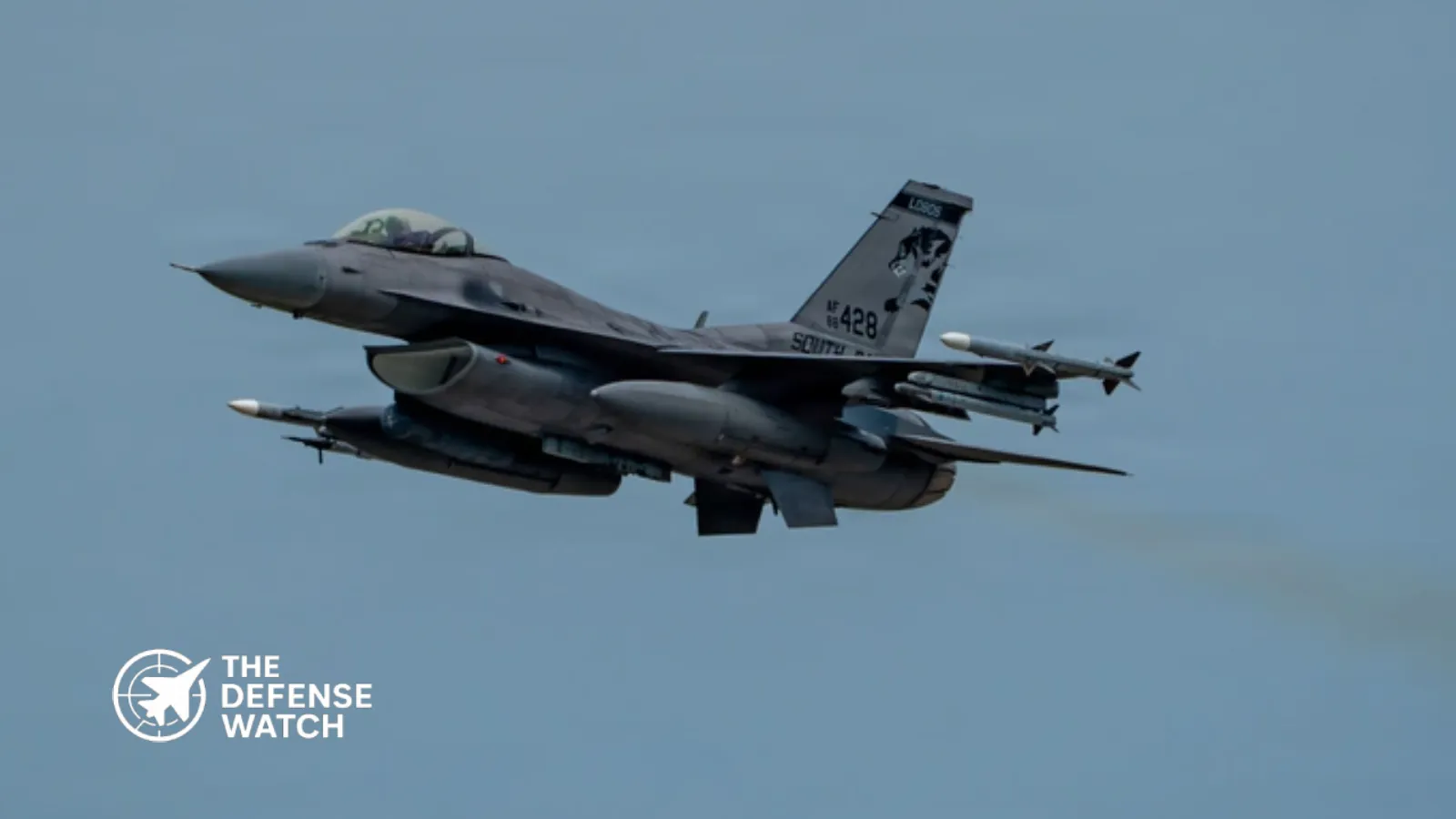
Image: U.S. Air Force F-16 Fighting Falcon
SHARE

Executive Summary:

Bulgaria has reaffirmed its willingness to facilitate U.S. military operations through its territory despite public warnings from Iran over regional tensions. The move reinforces Bulgaria’s role as a NATO logistics hub while highlighting the alliance’s continued focus on maintaining military mobility across Europe’s southeastern flank.

Bulgaria Reaffirms Support For US Military Operations

Bulgaria’s government has confirmed it will continue supporting U.S. military operations by allowing the movement of American military personnel and equipment through its territory, even as Iran issued warnings to countries assisting U.S. forces during heightened regional tensions.

Contents
  • Bulgaria Reaffirms Support For US Military Operations
  • NATO Commitments Drive Bulgaria’s Decision
  • Why Bulgaria Matters To US Military Logistics
  • Regional Tensions Raise Strategic Importance
  • Strategic Analysis: Why This Matters Beyond Bulgaria
  • US And Bulgaria Continue Defense Cooperation
  • Key Takeaways

Bulgarian officials emphasized that existing agreements with the United States and NATO remain fully in force. Sofia described the transit of allied military assets as part of its long standing alliance commitments rather than a change in national policy.

The decision comes as the Middle East continues to experience elevated security concerns following recent military exchanges involving Iran, Israel, and the United States.

NATO Commitments Drive Bulgaria’s Decision

As a NATO member since 2004, Bulgaria routinely supports allied deployments, exercises, and logistics across southeastern Europe. The country occupies a strategically important position linking the Black Sea region with the Balkans and the eastern Mediterranean.

- Advertisement -

Bulgarian authorities stressed that facilitating allied movement is consistent with existing defense agreements and collective security obligations.

Key aspects include:

AreaSignificance
NATO MembershipEnables allied force mobility
Strategic LocationConnects Black Sea, Balkans and Mediterranean
Existing AgreementsSupport U.S. and NATO logistics operations
Regional SecurityEnhances alliance readiness in southeastern Europe

Officials indicated that no extraordinary legal measures were required because existing bilateral and NATO frameworks already provide mechanisms for allied military transit.

Why Bulgaria Matters To US Military Logistics

Bulgaria has become an increasingly valuable logistics partner for the United States over the past two decades.

Several military facilities, including the Novo Selo Training Area, Bezmer Air Base, Graf Ignatievo Air Base, and Aitos Logistics Center, support joint training and rotational deployments under the U.S.-Bulgaria Defense Cooperation Agreement.

These locations improve NATO’s ability to:

  • Rapidly move personnel and equipment.
  • Conduct multinational exercises.
  • Sustain operations on NATO’s eastern flank.
  • Increase interoperability among allied forces.

Although Bulgaria does not permanently host large U.S. combat formations, its infrastructure plays a critical role during exercises and contingency operations.

Regional Tensions Raise Strategic Importance

Iran’s recent warnings toward countries supporting American military activities have placed additional attention on allied logistics networks throughout Europe.

- Advertisement -

Bulgarian leaders have maintained that their policies are based on treaty commitments rather than reactions to external political pressure.

For NATO planners, uninterrupted access to transportation corridors is essential because military mobility directly affects alliance responsiveness during crises.

Maintaining reliable routes through southeastern Europe reduces deployment timelines and strengthens operational flexibility across multiple theaters.

Strategic Analysis: Why This Matters Beyond Bulgaria

While Bulgaria’s announcement does not represent a major policy shift, it highlights an increasingly important aspect of modern defense planning: logistics.

Military operations depend not only on combat aircraft, ships, and ground forces but also on secure transportation corridors, airfields, fuel infrastructure, rail networks, and host nation support. NATO has spent years improving military mobility across Europe following Russia’s invasion of Ukraine, recognizing that reinforcement speed can significantly influence deterrence.

Bulgaria occupies a valuable geographic position because it connects Central Europe, the Black Sea region, Turkey, and the eastern Mediterranean. This makes the country particularly useful for transporting personnel, humanitarian assistance, airlift cargo, and military equipment during both exercises and potential contingencies.

The decision also demonstrates alliance cohesion. Even when external actors issue political warnings, NATO members generally continue implementing existing defense agreements unless governments formally change policy.

For the United States, dependable access through allied territory reduces logistical risk and increases operational flexibility. Rather than concentrating military support in only a few locations, distributed access across multiple allied nations improves resilience and complicates potential disruption efforts.

As European security challenges evolve simultaneously in Eastern Europe and the Middle East, reliable logistics networks have become as strategically important as advanced weapons systems.

US And Bulgaria Continue Defense Cooperation

Defense cooperation between Washington and Sofia has steadily expanded through joint exercises, modernization initiatives, and infrastructure improvements.

The United States regularly participates in multinational exercises hosted in Bulgaria that strengthen interoperability among NATO forces. These activities complement broader alliance efforts to improve readiness and collective defense across Europe’s eastern and southeastern regions.

Although the current development is primarily logistical, it reflects the continuing importance of allied cooperation in maintaining regional stability and operational preparedness.

Key Takeaways

  • Bulgaria will continue facilitating U.S. military transit under existing NATO and bilateral agreements.
  • Officials described the decision as consistent with longstanding alliance commitments.
  • Bulgaria’s geographic position makes it an important logistics hub connecting Europe, the Black Sea, and the eastern Mediterranean.
  • Reliable military mobility remains a core element of NATO deterrence and operational readiness.
  • The development underscores the strategic value of allied infrastructure during periods of heightened regional tension.
TAGGED:BulgariaNATO
Share This Article
Facebook Copy Link Print
BySamuel Drake | Defense Analyst
Follow:
Samuel Drake is a defense analyst at TheDefenseWatch.com covering naval warfare, military ordnance, maritime technology, fleet modernization, and defense procurement. His reporting focuses on documented capabilities, procurement programs, and military technology.
Leave a Comment

Leave a Reply Cancel reply

Your email address will not be published. Required fields are marked *

Latest Defense Systems

  • Rafale F5 Fighter Rafale F5 Fighter
  • Tomahawk Block V Missile Tomahawk Block V Missile
  • Tomahawk Block IV Missile Tomahawk Block IV Missile
  • SU-57 Felon Stealth Fighter SU-57 Felon Stealth Fighter
  • Boeing F/A-XX Fighter Boeing F/A-XX Fighter
  • JF-17 Thunder Fighter Jet JF-17 Thunder Fighter Jet
  • Gaurav Glide Bomb Gaurav Glide Bomb
  • F-47 Fighter Jet F-47 Fighter Jet
  • Spirit UAS Spirit UAS

Recent Compares

  • J-10C vs JF-17 Thunder: Which Fighter Is More Capable? J-10C vs JF-17 Thunder: Which Fighter Is More Capable? View Comparison →
  • Tejas vs Gripen: Key Differences and Capabilities Tejas vs Gripen: Key Differences and Capabilities View Comparison →
  • Tejas vs MiG-21 Bison: How India Replaced Its Iconic Supersonic Fighter Tejas vs MiG-21 Bison: How India Replaced Its Iconic Supersonic Fighter View Comparison →
  • F-35 vs F-16: Stealth, Sensors and Combat Roles F-35 vs F-16: Stealth, Sensors and Combat Roles View Comparison →
  • Tejas Fighter Jet vs F-16 Fighting Falcon: Capability Compared Tejas Fighter Jet vs F-16 Fighting Falcon: Capability Compared View Comparison →
  • Rafale Fighter Jet vs F-16 Fighting Falcon : Which Fighter Has the Edge? Rafale Fighter Jet vs F-16 Fighting Falcon : Which Fighter Has the Edge? View Comparison →
  • Su-57 Fighter Jet vs J-20 Fighter Jet: Stealth and Air Combat Compared Su-57 Fighter Jet vs J-20 Fighter Jet: Stealth and Air Combat Compared View Comparison →
  • Mirage 2000 vs Tejas Mk1A: Legacy Combat Power vs Indigenous Modernization Mirage 2000 vs Tejas Mk1A: Legacy Combat Power vs Indigenous Modernization View Comparison →
  • Rafale Fighter Jet vs F-22 Raptor: Which Air Dominance Fighter Has the Edge? Rafale Fighter Jet vs F-22 Raptor: Which Air Dominance Fighter Has the Edge? View Comparison →
  • Tejas Fighter Jet vs. Rafale Fighter Jet: India’s Indigenous Fighter Meets France’s Proven Multirole Combat Aircraft Tejas Fighter Jet vs. Rafale Fighter Jet: India’s Indigenous Fighter Meets France’s Proven Multirole Combat Aircraft View Comparison →

Recent Posts

  • Lockheed Martin Wins $114.6 Million Contract to Redesign F-35 Navigation Systems
  • Project Agincourt Pushes Pentagon to Speed Up Autonomous Weapons Fielding
  • Northrop Grumman Factory Expansion Aims to Increase B-21 Raider Production
  • France Orders Four More SAMP/T NG Air Defense Systems
  • France and UAE Revive Rafale F5 Fighter Development Partnership

You Might Also Like

CENTCOM Falcon Strike task force
Aerospace & AviationDrones & UAVs

Europe’s Drone Crisis: Inside the Continent’s Race to Build a Wall Against Russian Incursions

August 15, 2026
APFIT defense innovation funding
Defense Budgets & PolicyPolicy & Strategy

War Department APFIT Program Crosses $1 Billion Milestone in FY 2026 Small Business Awards

January 28, 2026
European Commission defense projects funding
Defense Budgets & PolicyPolicy & Strategy

European Commission Moves To Fund €1.07 Billion Defense Projects As Security Pressures Rise

April 16, 2026
most powerful army in the world
Geopolitical & Strategic DoctrinesPolicy & Strategy

Top 10 Most Powerful Army in the World 2025, Global Military Rankings Explained

September 8, 2026

Logo

Copyright © 2026 TheDefenseWatch.com

Helpful Links

  • Home
  • About Us
  • Privacy Policy
  • Terms of Use / Disclaimer
  • U.S. Privacy Notice – CCPA Compliance

Defense Systems

  • Defense Systems
  • Comparisons 
  • Manufacturer
  • Tactical Calculators

Popuplar

Which 5 Air Forces Possess the Costliest Fighter Jet Fleets in the World
Evolving Strategic Value: Carrier Strike Groups in the Indo-Pacific’s Future Security Architecture
Autonomous Weapon Systems Spark U.S. Ethics Debate Amid Rapid Military AI Integration

We report on developments involving military forces, governments, defense companies, research organizations, and security institutions around the world. 

Welcome Back!

Sign in to your account

Username or Email Address
Password

Lost your password?