• Home
  • About
  • Defense Systems
  • Manufacturer
  • Comparisons
  • Compare 
  • Tools
TheDefenseWatch.com
  • Aerospace & Aviation
  • Military & Ordnance
  • Naval & Maritime
  • Cyber & Space Defense
  • Policy & Strategy
  • Global News
  • Tools Library
    • Smart Calculator
    • Drone Flight Time Calculator
    • Drone Range Calculator
    • Counter-Drone Jammer Effective Range Calculator
    • Counter-Battery Radar Detection Calculator
    • Artillery Fire Correction Calculator
    • Thermal Camera Detection Range Calculator
    • Missile Range & Time-of-Flight Calculator
    • Radar Detection Range Calculator
    • FPV Strike Drone Payload vs Range Calculator
    • Loitering Munition Endurance Calculator
    • Sniper Ballistic Drop & Windage Calculator
    • Bullet Drop Calculator
    • U.S. Army Combat Fitness Test (ACFT) Calculator
    • Military Pension Calculator
    • Military Retirement Calculator
    • Military Pension Calculator
    • Large Number Calculator
Font ResizerAa

TheDefenseWatch.com

The Defense Watch | U.S. & Global Defense News, Analysis & Military Updates

Search
  • Home
  • About
  • Defense Systems
  • Manufacturer
  • Comparisons
  • Compare 
  • Tools

Stay Updated

Get the latest update

Subscribe

Explore

  • Drone
  • Fighter Jets & Military Aircraft
  • Hypersonic Weapons
  • Aircraft Carriers
  • Strategic History & Missions
  • Tools Library
Home » RTX’s Pratt & Whitney Races To Expand TJ150 Engine Production With 3D Printed Turbine Technology
Aerospace & AviationFighter Jets & Military Aircraft

RTX’s Pratt & Whitney Races To Expand TJ150 Engine Production With 3D Printed Turbine Technology

Daniel Mercer / Defense & Aerospace Analyst
Last updated: September 17, 2026 1:05 am
Daniel Mercer / Defense & Aerospace Analyst
Share
5 Min Read
RTX Pratt & Whitney TJ150
Image: RTX.
SHARE

Executive Summary:

RTX’s Pratt & Whitney has successfully tested a 3D printed rotating turbine component for its TJ150 turbojet engine. The achievement supports faster, more affordable production of propulsion systems designed for missiles and autonomous defense platforms at a time of growing global demand.

A Manufacturing Milestone For Military Propulsion

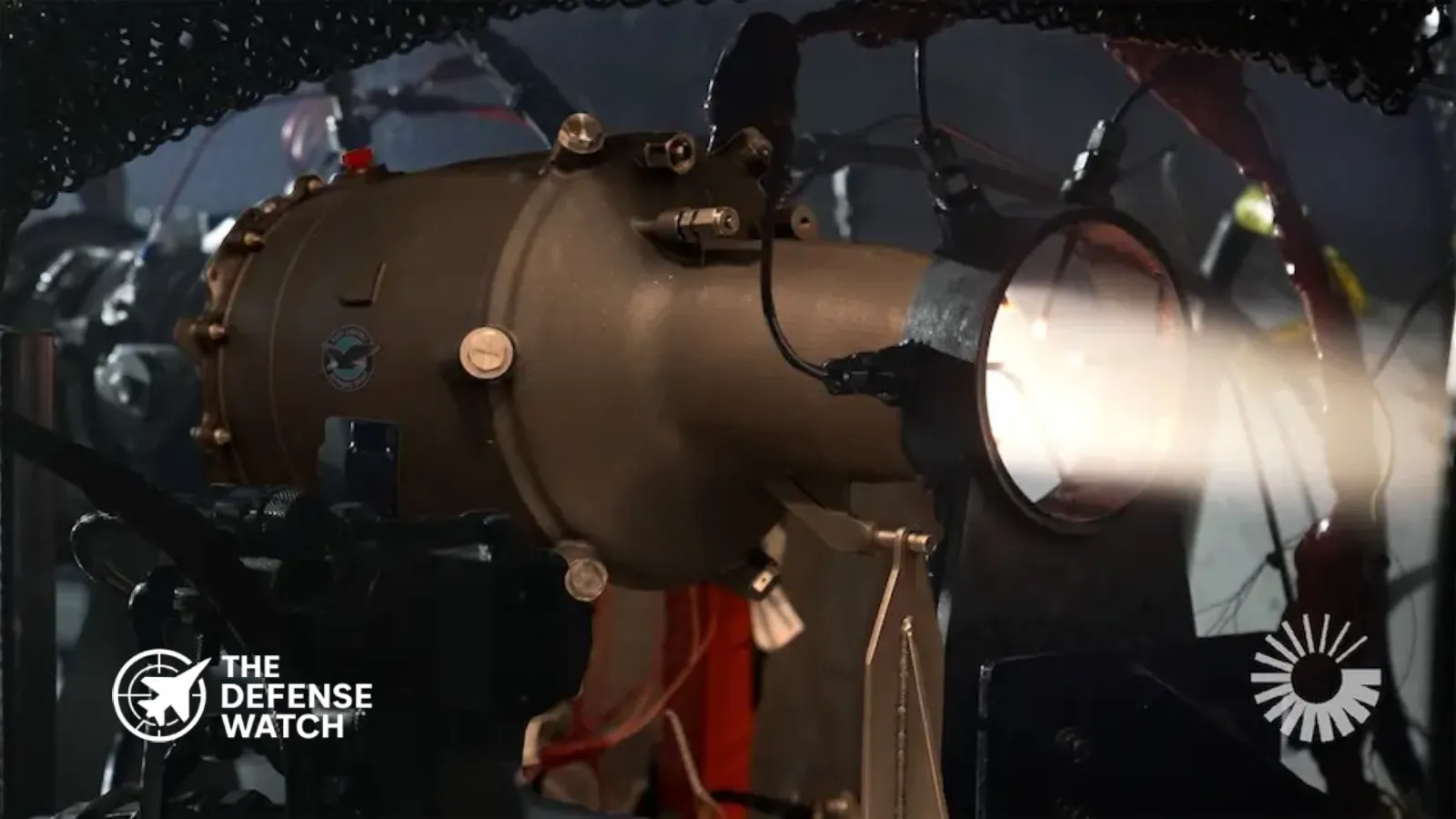
RTX Pratt & Whitney TJ150 development has reached a significant milestone after the company successfully completed testing of a 3D printed turbine wheel, one of the first rotating engine components produced using additive manufacturing for the compact turbojet.

Contents
  • A Manufacturing Milestone For Military Propulsion
  • Additive Manufacturing Reduces Complexity
  • Why The Test Matters
  • Growing Demand For Affordable Propulsion
  • Analysis: Strengthening The Defense Industrial Base

The successful tests demonstrated that the engine operated at full speeds and temperatures while meeting expected durability targets. According to RTX, the achievement represents an important step beyond using additive manufacturing for static engine structures and into critical rotating hardware, which has traditionally been more difficult to manufacture and certify.

The TJ150 is a compact turbojet producing approximately 150 pounds of thrust and is designed for expendable and limited life applications, including cruise missiles, loitering munitions, and unmanned aerial systems. The engine has become increasingly relevant as defense organizations seek affordable propulsion systems that can be manufactured rapidly and at scale.

Additive Manufacturing Reduces Complexity

Pratt & Whitney’s advanced development organization, GATORWORKS, led the redesign of the TJ150 in partnership with the RTX Technology Research Center.

- Advertisement -

Engineers used an additive manufacturing approach known as unitization, reducing the engine’s core module from more than 50 individual parts to only a handful. The simplified architecture cuts production time, lowers manufacturing costs, and reduces supply chain complexity without changing the engine’s intended operational role. RTX also stated that the redesigned engine progressed from concept to testing within eight months using in-house development capabilities.

According to Chris Hugill, Executive Director of Pratt & Whitney GATORWORKS, the successful turbine wheel testing confirms that additive manufacturing is expanding beyond stationary components into rotating hardware for expendable propulsion applications.

Why The Test Matters

The successful validation of a rotating 3D printed turbine component is important because rotating engine hardware experiences some of the highest mechanical and thermal stresses inside a turbojet.

Historically, these parts have required conventional manufacturing techniques due to demanding certification and reliability requirements. Demonstrating acceptable performance under operational conditions could enable future production methods that shorten manufacturing timelines while expanding industrial capacity.

Although additive manufacturing has been used extensively for static aerospace components, applying it to rotating turbine hardware represents a more advanced stage of engine production. The technology could help manufacturers respond more quickly to increasing defense procurement requirements while reducing dependence on lengthy supply chains.

Growing Demand For Affordable Propulsion

Demand for compact turbojet engines has increased as militaries place greater emphasis on long range precision strike weapons, autonomous aircraft, and attritable systems that require reliable but lower cost propulsion.

The TJ150 has already entered production and supports multiple autonomous platforms and weapon systems. RTX has stated that production capacity is already established and can support higher volume manufacturing as customer demand grows. The company is also supplying the engine for Leidos’ Small Cruise Missile program, demonstrating the propulsion system’s expanding role across U.S. defense programs.

Analysis: Strengthening The Defense Industrial Base

Beyond the technical achievement, the latest RTX Pratt & Whitney TJ150 milestone reflects a broader shift occurring across the defense industry.

- Advertisement -

Modern conflicts have underscored the importance of producing large numbers of affordable precision weapons and autonomous systems rather than relying solely on smaller inventories of highly complex platforms. Engine production has become one of several industrial bottlenecks affecting missile manufacturing worldwide.

Additive manufacturing addresses multiple challenges simultaneously by reducing part counts, simplifying assembly, lowering production costs, and making supply chains more resilient. Rather than replacing traditional manufacturing entirely, it enables critical propulsion components to move from design to production significantly faster.

For defense planners, these improvements translate into greater manufacturing flexibility during periods of increased operational demand. For industry, they represent an opportunity to scale propulsion production without proportionally expanding traditional machining capacity.

While certification of additional rotating components will continue to require rigorous validation, Pratt & Whitney’s successful testing indicates that additive manufacturing is becoming an increasingly practical tool for next generation military propulsion.


TAGGED:Aerospace & AviationDefense contracts
Share This Article
Facebook Copy Link Print
ByDaniel Mercer / Defense & Aerospace Analyst
Follow:
Daniel Mercer is a defense and aerospace analyst at TheDefenseWatch.com covering military aviation, aerospace technology, unmanned systems, air warfare, and defense procurement. His reporting uses official documents, government and military statements, company announcements, and other public sources.
Leave a Comment

Leave a Reply Cancel reply

Your email address will not be published. Required fields are marked *

Latest Defense Systems

  • SU-57 Felon Stealth Fighter SU-57 Felon Stealth Fighter
  • Boeing F/A-XX Fighter Boeing F/A-XX Fighter
  • JF-17 Thunder Fighter Jet JF-17 Thunder Fighter Jet
  • Gaurav Glide Bomb Gaurav Glide Bomb
  • F-47 Fighter Jet F-47 Fighter Jet
  • Spirit UAS Spirit UAS
  • GBU-43/B MOAB Bomb GBU-43/B MOAB Bomb
  • John F. Kennedy Aircraft Carrier John F. Kennedy Aircraft Carrier
  • Voyager Tanker Voyager Tanker

Recent Compares

  • J-10C vs JF-17 Thunder: Which Fighter Is More Capable? J-10C vs JF-17 Thunder: Which Fighter Is More Capable? View Comparison →
  • Tejas vs Gripen: Key Differences and Capabilities Tejas vs Gripen: Key Differences and Capabilities View Comparison →
  • Tejas vs MiG-21 Bison: How India Replaced Its Iconic Supersonic Fighter Tejas vs MiG-21 Bison: How India Replaced Its Iconic Supersonic Fighter View Comparison →
  • F-35 vs F-16: Stealth, Sensors and Combat Roles F-35 vs F-16: Stealth, Sensors and Combat Roles View Comparison →
  • Tejas Fighter Jet vs F-16 Fighting Falcon: Capability Compared Tejas Fighter Jet vs F-16 Fighting Falcon: Capability Compared View Comparison →
  • Rafale Fighter Jet vs F-16 Fighting Falcon : Which Fighter Has the Edge? Rafale Fighter Jet vs F-16 Fighting Falcon : Which Fighter Has the Edge? View Comparison →
  • Su-57 Fighter Jet vs J-20 Fighter Jet: Stealth and Air Combat Compared Su-57 Fighter Jet vs J-20 Fighter Jet: Stealth and Air Combat Compared View Comparison →
  • Mirage 2000 vs Tejas Mk1A: Legacy Combat Power vs Indigenous Modernization Mirage 2000 vs Tejas Mk1A: Legacy Combat Power vs Indigenous Modernization View Comparison →
  • Rafale Fighter Jet vs F-22 Raptor: Which Air Dominance Fighter Has the Edge? Rafale Fighter Jet vs F-22 Raptor: Which Air Dominance Fighter Has the Edge? View Comparison →
  • Tejas Fighter Jet vs. Rafale Fighter Jet: India’s Indigenous Fighter Meets France’s Proven Multirole Combat Aircraft Tejas Fighter Jet vs. Rafale Fighter Jet: India’s Indigenous Fighter Meets France’s Proven Multirole Combat Aircraft View Comparison →

Recent Posts

  • Department of War and Lockheed Martin Sign 10-Year F-35 Agreement With $7 Billion Investment Commitment
  • Pentagon Approves Active Denial System for Potential U.S. Southern Border Use
  • U.S. Air Force Plans Larger F-35 Role in 1,509-Aircraft Fighter Fleet
  • Raytheon Wins Two-Year Extension for AN/TPY-2 Radar Support
  • Space Force Selects Northrop Grumman, True Anomaly for New Orbital Reconnaissance Satellites

You Might Also Like

U.S. Air Force C-130J Super Hercules undergoing maintenance at Robins Air Force Base
Defense Contracts

Lockheed Martin Secures $48M Deal For C-130J Sustainment Support

May 6, 2026
MUX TACAIR Collaborative Combat Aircraft
Aerospace & AviationDrones & UAVs

U.S. Marine Corps Picks GA-ASI YFQ-42A For MUX TACAIR Collaborative Combat Aircraft Evaluation

February 11, 2026
FCAS fighter jet program
Aerospace & AviationFighter Jets & Military Aircraft

France’s Macron Says FCAS Fighter Jet Program Is Not Dead, Aims To Revive Talks With Germany

February 10, 2026
Su 30SM2 fighter jets
Aerospace & AviationFighter Jets & Military Aircraft

Belarus Receives Upgraded Su 30SM2 Fighters as Russia Deepens Air Force Ties

September 13, 2026

Logo

Copyright © 2026 TheDefenseWatch.com

Helpful Links

  • Home
  • About Us
  • Privacy Policy
  • Terms of Use / Disclaimer
  • U.S. Privacy Notice – CCPA Compliance

Defense Systems

  • Defense Systems
  • Comparisons 
  • Manufacturer
  • Tactical Calculators

Popuplar

Which 5 Air Forces Possess the Costliest Fighter Jet Fleets in the World
Evolving Strategic Value: Carrier Strike Groups in the Indo-Pacific’s Future Security Architecture
Autonomous Weapon Systems Spark U.S. Ethics Debate Amid Rapid Military AI Integration

We report on developments involving military forces, governments, defense companies, research organizations, and security institutions around the world. 

Welcome Back!

Sign in to your account

Username or Email Address
Password

Lost your password?