• Home
  • About
  • Defense Systems
  • Manufacturer
  • Comparisons
  • Compare 
  • Tools
TheDefenseWatch.com
  • Aerospace & Aviation
  • Military & Ordnance
  • Naval & Maritime
  • Cyber & Space Defense
  • Policy & Strategy
  • Global News
  • Tools Library
    • Smart Calculator
    • Drone Flight Time Calculator
    • Drone Range Calculator
    • Counter-Drone Jammer Effective Range Calculator
    • Counter-Battery Radar Detection Calculator
    • Artillery Fire Correction Calculator
    • Thermal Camera Detection Range Calculator
    • Missile Range & Time-of-Flight Calculator
    • Radar Detection Range Calculator
    • FPV Strike Drone Payload vs Range Calculator
    • Loitering Munition Endurance Calculator
    • Sniper Ballistic Drop & Windage Calculator
    • Bullet Drop Calculator
    • U.S. Army Combat Fitness Test (ACFT) Calculator
    • Military Pension Calculator
    • Military Retirement Calculator
    • Military Pension Calculator
    • Large Number Calculator
Font ResizerAa

TheDefenseWatch.com

The Defense Watch | U.S. & Global Defense News, Analysis & Military Updates

Search
  • Home
  • About
  • Defense Systems
  • Manufacturer
  • Comparisons
  • Compare 
  • Tools

Stay Updated

Get the latest update

Subscribe

Explore

  • Drone
  • Fighter Jets & Military Aircraft
  • Hypersonic Weapons
  • Aircraft Carriers
  • Strategic History & Missions
  • Tools Library
Home » China’s Space Militarization: Rising Threat to U.S. Space Dominance
Cyber & Space DefenseSpace Assets & Satellites

China’s Space Militarization: Rising Threat to U.S. Space Dominance

TeamDefenseWatch
Last updated: October 1, 2025 2:17 am
TeamDefenseWatch
Share
2 Min Read
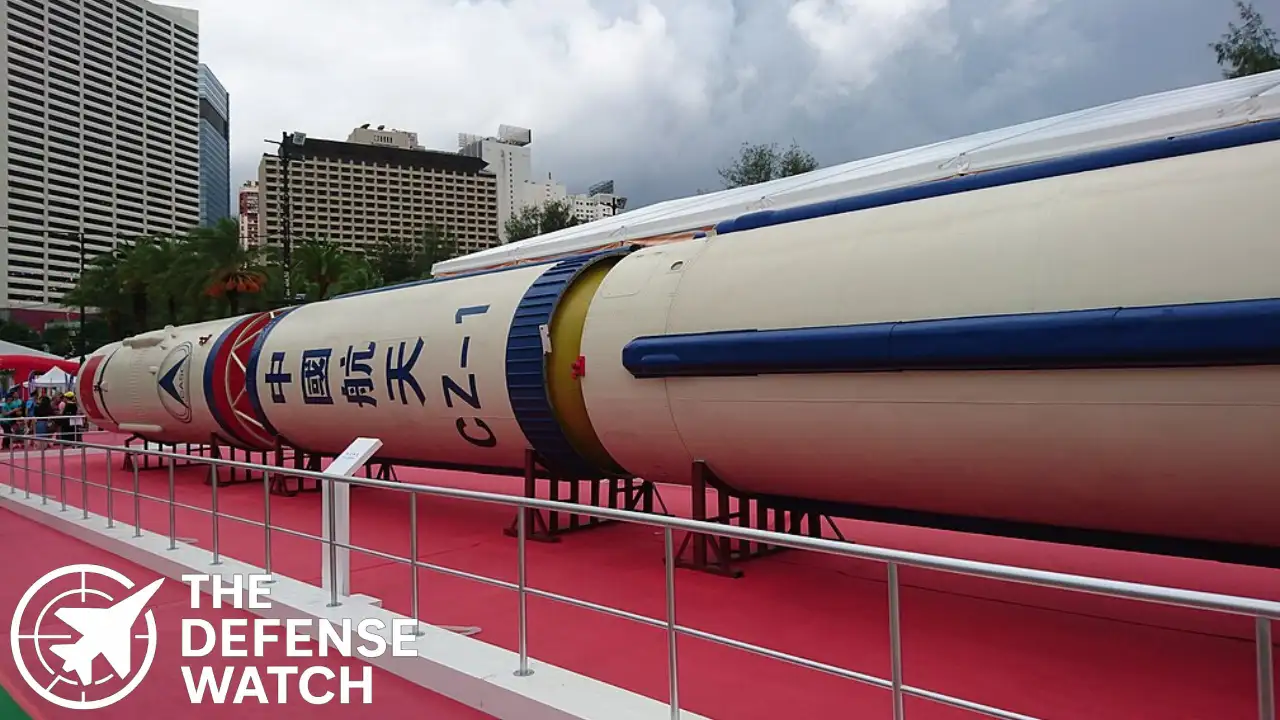
china space militarization
Image courtesy of wikipedia
SHARE

The rapid expansion of China’s space militarization has transformed outer space into a new arena of strategic competition between Beijing and Washington. From advanced satellite constellations to anti-satellite (ASAT) weapons and hypersonic glide vehicles, China’s growing capabilities are viewed by U.S. defense officials as a direct challenge to America’s long-standing space dominance.

Contents
China’s Expanding Satellite ProgramsAnti-Satellite Weapons and Space Denial StrategyHypersonic Glide Vehicles and Space IntegrationU.S. Response: Space Force and Allied CoordinationStrategic ImplicationsAnalysis: A Looming Space Arms RaceFAQs

China’s Expanding Satellite Programs

Over the past decade, China has deployed an extensive network of military and dual-use satellites under the management of the People’s Liberation Army Strategic Support Force (PLASSF). These include:

  • Reconnaissance satellites for Earth observation and maritime tracking.
  • Electronic intelligence satellites for signals interception.
  • Navigation systems through the BeiDou constellation, which rivals the U.S. GPS and now provides global coverage.
  • Secure communications satellites, supporting military operations across the Indo-Pacific.

With over 700 active satellites in orbit—second only to the United States—China’s satellite capabilities are now critical to its military doctrine, particularly in enabling precision strikes and joint operations.

Anti-Satellite Weapons and Space Denial Strategy

China’s 2007 ASAT test, which destroyed a weather satellite and created more than 3,000 pieces of debris, marked the world’s attention to its counter-space ambitions. Since then, Beijing has advanced both direct-ascent ASAT missiles and co-orbital systems designed to approach and potentially disable adversary satellites.

- Advertisement -

U.S. officials have expressed concerns that China’s counter-space arsenal could cripple critical American assets such as GPS, communications, and missile warning satellites in the event of a conflict, leaving U.S. forces vulnerable on the battlefield.

Hypersonic Glide Vehicles and Space Integration

China’s development of hypersonic glide vehicles (HGVs) has further fueled concerns about the militarization of space. The DF-ZF HGV, tested multiple times since 2014, can maneuver at speeds above Mach 5, potentially bypassing U.S. missile defense systems. In 2021, China reportedly tested a fractional orbital bombardment system (FOBS) with a hypersonic glide vehicle, demonstrating a novel approach to space-enabled strike capability.

Such technologies blur the line between traditional missile systems and space-based weapons, reinforcing U.S. fears of Beijing’s intent to dominate multiple strategic domains.

U.S. Response: Space Force and Allied Coordination

Washington has responded with accelerated investments in space defense. The creation of the U.S. Space Force in 2019 underscored the recognition of space as a contested warfighting domain. Key initiatives include:

  • Deploying resilient satellite architectures with smaller, distributed constellations to reduce vulnerability.
  • Advancing missile warning and tracking satellites to counter hypersonic threats.
  • Expanding collaboration with allies through NATO’s Space Centre of Excellence and partnerships with Japan and Australia.

Pentagon officials argue that deterrence will require not only defensive measures but also the credible ability to respond to hostile actions in space.

Strategic Implications

The pace of China’s space militarization signals a shift in the global balance of power. Unlike the Cold War, where U.S.-Soviet space competition was largely symbolic, today’s rivalry has direct implications for command, control, and precision warfare.

Analysts warn that without renewed international norms, space risks becoming an extension of great-power conflict, where satellites are prime targets and orbital debris could jeopardize civilian as well as military infrastructure.

Analysis: A Looming Space Arms Race

China’s steady progress underscores the reality that space is no longer a sanctuary. With Beijing integrating space capabilities into its joint force doctrine, the U.S. faces a dilemma: invest heavily to preserve dominance or seek cooperative arms control measures to prevent destabilization.

- Advertisement -

For now, the trend points toward an emerging space arms race. The critical question is whether international frameworks—such as proposals at the UN Conference on Disarmament—can slow the march toward weaponized orbit, or whether strategic rivalry will continue unchecked.

Source

FAQs

How many satellites does China have?

China operates more than 700 active satellites, second only to the United States.

What was significant about China’s 2007 ASAT test?

It demonstrated China’s ability to destroy satellites but created massive space debris, raising global concerns.

What is the DF-ZF hypersonic glide vehicle?

It is a maneuverable weapon capable of speeds above Mach 5, designed to evade missile defense systems.

How is the U.S. responding to China’s space militarization?

By expanding the U.S. Space Force, deploying resilient satellite constellations, and strengthening allied partnerships.


TAGGED:Anti-Satellite Weaponschina space militarizationhypersonic glide vehiclespace arms race
Share This Article
Facebook Copy Link Print
ByTeamDefenseWatch
TeamDefenseWatch is the official editorial byline of TheDefenseWatch.com. Working under one umbrella, TheDefenseWatch.com, the team delivers verified, factual reporting on global defense, military technology, aerospace systems, and security developments. Articles are sourced from official statements, defense industry releases, and trusted media, with editorial review to ensure accuracy and clarity.Contact: info@TheDefenseWtach.com
12 Comments
  • Pingback: Pakistan Army Tests Fatah-4 Cruise Missile, Expanding Strike Capabilities
  • buy cannabis los angeles says:
    October 5, 2025 at 4:08 am

    cannabis gummies usa delivery direct to your door

    Reply
  • Pingback: Hypersonic Weapons Race 2025: U.S., Russia, China Vie for Supremacy in Speed and Strike
  • Pingback: Hypersonic Missiles Explained: Why These Next-Generation Weapons Are So Dangerous
  • Pingback: US Moves Forward With Interim 2025 National Defense Strategy, Shifting Focus to Homeland and Regional Security
  • Pingback: China Claims Breakthrough in Hypersonic Engine with Mach 16 Potential
  • Pingback: Seventh-Generation Fighter Vision Pushes Speed to Mach 5 and Beyond
  • Pingback: China Delays Return of Shenzhou-20 Astronauts After Space Debris Strike
  • Pingback: Space Debris Damages Chinese Spacecraft, Highlighting Growing Orbital Threat
  • Pingback: Russia’s S-500 “Prometheus” Air-Defense System Claimed to Threaten F-22 and F-35 Stealth Fighters
  • Pingback: UK Cyber Alert Russian Hacktivists Target Online Services, NCSC Sees Rising Threat | TheDefenseWatch.com
  • Pingback: Pakistan PRSC-EO2 Satellite Launch: Successful Liftoff from South China Sea Marks First Seaborne Mission | TheDefenseWatch.com

Leave a Reply Cancel reply

Your email address will not be published. Required fields are marked *

Search Defense Systems

Latest Defense Systems

  • TRML-4D Radar TRML-4D Radar
  • F-47A Fighter Jet F-47A Fighter Jet
  • China DF-61 Missile China DF-61 Missile
  • B61 Nuclear Bomb B61 Nuclear Bomb
  • Japan E-767 Airborne Japan E-767 Airborne
  • Remington 870 Shotgun Remington 870 Shotgun
  • RUTA B1 Cruise Missile RUTA B1 Cruise Missile
  • XQ-67A Drone XQ-67A Drone
  • B-25 Mitchell Bomber B-25 Mitchell Bomber

Recent Compares

  • J-10C vs JF-17 Thunder: Which Fighter Is More Capable? J-10C vs JF-17 Thunder: Which Fighter Is More Capable? View Comparison →
  • Tejas vs Gripen: Key Differences and Capabilities Tejas vs Gripen: Key Differences and Capabilities View Comparison →
  • Tejas vs MiG-21 Bison: How India Replaced Its Iconic Supersonic Fighter Tejas vs MiG-21 Bison: How India Replaced Its Iconic Supersonic Fighter View Comparison →
  • F-35 vs F-16: Stealth, Sensors and Combat Roles F-35 vs F-16: Stealth, Sensors and Combat Roles View Comparison →
  • Tejas Fighter Jet vs F-16 Fighting Falcon: Capability Compared Tejas Fighter Jet vs F-16 Fighting Falcon: Capability Compared View Comparison →
  • Rafale Fighter Jet vs F-16 Fighting Falcon : Which Fighter Has the Edge? Rafale Fighter Jet vs F-16 Fighting Falcon : Which Fighter Has the Edge? View Comparison →
  • Su-57 Fighter Jet vs J-20 Fighter Jet: Stealth and Air Combat Compared Su-57 Fighter Jet vs J-20 Fighter Jet: Stealth and Air Combat Compared View Comparison →
  • Mirage 2000 vs Tejas Mk1A: Legacy Combat Power vs Indigenous Modernization Mirage 2000 vs Tejas Mk1A: Legacy Combat Power vs Indigenous Modernization View Comparison →
  • Rafale Fighter Jet vs F-22 Raptor: Which Air Dominance Fighter Has the Edge? Rafale Fighter Jet vs F-22 Raptor: Which Air Dominance Fighter Has the Edge? View Comparison →
  • Tejas Fighter Jet vs. Rafale Fighter Jet: India’s Indigenous Fighter Meets France’s Proven Multirole Combat Aircraft Tejas Fighter Jet vs. Rafale Fighter Jet: India’s Indigenous Fighter Meets France’s Proven Multirole Combat Aircraft View Comparison →

Recent Posts

  • Hensoldt Targets €10 Billion in Annual Revenue by 2035, Doubles TRML-4D Radar Capacity
  • Somalia’s Reported JF-17 Deal Raises Questions Over Airpower and Regional Security
  • Navy Awards General Dynamics Subsidiary $20 Million Undersea Warfare Research Contract
  • U.S. Air Force Awards $26 Million Contract for Flyways AI Air Operations Software
  • Hegseth Orders Major Overhaul of U.S. Military Education System

You Might Also Like

Raytheon Next Generation Jammer
AI & Electronic WarfareCyber & Space Defense

Raytheon Delivers Next Generation Jammer Pods To Australia To Counter Modern Air Defense Threats

September 7, 2026
U.S. Navy TRIDENT cybersecurity contract
Cyber & Space DefenseDefense Contracts

U.S. Navy Awards $23.1 Million Contract for Cybersecurity of Shipboard Power Systems

November 5, 2026
SpaceX Falcon 9 rocket launches Starlink satellites from Cape Canaveral during the company's first day of public trading.
Aerospace & AviationSpace Assets & Satellites

SpaceX Moves To Expand Starlink Network As Company Begins Public Trading On Nasdaq

September 7, 2026
GPS III SV09 satellite launch
Cyber & Space DefenseSpace Assets & Satellites

Lockheed Martin GPS III SV09 Satellite Reaches Orbit, Enhancing Military Navigation Resilience

September 7, 2026

Logo

Copyright © 2026 TheDefenseWatch.com

Helpful Links

  • Home
  • About Us
  • Privacy Policy
  • Terms of Use / Disclaimer
  • U.S. Privacy Notice – CCPA Compliance

Defense Systems

  • Defense Systems
  • Comparisons 
  • Manufacturer
  • Tactical Calculators

Popuplar

Which 5 Air Forces Possess the Costliest Fighter Jet Fleets in the World
Evolving Strategic Value: Carrier Strike Groups in the Indo-Pacific’s Future Security Architecture
Autonomous Weapon Systems Spark U.S. Ethics Debate Amid Rapid Military AI Integration

We report on developments involving military forces, governments, defense companies, research organizations, and security institutions around the world. 

Welcome Back!

Sign in to your account

Username or Email Address
Password

Lost your password?