• Home
  • About
  • Defense Systems
  • Manufacturer
  • Comparisons
  • Compare 
  • Tools
TheDefenseWatch.com
  • Aerospace & Aviation
  • Military & Ordnance
  • Naval & Maritime
  • Cyber & Space Defense
  • Policy & Strategy
  • Global News
  • Tools Library
    • Smart Calculator
    • Drone Flight Time Calculator
    • Drone Range Calculator
    • Counter-Drone Jammer Effective Range Calculator
    • Counter-Battery Radar Detection Calculator
    • Artillery Fire Correction Calculator
    • Thermal Camera Detection Range Calculator
    • Missile Range & Time-of-Flight Calculator
    • Radar Detection Range Calculator
    • FPV Strike Drone Payload vs Range Calculator
    • Loitering Munition Endurance Calculator
    • Sniper Ballistic Drop & Windage Calculator
    • Bullet Drop Calculator
    • U.S. Army Combat Fitness Test (ACFT) Calculator
    • Military Pension Calculator
    • Military Retirement Calculator
    • Military Pension Calculator
    • Large Number Calculator
Font ResizerAa

TheDefenseWatch.com

The Defense Watch | U.S. & Global Defense News, Analysis & Military Updates

Search
  • Home
  • About
  • Defense Systems
  • Manufacturer
  • Comparisons
  • Compare 
  • Tools

Stay Updated

Get the latest update

Subscribe

Explore

  • Drone
  • Fighter Jets & Military Aircraft
  • Hypersonic Weapons
  • Aircraft Carriers
  • Strategic History & Missions
  • Tools Library
Home » Russia Expands Zircon Hypersonic Missile Strikes As Ukraine’s Air Defense Network Faces Growing Pressure
Global News

Russia Expands Zircon Hypersonic Missile Strikes As Ukraine’s Air Defense Network Faces Growing Pressure

Kaleem Sheikh | Regional Defense Correspondent
Last updated: September 7, 2026 8:20 am
Kaleem Sheikh | Regional Defense Correspondent
Share
7 Min Read
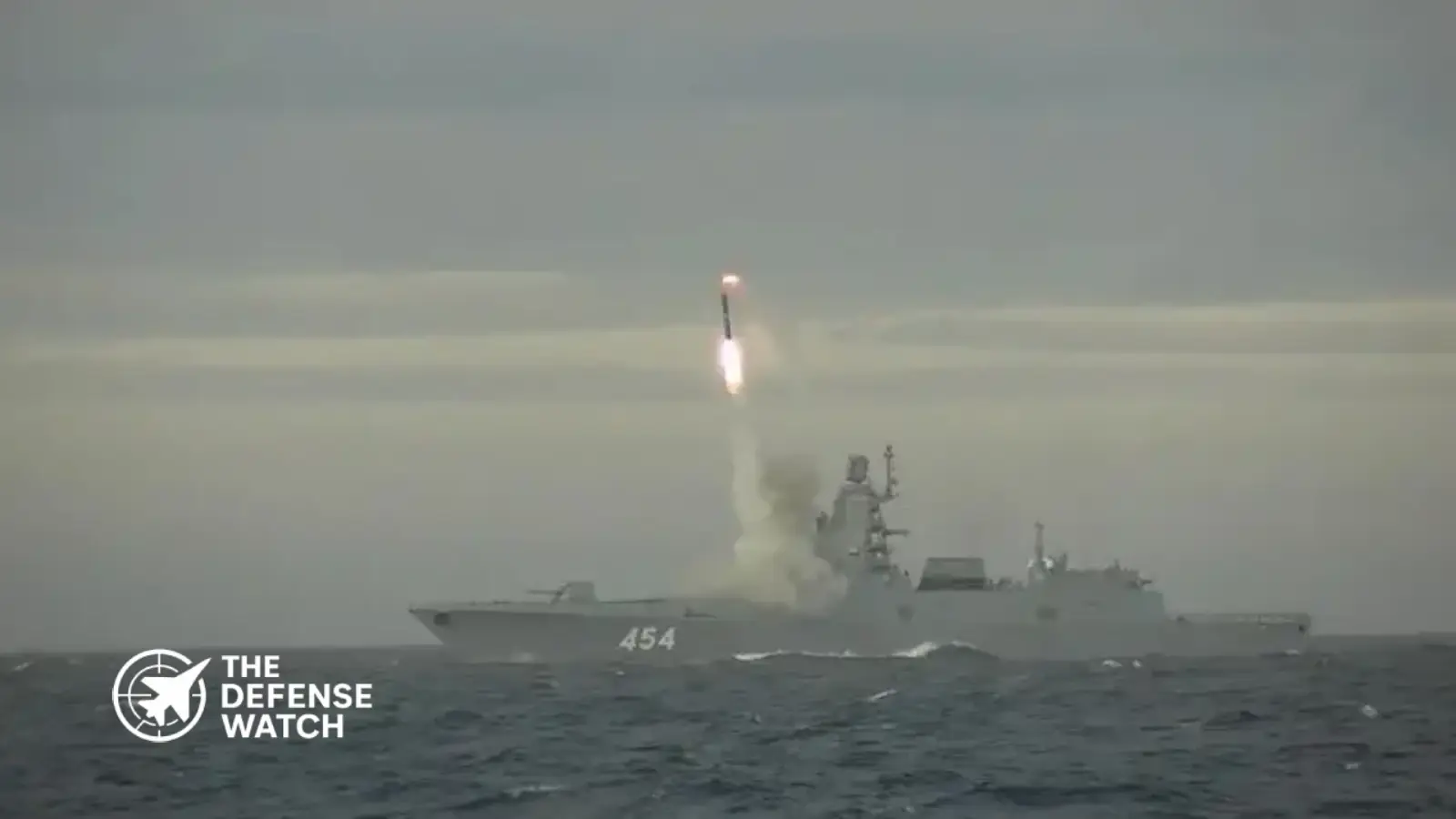
Zircon hypersonic missile
Image: Ministry of Defence of the Russian Federation.
SHARE

Executive Summary:

Russia has expanded the operational use of its 3M22 Zircon hypersonic missile in strikes against targets across Ukraine, including Kyiv, during one of the largest aerial attacks of 2026. The attacks highlight Moscow’s effort to stress Ukraine’s air defense network and force the expenditure of increasingly scarce Patriot interceptor missiles while demonstrating the combat utility of one of Russia’s most advanced missile systems.

(adsbygoogle = window.adsbygoogle || []).push({});

Russia Uses Zircon Hypersonic Missiles In Major Attack On Ukraine

Russia employed multiple 3M22 Zircon hypersonic missiles during a large-scale missile and drone attack against Ukraine on June 1-2, according to Ukrainian and international reporting. The barrage included 656 drones and 73 missiles targeting Kyiv, Dnipro, Kharkiv, Zaporizhzhia, and other locations.

Contents
  • Russia Uses Zircon Hypersonic Missiles In Major Attack On Ukraine
  • What Is The 3M22 Zircon Missile?
  • Why Zircon Matters To Ukraine’s Air Defense Challenge
  • Technical Reality Versus Strategic Messaging
  • Broader Implications For U.S. And Allied Defense Planning
  • Russia’s Evolving Strike Strategy

Ukrainian authorities reported that eight Zircon missiles were included in the strike package, making it one of the largest known operational uses of the weapon against Ukrainian territory. Ukrainian air defenses intercepted dozens of incoming missiles, but official reporting did not identify any confirmed Zircon interceptions during the attack.

The strikes occurred amid growing concerns in Kyiv over interceptor shortages, particularly for the U.S.-supplied Patriot air defense system that remains Ukraine’s most capable defense against advanced ballistic and hypersonic threats.

What Is The 3M22 Zircon Missile?

The 3M22 Zircon, known in Russia as Tsirkon, was originally developed as a naval anti-ship missile intended to threaten high-value maritime targets, including U.S. carrier strike groups. The missile entered Russian service aboard surface combatants and submarines equipped with the universal 3S-14 vertical launch system.

- Advertisement -
  • Zircon Hypersonic Cruise Missile

    Zircon Hypersonic Cruise Missile

    • Guidance System: INS + Satellite Navigation + Radar Homing
    • Maximum Speed: Mach 8–9
    • Launch Compatibility: Surface Ships, Submarines
    • Warhead Technology: High-Explosive Penetrator
    • View Details →
    8.0
    (adsbygoogle = window.adsbygoogle || []).push({});

    Key reported characteristics include:

    SpecificationEstimated Performance
    TypeHypersonic cruise missile
    Primary Original MissionAnti-ship warfare
    Launch PlatformsFrigates, submarines, coastal launch systems
    Claimed Maximum SpeedUp to Mach 8-9
    Estimated Operational Range700-1,500 km (high-altitude profile)
    WarheadConventional, estimated 150-400 kg class
    GuidanceInertial and terminal guidance systems

    Independent assessments continue to debate some of Russia’s performance claims. Defense analysts generally note that publicly available combat evidence does not fully validate the highest speed and range figures promoted by Moscow.

    Why Zircon Matters To Ukraine’s Air Defense Challenge

    The strategic significance of Zircon extends beyond the physical damage caused by individual missile strikes.

    Even when intercepted, advanced hypersonic or high-speed missiles force defenders to expend costly interceptor missiles. Ukraine’s Patriot batteries remain among the few systems capable of engaging advanced Russian missile threats, including ballistic and hypersonic weapons.

    (adsbygoogle = window.adsbygoogle || []).push({});

    For Russia, integrating Zircon missiles into larger strike packages creates a layered threat environment. Air defense operators must simultaneously track drones, cruise missiles, ballistic missiles, and hypersonic weapons approaching from multiple directions.

    This complicates target prioritization and increases the likelihood that some weapons may penetrate defenses.

    Technical Reality Versus Strategic Messaging

    The combat employment of Zircon has also generated renewed debate about the real-world effectiveness of hypersonic weapons.

    Russian officials have frequently presented Zircon as a breakthrough capability capable of evading modern air defenses. However, available battlefield evidence suggests the missile is not invulnerable. Ukraine previously reported successful interceptions of Zircon missiles in both 2024 and 2026 using Patriot systems.

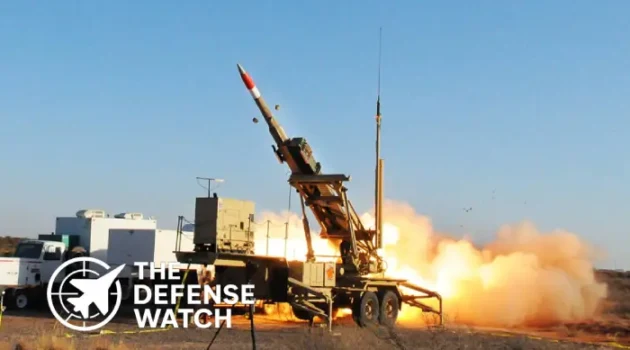
    • Patriot PAC-3 Missile Defense System

      Patriot PAC-3 Missile Defense System

      • Maximum Range: 160 km
      • Maximum Altitude: 24 km
      • Radar Detection Range: 150–300 km
      • Missile Speed: Mach 4.5
      • View Details →
      8.0

      Defense analysts note that hypersonic speed alone does not guarantee successful penetration of layered defenses. Detection, tracking quality, flight profile, maneuverability, and interceptor availability all influence engagement outcomes.

      Several assessments also indicate the missile slows significantly during its terminal phase, potentially creating a limited interception window for advanced air defense systems.

      Broader Implications For U.S. And Allied Defense Planning

      The continued use of Zircon against Ukraine offers an important real-world case study for NATO and U.S. military planners.

      Unlike many advanced missile systems that remain largely untested in combat, Russia’s hypersonic weapons are now generating operational data under wartime conditions. Military analysts are closely examining interception rates, flight characteristics, reliability, and the effectiveness of integrated air defense responses.

      For the United States and allied nations, Ukraine has effectively become the first large-scale environment where advanced missile defense systems are confronting operational hypersonic threats on a recurring basis.

      The experience is likely to influence future investment decisions involving:

      • Integrated air and missile defense networks
      • Next-generation Patriot upgrades
      • Hypersonic tracking sensors
      • Space-based warning systems
      • Directed-energy and advanced interceptor technologies
      (adsbygoogle = window.adsbygoogle || []).push({});

      The conflict is also demonstrating that missile inventory depth may be as important as technological sophistication. Even successful interceptions impose significant logistical and financial costs when attackers launch large mixed salvos containing hundreds of drones and dozens of missiles simultaneously.

      Russia’s Evolving Strike Strategy

      The growing use of Zircon missiles appears to reflect a broader Russian effort to increase pressure on Ukraine’s air defense architecture.

      Recent attacks have combined large numbers of drones with cruise missiles, ballistic missiles, and advanced hypersonic systems. Ukrainian officials report that Russia launched more than 8,000 long-range drones during May alone while continuing regular missile strikes across the country.

      This approach seeks to overwhelm defensive capacity through volume, complexity, and sustained operational tempo.

      Whether Russia can maintain extensive use of advanced missiles such as Zircon over the long term remains uncertain. However, recent attacks indicate Moscow continues to view these weapons as valuable tools for both operational effects and strategic signaling.
TAGGED:Ukraine warZircon Missile
Share This Article
Facebook Copy Link Print
ByKaleem Sheikh | Regional Defense Correspondent
Follow:
Kaleem Sheikh is a regional defense correspondent at TheDefenseWatch.com covering defense and security developments across Asia and the Middle East, including military operations, procurement, and regional security issues.
Leave a Comment

Leave a Reply Cancel reply

Your email address will not be published. Required fields are marked *

Latest Defense Systems

  • SU-57 Felon Stealth Fighter SU-57 Felon Stealth Fighter
  • Boeing F/A-XX Fighter Boeing F/A-XX Fighter
  • JF-17 Thunder Fighter Jet JF-17 Thunder Fighter Jet
  • Gaurav Glide Bomb Gaurav Glide Bomb
  • F-47 Fighter Jet F-47 Fighter Jet
  • Spirit UAS Spirit UAS
  • GBU-43/B MOAB Bomb GBU-43/B MOAB Bomb
  • John F. Kennedy Aircraft Carrier John F. Kennedy Aircraft Carrier
  • Voyager Tanker Voyager Tanker

Recent Compares

  • J-10C vs JF-17 Thunder: Which Fighter Is More Capable? J-10C vs JF-17 Thunder: Which Fighter Is More Capable? View Comparison →
  • Tejas vs Gripen: Key Differences and Capabilities Tejas vs Gripen: Key Differences and Capabilities View Comparison →
  • Tejas vs MiG-21 Bison: How India Replaced Its Iconic Supersonic Fighter Tejas vs MiG-21 Bison: How India Replaced Its Iconic Supersonic Fighter View Comparison →
  • F-35 vs F-16: Stealth, Sensors and Combat Roles F-35 vs F-16: Stealth, Sensors and Combat Roles View Comparison →
  • Tejas Fighter Jet vs F-16 Fighting Falcon: Capability Compared Tejas Fighter Jet vs F-16 Fighting Falcon: Capability Compared View Comparison →
  • Rafale Fighter Jet vs F-16 Fighting Falcon : Which Fighter Has the Edge? Rafale Fighter Jet vs F-16 Fighting Falcon : Which Fighter Has the Edge? View Comparison →
  • Su-57 Fighter Jet vs J-20 Fighter Jet: Stealth and Air Combat Compared Su-57 Fighter Jet vs J-20 Fighter Jet: Stealth and Air Combat Compared View Comparison →
  • Mirage 2000 vs Tejas Mk1A: Legacy Combat Power vs Indigenous Modernization Mirage 2000 vs Tejas Mk1A: Legacy Combat Power vs Indigenous Modernization View Comparison →
  • Rafale Fighter Jet vs F-22 Raptor: Which Air Dominance Fighter Has the Edge? Rafale Fighter Jet vs F-22 Raptor: Which Air Dominance Fighter Has the Edge? View Comparison →
  • Tejas Fighter Jet vs. Rafale Fighter Jet: India’s Indigenous Fighter Meets France’s Proven Multirole Combat Aircraft Tejas Fighter Jet vs. Rafale Fighter Jet: India’s Indigenous Fighter Meets France’s Proven Multirole Combat Aircraft View Comparison →

Recent Posts

  • Raytheon Wins Two-Year Extension for AN/TPY-2 Radar Support
  • Space Force Selects Northrop Grumman, True Anomaly for New Orbital Reconnaissance Satellites
  • Hegseth and Guyana’s President Establish Enhanced Military Partnership
  • Ukrainian F-16 vs. Russian Su-35: What Happened, How the Engagement Unfolded and Why It Matters
  • Canada’s Fighter Jet Fleet Faces a Critical Transition as F-35 Review Continues

You Might Also Like

Trump UFO files Pentagon release
Global News

Trump Orders Pentagon To Release UFO And UAP Files, Citing “Tremendous Public Interest”

September 7, 2026
Gurkha pensions British Army
Global News

UK MoD Says Gurkha Pensions Match British Troops, Rejects Parity Push

February 7, 2026
Venezuela military buildup
Global News

Trump’s Venezuela Military Build-Up: Coercive Diplomacy or Pre-War Posturing?

November 18, 2025
Poland intercepts Russian plane
Global News

Polish Air Force Intercepts Russian Recon Aircraft, Secures Baltic Airspace

December 25, 2025

Logo

Copyright © 2026 TheDefenseWatch.com

Helpful Links

  • Home
  • About Us
  • Privacy Policy
  • Terms of Use / Disclaimer
  • U.S. Privacy Notice – CCPA Compliance

Defense Systems

  • Defense Systems
  • Comparisons 
  • Manufacturer
  • Tactical Calculators

Popuplar

Which 5 Air Forces Possess the Costliest Fighter Jet Fleets in the World
Evolving Strategic Value: Carrier Strike Groups in the Indo-Pacific’s Future Security Architecture
Autonomous Weapon Systems Spark U.S. Ethics Debate Amid Rapid Military AI Integration

We report on developments involving military forces, governments, defense companies, research organizations, and security institutions around the world. 

Welcome Back!

Sign in to your account

Username or Email Address
Password

Lost your password?