• Home
  • About
  • Defense Systems
  • Manufacturer
  • Comparisons
  • Compare 
  • Tools
TheDefenseWatch.com
  • Aerospace & Aviation
  • Military & Ordnance
  • Naval & Maritime
  • Cyber & Space Defense
  • Policy & Strategy
  • Global News
  • Tools Library
    • Smart Calculator
    • Drone Flight Time Calculator
    • Drone Range Calculator
    • Counter-Drone Jammer Effective Range Calculator
    • Counter-Battery Radar Detection Calculator
    • Artillery Fire Correction Calculator
    • Thermal Camera Detection Range Calculator
    • Missile Range & Time-of-Flight Calculator
    • Radar Detection Range Calculator
    • FPV Strike Drone Payload vs Range Calculator
    • Loitering Munition Endurance Calculator
    • Sniper Ballistic Drop & Windage Calculator
    • Bullet Drop Calculator
    • U.S. Army Combat Fitness Test (ACFT) Calculator
    • Military Pension Calculator
    • Military Retirement Calculator
    • Military Pension Calculator
    • Large Number Calculator
Font ResizerAa

TheDefenseWatch.com

The Defense Watch | U.S. & Global Defense News, Analysis & Military Updates

Search
  • Home
  • About
  • Defense Systems
  • Manufacturer
  • Comparisons
  • Compare 
  • Tools

Stay Updated

Get the latest update

Subscribe

Explore

  • Drone
  • Fighter Jets & Military Aircraft
  • Hypersonic Weapons
  • Aircraft Carriers
  • Strategic History & Missions
  • Tools Library
Home » Northrop Grumman Selected To Power Pentagon Drone Dominance Program With Advanced Payload Systems
Defense Contracts

Northrop Grumman Selected To Power Pentagon Drone Dominance Program With Advanced Payload Systems

Daniel Mercer / Defense & Aerospace Analyst
Last updated: September 7, 2026 10:00 am
Daniel Mercer / Defense & Aerospace Analyst
Share
2 Min Read
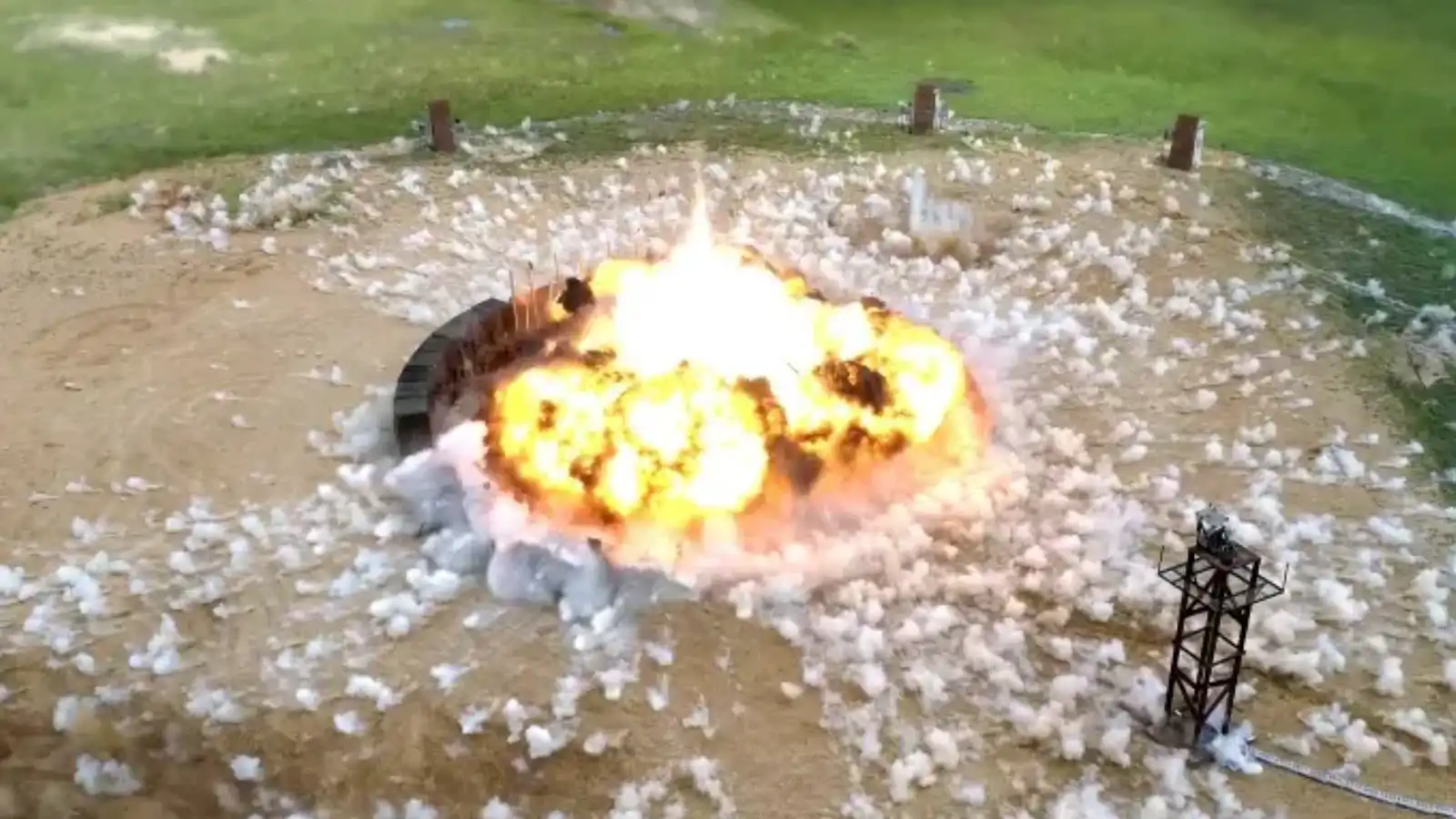
Northrop Grumman drone payloads
Image Credit: U.S. Army
SHARE
Follow The Defense Watch on Google:

The Pentagon is accelerating autonomous warfare capabilities as global competition in military drone technology intensifies.

Contents
Northrop Grumman Expands Role In Autonomous WarfarePentagon Pushes For Scalable Drone OperationsStrategic Importance Of Payload TechnologyAutonomous Systems Race Continues To AccelerateAnalysis: Why The Selection Matters

Executive Summary:
Northrop Grumman has been selected as the preferred payload provider for the U.S. Department of War’s Drone Dominance Program. The move strengthens the Pentagon’s push toward scalable autonomous warfare systems designed for contested and high threat environments.

The Northrop Grumman Drone Dominance Program selection marks another major step in the Pentagon’s broader effort to expand autonomous combat capabilities across multiple operational theaters. The company will support the initiative by delivering advanced payload technologies intended to improve intelligence gathering, targeting, survivability, and mission flexibility for future unmanned systems.

Northrop Grumman was named the preferred payload provider under the U.S. Department of War’s Drone Dominance Program, a project focused on accelerating deployment of highly capable unmanned platforms for modern military operations.

The announcement comes as the United States and allied nations continue investing heavily in autonomous systems amid growing competition with near peer adversaries including China and Russia.

- Advertisement -

Northrop Grumman Expands Role In Autonomous Warfare

Northrop Grumman has steadily expanded its presence in the unmanned systems sector over the past decade, leveraging expertise in sensors, electronic warfare, networking, and mission systems integration.

Under the Drone Dominance Program, the company is expected to provide payload solutions capable of supporting a wide range of missions, including:

  • Intelligence, surveillance, and reconnaissance (ISR)
  • Electronic warfare operations
  • Precision targeting
  • Communications relay
  • Multi domain battlefield coordination

While financial details and production quantities were not publicly disclosed, the selection highlights the Pentagon’s growing focus on modular drone architectures that can rapidly adapt to evolving operational requirements.

Defense analysts increasingly view payload technology as one of the most decisive factors in future drone warfare. Airframes can often be produced at scale relatively quickly, but advanced sensors, networking systems, and mission electronics determine battlefield effectiveness.

Pentagon Pushes For Scalable Drone Operations

The Drone Dominance Program reflects a broader strategic shift inside the U.S. defense establishment toward mass deployable autonomous systems capable of operating in contested environments.

Recent conflicts, particularly in Ukraine and the Middle East, have demonstrated how unmanned systems are reshaping battlefield tactics, intelligence collection, and strike operations.

The U.S. Department of Defense has accelerated multiple drone initiatives in response, aiming to field large numbers of lower cost autonomous platforms that can complement traditional high value assets such as crewed fighters, bombers, and naval vessels.

Northrop Grumman’s selection suggests the Pentagon is prioritizing mature payload technologies that can integrate into a variety of platforms rather than relying on single mission drone designs.

- Advertisement -

That modular approach could allow the U.S. military to rapidly update drone capabilities without redesigning entire aircraft, reducing procurement timelines and improving operational flexibility.

Strategic Importance Of Payload Technology

Payload systems increasingly define the operational value of unmanned platforms in modern warfare. Advanced sensors, electronic attack suites, AI enabled processing systems, and secure communications networks are now critical to battlefield survivability and effectiveness.

Northrop Grumman has extensive experience developing integrated mission systems for both manned and unmanned aircraft, including work connected to stealth aircraft, airborne early warning systems, and autonomous combat technologies.

The company’s expertise in sensor fusion and electronic warfare could prove especially valuable as the Pentagon prepares for potential operations in highly contested electromagnetic environments.

Military planners are placing greater emphasis on systems capable of resisting jamming, maintaining connectivity, and processing battlefield data in real time. These requirements have become increasingly important as adversaries invest heavily in counter drone and electronic warfare capabilities.

The Drone Dominance Program appears designed to address those challenges by pairing scalable unmanned aircraft with adaptable, survivable payload systems.

Autonomous Systems Race Continues To Accelerate

The United States is not alone in expanding military drone investments. Nations across Europe, Asia, and the Middle East are rapidly increasing procurement of autonomous systems for reconnaissance, strike, and naval operations.

China continues to showcase advanced unmanned combat aerial vehicles and AI enabled systems, while Turkey has expanded exports of combat proven drones used in multiple conflict zones.

The Pentagon’s emphasis on drone dominance reflects growing concern that future conflicts will depend heavily on autonomous mass, rapid decision making, and resilient battlefield networking.

For Northrop Grumman, the latest selection further strengthens its position within the expanding U.S. autonomous warfare ecosystem, where defense firms are competing to secure roles in next generation drone architectures.

Analysis: Why The Selection Matters

Northrop Grumman’s role in the Drone Dominance Program signals that the Pentagon views payload sophistication as equally important as drone production scale.

Many recent conflicts have shown that low cost drones alone do not guarantee battlefield superiority. Survivability, targeting accuracy, secure communications, and electronic resilience remain critical differentiators.

This is where established defense contractors retain a major advantage. Companies like Northrop Grumman possess decades of experience integrating advanced mission systems into highly contested operational environments.

The decision also suggests the Department of Defense is attempting to balance rapid innovation with proven defense industrial expertise. Rather than relying solely on emerging drone startups, the Pentagon appears to be combining traditional defense primes with next generation autonomous concepts.

That hybrid approach may help accelerate deployment timelines while reducing technical and operational risk.

Enjoying our coverage?

Make The Defense Watch a preferred source on Google to see more of our geopolitical and defense insights when relevant to you.

TAGGED:Defense contractsdrones & UAVs
Share This Article
Facebook Copy Link Print
ByDaniel Mercer / Defense & Aerospace Analyst
Follow:
Daniel Mercer is a defense and aerospace analyst at TheDefenseWatch.com covering military aviation, aerospace technology, unmanned systems, air warfare, and defense procurement. His reporting uses official documents, government and military statements, company announcements, and other public sources.
Leave a Comment

Leave a Reply Cancel reply

Your email address will not be published. Required fields are marked *

Search Defense Systems

Latest Defense Systems

  • F-104 Starfighter F-104 Starfighter
  • F-15J Eagle Fighter Jet F-15J Eagle Fighter Jet
  • China’s GJ-21 Stealth Drone China’s GJ-21 Stealth Drone
  • China’s GJ-11 Stealth Drone China’s GJ-11 Stealth Drone
  • F-15EX Eagle Fighter Jet F-15EX Eagle Fighter Jet
  • TRML-4D Radar TRML-4D Radar
  • F-47A Fighter Jet F-47A Fighter Jet
  • China DF-61 Missile China DF-61 Missile
  • B61 Nuclear Bomb B61 Nuclear Bomb

Recent Compares

  • J-10C vs JF-17 Thunder: Which Fighter Is More Capable? J-10C vs JF-17 Thunder: Which Fighter Is More Capable? View Comparison →
  • Tejas vs Gripen: Key Differences and Capabilities Tejas vs Gripen: Key Differences and Capabilities View Comparison →
  • Tejas vs MiG-21 Bison: How India Replaced Its Iconic Supersonic Fighter Tejas vs MiG-21 Bison: How India Replaced Its Iconic Supersonic Fighter View Comparison →
  • F-35 vs F-16: Stealth, Sensors and Combat Roles F-35 vs F-16: Stealth, Sensors and Combat Roles View Comparison →
  • Tejas Fighter Jet vs F-16 Fighting Falcon: Capability Compared Tejas Fighter Jet vs F-16 Fighting Falcon: Capability Compared View Comparison →
  • Rafale Fighter Jet vs F-16 Fighting Falcon : Which Fighter Has the Edge? Rafale Fighter Jet vs F-16 Fighting Falcon : Which Fighter Has the Edge? View Comparison →
  • Su-57 Fighter Jet vs J-20 Fighter Jet: Stealth and Air Combat Compared Su-57 Fighter Jet vs J-20 Fighter Jet: Stealth and Air Combat Compared View Comparison →
  • Mirage 2000 vs Tejas Mk1A: Legacy Combat Power vs Indigenous Modernization Mirage 2000 vs Tejas Mk1A: Legacy Combat Power vs Indigenous Modernization View Comparison →
  • Rafale Fighter Jet vs F-22 Raptor: Which Air Dominance Fighter Has the Edge? Rafale Fighter Jet vs F-22 Raptor: Which Air Dominance Fighter Has the Edge? View Comparison →
  • Tejas Fighter Jet vs. Rafale Fighter Jet: India’s Indigenous Fighter Meets France’s Proven Multirole Combat Aircraft Tejas Fighter Jet vs. Rafale Fighter Jet: India’s Indigenous Fighter Meets France’s Proven Multirole Combat Aircraft View Comparison →

Recent Posts

  • BAE Systems Wins $104.7 Million Navy Contract to Upgrade P-8A Survivability Pod
  • Raytheon Wins $120.3 Million Contract for RAM Block 2B Missiles
  • Lockheed Martin Awarded $330.6 Million for F-35 Lot 22 Production Materials
  • US Navy Awards $7.13 Billion SEWIP Contract to 28 Defense Companies
  • U.S. Expeditionary Wing Sharpens Counter-Drone Skills in UAS Training

You Might Also Like

White Sands Missile Range contract
Defense Contracts

Army awards 446 Million Dollar White Sands Mission Support Contract to Southwest Range Services

September 7, 2026
T56 engine support contract
Defense Contracts

U.S. Air Force Secures $343.2 Million T56 Engine Support Deal For C-130 Fleet

September 12, 2026
Elroy Air Army contract
Aerospace & AviationDefense ContractsDrones & UAVs

Elroy Air Wins $46 Million Army Contract For Autonomous Group IV Cargo UAS

August 18, 2026
NAVFAC Northwest construction contract
Defense Contracts

Navy Awards $9 Billion Northwest Construction Contract

October 1, 2026

Logo

Copyright © 2026 TheDefenseWatch.com

Helpful Links

  • Home
  • About Us
  • Privacy Policy
  • Terms of Use / Disclaimer
  • U.S. Privacy Notice – CCPA Compliance

Defense Systems

  • Defense Systems
  • Comparisons 
  • Manufacturer
  • Tactical Calculators

Popuplar

Which 5 Air Forces Possess the Costliest Fighter Jet Fleets in the World
Evolving Strategic Value: Carrier Strike Groups in the Indo-Pacific’s Future Security Architecture
Autonomous Weapon Systems Spark U.S. Ethics Debate Amid Rapid Military AI Integration

We report on developments involving military forces, governments, defense companies, research organizations, and security institutions around the world. 

Welcome Back!

Sign in to your account

Username or Email Address
Password

Lost your password?

Enjoying our coverage?

Make The Defense Watch a preferred source on Google to see more insights.