• Home
  • About
  • Defense Systems
  • Manufacturer
  • Comparisons
  • Compare 
  • Tools
TheDefenseWatch.com
  • Aerospace & Aviation
  • Military & Ordnance
  • Naval & Maritime
  • Cyber & Space Defense
  • Policy & Strategy
  • Global News
  • Tools Library
    • Smart Calculator
    • Drone Flight Time Calculator
    • Drone Range Calculator
    • Counter-Drone Jammer Effective Range Calculator
    • Counter-Battery Radar Detection Calculator
    • Artillery Fire Correction Calculator
    • Thermal Camera Detection Range Calculator
    • Missile Range & Time-of-Flight Calculator
    • Radar Detection Range Calculator
    • FPV Strike Drone Payload vs Range Calculator
    • Loitering Munition Endurance Calculator
    • Sniper Ballistic Drop & Windage Calculator
    • Bullet Drop Calculator
    • U.S. Army Combat Fitness Test (ACFT) Calculator
    • Military Pension Calculator
    • Military Retirement Calculator
    • Military Pension Calculator
    • Large Number Calculator
Font ResizerAa

TheDefenseWatch.com

The Defense Watch | U.S. & Global Defense News, Analysis & Military Updates

Search
  • Home
  • About
  • Defense Systems
  • Manufacturer
  • Comparisons
  • Compare 
  • Tools

Stay Updated

Get the latest update

Subscribe

Explore

  • Drone
  • Fighter Jets & Military Aircraft
  • Hypersonic Weapons
  • Aircraft Carriers
  • Strategic History & Missions
  • Tools Library
Home » BAE Systems Unveils $65M Electrification Facility To Accelerate Hybrid And All-Electric Aircraft Production
Aerospace & AviationFighter Jets & Military Aircraft

BAE Systems Unveils $65M Electrification Facility To Accelerate Hybrid And All-Electric Aircraft Production

Daniel Mercer / Defense & Aerospace Analyst
Last updated: September 7, 2026 11:50 am
Daniel Mercer / Defense & Aerospace Analyst
Share
3 Min Read
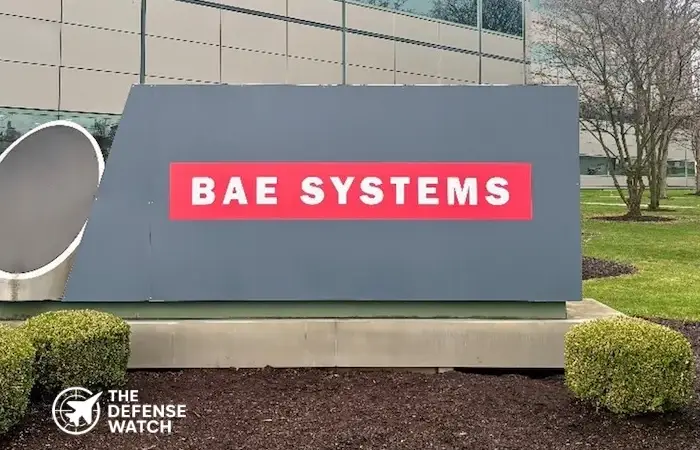
BAE Systems' new 150,000-square-foot electrification facility at its Endicott, New York campus, dedicated to high-voltage energy storage for hybrid and all-electric aircraft and ground vehicles.
Image Source: BAE Systems.
SHARE

Executive Summary:

BAE Systems has officially opened a 150,000-square-foot electrification facility at its Endicott, New York campus — a $65 million investment supporting hybrid and all-electric aircraft and ground vehicle development. The expansion adds 130 jobs and includes advanced manufacturing, a new battery production line, and a dedicated engineering laboratory, positioning the U.S. defense contractor as a key player in domestic battery and propulsion technology for both military and commercial aviation.

(adsbygoogle = window.adsbygoogle || []).push({});

BAE Systems Expands U.S. Aircraft Electrification Capacity With New York Facility

ENDICOTT, N.Y. — May 6, 2026 — BAE Systems has opened a major new facility at its Endicott, New York campus, dedicated to the development and manufacturing of high-voltage energy storage for hybrid and all-electric aircraft and ground vehicles. The move signals a significant escalation in the company’s domestic industrial footprint — and in the broader race to electrify both defense and commercial aviation platforms.

Contents
BAE Systems Expands U.S. Aircraft Electrification Capacity With New York FacilityA $65 Million Bet On Domestic Battery ManufacturingWhat The Facility Will ProduceDefense And Commercial Aviation: A Dual-Use StrategyLeadership CommentsStrategic Context: Electrification As A Defense PriorityKey Takeaways

The 150,000-square-foot addition was first announced last year and increases BAE Systems’ capacity to combine decades of propulsion expertise with leading-edge aviation technology.

A $65 Million Bet On Domestic Battery Manufacturing

The scale of the investment underscores growing urgency — both strategic and industrial — to reduce U.S. dependence on foreign battery supply chains.

Senator Chuck Schumer described the expansion as a “$65 million, 130-job expansion” that will bring to life “a new battery production line, research lab, and office space.”

- Advertisement -

Schumer further emphasized the facility’s national significance, stating that it would “help bring the battery supply chain back from overseas, supercharging the Southern Tier’s leadership in battery manufacturing.”

For defense analysts, that framing is notable. Battery and energy storage supply chains have emerged as a recognized vulnerability in U.S. defense industrial planning — particularly as more military platforms integrate electric and hybrid-electric propulsion systems. BAE Systems’ Endicott expansion is a direct response to that strategic gap.

What The Facility Will Produce

The campus addition supports the development of high-voltage energy storage systems essential to hybrid and all-electric aircraft and ground vehicles, and will accelerate delivery of technology enabling more efficient, lower-emission flights while significantly enhancing BAE Systems’ advanced manufacturing capacity and field support operations.

The upgraded facility includes an advanced engineering laboratory and fully automated, high-volume manufacturing capabilities, as well as dedicated workspace for BAE Systems’ Horizon Solutions Aftermarket Services and Support team, which provides comprehensive commercial aircraft solutions.

BAE Systems’ aircraft electrification portfolio spans both defense and civil aviation markets — a dual-use posture that amplifies the strategic value of the Endicott investment. Technologies developed here for commercial aircraft can feed directly into military platform development timelines, compressing what would otherwise be lengthy, costly military-specific R&D cycles.

(adsbygoogle = window.adsbygoogle || []).push({});

Defense And Commercial Aviation: A Dual-Use Strategy

BAE Systems’ Endicott employees develop solutions for both commercial and military air and land applications, including flight controls, engine controls, mission systems, and power and propulsion solutions.

This dual-use model is increasingly central to how major defense primes are approaching electrification. Rather than maintaining separate commercial and military development tracks, firms like BAE Systems are consolidating expertise in shared facilities — driving down costs while accelerating technology maturation across both sectors.

For the U.S. military, the implications are significant. The Army’s interest in hybrid-electric combat vehicles, the Air Force’s exploration of hybrid propulsion for unmanned systems, and the broader push toward reduced-emission military operations all point toward growing demand for exactly the type of high-voltage energy storage systems BAE Systems is now scaling up in Endicott.

- Advertisement -

Leadership Comments

Jack Stevens, Vice President and General Manager of Controls and Avionics Solutions at BAE Systems, framed the opening in terms of both market demand and regional commitment.

This expansion strengthens our ability to meet growing global demand for aircraft and ground vehicle electrification,” Stevens said. “Additionally, it creates new opportunities for growth and collaboration across the Greater Binghamton community, reinforcing our commitment to the talented workforce in this region.”

The regional jobs angle is not incidental. Defense manufacturing investments have become a bipartisan priority in Congress, with facilities like the Endicott campus frequently cited as examples of how defense spending translates into domestic industrial and employment benefits.

Strategic Context: Electrification As A Defense Priority

The Endicott expansion arrives at a pivotal moment. The Pentagon has been accelerating efforts to integrate electric and hybrid-electric propulsion across multiple platform categories — from next-generation tactical vehicles to advanced air mobility concepts under exploration by the Army and Air Force.

Meanwhile, peer competitors — notably China — have invested heavily in battery technology for both commercial and military applications, creating pressure on U.S. primes to close capability and production gaps. BAE Systems’ $65 million Endicott facility represents one concrete answer to that challenge: a purpose-built, domestically located production hub for the energy storage systems that will define the next generation of aircraft and ground combat vehicles.

By combining automated manufacturing, an advanced engineering lab, and aftermarket support operations under one roof, BAE Systems is positioning Endicott not just as a production site, but as an end-to-end center of excellence for defense-grade aircraft electrification.

Key Takeaways

  • BAE Systems has opened a 150,000-square-foot aircraft electrification facility in Endicott, New York
  • The $65 million investment adds 130 jobs and includes a new battery production line, research lab, and advanced manufacturing capabilities
  • The facility focuses on high-voltage energy storage for hybrid and all-electric aircraft and ground vehicles
  • The expansion serves both commercial and military customers, reinforcing a dual-use industrial strategy
  • Senator Chuck Schumer highlighted the facility’s role in reshoring battery supply chains from overseas
  • The move aligns with broader U.S. defense priorities around electrification and domestic industrial capacity
TAGGED:Aircraft ElectrificationBAE SystemsDefense ManufacturingEndicott New YorkHybrid Electric Aircraft
Share This Article
Facebook Copy Link Print
ByDaniel Mercer / Defense & Aerospace Analyst
Follow:
Daniel Mercer is a defense and aerospace analyst at TheDefenseWatch.com covering military aviation, aerospace technology, unmanned systems, air warfare, and defense procurement. His reporting uses official documents, government and military statements, company announcements, and other public sources.
Leave a Comment

Leave a Reply Cancel reply

Your email address will not be published. Required fields are marked *

Search Defense Systems

Latest Defense Systems

  • B61 Nuclear Bomb B61 Nuclear Bomb
  • Japan E-767 Airborne Japan E-767 Airborne
  • Remington 870 Shotgun Remington 870 Shotgun
  • RUTA B1 Cruise Missile RUTA B1 Cruise Missile
  • XQ-67A Drone XQ-67A Drone
  • B-25 Mitchell Bomber B-25 Mitchell Bomber
  • F-100 Super Sabre F-100 Super Sabre
  • North American F-86 Sabre North American F-86 Sabre
  • North American XB-70 Valkyrie North American XB-70 Valkyrie

Recent Compares

  • J-10C vs JF-17 Thunder: Which Fighter Is More Capable? J-10C vs JF-17 Thunder: Which Fighter Is More Capable? View Comparison →
  • Tejas vs Gripen: Key Differences and Capabilities Tejas vs Gripen: Key Differences and Capabilities View Comparison →
  • Tejas vs MiG-21 Bison: How India Replaced Its Iconic Supersonic Fighter Tejas vs MiG-21 Bison: How India Replaced Its Iconic Supersonic Fighter View Comparison →
  • F-35 vs F-16: Stealth, Sensors and Combat Roles F-35 vs F-16: Stealth, Sensors and Combat Roles View Comparison →
  • Tejas Fighter Jet vs F-16 Fighting Falcon: Capability Compared Tejas Fighter Jet vs F-16 Fighting Falcon: Capability Compared View Comparison →
  • Rafale Fighter Jet vs F-16 Fighting Falcon : Which Fighter Has the Edge? Rafale Fighter Jet vs F-16 Fighting Falcon : Which Fighter Has the Edge? View Comparison →
  • Su-57 Fighter Jet vs J-20 Fighter Jet: Stealth and Air Combat Compared Su-57 Fighter Jet vs J-20 Fighter Jet: Stealth and Air Combat Compared View Comparison →
  • Mirage 2000 vs Tejas Mk1A: Legacy Combat Power vs Indigenous Modernization Mirage 2000 vs Tejas Mk1A: Legacy Combat Power vs Indigenous Modernization View Comparison →
  • Rafale Fighter Jet vs F-22 Raptor: Which Air Dominance Fighter Has the Edge? Rafale Fighter Jet vs F-22 Raptor: Which Air Dominance Fighter Has the Edge? View Comparison →
  • Tejas Fighter Jet vs. Rafale Fighter Jet: India’s Indigenous Fighter Meets France’s Proven Multirole Combat Aircraft Tejas Fighter Jet vs. Rafale Fighter Jet: India’s Indigenous Fighter Meets France’s Proven Multirole Combat Aircraft View Comparison →

Recent Posts

  • General Atomics to Supply Components for U.S. Army and Navy Hypersonic Weapons
  • Lockheed Martin Tests Mk21A Reentry Vehicle for Sentinel ICBM
  • Lockheed Martin Wins $122.4 Million Trident II Navigation Contract
  • Pentagon Prepares Review of Military Legal System and JAG Corps
  • U.S. and Colombia Launch Southern Vanguard 2027 Exercise

You Might Also Like

The MQ-72C Lakota autonomous helicopter demonstrator during a logistics test flight for the US Marine Corps.
Aerospace & AviationDrones & UAVs

US Marines Accelerate MQ-72C Lakota Autonomous Helicopter Integration for Pacific Combat Resupply

September 12, 2026
Renault drone production
Aerospace & AviationDrones & UAVs

Renault to Build Long-Range Military Drones for French Forces

January 20, 2026
U.S. Air Force B-52 bomber flying with upgraded engines under modernization program
Aerospace & AviationFighter Jets & Military Aircraft

U.S. Air Force Advances B-52J Upgrade as Engine Replacement Program Reaches Critical Design Review

September 7, 2026
RAF Hawk cockpit software upgrade
Aerospace & AviationFighter Jets & Military Aircraft

RAF Hawk to Get Upgraded Cockpit Software Under New UK Defence Contract

September 7, 2026

Logo

Copyright © 2026 TheDefenseWatch.com

Helpful Links

  • Home
  • About Us
  • Privacy Policy
  • Terms of Use / Disclaimer
  • U.S. Privacy Notice – CCPA Compliance

Defense Systems

  • Defense Systems
  • Comparisons 
  • Manufacturer
  • Tactical Calculators

Popuplar

Which 5 Air Forces Possess the Costliest Fighter Jet Fleets in the World
Evolving Strategic Value: Carrier Strike Groups in the Indo-Pacific’s Future Security Architecture
Autonomous Weapon Systems Spark U.S. Ethics Debate Amid Rapid Military AI Integration

We report on developments involving military forces, governments, defense companies, research organizations, and security institutions around the world. 

Welcome Back!

Sign in to your account

Username or Email Address
Password

Lost your password?