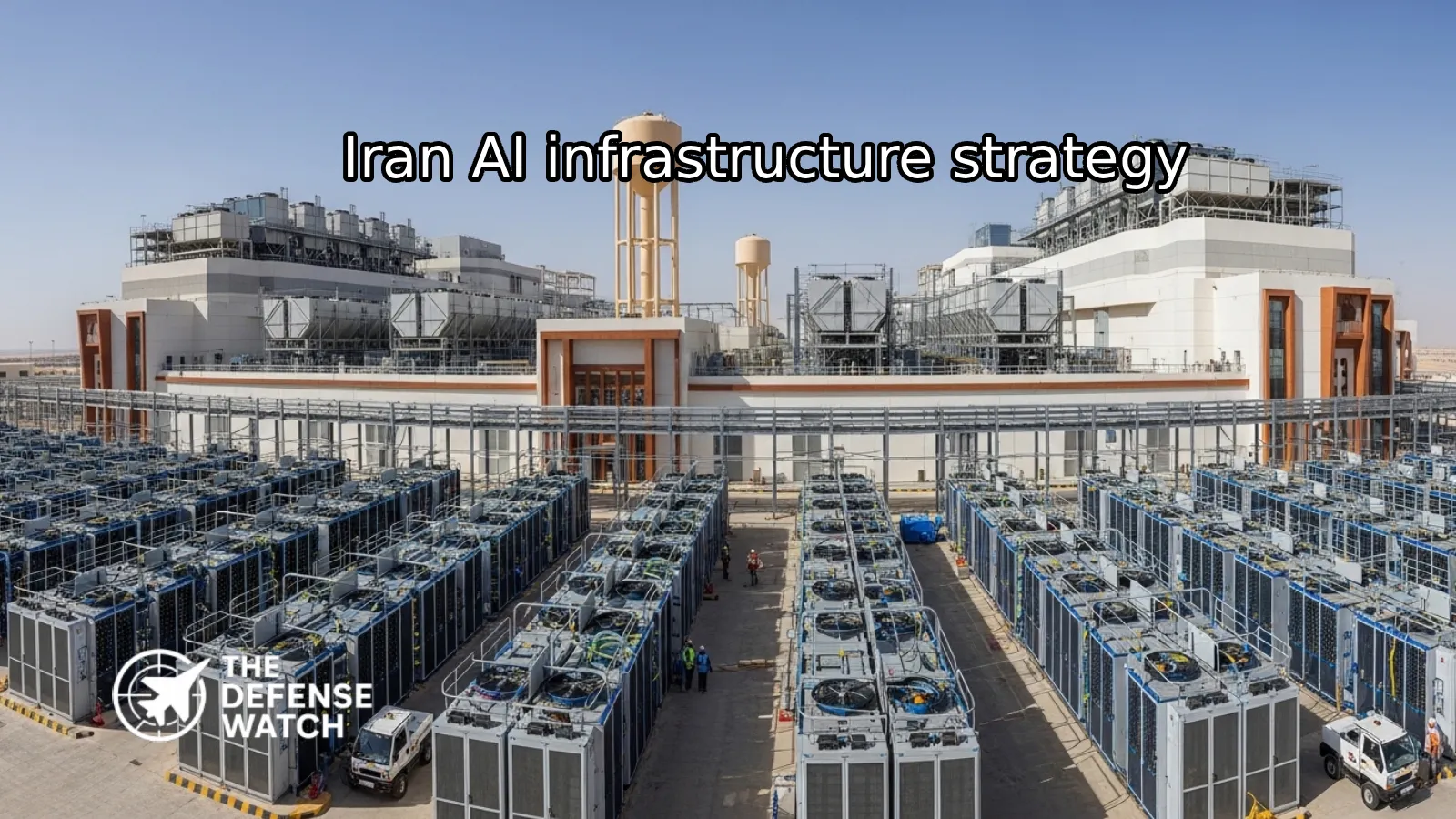
Iran AI Infrastructure Strategy Raises Stakes In Gulf Cyber Domain
Iran AI infrastructure strategy is increasingly focused on Gulf-based data centers linked to major U.S. technology firms, signaling a shift toward targeting critical digital assets as part of broader geopolitical competition.
Recent reporting indicates that Tehran is assessing or prioritizing infrastructure tied to companies such as Apple, Google, and Microsoft, particularly facilities located in Gulf states that host cloud computing and artificial intelligence workloads.
The development reflects a widening definition of strategic infrastructure, where data centers and AI ecosystems now sit alongside traditional military and energy targets.
- Iran is reportedly focusing on Gulf-based data centers linked to major U.S. tech firms.
- Targets include AI infrastructure and cloud systems operated by global companies.
- The move reflects growing cyber and strategic competition over digital infrastructure in the Middle East.
- Gulf states have rapidly expanded data center capacity to support AI and cloud services.
- The development highlights the militarization of data infrastructure as a national security priority.
The Big Picture
Digital infrastructure has become a core pillar of national power. Governments increasingly treat cloud platforms, AI systems, and hyperscale data centers as critical assets that underpin economic resilience, military operations, and intelligence capabilities.
The Middle East has emerged as a key battleground in this domain. Gulf states, including Saudi Arabia and the United Arab Emirates, have invested heavily in becoming regional hubs for cloud computing and AI development. These efforts align with broader diversification strategies and partnerships with U.S. and Western technology firms.
Iran’s focus on this infrastructure highlights a broader trend. Cyber operations and digital targeting now play a central role in deterrence and asymmetric warfare, particularly for states seeking to offset conventional military disadvantages.
What’s Happening
Iranian strategic messaging and reporting suggest a growing interest in targeting Gulf-based data centers that support global technology firms and AI platforms.
These facilities host cloud services, data storage, and AI processing capabilities that serve both commercial and government users across the region.
The infrastructure is largely concentrated in Gulf countries, where companies such as Apple, Google, and Microsoft have expanded their presence through partnerships, cloud regions, and data center deployments.
The timeline reflects a recent shift in emphasis rather than a single event. Analysts point to a steady evolution in Iran’s cyber posture, with increasing attention on high-value digital targets.
Why It Matters
Targeting AI infrastructure represents a significant escalation in the scope of cyber competition.
Data centers are not just commercial assets. They support financial systems, government services, defense communications, and emerging AI-driven applications. Disrupting these systems could have cascading effects across multiple sectors.
The Iran AI infrastructure strategy underscores how cyber operations can deliver strategic impact without direct military confrontation. This aligns with Tehran’s established doctrine of asymmetric warfare, which emphasizes cyber capabilities, proxy networks, and indirect pressure.
The focus on Gulf infrastructure also reflects the region’s growing importance as a digital hub. Any disruption could affect not only local economies but also global data flows and enterprise operations.
Strategic Implications
The development raises concerns about the resilience and security of critical digital infrastructure in the Middle East.
Gulf states have positioned themselves as trusted partners for global technology firms. Increased targeting risk may drive additional investment in cybersecurity, redundancy, and data sovereignty measures.
The shift also complicates regional security dynamics. Digital infrastructure is often interconnected across borders, meaning an attack on one facility could have broader regional implications.
For the United States and its partners, protecting allied digital ecosystems becomes part of a wider security commitment. This includes securing cloud infrastructure used by defense and government agencies.
Competitor View
China and Russia are likely to view this development through the lens of ongoing cyber competition with the United States.
Both countries have invested heavily in cyber capabilities and may see similar infrastructure as potential leverage points in future conflicts.
Regional rivals of Iran may interpret the move as part of a broader strategy to expand influence and apply pressure in non-kinetic domains.
At the same time, Gulf states are likely to deepen cooperation with Western partners to counter potential threats and strengthen cyber defenses.
What To Watch Next
Future developments will likely center on increased cybersecurity investments across Gulf data centers and cloud infrastructure.
Key indicators include:
Expansion of regional cloud security frameworks
Deployment of advanced threat detection systems
Closer coordination between governments and private sector operators
Potential public attribution of cyber incidents linked to state actors
Analysts will also monitor whether Iran’s focus translates into observable cyber activity targeting these facilities.
Capability Gap
Iran’s emphasis on digital targeting highlights a capability gap in conventional power projection.
Cyber operations provide a means to influence adversaries without engaging in direct military confrontation. However, these operations face limitations, including attribution risks, defensive countermeasures, and the challenge of achieving sustained disruption.
Data centers are designed with redundancy and resilience in mind. Large-scale impact would require sophisticated and coordinated efforts.
The Bottom Line
Iran’s focus on Gulf-based AI infrastructure signals that data centers have become strategic targets in modern geopolitical competition.