• Home
  • About
  • Defense Systems
  • Manufacturer
  • Comparisons
  • Compare 
  • Tools
TheDefenseWatch.com
  • Aerospace & Aviation
  • Military & Ordnance
  • Naval & Maritime
  • Cyber & Space Defense
  • Policy & Strategy
  • Global News
  • Tools Library
    • Smart Calculator
    • Drone Flight Time Calculator
    • Drone Range Calculator
    • Counter-Drone Jammer Effective Range Calculator
    • Counter-Battery Radar Detection Calculator
    • Artillery Fire Correction Calculator
    • Thermal Camera Detection Range Calculator
    • Missile Range & Time-of-Flight Calculator
    • Radar Detection Range Calculator
    • FPV Strike Drone Payload vs Range Calculator
    • Loitering Munition Endurance Calculator
    • Sniper Ballistic Drop & Windage Calculator
    • Bullet Drop Calculator
    • U.S. Army Combat Fitness Test (ACFT) Calculator
    • Military Pension Calculator
    • Military Retirement Calculator
    • Military Pension Calculator
    • Large Number Calculator
Font ResizerAa

TheDefenseWatch.com

The Defense Watch | U.S. & Global Defense News, Analysis & Military Updates

Search
  • Home
  • About
  • Defense Systems
  • Manufacturer
  • Comparisons
  • Compare 
  • Tools

Stay Updated

Get the latest update

Subscribe

Explore

  • Drone
  • Fighter Jets & Military Aircraft
  • Hypersonic Weapons
  • Aircraft Carriers
  • Strategic History & Missions
  • Tools Library
Home » U.S. Army Laser Defense Redirected To Navy For Golden Dome Integration In Major Air Defense Shift
Military & OrdnanceMissile Defense Systems

U.S. Army Laser Defense Redirected To Navy For Golden Dome Integration In Major Air Defense Shift

Daniel Mercer / Defense & Aerospace Analyst
Last updated: September 7, 2026 4:40 pm
Daniel Mercer / Defense & Aerospace Analyst
Share
2 Min Read
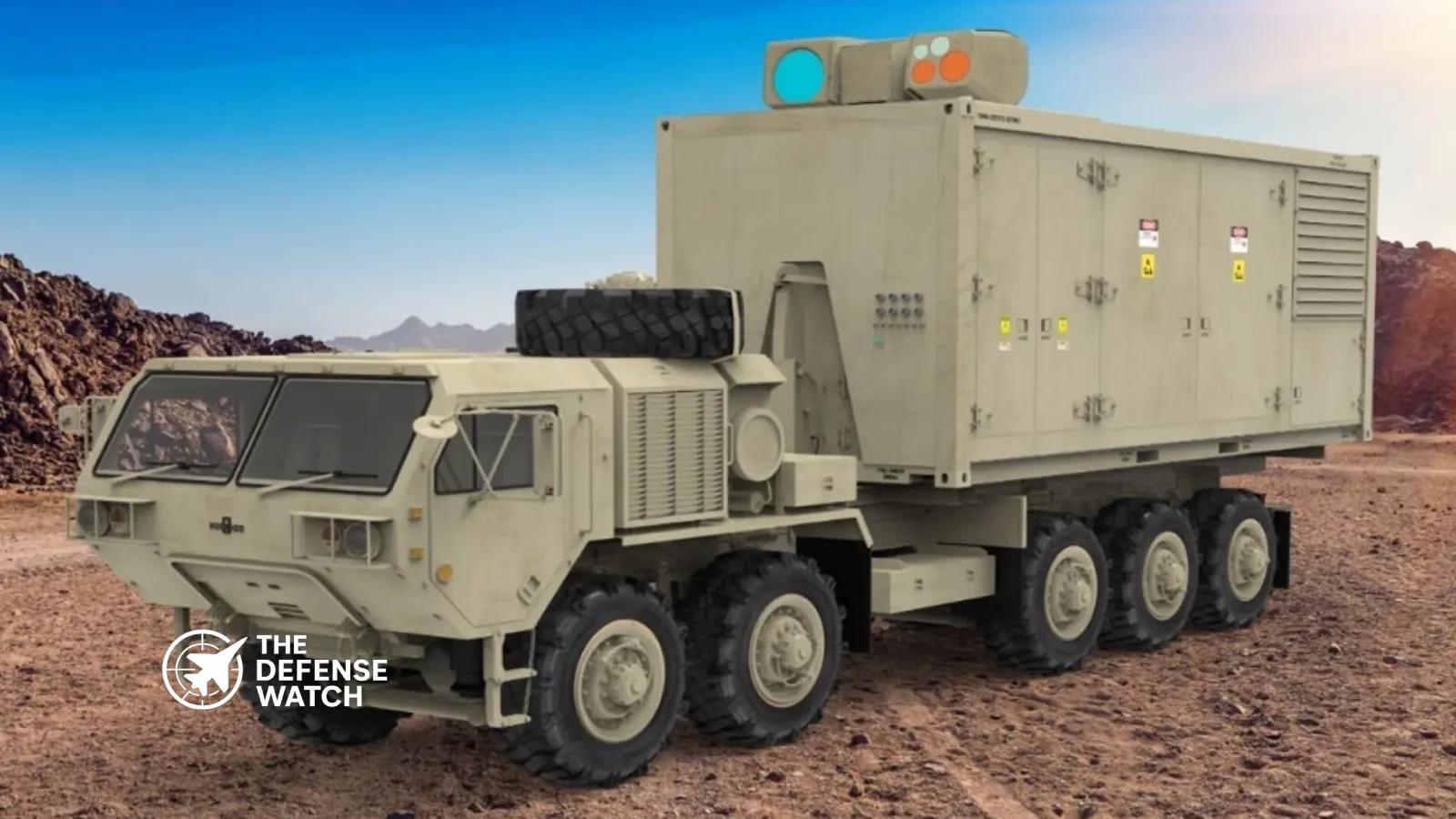
U.S. Army laser defense program
Image : Lockheed Martin
SHARE
KEY FACTS AT A GLANCE
  • U.S. Army redirects its laser air defense effort to a Navy-led program.
  • Directed energy systems will support the Navy’s Golden Dome architecture.
  • Move reflects Pentagon push for integrated, layered missile defense.
  • Focus shifts toward countering drones and low-altitude threats.
  • Consolidation aims to accelerate deployment and reduce duplication.

U.S. Army Laser Defense Program Shift Signals New Phase In Integrated Air Defense

The U.S. Army laser defense program has been redirected to support the U.S. Navy’s Golden Dome initiative, marking a significant step toward a unified, layered air and missile defense architecture.

Contents
U.S. Army Laser Defense Program Shift Signals New Phase In Integrated Air DefenseThe Big PictureWhat’s HappeningWhy It MattersStrategic ImplicationsCompetitor ViewWhat To Watch NextCapability GapThe Bottom Line

This decision reflects a broader Pentagon effort to streamline directed energy development and integrate capabilities across services, according to reporting from Army Recognition and official defense sources.

The Big Picture

The U.S. military is accelerating efforts to field layered air and missile defense systems capable of countering increasingly complex threats, including drones, cruise missiles, and loitering munitions.

Directed energy weapons, particularly high-energy lasers, are central to this strategy. They offer a low cost per shot, deep magazines, and rapid engagement speeds compared to traditional interceptors.

- Advertisement -

The Golden Dome concept represents a multi-layered defensive architecture designed to integrate sensors, interceptors, and emerging technologies across domains. Aligning Army and Navy laser efforts under this framework suggests a shift from service-specific programs toward joint operational capability.

  • Golden Dome Missile Defense System

    Golden Dome Missile Defense System

    • Maximum Range: 160+ km
    • Maximum Altitude: 25–30 km
    • Radar Detection Range: 300+ km
    • Missile Speed: Mach 4+
    • View Details →
    8.8

    What’s Happening

    The U.S. Army has redirected its laser-based air defense efforts to align with a U.S. Navy program tied to the Golden Dome initiative.

    The move effectively transfers responsibility for certain directed energy developments from the Army to the Navy, with the goal of integrating these capabilities into a broader naval-led air and missile defense system.

    The decision comes as the Pentagon seeks to avoid duplication across services and accelerate the deployment of operational laser systems.

    The focus remains on countering low-altitude aerial threats such as drones and loitering munitions, which have proven highly disruptive in recent conflicts.

    Why It Matters

    This shift highlights a growing recognition that future air defense systems must operate as integrated networks rather than isolated platforms.

    Laser weapons are particularly well suited for countering drone swarms and low-cost threats that can overwhelm traditional missile defenses. By consolidating development under a unified architecture, the Pentagon aims to improve interoperability and reduce logistical complexity.

    The move also reflects budget realities. Directed energy programs have historically faced funding challenges and technical hurdles. Combining efforts may improve efficiency and accelerate progress toward operational deployment.

    Strategic Implications

    The integration of the U.S. Army laser defense program into the Navy’s Golden Dome initiative strengthens the U.S. military’s ability to build a layered defense against evolving threats.

    • Golden Dome Missile Defense System

      Golden Dome Missile Defense System

      • Maximum Range: 160+ km
      • Maximum Altitude: 25–30 km
      • Radar Detection Range: 300+ km
      • Missile Speed: Mach 4+
      • View Details →
      8.8

      A unified system enhances situational awareness and enables faster decision-making across domains, from land to sea.

      This approach also supports distributed operations, a key concept in modern U.S. military doctrine, where forces operate across wide geographic areas while remaining connected through integrated networks.

      Over time, this could improve deterrence by demonstrating the ability to counter massed, low-cost attacks that adversaries increasingly rely on.

      Competitor View

      China and Russia are closely watching U.S. progress in directed energy and integrated air defense.

      China has invested heavily in counter-drone systems and laser technologies, viewing them as critical for both homeland defense and expeditionary operations.

      Russia, drawing lessons from conflicts involving drone saturation, is likely to interpret this move as part of a broader U.S. effort to neutralize asymmetric aerial threats.

      Both countries may accelerate their own directed energy programs in response, particularly in areas related to power generation, beam control, and operational deployment.

      What To Watch Next

      Key developments to monitor include:

      • Integration milestones within the Golden Dome architecture
      • Field testing of laser systems in operational environments
      • Procurement decisions and funding allocations
      • Deployment timelines for initial operational capability

      The pace of integration will be a critical indicator of whether the consolidation delivers the intended benefits.

      Capability Gap

      The U.S. Army laser defense program aims to address a clear operational gap: the need for cost-effective defenses against large numbers of low-cost aerial threats.

      Traditional missile systems are expensive and limited in magazine depth, making them less effective against drone swarms.

      However, laser systems still face limitations, including power generation, atmospheric interference, and range constraints. These factors could affect performance in contested or adverse environments.

      Despite these challenges, integrating laser systems into a broader defensive network increases their overall effectiveness.

      The Bottom Line

      The redirection of the U.S. Army laser defense program to the Navy’s Golden Dome initiative signals a decisive shift toward integrated, multi-domain air defense built around emerging directed energy capabilities.

TAGGED:Directed energylaser weaponsMissile DefenseUS ArmyUS Navy
Share This Article
Facebook Copy Link Print
ByDaniel Mercer / Defense & Aerospace Analyst
Follow:
Daniel Mercer is a defense and aerospace analyst at TheDefenseWatch.com covering military aviation, aerospace technology, unmanned systems, air warfare, and defense procurement. His reporting uses official documents, government and military statements, company announcements, and other public sources.
Leave a Comment

Leave a Reply Cancel reply

Your email address will not be published. Required fields are marked *

Search Defense Systems

Latest Defense Systems

  • F-47A Fighter Jet F-47A Fighter Jet
  • China DF-61 Missile China DF-61 Missile
  • B61 Nuclear Bomb B61 Nuclear Bomb
  • Japan E-767 Airborne Japan E-767 Airborne
  • Remington 870 Shotgun Remington 870 Shotgun
  • RUTA B1 Cruise Missile RUTA B1 Cruise Missile
  • XQ-67A Drone XQ-67A Drone
  • B-25 Mitchell Bomber B-25 Mitchell Bomber
  • F-100 Super Sabre F-100 Super Sabre

Recent Compares

  • J-10C vs JF-17 Thunder: Which Fighter Is More Capable? J-10C vs JF-17 Thunder: Which Fighter Is More Capable? View Comparison →
  • Tejas vs Gripen: Key Differences and Capabilities Tejas vs Gripen: Key Differences and Capabilities View Comparison →
  • Tejas vs MiG-21 Bison: How India Replaced Its Iconic Supersonic Fighter Tejas vs MiG-21 Bison: How India Replaced Its Iconic Supersonic Fighter View Comparison →
  • F-35 vs F-16: Stealth, Sensors and Combat Roles F-35 vs F-16: Stealth, Sensors and Combat Roles View Comparison →
  • Tejas Fighter Jet vs F-16 Fighting Falcon: Capability Compared Tejas Fighter Jet vs F-16 Fighting Falcon: Capability Compared View Comparison →
  • Rafale Fighter Jet vs F-16 Fighting Falcon : Which Fighter Has the Edge? Rafale Fighter Jet vs F-16 Fighting Falcon : Which Fighter Has the Edge? View Comparison →
  • Su-57 Fighter Jet vs J-20 Fighter Jet: Stealth and Air Combat Compared Su-57 Fighter Jet vs J-20 Fighter Jet: Stealth and Air Combat Compared View Comparison →
  • Mirage 2000 vs Tejas Mk1A: Legacy Combat Power vs Indigenous Modernization Mirage 2000 vs Tejas Mk1A: Legacy Combat Power vs Indigenous Modernization View Comparison →
  • Rafale Fighter Jet vs F-22 Raptor: Which Air Dominance Fighter Has the Edge? Rafale Fighter Jet vs F-22 Raptor: Which Air Dominance Fighter Has the Edge? View Comparison →
  • Tejas Fighter Jet vs. Rafale Fighter Jet: India’s Indigenous Fighter Meets France’s Proven Multirole Combat Aircraft Tejas Fighter Jet vs. Rafale Fighter Jet: India’s Indigenous Fighter Meets France’s Proven Multirole Combat Aircraft View Comparison →

Recent Posts

  • USA vs China Military: Comparing Global Military Power in 2026
  • USA vs UK Army: How U.S. and British Ground Forces Compare in 2026
  • Saab Wins SEK 2 Billion Contract to Equip Sweden’s Four New FDI Frigates
  • F-47 Fighter May Fly With Interim Engine as Next-Generation Propulsion Program Falls Behind Schedule
  • UK Says F-35 Agreement Guarantees Access to U.S. Support System

You Might Also Like

M1E3 Abrams operational testing
Military & OrdnanceTanks & Armored Vehicles

U.S. Army To Begin M1E3 Abrams Prototype Operational Testing In Summer 2026

September 13, 2026
North Korea ballistic missile
Military & OrdnanceMissile Defense Systems

North Korea Launches Ballistic Missiles Amid U.S. South Korea Drills

August 20, 2026
Raytheon OTH radar contract
Defense Contracts

Raytheon Secures $212M Over-The-Horizon Radar Support Contract For U.S. Navy

September 7, 2026
SOLGW MK1 assault rifle
Military & OrdnanceSmall Arms & Infantry Weapons

U.S. Picks SOLGW MK1 as Next‑Generation 5.56mm Assault Rifle for Special Forces

September 8, 2026

Logo

Copyright © 2026 TheDefenseWatch.com

Helpful Links

  • Home
  • About Us
  • Privacy Policy
  • Terms of Use / Disclaimer
  • U.S. Privacy Notice – CCPA Compliance

Defense Systems

  • Defense Systems
  • Comparisons 
  • Manufacturer
  • Tactical Calculators

Popuplar

Which 5 Air Forces Possess the Costliest Fighter Jet Fleets in the World
Evolving Strategic Value: Carrier Strike Groups in the Indo-Pacific’s Future Security Architecture
Autonomous Weapon Systems Spark U.S. Ethics Debate Amid Rapid Military AI Integration

We report on developments involving military forces, governments, defense companies, research organizations, and security institutions around the world. 

Welcome Back!

Sign in to your account

Username or Email Address
Password

Lost your password?