• Home
  • About
  • Defense Systems
  • Manufacturer
  • Comparisons
  • Compare 
  • Tools
TheDefenseWatch.com
  • Aerospace & Aviation
  • Military & Ordnance
  • Naval & Maritime
  • Cyber & Space Defense
  • Policy & Strategy
  • Global News
  • Tools Library
    • Smart Calculator
    • Drone Flight Time Calculator
    • Drone Range Calculator
    • Counter-Drone Jammer Effective Range Calculator
    • Counter-Battery Radar Detection Calculator
    • Artillery Fire Correction Calculator
    • Thermal Camera Detection Range Calculator
    • Missile Range & Time-of-Flight Calculator
    • Radar Detection Range Calculator
    • FPV Strike Drone Payload vs Range Calculator
    • Loitering Munition Endurance Calculator
    • Sniper Ballistic Drop & Windage Calculator
    • Bullet Drop Calculator
    • U.S. Army Combat Fitness Test (ACFT) Calculator
    • Military Pension Calculator
    • Military Retirement Calculator
    • Military Pension Calculator
    • Large Number Calculator
Font ResizerAa

TheDefenseWatch.com

The Defense Watch | U.S. & Global Defense News, Analysis & Military Updates

Search
  • Home
  • About
  • Defense Systems
  • Manufacturer
  • Comparisons
  • Compare 
  • Tools

Stay Updated

Get the latest update

Subscribe

Explore

  • Drone
  • Fighter Jets & Military Aircraft
  • Hypersonic Weapons
  • Aircraft Carriers
  • Strategic History & Missions
  • Tools Library
Home » US To Send More Missile Launchers To The Philippines Despite China Alarm
Alliances & DoctrinesPolicy & Strategy

US To Send More Missile Launchers To The Philippines Despite China Alarm

Daniel Mercer / Defense & Aerospace Analyst
Last updated: February 18, 2026 1:23 am
Daniel Mercer / Defense & Aerospace Analyst
Share
2 Min Read
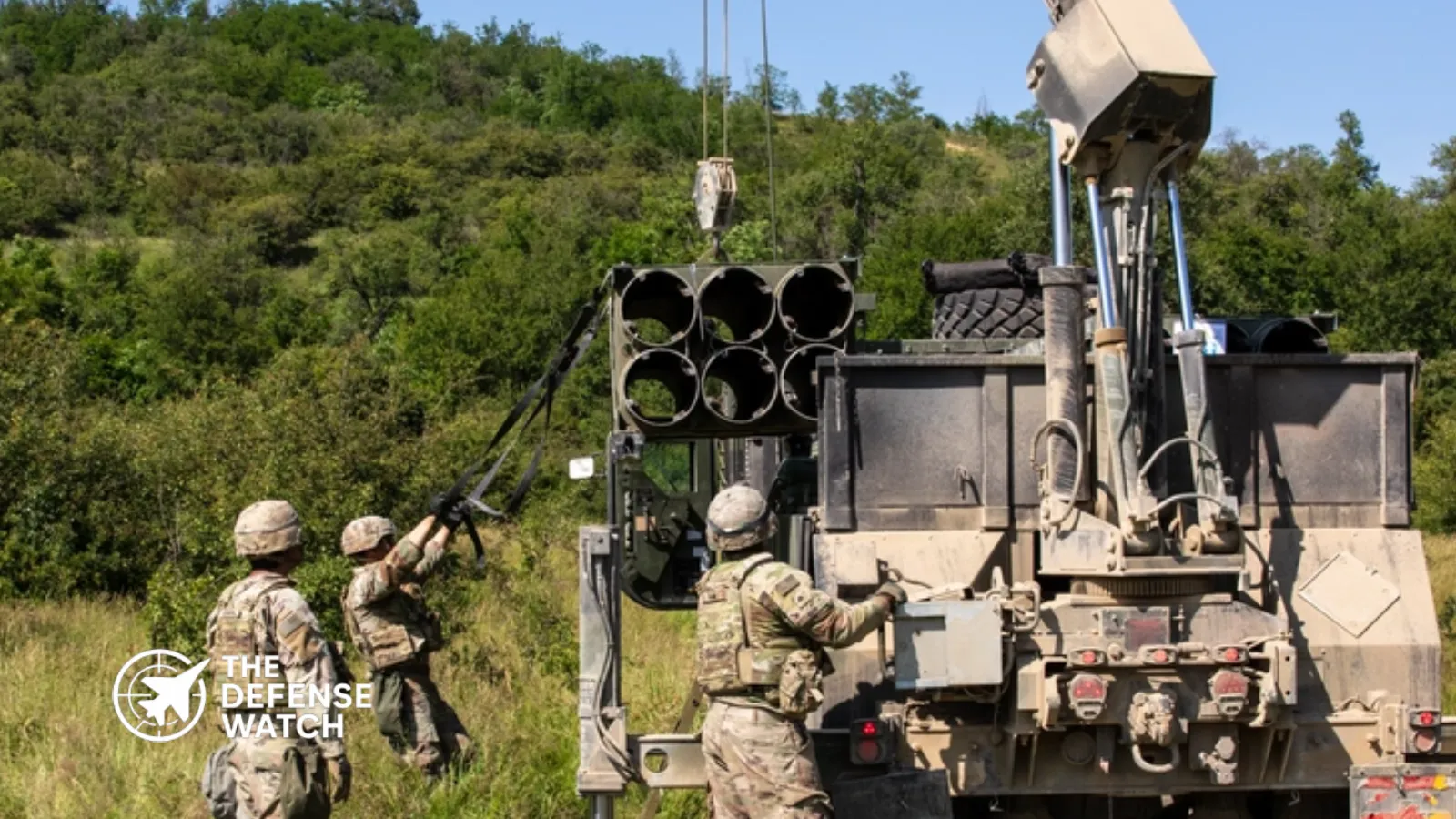
US missile launchers Philippines
Image : dvidshub
SHARE
Follow The Defense Watch on Google:
■ KEY FACTS AT A GLANCE
  • ► The United States plans to send additional missile launchers to the Philippines under alliance cooperation frameworks.
  • ► The deployment follows earlier use of the U.S. Army Typhon mid range capability during joint exercises.
  • ► China has publicly criticized the move, calling it destabilizing for regional security.
  • ► The Philippines has expanded U.S. access to military sites under the Enhanced Defense Cooperation Agreement.
  • ► The move comes amid ongoing maritime confrontations in the South China Sea.

US To Send More Missile Launchers To The Philippines

The United States will send more missile launchers to the Philippines, expanding its military presence in the Indo Pacific despite strong objections from China, according to report.

Contents
US To Send More Missile Launchers To The PhilippinesExpanding U.S. Missile Presence In Southeast AsiaManila’s Strategic ShiftBeijing’s ResponseStrategic ContextAlliance Implications

The move builds on earlier deployments under joint exercises and signals deeper U.S. Philippines defense cooperation as tensions persist in the South China Sea.

Washington has framed the decision as part of routine alliance coordination. Beijing, however, has warned that the deployment risks destabilizing the region.

Expanding U.S. Missile Presence In Southeast Asia

The decision to send more missile launchers to the Philippines follows the earlier deployment of the U.S. Army’s Typhon mid range capability system during 2024 exercises.

- Advertisement -

The Typhon system, also known as the Mid Range Capability, can launch Standard Missile 6 and Tomahawk land attack cruise missiles. Its presence marked the first time the United States positioned a ground based system of that range in the region since the end of the Intermediate Range Nuclear Forces Treaty.

According to Defense News, U.S. officials indicated that additional launchers will rotate into the Philippines as part of continuing cooperation with Manila.

The deployments are being conducted under the framework of the Enhanced Defense Cooperation Agreement, which allows expanded U.S. access to Philippine military bases.

Manila’s Strategic Shift

Under President Ferdinand Marcos Jr., the Philippines has moved to strengthen defense ties with Washington. Manila has granted U.S. forces access to additional sites, some located near Taiwan and contested waters in the South China Sea.

Philippine defense officials have described the missile deployments as defensive in nature, aimed at improving deterrence and joint readiness.

The United States and the Philippines are treaty allies under the 1951 Mutual Defense Treaty. In recent years, both governments have emphasized closer interoperability amid increased Chinese maritime activity.

Beijing’s Response

China has repeatedly criticized the presence of U.S. missile systems in the Philippines. Officials in Beijing argue that such deployments heighten regional tensions and risk turning the Southeast Asian nation into a frontline state in strategic competition.

The Chinese government has also warned Manila against deepening military alignment with Washington, especially in areas close to Taiwan.

- Advertisement -

Tensions between China and the Philippines have escalated over disputed features in the South China Sea, including repeated confrontations between coast guard vessels.

Strategic Context

The move to send more missile launchers to the Philippines aligns with broader U.S. Indo Pacific strategy. Washington has sought to distribute combat power across allied territory to complicate potential adversary planning.

Ground based long range missile systems are seen by U.S. planners as a key component of deterrence, particularly in scenarios involving maritime access denial.

Defense analysts note that rotational deployments allow the United States to maintain presence without establishing permanent bases, which can be politically sensitive in host nations.

Alliance Implications

The expansion of missile capabilities in the Philippines underscores the deepening U.S. Philippines defense partnership. It also reflects Manila’s recalibration of foreign policy in response to maritime friction.

While Washington maintains that the deployments are defensive and alliance focused, China continues to frame them as destabilizing.

The coming months are likely to see further joint exercises and operational coordination as both allies refine how missile systems integrate into regional contingency planning.

Enjoying our coverage?

Make The Defense Watch a preferred source on Google to see more of our geopolitical and defense insights when relevant to you.


TAGGED:China military tensionsIndo Pacific securityMissile Defense SystemsSouth China SeaUS Philippines alliance
Share This Article
Facebook Copy Link Print
ByDaniel Mercer / Defense & Aerospace Analyst
Follow:
Daniel Mercer is a defense and aerospace analyst at TheDefenseWatch.com covering military aviation, aerospace technology, unmanned systems, air warfare, and defense procurement. His reporting uses official documents, government and military statements, company announcements, and other public sources.
Leave a Comment

Leave a Reply Cancel reply

Your email address will not be published. Required fields are marked *

Search Defense Systems

Latest Defense Systems

  • F-104 Starfighter F-104 Starfighter
  • F-15J Eagle Fighter Jet F-15J Eagle Fighter Jet
  • China’s GJ-21 Stealth Drone China’s GJ-21 Stealth Drone
  • China’s GJ-11 Stealth Drone China’s GJ-11 Stealth Drone
  • F-15EX Eagle Fighter Jet F-15EX Eagle Fighter Jet
  • TRML-4D Radar TRML-4D Radar
  • F-47A Fighter Jet F-47A Fighter Jet
  • China DF-61 Missile China DF-61 Missile
  • B61 Nuclear Bomb B61 Nuclear Bomb

Recent Compares

  • J-10C vs JF-17 Thunder: Which Fighter Is More Capable? J-10C vs JF-17 Thunder: Which Fighter Is More Capable? View Comparison →
  • Tejas vs Gripen: Key Differences and Capabilities Tejas vs Gripen: Key Differences and Capabilities View Comparison →
  • Tejas vs MiG-21 Bison: How India Replaced Its Iconic Supersonic Fighter Tejas vs MiG-21 Bison: How India Replaced Its Iconic Supersonic Fighter View Comparison →
  • F-35 vs F-16: Stealth, Sensors and Combat Roles F-35 vs F-16: Stealth, Sensors and Combat Roles View Comparison →
  • Tejas Fighter Jet vs F-16 Fighting Falcon: Capability Compared Tejas Fighter Jet vs F-16 Fighting Falcon: Capability Compared View Comparison →
  • Rafale Fighter Jet vs F-16 Fighting Falcon : Which Fighter Has the Edge? Rafale Fighter Jet vs F-16 Fighting Falcon : Which Fighter Has the Edge? View Comparison →
  • Su-57 Fighter Jet vs J-20 Fighter Jet: Stealth and Air Combat Compared Su-57 Fighter Jet vs J-20 Fighter Jet: Stealth and Air Combat Compared View Comparison →
  • Mirage 2000 vs Tejas Mk1A: Legacy Combat Power vs Indigenous Modernization Mirage 2000 vs Tejas Mk1A: Legacy Combat Power vs Indigenous Modernization View Comparison →
  • Rafale Fighter Jet vs F-22 Raptor: Which Air Dominance Fighter Has the Edge? Rafale Fighter Jet vs F-22 Raptor: Which Air Dominance Fighter Has the Edge? View Comparison →
  • Tejas Fighter Jet vs. Rafale Fighter Jet: India’s Indigenous Fighter Meets France’s Proven Multirole Combat Aircraft Tejas Fighter Jet vs. Rafale Fighter Jet: India’s Indigenous Fighter Meets France’s Proven Multirole Combat Aircraft View Comparison →

Recent Posts

  • US Army vs Mexican Cartels: Military Capabilities, Tactics and Operational Differences
  • U.S. Army 5th Special Forces Group: History, Mission and Training
  • Saab and Poland’s Dezamet Sign MAPAM Mortar Ammunition Production Deal
  • Nordic Air Defence to Send K200 Drone Interceptor to Ukraine for Trials
  • Türkiye Inducts First Three Bayraktar Kızılelma Unmanned Fighter Aircraft

You Might Also Like

India Su-30MKI Indian Ocean patrol
Asian Defense & Security

India’s Su-30MKI And Thai Gripen Jets Conduct Indian Ocean Patrol, Signaling Stronger Indo Pacific Alignment

September 12, 2026
most powerful army in the world
Geopolitical & Strategic DoctrinesPolicy & Strategy

Top 10 Most Powerful Army in the World 2025, Global Military Rankings Explained

September 8, 2026
Supply chain for U.S. weapon manufacturers
Defense Budgets & PolicyPolicy & Strategy

U.S. Weapon Manufacturers Confront Supply Chain Strains Amid Rising Global Demand

September 25, 2025
US Army Secretary
Geopolitical & Strategic DoctrinesPolicy & Strategy

US Army Secretary Emerges as Key Diplomatic Player in Ukraine Peace Talks

November 26, 2025

Logo

Copyright © 2026 TheDefenseWatch.com

Helpful Links

  • Home
  • About Us
  • Privacy Policy
  • Terms of Use / Disclaimer
  • U.S. Privacy Notice – CCPA Compliance

Defense Systems

  • Defense Systems
  • Comparisons 
  • Manufacturer
  • Tactical Calculators

Popuplar

Which 5 Air Forces Possess the Costliest Fighter Jet Fleets in the World
Evolving Strategic Value: Carrier Strike Groups in the Indo-Pacific’s Future Security Architecture
Autonomous Weapon Systems Spark U.S. Ethics Debate Amid Rapid Military AI Integration

We report on developments involving military forces, governments, defense companies, research organizations, and security institutions around the world. 

Welcome Back!

Sign in to your account

Username or Email Address
Password

Lost your password?

Enjoying our coverage?

Make The Defense Watch a preferred source on Google to see more insights.