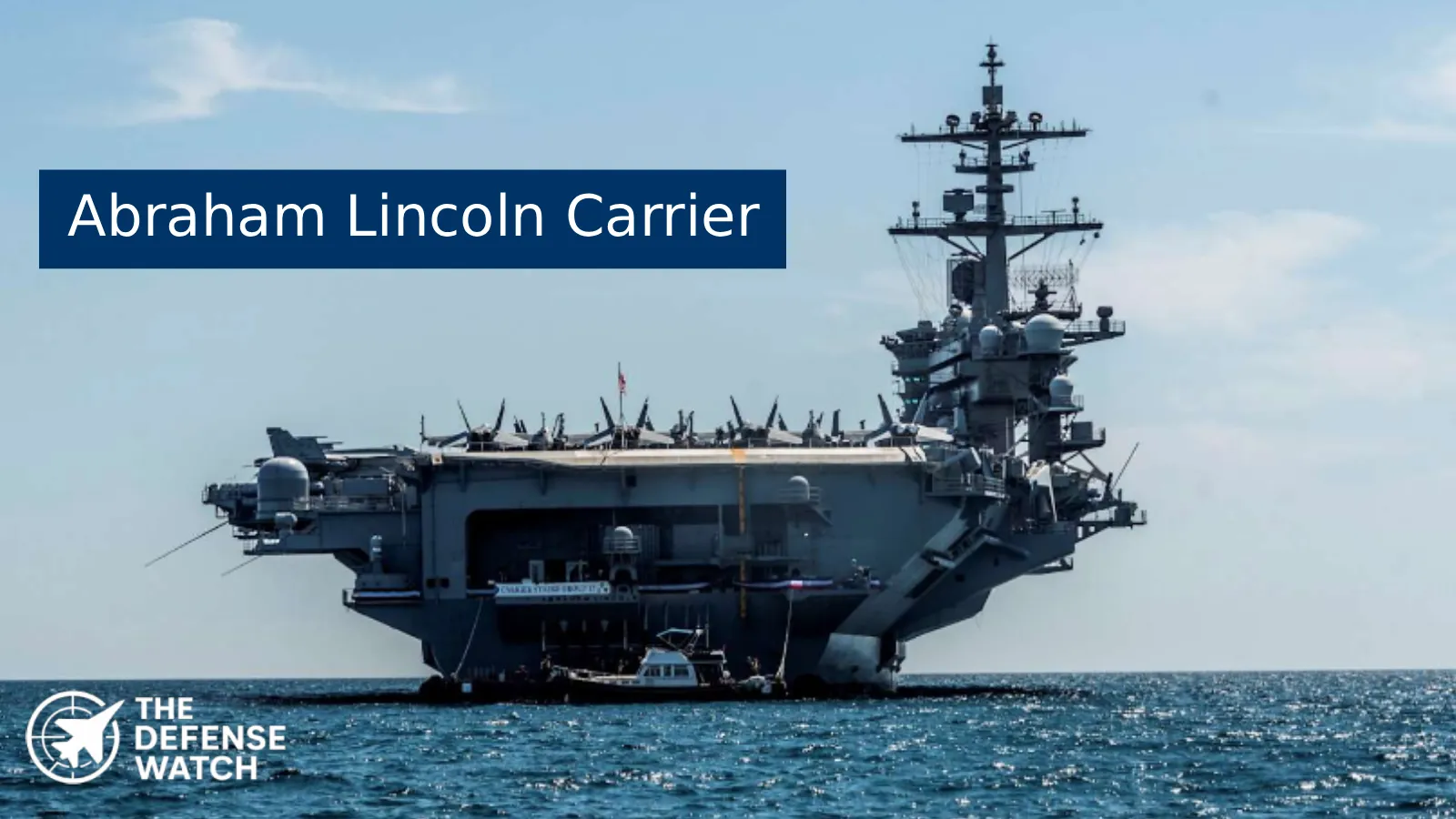
USS Abraham Lincoln Arrives Near Iran as U.S. Pressure Increases
The USS Abraham Lincoln arrives near Iran as the United States sharply increases its military and economic pressure on Tehran, deploying a carrier strike group into the Middle East while announcing new sanctions targeting Iran linked shipping networks.
The arrival, reported Sunday evening by Israel Channel 13, places a U.S. nuclear powered aircraft carrier within operational range of Iran at a moment of heightened regional tension, marking one of the most visible U.S. naval movements in the area in years.
Carrier Strike Group Enters the Region
According to regional media reports, the USS Abraham Lincoln Carrier Strike Group entered Middle Eastern waters accompanied by guided missile destroyers and supporting naval assets. The deployment includes layered missile defense capabilities designed to counter cruise missiles, ballistic missiles, and unmanned aerial threats.
U.S. officials have not publicly disclosed the carrier’s exact operating area, consistent with Navy practice. However, the positioning places the strike group within reach of the Persian Gulf, Gulf of Oman, and Arabian Sea, all key maritime corridors tied to Iran’s security calculus.
President Donald Trump described the deployment as an approaching U.S. armada, signaling a willingness to apply overwhelming force if American interests or partners are threatened.
Sanctions Expand Alongside Military Pressure
The carrier deployment coincides with fresh U.S. sanctions imposed on nine vessels and their management companies, according to U.S. Treasury statements issued earlier this week. The sanctions target shipping networks accused of facilitating Iranian oil exports and revenue generation in violation of U.S. restrictions.
U.S. officials say the measures are intended to restrict Iran’s access to hard currency while reinforcing deterrence through visible military presence. The dual track approach reflects a broader U.S. strategy of economic pressure backed by forward deployed military power.
Treasury officials emphasized that maritime sanctions remain a core tool for limiting Iran’s regional activities and funding streams.
Role and Capabilities of USS Abraham Lincoln
The USS Abraham Lincoln is a Nimitz class aircraft carrier powered by two nuclear reactors, allowing virtually unlimited range and sustained operations. The carrier typically embarks a full air wing of strike fighters, electronic warfare aircraft, airborne early warning platforms, and helicopters.
A standard carrier air wing provides:
Strike and close air support
Air superiority missions
Intelligence, surveillance, and reconnaissance
Electronic attack and suppression of enemy air defenses
When combined with escorting destroyers armed with Aegis missile defense systems, the carrier strike group forms a self contained force capable of sustained combat operations.
Defense analysts note that the presence of a carrier near Iran significantly complicates Tehran’s military planning, particularly in the maritime domain.
Strategic Signal to Iran and Regional Actors
The U.S. naval buildup near Iran sends a clear signal not only to Tehran, but also to U.S. allies and adversaries across the Middle East. Carrier deployments are among the most visible indicators of American military intent, often used to reassure partners and deter escalation.
Iran has previously responded to carrier movements with naval exercises, missile tests, and rhetoric emphasizing its anti access and area denial capabilities. These include fast attack craft, shore based missile systems, and armed drones.
U.S. defense officials argue that forward naval presence reduces the risk of miscalculation by maintaining clear deterrent lines.
Regional Security Context
The arrival of the USS Abraham Lincoln near Iran occurs amid broader instability across the Middle East, including maritime security concerns, regional proxy conflicts, and heightened alert levels among Gulf states.
U.S. naval forces routinely conduct freedom of navigation operations and maritime security patrols in the region. However, the introduction of a carrier strike group represents a significant escalation in posture rather than routine presence.
Military planners stress that carriers offer decision makers flexible response options without requiring basing agreements or permanent ground deployments.
U.S. Navy Force Posture in the Middle East
The U.S. Navy maintains rotational forces across the Fifth Fleet area of responsibility, headquartered in Bahrain. Assets typically include destroyers, patrol aircraft, logistics ships, and allied naval forces.
Carrier strike groups are deployed as needed, often during periods of crisis or elevated risk. The Abraham Lincoln deployment reinforces U.S. commitments to freedom of navigation and regional stability.
Pentagon officials have emphasized that the United States seeks to deter conflict, not provoke it, while remaining prepared to respond decisively if required.
What Comes Next
While U.S. officials have avoided setting timelines or objectives for the deployment, analysts expect the USS Abraham Lincoln Carrier Strike Group to remain in the region as long as tensions persist.
Future developments will likely depend on diplomatic signaling, Iranian responses, and regional security dynamics. For now, the carrier’s presence underscores Washington’s intent to pair economic pressure with credible military capability.