What Is a Sonic Boom, and Why Does It Matter for Military Aviation?
A sonic boom is one of the most dramatic byproducts of modern air power — a thunderclap produced not by weather, but by the raw physics of supersonic flight. A sonic boom is an impulsive noise caused by an object moving faster than sound, which travels at approximately 750 miles per hour at sea level. The phenomenon has shaped U.S. Air Force doctrine, civilian airspace law, and now, the trajectory of a new generation of aerospace technology designed to tame it.
For defense analysts and aviation professionals alike, understanding how sonic booms are generated, regulated, and potentially neutralized has become increasingly relevant in 2026 — as both military trainers and commercial developers push the boundaries of supersonic operations over populated land.
- A sonic boom is produced when any aircraft exceeds approximately 750 miles per hour at sea level — roughly the speed of sound.
- The U.S. Air Force has conducted supersonic test flights since 1947, and most of its fighter aircraft are supersonic-capable today.
- Peak sonic boom overpressure for typical fighter aircraft ranges from less than 1 to about 10 pounds per square foot under normal flight conditions.
- NASA’s X-59 QueSST demonstrator completed its maiden flight on October 28, 2025, targeting a reduced “sonic thump” instead of a full boom.
- Community overland supersonic acceptance flights by NASA are planned for 2026, with regulatory data submissions expected by 2028.
The Physics Behind the Boom
To grasp why a sonic boom happens, it helps to understand how aircraft interact with the air around them. An aircraft traveling through the atmosphere continuously produces air-pressure waves similar to the water waves caused by a ship’s bow. When the aircraft exceeds the speed of sound, these pressure waves combine and form shock waves which travel forward from the generation or “release” point.
The result on the ground is not a single bang, but rather a sustained pressure event that moves with the aircraft. As an aircraft flies at supersonic speeds it is continually generating shock waves, dropping sonic boom along its flight path, similar to someone dropping objects from a moving vehicle.
Two distinct waveform types determine how a boom manifests. The N-wave is generated from steady flight conditions, and its pressure wave is shaped like the letter “N,” with a front shock rising to positive peak overpressure followed by a linear decrease until the rear shock returns to ambient pressure. The U-wave, or focused boom, is generated from maneuvering flights, and its pressure wave is shaped like the letter “U,” with positive shocks at both the front and rear of the boom where peak overpressures are amplified compared to the N-wave.
In practical terms, maneuvers matter enormously. Pilots and mission planners must account for how aircraft movements alter a boom’s ground footprint and intensity.
How Strong Can a Sonic Boom Get?
The intensity of a sonic boom varies widely depending on aircraft size, altitude, speed, and flight maneuvers. For today’s supersonic aircraft in normal operating conditions, the peak overpressure varies from less than one pound to about 10 pounds per square foot for an N-wave boom. Peak overpressures for U-waves are amplified two to five times the N-wave, but this amplified overpressure impacts only a very small area.
Historical data points to some remarkable extremes. The strongest sonic boom ever recorded was 144 pounds per square foot, produced by an F-4 flying just above the speed of sound at an altitude of 100 feet — yet it did not cause injury to the researchers exposed to it.
Under more operationally realistic scenarios, the maximum boom measured was 21 pounds per square foot. Buildings in good repair should suffer no damage from pressures below 16 pounds per square foot, and community exposure to sonic boom typically stays below two pounds per square foot.

Image : NASA These figures matter greatly for airspace planning. The difference between a training route that keeps a fighter at 40,000 feet and one that permits lower supersonic operations can mean the difference between a faint distant rumble and cracked windows in homes below.
Altitude, Distance, and the Boom Carpet
One of the most operationally significant aspects of sonic boom behavior is how altitude affects its spread and intensity. In general, the greater an aircraft’s altitude, the lower the overpressure on the ground. Greater altitude also increases the boom’s lateral spread, exposing a wider area to the boom.
The scale of this spread is considerable. Ground width of the boom exposure area is approximately one mile for each 1,000 feet of altitude — meaning an aircraft flying supersonic at 30,000 feet will create a lateral boom spread of about 30 miles. For steady supersonic flight, the boom is described as a carpet boom since it moves with the aircraft as it maintains supersonic speed and altitude.
Weather and atmospheric conditions further complicate the picture. Under standard atmospheric conditions, air temperature decreases with increased altitude, which helps bend sound waves upward. For a boom to reach the ground, the aircraft’s speed relative to the ground must be greater than the speed of sound at ground level — for example, an aircraft must travel at least 750 miles per hour, or Mach 1.12, for a boom to be heard at the surface.
U.S. Air Force Supersonic Regulations: Balancing Combat Readiness and Public Impact
The U.S. Air Force has operated supersonic aircraft since Chuck Yeager broke the sound barrier in October 1947. That history carries significant regulatory weight. Air Force procedures require that, whenever possible, supersonic flights be conducted over open water, above 10,000 feet, and no closer than 15 miles from shore. Supersonic operations over land must be conducted above 30,000 feet or, when below 30,000 feet, in specially designated areas approved by Headquarters United States Air Force and the Federal Aviation Administration.
This regulatory architecture reflects a long-standing tension between the demands of realistic combat training and the rights of civilian communities beneath military flight corridors. Fighter pilots cannot fully prepare for high-speed engagements by flying subsonic training sorties; pushing through Mach 1 in realistic tactical scenarios is operationally essential. Yet the communities surrounding air bases and designated supersonic corridors bear the acoustic impact of that training.
The Air Force continues to expand its knowledge of sonic boom, with ongoing research specifically addressing modeling of boom generation and its impact on the environment — including people, domestic animals, wildlife, and structures. This research provides tools to mitigate disturbances through flight operations and land use planning.
NASA’s X-59: The Turning Point for Overland Supersonic Flight
The most consequential development in sonic boom science in years came in late 2025, when a purpose-built aircraft took to the skies specifically to answer a regulatory question: can supersonic flight over populated land ever be made acceptable?
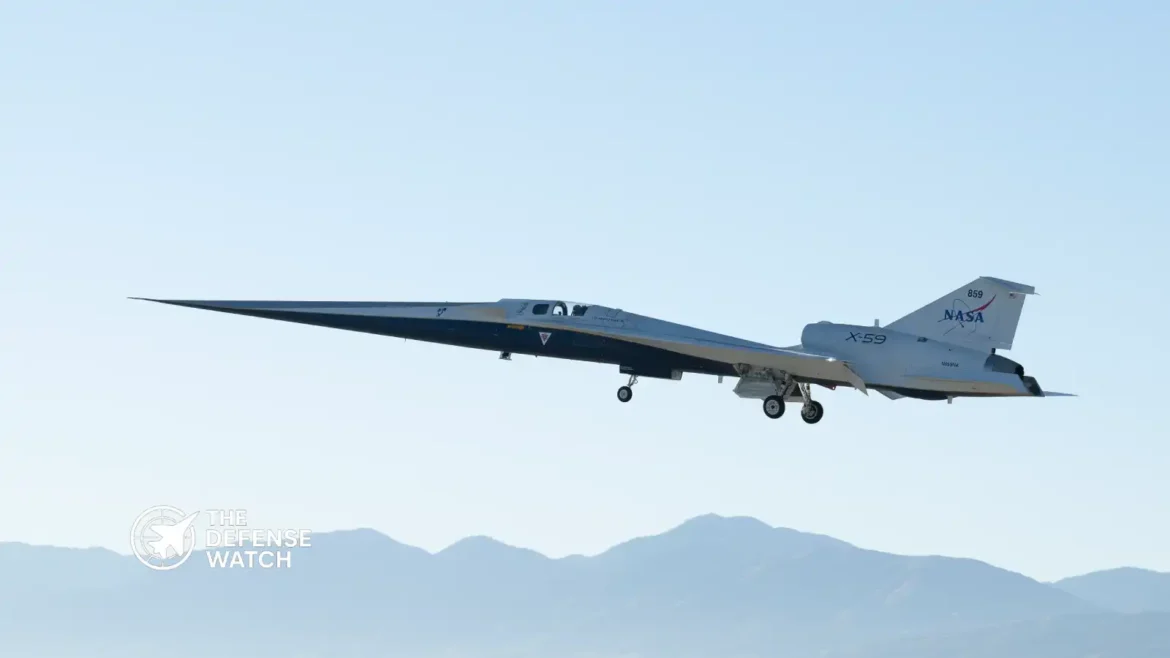
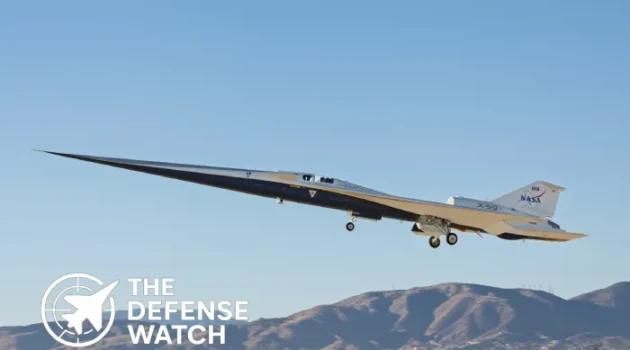
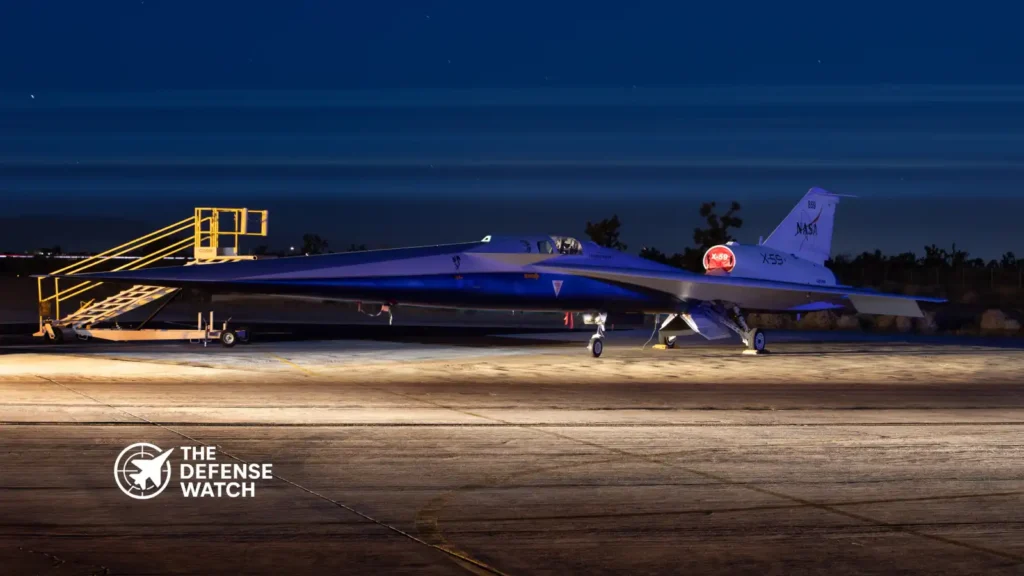
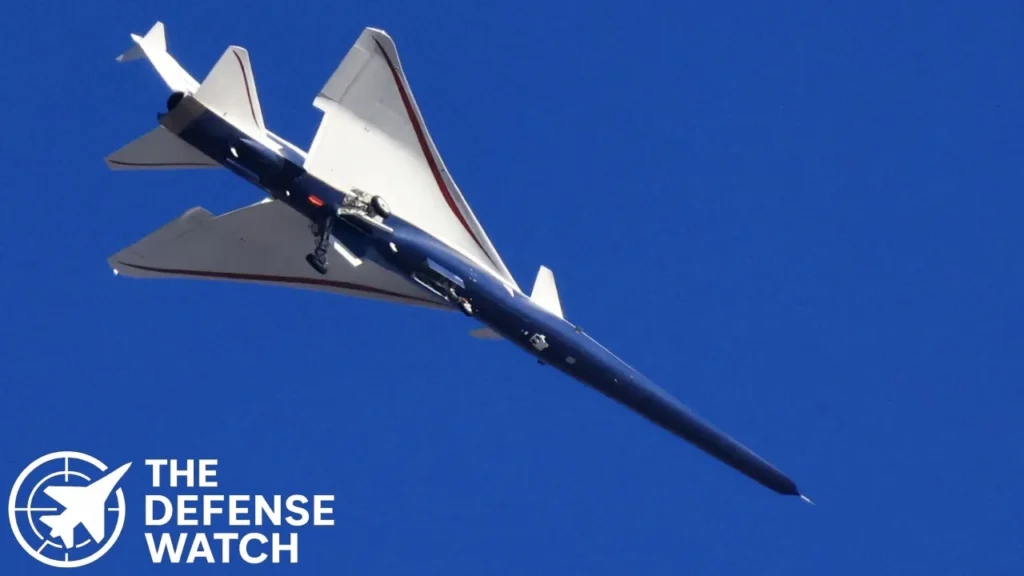
The single-seat X-59, developed by Lockheed Martin Skunk Works in partnership with NASA, is designed to cruise faster than sound while producing a minimal sonic boom — reduced to what engineers describe as a “gentle thump.” The aircraft completed its first flight on October 28, 2025, flying from Palmdale, California to NASA’s Armstrong Flight Research Center at Edwards to verify basic handling and data systems.
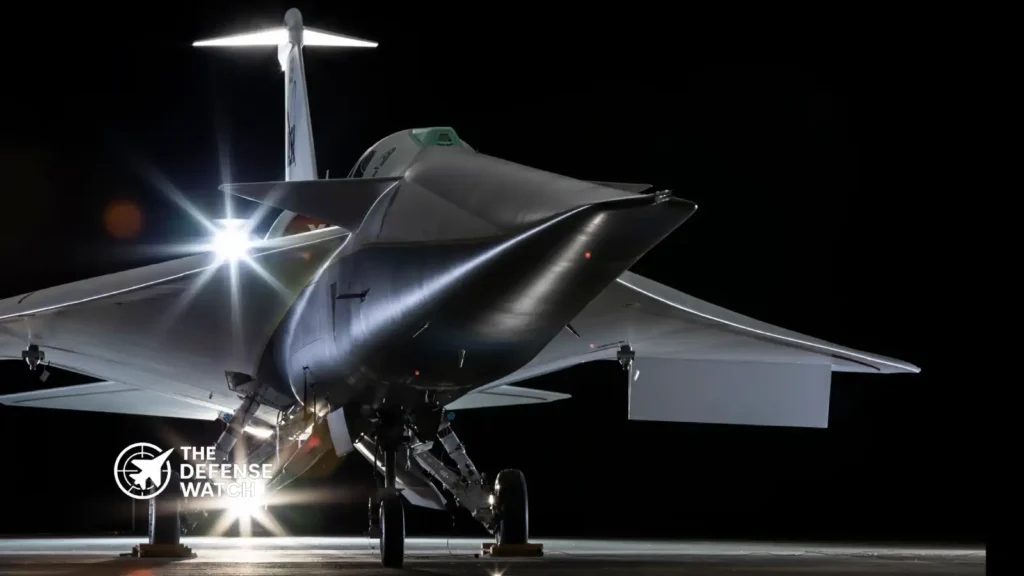
The engineering behind this achievement is substantial. The X-59’s elongated nose, carefully shaped fuselage, and engine integration aim to reshape shock waves and reduce noise output to levels comparable to slamming a car door. The aircraft’s 38-foot nose cone and uniquely contoured fuselage prevent shock waves from merging into a disruptive sonic boom, resulting in a softer “sonic thump.”
The X-59 is designed to operate at speeds up to Mach 1.4 and altitudes around 55,000 feet. NASA estimates that community acceptance flights over selected U.S. cities will begin in 2026, and data will inform regulatory proposals by 2028. Aviation A2Z
The Regulatory and Commercial Stakes
The implications of the X-59 program extend far beyond the aerospace research community. For decades, a 1973 FAA rule has effectively banned civil supersonic flight over U.S. soil, a restriction that grounded Concorde from trans-continental routes and has since constrained every commercial supersonic ambition that followed.
The United States recently reversed its 50-year-old ban on supersonic aircraft flying over land — a development that creates the regulatory framework into which X-59 data will feed. If NASA’s acoustic measurements demonstrate that the X-59’s “sonic thump” falls within community-acceptable noise thresholds, the FAA and the International Civil Aviation Organization could revise standards that have been frozen since the Concorde era.
The commercial sector is watching closely. Looking ahead to 2026, supersonic travel appears poised to move from concept to reality once more, with NASA’s X-59 demonstrating that sonic booms can be tamed and Boom Supersonic proving that civil jets can break the sound barrier again. Boom Supersonic’s Overture airliner, which has secured orders from United Airlines, American Airlines, and Japan Airlines, targets service entry by 2029.
Analysis: Why This Matters for Defense Strategy and Airspace Policy
From a defense perspective, the convergence of military sonic boom research and commercial low-boom technology carries strategic weight that extends beyond noise ordinances.
First, quiet supersonic flight has direct implications for reconnaissance and rapid-response aircraft. A platform capable of operating at Mach 1.4 while generating a noise signature comparable to background levels fundamentally changes what an adversary’s acoustic detection systems can track. The X-59 program, while civilian in charter, is generating data that military planners and aircraft designers will closely monitor.
Second, the regulatory shift underway in U.S. airspace policy creates new operational flexibility for Air Force training. Designated supersonic corridors could expand if community noise thresholds are revised upward based on low-boom technology. Pilots could access realistic supersonic training environments closer to populated air bases — a meaningful readiness advantage.
Third, the broader revival of supersonic commercial aviation will inevitably blur the line between civil and military aerospace industrial capacity. Engine designs, materials science, and aerodynamic shaping developed for commercial supersonic programs will feed back into next-generation military platforms, compressing development timelines and potentially cutting costs for future advanced fighters and reconnaissance assets.
The sonic boom — for 78 years a blunt announcement of military air power — may soon become a whisper. And in that transformation lies some of the most consequential aerospace policy and technology competition of the coming decade.
FAQs
What causes a sonic boom?A sonic boom is caused when an aircraft exceeds the speed of sound — roughly 750 mph at sea level — generating combined shock waves that release a sudden pressure burst heard as a loud crack on the ground.
Can a sonic boom damage buildings?Structural damage is unlikely at typical community exposure levels below two pounds per square foot. Buildings in good condition can generally withstand pressures below 16 pounds per square foot without damage.
Why can’t civilian aircraft fly supersonic over the United States?A 1973 FAA rule banned civil supersonic overland flight due to sonic boom disturbances. The U.S. government recently reversed this restriction, opening the door for new supersonic aircraft — provided they meet updated noise standards.
What is the NASA X-59 aircraft?The X-59 QueSST is a research aircraft developed by Lockheed Martin Skunk Works and NASA designed to fly at Mach 1.4 while reducing its sonic signature to a quiet “thump.” Its first flight occurred on October 28, 2025. Data from the program will be used to propose new FAA and ICAO noise regulations.
How does altitude affect a sonic boom on the ground?Higher altitude reduces peak overpressure at ground level but increases the width of the area exposed to the boom. An aircraft at 30,000 feet produces a boom carpet approximately 30 miles wide.
What is the difference between an N-wave and a U-wave sonic boom?An N-wave is produced by steady supersonic flight and has a pressure profile shaped like the letter “N.” A U-wave results from maneuvers such as dives or turns and has amplified peak pressures at both the front and rear of the boom, though it affects a smaller area.
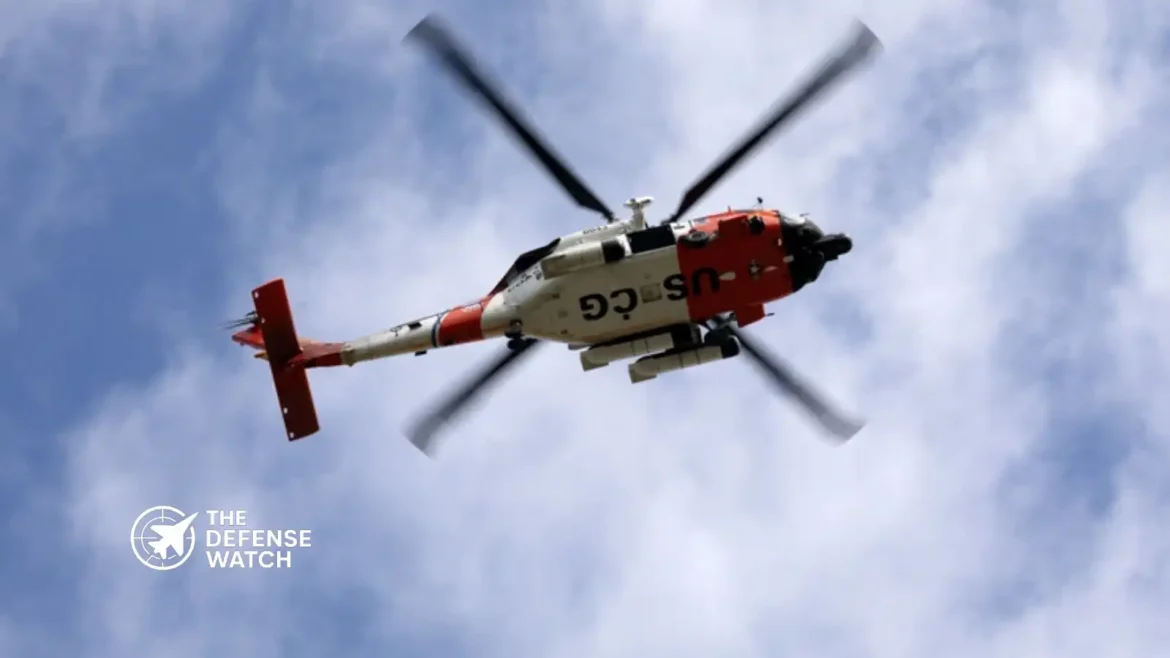
Iran Peace Talks And Missing US Pilot Crisis
Iran peace talks remain a possibility even as U.S. forces continue searching for a missing pilot following a recent military aircraft incident, underscoring the fragile balance between diplomacy and confrontation.
- Iran signals openness to diplomatic engagement despite ongoing tensions with the United States.
- U.S. forces continue search and recovery operations for a missing pilot after a reported aircraft loss.
- Incident highlights persistent risks of escalation in contested Middle East airspace.
- Event unfolds amid broader regional instability and stalled diplomatic frameworks.
- Situation tests crisis management channels between Washington and Tehran.
The Big Picture
Tensions between the United States and Iran remain a central driver of instability in the Middle East. Both countries operate in close proximity across contested air and maritime domains, particularly in and around the Persian Gulf.
Recent years have seen a mix of indirect engagement and episodic confrontation. Diplomatic channels have opened and closed repeatedly, often influenced by regional conflicts, sanctions pressure, and military incidents.
The latest development reflects a recurring pattern. Tactical incidents risk escalation, while strategic interests push both sides to keep diplomatic options alive.
What’s Happening
U.S. officials are actively searching for a missing pilot after a military aircraft was reportedly lost during operations in the region. The incident triggered a rapid response effort involving search and rescue assets.
At the same time, Iranian officials signaled that the door to peace talks remains open. Public statements indicate a willingness to engage diplomatically, even as tensions rise over the aviation incident.
The timing is significant. The search operation is ongoing, and details about the aircraft, mission profile, and circumstances of the loss remain limited.
Why It Matters
This development highlights the dual-track nature of U.S. Iran relations. Military friction continues, but neither side appears willing to fully abandon diplomatic engagement.
Operationally, the loss of a U.S. aircraft and the ongoing search for a missing pilot represent a serious incident. Personnel recovery missions carry inherent risks and often require coordination across multiple domains, including air, sea, and intelligence assets.
From a policy perspective, Iran’s signaling suggests an effort to avoid further escalation. Maintaining the option for talks allows Tehran to manage international perception while preserving leverage.
Strategic Implications
The incident underscores the persistent خطر of miscalculation in crowded operational environments. U.S. forces routinely operate in proximity to Iranian air defense systems and regional proxies.
For the United States, the immediate priority remains personnel recovery. Successful recovery operations reinforce credibility and demonstrate commitment to service members.
For Iran, signaling openness to talks may serve to contain escalation while avoiding direct confrontation. This approach aligns with a broader strategy of calibrated pressure combined with diplomatic flexibility.
Regionally, the situation affects Gulf security dynamics. Partner nations closely monitor U.S. responses to ensure continued deterrence credibility.
Competitor View
Iran is likely to frame the incident within its broader narrative of resisting U.S. military presence in the region. At the same time, keeping diplomatic channels open allows Tehran to avoid isolation.
Russia and China may interpret the situation as further evidence of U.S. operational vulnerability in contested environments. Both countries have emphasized the risks of forward-deployed U.S. forces operating near peer or near-peer adversaries.
Regional actors, including Gulf states, will assess whether the incident alters U.S. posture or commitment levels.
What To Watch Next
Key developments will include the outcome of the search and recovery operation. Confirmation of the pilot’s status will shape immediate U.S. responses.
Diplomatic signals from both Washington and Tehran will also be critical. Any shift toward formal talks or backchannel engagement could indicate de-escalation.
Military posture changes, including force movements or adjustments to air operations, will provide insight into evolving risk assessments.
Capability Gap
The incident highlights ongoing challenges in operating within contested airspace. Even advanced aircraft face risks from integrated air defense systems and electronic warfare environments.
Personnel recovery remains a complex mission set. It requires rapid coordination, survivability in hostile environments, and reliable intelligence support.
Limitations persist in ensuring immediate recovery in denied or heavily defended areas. These gaps continue to drive investment in next-generation rescue platforms and tactics.
U.S. Marines Demonstrate CH-53E Refueling Test Under Combat Conditions
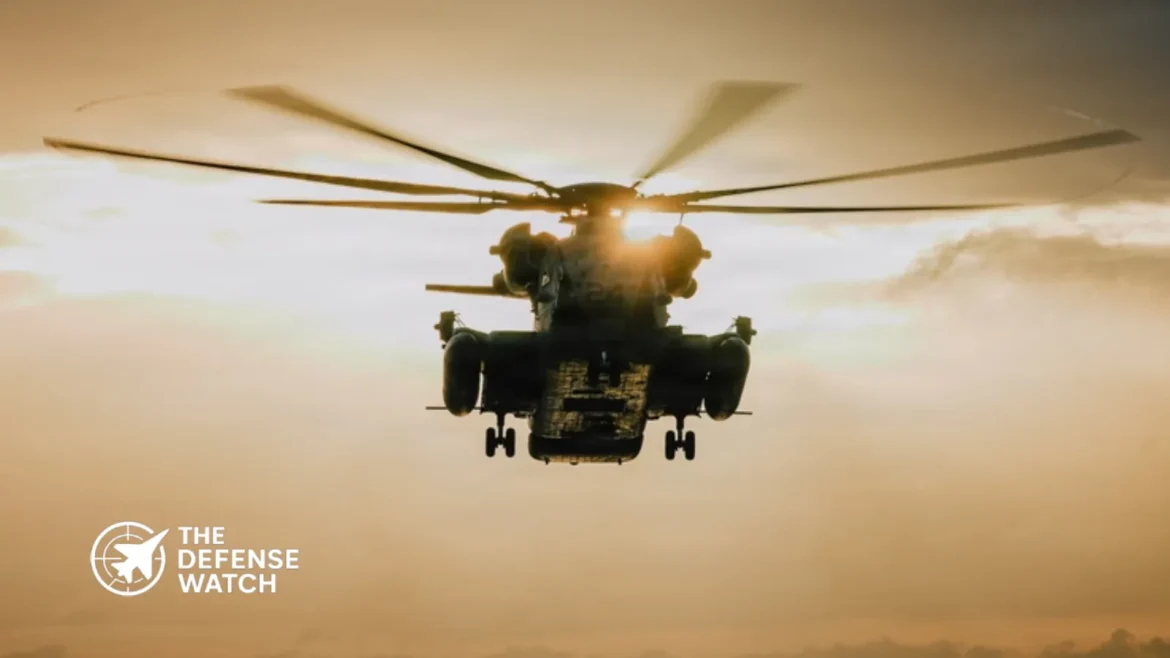
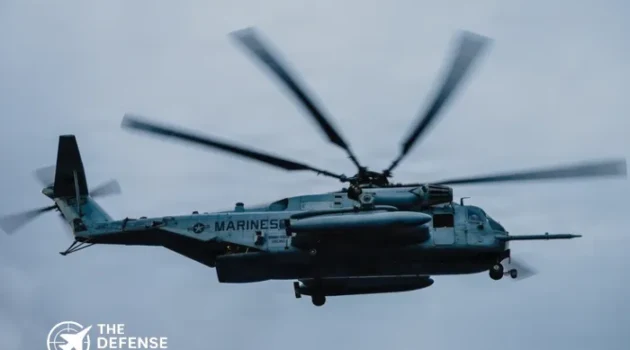
The CH-53E refueling test conducted by the U.S. Marine Corps marks a significant step in expanding heavy-lift aviation capability under realistic combat conditions. According to reporting by Army Recognition, Marines successfully executed aerial refueling while the CH-53E Super Stallion was simultaneously transporting two external vehicles, a complex maneuver rarely demonstrated at this scale.
This dual-operation test reflects a growing focus on operational endurance and logistics flexibility, especially in contested environments where traditional supply chains may be disrupted.
The ability to refuel mid-air while carrying heavy external loads directly enhances mission range, persistence, and survivability.
- U.S. Marines tested CH-53E aerial refueling while carrying two vehicles simultaneously.
- The exercise combined heavy-lift operations with extended-range refueling in a single mission.
- CH-53E Super Stallion is capable of lifting over 16 tons of cargo in external load operations.
- The test highlights expeditionary logistics capabilities under contested combat scenarios.
- The demonstration supports Marine Corps efforts to enhance mobility across dispersed battlefields.
Combining Heavy Lift And Aerial Refueling In One Mission
The CH-53E Super Stallion is already one of the most capable heavy-lift helicopters in the U.S. inventory. However, integrating aerial refueling into a live lift scenario introduces new operational complexity.
During the test, the helicopter maintained stability while connected to a tanker aircraft, all while managing the aerodynamic and weight challenges of carrying two vehicles via external sling loads.
This is not a routine task. External loads create drag and instability, which are further complicated during refueling due to precise positioning requirements.
By successfully completing this maneuver, Marine aviation units demonstrated improved coordination between aircrew, refueling assets, and ground logistics elements.
Operational Impact In Contested Environments
The CH-53E refueling test directly supports the Marine Corps’ evolving expeditionary doctrine, particularly concepts like Expeditionary Advanced Base Operations, often referred to as EABO.
In such scenarios, forces are expected to operate across dispersed and austere locations with limited infrastructure. Helicopters must deliver equipment, vehicles, and supplies over long distances without relying on fixed bases.
Aerial refueling enables:
- Extended mission range without landing
- Reduced vulnerability to ground threats
- Faster repositioning of combat assets
- Sustained operations in denied environments
This capability is especially relevant in the Indo-Pacific theater, where vast distances and limited basing options pose logistical challenges.
Why The CH-53E Still Matters Despite New Platforms
While the newer CH-53K King Stallion is gradually entering service, the CH-53E remains a critical platform in current Marine aviation operations.
The CH-53E refueling test underscores that legacy systems can still deliver advanced capabilities when paired with modern tactics and integration.
With a lifting capacity exceeding 16 tons and proven reliability, the CH-53E continues to play a vital role in:
- Amphibious operations
- Rapid troop and vehicle deployment
- Disaster response and humanitarian missions
Upgrades and training enhancements allow the platform to remain relevant even as next-generation systems are fielded.
Strategic Messaging And Readiness Signal
Beyond the technical achievement, the test sends a broader signal about U.S. military readiness.
Demonstrating the ability to sustain heavy-lift operations over extended distances shows that Marine forces can maintain operational tempo even under pressure.
It also reinforces interoperability between aviation units and aerial refueling assets, a key requirement for joint operations with the U.S. Air Force and Navy.
According to Army Recognition, the test aligns with ongoing efforts to refine combat logistics and improve responsiveness in high-threat environments.
Analysis: Closing The Logistics Gap In Modern Warfare
Modern warfare is increasingly defined by mobility and sustainment rather than just firepower.
The CH-53E refueling test highlights a shift toward resilient logistics, where forces must operate independently and adapt quickly to changing battlefield conditions.
Historically, logistics chains have been a vulnerability. Fixed supply points can be targeted, and long ground convoys are exposed to threats.
Aerial refueling combined with heavy lift changes that equation. It allows forces to bypass traditional choke points and maintain momentum.
This capability becomes even more critical in scenarios involving peer adversaries, where contested airspace and anti-access strategies could limit traditional resupply options.
In that context, the ability to move vehicles and equipment over long distances without landing is not just a tactical advantage, it is a strategic necessity.
GCAP Fighter Program Gains Financial Momentum
The GCAP fighter program is moving forward as the United Kingdom begins unlocking funding to sustain development of its next-generation combat aircraft.
British officials are working through internal budget processes to ensure steady financial support for the Global Combat Air Programme, a trilateral initiative with Japan and Italy aimed at delivering a sixth-generation fighter by 2035.
The funding progress comes at a critical stage, as partner nations transition from early concept work toward more intensive development and industrial alignment.
- The UK is finalizing funding mechanisms to sustain the GCAP sixth-generation fighter program.
- GCAP is a trilateral effort between the UK, Japan, and Italy targeting service entry by 2035.
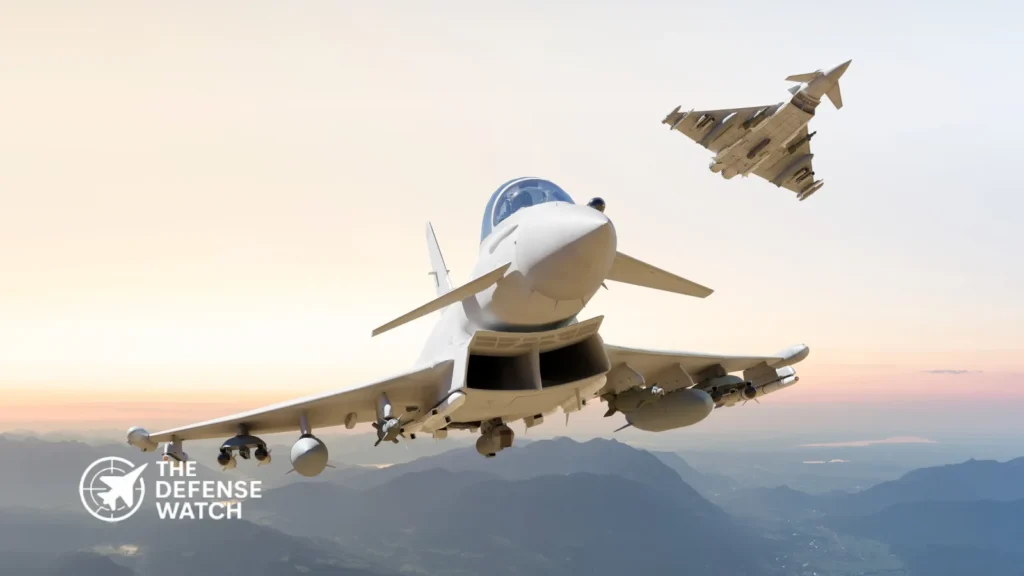
- The program aims to replace aging Eurofighter Typhoon fleets and maintain advanced air superiority.
- Funding flows are beginning despite broader UK defense budget pressures and fiscal constraints.
- GCAP represents one of the most ambitious multinational combat aircraft programs in Europe.
The Big Picture
Europe is accelerating efforts to field sixth-generation air combat systems as global competition intensifies. The GCAP fighter program reflects a broader shift among U.S. allies to maintain technological parity with emerging threats, particularly in the Indo-Pacific and Euro-Atlantic theaters.
The United States continues to advance its own Next Generation Air Dominance program, while France, Germany, and Spain are pursuing the Future Combat Air System. GCAP positions the UK and its partners as a parallel center of advanced combat aviation development.
The program also reinforces defense industrial cooperation between Europe and Asia, linking British and Italian aerospace capabilities with Japan’s growing defense technology base.
What’s Happening
The UK government has begun allocating funding streams to sustain GCAP development, even as it navigates broader fiscal pressures within its defense budget.
Officials are reportedly refining how funding will be structured over the coming years, ensuring predictable investment for industry partners. This includes major defense contractors responsible for propulsion, avionics, and advanced sensors.

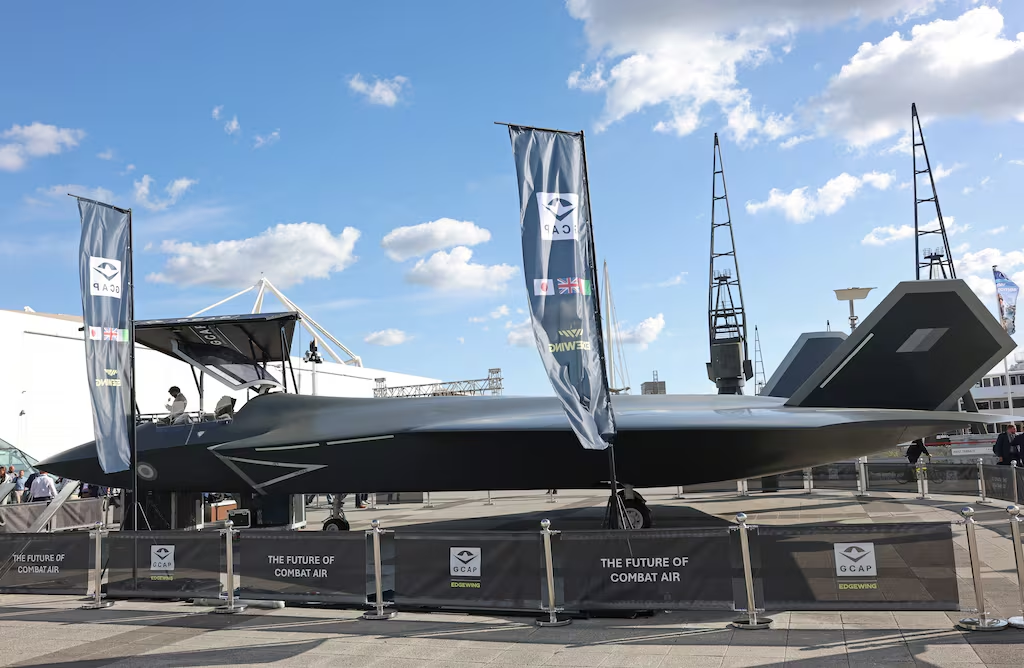
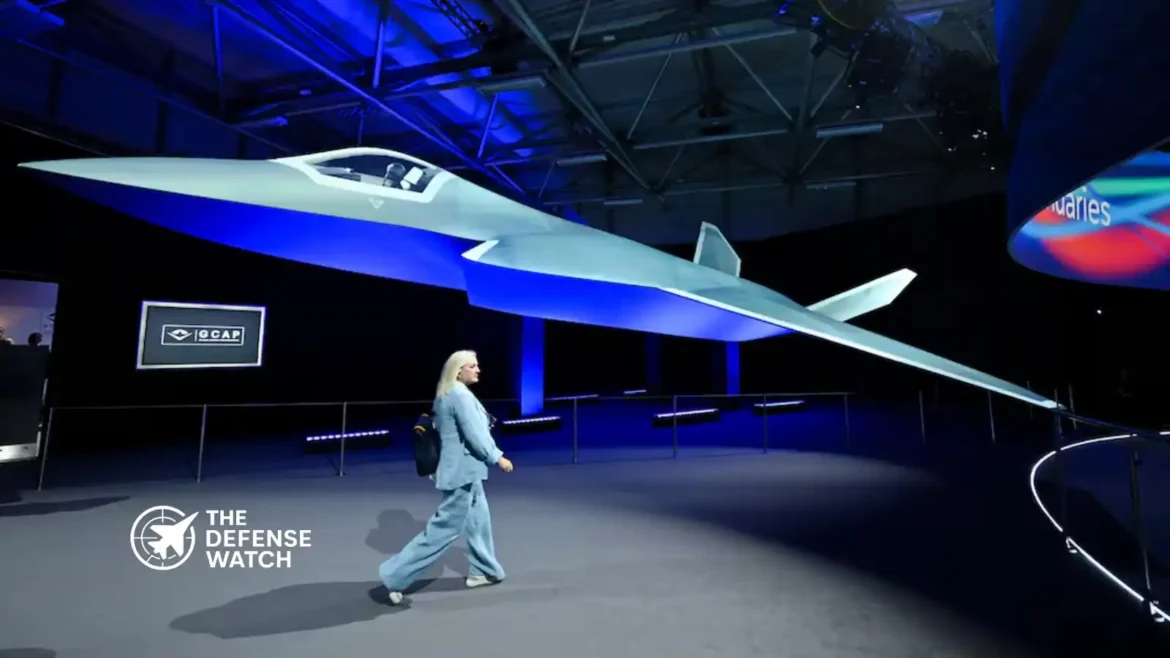
A design model for the Global Combat Air Programme (GCAP) fighter jet is displayed at the Defence and Security Equipment International (DSEI) arms fair in London on Sept. 9, 2025. (Reuters/Toby Melville) GCAP remains a joint effort between the United Kingdom, Japan, and Italy, formally announced in 2022. The program aims to deliver a stealthy, networked, and highly survivable fighter aircraft capable of operating in contested environments.
The target in-service date remains 2035, a timeline that requires sustained funding discipline across all partner nations.
Why It Matters
Stable funding is the single most critical factor in determining whether the GCAP fighter program meets its timeline.
Sixth-generation fighters require long development cycles, often spanning more than a decade. Any disruption in funding can delay key milestones such as prototype testing, systems integration, and production ramp-up.
The UK’s effort to secure financing signals political commitment to maintaining sovereign and allied airpower capabilities. It also reassures industry partners that the program will not face near-term cancellation risks.
This is particularly important given the scale of investment required, which is expected to reach tens of billions of dollars over the program’s lifecycle.
Strategic Implications
GCAP strengthens NATO-aligned airpower by ensuring that European allies retain access to advanced combat aircraft beyond the current generation.
The program enhances deterrence by signaling that partner nations are willing to invest in high-end capabilities designed for peer conflict scenarios. These include advanced stealth, sensor fusion, artificial intelligence-assisted decision-making, and collaborative combat with unmanned systems.
GCAP also diversifies the global fighter market, reducing reliance on U.S.-built platforms such as the F-35. While interoperability with U.S. systems remains essential, independent development gives allies greater operational flexibility.
Competitor View
China and Russia are likely to view the GCAP fighter program as part of a broader Western effort to sustain technological superiority in air combat.
China is advancing its own next-generation fighter concepts alongside existing fifth-generation platforms like the J-20. Russia continues work on programs such as the Su-57 and future designs, despite industrial and financial constraints.
From Beijing’s perspective, GCAP’s integration with Japan introduces a direct Indo-Pacific dimension, potentially affecting regional military balances.
What To Watch Next
Program milestones over the next several years will determine whether GCAP stays on track.
Observers should monitor prototype development timelines, engine testing progress, and the establishment of joint industrial structures among the three partner nations.
Funding stability across all partners will remain a key indicator. Any divergence in national priorities could affect the program’s schedule or scope.
Formal contracts, industrial workshare agreements, and technology demonstrations are expected to accelerate as the program moves deeper into development.
Capability Gap
The GCAP fighter program aims to close a growing capability gap in advanced air combat.
Current fourth-generation platforms such as the Eurofighter Typhoon face limitations in contested environments dominated by advanced air defenses and electronic warfare systems.
Fifth-generation aircraft address many of these challenges, but sixth-generation systems are expected to go further by integrating manned-unmanned teaming, enhanced stealth, and real-time data fusion across multiple domains.
However, the program faces inherent risks. These include cost growth, technological complexity, and the challenge of coordinating three national defense industries with differing requirements.
The Bottom Line
The UK’s move to secure funding for the GCAP fighter program signals firm commitment to sixth-generation airpower and reinforces allied efforts to maintain long-term air superiority.
 ¦ KEY FACTS AT A GLANCE
- Italy has denied stopovers for some US military aircraft transiting through Sicily toward the Middle East.
- The decision affects operations at Naval Air Station Sigonella, a key NATO logistics hub.
- The move reflects political sensitivity over escalating Middle East military activity.
- US airlift and refueling routes may require adjustments or alternative basing options.
- The development signals friction within allied coordination despite ongoing NATO commitments.
Italy US Military Aircraft Stopover Restrictions Highlight Operational Friction
Italy US military aircraft stopover restrictions are reshaping air mobility planning as Rome declines to support certain US flights transiting through Sicily en route to the Middle East. The decision affects operations at Naval Air Station Sigonella, a critical hub for US and NATO logistics in the Mediterranean.
The Big Picture
US military air mobility depends on a network of allied bases across Europe to sustain operations in the Middle East. Italy plays a central role in that network, particularly through Sigonella, which supports surveillance aircraft, tankers, and strategic airlift platforms.
Rising tensions and sustained US air operations in the Middle East have increased the tempo of flights passing through Southern Europe. This places political and operational pressure on host nations that must balance alliance commitments with domestic and regional concerns.
Italy’s decision reflects a broader trend where European allies exercise tighter control over how their territory supports expeditionary military operations.
What’s Happening
Italian authorities recently denied permission for certain US military aircraft to stop over in Sicily while en route to the Middle East. The restriction specifically impacts flights that would typically use Sigonella for refueling, crew rest, or logistical staging.
The move does not represent a full closure of the base to US forces. Instead, it introduces case by case limitations tied to mission type and political considerations.
US officials continue to operate from Sigonella, but the denial of select stopovers forces planners to reroute or adjust flight profiles.
Defense News first reported the development, citing officials familiar with the situation.
Why It Matters
Air mobility underpins US global military reach. Even limited restrictions at key nodes can disrupt efficiency, increase flight times, and strain tanker support.
Sigonella serves as a forward logistics platform for intelligence, surveillance, reconnaissance missions, as well as transport aircraft supporting operations across the Middle East and North Africa.
Restricting stopovers creates friction in an already complex air bridge. Aircraft may need to divert to alternative bases in Spain, Greece, or other NATO locations, adding operational cost and reducing responsiveness.
The decision also highlights how political considerations can directly affect military logistics, even among close allies.
Strategic Implications
Italy’s move introduces uncertainty into NATO’s southern logistics corridor. While the alliance remains cohesive, operational flexibility depends on predictable access to infrastructure.
Reduced access to Sigonella could slow surge operations or complicate sustained air campaigns. It also places greater reliance on fewer alternative bases, which may face capacity constraints.
From a deterrence perspective, any perceived friction in allied coordination could be noted by adversaries. However, the limited scope of the restriction suggests Italy aims to signal political caution without undermining NATO commitments.
The development underscores the importance of distributed basing strategies. The US has increasingly emphasized flexible basing and dispersed logistics to mitigate such risks.
Competitor View
Russia and Iran are likely to interpret the restrictions as evidence of political sensitivity within NATO regarding Middle East operations.
Moscow has long highlighted divisions within Western alliances. Even limited constraints on US operations can reinforce that narrative.
Tehran may view the decision as a sign that sustained US air campaigns carry political costs for regional partners. This could factor into its assessment of US operational endurance.
China, while less directly involved in the region, continues to study alliance cohesion as part of its broader strategic analysis.
What To Watch Next
US planners will likely adjust routing for aircraft supporting Middle East operations. Increased use of alternative bases in Southern Europe is expected.
Diplomatic engagement between Washington and Rome may clarify the scope of restrictions. Future decisions will indicate whether this is a temporary measure or part of a longer term policy shift.
Monitoring flight patterns and tanker deployments will provide insight into how the US adapts its air mobility network.
Any expansion of restrictions to other NATO bases would signal a broader shift in alliance dynamics.
Capability Gap
The Italy US military aircraft stopover issue highlights a vulnerability in reliance on fixed allied infrastructure.
US forces depend heavily on predictable access to overseas bases. When access becomes conditional, operational tempo and flexibility can suffer.
The situation reinforces the need for greater investment in long range airlift, aerial refueling capacity, and expeditionary basing concepts.
However, alternatives are not without limits. Longer routes increase fuel consumption and reduce payload efficiency. Dispersed basing requires additional logistical coordination and infrastructure investment.
The Bottom Line
Italy’s restriction on US military aircraft stopovers introduces operational friction in a critical logistics corridor, underscoring the strategic importance of allied access in sustaining global air operations.
¦ KEY FACTS AT A GLANCE- FTG is supplying advanced printed circuit boards for the global F-35 fighter program.
- The company supports avionics, radar, and mission-critical systems integration.
- Its manufacturing spans North America and Asia, enabling global supply resilience.
- The F-35 program relies on a multinational supplier network for production and sustainment.
- Demand for high-reliability electronics continues to grow alongside F-35 fleet expansion.
FTG Strengthens F-35 Production Supply Chain
The F-35 production supply chain continues to expand as Canada-based FTG (Firan Technology Group) delivers advanced printed circuit boards for the global fleet of F-35 Lightning II fighters.
FTG plays a key role in manufacturing high-reliability electronics used across avionics and mission systems. These components are critical to maintaining operational performance in fifth-generation aircraft, where data processing and sensor fusion define combat capability.
The F-35 program, led by Lockheed Martin, depends on a wide network of international suppliers to sustain production and lifecycle support. FTG’s contribution highlights the importance of specialized electronics firms within this ecosystem.
High-Reliability Electronics for Mission Systems
FTG’s circuit boards are designed for demanding aerospace environments, supporting systems such as radar, communications, and flight controls. In modern fighters, these subsystems must operate under extreme conditions, including high temperatures, vibration, and electromagnetic interference.
The company’s expertise lies in producing complex, multilayer printed circuit boards that meet stringent military standards. These boards serve as the backbone for processing and transmitting data across the aircraft’s integrated systems.
As the F-35 continues to evolve, including software upgrades and block improvements, the role of electronics suppliers becomes even more critical. Each iteration increases reliance on processing power and data management, placing additional demands on hardware reliability.
Global Manufacturing Footprint Enhances Resilience
A notable aspect of FTG’s involvement in the F-35 production supply chain is its global manufacturing footprint. With facilities in North America and Asia, the company is positioned to support distributed production requirements.
This geographic diversification aligns with broader efforts across the defense sector to strengthen supply chain resilience. Recent disruptions, including pandemic-related delays and geopolitical tensions, have underscored vulnerabilities in highly specialized manufacturing sectors.

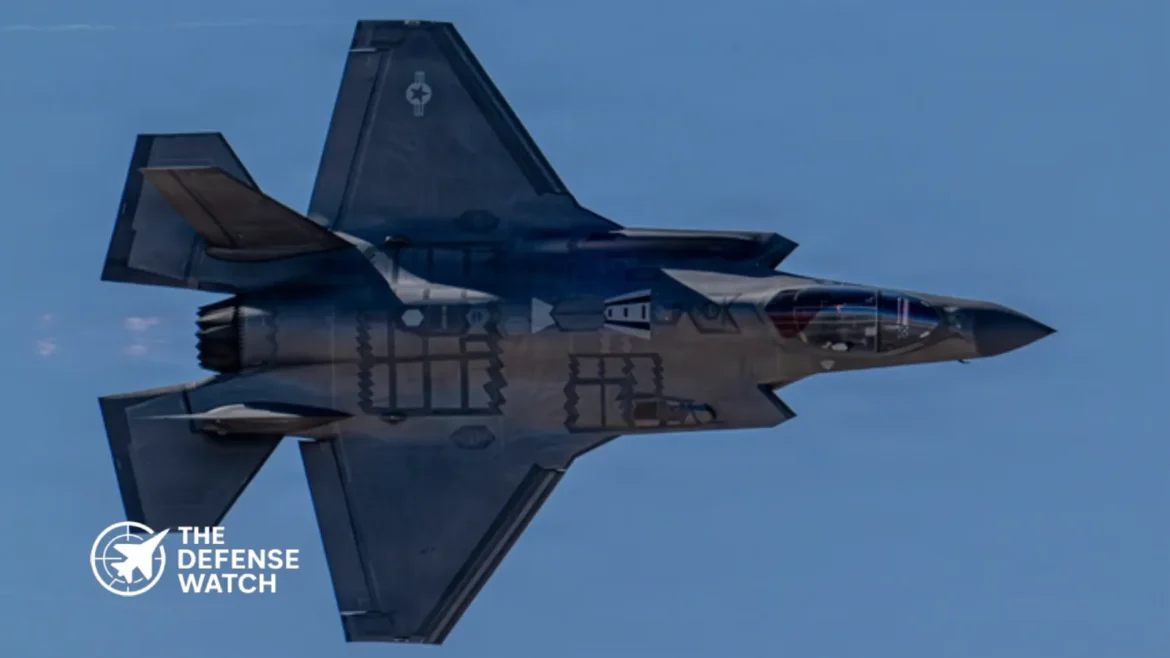
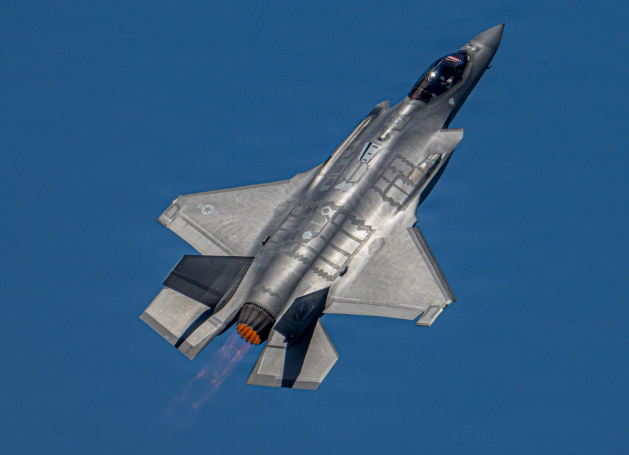
Image: U.S. Air Force. By maintaining multiple production sites, FTG can mitigate risks associated with single-point failures and support continuous delivery to prime contractors and subsystem integrators.
Strategic Importance of Supplier Networks
The F-35 program is one of the largest and most complex defense initiatives in history, involving dozens of partner nations and hundreds of suppliers. While prime contractors often receive the most attention, second- and third-tier suppliers like FTG are essential to sustaining production rates.
The F-35 production supply chain depends heavily on such firms to deliver components that meet exacting specifications. Any disruption at this level can cascade across the program, affecting delivery timelines and operational readiness.
This dynamic has prompted increased focus by governments and defense companies on supply chain transparency and risk management. Ensuring consistent access to critical components, especially electronics, has become a strategic priority.
Growing Demand Driven by Fleet Expansion
Demand for F-35 aircraft continues to rise, with new orders and ongoing deliveries to U.S. and allied forces. As the fleet grows, so does the need for replacement parts, upgrades, and sustainment support.
This trend directly benefits suppliers like FTG, which provide foundational components for both production and maintenance. The long service life of the F-35, expected to extend for decades, further amplifies the importance of reliable electronics manufacturing.
In addition, evolving threats are driving continuous upgrades to the aircraft’s capabilities. These upgrades often require new or enhanced hardware, reinforcing the need for adaptable and scalable production capabilities within the F-35 production supply chain.
Analysis: Electronics as a Critical Enabler of Air Dominance
The increasing reliance on advanced electronics reflects a broader shift in air combat toward information-centric warfare. In platforms like the F-35, superiority is not determined solely by speed or maneuverability, but by the ability to collect, process, and share data in real time.
This makes companies like FTG strategically important, even if they operate outside the spotlight. Their products enable core capabilities such as sensor fusion, electronic warfare, and networked operations.
From a U.S. defense perspective, maintaining a robust and diversified supplier base is essential to sustaining technological advantage. The inclusion of allied suppliers like FTG also strengthens interoperability and industrial cooperation across partner nations.
However, this interconnected model also introduces complexity. Managing quality, security, and delivery timelines across a global network requires significant coordination. As the F-35 program scales, these challenges will remain central to its long-term success.
¦ KEY FACTS AT A GLANCE- BAE Systems signed a contract to provide Typhoon support and training services to Türkiye.
- The agreement focuses on maintenance, sustainment, and pilot training for the Eurofighter Typhoon fleet.
- The contract supports operational readiness and long-term sovereign sustainment capabilities.
- The UK Royal Air Force is also involved in supporting Türkiye under the agreement.
- Türkiye is positioning the Typhoon as a central pillar of its future combat airpower.
BAE Systems Türkiye Typhoon Support Contract Expands Airpower Capability
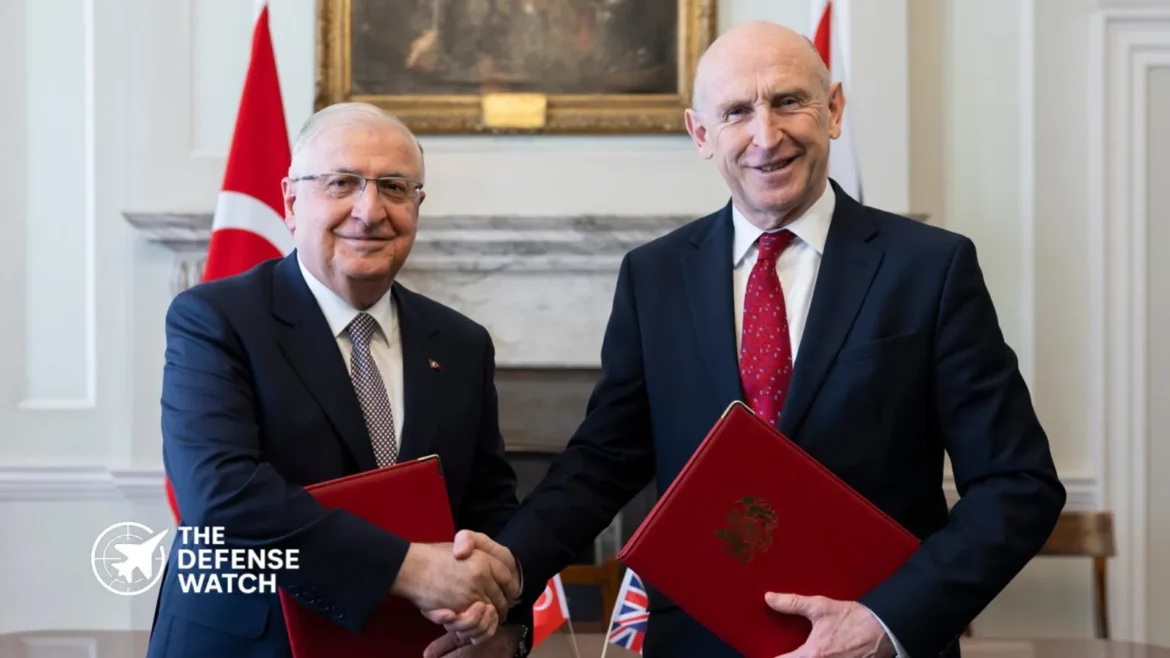
The BAE Systems Türkiye Typhoon support contract marks a significant step in strengthening Ankara’s combat aviation capabilities, focusing on sustainment, training, and long-term operational readiness of the Eurofighter Typhoon fleet.
Announced by BAE Systems, the agreement will deliver a comprehensive package of support services, including maintenance expertise and advanced pilot training. The contract underscores Türkiye’s continued investment in modernizing its air force and ensuring high readiness levels amid evolving regional security challenges.
In an official statement, BAE Systems emphasized the broader impact of the deal, noting that the work will support the Turkish Air Force in delivering operational readiness while progressively increasing its sovereign ability to sustain the fleet. The company added that, together with the Royal Air Force, it is supporting Türkiye as it becomes the latest air force to position the Typhoon as the backbone of its combat aviation capability.
Strengthening Eurofighter Typhoon Operations
The Eurofighter Typhoon remains one of the most advanced multirole fighter platforms in service across Europe and allied nations. Its effectiveness depends not only on platform performance but also on sustainment infrastructure and pilot proficiency.
Under the BAE Systems Türkiye Typhoon support contract, the integration of maintenance and training services is designed to ensure high availability rates and mission readiness. This reflects a broader shift in modern airpower, where lifecycle support is critical to operational success.
BAE Systems continues to play a central role in the Typhoon program, providing design expertise, upgrades, and in-service support across multiple operator nations.
Training And Sovereign Capability Development
A key aspect of the agreement is the development of Türkiye’s sovereign support capabilities. By transferring knowledge and enhancing local expertise, the contract aims to reduce reliance on external support over time.
Training initiatives will include advanced pilot instruction, simulation systems, and operational doctrine development. These elements are essential for maximizing the effectiveness of a fourth-generation-plus fighter such as the Typhoon.
This approach aligns with global trends, where nations seek greater control over maintenance, logistics, and training to ensure resilience during crises or supply chain disruptions.
Strategic Context: Türkiye’s Airpower Modernization
Türkiye continues to prioritize airpower modernization as part of its broader defense strategy. The integration of the Typhoon into its force structure reflects a focus on maintaining a capable and flexible fighter fleet.
The aircraft’s interoperability with NATO-aligned systems enhances Türkiye’s ability to participate in joint operations and coalition missions. At the same time, building sovereign sustainment capabilities supports long-term strategic autonomy.
Industrial And Geopolitical Implications
The BAE Systems Türkiye Typhoon support contract also carries significant industrial and geopolitical weight.
For BAE Systems, the deal strengthens its position as a global leader in defense sustainment and training solutions. Long-term support contracts provide consistent engagement with partner nations and reinforce industrial ties.
From a geopolitical perspective, the agreement highlights continued defense cooperation between Türkiye and European partners. Such collaboration plays a role in shaping regional security dynamics and maintaining interoperability within allied frameworks.
Analysis: Sustainment As The Core Of Modern Airpower
The BAE Systems Türkiye Typhoon support contract reflects a broader evolution in defense procurement, where sustainment and training are as critical as platform acquisition.
Modern fighter aircraft require continuous upgrades, predictive maintenance, and highly trained personnel. Without these elements, even advanced platforms risk reduced readiness.
For Türkiye, the focus on sovereign capability development is particularly significant. It enables greater control over operational readiness and reduces vulnerability to external constraints.
For BAE Systems, the agreement reinforces a strategic shift toward integrated service offerings, combining hardware, software, and human capital development.
Outlook
As global air forces adapt to increasingly complex operational environments, contracts like the BAE Systems Türkiye Typhoon support contract are expected to grow in importance.
For Türkiye, the deal supports both immediate readiness and long-term modernization goals. For the Eurofighter program, it demonstrates continued relevance in a competitive global market.
¦ KEY FACTS AT A GLANCE- US bombers avoided European airspace during missions targeting Iran.
- Aircraft used extended flight paths, likely supported by aerial refueling.
- Routing reflects political sensitivities among European allies.
- Missions demonstrate long-range strike capability and operational flexibility.
- Strategic takeaway: route selection is now as critical as strike capability.
US Bombers Avoid European Airspace On Iran Bombing Runs
US bombers avoid European airspace during Iran bombing runs, signaling a deliberate shift in operational routing while maintaining long-range strike capability. The development highlights how geopolitical constraints increasingly shape military flight planning alongside tactical requirements.
The Big Picture
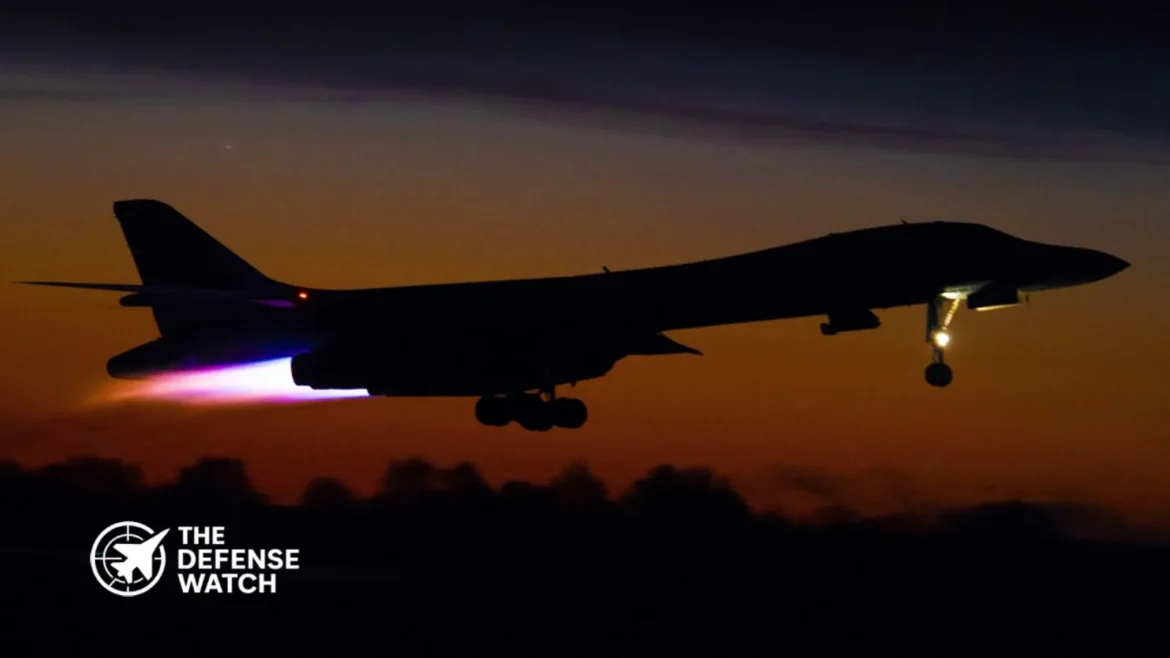
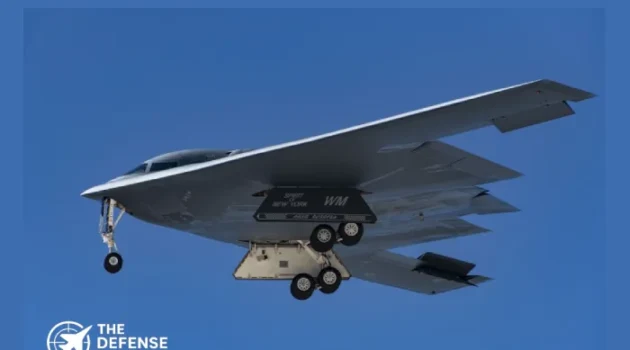
Long-range bomber operations remain central to US global power projection. Platforms such as the B-52 and B-2 allow the United States to strike targets across continents without forward basing, a capability emphasized in recent US Department of Defense posture statements.
Operational routing, however, has become more complex. European airspace access depends on diplomatic clearance, alliance politics, and domestic sensitivities within NATO member states. As tensions in the Middle East persist, Washington appears to be adjusting mission profiles to reduce political friction while preserving operational reach.
This shift reflects a broader trend in US military planning. Commanders increasingly balance kinetic effectiveness with alliance management, especially in regions where partners may not support escalation.
What’s Happening
Recent reporting indicates that US bombers conducting Iran-related strike missions deliberately avoided flying over European airspace. Instead, aircraft used alternative routes that extended flight distances.
These missions likely involved long-range bombers operating from bases outside Europe, supported by aerial refueling assets to sustain extended flight durations. Tanker aircraft remain critical in enabling such missions, allowing bombers to bypass politically sensitive corridors.
The rerouting suggests coordination at the strategic level, where flight paths are chosen not only for efficiency but also for diplomatic acceptability. European nations often require advance approval for overflight, particularly for combat operations tied to active conflict zones.
Why It Matters
Route selection directly affects operational tempo and mission complexity. Avoiding European airspace increases flight time, fuel requirements, and reliance on tanker support. This adds logistical strain but reduces the risk of diplomatic friction with allies.
The decision also reflects sensitivity to domestic politics within NATO countries. Some European governments face public opposition to involvement in Middle East conflicts, even indirectly through airspace access.
From a military perspective, the ability to execute these missions despite longer routes demonstrates resilience in US strike planning. It shows that operational effectiveness does not depend on any single geographic corridor.
Strategic Implications
This development underscores the flexibility of US global strike architecture. By rerouting bombers, the United States preserves freedom of action even when traditional transit routes become politically constrained.
It also highlights the growing importance of distributed basing and tanker fleets. Without robust aerial refueling, extended routes would significantly degrade mission effectiveness.
At the alliance level, the move signals a careful balancing act. Washington appears willing to absorb operational costs to avoid straining relationships with European partners. This approach supports long-term alliance cohesion, even if it complicates short-term mission planning.
Competitor View
Iran likely interprets these operations as evidence of sustained US strike capability despite geographic constraints. The use of indirect routes may also signal caution, suggesting Washington seeks to limit escalation pathways while retaining deterrence.
Russia and China may view the development differently. Both countries have invested in anti-access strategies designed to complicate US operations. The ability of US bombers to adapt routing reinforces the credibility of long-range strike forces even in contested or politically restricted environments.
At the same time, reliance on tankers exposes a known vulnerability. Peer competitors continue to develop capabilities aimed at targeting aerial refueling assets in future conflicts.
What To Watch Next
Future operations will likely continue to reflect a balance between operational efficiency and political considerations. Key indicators include:
Increased tanker deployments supporting long-range missions
Expanded use of alternative basing locations outside Europe
Changes in NATO overflight policies or political alignment
Integration of stealth platforms to reduce exposure along longer routesUS Air Force modernization efforts, including next-generation bomber programs, may also influence how these missions evolve.
Capability Gap
The reliance on extended routing highlights a persistent challenge in US operations. Access denial, whether political or military, can complicate mission planning and increase logistical demands.
Aerial refueling mitigates this gap, but it introduces additional risk. Tankers are high-value assets and may become targets in contested environments. This creates a tradeoff between operational reach and vulnerability.
Additionally, longer routes reduce sortie generation rates, which could affect sustained operations during high-intensity conflict.
The Bottom Line
US bombers avoid European airspace on Iran missions, demonstrating that modern airpower depends as much on geopolitical navigation as it does on technological capability.
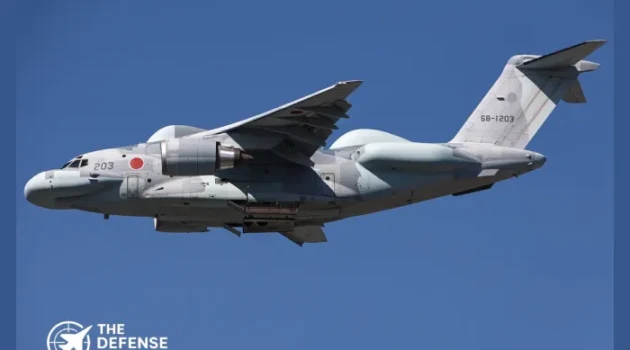
¦ KEY FACTS AT A GLANCE- Japan’s EC-2 electronic warfare jet has successfully completed its first flight.
- The aircraft is designed to jam enemy radar and communications from long range.
- EC-2 enables standoff electronic attack without entering contested airspace.
- The platform supports Japan’s expanding electronic warfare and network disruption capabilities.
- The development aligns with broader regional focus on electromagnetic spectrum dominance.
Japan EC-2 Electronic Warfare Jet Completes First Flight
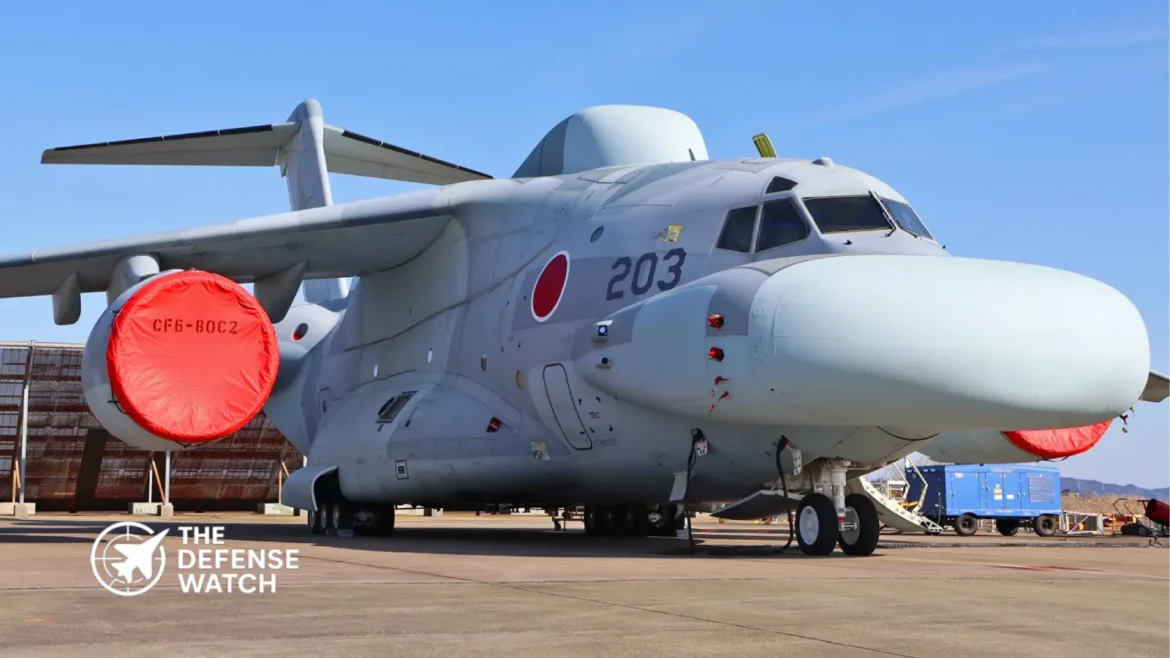
The Japan EC-2 electronic warfare jet has completed its first flight, marking a significant step in strengthening Japan’s airborne electronic attack capabilities.
The aircraft is designed to conduct long-range jamming missions, targeting enemy radar systems and communications networks while remaining outside hostile airspace. This standoff capability reflects a growing emphasis on survivability and spectrum dominance in modern air operations.
According to defense reporting and aviation sources, the EC-2 represents a next-generation evolution in Japan’s electronic warfare fleet, supporting both defensive and offensive electromagnetic operations.
Standoff Jamming and Survivability at the Core
A key feature of the EC-2 is its ability to disrupt adversary systems without crossing into heavily defended zones. This reduces exposure to surface-to-air missile systems and advanced fighter threats.
Modern electronic warfare increasingly prioritizes range and precision. By operating at a distance, the EC-2 can degrade enemy situational awareness before kinetic operations begin.
This concept aligns with broader trends seen in U.S. and allied forces, where platforms such as the EA-18G Growler emphasize stand-in and stand-off jamming combinations. Japan’s EC-2 appears focused primarily on the latter, providing a safer and persistent electronic attack layer.
Role in Japan’s Expanding EW Doctrine
The introduction of the EC-2 comes as Japan continues to invest in electronic warfare as part of its evolving defense posture.
Over the past decade, the country has shifted toward integrated multi-domain operations, combining cyber, space, and electromagnetic spectrum capabilities. Electronic warfare aircraft like the EC-2 play a central role in this shift by:
- Disrupting enemy command and control networks
- Blinding radar systems during air operations
- Supporting joint force coordination
This reflects a broader recognition that future conflicts will depend heavily on control of the electromagnetic spectrum, not just air superiority in the traditional sense.
Regional Context and Strategic Implications
The EC-2’s first flight takes place amid rising competition in the Indo-Pacific region. Several regional powers are rapidly advancing their own electronic warfare and countermeasure systems.
Aircraft capable of long-range jamming provide a strategic advantage by shaping the battlefield before direct engagement. They can delay detection, confuse targeting systems, and reduce the effectiveness of integrated air defense networks.
For Japan, this capability strengthens deterrence by complicating adversary planning. It also enhances interoperability with allied forces, particularly the United States, which places significant emphasis on electronic attack in joint operations.
Technology and Platform Evolution
While detailed specifications remain limited, the EC-2 is expected to incorporate advanced electronic support and attack systems, including:
- Wideband jamming technologies
- Signals intelligence collection systems
- Networked electronic attack coordination
Such systems allow operators to detect, identify, and disrupt multiple threats simultaneously.
Compared to older platforms, newer electronic warfare aircraft are more software-driven, enabling faster updates and adaptability against evolving threats.
Analysis: Why the EC-2 Matters
The significance of the EC-2 goes beyond a single aircraft milestone.
First, it highlights a shift toward non-kinetic warfare capabilities. Modern militaries are investing heavily in tools that can disable or degrade enemy systems without firing a shot.
Second, it reflects changing risk calculations. Operating outside contested airspace reduces losses while still achieving operational effects.
Third, it underscores the growing importance of electronic warfare in the Indo-Pacific, where dense air defense environments make traditional penetration missions more challenging.
In this context, the EC-2 is not just a support platform. It is a frontline enabler of air and joint operations.
¦ KEY FACTS AT A GLANCE- Boeing received a $38.67 million contract to upgrade software on South Korea’s P-8A aircraft.
- The upgrade includes Tactical Open Mission Software version 105K enhancements and capability expansion.
- New features include Multi-Static Active Coherent processing and Harpoon II integration.
- Work will be conducted across five locations in the United States and South Korea through January 2029.
- The $38.67 million contract is funded in full through Foreign Military Sales.
Boeing P-8A Software Upgrade Strengthens South Korea’s Maritime Surveillance
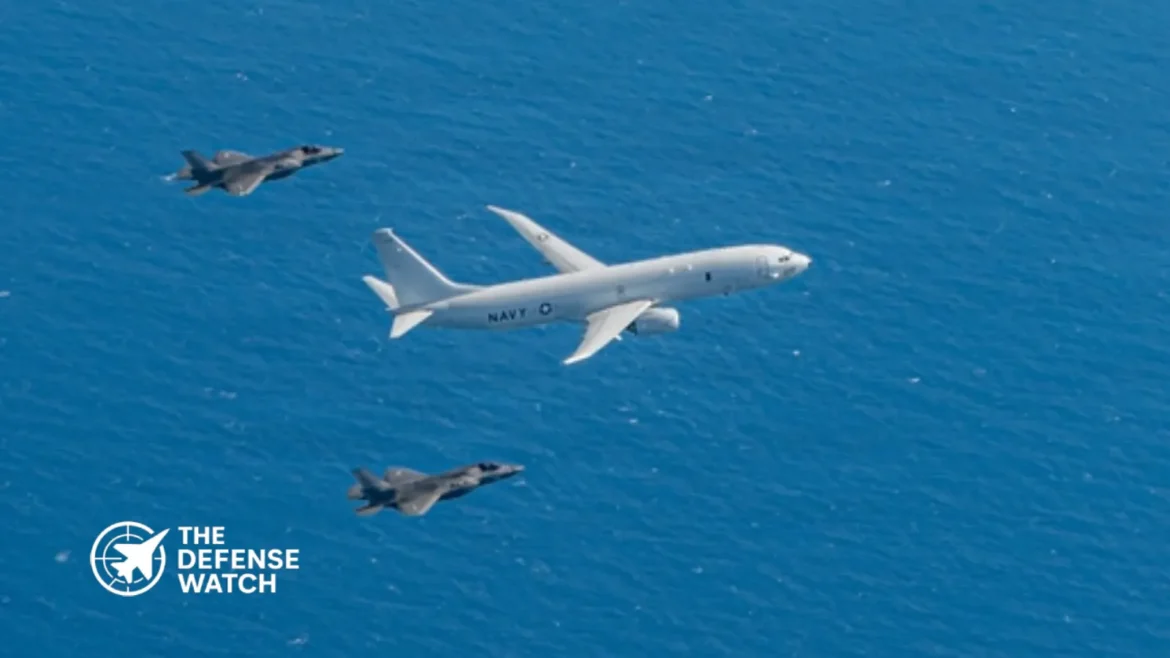
The Boeing P-8A software upgrade contract marks a significant step in enhancing South Korea’s maritime patrol and anti-submarine warfare capabilities, as the U.S. Navy awarded a $38.67 million order under an existing agreement.
The contract, issued by Naval Air Systems Command, covers the development and installation of an updated software load for the Republic of Korea’s P-8A Poseidon fleet. The effort centers on deploying Tactical Open Mission Software (TOMS) version 105K, a key evolution in the aircraft’s mission system architecture.
This upgrade is designed to improve operational flexibility, address supply chain constraints, and expand mission effectiveness in contested maritime environments.
Modernizing Mission Systems And Addressing Supply Chain Gaps
A core component of the Boeing P-8A software upgrade is the inclusion of improvements tied to diminishing manufacturing sources and material shortages. These updates ensure continued system sustainment as legacy components become harder to source.
This reflects a broader trend across U.S. and allied defense programs, where software-driven upgrades are increasingly used to extend platform life cycles without requiring costly hardware redesigns.
By integrating these changes into TOMS 105K, Boeing enables the Republic of Korea Navy to maintain readiness while adapting to evolving logistical challenges.
Expanded Combat Capabilities With Advanced Processing And Weapons Integration
Beyond sustainment, the Boeing P-8A software upgrade introduces notable capability enhancements.
One of the most significant additions is Multi-Static Active Coherent (MAC) processing. This technology improves the aircraft’s ability to detect and track submarines by leveraging multiple acoustic sources and receivers. In practical terms, it strengthens anti-submarine warfare performance, particularly in complex underwater environments.
The upgrade also integrates Harpoon II anti-ship missile capabilities. This provides the P-8A with enhanced maritime strike options, allowing it to engage surface targets with greater precision and flexibility.
Together, these additions move the aircraft beyond traditional surveillance roles toward a more versatile, multi-mission platform.
Distributed Industrial Base And Long-Term Timeline
Work on the Boeing P-8A software upgrade will be distributed across several locations, reflecting the program’s wide industrial footprint.
Seattle, Washington, will handle the largest share at 45 percent, followed by Huntington Beach, California at 30 percent. Additional work will take place in St. Louis, Missouri, Patuxent River, Maryland, and Pohang, South Korea.
The program is scheduled for completion by January 2029, indicating a multi-year effort that aligns with long-term fleet modernization planning.
This distributed approach supports both U.S. defense industry capacity and allied integration, reinforcing interoperability between American and South Korean forces.
Strategic Implications For South Korea’s Maritime Posture
The Boeing P-8A software upgrade comes at a time of increasing maritime security concerns in the Indo-Pacific region. South Korea faces a complex threat environment, including North Korean submarine activity and broader regional naval competition.
Enhancing the P-8A’s capabilities directly contributes to improved situational awareness and deterrence. The addition of advanced anti-submarine processing and anti-ship strike capability strengthens Seoul’s ability to monitor and respond to threats across its maritime domain.
From a strategic perspective, this upgrade also deepens defense ties between the United States and South Korea under the Foreign Military Sales framework.
Growing Role Of Software In Modern Military Aviation
The contract highlights a broader shift in military aviation toward software-centric modernization.
Rather than relying solely on new airframes, defense planners are increasingly investing in software upgrades to unlock new capabilities from existing platforms. This approach reduces costs, accelerates deployment timelines, and allows for more rapid adaptation to emerging threats.
In the case of the P-8A, continuous software evolution ensures the aircraft remains relevant against advancing submarine technologies and changing operational demands.
Contract Details And Funding Structure
The $38.67 million contract is funded بالكامل through Foreign Military Sales customer funds, which were obligated at the time of award. Notably, none of the funds are set to expire at the end of the current fiscal year, providing stability for program execution.
The award was issued on a sole-source basis, consistent with Boeing’s role as the original manufacturer and systems integrator for the P-8A platform.
Naval Air Systems Command, based in Patuxent River, Maryland, is overseeing the contract.